Breaking News
Kuldeep Yadav ties the knot with longtime girlfriend Vanshika in grand Mussoorie ceremony


Indian cricketer Kuldeep Yadav has stepped into a new phase of life after marrying his fiancée Vanshika Singh in a grand ceremony held on March 14 in the scenic hill town of Mussoorie. The celebrations came just days after Kuldeep returned from India’s triumphant campaign in the ICC Men’s T20 World Cup 2026, where the team successfully defended its title.

The wedding, set against the breathtaking backdrop of the Himalayan foothills, turned into a vibrant celebration filled with music, dance, and the presence of several well-known faces from the cricketing fraternity.

Festive atmosphere lights up Mussoorie as Kuldeep Yadav ties the knot with Vanshika

The wedding festivities were marked by a joyous and lively atmosphere. Traditional dhol beats, band music, and enthusiastic dancing by guests created a festive mood throughout the celebrations. Videos from the ceremony quickly surfaced on social media, offering fans a glimpse into the colorful event.

In the clips, Kuldeep appeared relaxed and delighted, sharing the special moment with close friends and relatives. The celebrations reflected a blend of traditional rituals and modern wedding charm, with guests enjoying every part of the ceremony.

Fans across social media platforms expressed their happiness for the cricketer, congratulating him and wishing the couple a wonderful married life.

Cricket fraternity joins the celebrations

Several prominent figures from the Indian cricket fraternity were present to celebrate the occasion. Among the notable attendees were Yuzvendra Chahal, Rinku Singh, Tilak Varma and former India batter Mohammad Kaif.

Their presence added extra sparkle to the wedding, as many of Kuldeep’s teammates and cricketing friends joined the celebrations. Guests were seen enjoying the festivities together, sharing laughter and dance moments during the event.

The picturesque surroundings of Mussoorie further enhanced the charm of the ceremony, making it a memorable occasion for everyone present.

Also WATCH: MS Dhoni repairs his bat using an electric sander during IPL 2026 practice session

Grand reception planned in Lucknow

While the Mussoorie wedding was an intimate yet grand affair, an even bigger celebration is set to follow. The couple will host a lavish reception on March 17 at Hotel Centrum in Lucknow.

The reception is expected to witness the presence of several eminent personalities from cricket, politics, and business circles. With Kuldeep being one of India’s leading spinners, many prominent figures from the sporting world are likely to attend the event.

Also READ: Ahead of IPL 2026, Sun TV takes CSK to court – here’s the reason


Source link

Rohit Sharma on Mumbai vs rest debate: ‘I don’t believe in this edge’ | Cricket News


Rohit Sharma on Mumbai vs rest debate: 'I don't believe in this edge'

MUMBAI: Hailing the India men’s team for winning the 2026 T20 World Cup and the Women’s team too for clinching their maiden Women’s ODI World Cup title last year, former India captain Rohit Sharma has expressed hope that “there is looking back from here,” and both the sides “carry this momentum forward.” “I am very happy and very proud to see what we have been seeing for the last couple of years now. To come out with flying colours and achieve what we have achieved, not just the men’s team but also the women’s team winning that World Cup in (Navi) Mumbai was fantastic to watch. Recently, the men’s team, what they did was phenomenal. I hope this is just the start, there is no looking back from here because once you get that momentum… we often talk about momentum and now both the men’s and women’s teams have that momentum. All I hope is that we carry this momentum forward,” Rohit said at the launch of the new season of T20 Mumbai League and the announcement of the three-team T20 Mumbai Women’s League on Saturday.

Suryakumar Yadav receives grand homecoming after India’s T20 World Cup win

Led by Rohit Sharma and then Suryakumar Yadav, the Indian men’s teams clinched back-to-back T20 World Cup titles in 2024 and then on March 8, 2026 in Ahmedabad, crushing New Zealand by 96 runs in the final. Meanwhile, the Harmanpreet Kaur-led Indian women’s team beat South Africa by 52 runs at the DY Patil Stadium in Navi Mumbai to clinch the 2025 Women’s ODI World Cup on No 3 last year. The modern-day great credited the “people behind the scenes” as well for the success of the Indian men’s and women’s teams. “There is no secret to success, it’s all about hard work. The men’s and women’s team have worked really hard to achieve what they have achieved today. Of course, it’s not just about the players who perform on the field, there are so many people behind the scene who have put in so much hard work into that success so that the team can have success. A lot of people and personnel to give thanks to,” said the 38-year-old. Rohit’s advice to players in the T20 Mumbai league was simple: ‘Grab your opportunity.’ “You never know what’s going to happen so whenever the opportunity arises you should be ready for the challenges. I still believe in the process to prepare really well and be ready for the opportunity,” said the ‘Hitman’.Asked on whether Mumbai’s cricketers had an edge over their counterparts due to the struggles they went through while growing up as cricketers, Rohit disagreed with the thought. “I don’t believe in this edge. When players are picked in the national team there is a reason why they’ve been picked. We have seen there is so much competition in our country when we talk about cricket. Right from U-14s you got to be lucky; of course, you need the talent to find success but you also got to be lucky to be at the right time at the right place for people to notice you. Sometimes you can be as talented as you can be but if people are not watching you, then you can be slightly unlucky. You’ve got to be lucky as well, but there is no substitute to hard work and that is not just with the Mumbaikars but also with the players who are representing the country,” said the opening great. Also present was India women’s team pacer Sayali Satghere, Mumbai Cricket Association president Ajinkya Naik, ex-president Ashish Shelar and the entire MCA apex council. Rohit expressed his happiness “with the way Mumbai cricket is shaping up.” “They are going through this tough grind to find success. But (I am) very happy with the way Mumbai cricket is shaping up, also with what T20 Mumbai has done. A lot of young cricketers we saw who played this T20 Mumbai have gone on to play the IPL team and of course the national team as well so it is a big, big platform. I am sure the guys who are going to play will understand that this format is wonderful and I am happy that we are doing this again after a successful last season,” he said. Rohit gave credit to the MCA for conducting the revived T20 Mumbai League despite the monsoon having just started. “It was a tough task right after the IPL got over, and the monsoon had just started. I got to give credit to each and every member of the MCA to pull that through, making three games in a day happen is not easy and also a big, big round of applause to all the groundsmen as well who put their hands up and got the grounds ready, which is why I said there is no substitute to hard work. With three new teams added, it’s getting bigger,” Rohit said.

Banner Insert


Source link

24 quarries in Kalyan sealed in on crackdown illegal mining | Thane News


KALYAN: In a major crackdown on illegal mineral mining in the Kalyan region, the Revenue Department has sealed 24 stone quarries and stone crusher units and registered an FIR against operators of nine units for allegedly carrying out unauthorized excavation on government and private land without official permission. The case has been registered at the Kalyan Taluka police station. The action was carried out by a team led by Sub-Divisional Officer Vishwas Gujar, which conducted inspections across several mining and industrial units with-in Kalyan taluka limits. During the inspection drive, the team checked operational quarry leases, stone crusher plants, ready-mix concrete (RMC) units and asphalt plants. Officials found that nine stone quarries and crusher units were operating without the mandatory government permissions. Based on the findings, mandal officer Preeti Ghude filed a complaint at the Kalyan Taluka police station, following which a case was registered against the operators. Apart from these, several other units that possessed valid permissions were also found violating regulatory norms. Officials discovered that some plants had failed to maintain la-bour registers while others had discrepancies in excavation measurements. Such units have been sealed temporarily and have been direct-ed to submit proper measure-ment reports to the authorities. The action has reportedly created difficulties for several road contractors in Thane district who rely heavily on these plants for con-struction material required for road works.Meanwhile, the owner of one such unit, who claimed to possess valid permissions but whose plant was also sealed did not wish to be named, alleged that the action was a tactic by authorities to harass operators.

Banner Insert


Source link

‘Britain has fallen to Islam’: How a ‘non-halal’ Sikh restaurant in London became a flashpoint for the global right-wing | World News


'Britain has fallen to Islam': How a 'non-halal' Sikh restaurant in London became a flashpoint for the global right-wing

A neighbourhood Indian restaurant in west London has suddenly become the centre of a political and cultural storm stretching far beyond Hammersmith. What began as a dispute over halal and non-halal meat at a Sikh-owned establishment has spiralled into street confrontations, police intervention and viral social-media outrage.At the centre of the controversy is Rangrez, a restaurant on Fulham Palace Road that had already announced its closure after operating for 16 years. Its owner, Harman Singh Kapoor, says he faced months of harassment because the restaurant publicly refused to serve halal meat. Videos of confrontations outside the premises have since been seized upon by commentators across the world as evidence for a familiar claim in right-wing circles: that Britain has “fallen to Islam”.

What is the controversy?

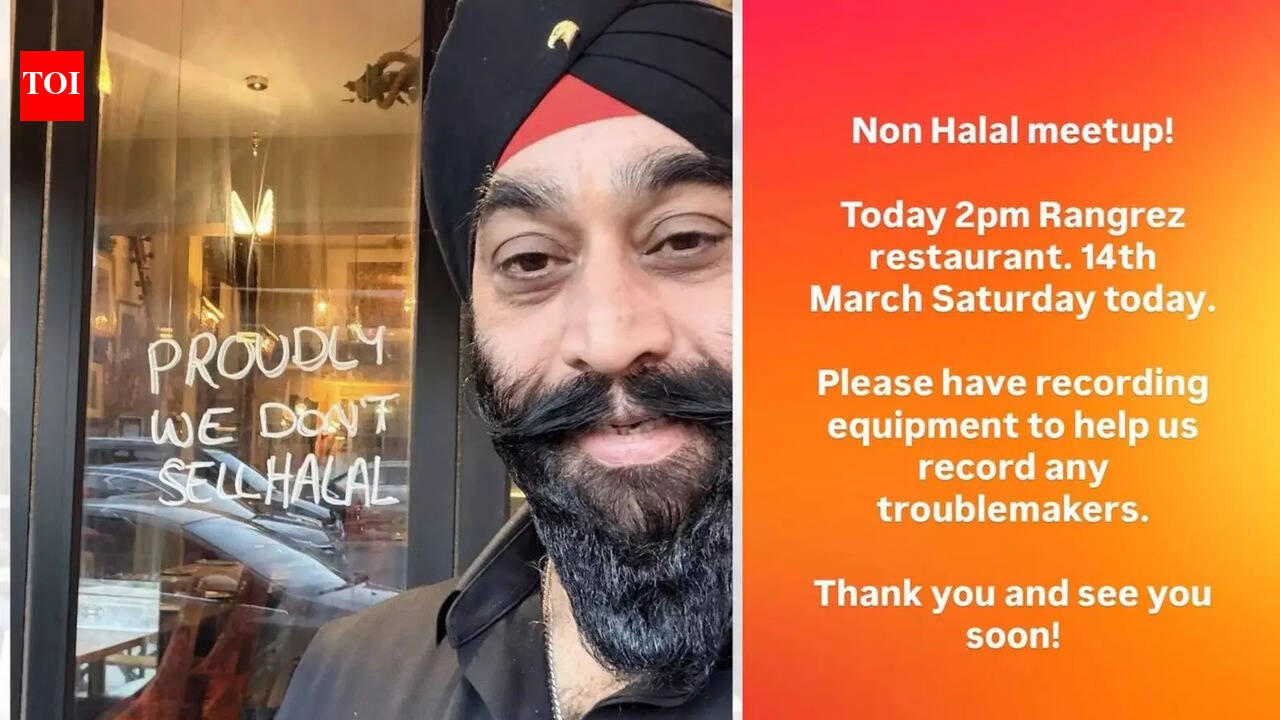
The immediate trigger was the restaurant’s declaration that it did not serve halal meat. Kapoor said that as a Sikh he preferred to serve jhatka meat, which some Sikhs consider religiously permissible in contrast to halal slaughter.According to Kapoor, the decision led to months of harassment including fake online reviews, threats and confrontations outside the restaurant. The situation escalated on March 14, when a crowd gathered outside Rangrez. Social media posts claimed that more than a hundred people had surrounded the premises and blocked entrances while chanting slogans.In the hours leading up to the confrontation, Kapoor also promoted what he called a “Non Halal meetup” at the restaurant through his social-media accounts. The post invited supporters to gather at Rangrez at 2 pm on March 14 and asked attendees to bring recording equipment to document any “troublemakers”.The message read: “Non Halal meetup! Today 2pm Rangrez restaurant. 14th March Saturday today. Please have recording equipment to help us record any troublemakers. Thank you and see you soon!” The call for a meetup circulated widely online and drew both supporters and critics to the restaurant.Later that day Kapoor posted videos describing the situation as threatening and said he had taken his kirpan, the ceremonial blade carried by observant Sikhs, to protect his family. Hours later he was arrested while the crowd dispersed.The arrest quickly became the centre of the controversy. Supporters argue the restaurant owner was punished for defending his family and exercising his religious beliefs. Critics say the confrontation had been escalating for weeks and point to Kapoor’s own inflammatory posts.Police have not publicly clarified the circumstances of the arrest or whether charges have been filed.

Who is Kapoor?

Rangrez

Harman Singh Kapoor has been active for years in diaspora politics and Sikh community debates, often presenting himself as a critic of Khalistani extremism and what he describes as weak policing in Britain.He has previously said he received threats because of his activism. When he announced the closure of Rangrez earlier this year, he cited rising costs but also claimed that intimidation and disturbances around the restaurant had made it impossible to continue operating.At the same time, Kapoor’s social-media posts have attracted criticism. Some have included harsh remarks about Muslims and declarations that he would not cater to them. Those comments have complicated attempts by supporters to portray him purely as a victim of religious intolerance.How the global right turned Rangrez into a culture-war symbolOnce videos of the confrontation began circulating online, the episode was rapidly absorbed into the global culture wars.Right-wing commentators framed the incident as proof that Muslim communities were forcing businesses to comply with halal practices and that British authorities were siding with protesters rather than protecting a Sikh business owner. In this narrative, the Rangrez dispute became another example cited by critics who argue that Britain is capitulating to religious pressure.The idea that Britain has “fallen to Islam” has circulated for years across sections of the global right. Even before becoming US Vice President, JD Vance sparked controversy when he joked that Britain might become the “first truly Islamist country that will get a nuclear weapon.”Technology billionaire Elon Musk has also repeatedly criticised the British government under Keir Starmer, particularly over issues such as policing, immigration and free speech.Against that backdrop, the Rangrez episode quickly became another flashpoint. American political activist Valentina Gomez wrote on X: “Either bow… or you’ll get arrested. The UK has succumbed.” Commentator Gunther Eagleman wrote: “BRAVE Sikh restaurant owner Harman Singh Kapoor and his family are being terrorised because he refuses to sell Sharia-compliant halal meat.” Other posts claimed that Pakistanis had surrounded the restaurant and suggested the incident showed that Sharia law had effectively replaced British law. The framing mirrors the style of MAGA-aligned social-media narratives, where isolated incidents are turned into symbols of national decline. In this telling, a confrontation outside a restaurant in Hammersmith becomes evidence of a country surrendering to religious pressure.Yet many of the claims circulating online rely on partisan interpretations. The exact size of the crowd, the sequence of events leading to Kapoor’s arrest and the legal basis for police action have not yet been fully clarified.

Jhatka vs halal: what is the difference?

At the heart of the dispute lies a religious distinction rooted in South Asian traditions.Halal, in Islamic practice, refers to food permitted under Islamic law. When it comes to meat, halal slaughter requires a method known as dhabihah, in which the animal’s throat is cut while invoking the name of God and the blood is drained from the body.For Muslims, halal meat forms part of a broader framework of religious observance governing everyday life.Jhatka, by contrast, refers to a method in which the animal is killed instantly with a single blow. The term literally means “a swift strike”.The distinction has historical roots in Sikh tradition. Sikh teachings discourage consumption of kutha meat, which many Sikhs interpret as referring to meat slaughtered through ritual methods such as halal. The rejection of ritual slaughter is linked to Sikh ideas of autonomy and resistance to religious authority imposed by others.

The Empire strikes back

The Rangrez episode is about far more than a restaurant menu. It sits at the crossroads of diaspora politics, Britain’s anxieties about immigration and multiculturalism, and the modern culture wars that now travel across the internet at the speed of outrage.At one level, it reflects how South Asia’s unresolved history continues to echo inside Britain itself. The United Kingdom today hosts large communities from India, Pakistan and Bangladesh, many of whose families arrived in the decades after the Second World War. With them came memories, loyalties and grievances forged during the final years of British rule on the subcontinent.That history matters. The hurried partition of India in 1947, engineered under the departing British Empire, divided the subcontinent into India and Pakistan and hardened religious identities across the region. The trauma of that moment shaped the politics of Hindus, Muslims and Sikhs for generations.

Partition of India

A refugee special train at Ambala Station during the Partition of India (Source: Wiki Commons)

The British once managed those communities as subjects of empire. Today many of their descendants live in British cities. History, in other words, has completed a quiet circle.Occasionally that circle becomes visible. The Leicester riots of 2022, where Hindu and Muslim groups clashed after an India–Pakistan cricket match, were a reminder that South Asia’s rivalries can reappear thousands of miles from where they began. Social media mobilisation and diaspora politics turned a sporting dispute into a street confrontation.The Rangrez episode sits in the same uneasy landscape.It also unfolds at a moment when parts of British society are increasingly sceptical about the state’s willingness to confront Islamist extremism. Critics frequently point to the grooming gang scandals in towns such as Rotherham and Rochdale, where investigations later concluded that authorities were slow to act against organised abuse networks partly out of fear of being accused of racism.Those episodes have fed a broader sentiment among sections of the public that the British state has become overly cautious in confronting certain forms of extremism. Whether that perception is fair or exaggerated remains fiercely contested, but it has become a powerful political narrative.Right-wing commentators have seized on incidents like Rangrez to reinforce that argument. In their telling, a dispute over halal meat is not just a restaurant controversy but another sign that Britain’s institutions are unwilling to challenge religious pressure.Social media has amplified that interpretation. In the digital age, a confrontation outside a neighbourhood restaurant can become a global ideological symbol within hours. What begins as a local dispute quickly turns into a morality play about civilisation, immigration and national identity.And there is an irony running through all of this. The communal politics that intensified under the British Empire in South Asia were once exported from London to the subcontinent. Today, through migration and diaspora networks, those same tensions occasionally travel back the other way.When that happens — as in Leicester, or outside a restaurant in Hammersmith — it can feel as though the old imperial story has come full circle.The empire divided the subcontinent. Decades later, fragments of those divisions sometimes reappear on British streets — a reminder that history has a long memory, and that the past rarely stays where it began.


Source link

Iraq football team to travel for FIFA World Cup playoff in Mexico | Football News


Iraq football team to travel for FIFA World Cup playoff in Mexico
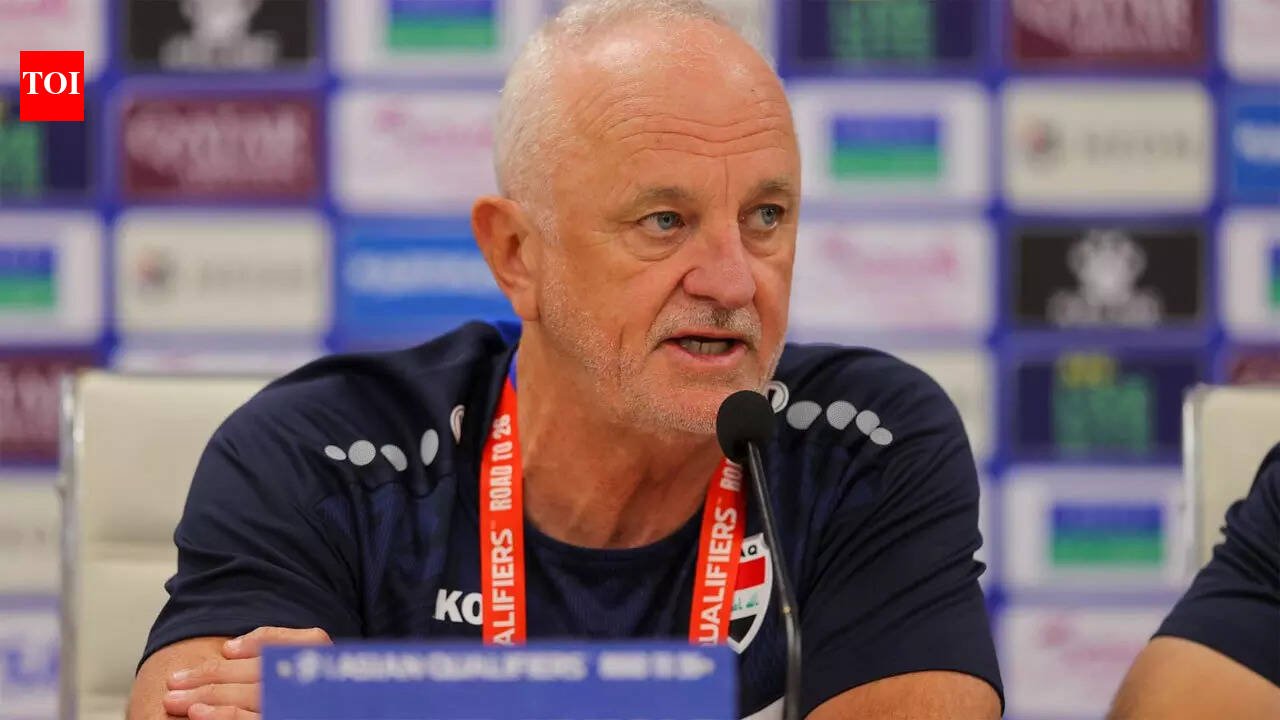
Iraq head coach Graham Arnold (Image credit: X)

Iraq will travel to Mexico for a 2026 World Cup playoff match despite calls for it to be postponed due to the ongoing Middle East war, the country’s football association said on Saturday.“The national team will depart at the end of the week to Mexico via a private plane,” Iraq Football Association president Adnan Dirjal said in a statement, adding that they had contacted FIFA to help facilitate the trip amid the regional conflict that has disrupted flights.

EXCLUSIVE: Rahul Dravid on iconic Eden Gardens win against Australia in 2001

“We succeeded in communicating with some of the clubs of our professional players to facilitate their joining the national team.”The match is scheduled to take place on March 31 in the Mexican city of Monterrey.Iraq is set to face either Suriname or Bolivia in the intercontinental playoff final.The winner will be placed in Group I alongside France, Senegal and Norway in the first round of this summer’s men’s tournament, which will be jointly hosted by the United States, Canada and Mexico.The war, triggered by US-Israeli strikes on February 28, has also cast uncertainty over Iran’s participation in the global event.US President Donald Trump warned on Thursday that the Iranian team’s “life and safety” could be at risk in the United States, despite FIFA president Gianni Infantino stating they would be welcome at the tournament.The conflict has also raised concerns over Iraq’s participation, given the country’s proximity to Iran and potential travel disruptions, with the team’s manager earlier urging FIFA to postpone the playoff match.Iraq head coach, Australian Graham Arnold, said several players and members of the technical staff were stranded in the Middle East because of the ongoing conflict.

Banner Insert


Source link

Middle East crisis: How will Americans pay for the Iran war as oil prices soar


Middle East crisis: How will Americans pay for the Iran war as oil prices soar

The Middle East crisis is no longer just a geopolitical standoff, rather it has now escalated into a full-scale war zone, with the potential to send shockwaves through multiple economies. Analysts have warned that the US and Israel’s attack on Iran could carry direct consequences for consumers and the broader economy. At the heart of the concern lies the Strait of Hormuz, a critical global oil route that has now been disrupted as the war intensifies.The global oil market is closely tracking developments around the Strait of Hormuz, a narrow waterway that carries roughly one-fifth of the world’s oil supply. As the crisis escalates, its impact is also expected to reach American consumers.It began at the Strait of HormuzOn Thursday, oil climbed above $100 a barrel even after 32 countries announced they would release a record 400 million barrels of oil into the market. Earlier in the week, prices had stayed below that level after US President Donald Trump suggested that the war would end soon, a prediction that now appears overly optimistic. Iran continues to control the strait. In his first public message since assuming leadership, Iran’s new supreme leader Mojtaba Khamenei said Thursday that the Strait of Hormuz would remain closed as a “tool of pressure.” US Energy Secretary Chris Wright said on CNBC that it could take weeks before the US Navy is able to start escorting oil tankers through the strait. While international tankers remain stranded in the Persian Gulf, Iran has continued moving its own oil through the passage. Its ships are currently the only ones transiting the route, allowing Tehran to maintain oil revenue while other countries face disruption. Even if the fighting were to stop immediately, reopening the waterway would not be instant. Homayoun Falakshahi, lead crude research analyst at Kpler, said it could take between one and three months to restore operations. Hundreds of ships would need to be cleared, and oil producers would also require time to repair damaged facilities, increase production and restart shipments. Analysts say the length of the war will play a key role in determining how far energy prices climb. Jay Hatfield, CEO and founder of Infrastructure Capital Advisors, warned that oil could reach $150 a barrel if the Strait of Hormuz remains closed. As oil prices rise, fuel costs are also expected to climb. Petrol prices are already moving towards $4 a gallon, increasing the cost of filling up vehicles. Diesel prices are also projected to approach $5 a gallon, according to CNN. Higher diesel costs would affect the transportation sector. Trucking companies that move consumer goods could introduce fuel surcharges to offset rising expenses, and some companies, including FedEx, have already begun doing so. Businesses are unlikely to absorb the added costs themselves. Many companies are already coping with tariffs introduced under the Trump administration, leaving little willingness to cut into profits further. According to JPMorgan, consumers are expected to absorb around 80% of tariff-related costs this year. As transportation becomes more expensive, certain products could see price increases sooner than others. Perishable goods such as dairy products, fruits, vegetables and fish are expected to rise first. Airfares may also increase. Over time, if fuel remains expensive, many goods transported by trucks, aircraft or ships could become costlier. Economic outlook facing pressure The potential economic impact is also drawing attention. While the US economy remains relatively strong, there are signs of vulnerability. Since May last year, the economy has lost 19,000 jobs. Large spikes in oil prices have historically been followed by weaker economic activity. Previous examples include the 1973 oil crisis, the oil shock during the 1990 Gulf War and the 2008 global financial crisis. A prolonged rise in energy costs could lead businesses to reduce hiring or implement layoffs. It could also cause stock markets to decline and reduce consumer spending, which accounts for roughly two-thirds of US economic output. The current situation contrasts with the surge in oil prices following Russia’s invasion of Ukraine in 2022, when the US job market was expanding strongly. Businesses today are already facing uncertainty linked to tariffs and the growing role of artificial intelligence, CNN reported. Reflecting these risks, economists at Goldman Sachs have revised their outlook. They have increased their forecasts for both inflation and unemployment and raised the probability of a recession this year to 25%, up from 20% previously.


Source link

Hansika Motwani’s estranged sister-in-law requests not to be dragged into her divorce: ‘I’m on my healing journey’ |


Actor Hansika Motwani and businessman Sohael Khaturiya have officially ended their marriage after the Bandra Family Court granted them a divorce on March 11, bringing their four-year relationship to a close. The development has continued to draw public attention, prompting reactions from people connected to the family. Amid the ongoing talk of divorce, Hansika’s estranged sister-in-law Nancy James has urged people not to involve her in the matter. Nancy, who is currently separated from Hansika’s brother Prashant Motwani, said she has been inundated with calls, messages and social media tags asking her to comment on the divorce.Speaking to Hindustan Times, Nancy said the situation had become overwhelming and that she would rather stay away from the controversy.

Hansika Motwani shares first post after divorce from Sohael Khaturiya

“After Hansika’s divorce I started getting a lot of calls and messages to comment on the development. On social media also I started getting a lot of DMs and tags and people started this is karma for Hansika. I really got fed up. Honestly, I don’t want to involve myself in anyone else’s life. My divorce is underway. And I am on a healing journey. I was getting calls and messaged for comments, I was fed up so I wrote the message on Stories,” she said.Nancy’s relationship with the Motwani family has been strained for some time. In December 2024, she filed an FIR against Hansika and the actor’s mother Jyoti Motwani under multiple sections of the Bharatiya Nyaya Sanhita, including Section 498A (dowry-related cruelty), Section 323 (voluntarily causing hurt) and Section 352 (criminal intimidation and intentional insult).In her complaint, Nancy alleged domestic violence and claimed the stress caused her to develop Bell’s palsy. She also accused her in-laws of demanding expensive gifts and money, and alleged that interference from Hansika and her mother created problems in her marriage with Prashant Motwani. Nancy further claimed that she was pressured to sell her apartment.In February last year, Hansika and Jyoti obtained anticipatory bail from the Mumbai Sessions Court. Two months later, in April, they approached the Bombay High Court seeking to have the FIR quashed. In her petition, Hansika stated that she was shocked to find her name included in the complaint.Reflecting on her own legal battle, Nancy said, “I have been harassed and tortured by this family and I don’t want to associate with them anymore. I am therefore seeking divorce and has file a DV case against my husbands his sister and mother. I hope my divorce puts an end to the ordeal. I am still suffering and on a healing journey.”Nancy also made it clear that she does not wish to comment further on Hansika’s divorce or the speculation circulating online.“I have full faith in the judiciary and the legal system of our country. Justice will prevail and once the case reaches its logical conclusion I will speak at length But right now, I don’t want to be dragged in her case or her karma or whatever,” she said before ending the conversation.Meanwhile, Hansika Motwani and Sohael Khaturiya’s divorce was formally confirmed earlier this month by the actor’s lawyer, Adnan Shaikh, who shared the update with NDTV.


Source link

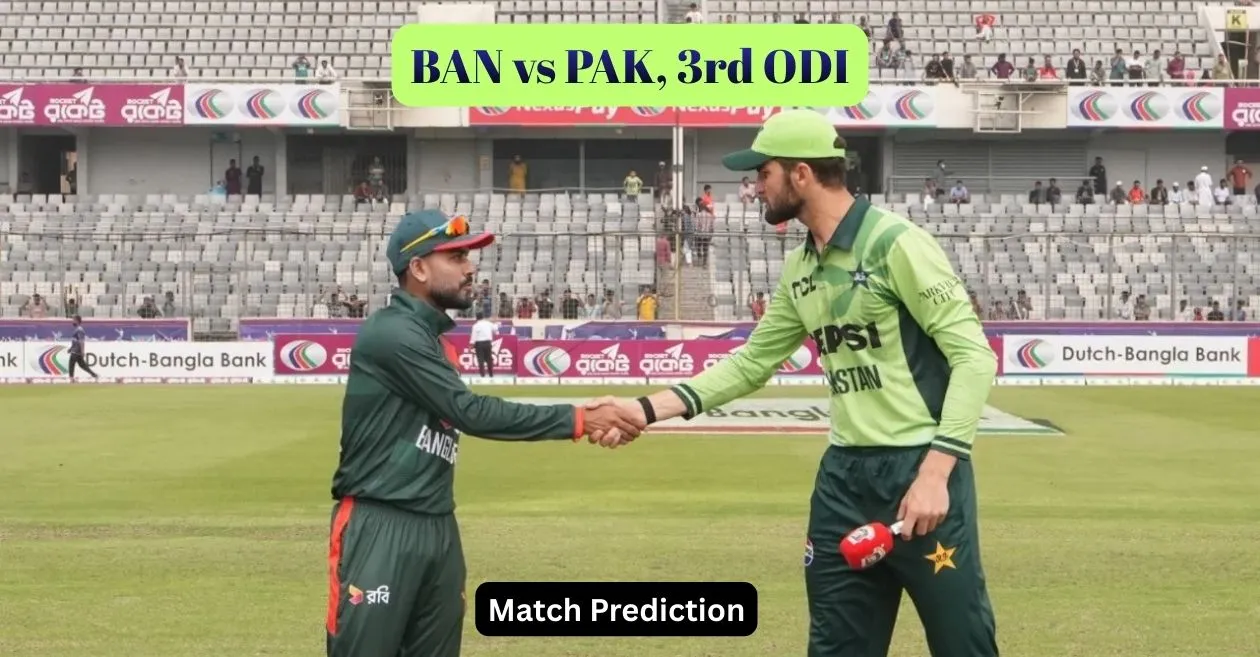
BAN vs PAK, 3rd ODI Match Prediction: Who will win today’s game between Bangladesh and Pakistan?


After two wildly contrasting games, the series stands on a knife-edge at 1-1. Bangladesh dominated the opener with a clinical 8-wicket win, but Pakistan roared back in the second ODI, securing a massive 128-run victory (DLS). Both teams have now experienced the highs of a blowout win and the lows of a batting collapse. With the trophy on the line on Sunday, expect a high-tension battle at the Shere Bangla National Stadium.

The hosts will be scratching their heads after the second ODI. Their bowlers, particularly Rishad Hossain, who claimed three wickets, and Mehidy Hasan Miraz, did well to spark a Pakistan collapse in the latter half of the first innings, but the batting unit ultimately failed to turn up. Nahid Rana remains the focal point of the attack; after his blistering five-wicket haul in the series opener, he continues to be the primary threat to Pakistan’s top order. However, the major concern for the Tigers lies in their top-order vulnerability. Chasing a revised target in the second game, the top three batters fell for single digits, leaving the middle order exposed. Heading into the decider, they desperately need a steady start from Tanzid Hasan and Litton Das to anchor the innings and provide a platform for a competitive total.

This new-look Pakistan side, missing veterans like Babar Azam, found an unexpected hero in Maaz Sadaqat. The youngster’s sensational all-round performance anchored by 75 runs and capped with three wickets has shifted the momentum firmly back toward Shaheen Afridi’s men. All eyes will once again be on Sadaqat to see if the 20-year-old can replicate those Player of the Match heroics under the pressure of a series finale. Pakistan’s clear strategy will be to attack with raw pace; Shaheen Afridi and Haris Rauf looked lethal in the previous encounter, effectively using the steep Dhaka bounce to dismantle the Tigers’ lineup. If their speedsters hit their marks early, they will be confident in their ability to overpower the hosts once more.

BAN vs PAK, 3rd ODI: Match Details

  • Date and Time: March 15; 01:45 pm IST/ 08:15 am GMT/ 02:15 pm Local
  • Venue: Shere Bangla National Stadium, Dhaka

BAN vs PAK, Head-to-Head Record

Matches played: 41 | Bangladesh won: 6 | Pakistan won: 35 | No results: 0

Shere Bangla National Stadium Pitch Report

Sher-e-Bangla track for this series decider is expected to maintain its traditional slow and low character, though the first two ODIs have shown a surprising amount of carry and bounce for the pacers. Early on, new-ball bowlers will likely find lateral movement and extra lift, making the Powerplay a critical phase for survival.

As the game progresses, the surface will likely dry out, allowing spinners to extract significant grip and turn. Batting will require patience, as the ball may hold in the surface, making timing difficult. Given the humid conditions and the potential for a slightly sluggish second innings, the captain winning the toss might lean toward batting first to avoid the wear and tear of a typical Mirpur afternoon.

Squads

Bangladesh: Mehidy Hasan Miraz (c), Soumya Sarkar, Saif Hassan, Tanzid Hasan, Najmul Hossain Shanto, Tawhid Hridoy, Litton Das, Afif Hossain, Mahidul Islam Bhuiyan, Rishad Hossain, Tanvir Islam, Mustafizur Rahman, Taskin Ahmed, Shoriful Islam, Nahid Rana.

Pakistan: Shaheen Shah Afridi (c), Abdul ​Samad, Abrar Ahmed, Faheem Ashraf, Faisal Akram, Haris Rauf, ⁠Hussain Talat, Maaz Sadaqat, Mohammad ⁠Rizwan (wk), Mohammad Wasim Jnr, Muhammad Ghazi Ghori (wk), Saad Masood, ‌Sahibzada Farhan, Salman Ali Agha, Shamyl Hussain

Also WATCH: Salman Agha loses cool after unusual run out by Mehidy Hasan Miraz in BAN vs PAK 2nd ODI

BAN vs PAK, 3rd ODI: Today’s Match Prediction

Case 1:

  • Pakistan wins the toss and bat first
  • Pakistan powerplay score: 40-50
  • Pakistan total score: 250-260

Case 2:

  • Bangladesh wins the toss and bat first
  • Bangladesh powerplay score: 30-40
  • Bangladesh total score: 245-255

Match result: Team batting first will win the game.

Also READ: Salman Ali Agha and Mehidy Hasan Miraz react to the run-out controversy after Pakistan’s emphatic win over Bangladesh in 2nd ODI


Source link

EC likely to announce assembly polls schedule for five states | India News


EC likely to announce assembly polls schedule for five states

NEW DELHI: The Election Commission is expected to announce the schedule for assembly elections in five states and union territories, West Bengal, Assam, Tamil Nadu, Kerala, and Puducherry, today according to news agency ANI.The date coincides with the deadline for filing appeals against the final electoral roll for West Bengal, which was published on February 28 and lists over 6.4 crore electors.The window for filing appeals against final rolls in Assam, Tamil Nadu, Kerala, and Puducherry has already closed. It is indicated that the upcoming elections will likely involve fewer phases than in 2021, when West Bengal went to polls over eight phases, Assam over three, and Tamil Nadu, Kerala, and Puducherry in a single phase.To conduct elections over a shorter period, the EC is expected to substantially increase the deployment of central forces, particularly in West Bengal. Reports suggest the total strength of central armed police forces (CAPFs) could surpass the 1,500 companies (around 1.4 lakh personnel) deployed for the 2024 Jammu & Kashmir assembly elections. About 500 companies (45,000 personnel) are already on advance deployment in West Bengal.Multi-phase polling is expected in West Bengal and Assam, while Tamil Nadu, Kerala, and Puducherry may vote in a single phase. With the term of the West Bengal assembly expiring on May 7, voting in the state is likely to stretch from April into early May.The EC will also continue the adjudication of around 60 lakh ‘doubtful’ voter cases in West Bengal, handled by judicial officers appointed by the Calcutta High Court, with further appeals possible before tribunals. Supplementary voter lists incorporating approved cases will be published, as directed by the Chief Justice of the Calcutta High Court.Meanwhile, the EC has issued notifications for the appointment of returning officers for all 294 West Bengal constituencies, following the state government’s consent to provide officers of requisite seniority. The commission will closely monitor the deployment and randomisation of CAPF and state police personnel through special observers and CAPF nodal officers.


Source link

FPV drones enter Iran vs US-Israel war: All about the low-cost ‘kamikaze’ weapons


FPV drones enter Iran vs US-Israel war: All about the low-cost ‘kamikaze’ weapons

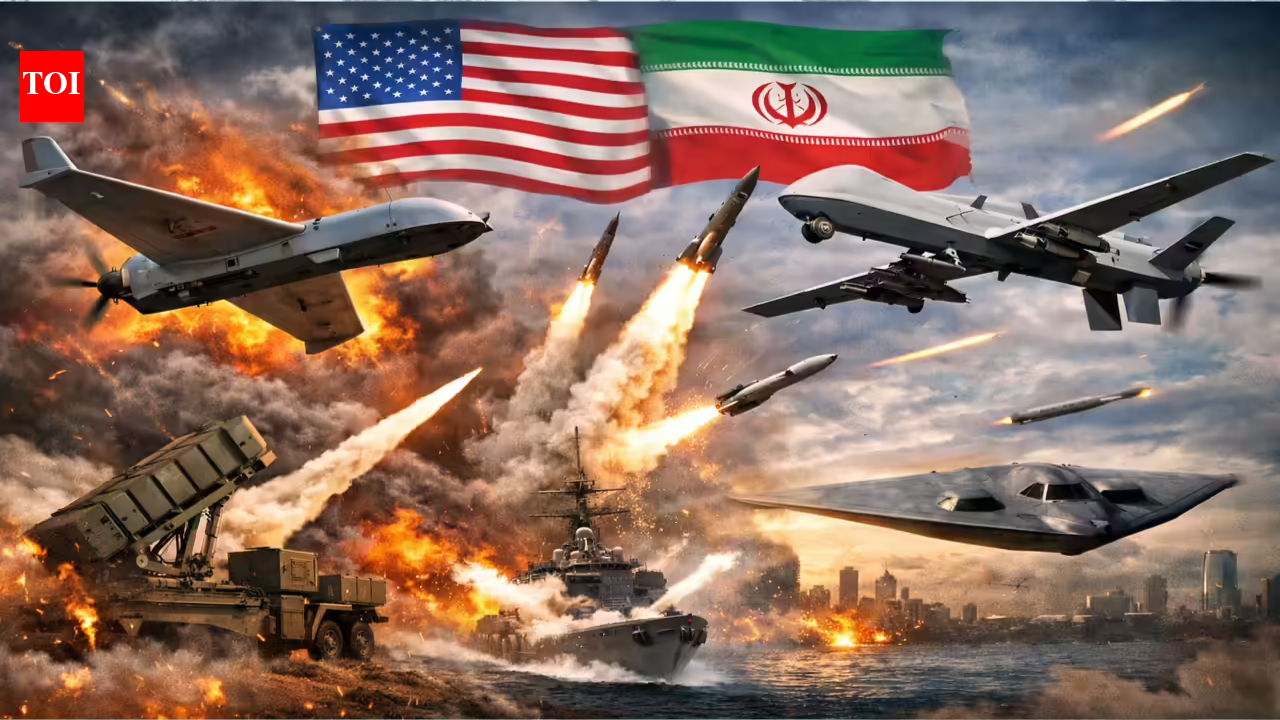
As the war between the United States, Israel and Iran enters its third week, the use of low-cost drones has emerged as a central feature of the conflict, reflecting how inexpensive unmanned systems are increasingly influencing modern warfare.Bombing has continued across Iran and the region since the conflict escalated, while Tehran has responded by launching swarms of low-cost kamikaze drones across Israel and Gulf states, targeting military facilities and energy infrastructure. The attacks have forced the US and its regional allies to activate air defence systems designed primarily to counter more advanced missiles and aircraft.Against this backdrop, another category of small unmanned systems, first-person-view (FPV) drones, has become the latest tactical weapon to enter the war. A video circulating widely on social media shows a first-person-view (FPV) drone striking a building near Victory Base, close to Baghdad International Airport in Iraq, possibly the first known instance of an Iranian-backed militia using such a munition in the current conflict.The footage shows the FPV drone flying over the area near the base before slamming into a structure, causing an explosion.

What are FPV drones?

FPV drones are small aerial drones equipped with onboard cameras that transmit live video feeds directly to an operator’s goggles, headset or mobile device. The pilot sees exactly what the drone sees and guides it manually toward a target.According to analysis by the Manohar Parrikar Institute for Defence Studies and Analyses, the technology enables highly precise manoeuvring and real-time control, allowing operators to carry out targeted strikes in complex combat environments.Originally developed for recreational flying and drone racing, FPV drones are now often fitted with explosive payloads and used in one-way attack missions, sometimes described as “kamikaze” strikes.

From hobby technology to battlefield weapon

The technology behind FPV drones gained popularity in drone racing during the early 2010s, where pilots controlled aircraft through a live camera feed to navigate obstacle courses at high speed.The same features that made them effective in racing, speed, agility and immersive control, have also made them useful in combat. According to the MP-IDSA, FPV drones allow soldiers to strike targets such as bunkers, trenches or vehicles with high precision. The drones are usually built using commercially available components and consist of four main systems, a carbon-fibre frame, a flight system including motors and controllers, a power system powered by lithium-polymer batteries, and the FPV system that transmits video to the operator.

Why they are attractive for militaries

FPV drones have gained prominence in recent years largely because of their widespread use in the Russia-Ukraine war, where both sides have used them extensively for tactical strikes.Their main advantage is cost. Unlike sophisticated missiles or large military drones, FPV drones can be assembled quickly using off-the-shelf components or 3D-printed parts and fitted with customised explosive payloads.This makes them relatively inexpensive while still offering high precision and manoeuvrability.Analysts say they can function as fast, guided explosives capable of reaching targets that are difficult for traditional weapons to hit, such as soldiers hiding in trenches or bunkers.

Role of drones in the current conflict

The ongoing confrontation between Iran, Israel and the US has already highlighted the growing importance of unmanned systems. Tehran has launched large numbers of Shahed drones in retaliation for strikes that it says have killed more than 1,400 people in the country, including former supreme leader Ayatollah Ali Khamenei.The drone barrages have targeted military installations and energy infrastructure across Israel and Gulf states. The United States says it is gradually degrading Iran’s capacity to launch attacks, but the continued drone strikes have forced Washington and its allies to deploy advanced air defence systems such as THAAD and Patriot interceptors to counter the incoming threats.These systems rely on radar and expensive interceptor missiles to detect and destroy incoming drones and rockets.Military specialists told the Financial Times that Iran has managed to sustain its drone campaign by combining intelligence inputs, satellite imagery and lessons learned from conflicts such as the Russia-Ukraine war.

Cheap weapons, costly defence

One reason drones have become a key tool in the conflict is the imbalance between their cost and the systems used to counter them.Low-cost attack drones can be launched in large numbers, while intercepting them often requires sophisticated and expensive defence systems. According to The Wall Street Journal, the conflict has already consumed large numbers of US interceptor missiles deployed across the region.Analysts say this cost imbalance is pushing militaries worldwide to rethink battlefield strategy.As the MP- IDSA notes, FPV drones and similar systems demonstrate how modern warfare is increasingly shifting toward large numbers of relatively inexpensive platforms that can deliver precise strikes at scale.


Source link