Breaking News
West Bengal polls: TMC releases list of 291 candidates; stage set for Suvendu vs Mamata in Bhabanipur | India News


West Bengal polls: TMC releases list of 291 candidates; stage set for Suvendu vs Mamata in Bhabanipur

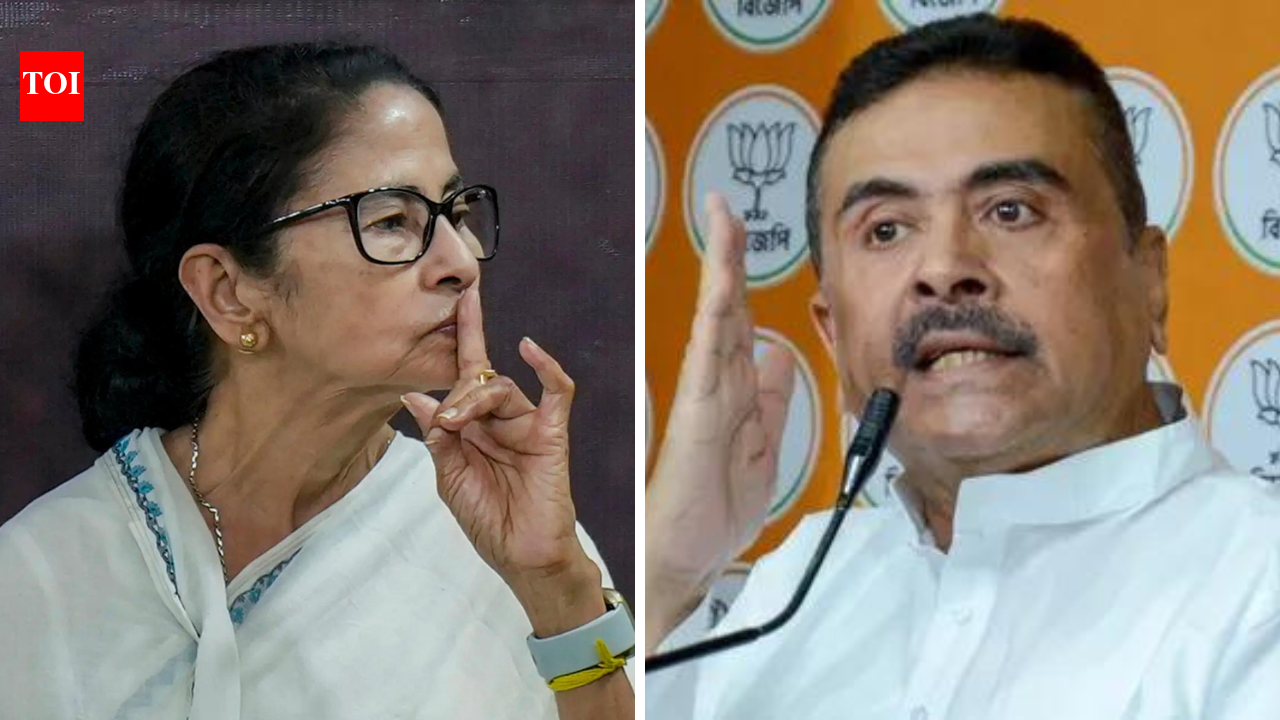
NEW DELHI: The All India Trinamool Congress on Tuesday announced its list of candidates for the upcoming West Bengal Assembly elections. Party supremo and chief minister Mamata Banerjee declared that the party will contest 291 of the 294 seats in the state. The remaining three seats in the Darjeeling hills will be contested by Anit Thapa-led Bharatiya Gorkha Prajatantrik Morcha (BGPM).Mamata has decided to contest the election from Bhabanipur against BJP’s Suvendu Adhikari. Meanwhile, the TMC has also fielded Adhikari’s former loyalist Pabitra Kar against him in Nandigram.Additionally, Chandrima Bhattacharya has been fielded from the Dum Dum Uttar seat, Madan Mitra from the Kamarhati seat, Firhad Hakim from the Kolkata Port seat, Kunal Ghosh from the Beleghata seat, and Dr Shashi Panja from the Shyampukur seat.“We will contest 291 of the 294 seats. The remaining three seats will be contested by our ally, Anit Thapa-led BGPM, in the Darjeeling hills,” Banerjee said while announcing the names of candidates, flanked by the party’s national general secretary Abhishek Banerjee and state president Subrata Bakshi.Among the TMC’s 291 candidates for the West Bengal polls, 52 are women, 95 are from SC/ST communities, and 47 are minorities.See full listMamata expressed confidence that the TMC would retain power with a comfortable majority in the 2026 Assembly elections.“We will win more than 226 seats in the 2026 Assembly polls,” she asserted.The chief minister also sought to reassure party leaders and workers who could not find a place in the candidate list, saying they would be accommodated in the organisation.Earlier on Sunday, the Election Commission announced that the Assembly polls in West Bengal will be held in two phases on April 23 and April 29.While announcing the poll schedule for four states and one Union Territory, Chief Election Commissioner Gyanesh Kumar said that reducing the number of phases was necessary to make elections convenient for everyone.The counting of votes for the West Bengal Assembly elections 2026 will take place on May 4, along with that of Assam, Kerala, Puducherry, and Tamil Nadu. In the 2021 Bengal elections, the Mamata Banerjee-led Trinamool Congress secured 215 seats, while the Bharatiya Janata Party became the official opposition with 77 seats.


Source link

Is Rs 1,000 EPS pension enough? Parliamentary panel seeks urgent hike amid cost pressures


Is Rs 1,000 EPS pension enough? Parliamentary panel seeks urgent hike amid cost pressures

A Parliamentary panel has recommended an urgent and comprehensive review of the Rs 1,000 minimum monthly pension under the Employees’ Pension Scheme, 1995, saying the amount is no longer sufficient to meet the basic needs of beneficiaries amid rising living costs, reported PTI.The recommendation assumes significance as pensioners have been demanding that the minimum pension be raised to Rs 7,500 per month. Beneficiaries under the Employees’ Pension Scheme (EPS-95), administered by retirement fund body EPFO, had staged a three-day protest at Jantar Mantar from March 9 pressing for the hike.In its 15th report on ‘Demands for Grants (2026-27)’ of the Ministry of Labour and Employment, the Parliamentary Standing Committee on Labour, Textiles and Skill Development observed that the minimum pension has remained unchanged for a considerable period despite increasing inflation and healthcare expenses.The panel noted that it had received numerous representations from pensioners seeking an upward revision, particularly in view of the financial hardships faced by elderly and economically vulnerable beneficiaries.

Poll

What is your opinion on the protest by pensioners for better pension rates?

The Committee also took note of the Ministry’s submission that the government is extending financial support to the scheme, including a contribution of 1.16 per cent for currently serving EPFO members and budgetary support to ensure the Rs 1,000 minimum pension.However, it said the existing pension amount is inadequate even to meet basic needs in the current economic environment and recommended that the Ministry undertake an urgent review to enhance the payout to a “more realistic and dignified level”.The panel further suggested exploring the possibility of increased budgetary support to ensure a reasonable minimum pension commensurate with present-day living costs, thereby strengthening social security and financial stability for lakhs of retired workers.Besides pension reforms, the Committee welcomed implementation of the Labour Codes and recommended setting up a Permanent Co-ordination and Interaction Board with representatives from the Centre and states to monitor rollout of labour schemes.It also flagged delays in relief and compensation for contractual labourers after workplace accidents and urged timely inclusion of such workers under social security schemes like Employees’ State Insurance and Provident Fund.Highlighting the growing role of gig workers in urban supply chains, the panel recommended mandatory registration of such workers by aggregators on the e-Shram portal, with continued access to benefits such as insurance and accident coverage.The Committee also called for realistic, evidence-based budgeting by the Ministry of Labour and Employment, systematic provisioning for awareness and IT infrastructure under the Labour Codes, faster filling of vacancies in DGMS, and stricter action against illegal mining to safeguard worker safety.It further recommended expediting revision of the wage ceiling under the Employees’ State Insurance Corporation to expand coverage while ensuring the financial sustainability of the ESI fund.


Source link

Salman Ali Agha runout row: Should umpires have called dead ball? MCC settles debate | Cricket News


Salman Ali Agha runout row: Should umpires have called dead ball? MCC settles debate

The Marylebone Cricket Club (MCC), guardians of the laws of cricket, clarified on Monday that the controversial run-out during the Bangladesh vs Pakistan ODI match was correctly given out under the Laws of Cricket.“Under Laws, there is little that either umpire could have done differently. The non-striker was clearly out of his ground when the wicket was broken, and the ball was in play. That is out,” MCC said in a statement. The MCC statement further read, “It is also worth pointing out that the non-striker had left his ground when the ball was in play and had just started to attempt to regain his ground when he collided with Mehidy. Furthermore, no batter should attempt to pick the ball up without the consent of the fielding side, and had he done so, he would have been at risk of an Obstructing the field dismissal. In retrospect, he would have been better using that time to attempt to regain his ground.Pakistan batter Salman Ali Agha was involved in a rare and controversial dismissal during the second ODI against Bangladesh played at the Sher-e-Bangla National Cricket Stadium in Dhaka last week.The incident occurred in the 39th over of Pakistan’s innings when the visitors were building a strong partnership. Agha and Mohammad Rizwan were on the crease and had added 109 runs for the fourth wicket after Pakistan lost three early wickets.On the fourth delivery of the over, bowled by Bangladesh captain Mehidy Hasan Miraz, Rizwan played a gentle push down the ground. The ball rolled towards Agha, who was standing outside his crease at the non-striker’s end after backing up.As the ball made contact with his pads, Agha bent down and tried to pick it up. Miraz quickly collected the ball and broke the stumps with Agha still outside the crease, appealing for a run-out.The on-field umpire upheld the appeal and referred the decision upstairs. The third umpire also ruled in Bangladesh’s favour, confirming Agha’s dismissal.The decision left Agha visibly frustrated as he walked back to the pavilion. Visuals showed the Pakistan batter expressing his displeasure after the dismissal.On the suggestions that the ball should have been declared dead, MCC clarified, “There have been some suggestions that the ball should have been treated as Dead. That is not viable under the Laws; the ball does not become dead when players collide – if it did, that would incentivise players to seek out collisions when the situation was advantageous. There was no question of a serious injury, so there could be no call of Dead ball for that. It could not have been clear to the umpire that all the players ceased to consider the ball to be in play, since Mehidy clearly believed it was live, even if Agha did not. And it cannot have been finally settled in the hands of the bowler or wicket-keeper, since it was on the ground.”

Banner Insert


Source link

US-Iran war: How the LPG cylinder has become the face of Middle East mayhem’s impact on India


US-Iran war: How the LPG cylinder has become the face of Middle East mayhem's impact on India

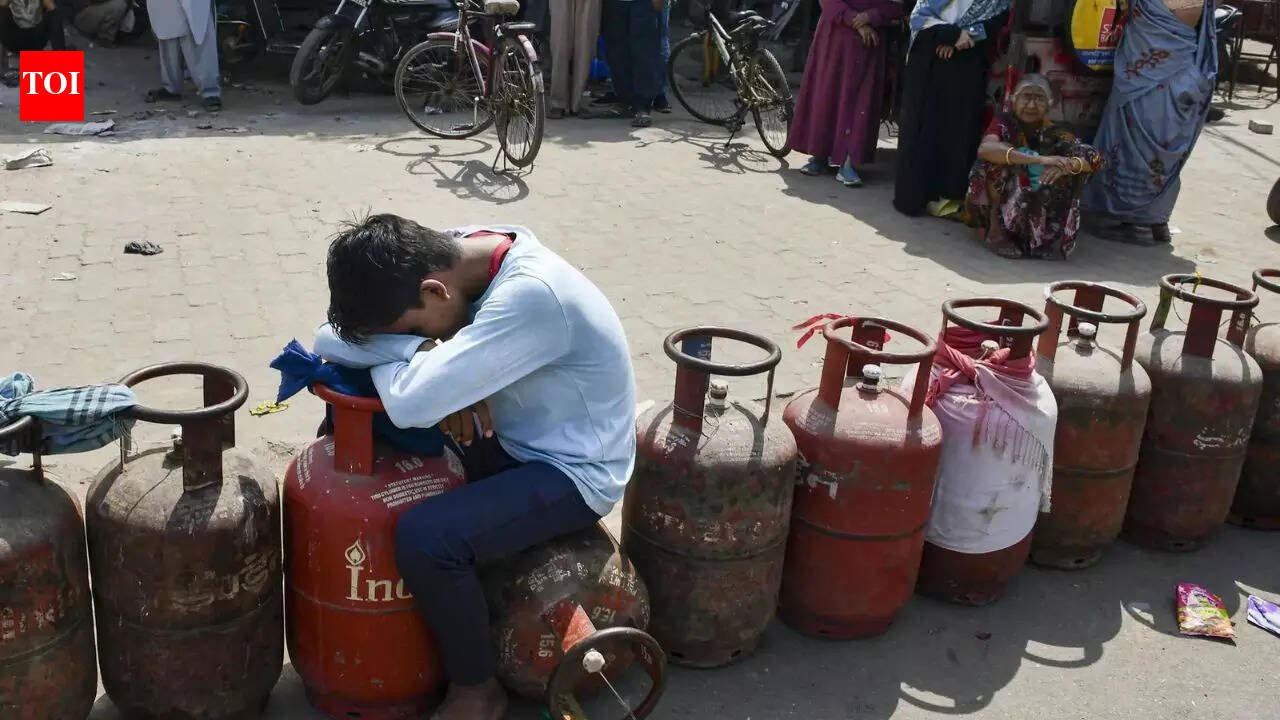
“The tea is 15 rupees,” said the tea stall vendor outside Noida Sector 16A metro station, apologetically handing over a cup of tea that had suddenly become more expensive.When asked why the price had increased, the vendor offered a brief explanation with tired eyes, the “cylinder has gone very costly.” Even the samosas and pakoras at nearby stalls were being served cold. Cooking gas had become scarce, forcing many vendors to cut back on preparation. The scene reflects a broader reality unfolding across India as the ongoing Middle East conflict begins to affect everyday life thousands of kilometres away.Disruptions in energy shipments and rising global oil prices are now spilling into Indian households, factories, hostels and restaurants. Liquefied Petroleum Gas (LPG), a key fuel for cooking and several industries, has become increasingly difficult to obtain in many places, triggering panic bookings, long queues outside gas agencies and reports of black marketing.While the government maintains that supplies remain adequate, the situation on the ground tells a more complex story!
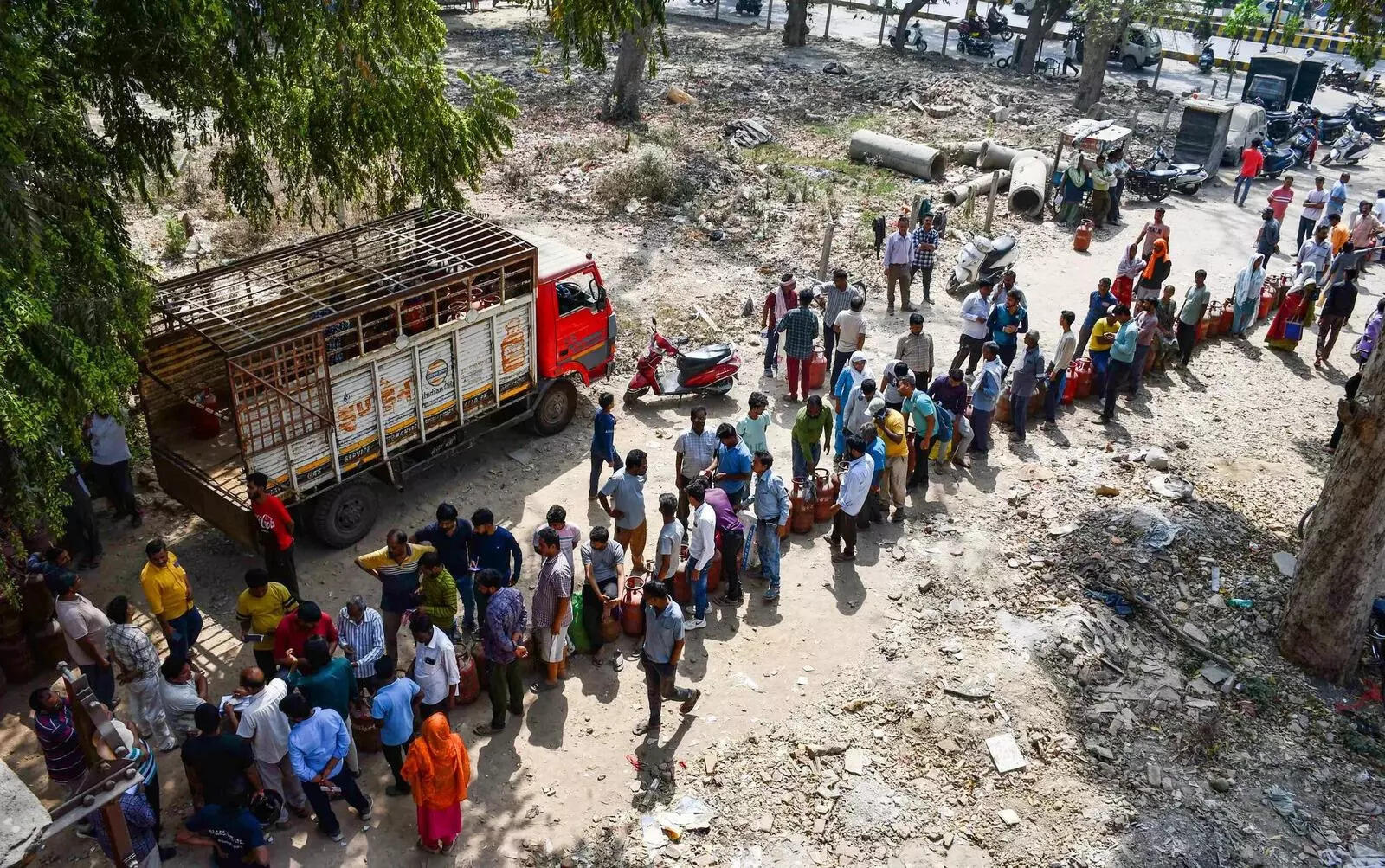
Prayagraj, Mar 17 (ANI)_ People wait in a long queue to refill their LPG cylinde....

People wait in a long queue to refill their LPG in UP (Photo: ANI)

How global tensions triggered the LPG disruption

The current crisis has been linked to the widening conflict in the Middle East involving Iran, the United States and Israel. The situation has disrupted vessel movement through the Strait of Hormuz, one of the world’s most critical maritime energy routes.The narrow waterway carries roughly one-fifth of global oil supplies and a large portion of the world’s LPG shipments. Any instability in the region sends shockwaves through global energy markets.The resulting volatility has quickly translated into higher LPG costs and supply uncertainties in India, which depends heavily on imports for its cooking gas needs.

,

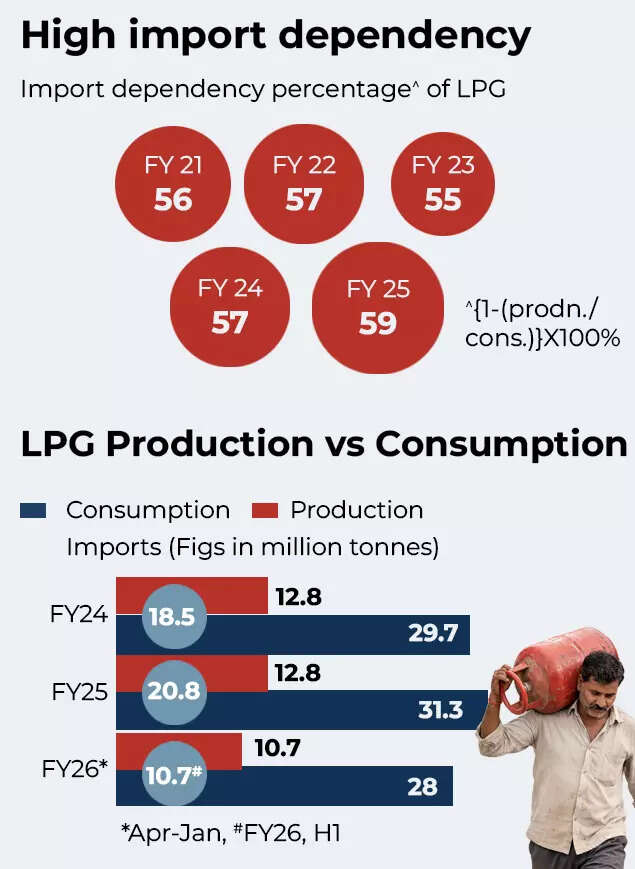
As per reports, India imports nearly 60% of its LPG requirement, and about 90% of those shipments pass through the Strait of Hormuz. This concentration of supply routes means geopolitical disruptions in the Gulf region can directly affect LPG availability in any country.

How India became highly dependent on LPG imports

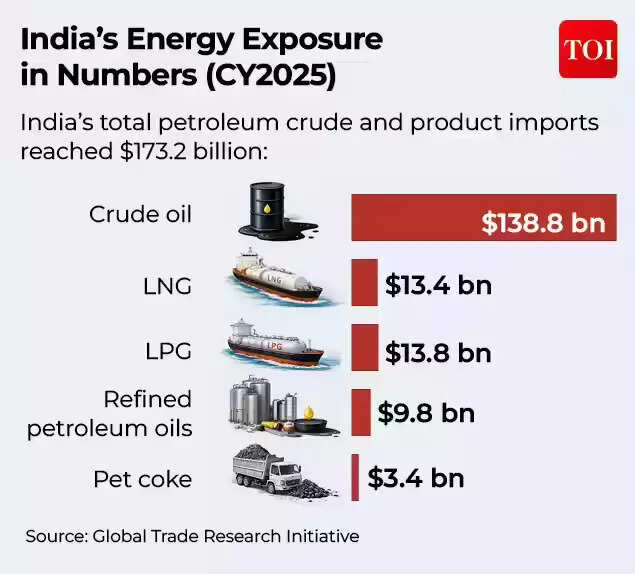
India’s dependence on LPG imports has grown sharply over the years, mainly due to rising domestic demand that has outpaced production.LPG is produced as a byproduct during crude oil refining or natural gas processing. While India has increased imports of both crude oil and liquefied natural gas (LNG), LPG imports have risen even more dramatically.Between 2011–12 and 2024–25, crude oil imports increased by about 40% in volume, while LNG imports doubled during the same period.

,

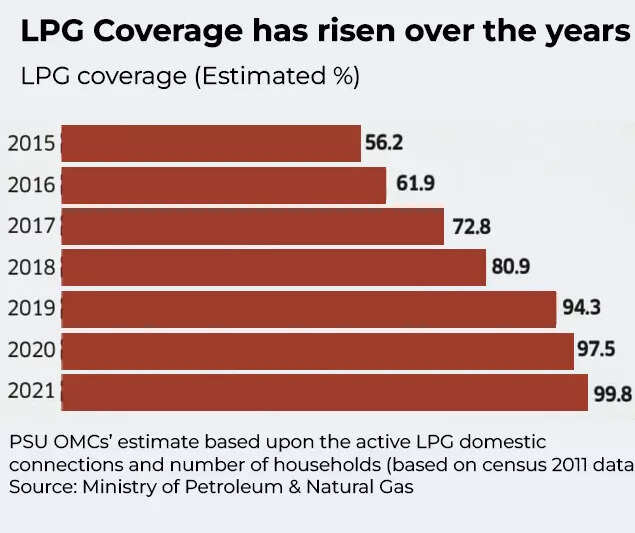
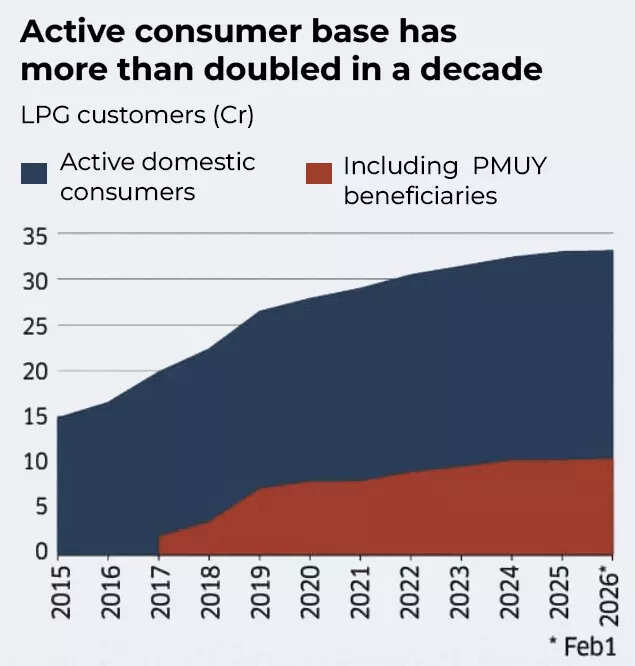
However, direct LPG imports have seen the steepest rise. They surged from just 1,722 thousand metric tonnes (TMT) in 1998–99 to 20,667 TMT in 2024–25, marking a nearly 12-fold increase over 27 years.This trend highlights a key shift in India’s energy basket. In 1998–99, LPG made up only 7.2% of total petroleum product imports. By 2024–25, LPG’s share had jumped to around 40%, making it the largest imported petroleum product by volume.But why? The gap between domestic production and consumption further explains this dependence. In FY24, India consumed 29.7 million tonnes of LPG, while domestic production stood at just 12.8 million tonnes, with the rest met through imports. In FY25, consumption rose to 31.3 million tonnes, while production remained unchanged at 12.8 million tonnes. Early estimates for FY26 show consumption at around 28 million tonnes, with production at about 10.7 million tonnes, again indicating heavy reliance on imports.Overall, India’s growing demand for cooking gas driven by rising household usage and policy push for cleaner fuels has made LPG one of the most import-dependent energy products in the country.

,

Rising prices add pressure on households

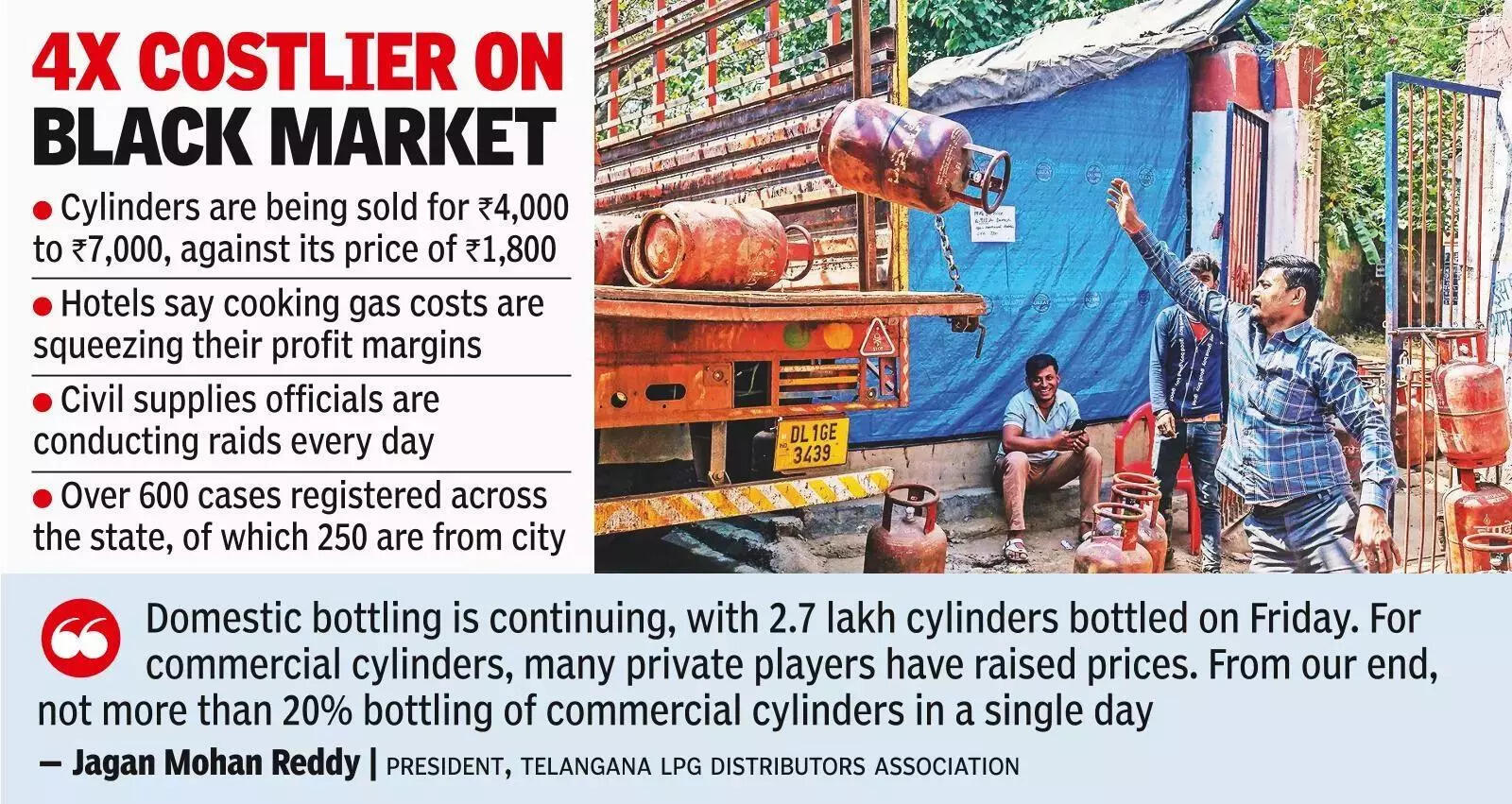
As of March 16, 2026, the price of a domestic 14.2 kg LPG cylinder in New Delhi is Rs 913. This has recently been hiked from Rs 853 earlier. Prices vary across major cities in India, reflecting regional transportation costs and local taxes. The rate currently stands at Rs 939 per cylinder in Kolkata, Rs 912.50 in Mumbai, and Rs 928.50 in Chennai. In Bengaluru, the price is Rs 915.50, while Bhubaneswar records a rate of Rs 939 per cylinder. The cost is relatively lower in Chandigarh at Rs 862.50, whereas consumers in Gurgaon pay Rs 921.50. The highest among these major cities is in Hyderabad, where the price has reached Rs 965 per cylinder.These rates apply to domestic cylinders used for household cooking. However, consumers say the bigger problem is availability. In several places, commercial LPG cylinders are reportedly being sold on the black market for nearly double the normal price. Cylinders that typically cost around Rs 1,400 are being sold for as much as Rs 3,000.The scarcity has pushed many small businesses to the brink.

Restaurants shut, street vendors struggle

Hotels, restaurants and food stalls that rely heavily on commercial LPG have been among the hardest hit.Several eateries have either reduced operations or temporarily shut down due to the shortage. For smaller vendors such as tea stalls and snack shops, cooking gas shortages mean cutting back on production or raising prices.This has had a negative impact on livelihoods. Workers in the hospitality sector face reduced wages or job losses as businesses struggle to stay open.Manufacturers are also beginning to feel the strain. Industrial facilities that use LPG for certain processes and for staff canteens report growing difficulty maintaining operations.

,

Factories revive firewood stoves

In several industrial areas, companies are experimenting with alternative cooking arrangements for workers. Factory canteens have begun reviving firewood stoves, a practice largely abandoned years ago.Some companies are switching to electric cooking devices such as induction cooktops, electric rice cookers and electric roti makers.Menus have also been simplified. Meals requiring significant gas consumption have been removed, while packaged foods, sandwiches and ready-to-eat items are being served instead.In some facilities, even tea supplies have been cut back to conserve fuel.The shortage is also beginning to affect labour mobility. The Automotive Component Manufacturers Association of India warned that the situation could push migrant workers to return to their hometowns if cooking facilities remain unavailable.“Workers shifted to small gas-enabled burners for cooking purposes as usage of wood was discouraged due to air pollution. Now, with LPG cylinder shortage, they are finding it difficult to cook at home, and also some of the factory canteens are shut, forcing them to leave for their native places,” said Vinnie Mehta, Director General of the association.“Currently, the situation is not like the COVID pandemic, but the situation can escalate if not resolved,” Mehta added.

Panic bookings overwhelm LPG systems

The shortage has also triggered panic buying across several cities. Consumers have rushed to book cylinders through mobile apps, websites and IVRS numbers, overwhelming booking systems and causing technical failures.Many people reported that online platforms crashed or displayed “server down” messages. As a result, thousands of customers have been forced to visit gas agency offices in person.Outside LPG outlets in cities such as Delhi, Gurgaon, Mumbai, Kolkata, Lucknow and Chennai, long queues have become a common sight.Women carrying empty cylinders, elderly residents and office workers who had taken time off from work have been waiting for hours outside distribution centres.Shashi Kant Sharma, vice-president of Federation of LPG Distributors of India, said the system was not built to handle such heavy traffic.“Bookings have risen tenfold, so the system has slowed. We are working on it at the backend,” he said. Even those who successfully placed orders have reported cancellation alerts or delays in delivery.The shortage is affecting vulnerable households most severely.Radha Rani, a 60-year-old resident of Delhi’s Ajmeri Gate area, was seen standing in a queue outside a gas agency with her grandson in her arms.“My three sons work. My daughter-in-law had a baby 15 days ago, and I have been coming here three days in a row,” she told TOI.According to her, the agency claims the supply runs out before her turn arrives. Others complain that phone calls to gas agencies go unanswered.A tea vendor in Noida said, “I tried calling the agency a lot many times but they didn’t pick or return my calls.”At some locations, police personnel have been deployed outside gas agencies to manage crowds.

,

Hostels and PG residents hit hard

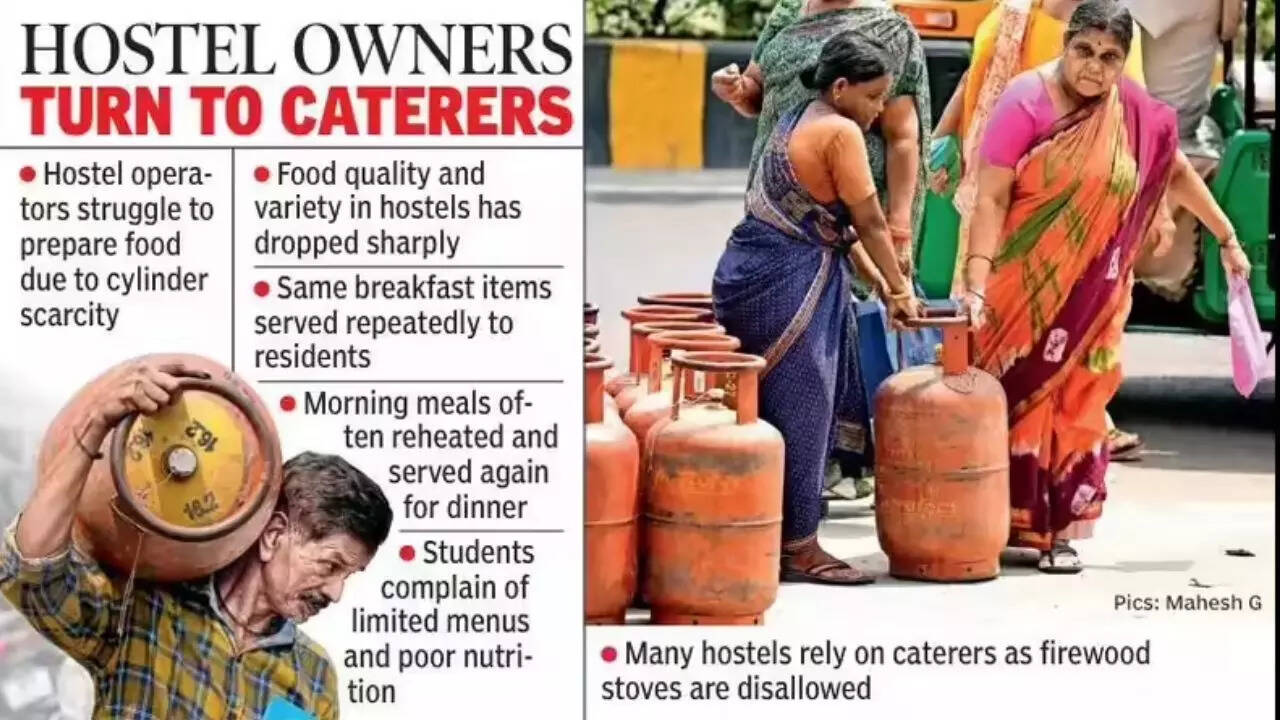
The LPG shortage is also affecting students and working professionals living in paying guest hostels across the country.Hostel operators say they are struggling to maintain food services due to the scarcity of cylinders. Residents report that food quality has declined and meal options have been reduced.Many said the same breakfast dishes are repeated every day, while food cooked in the morning is sometimes reheated and served again for dinner.PG hostel owner in Vijayawada, K Deva Rani said operators were facing immense pressure. “Gas cylinders are not easily available, and in some cases we must arrange alternative cooking methods. Costs increased sharply, and we request students to cooperate until normal supplies are restored,” she told TOI.

Ready-to-cook foods trend back

As cooking gas becomes scarce, many households are turning to ready-to-cook or ready-to-eat food products. Retailers report that sales of frozen snacks, instant noodles and packaged meals have surged by nearly 20% month-on-month.“Categories such as ready meals, frozen snacks, instant noodles and ready-to-cook products have seen strong traction, leading to about a 10-12% rise in this segment. While the surge appears temporary, we are proactively stocking these categories to ensure adequate availability,” said Karan Ahuja, spokesperson at premium grocery retailer Le Marche.Food delivery companies and retailers have also begun promoting induction-friendly cookware and electric cooking appliances.Analysts say the shift toward convenience foods, which surged during the Covid-19 lockdowns, may once again become a lasting trend.

Black marketing and ghost deliveries surge

Alongside shortages, reports of black marketing and fraudulent deliveries have surfaced in several cities. In various cities, residents have complained that LPG cylinders are being marked as delivered in official records without actually reaching consumers.Abdus Salam, a resident of Patna’s Bhagwanpur, said his mother’s LPG account showed a refill delivered even though no cylinder had been received.“The gas agency sent a message showing a refill delivered on Feb 24, with the next booking allowed only on April 11, 2026. We did not take any cylinders in the last one year. We didn’t even book the gas, someone took it away. This is black-marketing by the gas agency. I’m really troubled by this,” he wrote on social media.Another resident said he paid for a refill but never received the cylinder. These complaints have raised concerns that some cylinders may be diverted to the black market while digital records are manipulated to show deliveries.

,

Government says supplies remain adequate

Despite the widespread concerns, government officials say there is no major shortage of fuel in the country. Sujata Sharma, joint secretary at the ministry of petroleum and natural gas, said crude oil inventories remain sufficient and refineries are operating at full capacity.During an inter-ministerial briefing on Tuesday, Sujata Sharma advised judicious consumption of LPG and also advised using alternate sources for cooking.“I would like to reiterate that the situation still remains a matter of concern. However, no LPG distributor is facing a dry-out situation at present. In addition, LPG supplies and cylinder deliveries for all domestic consumers are continuing as usual,” she said.“With regard to online booking, I would like to inform you that there has been significant improvement, and as of today, nearly 94% of cylinder bookings are being made online. There has also been improvement in the delivery authentication code system, which has now reached 76%. As far as commercial LPG supplies are concerned, these were initially completely halted but were later partially restored,” she added.The government has also said that supplies of PNG and CNG for transport and domestic use are being maintained fully.Authorities say domestic LPG supply is being prioritised, even as commercial LPG availability remains restricted. State governments have begun conducting raids to prevent hoarding and black marketing of cylinders.

Alternative fuels and policy measures

To ease pressure on LPG supplies, authorities have activated alternative fuels such as kerosene and coal for certain sectors including restaurants and hospitality businesses.Commercial LPG sales, which had earlier been curtailed, have now been partially restored.Consumers in cities with piped natural gas infrastructure are being encouraged to shift to PNG connections. Gas distribution companies have begun offering incentives to promote the transition.Financial analysts warn that if the Middle East conflict continues, the consequences could extend beyond LPG shortages.A report by Morgan Stanley said supply disruptions from the region could affect several industries across Asia, including manufacturing, agriculture and transport.“The rise in oil prices, if sustained, will take Asia’s oil burden to above its 10-year average. But beyond the rise in oil prices, we are more concerned about potential disruption risks to supply in the case of LNG,” the report said.Countries such as India, Thailand, South Korea and Taiwan are considered particularly exposed to such risks. The Middle East is also a major supplier of industrial materials such as fertilisers, sulphur, aluminium, helium and petrochemicals, which are critical inputs for several sectors.

Shipping routes remain under watch

In a small relief for India, two LPG carriers have recently crossed the Strait of Hormuz safely, with more to be back hopefully.Reports indicate that Iran allowed Indian-flagged LPG tankers to transit the region despite rising tensions. Currently, around 28 Indian vessels are operating in the Persian Gulf, with authorities closely monitoring their movement to ensure safety.For now, the effects of the Middle East conflict continue to ripple through India’s kitchens, factories and markets.What began as a geopolitical confrontation thousands of kilometres away has quickly turned into an everyday struggle for millions of people trying to cook meals, run businesses or keep factories running.Until energy shipments stabilise and supply chains return to normal, the humble LPG cylinder has become one of the most visible reminders of how global conflicts can reshape daily life at worst.(With inputs from Khushi Bhuta, Venu Lanka)


Source link

Why Trump’s ‘beautiful armada’ cannot take control of the Strait of Hormuz


Why Trump's 'beautiful armada' cannot take control of the Strait of Hormuz

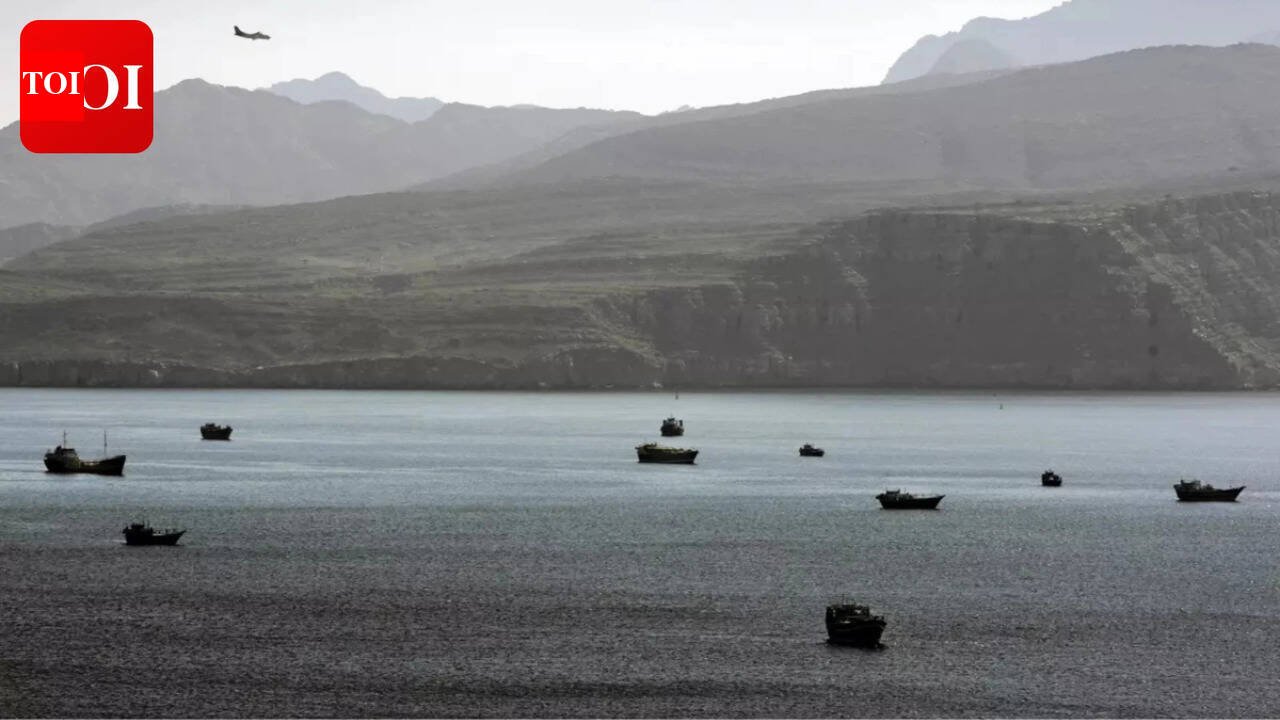
President Donald Trump recently urged nations worldwide to dispatch warships to seize control of the Strait of Hormuz, declaring it a collective duty to break Iran’s blockade amid soaring global oil prices. Speaking on March 13, Trump called for contributions from allies like the UK, France, Japan, and even China to bolster his “beautiful armada”, yet responses remained tepid. The appeal brought into stark focus that even the most powerful navy in the world cannot achieve lasting dominance over the world’s most critical chokepoint.

All in the geography

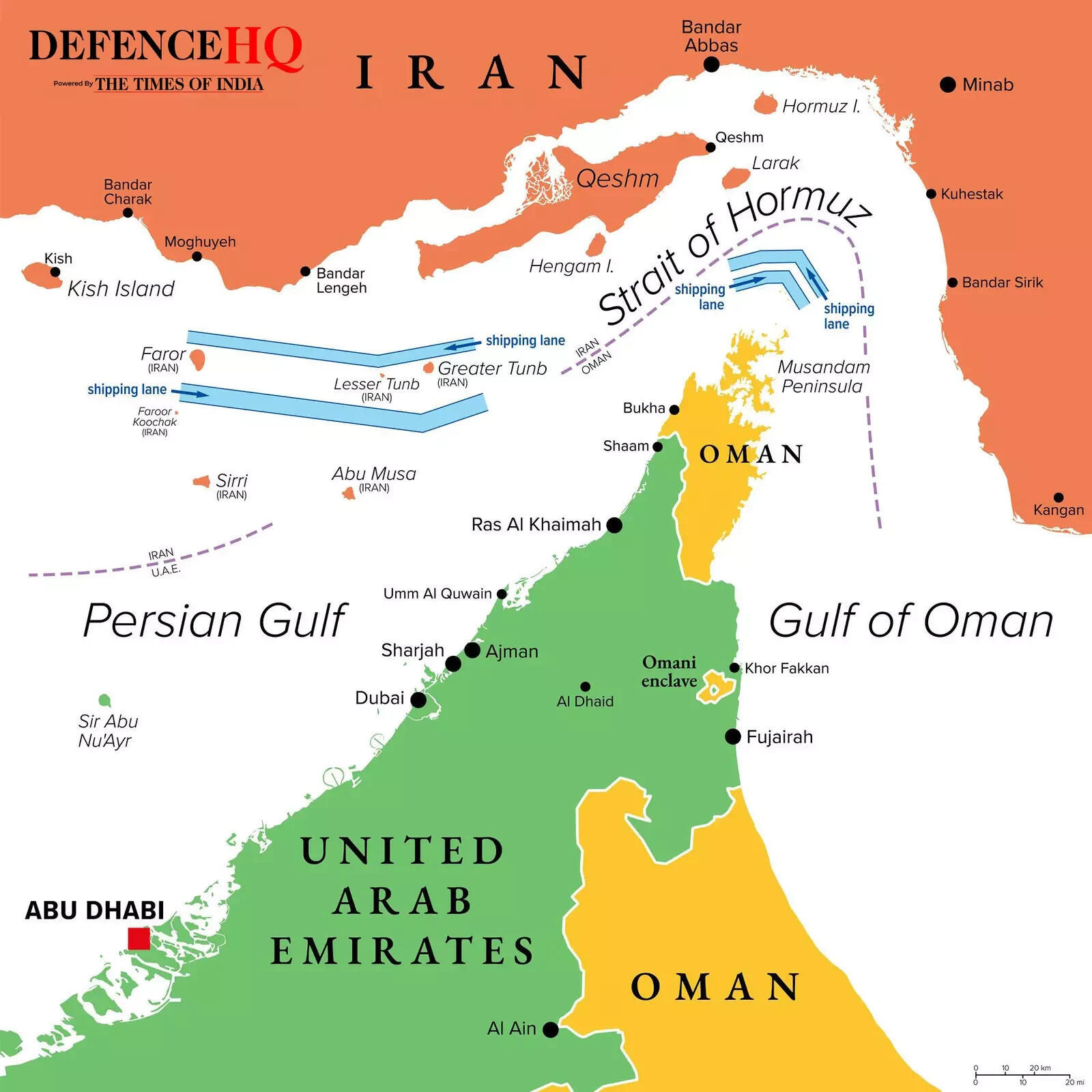
The Strait funnels 20-30% of global oil trade through Iranian-dominated northern shores and Omani southern flanks. It is a narrow 34-km-wide chokepoint at its tightest, with shipping lanes just 4km wide each way, making it impossible to secure a defensible line against constant threats.US carrier strike groups, including Nimitz-class behemoths with F-35 squadrons, struggle in these confined waters where ship maneuvers demand vast turning radii — up to several kilometres. Iran’s elevated terrain enables over-the-horizon strikes via truck-mounted Khalij Fars ballistic missiles (range: 300km), which outpace US naval guns and even some carrier aircraft launch times.

Strait of Hormuz

Mines remain the ultimate low-cost denial weapon. Iran stockpiles thousands, deployable by IRGC speedboats or Ghadir midget submarines in shallow depths. Past US operations, like the 1988 Earnest Will tanker escorts, maintained partial flow but never full control, as Iranian forces adapted with swarm tactics. Trump’s January 2026 armada deployment repeats this pattern, projecting power without overcoming the strait’s natural ambush corridors. Full strait control further necessitates air dominance over Iran’s 1,600-mile coastline — requiring thousands of sorties unsustainable without regional staging.

Iran’s resilient arsenal

Far from crippled, Iran’s military wields a layered anti-access/area-denial (A2/AD) network tailored for Hormuz. Over 3,000 anti-ship cruise missiles (Noor, Qader variants) and ballistic systems like the Hormuz-1 can target lumbering tankers or high-value carriers from mobile launchers hidden in coastal caves. Swarms of Shahed-136 drones overwhelm Aegis radar defenses through sheer volume — US interceptors excel against salvos of dozens, not thousands. The IRGC Navy’s 20,000+ fast inshore attack craft execute “hornet’s nest” tactics, as validated in the 2002 Millennium Challenge wargame where a simulated Iranian force decimated a US battle group. Six Kilo-class submarines and scores of mini-subs prowl murky gulf waters, evading sonar amid civilian traffic. Recent events bear this out: despite US strikes on Kharg Island, no tankers transited freely on March 14, with IRGC speedboats harassing approaches. Iran’s IRGC Navy deploys cheap naval mines (up to 6,000 stockpiled), swarms of fast boats, explosive drones, shore-based anti-ship missiles, and small craft for hit-and-run attacks, even after US strikes destroyed 16 minelayers and 30 vessels.

Logistical nightmare

Escorting 60+ daily oil tankers demands round-the-clock patrols, taxing the US Navy’s 290 hulls already stretched across Indo-Pacific and European theaters. Resupply hinges on vulnerable bases like Bahrain’s Fifth Fleet hub, itself within Iranian missile range. Trump’s multinational plea yielded no firm commitments. Gulf allies such as Saudi Arabia and UAE balk at exposing their Abqaiq-style facilities to more reprisals. Japan and Europe, highly dependant on Iranian oil, have given statements prioritising diplomacy amid energy crises. “Nobody is ready to put their ⁠people in harm’s way. We have to find diplomatic ⁠ways to keep this open ⁠so that we ⁠don’t have a food crisis, fertilisers crisis, energy crisis as well,” said EU foreign policy chief Kaja Kallas.During the bombing of Kharg Island, US was supremely careful of sparing Iran’s oil export terminals, signalling Washington’s aversion to total war, prioritising economic pressure over occupation.

Why the armada fails

Trump’s “beautiful armada” comprises at least two aircraft carriers, including USS Abraham Lincoln and USS Gerald Ford. Each carrier is flanked by at least two destroyers and two cruisers — all Aegis-equipped with SM-6 missiles and MH-60R helicopters. Submarines include at least four Virginia-class attack boats for undersea screening.Littoral combat ships handle mine countermeasures, backed by USNS Pathfinder survey vessels. Yet this formidable force — packing 90+ aircraft, 500+ missiles, and Tomahawk cruise salvoes — falters against Hormuz’s brutal realities.Aircraft carriers demand a turn radius of 4-6km, exposing flight decks to shore-launched Khalij Fars ballistics from coastal hideouts. F-35s, stealthy as they are, require carrier catapults vulnerable during high-threat transits.Iranian Noor cruise missiles (150km range) skim waves, saturating SPY-1 radars designed for open-ocean volleys, not string-thin kill zones.Virginia-class boats excel in blue waters but struggle in Hormuz’s 100-foot shallows, where Iran’s 6 Kilo diesels — quiet, Gulf-adapted — and 20+ Ghadir midgets (armed with torpedoes, mines) ambush via bottom-hugging tactics. Sonar clutter from civilian traffic shields IRGC subs.The vast ammunition of destroyers can deplete fast against 3,000+ Iranian anti-ship missiles and Shahed drone swarms. Mine-hunters are vulnerable to speedboat rams. Daily tanker escorts (60+) burn 10,000 tons of fuel weekly, resupply chained to missile-bombable Bahrain.


Source link

Access Denied


Access Denied

You don’t have permission to access “http://www.ndtv.com/opinion/iran-israel-war-what-iran-attacks-on-uae-reveals-about-the-drone-swarm-campaign-11227572” on this server.

Reference #18.1ffdd417.1773751806.1e8a7224

https://errors.edgesuite.net/18.1ffdd417.1773751806.1e8a7224


Source link

Europe bans two Chinese technology companies for ‘hacker attacks’, bans their CEOs from entering European Union


Europe bans two Chinese technology companies for 'hacker attacks', bans their CEOs from entering European Union

European Union has imposed sanctions against two China-based and one Iranian company ‌for cyberattacks against EU member states. The European Union has announced sanctions on China-based Integrity Technology Group and Anxun Information Technology, also known as i-Soon. Other than these two technology companies, EU has also banned Iranian company Emennet Pasargad on the same charges. European Union has also banned the two Chinese companies co-founders Chen Cheng and Wu Haibo from entering Europe.As per a report in Plitico, Integrity Technology Group facilitated the activities of a Chinese state hacking group dubbed Flax Typhoon, which security officials say has targeted organizations in Taiwan for espionage purposes. Flax Typhoon reportedly used Integrity’s products and technology to hack into more than 65,000 devices in six EU member countries, the Council of the EU said on Monday. The U.S. Treasury Department also sanctioned Integrity in January 2025.

Here’s what EU said on three companies and two founders

The Council adopted today (March 16) restrictive measures against three entities and two individuals responsible for cyber-attacks carried out against EU member states and EU partners.The Council has listed Integrity Technology Group, a China-based company, that has routinely provided products used to compromise and access devices in EU members states, across Europe and worldwide. Between 2022 and 2023, through their technical and material support, more than 65,000 devices were hacked across six member states.Similarly, Anxun Information Technology, a China-based company, has provided hacking services aimed at the critical infrastructure and critical functions of member states and third countries. The two Chinese individuals also listed today by the Council, are co-founders of the company and were responsible for and involved in cyber-attacks affecting EU member states.Lastly, the Iranian company Emennet Pasargad has unlawfully gained access to a French subscriber database and advertised its contents for sale on the dark web. They also compromised advertising billboards to spread disinformation during the 2024 Paris Olympic Games. Additionally, the company compromised a Swedish SMS service, impacting a large number of EU citizens.Those listed today under both regimes are subject to an asset freeze, and EU citizens and companies are forbidden from making funds, financial assets or economic resources available to them. Natural persons also face a travel ban that prohibits them from entering or transiting through EU territories.With today’s listings the EU horizontal cyber sanctions regime now applies to 19 individuals and 7 entities.Today’s decision confirms EU’s and its member states’ willingness to provide a strong and sustained response to persistent malicious cyber activities targeting the EU, its member states and partners. The EU and its member states will continue to cooperate with our international partners to promote an open, free, stable and secure cyberspace.


Source link

Lucknow Boy Torture News: ‘Broom, wiper, belt, kitchen knife used to torture kid? UP man, his 2nd wife held after boy, 4, dies of injuries | Lucknow News


The alleged torture of a four-year-old boy in Lucknow’s Chowk area took a more chilling turn after police recovered several household objects suspected to be used to assault the child.

LUCKNOW: The alleged torture of a four-year-old boy in Lucknow’s Chowk area took a more chilling turn after police recovered several household objects suspected to be used to assault the child.During the investigation, Chowk police recovered a broom, floor wiper, vegetable-cutting knife, a scale, a belt and a rope from the house of the accused, child’s father Bhishm Kharbanda and stepmother Ragini in Lajpat Nagar. Investigators believe the objects may have been used repeatedly to beat the child.The recoveries assume significance as the post-mortem examination revealed 18 injury marks and multiple fractures on the minor’s body, suggesting sustained physical abuse before his death. Police said the nature of the injuries indicated that the child may have been subjected to repeated assaults using different objects. “The items recovered from the house include a broom, wiper, belt, rope, a scale and a kitchen knife. These have been seized as part of the investigation and will be examined further,” said Chowk SHO Nagesh Upadhay.

Poll

Should there be stricter regulations on child custody cases to protect vulnerable children?

The boy died on Thursday under suspicious circumstances. Based on a complaint filed by the child’s maternal grandmother, Chowk police registered a murder case against the couple. Both were taken into custody for questioning and later arrested after the post-mortem findings indicated severe physical abuse.According to relatives, the boy was living with his maternal family in Unnao after the death of his mother Swati in April 2022. The child was handed over to his father in August 2025 following a court order.Meanwhile, the incident triggered anger among local residents in the Chowk neighbourhood. On Saturday, when police brought the accused couple to the house for reconstruction of the crime scene, several residents gathered outside and raised slogans against them. Police personnel managed the crowd and escorted the accused out of the area amid heavy tension.Family members alleged that after taking custody, the father and stepmother frequently assaulted the child and tried to hide injury marks by making him wear full-sleeved clothes and a cap, even during the summer months.“The recovered items were taken into custody as evidence and will be examined as part of the ongoing investigation,” the SHO added. Officials added that questioning of the accused is underway to determine the exact sequence of events leading to the child’s death.


Source link

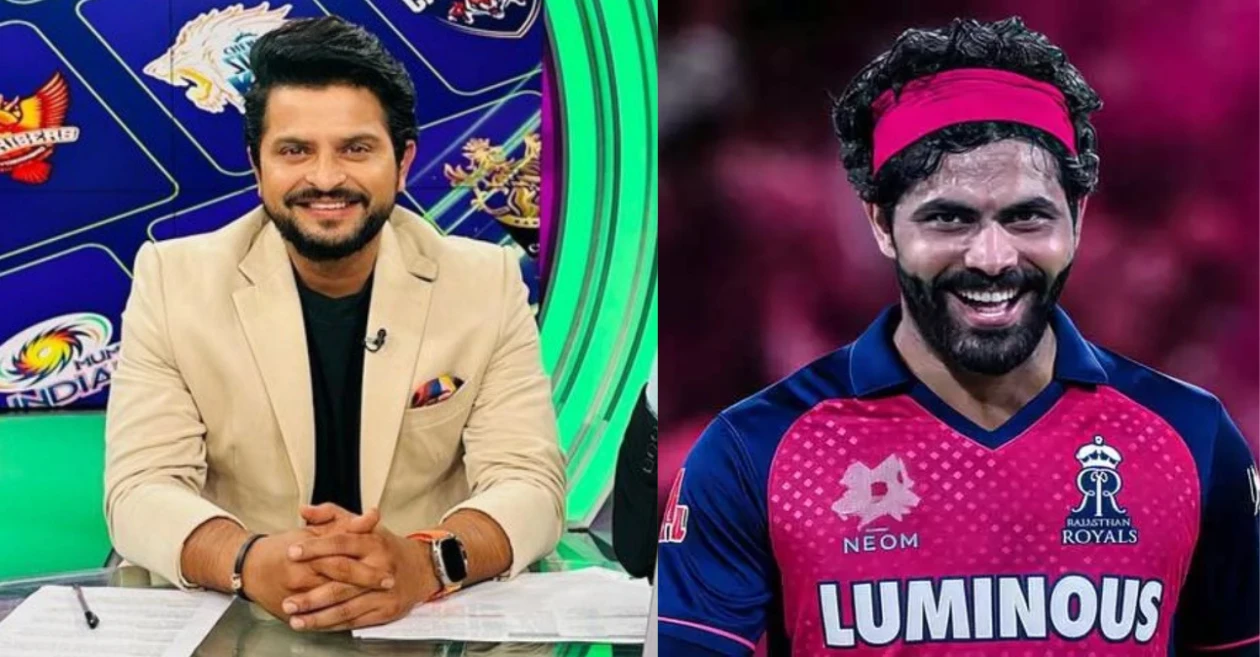
“Ravindra Jadeja at No. 4, no Sam Curran”: Suresh Raina predicts Rajasthan Royals’ playing XI for IPL 2026


With the Indian Premier League (IPL) 2026 set to kick off on March 28, former Chennai Super Kings (CSK) star Suresh Raina has stirred conversation by revealing his predicted playing XI for the Rajasthan Royals (RR). His selections include a few bold calls – most notably placing Ravindra Jadeja at No. 4 and hinting at the possible omission of Sam Curran.

With Rajasthan set to open their campaign against CSK on March 30 at the Barsapara Stadium in Guwahati, Raina’s XI offers a fascinating glimpse into how the inaugural champions might shape up this season.

Suresh Raina names RR’s playing XI for IPL 2026

Raina began with a strong and exciting opening pair – young sensation Vaibhav Suryavanshi alongside Yashasvi Jaiswal. The teenage prodigy Suryavanshi, fresh off a remarkable U19 World Cup campaign, is already making headlines for his fearless batting and big ambitions. Pairing him with Jaiswal gives RR an aggressive left-handed opening combination capable of dominating powerplays.

At No. 3, Raina placed captain Riyan Parag, calling him an attacking option who can break the rhythm after two left-handers at the top. With Parag stepping into a leadership role following Sanju Samson’s move to CSK, the responsibility on his shoulders will be significant.

The biggest surprise in Raina’s XI comes at No. 4, where he slotted in Ravindra Jadeja. Traditionally known as a lower-order finisher, Jadeja’s promotion suggests a more strategic role in stabilizing innings while maintaining scoring momentum.

“Ravindra Jadeja could easily slot in at No. 4,” said Raina.

This move indicates Raina’s belief in Jadeja’s ability to anchor the innings while also accelerating when required—a role that could add flexibility to RR’s batting lineup.

In the middle order, Shimron Hetmyer takes the No. 5 spot as the designated finisher. Known for his explosive hitting, Hetmyer remains a key asset in closing out innings strongly. Behind him, Dhruv Jurel is expected to handle wicketkeeping duties while adding stability at No. 6.

Also READ: IPL 2026 – Irfan Pathan explains why Sanju Samson will be a huge advantage for CSK in the clash against RR

RR’s bowling strategy

One of the most talked-about aspects of Raina’s predicted XI is the uncertainty around Sam Curran’s place in the team. Despite being a high-profile all-rounder, Raina suggested that RR might opt for a different overseas combination.

“I feel this is the team that will play. Maybe they won’t play Sam Curran, and Ferreira can come in,” he added.

This opens the door for Donovan Ferreira to feature instead, depending on team balance and match conditions. It’s a tough call, considering Curran’s all-round abilities, but one that reflects the competition for overseas spots in the squad.

Raina’s overseas picks include Hetmyer, Jofra Archer, Nandre Burger, and either Curran or Ferreira. This combination leans toward a strong pace attack, particularly suited to Guwahati conditions.

The bowling unit, as predicted by Raina, is heavily pace-oriented. Alongside Archer and Burger, he included Tushar Deshpande and Sandeep Sharma. This four-seamer setup suggests RR may look to exploit pace-friendly surfaces early in the tournament.

As the Impact Player, Raina chose Ravi Bishnoi, giving the team the option to introduce spin depending on match situations. Bishnoi’s ability to pick wickets in the middle overs makes him a valuable tactical weapon.

Also WATCH: Sanju Samson hilariously mimics Vaibhav Suryavanshi while recalling his IPL chat with Rahul Dravid


Source link

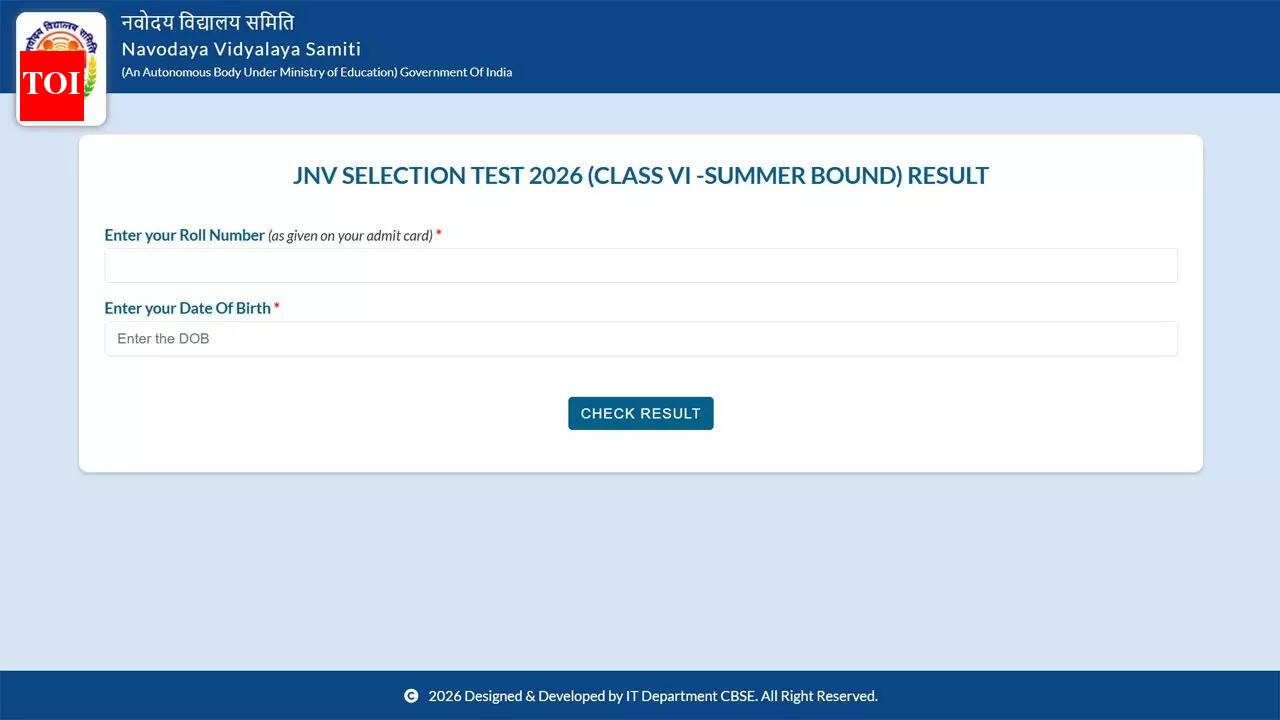
Jnvst Class 6 Result 2026: Jawahar Navodaya Summer Bound Class 6 result released at navodaya.gov.in: Direct link to download scorecards here


Jawahar Navodaya Summer Bound Class 6 result released at navodaya.gov.in: Direct link to download scorecards here

The Jawahar Navodaya Vidyalaya Selection Test (JNVST) Class 6 Result 2026 has been released today, March 17, 2026 on navodaya.gov.in. The NVS has published the selection list on its official website. It will allow the candidates to check their qualifying status and move forward with the admission process for the prestigious residential school network. Students will need their roll number and date of birth to access the scorecards. The application started on April 30, 2026. The last date to apply was August 27, 2026. The admit card was released on 17th November 2026.

JNVST Class 6 result 2026: Steps to download scorecards

Students may access their results by visiting the official website of Navodaya Vidyalaya Samiti.Follow these steps to download your result:

  • Move to the official website at navodaya.gov.in.
  • On the homepage, search and click on “Latest @ NVS” from the home page.
  • You can click on “JNVST Class 6 Result 2026” from the list.
  • Then, select the option for “View Individual Result.”
  • Enter your roll number and date of birth as specified in your admit card.
  • Click on submit to view your results.
  • Candidates can click on the link provided here to download the JNVST Class 6 result 2026.

The screen will display the candidate’s name, marks obtained, and qualifying status. Students are advised to download and keep a printed copy for the admission process.Apart from the online release, selected candidates are also being notified through SMS and Speed Post.

JNVST Class 6 result 2026: Documents required for admission verification

Candidates shortlisted through the selection list must complete the document verification process before securing admission.The documents required are:

  • Birth certificate
  • Residence certificate issued by the district authority
  • Rural area certificate (if applicable)
  • Caste certificate for reserved categories of students
  • Disability certificate (if applicable)
  • Proof of having studied in the same district for the past two years
  • Passport-size photographs
  • Transfer certificate from the previous school

Candidates are advised to stay tuned to the official website to get the complete details of the JNVST Class 6 result 2026.


Source link