Breaking News
2nd T20I: Devon Conway shines as New Zealand crush South Africa to level series | Cricket News


2nd T20I: Devon Conway shines as New Zealand crush South Africa to level series
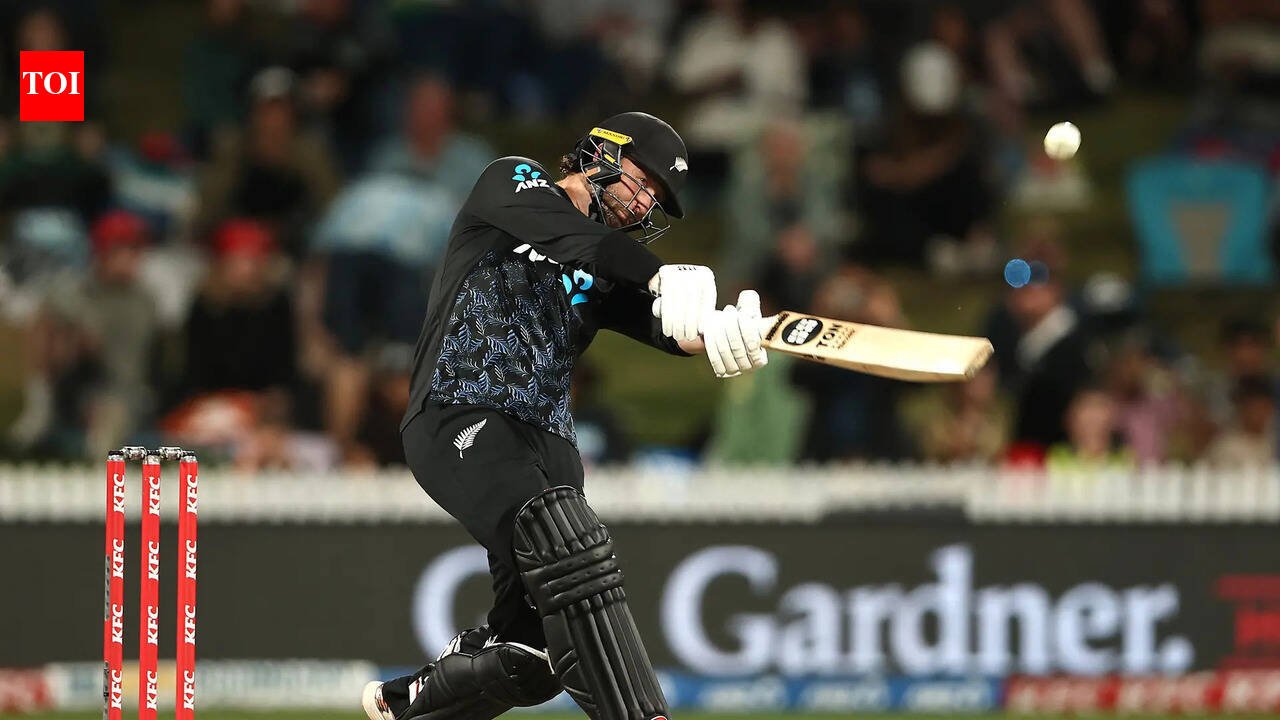
Devon Conway of New Zealand (Getty Images)

Devon Conway struck a composed half-century before a clinical bowling display powered New Zealand to a dominant 68-run win over South Africa in the second T20I at Seddon Park, Hamilton, on Tuesday, levelling the five-match series 1-1.After being sent in to bat, New Zealand posted a competitive 175/6, anchored by Conway’s 60 off 49 balls. The left-hander, who had a quiet T20 World Cup campaign, made the most of his opportunity with a controlled knock featuring five fours and two sixes. “It’s been a very quiet couple of months… it’s nice to come back and contribute,” Conway said after the match.Scorecard: New Zealand vs South Africa, 2nd T20INew Zealand got off to a brisk start, reaching 43 without loss in the powerplay, with Conway and Tom Latham setting the tone. However, the hosts found it difficult to accelerate in the middle overs as the pitch slowed down and became two-paced. Contributions from Nick Kelly (21) and Mitchell Santner (20) kept the scoreboard ticking, before a late flourish from Josh Clarkson, who smashed 26 off just nine balls, lifted the total.South Africa struggle in chaseIn response, South Africa never got going and were bowled out for just 107 in 15.3 overs. The chase unraveled early at 31/3, and despite a brief counter from George Linde, who top-scored with a quickfire 33, the visitors collapsed under sustained pressure.Pace duo Ben Sears (3/14) and Lockie Ferguson (3/16) were outstanding, exploiting the variable bounce and pace on offer. All 10 South African wickets fell to catches, underlining the effectiveness of New Zealand’s disciplined bowling.South Africa captain Keshav Maharaj admitted his side misread the conditions. “We thought the dew would play a factor, but the wicket got worse. New Zealand bowled really well and stifled us early,” he said.The result comes after South Africa’s seven-wicket win in the series opener and keeps the contest finely poised. With both sides fielding relatively inexperienced squads following the T20 World Cup, the series has offered opportunities for emerging players to step up.The third T20I will be played in Auckland on Friday.

Banner Insert


Source link

Passive euthanasia: How Harish Rana’s case revived memories for Aruna Shanbaug’s long, silent fight for dignity in death | India News


Passive euthanasia: How Harish Rana's case revived memories for Aruna Shanbaug's long, silent fight for dignity in death
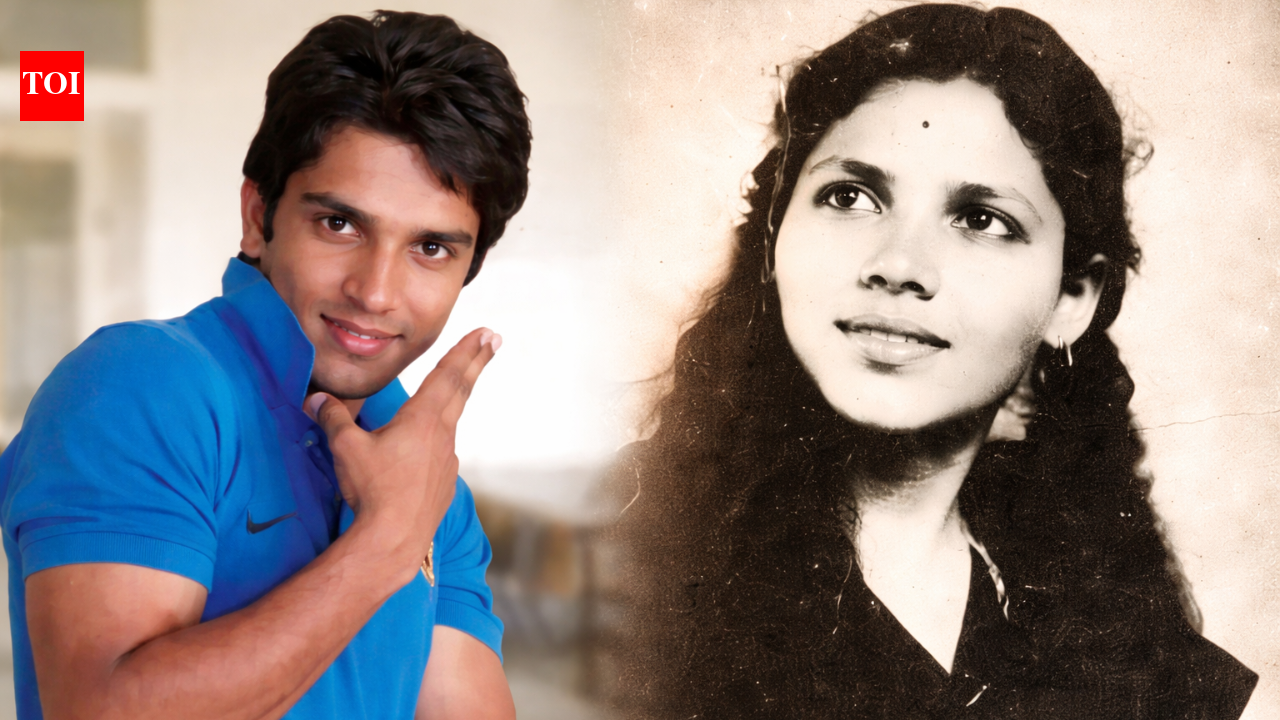
Harish Rana (L) and Aruna Shanbaug (R)

NEW DELHI: “To be, or not to be: that is the question,” William Shakespeare’s famous soliloquy aptly captures the tragic dilemma surrounding Harish Rana’s life and death, who has struggled for over a decade in a vegetative condition. Invoking the Shakespearean tragedy of Hamlet, the Supreme Court announced a historic verdict allowing passive euthanasia for the young man from Ghaziabad.The top court granted the first-ever approval of passive euthanasia in such a case, permitting the withdrawal of medical treatment and life support for the 32-year-old, who has remained between the thin line of life and death for over 13 years due to irreversible and non-progressive brain damage. The decision effectively paves the way for nature to take its course, while bringing an end to the prolonged agony of parents who have endured the pain of witnessing their son’s suffering every day.

-

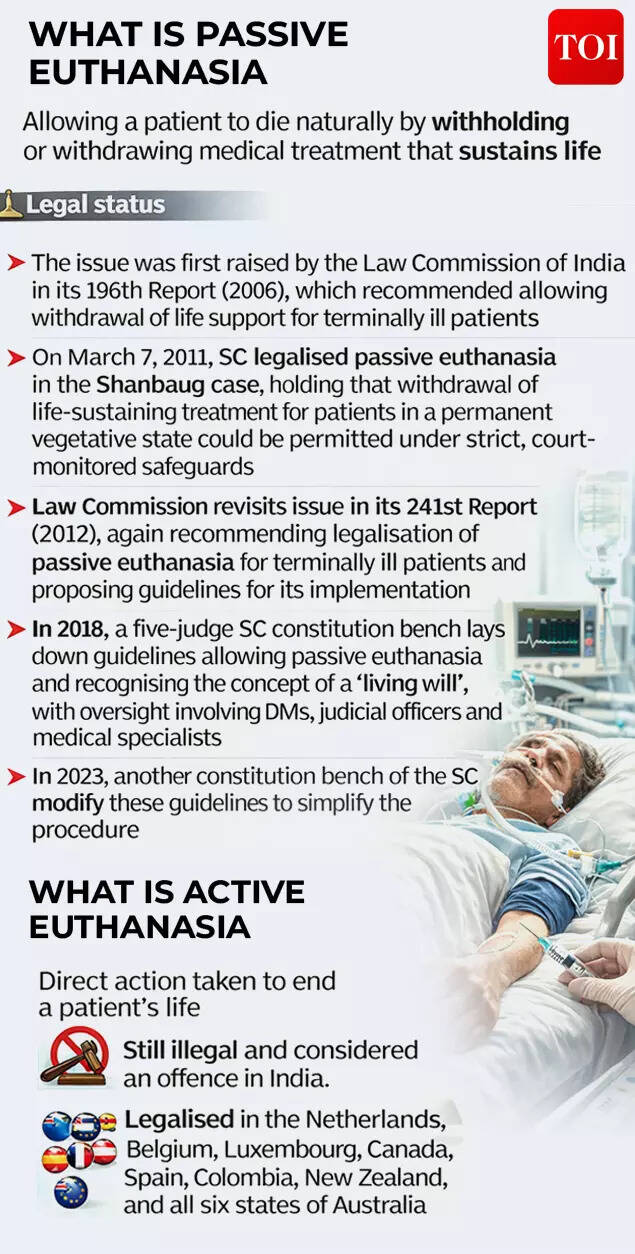
The “difficult decision” came from a bench of Justices JB Pardiwala and KV Viswanathan, based on the recommendations of two medical boards, as per the amended Euthanasia framework of 2018, and after personally interacting with Harish’s parents. The judgment observed that the continuation of medical treatment was no longer in the patient’s best interest.With its first verdict of this kind, the court granted Harish Rana the possibility of a “dignified death,” allowing him to exercise the “right to die with dignity”, a choice that Aruna Shanbaug had sought but never received during the four decades she spent suspended between life and death.

From Ghalib to Constitution: The legal journey of euthanasia in India

When the Supreme Court heard Shanbaug’s case in 2011, it turned to the existential lines of Mirza Ghalib: “Marte hain aarzoo mein marne ki, maut aati hai par nahin aati.” loosely translated as, “We perish with the wish to die; death approaches, yet never arrives.”In that landmark ruling, the topmost court laid down the legal framework permitting passive euthanasia in India, later detailed procedural guidelines established in 2018. Years later, that precedent has now found its first full expression in the case of Harish Rana, turning a long-debated principle into a lived judicial decision.In its Wednesday verdict, the court also directed AIIMS Delhi to admit Harish Rana to its palliative care centre and initiate steps for the withdrawal or withholding of medical treatment. At the same time, the bench underlined that such a decision must not translate into neglect. “The resultant effect must not be the abandonment of the patient,” it observed.

harish rana

Separated by more than a decade, the cases of Aruna Shanbaug and Harish Rana together add deeper meaning to the evolving role of India’s judiciary and the expectations placed upon it.When life recedes and death refuses to arrive, when consciousness fades and existence is confined to a hospital bed, the question of dignity becomes unavoidable.As Friedrich Nietzsche once wrote, “He who has a why to live can bear almost any how.” The court’s decision, in many ways, confronts the painful reality of what remains when that “why” disappears.

Harish Rana: A life halted, a family’s long wait

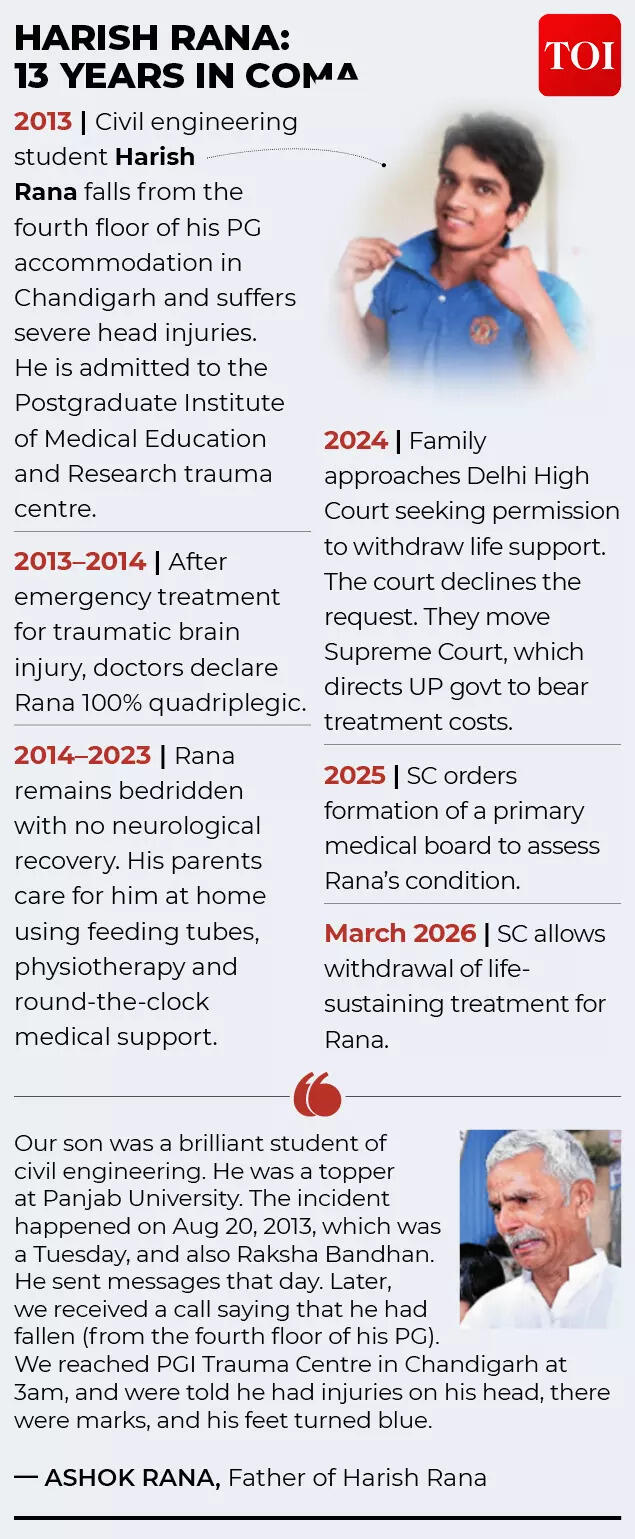
Tragedy struck Harish Rana when he was just 20, a bright engineering student at Panjab University with a promising future ahead. In August 2013, during the final semester of his BTech in civil engineering, a fall from the fourth floor of his paying guest accommodation in Punjab’s Kharar changed everything.The accident left him with severe brain injuries, including diffuse axonal injury, a devastating form of traumatic brain damage, and resulted in complete quadriplegia. Despite treatment at leading institutions such as PGI Chandigarh, AIIMS Delhi, Ram Manohar Lohia Hospital and Lok Nayak Hospital, Harish never recovered. He has remained in a permanent vegetative state since the fall, bedridden and entirely dependent on life support.He can open his eyes and blink, but there is no awareness, no response to sound, touch, voice or pain.Years of immobility have left him with severe bedsores, adding to his suffering.For his family, the passage of time has only deepened the pain.

-

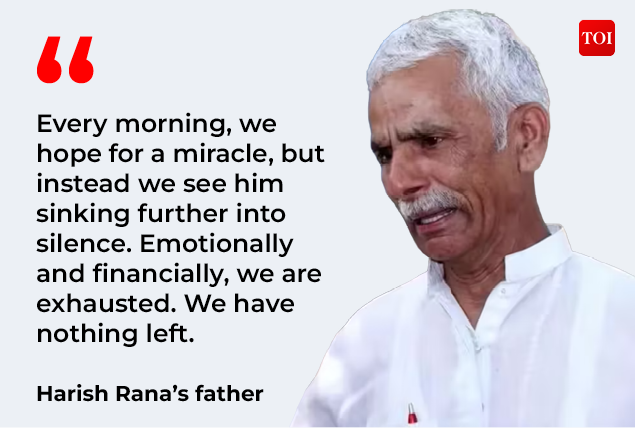
“How does it feel to see your own child lying in bed for years, without any eye contact, any communication or movement?” asked his father, Ashok Rana, his voice breaking months ago in 2025. “Every morning, we hope for a miracle, but instead we see him sinking further into silence. Emotionally and financially, we are exhausted. We have nothing left.”Pausing to steady himself, he added, “When I look into his eyes, there is nothing, no recognition. He cannot even turn his head. As parents, it is unbearable. We cannot see him like this anymore.”The memories of who Harish once was remain vivid.“Our son was a brilliant student. He was a topper in civil engineering at the university. The incident happened on Aug 20, 2013, which was a Tuesday and also Raksha Bandhan. He had sent us messages. Later in the day, we received a call saying he had fallen. When we reached the PGI trauma centre at 3am, he had injuries on his head and his feet had turned blue,” Ashok said.His brother, Ashish Rana, recalled how the family clung to hope for years. “We kept believing he would wake up someday, talk again, walk again,” he said.But hope came at a heavy cost.The family said they were forced to sell their home in Dwarka to continue his treatment. Monthly medical expenses alone run between Rs 24,000 and Rs 30,000, covering tubes, medicines and life-support equipment.

-

“It takes around Rs 24,000-30,000 every month for his basic medical needs, including tubes, medicines, life support equipment. We are not financially affluent. Selling the house was the only option,” Ashish said.For the Ranas, their plea was never about giving up, it was about dignity.“We just want him to be at peace,” his father said quietly. “No child deserves to suffer like this, and no parent deserves to watch it.”

What court said: ‘Best interest’ and right to dignity

The top court’s landmark ruling permitting passive euthanasia for the first-ever time has brought renewed focus to a critical legal doctrine, the “best interest of the patient.”The decision by the two-judge bench described it as the delicate intersection of “love, loss, medicine and mercy”.“You are not giving up on your son. You are allowing him to leave with dignity. It reflects the depth of your selfless love and devotion towards him,” the Supreme Court told the parents.

-

At the heart of the ruling was the case of 32-year-old Harish Rana, who had remained in a persistent vegetative state for nearly 13 years, with irreversible and non-progressive brain damage. Applying the “best interest” principle, the court permitted passive euthanasia, allowing the withdrawal of all life-sustaining treatment, including ventilators and feeding tubes.In doing so, the bench undertook an extensive examination of the doctrine, drawing from the landmark 2018 Constitution Bench ruling in Common Cause vs Union of India, as well as international practices on end-of-life decision-making.On January 24, 2023, a Constitution bench eased the 2018 passive euthanasia guidelines, mandating primary and secondary medical boards to approve withdrawal of life support for patients in a vegetative state.This marks the first time the apex court has applied its own 2018 guidelines on passive euthanasia in a specific case.“The famous literary Shakespeare quote ‘To be or not to be’ is now being used for judicially interpreting the ‘Right to Die,” Justice Pardiwala noted at the beginning of the judgment.The bench described its decision as a “difficult” one, taken after relying on reports from two medical boards, which had approved the withdrawal of life support after personally interacting with Rana’s parents.It concluded that the continuation of medical treatment was not in his “best interest”.The court directed AIIMS Delhi to admit Rana to its palliative care centre and initiate the process of withdrawing or withholding treatment, while specifying that “the resultant effect must not be the abandonment of the patient”.“Due focus must be given to the comfort of the patient through pain and symptom management,” the court said.Reaffirming constitutional principles, the bench described dignity as the most sacred possession of a human being. It held that the right to live with dignity under Article 21 inherently includes the right to die with dignity.“Temporarily keeping alive a terminally ill patient who is brain dead or in PVS (persistent vegetative state), solely because doctors are able to leverage the technological advancements in medicine, and compelling such patients to endure a slow, agonising death, cannot fully be compatible with the constitutional ideal of dignity. There would arise a point of precipice where such prolonged medical treatment would stand as an affront to basic human dignity,” the bench said.

Aruna Shanbaug: The case that began it all

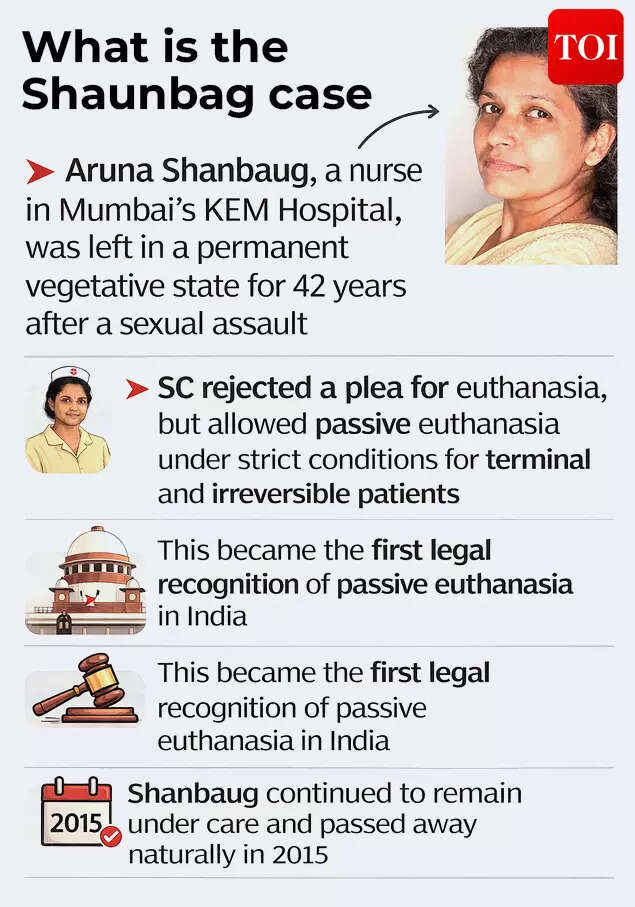
November 27, 1973.Decades before Harish Rana’s birth, a young nurse’s routine night shift in Bombay would turn into one of India’s most haunting medical-legal cases. Aruna Shanbaug, just 26, had spent the day caring for patients at King Edward Memorial Hospital, unaware that the night ahead would alter the course of her life, and the country’s legal history, forever.“November 27, 1973. Aruna Shanbaug, 26, is almost at the end of a tiring day. As nurse at Bombay’s King Edward Memorial Hospital, she’s been busy dealing with adulterated mithai poisoning cases, particularly children. It’s far too late to go home; she will spend the night at the nurses’ quarters…At last it’s time for bed. Aruna Shanbaug walks towards the cardio-vascular thoracic centre (CVTC) in the basement for her purse. That’s the last time in her life she walks. Or talks.

-

…At around eight the next morning, Matron Belimal gets frantic messages. A sweeper went to the CVTC and saw a woman with white clothes torn and thrown all around her. She has been identified as nurse Aruna Shanbaug. And there is a dog’s chain around her neck,” euthanasia activist and journalist Pinki Virani recounted.That night changed everything.A young nurse known among colleagues for her spirited personality and warmth, Shanbaug had been preparing to change from her uniform into a rose-pink sari to meet her fiancé, a doctor. Instead, she was brutally attacked in the hospital basement by sweeper Sohanlal Bharta Walmiki.She was discovered nearly 11 hours later, her heart still beating. But survival came at a devastating cost.The lack of oxygen had caused severe and irreversible brain damage. Shanbaug slipped into a persistent vegetative state, conscious only of pain, unable to speak, move or communicate.
-

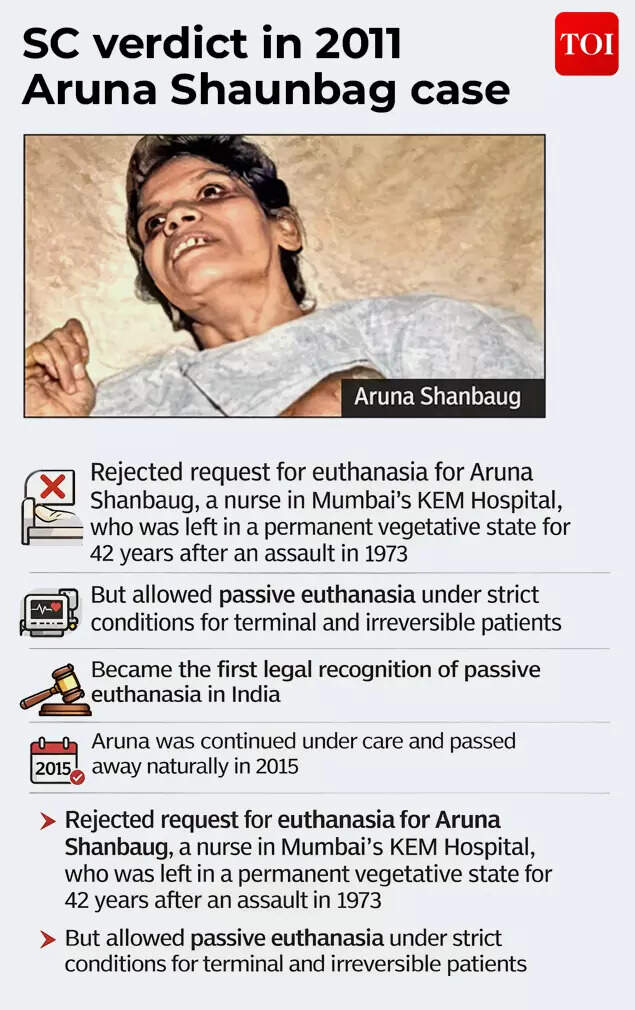
SC verdict in 2011 on Aruna Shanbaug’s case

His freedom stood in stark contrast to Shanbaug’s condition.Confined to a hospital bed at KEM, she remained in a vegetative state for decades.Ultimately, despite laying the foundation of legal framework for passive euthanasia under strict conditions, the topp court denied Aruna Shanbaug the ‘right to die.’In the end, Aruna Shanbaug’s case laid the foundation. Years later, that legal pathway would finally be invoked in the case of Harish Rana.

But as a nation, we must remember that we gave her nothing. We let Aruna down.

Pinki Virani

For decades, Aruna Shanbaug lay silent in a hospital ward, her story a haunting reminder of violence, neglect and the long struggle for dignity in life and death.

‘To be, or not to be’ finds an answer

Meanwhile, the long agony of Harish Rana and his family edges toward an end that resists the binaries of joy or grief.At Delhi’s AIIMS, doctors have initiated the protocol for passive euthanasia following the top court’s order, a process expected to implement over the next two to three weeks, officials told PTI.In a video that has circulated widely, the young man from Ghaziabad lies still, eyes open yet distant, as relatives gather in quiet prayer.A member of the Brahma Kumaris based in Mount Abu, gently places a tilak on his forehead and whispers, “Sabko maaf karte hue, sabse maafi mangte hue, so jaao theek hai… (Forgiving everyone and asking forgiveness from everyone. Now sleep. It’s okay).”A struggle that spanned more than a decade has now reached a form of closure. As John Keats once wrote, “Half in love with easeful death,” the line lingers over Rana’s final passage.Through a legal path first carved in the case of Aruna Shanbaug, he has been granted what she never was.In that quiet, difficult distinction lies the weight of both justice, and time.


Source link

‘Use LPG wisely’: Centre says supply ‘matter of concern’; advises consumers not to panic | India News


'Use LPG wisely': Centre says supply 'matter of concern'; advises consumers not to panic

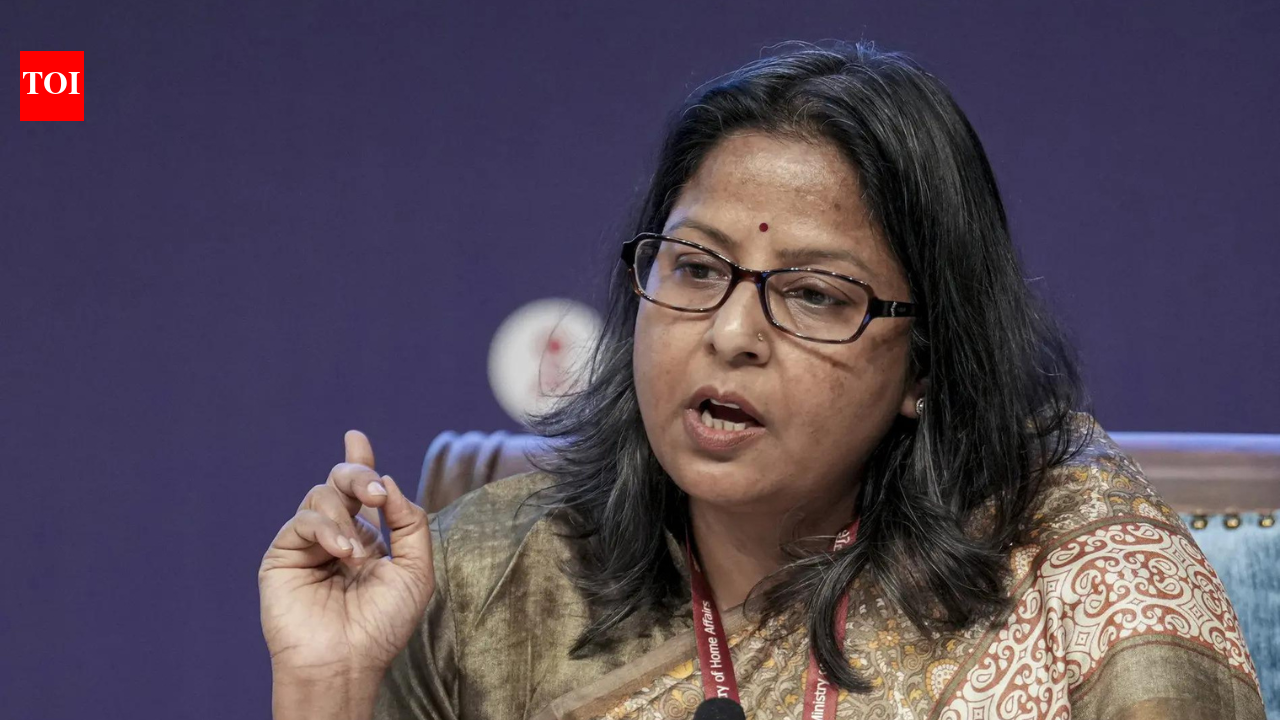
NEW DELHI: The Centre on Tuesday said that the energy crisis in India still remains a matter of concern amid the ongoing conflict in the Middle East. However, it assured consumers not to panic over LPG supplies.During an inter-ministerial briefing on recent developments, Sujata Sharma, joint secretary in the ministry of petroleum and natural gas, advised judicious consumption of LPG and also advised using alternate sources for cooking.“On the issue of LPG, I would like to reiterate that the situation still remains a matter of concern. However, no LPG distributor is facing a dry-out situation at present. In addition, LPG supplies and cylinder deliveries for all domestic consumers are continuing as usual. With regard to online booking, I would like to inform you that there has been significant improvement, and as of today, nearly 94% of cylinder bookings are being made online. There has also been improvement in the delivery authentication code system, which has now reached 76%. As far as commercial LPG supplies are concerned, these were initially completely halted but were later partially restored,” Sharma said.“Cylinders that were placed at the disposal of various state governments and Union Territories are also being distributed. Several governments, including those of Bihar, Delhi, Gujarat, Haryana, Himachal Pradesh, Karnataka, Manipur, Rajasthan and Uttarakhand, have already issued allocation orders for non-domestic LPG,” she added.“Petrol and diesel are available in sufficient quantity. Regarding natural gas, as I told you, the Government of India is making efforts, and it would be beneficial if all commercial LPG consumers shifted to PNG,” Sharma said.Sharma also warned against hoarding and black marketing, saying that adequate measures are in place to ensure smooth distribution across the country.“Regarding enforcement action, so far, about twelve thousand raids have been conducted in the last few days. About fifteen thousand cylinders have been seized… Yesterday in Delhi, about six hundred cylinders were seized. Similarly, in Uttar Pradesh, about four hundred and fifty inspections and raids have been conducted in the last few days. Ten people have also been arrested. In Jammu and Kashmir, five hundred and sixty-four raids have been conducted, FIRs have been filed, and arrests have also been made. In Kerala, about a thousand raids and inspections have been conducted, and domestic and commercial cylinders have been seized. In Madhya Pradesh, too, about twelve hundred raids have been conducted, and about eighteen hundred cylinders have been seized,” she said.“Apart from this, the inspection teams of our oil marketing companies have also been activated, and surprise inspections have been conducted at about two and a half thousand retail outlets and LPG distributorships,” she added.State governments are undertaking enforcement measures to prevent hoarding and black marketing of petrol, diesel and LPG. Raids are being carried out in several states to check hoarding and black marketing of LPG cylinders.Alternate fuels such as kerosene and coal have been activated for certain sectors, including hospitality and restaurants, to ease pressure on LPG supplies.The shortage of LPG has emerged amid global energy supply disruptions triggered by the ongoing conflict in West Asia.


Source link

Monalisa Bhonsle Marriage: ‘Brainwashed and trapped’: Filmmaker Sanoj Mishra to meet MP CM over ‘Kumbh girl’ Monalisa Bhonsle’s marriage | Bhopal News


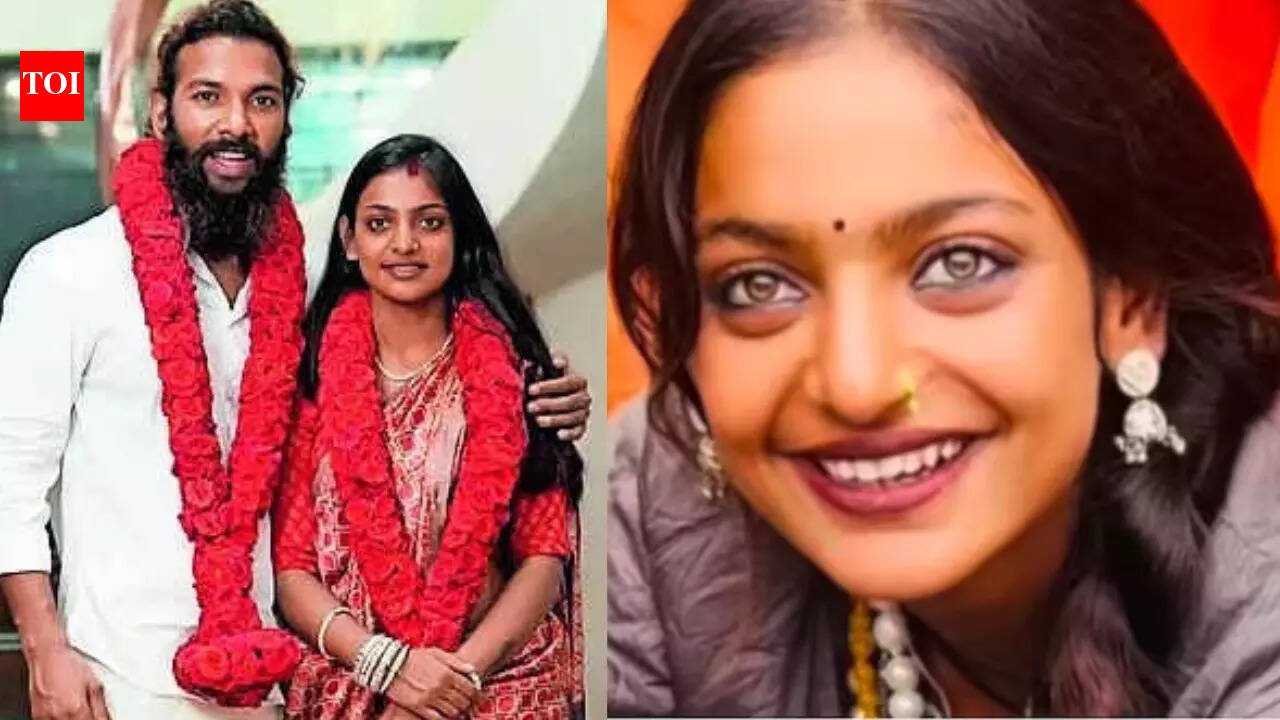
Mahakumbh Girl Monalisa Marries Farman Khan In Kerala, Rejects Love Jihad Charges Amid Family Row

KHARGONE: Filmmaker Sanoj Mishra on Sunday met family members of Monalisa Bhonsle in Maheshwar and said that he would seek an appointment with CM Mohan Yadav along with the girl’s family and present the issue in detail (her marriage to a Muslim youth), claiming that the family believes the incident was a planned attempt to trap the girl.Speaking to mediapersons after meeting the family, Mishra also alleged that certain organisations fund unemployed youth to target Hindu girls in order to defame Sanatan.

Mahakumbh Girl Monalisa Marries Farman Khan In Kerala, Rejects Love Jihad Charges Amid Family Row

According to him, Monalisa was in the lead role in his upcoming film ‘The Diary of Manipur,’ which deals with the issue of religious conversion.

Poll

Do you believe that the marriage of Monalisa Bhonsle was a planned attempt to trap her?

He claimed that because of this, both he and the ideology he represents were targeted and that the girl was brainwashed and trapped, destroying the dreams of her father.


Source link

Pakistani pacer Asad Akhtar makes headlines after delivering giant no-ball in National T20 Cup 2026 match


The National T20 Cup 2026 witnessed a moment of sheer disbelief on March 14, during the Group B clash between Karachi Region Blues and Lahore Region Blues. While the match at the Imran Khan Cricket Stadium in Peshawar was high-scoring and intense, the primary talking point wasn’t the boundary count, but a single delivery from young pacer Asad Akhtar that has since gone viral for all the wrong reasons.

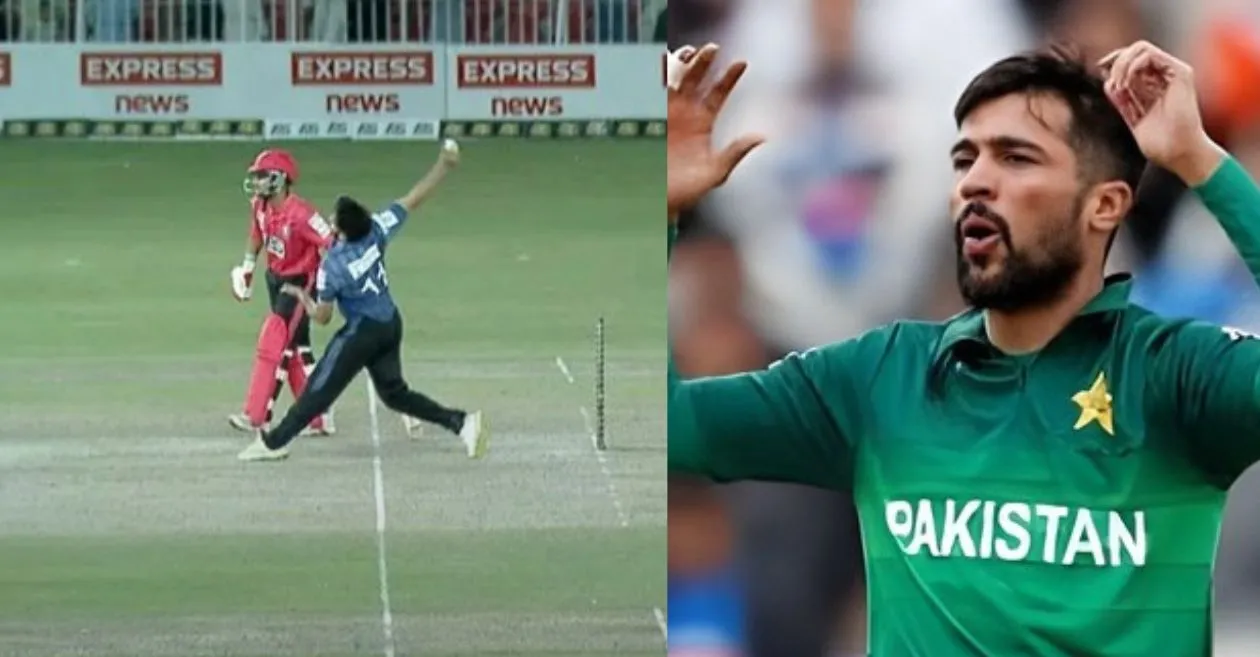
Asad Akhtar under microscope for extraordinary no-ball in National T20 Cup 2026

In what can only be described as a lapse in spatial awareness, Akhtar delivered a front-foot no-ball so massive that it left commentators and fans stunned. In a sport where margins are usually measured in centimetres, Akhtar’s overstep was measured in nearly a full stride. Social media was quick to draw parallels to the infamous 2010 Lord’s scandal involving Mohammad Amir; however, many observers noted that Akhtar’s foot landed significantly further beyond the popping crease than Amir’s ever did.

Representing Karachi Region Blues, the inexperienced right-arm pacer had a nightmare outing. Entrusted with the ball, Akhtar struggled with his rhythm from the start, conceding 21 runs in his solitary over. His discipline wavered significantly, as he leaked two wides and two no-balls.

The giant no-ball occurred mid-over, where his front foot landed so far past the line that his back foot was nearly touching the bowling crease. For a young player who only made his debut earlier this year, the error highlighted the immense pressure of the National T20 circuit. Akhtar’s statistics currently reflect these growing pains; in his five career T20 appearances, he has maintained an economy rate of 9.14, which has ballooned to 11.25 during the current tournament. While there is no evidence of anything beyond a technical blunder, the sheer scale of the overstep has placed his bowling action and temperament under heavy scrutiny by fans and analysts alike.

Also READ: Mohammad Hafeez picks 2 players who can replace Babar Azam in Pakistan’s ODI lineup

Karachi Region Blues dominate Lahore Region Blues despite Akhtar’s expensive spell

Fortunately for the young pacer, his expensive over proved to be a mere footnote in an otherwise clinical performance by Karachi Region Blues. Despite the 21-run gift to Lahore, Karachi’s massive total and disciplined bowling attack ensured an emphatic 57-run victory, solidifying their standing in Group B.

After being put in to bat, Karachi’s top order fired on all cylinders to post a daunting 206/3. The protagonist of the innings was Saad Baig, who played a blistering, unbeaten knock of 72 off just 37 balls, decorated with seven fours and four towering sixes. Contributions from Ahsan Ali (39) and Usman Rahim (33) provided the necessary platform for the late-innings fireworks.

Lahore’s chase never truly found its rhythm. The duo of Jahandad Khan and the experienced Shahnawaz Dahani dismantled the batting lineup, picking up four wickets each. Lahore Region Blues were eventually bundled out for 149 in 17.3 overs. This victory moves Karachi to fourth place in the standings with four points, providing a vital boost to their net run rate as the tournament progresses toward the knockout stages.

Also READ: Pakistan lodge complaint over controversial DRS call as Bangladesh clinch series with thrilling win in 3rd ODI


Source link

Gold price today (March 17, 2026): Check the price of 18K, 22K and 24K gold in your city today; Delhi, Mumbai & more


Gold price today (March 17, 2026): Check the price of 18K, 22K and 24K gold in your city today; Delhi, Mumbai & more

Gold opened sharply higher on Multi Commodity Exchange on Tuesday, as investors turned to safe-haven assets amid escalating tensions in the Middle East involving the US, Israel and Iran. The uncertainty has also kept oil prices above the $100-per-barrel mark. On the MCX, April 2026 gold futures rose Rs 1,260, or 1%, reaching Rs 1,56,996 per 10 grams. The gains came despite a slightly stronger dollar, which typically makes dollar-denominated bullion costlier for holders of other currencies. Oil markets continued to remain elevated, with supplies disrupted as the US-Israel conflict with Iran has largely closed the Strait of Hormuz. Globally, gold remained mostly steady. In early trade, spot gold edged up 0.1% to $5,007.61 per ounce at 0110 GMT, while US April gold futures advanced 0.2% to $5,011.70.Here’s how much gold costs in your city today:

Gold price in Ahmedabad today

In Ahmedabad, 24K gold is priced at Rs 15,867 per gram, while 22K comes at Rs 14,545 and 18K at Rs 11,902 per gram.

Gold price in Bangalore today

Bangalore sees 24K gold at Rs 15,862 per gram, 22K costs Rs 14,540, and 18K costs Rs 11,897 per gram.

Gold price in Bhubaneswar today

The rates in Bhubaneswar are Rs 15,862 for 24K gold, Rs 14,540 for 22K, and Rs 11,897 for 18K gold per gram.

Gold price in Chennai today

Chennai gold rates stand at Rs 15,982 for 24K, Rs 14,650 for 22K, and Rs 12,330 for 18K per gram.

Gold price in Delhi today

Delhi residents can buy 24K gold at Rs 15,877 per gram, 22K at Rs 14,555, and 18K at Rs 11,912.

Gold price in Hyderabad today

In Hyderabad, 24K gold costs Rs 15,862, 22K is Rs 14,540, and 18K comes to Rs 11,897 per gram.

Gold price in Jaipur today

Jaipur’s gold rates are Rs 15,877 for 24K, Rs 14,555 for 22K, and Rs 11,912 for 18K per gram.

Gold price in Kanpur today

Buyers in Kanpur can get 24K gold for Rs 15,877, 22K is priced at Rs 14,555, and 18K at Rs 11,912 per gram.

Gold price in Kolkata today

Kolkata’s gold pricing: 24K at Rs 15,862 per gram, 22K at Rs 14,540, and 18K stands at Rs 11,897.

Gold price in Mumbai today

In Mumbai, 24K gold sells for Rs 15,862, 22K is Rs 14,540, and 18K comes at Rs 11,897 per gram.


Source link

5 IPL legends to have not won the Orange Cap | Cricket News


5 IPL legends to have not won the Orange Cap
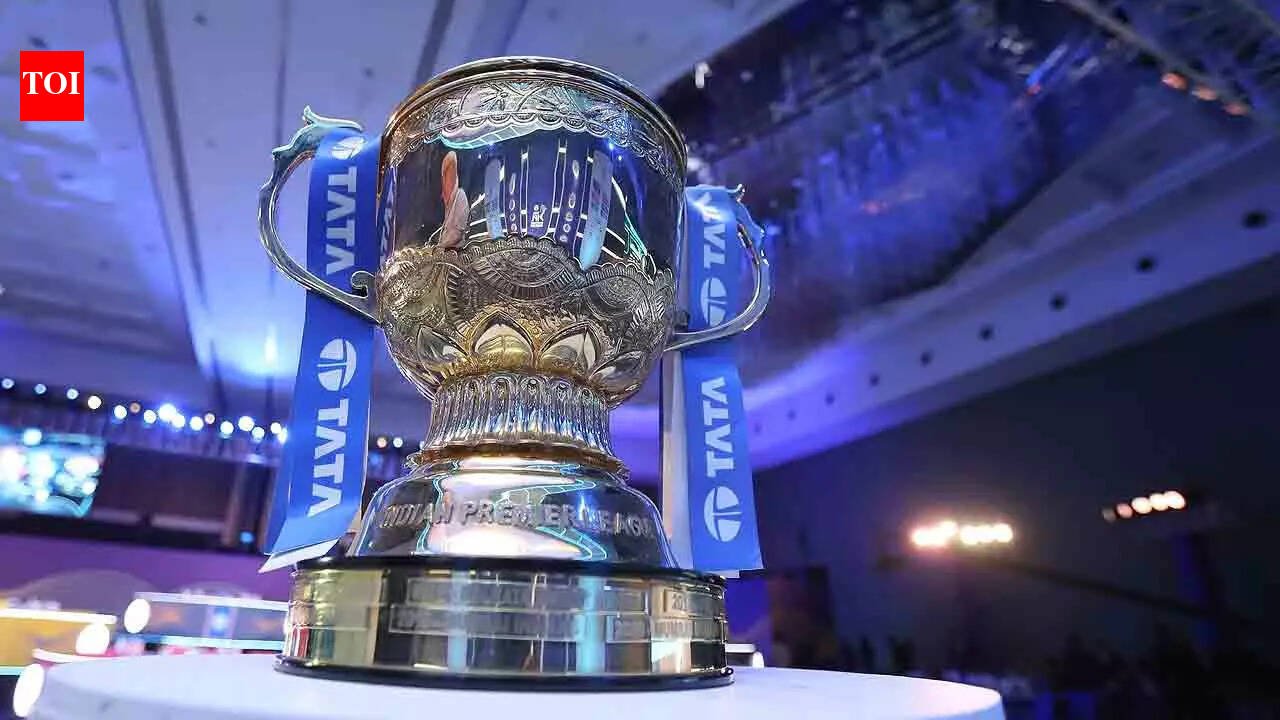
IPL Trophy. (BCCI/IPL Photo)

As the Indian Premier League (IPL) 2026 approaches its blockbuster start of the 19th edition on March 28, the tournament once again promises high-octane cricket, massive runs, and individual brilliance. In an era dominated by batting, where the highest run scorer of season leads to the prestigious Orange Cap, there is a shocking fact that some of the IPL’s greatest run-scorers have never claimed the award.Despite featuring in the Top 10 highest run-getters in IPL history, these legendary players have never won the orange cap even after 18 editions of the tournament.

IPL 2026 should be audition for the next India T20I captain

1. Rohit Sharma: One of the biggest names in IPL history, Rohit Sharma is also one of the most successful captains, leading Mumbai Indians to five titles (2013, 2015, 2017, 2019, 2020). Known for his elegant batting, Rohit ranks 2nd in the top run-scorers in IPL history with 7,046 runs in 272 matches. Rohit Sharma’s best IPL season with the bat was arguably 2013, where he scored 538 runs to lead the Mumbai Indians (MI) to their maiden title. Despite his impact, he has never won an Orange Cap. 2. Shikhar Dhawan: Sitting 3rd on the all-time run charts, Dhawan has amassed 6769 runs in 222 matches. He came close to winning the Orange Cap in 2020 and 2021, where he was among the top contenders but narrowly missed out. Representing teams Sunrisers Hyderabad, Delhi Capitals, and Punjab Kings, Dhawan has delivered several memorable performances but never topped a season.3. Suresh Raina: Suresh Raina Often called ‘Mr. IPL’ was the backbone of Chennai Super Kings’ batting lineup. He scored 5,528 runs in 205 matches Sitting on 5th on the all-time run charts. His best season came in 2013 (548 runs), but even then, he fell short of the Orange Cap an astonishing fact given his dominance during IPL’s early years.4. AB de Villiers: One of the most destructive batters in IPL history, AB de Villiers thrilled fans with his innovative stroke play. He ended his IPL career with 5,162 runs in 184 matches currently sitting on 8th position, with his best season coming in 2016 (687 runs, 3rd place). Batting mostly in the middle order often reduced his chances of accumulating the highest seasonal tally, keeping the Orange Cap just out of reach.5. Ajinkya Rahane: Ajinkya Rahane currently at 9th position in all time run getters has been a dependable opener in the IPL, scoring 5,032 runs in 183 matches. His standout season came in 2012 (560 runs for Rajasthan Royals), yet he never finished as the top run-scorer in any edition. Despite his classical style and consistency, the Orange Cap has eluded him.

Honourable Mention: MS Dhoni

MS Dhoni, one of the most iconic players in IPL history, has also never won the Orange Cap. The Chennai Super Kings legend has led his team to five titles (2010, 2011, 2018, 2021, 2023) and scored 5,439 runs in 278 matches. Known more for his finishing role than accumulating big seasonal tallies, Dhoni’s best seasons 2018 (455 runs) and 2019 (416 runs) still weren’t enough to secure the award mainly because his role as a finisher limited his opportunities to score big runs across the season.

Top 10 highest ‘run scorers’ in IPL history

Number Runs Orange Cap
Virat Kohli 8661 runs 2016, 2024
Rohit Sharma 7046 runs
Shikhar Dhawan 6769 runs
David Warner 6565 runs 2015, 2017, 2019
Suresh Raina 5528 runs
MS Dhoni 5439 runs
KL Rahul 5222 runs 2020
AB de Villiers 5162 runs
Ajinkya Rahane 5032 runs
Chris Gayle 4965 runs 2011, 2012
Banner Insert


Source link

Access Denied


Access Denied

You don’t have permission to access “http://www.ndtv.com/offbeat/foreign-woman-looking-for-place-to-stay-instantly-adopted-by-indian-mother-heartwarming-video-viral-11226031” on this server.

Reference #18.34fdd417.1773738885.8be332a

https://errors.edgesuite.net/18.34fdd417.1773738885.8be332a


Source link

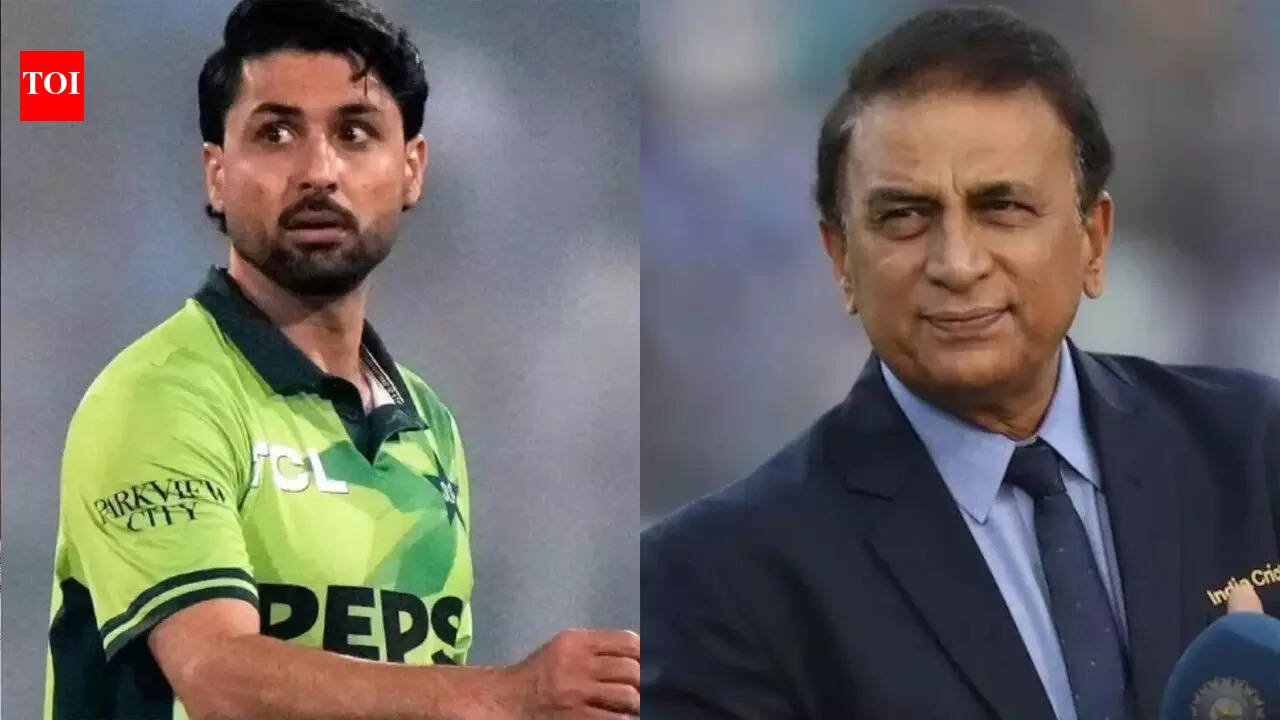
Sunil Gavaskar faces ‘vile stuff’ attack from Pak-born player over Abrar comment | Cricket News


Sunil Gavaskar faces ‘vile stuff’ attack from Pak-born player over Abrar comment
Abrar Ahmed and Sunil Gavaskar

NEW DELHI: A fresh controversy has erupted in the cricketing world after Pakistan-born England cricketer Azeem Rafiq strongly criticised batting great Sunil Gavaskar for his remarks on Indian-owned franchises signing Pakistan players in overseas leagues.Go Beyond The Boundary with our YouTube channel. SUBSCRIBE NOW!The debate was triggered after Abrar Ahmed was picked by Sunrisers Leeds for £190,000 in The Hundred auction, making him the first Pakistan cricketer to join an Indian-owned team in the competition. The move sparked backlash among Indian fans, prompting Gavaskar to weigh in with a strong opinion.

Jay Shah calls 2019 to 2026 as Indian cricket’s golden period

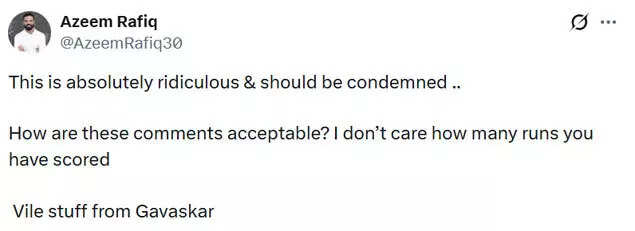
Writing in his Mid-day column, Gavaskar said Indian-owned franchises should refrain from signing Pakistan players, arguing that such financial transactions could indirectly contribute to harm against India. “The furore… is hardly surprising,” he wrote, adding that payments made to players eventually go to their government through taxes, which could be used for military purposes. “If the owner is Indian then he or she is contributing to the Indian casualties. It’s as simple as that,” he stated, also warning of possible fan protests and boycotts.Rafiq, however, did not hold back in his response. Sharing Gavaskar’s comments on social media, he wrote: “This is absolutely ridiculous & should be condemned… How are these comments acceptable? I don’t care how many runs you have scored. Vile stuff from Gavaskar.” His sharp reaction quickly gained traction, adding another layer to the already heated debate.

Azeem Rafiq

After the Hundred auction, Sunrisers Leeds head coach Daniel Vettori defended the signing, insisting it was purely based on cricketing needs. He revealed that the franchise turned to Abrar after missing out on England leg-spinner Adil Rashid, highlighting the Pakistan spinner’s variations and effectiveness, especially in powerplays.Meanwhile, Rajeev Shukla clarified that the BCCI has no jurisdiction over franchise decisions in foreign leagues, leaving the matter entirely to the team management.The episode has once again spotlighted the complex intersection of sport, politics and public sentiment, with Rafiq’s blunt criticism ensuring that Gavaskar’s remarks remain firmly in the spotlight.

Banner Insert


Source link

Iran war shakes skies: Emirates jets fly back to Dubai nearly empty as travellers flee


Iran war shakes skies: Emirates jets fly back to Dubai nearly empty as travellers flee

The ongoing Middle East war has drained Dubai of much of its travel appeal. Emirates, the world’s largest international airline, is operating some flights to Dubai almost empty, as travellers avoid the Persian Gulf. Flights from the US and continental Europe have been hit hardest, with occupancy on several routes dropping sharply, as thecarrier faces challenges in restoring its network amid the escalating conflict.Data compiled by Emirates and reviewed by Bloomberg shows planes returning from Prague or Budapest carrying only 5% to 10% of passengers. Several aircraft from New York flew with just a fifth of tickets sold, and at least one Airbus A380 departed last week with fewer than 35 passengers on a jet that normally seats nearly 500. Departures from Chicago ran with half-empty cabins.Emirates faces several thousand no-shows daily on outbound flights, according to a memo, highlighting the complexity of running an operation that normally includes hundreds of daily flights that are nearly full. The airline is offering refunds and flexible rescheduling for flights until the end of the month.“Given the circumstances, current inbound occupancy is unsurprisingly light,” an Emirates official told Bloomberg. Emirates said it will continue to restore its network at pace, provided it can do so safely.Passenger demand remains weak, but the airline is also carrying cargo, including perishable goods, generating revenue. Boeing 777s are prioritised because they have more optimal cargo capacity than the Airbus A380. With the Strait of Hormuz effectively closed, Emirates flights are among the few ways to import supplies.Meanwhile, flights leaving Dubai show a different picture, as passengers continue to depart the city despite fewer planes being available. Operations have been disrupted by Iranian missile threats and several drone incidents near Dubai International Airport, which caused minor injuries and some damage since the war began. On Monday, Emirates suspended operations for more than seven hours after a fuel-tank fire, triggered by a drone, before resuming flights later the same day.Etihad Airways and Qatar Airways, the other major Gulf carriers, have resumed a thinned-out service, primarily focused on evacuating stranded passengers. Emirates, however, continues to operate at a faster pace than competitors, offering at least six times as many flights as Qatar Airways. Some Emirates aircraft remain out of position in Europe and China.On one Paris-Dubai flight, an Airbus A380 with a high-density layout seating about 600 carried only around 25 passengers, almost the same number as the crew needed to operate it. London Heathrow departures have fared slightly better, with about 20% of tickets sold, still far below Emirates’ usual near-full occupancy on its dozen daily UK services. Forward bookings for inbound flights are around a third of capacity, unusually low given the approaching busy Easter season.


Source link