Breaking News
West Bengal elections: EC transfers 19 senior police officers in fresh reshuffle ahead of polls | India News


West Bengal elections: EC transfers 19 senior police officers in fresh reshuffle ahead of polls
The IPS officers were transferred as ordered by the Election Commission of India.

NEW DELHI: The Election Commission of India (ECI) on Tuesday ordered the transfer of 19 senior police officers in West Bengal, marking the third consecutive day of such reshuffles in the poll-bound state.The poll body replaced the ADG/IGPs of the south and north Bengal regions, the police commissioners of Howrah, Barrackpore, Chandannagar, and Asansol-Durgapur, as well as 12 superintendents of police (SPs) and a deputy commissioner (DC) across 13 districts.The first round of transfers was carried out in the state’s top bureaucracy just hours after the ECI announced the assembly election schedule on Sunday for four states, including West Bengal, and the Union territory of Puducherry.The second round of transfers took place on Monday afternoon within the senior ranks of the West Bengal Police. The ECI is empowered to transfer officers directly involved in elections under Article 324 of the Constitution. Under it, the poll body has the power of “superintendence, direction, and control” over the entire poll machinery in a state or Union territory during elections.However, the transfers drew sharp criticism in Parliament from the Trinamool Congress (TMC), which governs West Bengal. TMC MP Derek O’Brien announced a day-long walkout by party MPs from the Rajya Sabha to protest what he called “transfers made by the ECI in the middle of the night.” Parliamentary affairs minister Kiren Rijiju, however, emphasised that the poll panel was exercising its constitutional mandate and accused the TMC of “routinely attacking constitutional bodies.All 294 assembly constituencies in West Bengal will be held in two phases – April 23 and 29 – with voting for 152 and 142 seats, respectively. The counting will be held on May 4.


Source link

Rasgulla stuck in throat: Man chokes to death at wedding feast | Jamshedpur News


Man dies in Jamshedpur after choking on Rasgulla at wedding.

JAMSHEDPUR: A 41-year-old man died after a rasgulla got stuck in his throat while he was attending a wedding feast in Jharkhand’s Jamshedpur, doctors said.The incident took place on Saturday in Maliyanta village, where Lalit Singh had gone to attend a wedding ceremony.According to doctors, the dessert blocked his airway, cutting off the oxygen supply to his body.Doctors said the rasgulla had completely obstructed his airways. As a result, Singh died within a few minutes. Singh collapsed during the feast, after which people present at the venue rushed him for medical help.


Source link

Babies can lie before their first birthday: Why it’s normal and what it means for brain development


Babies can lie before their first birthday: Why it’s normal and what it means for brain development
Recent studies show that even infants as young as 10 months old can display basic forms of deceit. By the time they reach three years, almost all children engage in these playful fabrications. This instinct doesn’t come from a sense of right or wrong; rather, it arises from a natural drive to fulfill their desires or sidestep consequences.

A baby who cannot yet speak may still “bend the truth.” That idea feels strange at first. But new research, including the Early Deception Survey (EDS) published in the journal Cognitive Development, shows something important: the roots of lying begin far earlier than most parents expect.By 10 months, about 25% of babies show simple deceptive behaviour. By age three, almost all children experiment with it. These are not calculated lies. They are small, everyday attempts to get what they want or avoid trouble. Understanding this phase can change how parents respond, and how children learn honesty over time.

The first signs: It starts earlier than expected

Parents often link lying with older children. But the study suggests otherwise. Some parents noticed early signs as young as eight months.These early behaviours are subtle. A baby may pretend not to hear a parent’s voice. A toddler may quietly hide a toy. Another may eat something forbidden and shake their head when asked.These actions are not planned deception in the adult sense. They are trial-and-error responses. The child learns: this action helped avoid a reaction. That learning sticks.

Baby lying

As children grow, deception becomes more complex, shaped by language and environment. With calm guidance, parents can turn this phase into a foundation for honesty and trust.

Why babies “lie”: It’s not about morality

It helps to ask a simple question: why would a baby even try to deceive?The answer is direct. It is about outcomes, not ethics.At this stage, children are driven by immediate needs. Food, comfort, attention, or avoiding a “no.” When a behaviour works once, the brain stores it.Researchers believe this links to early social learning. Babies begin to understand that other people have reactions they can influence. This is the beginning of what psychologists call “theory of mind,” or the ability to guess what someone else knows or feels.So a child is not thinking, “This is wrong.”They are thinking, “This works.”

How deception grows with age

The study shows a clear pattern.

  • By 10 months: simple avoidance or hiding
  • By 16 months: about half of children try some form of deception
  • By 24 months: most children engage in it regularly
  • By 3 years: deception becomes more creative and verbal

At age two, actions dominate. A child may ignore instructions or deny doing something. By age three, language enters the picture. Children may exaggerate, leave out details, or invent stories like “a ghost ate the chocolate.”This shift matters. It shows growing brain development, especially in memory, language, and social awareness.

The role parents play (often without realising it)

One of the most striking findings from the EDS study is this: children’s deception is linked to what they see at home.When parents use small “social lies” like “the shop is closed” instead of saying no, children notice patterns. The study found a positive link between parental behaviour and children’s understanding of deception.Encouraging deception was rare. But even everyday interactions can shape how children think.This does not mean parents should feel guilty. It simply shows that children are sharp observers. They learn not just from what is said, but how it is said.

Should parents be worried? Not really

It is easy to feel concerned when a child lies for the first time. But experts say this behaviour is normal.Instead, calm responses work better. When a child denies eating chocolate with crumbs on their face, the goal is not to “catch” them. It is to guide them.Simple language helps. Clear boundaries help more.

A small phase with a big lesson

A baby hiding a biscuit or a toddler denying a mess may seem frustrating in the moment. But these are small signs of a growing mind.Deception in early childhood is not a flaw. It is a step. It shows curiosity, learning, and awareness of others.Handled with patience, this phase can lead to something stronger: a child who understands honesty, not just follows it.


Source link

Rashid Khan and other Afghanistan cricketers slam Pakistan for deadly air strike in Kabul


The cricketing world was shaken after reports emerged of a devastating airstrike by Pakistan in Kabul that took hundreds of lives. Members of the Afghanistan cricket team were among the first to react, with several players voicing grief, anger and calls for accountability following the incident.

The strike reportedly targeted the Omid Addiction Treatment Hospital, a major rehabilitation centre in the Afghan capital. With over 400 people feared dead and hundreds injured, the tragedy has triggered strong reactions not just politically, but also within the sporting community – especially from Afghan cricketers who have long served as global ambassadors for their nation.

Rashid Khan leads outrage, calls for UN investigation

Star spinner Rashid Khan led the condemnation, using social media platform X to demand justice and highlight the severity of the incident. The former T20I captain did not hold back, describing the attack in stark terms and urging global authorities to intervene.

“I am deeply saddened by the latest reports of civilian casualties as a result of Pakistani airstrikes in Kabul. Targeting civilian homes, educational facilities or medical infrastructure, either intentional or by mistake, is a war crime,” Rashid wrote.

He further emphasized the emotional weight of the tragedy, especially given its timing during Ramadan – a period of reflection and peace for Muslims worldwide.

“The sheer disregard for human lives, especially during the holy month of Ramadan, is sickening and deeply concerning. It will only fuel division and hatred,” he added.

Rashid also called upon international bodies to act swiftly. He urged the United Nations and human rights organizations to “thoroughly investigate this latest atrocity and hold the perpetrators to account.”

Ending on a note of resilience, he expressed solidarity with his fellow citizens: “I stand with my Afghan people in this difficult time. We shall heal, and we will rise as a nation. We always do. Inshallah!”

Rashid was not alone in his response. Veteran all-rounder Mohammad Nabi shared a deeply emotional message that resonated widely across social media.

“Tonight in Kabul, hope was extinguished at a hospital. Young men seeking treatment were murdered in a bombing by the Pakistani military regime.”

He described the human cost in heartbreaking detail: “Mothers waited at the gates, calling their sons’ names. On the 28th night of Ramadan, their lives were cut short.”

His words highlighted the tragic irony of a medical facility – meant for healing – becoming the site of such devastation.

New T20I captain Ibrahim Zadran offered a personal account, revealing that he was in Kabul when the explosion occurred.

“Tonight I heard a massive explosion here in Kabul. Moments later we saw flames rising into the sky from a hospital.”

He added a poignant reflection on the timing of the attack: “Our brothers who intended to fast tomorrow are now gone, or wounded. My thoughts are with every family grieving tonight. Kabul is in pain. We pray for justice.”

Reactions of other Afghan players 

Other Afghan cricketers also joined the chorus of condemnation. Fast bowler Naveen-ul-Haq drew comparisons with other global conflicts, while Wafadar Momand described the hospital as a “house of humanity,” calling the strike a grave violation of ethics and human values.

All-rounder Gulbadin Naib expressed solidarity with affected families, stressing unity and resilience in the face of tragedy. Meanwhile, young spinner Noor Ahmad summed up the collective grief in a single word: “Heartbreaking.”

Also READ: Afghanistan unveil squads for the white-ball series against Sri Lanka; Ibrahim Zadran appointed new T20I captain

Meanwhile, Afghanistan Cricket Board (ACB) posted a series of tweets to condemn the attack and also mentioned that they stand in solidarity with the affected families and their people during this difficult time.

According to officials, the airstrike occurred around 9:00 pm local time and caused widespread destruction across the hospital complex. Rescue operations continued through the night, with fears that the death toll could rise further as teams searched through the debris.

While investigations and official responses are awaited, one thing is clear – the emotional impact of this incident has gone far beyond the boundaries of cricket, uniting players and fans alike in grief and solidarity.

Also READ: IPL 2026 – Here’s why KKR have no replacements for Harshit Rana and Matheesha Pathirana






Source link

‘Unconstitutional’: SC rules adoptive mothers can’t be denied maternity leave if child is older than 3 months | India News


'Unconstitutional': SC rules adoptive mothers can't be denied maternity leave if child is older than 3 months

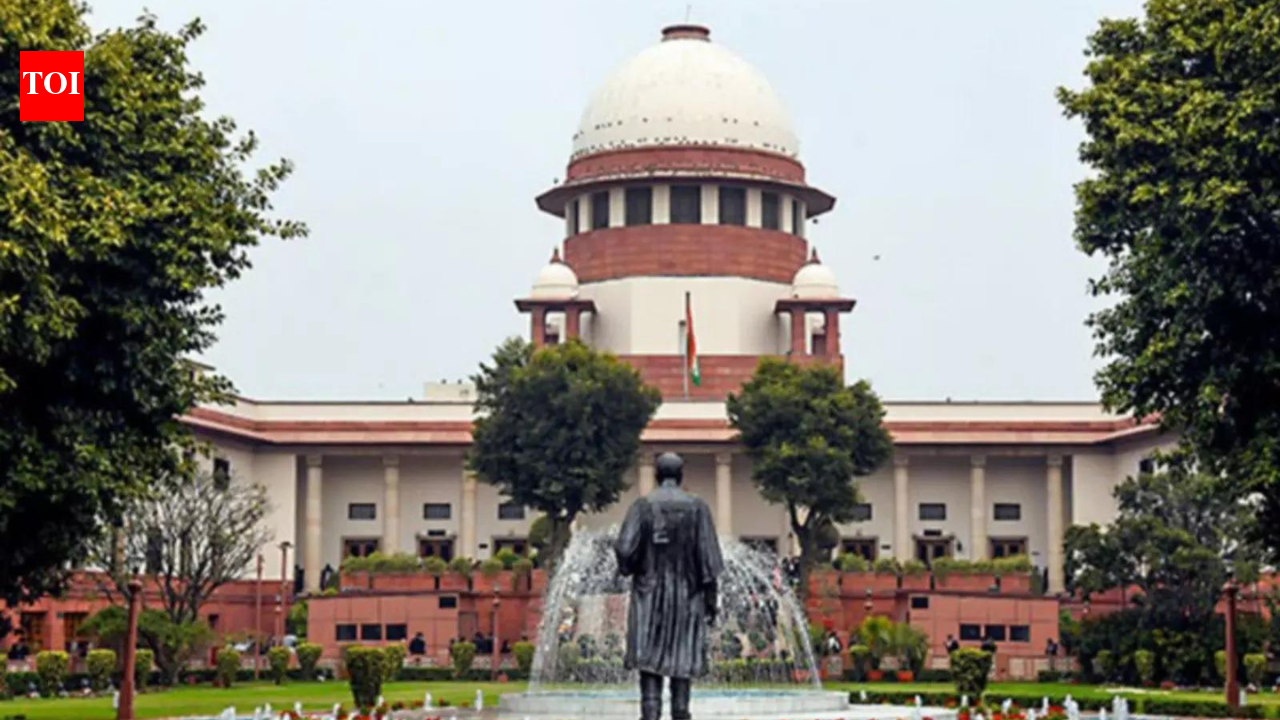
NEW DELHI: The Supreme Court on Tuesday ruled that there is “no rationality” in a provision of the Social Security Code 2020, calling it “contentious.” The provision limits maternity leave for adoptive mothers to those who adopt children under three months of age.The top court has declared Section 60(4) of the Code on Social Security, 2020—which restricted 12 weeks of maternity leave for adoptive mothers to those adopting children under three months of age—”unconstitutional and a violation of the Right to Equality.”A bench of Justices JB Pardiwala and R Mahadevan observed that maternity benefits are inherently linked to motherhood. Adoptive mothers of children older than three months are in the same position as those adopting younger infants, as both require time for bonding, caregiving, and adjustment. Denying leave based solely on the child’s age, the Court said, creates an artificial and unreasonable classification.The apex court also noted that the provision overlooks the significant emotional, psychological, and practical adjustments that adoption entails, regardless of the child’s age.


Source link

The 3.6-million-year brake: Why climate change is slowing Earth’s spin |


The 3.6-million-year brake: Why climate change is slowing Earth’s spin

Looking out to the future, we see a gradual but also very important shift occurring right under our feet; the Earth’s own rhythm has begun to alter and slow down. New studies by researchers from both ETH Zurich and the University of Vienna have demonstrated that climate change caused by humans is making our planet’s rotation continuously longer than it has ever been at any time in recorded history for approximately 3.6 million years. As the polar ice caps have melted due to climate change, they have created a mass of water now distributed towards the equator, which resembles how an ice skater uses his arms to slow himself down as he turns. This has had a direct impact on slowing down how fast the Earth rotates. The current rate at which Earth is drastically slowing can be measured at approximately a very small but measurable slowdown of about 1.3 milliseconds per century. The study was published in the research article of the Journal of Geophysical Research: Solid Earth. The Solid Earth has established that anthropogenic causes this deceleration.

How melting ice is affecting Earth’s rotation

The Journal of Geophysical Research: Solid Earth publishes research by teams at ETH Zurich and the University of Vienna theorising that anthropogenic climate change plays a large role in changing the rotation of Earth. Melting glaciers from Greenland and Antarctica produce increased amounts of water that move into the ocean due to increasing average global temperatures.This redistribution of mass will change the way that weight is distributed across the Earth, which causes the Earth to rotate more slowly, which causes a slight increase in the amount of time it takes to complete one rotation (length of a day). Historically, other factors such as tidal forces from the Moon have been the main influences on this phenomenon. Currently, however, the brake placed on the Earth’s rotational speed caused by the melting of anthropogenic ice has become the principal influence.“In our earlier work, we showed that the accelerated melting of polar ice sheets and mountain glaciers in the 21st century is raising sea levels, which slows Earth’s rotation and therefore lengthens the day – similar to a figure skater who spins more slowly once they stretch their arms, and more rapidly once they keep their hands close to their body,” explains Mostafa Kiani Shahvandi of the University of Vienna’s Department of Meteorology and Geophysics. “What remained unclear was whether there were earlier periods when climate increased day length at a similarly rapid pace.”

The ‘figure skater effect’: A simple physics explanation

The principles of Angular Momentum provide a basis for how a slowing down occurs as a result of distance from the axis of rotation. Mass that travels away from this axis creates a slowing of its rotation.Figure skating is an example of this idea being tested. A figure skater who extends her arms will cause a decrease in the rate of spin, while bringing them in will create a faster spin. Movement of melting glacial ice, for example, redistributes water from the poles to the equator, which increases Earth’s Moment of Inertia and causes Earth to rotate slightly slower and increases the length of the day.

Measuring a tiny but important change

The impact on Earth’s rotation is negligible but still discernible; it is predicted that a day will last approximately 1.33 milliseconds longer each century as a result of fluctuations in the distribution of mass on the planet as a result of climate change.According to this research, human-induced melting of ice is one of the major contributors to this variation. The variation of a planet’s spin due to natural geophysical processes can typically be between 30 milliseconds and 2 minutes across an extended time period that can take many thousands of years. The amount of variation measured in the 21st-century is shocking by comparison.

What geological records reveal

Scientists utilise geological information to establish the relationship between changes happening today and those that occurred in the past. One key area where this type of data can be found is Benthic Foraminifera, which are minute marine creatures that build hard outer shells, called tests, made out of calcium carbonate (CaCO3) when living. The tests of Benthic Foraminifera provide us with a ‘chemical scrap book’ with which to examine past ocean conditions.By measuring the ratio of oxygen and carbon isotopes found in analysed tests, Mostafa Kiani Shahvandi and Benedikt Soja were able to analyse the fluctuations in sea levels for the past 3.6 million years back to the end of the Pliocene Epoch. These sea-level records have shown that while all natural phenomena have caused the Earth to rotate at different rates, primarily due to the ice ages, the current amount of time spent rotating is much faster than any of the changes that have occurred naturally over the past 3.6 million years. The only time that has occurred before was approximately 2 million years ago, and therefore it can be concluded that the period from 2000 to 2026 consists of a true ‘geological anomaly.

Combining modern data with advanced models

With the goal to unite ancient observations with modern data gathered by satellite analysis, a team of researchers has implemented an innovative artificial intelligence tool known as the Physics-Informed Diffusion Model (PIDM). The Physics-Informed Diffusion Model can anchor itself to existing principles of Physics rather than merely identifying numeric patterns, as traditional AIs would do.For example, the PIDM was programmed against the Sea Level Equation, which predicts oceanic evolution based on the following principles: gravitational force, centrifugal force due to Earth’s rotation, and the natural recovery of land caused by glacial retreat. To achieve this goal, the PIDM utilised Monte Carlo sampling techniques to develop records of 3.6 million years’ worth of Earth’s Ecological influences (with the aid of over 50,000 Monte Carlo samples) while removing extraneous sources of ‘noise’ (i.e., Moon feature terrestrial connectivity; and core material displacement) to isolate the magnitude of human underpinnings due to melting glacial ice.

Why this slowdown matters

The change in the Earth’s rotational rate may seem minuscule to notice in an everyday sense, but it is important in the world of science, especially when considering precise measures of time (e.g., short-term uses of time). In this regard, global time synchronisation must take into account very small changes in rotation between two consecutive days.To provide time with extreme accuracy, such as an Atomic Clock does, will need resynchronisation periodically (depending on how often the Earth’s rotation changes) to maintain alignment between the Atomic Clock and the rotational position of the Earth. If able to provide extreme accuracy of clocks used in GPS Navigation, Space Exploration Missions, and World Financial Systems without realignment/updates, it would create substantial issues with the precision of synchronisation between any such systems.

A subtle signal of a changing planet

The deceleration of the planet’s rotation illustrates how all of the systems on Earth are interrelated and interconnected; therefore, the changes that occur due to climate change, such as the melting of ice caps and the shifting of oceans, will not only have an impact on ecosystems and weather systems but also affect the basic principles of the planet itself.Although this time frame is measured in milliseconds, it is a measurable indication of the impact of human activities on Earth in complex and extensive ways. By 2100, the effects of climate change are likely to create changes to the length of a day that exceed that of the Moon’s effects- a change to the rhythm of the Earth that has not been experienced for millions of years.


Source link

‘Khoon garam tha’: Suryakumar Yadav on how India’s 2026 T20 World Cup team differed from 2024 | Cricket News


‘Khoon garam tha’: Suryakumar Yadav on how India’s 2026 T20 World Cup team differed from 2024
Suryakumar Yadav and Tilak Varma of India lift the T20 World Cup trophy. (Getty Images)

NEW DELHI: India captain Suryakumar Yadav has offered a fascinating insight into what set apart the country’s back-to-back T20 World Cup-winning squads, describing the 2024 side as driven by “experienced enthusiasm” and the 2026 unit as fuelled by the “fiery passion of youth.Go Beyond The Boundary with our YouTube channel. SUBSCRIBE NOW!Suryakumar explained that while both teams were equally skilled, the difference lay in their mindset. “There was just an ‘unnis bees ka farak’. Woh experience wala josh tha, idhar ekdum khoon garam tha ladkon ka,” he said in a PTI interview, highlighting how the earlier team leaned on experience, while the latest group thrived on youthful intensity.The 2024 triumph, achieved under Rohit Sharma, featured stalwarts like Virat Kohli and Ravindra Jadeja, whose experience helped India end a long ICC title drought. In contrast, the 2026 squad saw a younger core step up after the senior trio’s retirement from the format.

IPL 2026 should be audition for the next India T20I captain

2024 vs 2026 – Experience vs Youth“In 2024, we had a lot of experience and clearly defined roles. There are good players now as well, but that team had immense experience,” Suryakumar noted, downplaying any direct comparison in terms of superiority between the two sides.Leading a relatively young group in 2026 also meant managing expectations, especially with the tournament being held at home. Suryakumar revealed he had to prepare his players mentally for the magnitude of the occasion. “All the guys are 25 to 27 years old. It was important to tell them what it feels like to win a World Cup in India, with 50,000 or even a lakh people cheering,” he said.Despite the relative inexperience, the captain felt the team’s hunger made the difference. “Skill-wise, there’s only a slight difference in T20 cricket, but this time there was more enthusiasm,” he added.Reflecting on his own journey from a key player in 2024 to captain in 2026, Suryakumar admitted the emotions were heightened. “The goal was the same, but the emotion in 2026 was more because we were playing in India. Winning it in Ahmedabad made it even more special,” he said.

Banner Insert


Source link

UK MPs delegation meets Maharashtra CM Devendra Fadnavis | Mumbai News


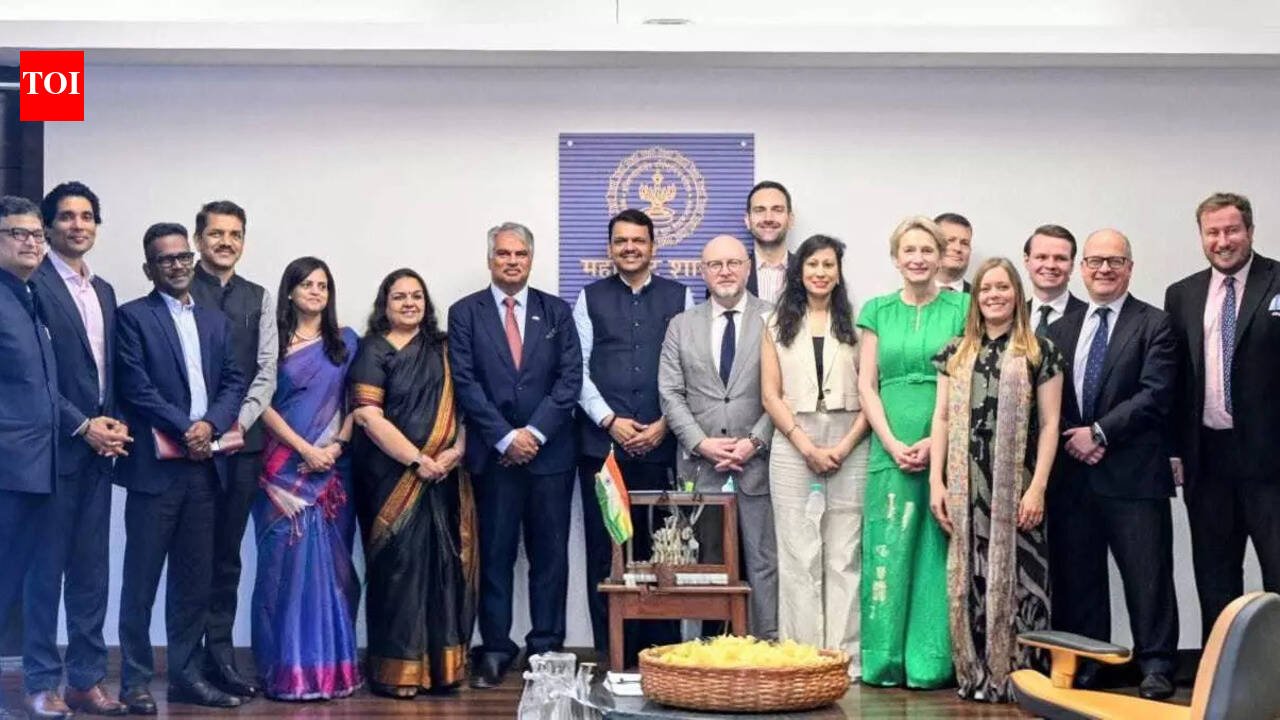
MUMBAI: A delegation of UK MPs, led by Liam Byrne, MP from Birmingham in UK met CM Devendra Fadnavis on Monday. CM Fadnavis said Maharashtra is the country’s economic powerhouse and the nation’s ‘Startup Capital’ and urged investors from the UK to invest in Maharashtra, which has an excellent ecosystem for investment. On this occasion. CM provided detailed information about the state’s progress.“Maharashtra is not only the country’s powerhouse but has also become an attraction for global investors,” stated MP Liam Byrne. MPs Sonia Kumar (MP for Dudley), Sarah Edwards (MP for Tamworth), John Cooper (MP for Dumfries and Galloway), Dan Aldridge (MP for Weston-super-Mare), Alison Griffiths (MP for Bognor Regis and Littlehampton), Justin Madders (MP for Ellesmere Port and Bromborough) and Joshua Reynolds (MP for Maidenhead) were part of the delegation. “The state contributes 13% to the country’s total GDP. 60% of the data center capacity in the country is in Maharashtra. The trade agreement between India and Britain is a milestone for Maharashtra and Britain. The government is working towards the goal of generating 52% of the total energy needs by 2030 through the renewable energy sector. Letters of Intent have been issued to universities in Britain to open educational institutes in the Educity in Navi Mumbai. The partnership between Maharashtra and Britain will certainly prove beneficial for a bright future,” CM Fadnavis said. Harjinder Kang, UK’s Trade Commissioner for South Asia and the British Deputy High Commissioner for Western India, CM Chief Advisor Kaustubh Dhavse and other senior officials were present during the meeting. “I was glad to know about the learnings of the delegation about Indian democracy and systems during this visit. Our interaction was about the prospects and partnership between Maharashtra and the UK, highlighted by the India-UK Comprehensive Economic and Trade Agreement (CETA), which opens vast opportunities for collaboration in pharma, electronics, technology, and higher education, transforming historic ties into a modern engine for mutual growth and global progress. The Maharashtra Industry, Investment and Services Policy 2025 ensures a seamless journey for global investors, fostering expansion in manufacturing, energy and innovation and strengthening the state’s position as a hub for global business and technological advancement,” CM Fadnavis said in a post on X.


Source link

‘I was never the home-breaker’: When Asha Parekh admitted Nasir Hussain was the only man she loved but never married him |


Veteran actor Asha Parekh, celebrated for iconic films such as ‘Kati Patang’, ‘Caravan’, ‘Chirag’, ‘Teesri Manzil’ and ‘Love In Tokyo’, has had a remarkable career spanning decades. The actress has admitted that Nasir Hussain whose death anniversary was on March 13, was the only man she loved. Despite never marrying, the legendary star has often said she has no regrets about remaining single and has spoken candidly about why marriage never worked out for her.In an earlier interview with Verve magazine, Parekh shared her thoughts on relationships and the realities of married life. She said, “Marriage is not all rainbows and butterflies; you have to give in to your partner’s whims every now and then, and that’s a two-way street.”

Bollywood’s Golden Girls Reunite: Asha Parekh, Waheeda Rehman & Helen Share Heartfelt Dinner

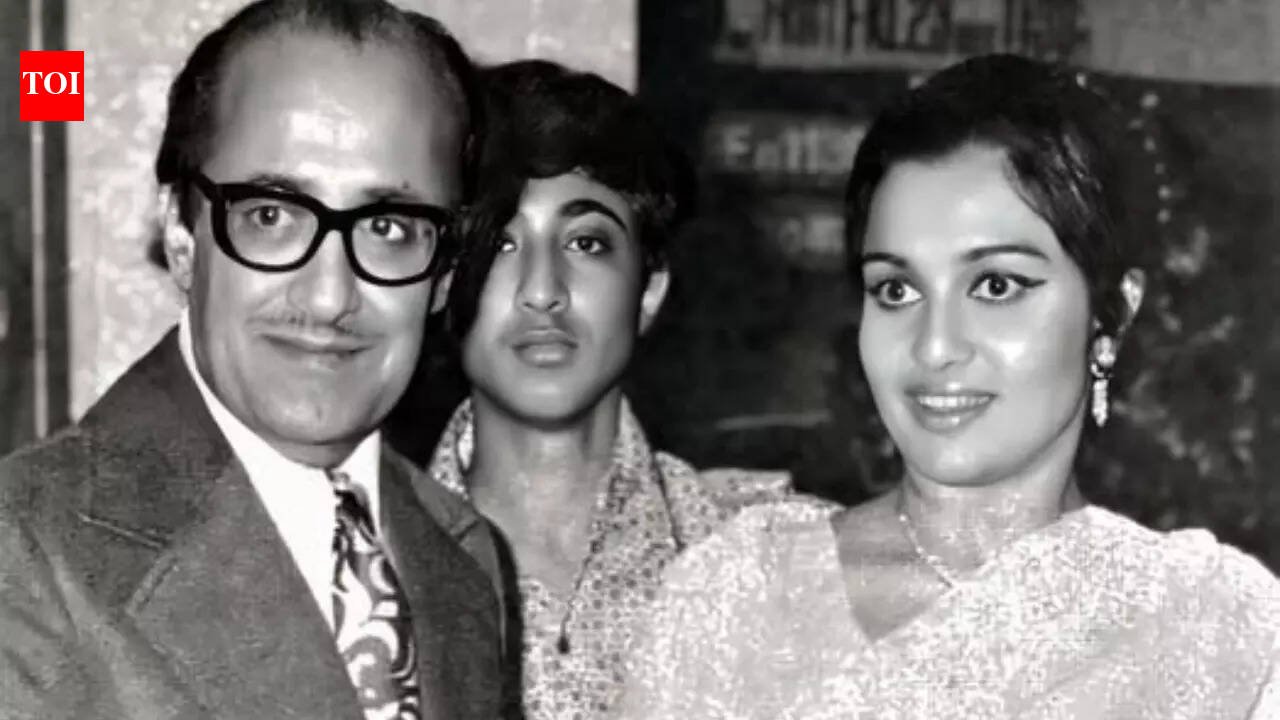
When asked whether she ever felt regret about not tying the knot, especially since many people fear loneliness in old age, she made it clear that the thought never troubled her. “Not at all. I saw the kind of people that were out there. When I went out with the boys that my mother set me up with, I was completely put off by the whole premise of marriage. They were so fussy! They’d take longer to get ready than I did and would keep preening in the mirror. The narcissism was repulsive. I know it seems silly but these little things really nettled me. There was also the case of my heroes Rajesh Khanna and Vinod Khanna getting an earful from their girlfriends during outstation shoots because they were gallivanting and making merry at night instead of being in bed. I would’ve never been able to take someone dictating terms to me — I was just not cut out for it.”Parekh also recalled a time when she almost got married. Speaking about the incident, she revealed how an unexpected moment changed everything. “I did come very close to tying the knot once with a professor from the US. I was visiting him and we were in a cafe at 2 a.m., when he turned to me and nonchalantly said, ‘I have a girlfriend and you’ve come in the way’. It completely caught me off guard. In a way, that was the final straw for me in this whole wedding business. My friend was travelling with me at the time and when I told her that we were returning to India that very instant, she asked me how I wasn’t gutted that I was cutting ties so unceremoniously with the man I was supposed to be marrying.”The actress had once admitted that Nasir Hussain was the only man she loved. “Yes, Nasir Saab was the only man I ever loved. It is not respectful to those whom we love if we don’t acknowledge their presence to the world,” she had said. The actor has also openly spoken about her feelings for filmmaker Nasir Hussain in the past. However, she explained why marriage was never an option. In her autobiography, Parekh wrote, “I was never a home breaker. There was never any ill will between me and Nasir Saab’s family. In fact, I was so happy to see Nusrat (Hussain’s daughter) and Imran Khan (grandson) at my book launch. I feel I’ve lived my life decently and without hurting anyone.”


Source link

LPG crisis hits restaurants: Staff face salary cuts, layoffs as eateries struggle to keep kitchens running


LPG crisis hits restaurants: Staff face salary cuts, layoffs as eateries struggle to keep kitchens running

The Middle East crisis continues to boil and the ripples have triggered an operational stress for India’s food services sector. As LPG supply flows are disrupted amid the Strait of Hormuz transit issues, industry voices have warned of layoffs, salary cuts and widespread business impact if the situation drags on. Despite assurances from the government on boosting availability, restaurant owners and caterers have flagged that access to commercial LPG remains inconsistent, leaving many scrambling to keep operations afloat. Several described the situation as unpredictable, with little clarity on when normal supply will resume.Anjan Chatterjee, founder of Speciality Restaurants pointed to the growing distress across the sector. Highlighting the uncertainty of the situation, Chatterjee told ET that people are running from pillar to post. The founder further cautioned that the worst-hit would be workers at the lower end of the chain. “If restaurants and eateries are unable to do business, the first ones to get hit will be people down below.

Impact on businesses, especially smaller players

Smaller restaurants, street-side eateries, caterers and cloud kitchens are the worst affected, with many already shutting or scaling down. Anjan Chatterjee of Speciality Restaurants described the chaos, saying people are running from pillar to post, and warned, “If restaurants and eateries are unable to do business, the first ones to get hit will be people down below.” He added, “While we hope supplies improve soon, currently, the situation is dynamic and we don’t know how things will pan out. At the ground level, particularly for local and street-side eateries, things are much worse.”Kirit Budhdev of the Federation of All India Caterers flagged worsening delays, “Suppliers are telling us to wait for 15 days. The on-ground situation is very challenging and it’s actually worsening for a lot of our members.”

Financial strain and risk of layoffs

The shortage is hitting profitability, menus and operating hours. Sagar Daryani of the National Restaurant Association of India said, “Smaller players which cannot bear the loss will see job cuts and the bigger players may bear the brunt for a while,” adding that multiple aspects of operations will be impacted.The strain is cascading to workers, especially those at the lower end. Aditya Narayan Mishra of CIEL HR explained, “For instance, if a restaurant has to close shop or run for fewer days in a week, they will not be employing helpers, local delivery boys, etc., who typically get paid Rs 500-700 daily. This segment, which accounts for the largest number of people employed, is already seeing an impact.”In Pune, Ganesh Shetty said, “Our members are still being told by agencies and suppliers that the supply is not for them but for other priority sectors like hospitals. Smaller restaurants have already shut down and they are not operational in Pune.Meanwhile, street food vendors in Madhya Pradesh are facing mounting pressure as a shortage of commercial gas cylinders disrupts operations, particularly for pani puri stalls and similar snack sellers. The impact is clearly visible across key markets such as Kolar, Jawahar Chowk and the BHEL area, where several carts remain closed or operate only during limited peak evening hours. Vendors who once catered to regular crowds are now struggling to secure enough fuel even for basic preparation.

Turning towards alternatives

Cloud kitchens are also under pressure, with FreshMenu’s Rashmi Daga noting, “At a central level, we are trying to move to firewood cooking, bring in induction, electric stoves, etc. But one can’t just move seamlessly to electric equipment given that summer months will also see power cuts.” At the same time in MP, two villages, Bandarkol in Jabalpur district and Baghuwar in neighbouring Narsinghpur, remain largely unaffected, with kitchen stoves continuing to run smoothly. In these villages, residents have turned to biogas instead of LPG cylinders. In Bandarkol, several households have installed small biogas plants that convert cattle dung into cooking fuel. Villagers say the system requires only a few minutes of daily effort while ensuring a steady supply of fuel for use throughout the day.

Uncertainty and outlook

Industry stakeholders say the situation remains volatile, with no clear timeline for recovery. While there has been slight easing compared to earlier days, supply gaps persist, and businesses continue to operate under uncertainty as they brace for prolonged disruption. Chatterjee added that while there is hope for improvement, conditions on the ground remain volatile. “While we hope supplies improve soon, currently, the situation is dynamic and we don’t know how things will pan out. At the ground level, particularly for local and street-side eateries, things are much worse,” he said. Speaking to ET, Rashmi Daga also highlighted the uncertainty ahead, saying, “One can’t even plan for perishables without knowing if gas is available the next day. Right now, the industry is bracing for 40-60 days of pain, but who knows, it could continue for months, too. If this happens, we will have no choice but to send some workers home.” The All Assam Restaurant Association (AARA) has called on the state government to urgently ensure a dedicated supply of commercial LPG cylinders for the hospitality sector, cautioning that continued shortages could force restaurants and hotels across the state to shut down operations entirely. The association has appealed to CM Himanta Biswa Sarma to step in, describing the situation as an “escalating commercial LPG crisis” impacting the restaurant industry in Assam. Members said that eateries across the state are grappling with an abrupt disruption in the supply of commercial LPG cylinders, leaving many struggling to function.


Source link