Breaking News
Eid truce: Pakistan pauses Afghanistan operations after deadly Kabul strike | World News


Eid truce: Pakistan pauses Afghanistan operations after deadly Kabul strike

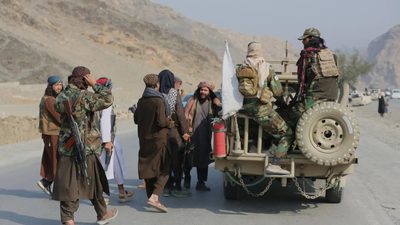
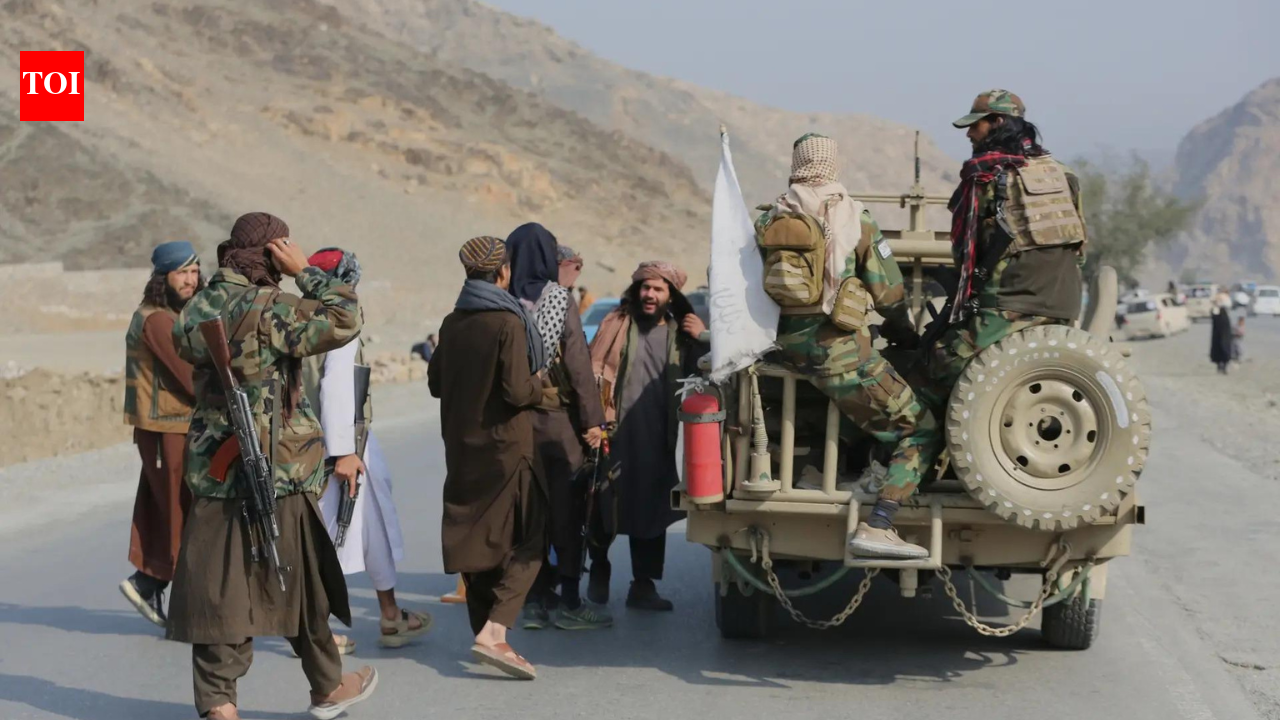
Pakistan on Wednesday announced a temporary pause in its military operations against Afghanistan, according to a reuters report quoting information minister Attaullah Tarar.The minister said the decision was taken in view of Eid, and also following requests from Turkey, Saudi Arabia and Qatar.There was no immediate clarity on the duration of the pause or whether further de-escalation measures are under consideration.The development comes amid heightened tensions along the Pakistan-Afghanistan border after Kabul attack that killed over 400 people.The site in Kabul hit by a Pakistani airstrike this week was used for storing drones and military grade ordnance, and to train suicide bombers, the Pakistani military said on Wednesday.The strike was the deadliest in an escalating conflict between the two neighbours, now in its third week. Afghan officials have put the death toll at 408 people, with 265 wounded. The toll could not be independently verified.


Source link

Rain lashes several parts of Delhi-NCR; thunderstorms, gusty winds likely this week, says IMD | India News


Rain lashes several parts of Delhi-NCR; thunderstorms, gusty winds likely this week, says IMD

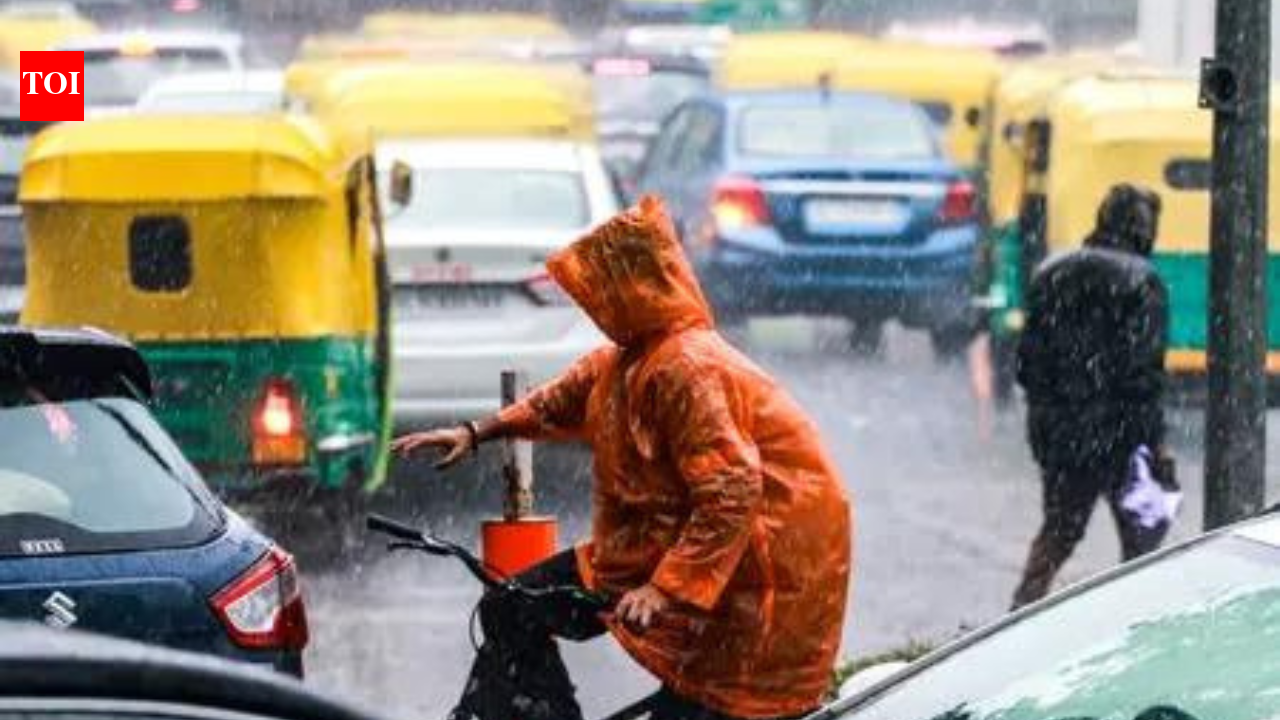
NEW DELHI: Parts of the Delhi-NCR witnessed rainfall on Wednesday, bringing a noticeable change in weather conditions along with a dip in temperatures. Visuals from Indira Bhawan showed steady rain under cloudy skies, while scenes from Moolchand Metro Station captured commuters moving through light to moderate showers. In the Palam area, rainfall and gusty winds were also reported, indicating widespread weather activity across Delhi.According to news agency PTI, high-velocity winds sweeping through Delhi caused power outages and disruptions across several parts of the capital. The India Meteorological Department (IMD) issued advisories, urging residents to remain indoors and avoid vulnerable structures. People were cautioned to stay away from windows, electrical poles, and overhead power lines, while securing loose objects to prevent accidents.Farmers were advised to halt outdoor work temporarily and move livestock to safer areas, while motorists caught in the storm were told to pull over safely and remain inside their vehicles instead of driving through strong winds and flying debris.According to the India Meteorological Department, the city is likely to continue witnessing light rain, thunderstorms, lightning and gusty winds till March 20. Wind speeds may range between 20–30 kmph, gusting up to 40–50 kmph, especially during afternoon and evening hours.The change in weather is attributed to active western disturbances and cyclonic circulations affecting northwest India, leading to increased thunderstorm activity over the region.The rainfall has led to a fall in temperatures, with the maximum expected to drop from around 32–34°C to 26–28°C over the next two days, remaining below normal for this time of year. Minimum temperatures are likely to stay between 16°C and 20°C.The brief spell of rain has provided relief from the early onset of summer heat and improved overall weather conditions in the city.The IMD has advised residents to take precautions and to remain cautious during thunderstorms, avoid waterlogged areas and trees, and drive carefully.


Source link

US stock markets today (March 18, 2026): Dow, S&P 500 fall as oil surge stokes inflation fears


US stock markets today (March 18, 2026): Dow, S&P 500 fall as oil surge stokes inflation fears

US equities edged lower in early trade on Wednesday as a fresh surge in crude oil prices reignited worries about inflation and dampened investor sentiment ahead of the Federal Reserve’s policy decision.The S&P 500 fell 0.3 per cent and was on course for its first decline this week. The Dow Jones Industrial Average dropped 180 points, or 0.4 per cent, while the Nasdaq Composite also slipped 0.3 per cent in morning trade, AP reported.Markets came under pressure after benchmark US crude prices rose 2.2 per cent to $97.69 a barrel. Brent crude, the global benchmark, jumped 4.2 per cent to $107.69 per barrel. Energy prices have been volatile since the outbreak of the Iran conflict, amid disruptions to production and transportation across the Persian Gulf.Concerns intensified after Qatar blamed Israel for an attack on an offshore natural gas field jointly operated with Iran. Prolonged supply disruptions, analysts warn, could push global inflation sharply higher and weigh on economic growth.Adding to inflationary worries, data released on Wednesday showed wholesale prices in the United States accelerated unexpectedly to 3.4 per cent last month. The increase suggests producers may pass on higher costs to households in the coming months.The inflation print reinforced expectations that the Federal Reserve will keep interest rates unchanged at the conclusion of its policy meeting later in the day. While rate cuts could support the job market and financial assets, they also risk stoking inflation — a point that has remained central to the ongoing policy debate. US President Donald Trump has repeatedly called for lower borrowing costs.Investors will also watch whether Fed officials continue to project the possibility of a rate cut during 2026. The outlook remains uncertain, particularly as the geopolitical situation complicates economic forecasts. Rising fuel prices are already beginning to feed into consumer costs, with average gasoline prices climbing to $3.84 per gallon after remaining below $3 just a month ago.Global energy flows continue to face constraints, even as there are tentative hopes that more vessels could eventually pass through the Strait of Hormuz — a key shipping route for about one-fifth of the world’s crude oil.Corporate earnings updates offered mixed cues. Macy’s rose 4.7 per cent after reporting better-than-expected quarterly profit and revenue, while General Mills slipped 1.6 per cent following weaker earnings.In the bond market, Treasury yields edged higher after the inflation data. The yield on the 10-year US Treasury note rose to 4.22 per cent from 4.20 per cent in the previous session.Overseas markets presented a mixed picture. European indices were largely subdued after reacting to rising crude prices, while Asian markets ended higher, with Japan’s Nikkei 225 gaining 2.9 per cent and South Korea’s Kospi jumping 5 per cent.US equities edged lower in early trade on Wednesday as a fresh surge in crude oil prices reignited worries about inflation and dampened investor sentiment ahead of the Federal Reserve’s policy decision.The S&P 500 fell 0.3 per cent and was on course for its first decline this week. The Dow Jones Industrial Average dropped 180 points, or 0.4 per cent, while the Nasdaq Composite also slipped 0.3 per cent in morning trade, AP reported.Markets came under pressure after benchmark US crude prices rose 2.2 per cent to $97.69 a barrel. Brent crude, the global benchmark, jumped 4.2 per cent to $107.69 per barrel. Energy prices have been volatile since the outbreak of the Iran conflict, amid disruptions to production and transportation across the Persian Gulf.Concerns intensified after Qatar blamed Israel for an attack on an offshore natural gas field jointly operated with Iran. Prolonged supply disruptions, analysts warn, could push global inflation sharply higher and weigh on economic growth.Adding to inflationary worries, data released on Wednesday showed wholesale prices in the United States accelerated unexpectedly to 3.4 per cent last month. The increase suggests producers may pass on higher costs to households in the coming months.The inflation print reinforced expectations that the Federal Reserve will keep interest rates unchanged at the conclusion of its policy meeting later in the day. While rate cuts could support the job market and financial assets, they also risk stoking inflation — a point that has remained central to the ongoing policy debate. US President Donald Trump has repeatedly called for lower borrowing costs.Investors will also watch whether Fed officials continue to project the possibility of a rate cut during 2026. The outlook remains uncertain, particularly as the geopolitical situation complicates economic forecasts. Rising fuel prices are already beginning to feed into consumer costs, with average gasoline prices climbing to $3.84 per gallon after remaining below $3 just a month ago.Global energy flows continue to face constraints, even as there are tentative hopes that more vessels could eventually pass through the Strait of Hormuz — a key shipping route for about one-fifth of the world’s crude oil.Corporate earnings updates offered mixed cues. Macy’s rose 4.7 per cent after reporting better-than-expected quarterly profit and revenue, while General Mills slipped 1.6 per cent following weaker earnings.In the bond market, Treasury yields edged higher after the inflation data. The yield on the 10-year US Treasury note rose to 4.22 per cent from 4.20 per cent in the previous session.Overseas markets presented a mixed picture. European indices were largely subdued after reacting to rising crude prices, while Asian markets ended higher, with Japan’s Nikkei 225 gaining 2.9 per cent and South Korea’s Kospi jumping 5 per cent.US equities edged lower in early trade on Wednesday as a fresh surge in crude oil prices reignited worries about inflation and dampened investor sentiment ahead of the Federal Reserve’s policy decision.The S&P 500 fell 0.3 per cent and was on course for its first decline this week. The Dow Jones Industrial Average dropped 180 points, or 0.4 per cent, while the Nasdaq Composite also slipped 0.3 per cent in morning trade, AP reported.Markets came under pressure after benchmark US crude prices rose 2.2 per cent to $97.69 a barrel. Brent crude, the global benchmark, jumped 4.2 per cent to $107.69 per barrel. Energy prices have been volatile since the outbreak of the Iran conflict, amid disruptions to production and transportation across the Persian Gulf.Concerns intensified after Qatar blamed Israel for an attack on an offshore natural gas field jointly operated with Iran. Prolonged supply disruptions, analysts warn, could push global inflation sharply higher and weigh on economic growth.Adding to inflationary worries, data released on Wednesday showed wholesale prices in the United States accelerated unexpectedly to 3.4 per cent last month. The increase suggests producers may pass on higher costs to households in the coming months.The inflation print reinforced expectations that the Federal Reserve will keep interest rates unchanged at the conclusion of its policy meeting later in the day. While rate cuts could support the job market and financial assets, they also risk stoking inflation — a point that has remained central to the ongoing policy debate. US President Donald Trump has repeatedly called for lower borrowing costs.Investors will also watch whether Fed officials continue to project the possibility of a rate cut during 2026. The outlook remains uncertain, particularly as the geopolitical situation complicates economic forecasts. Rising fuel prices are already beginning to feed into consumer costs, with average gasoline prices climbing to $3.84 per gallon after remaining below $3 just a month ago.Global energy flows continue to face constraints, even as there are tentative hopes that more vessels could eventually pass through the Strait of Hormuz — a key shipping route for about one-fifth of the world’s crude oil.Corporate earnings updates offered mixed cues. Macy’s rose 4.7 per cent after reporting better-than-expected quarterly profit and revenue, while General Mills slipped 1.6 per cent following weaker earnings.In the bond market, Treasury yields edged higher after the inflation data. The yield on the 10-year US Treasury note rose to 4.22 per cent from 4.20 per cent in the previous session.Overseas markets presented a mixed picture. European indices were largely subdued after reacting to rising crude prices, while Asian markets ended higher, with Japan’s Nikkei 225 gaining 2.9 per cent and South Korea’s Kospi jumping 5 per cent.


Source link

Who is winning so far? How Iran is turning Donald Trump’s war into an ‘epic failure’


Who is winning so far? How Iran is turning Donald Trump’s war into an 'epic failure'

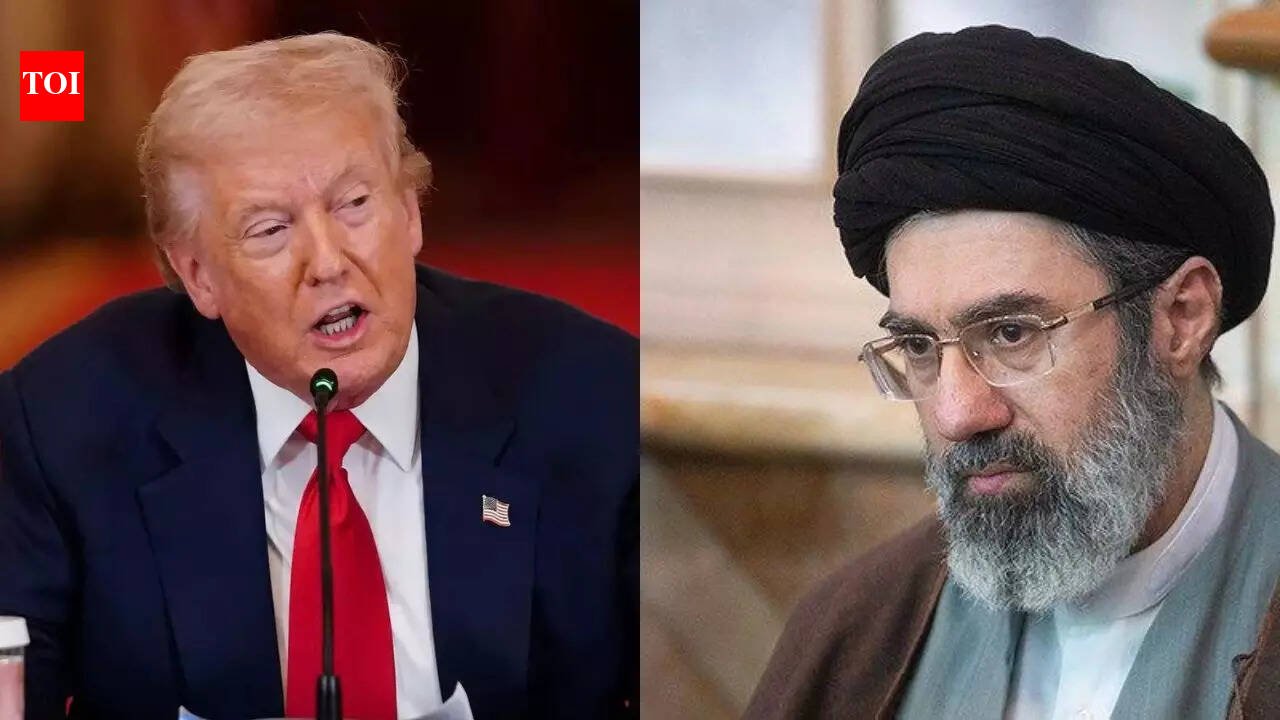
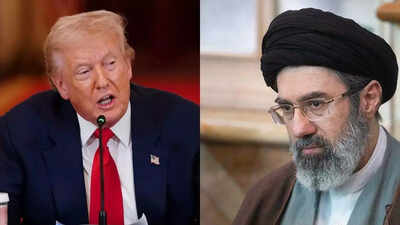
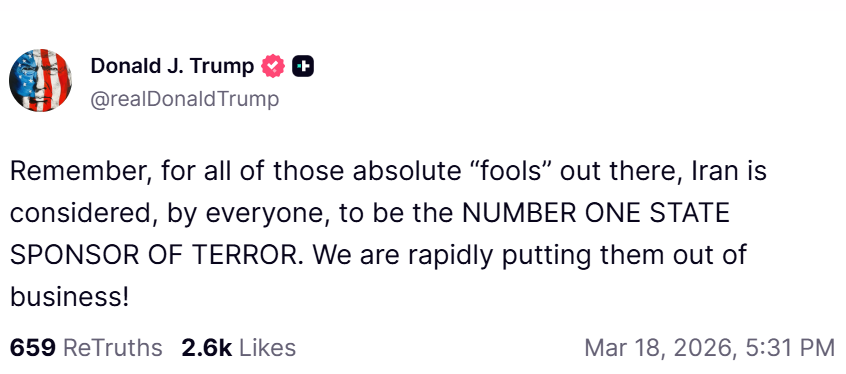
On the war’s 19th day, the numbers still flatter the US and Israel. More Iranian officials are dead. More launchers are wrecked. More command nodes have been hit. Israel says it has penetrated deep into Iran’s security structure and is now going after the machinery that keeps the Islamic Republic in power at home as well as abroad. From the air, it looks like the operation “Epic Fury” is going on in “cruise control” mode.Driving the newsAnd yet wars have a way of humiliating arithmetic.The war is no longer just a US-Israeli air campaign against Iran. It is now a broader regional confrontation touching Lebanon, the Gulf, global shipping and energy markets.That matters because the core question has shifted. The issue is no longer whether the US and Israel have inflicted severe damage. They plainly have. The question now is whether President Donald Trump can turn that military dominance into a political outcome that looks like victory – or whether Iran is succeeding in making the war longer, wider and more costly than Trump expected.

.

Why it mattersOn the battlefield, Trump has a case. Iran’s top leadership, including Supreme Leader Ayatollah Ali Khamenei, was obliterated on Day 1. Since then, US-Israeli forces have killed many other important political and military figures too. Israel and the US have degraded Iranian military infrastructure, targeted the internal security forces that suppress dissent, and pushed Tehran onto the defensive.But wars are not scored only by body counts, destroyed launchers or command bunkers. They are also scored by endurance, economic pain, alliance cohesion and the ability to shape the terms of peace.That is where Trump’s position looks shakier.Reuters reported that the Strait of Hormuz remains largely closed, that oil prices are up around 45% since the war began on February 28, and that Gulf Arab states have been hit by more than 2,000 missile and drone attacks on US diplomatic missions, military bases, oil infrastructure, ports, airports and residential buildings. Reuters also cited the International Energy Agency saying the conflict has caused the worst oil crisis since the 1970s. Global airlines, Reuters reported, have warned of soaring fuel costs, higher fares and route cuts.Those are not side effects. They are central to Iran’s strategy.According to an FT analysis by Emile Hokayem, Iran “has taken a beating” but still retains three major advantages: “geography, time and asymmetry.” The FT’s argument is that Tehran does not need to win conventionally. It only needs to impose enough cost on everyone else to turn apparent military success into strategic ambiguity.That is the danger for Trump. He may be winning the opening phase of the war while losing the ability to define its ending.Between the linesPolitico reported that Trump has been enraged by the refusal of many allies to join the effort to restore shipping through Hormuz. After publicly pressing allies for help, he swung back to insisting he never needed them in the first place. “Because of the fact that we have had such Military Success, we no longer ‘need,’ or desire, the NATO Countries’ assistance – WE NEVER DID!” he wrote on Truth Social, “WE DO NOT NEED THE HELP OF ANYONE!”That rhetorical reversal matters. It suggests Trump is confronting one of the central limits of his Iran campaign: the US can dominate the skies and still struggle to assemble a coalition for the consequences.Politico reported that Germany’s defense minister said, “We did not start this war,” while Luxembourg’s deputy prime minister described Trump’s push for European help as “blackmail.” British Prime Minister Keir Starmer said the UK “will not be drawn into a wider war,” according to Politico. Sen Lindsey Graham, after speaking with Trump, wrote on X that he had “never heard him so angry in my life.”Trump’s problem is not only Iran. It is also the optics of isolation. If Washington cannot persuade allies to share the burden, the war starts to look less like a coalition campaign and more like a unilateral gamble with global costs.The big pictureThe most persuasive argument that the war may be backfiring on Trump comes from Foreign Affairs, where Nate Swanson wrote that “Trump likely wants to declare victory soon,” but “he cannot force surrender on a government that refuses it.” In Swanson’s telling, the war’s first phase has badly damaged Iran, but the second phase may still favor Tehran because the regime has incentives and enough residual capability to sustain a war of attrition.That is the strategic paradox. Trump and Netanyahu may have destroyed much of Iran’s immediate capacity. But unless they can force capitulation, install a new deterrent order or engineer a stable ceasefire, Iran can still shape the peace by refusing to lose on Washington’s timetable.Swanson’s central point in Foreign Affairs is that Tehran does not need daily military success. It only needs to keep regional partners, global markets and the American public nervous. A few drone attacks on tankers, enough missile strikes to keep Gulf states on edge, and enough disruption in Hormuz to keep oil elevated may be sufficient to turn Trump’s “little excursion” into a politically draining war with no clean off-ramp.The FT makes a similar case from a more operational angle. Hokayem argues that “good strategy is the alignment of ends and means,” and by that standard, “the Iranians haven’t done badly.” Tehran, in the FT’s view, has sensibly prioritized vulnerable regional targets and energy chokepoints over trying to break Israel directly. For Iran, success is not conquering territory. It is keeping everyone else off balance.There is another way the war may be backfiring. In Foreign Affairs, Akbar Ganji argued that the assassination of Ali Khamenei and wartime pressure from the US and Israel may have solved Iran’s succession crisis in favor of Mojtaba Khamenei. Ganji wrote that Trump’s interventions and Israeli threats made Mojtaba “the only viable option for regime survival.” In other words, a campaign partly justified as a blow against the regime may also have hardened it.Zoom inIsrael’s hope, according to a New York Times report by Adam Rasgon, Ronen Bergman and David M Halbfinger, is that strikes on the Basij, the Ministry of Intelligence and other coercive institutions can weaken the regime enough to open space for a popular uprising.That is one of the biggest unresolved bets in this war.The New York Times reported that some former Israeli officials think the strategy is unrealistic because Iran’s internal security services remain deeply entrenched. Vali Nasr told the Times, “There’s enormous hatred of the Islamic republic,” but also “considerable hatred of the United States and Israel and considerable worry about the future of the country itself.”That gets to the central political reality inside Iran. Many Iranians may despise the regime and still refuse to rise up while under foreign bombardment. National humiliation can unify even fractured societies. War can suppress dissent as effectively as repression can.If that is true, then the regime-change theory behind part of the Israeli and US strategy is weak. And if regime change is not coming, Trump is left with a narrower set of choices: keep bombing, negotiate a cease-fire, or accept a murky partial victory.What next: Trump now faces a scoreboard that cuts in two directionsOn one side, the US and Israel are clearly ahead militarily. Iran’s leadership has been decapitated. Its security apparatus has taken severe hits. Its missile operations are under pressure. Its proxies are being pulled into a fight from a position of weakness, not strength.On the other side, Iran may still be doing enough to deny Trump the one outcome he most wants: a quick, unmistakable victory that reinforces deterrence, calms markets and proves his judgment.So, who is winning so far?In an opinion piece for the Greek newspaper eKathimerini, Endy Zemenides aptly described Operation Epic Fury as an “Epic Failure.”The honest answer is this: Trump is winning the war’s first chapter. Iran may still be writing the ending.That is why the war is not clearly backfiring on Trump in military terms. But in strategic, diplomatic and economic terms, the warning lights are flashing. If the conflict drags on, keeps oil high, leaves Hormuz contested and shows Trump unable to rally allies or force Tehran to fold, the question will stop being whether the war is backfiring.It will be how much.(With inputs from agencies)


Source link

Doping scare at National Open Jumps meet after syringes found in venue toilets | More sports News


BENGALURU: Despite continued efforts by the Athletics Federation of India and the National Anti-Doping Agency (NADA), the use of banned performance-enhancing drugs persists among some of the country’s top athletes and promising youngsters. The latest evidence emerged at the 5th National Open Jumps competition, which concluded here on Sunday.Go Beyond The Boundary with our YouTube channel. SUBSCRIBE NOW!According to sources, several syringes and vials allegedly used for doping were found in the restrooms used by athletes at the venue, located on the outskirts of the city.“NADA officials were present during the meet and were conducting routine checks, but they went on high alert after syringes were found in the toilets,” a source told TOI. “Many of the bottles had labels in Russian language, pointing to the use of banned substances. One label in English was almost entirely peeled off, but it was still possible to make out that it was a mephentermine injection — a prohibited stimulant under WADA rules,” the source added.NADA officials were alerted about the findings on the first day of the competition. Organisers subsequently put up posters outside the restrooms warning athletes: “Do not take any syringes inside the toilet. Our volunteers are watching you,” a poster, which also had the same message in Hindi, read.A coach said the warning had an immediate impact, with the number of syringes recovered falling sharply on the second day. Another senior coach present at the venue struck a cautionary note and said, “Some senior athletes are encouraging juniors to use banned substances. We need to create greater awareness among young athletes, so they do not look for short-cuts to success.” India topped the 2024 WADA Testing Figures report with 260 adverse analytical findings from 7,113 samples tested — a positivity rate of 3.6 per cent, the highest among all major nations. France ranked second in absolute numbers.

Banner Insert


Source link

Pakistan not safe? PCB reacts to Australian players’ security and travel concerns ahead of PSL 2026


With tensions rising in the region following the Kabul airstrike, questions around player safety – especially for overseas stars – have taken centre stage ahead of PSL 2026. But the Pakistan Cricket Board (PCB) has moved quickly to calm nerves, firmly stating that there is no reason for concern and that the tournament will go ahead as planned.

PCB dismisses security fears as PSL 2026 preparations continue

Reports had suggested that Australian players were hesitant about traveling, particularly after their government issued advisories related to certain areas. However, the PCB has dismissed these claims, maintaining that everything is on track.

“All travel arrangements and plans are in place, and we will have all the Australian players who have signed for the PSL 11 start arriving from next week,” a PCB source stated.

The board has made it clear that speculation around withdrawals or reluctance is being overstated. Officials insist that overseas players remain committed and that the league has handled similar situations in the past without disruption.

“The news reports in the media are not correct. There is no concern regarding Australian players coming to Pakistan,” another PCB source said, reinforcing confidence in the security framework.

Behind the scenes, the PCB has reportedly strengthened its safety protocols and logistical planning, aiming to ensure a smooth tournament despite the geopolitical backdrop. From their perspective, PSL 2026 is business as usual.

Peshawar fixture raises questions as contingency plans stay ready

While the PCB remains confident, one specific concern continues to draw attention – the scheduled fixture in Peshawar. The city has been marked as a “do not travel” zone by Australian authorities due to its proximity to the Afghanistan border and the risk of escalation.

This has put the March 28 match between Peshawar Zalmi and Rawalpindi Pindiz under the spotlight. With Australian players like Aaron Hardie and Jake Fraser-McGurk part of those squads, there is uncertainty over whether they will be available for that particular game.

Despite this, the PCB appears well-prepared for any scenario. Reports suggest that contingency measures, including emergency evacuation plans via private charter flights, have been put in place to reassure players and teams.

Also READ: PSL 2026 – Australian government issues urgent travel warning to its players following deadly Kabul airstrike

A PCB source acknowledged the backup arrangements, stating that “if things go wrong, players could be flown out instantly,” while also expressing confidence that such measures would not be needed.

The broader context, however, cannot be ignored. The Kabul airstrike, which reportedly resulted in heavy casualties, has heightened tensions between Pakistan and Afghanistan, leading to diplomatic strain and increased caution from foreign governments. This naturally impacts how players and boards assess risk.

Still, PSL 2026 is shaping up to be one of the most ambitious editions yet. With eight teams, 44 matches, and new venues like Faisalabad and Peshawar making their debut, the tournament is expanding its footprint significantly.

Adding to the intrigue is the strong Australian presence across teams, featuring big names like Steve Smith, David Warner, Glenn Maxwell and Marnus Labuschagne, alongside experienced coaches such as Tim Paine and Jason Gillespie.

At the same time, the league has had to deal with other challenges, including the withdrawal of several Afghanistan players following backlash over certain signings. Yet, the PCB remains unfazed, pointing to its track record of successfully hosting international cricket even in difficult circumstances.

With the tournament set to begin on March 26 in Lahore, the focus now shifts to execution. While uncertainties remain in the background, the PCB’s message is clear – they are confident, prepared and determined to deliver a successful PSL season.

Ultimately, much will depend on how the situation evolves in the coming days. But for now, PSL 2026 is firmly on track, with teams, players, and fans hoping that cricket once again takes centre stage.

Also READ: From Glenn Maxwell to Tim Paine – Complete list of Australian players and coaches in PSL 2026


Source link

5 IPL legends who have never won the Purple Cap | Cricket News


5 IPL legends who have never won the Purple Cap
Jasprit Bumrah never won the purple cap

NEW DELHI: While many of the greatest bowlers in IPL history have topped the charts at least once, a surprising number of legends have consistently taken wickets year after year without ever finishing a single season as the number one. Here is the breakdown of the legendary wicket-takers from your list who have never won the Purple Cap:

Watch

Jay Shah calls 2019 to 2026 as Indian cricket’s golden period

1. Sunil NarineThe KKR legend is perhaps the most “expensive” bowler to never win the cap, not in terms of runs, but in terms of value. Narine often misses out on the Purple Cap because teams choose to block him out rather than attack him. By maintaining an incredible career economy rate (around 7.96), he creates pressure that leads to wickets for the bowler at the other end.2. Piyush ChawlaChawla is the ultimate IPL workhorse. Having played since the very first season in 2008, he has outlasted almost everyone. While he has been a consistent top-10 performer across stints with PBKS, KKR, and MI, he has never had that one explosive season with 25+ wickets required to snatch the trophy from the field.3. Ravichandran AshwinThe master tactician treats T20 bowling like a game of chess. Ashwin’s primary goal is often to squeeze the opposition in the Powerplay or middle overs. Because he prioritizes variations and containment over hunting wickets, his tally stays high through longevity rather than single-season dominance.4. Jasprit BumrahIt is widely considered an IPL anomaly that the world’s best fast bowler has no Purple Cap. Similar to Narine, Bumrah is often a victim of his own excellence; captains would rather take zero runs off his over than risk losing a wicket. He famously took 27 wickets in 2020 but was beaten to the cap by Kagiso Rabada’s 30.5. Ravindra Jadeja Jadeja was often used by CSK as a defensive specialist on turning tracks. He bowls his four overs so quickly that batters barely have time to think, let alone plan an attack. This dart-in style makes him one of the most economical bowlers in the league, but it rarely produces the massive 4-wicket hauls needed to climb to the top of the season leaderboards.ALSO READ: 5 IPL legends to have not won the Orange CapTop 10 most wicket-takers in IPL history

Players Wickets Purple Caps
Yuzvendra Chahal 221 2022
Bhuvneshwar Kumar 198 2016, 2017
Sunil Narine 192
Piyush Chawla 192
Ravichandran Ashwin 187
Jasprit Bumrah 183
Dwayne Bravo 183 2013, 2015
Amit Mishra 174
Lasith Malinga 170 2011
Ravindra Jadeja 170

Banner Insert


Source link

‘Abusive relationship’: Deve Gowda responds to Kharge’s ‘loved us, married Modiji’ dig | India News


'Abusive relationship': Deve Gowda responds to Kharge's 'loved us, married Modiji' dig

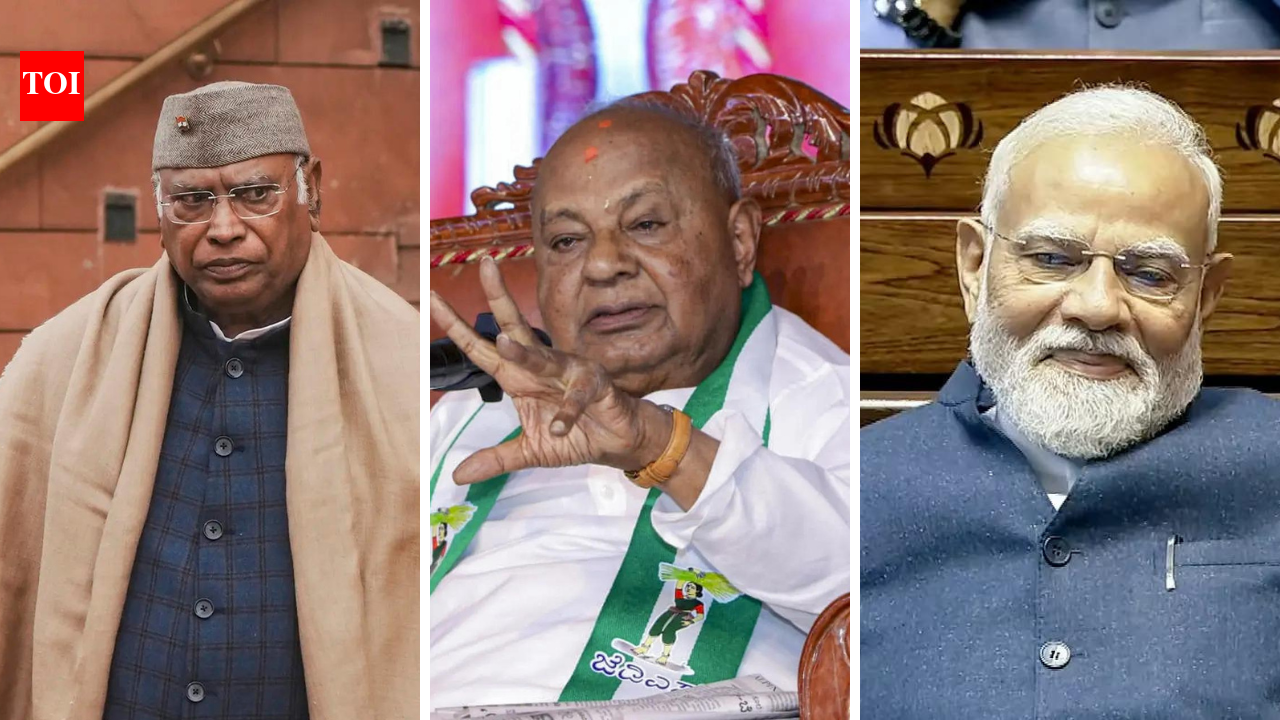
NEW DELHI: Former Prime Minister HD Deve Gowda on Wednesday responded to Congress president Mallikarjun Kharge’s dig at him for choosing the Bharatiya Janata Party as an alliance partner rather than the Congress.Hours after Kharge’s address in Rajya Sabha, Deve Gowda wrote a letter saying that he was in a “forced marriage” with the grand old party but had to “divorce” them because it was an “abusive relationship.”“My dear and longtime friend, Shri Mallikarjun Kharge, made a light-hearted comment in Parliament today about me having been in ‘love’ with them (Congress) but ‘married’ Modi Ji (BJP) eventually. He also said he did not know the reason as to why I did so. I was not in the House when Shri Kharge spoke, as I had to leave for Bengaluru to be present for tomorrow’s Ugadi celebrations,” the letter reads.“If I were to respond to my friend in the same language of marriage, I would like to say that I was in a ‘forced marriage’ with the Congress but had to ‘divorce’ them because it was an abusive relationship,” he added.Further, the former Prime Minister accused Congress of “dumping” his party in 2018 after offering the chief ministerial post of Karnataka to Deve Gowda’s son Kumaraswamy.“Shri Kharge will remember that in 2018 Congress sent Shri Ghulam Nabi Azad and offered Shri Kumaraswamy the chief ministership. I did not consent to this. I said in everybody’s presence that Shri Kharge should be made Chief Minister. Shri Siddaramaiah was also there. However, Shri Azad insisted on Shri Kumaraswamy’s leadership. But after all this song, dance, and a wedding, what did they do in 2019? They dumped us,” he said.“How many Congress MLAs defected to the BJP and who sent them across is now common knowledge. If Congress had acted against the person who instigated defection that day, today my friend Shri Kharge would be in a better position as AICC President. So, to put the record straight, I did not desert the Congress alliance. It is they who walked away. They left me with no choice but to ‘divorce’ them and seek a more stable alliance,” he added.Earlier in the day, Mallikarjun Kharge, speaking during his farewell, said he had known Deve Gowda for over 54 years and had worked closely with him before the former PM’s party aligned with the BJP.“I know Deve Gowda ji for more than 54 years and I worked with him a lot. Later, I don’t know what happened… ‘Wo mohabbat humare saath kiye, shadi Modi sahab ke sath,’” Kharge said, drawing laughter from fellow MPs and Prime Minister Narendra Modi.Deve Gowda became Prime Minister in 1996 at the head of a United Front government backed by Congress, marking a key phase of cooperation. In Karnataka, his party, JD(S), later alternated between opposing and partnering Congress.Earlier in the day, PM Modi also addressed the House, thanking outgoing members for their contributions and echoing a similar sentiment.“There is no full stop in politics. The future is waiting for you,” the Prime Minister said, urging retiring MPs to continue contributing to public life. He also called on newly elected members to learn from senior leaders such as Deve Gowda, Kharge, and Sharad Pawar, noting their decades of parliamentary experience.PM Modi also singled out Ramdas Athawale for his wit, remarking that humour and satire in the House had diminished in recent years but remained alive through figures like him. Athawale is among 37 members completing their terms, alongside leaders including Priyanka Chaturvedi, Tiruchi Siva, and Abhishek Manu Singhvi.The retirements follow elections to 37 Rajya Sabha seats across 10 states, with 26 candidates elected unopposed. Political developments in states such as Bihar, where opposition abstentions aided the NDA, have further reshaped the Upper House’s composition.


Source link

Stock market today (March 18, 2026): Which are the top gainers and losers in Nifty50 & BSE Sensex? Check list


Stock market today (March 18, 2026): Which are the top gainers and losers in Nifty50 & BSE Sensex? Check list

Benchmark equity indices Sensex and Nifty closed nearly 1 per cent higher on Wednesday, extending their recovery for a third straight session amid a slight easing in crude oil prices and supportive global cues.The 30-share BSE Sensex rose 633.29 points, or 0.83 per cent, to settle at 76,704.13. During the session, it surged as much as 929.38 points, or 1.22 per cent, to hit an intraday high of 77,000.22.The 50-share NSE Nifty climbed 196.65 points, or 0.83 per cent, to end at 23,777.80.

Nifty50 top gainers

  • Jio Financial Services (4.47%)
  • Eternal (3.38%)
  • Tech Mahindra (3.24%)
  • Infosys (2.78%)
  • HCL Tech (2.74%)
  • Mahindra & Mahindra (2.74%)
  • Adani Ports (2.67%)
  • TCS (2.06%)
  • Axis Bank (2.05%)
  • Kwality Wall’s (1.90%)

Nifty50 top losers

  • Coal India (-1.53%)
  • NTPC (-1.27%)
  • Hindustan Unilever (-1.07%)
  • Cipla (-1.05%)
  • Sun Pharma (-0.90%)
  • Hindalco (-0.39%)
  • Apollo Hospitals (-0.39%)
  • HDFC Bank (-0.28%)
  • ITC (-0.27%)
  • Tata Consumer (-0.27%)

BSE Sensex top gainers

  • Eternal (3.38%)
  • Tech Mahindra (3.24%)
  • Infosys (2.78%)
  • HCL Tech (2.74%)
  • Mahindra & Mahindra (2.74%)
  • Adani Ports (2.67%)
  • Tata Consultancy Services (2.06%)
  • Axis Bank (2.05%)
  • Larsen & Toubro (1.84%)
  • Kwality Wall’s (1.90%)

BSE Sensex top losers

  • NTPC (-1.27%)
  • Hindustan Unilever (-1.07%)
  • Sun Pharma (-0.90%)
  • HDFC Bank (-0.28%)
  • ITC (-0.27%)
  • Tata Steel (-0.02%)

“Domestic markets extended their recovery, supported by opportunistic buying after the recent sell-off. The rebound was broad-based, driven by a combination of short covering and value buying, with leadership from IT, realty, and auto sectors, alongside strength in mid and smallcap stocks,” Vinod Nair, Head of Research at Geojit Investments Limited, said, PTI quoted.Ajit Mishra, SVP – Research at Religare Broking, said markets maintained a positive bias for most of the session but profit booking in the final hours trimmed some gains. He noted that the sharp rebound in IT stocks was a key highlight of the day’s trade.The broader market also participated in the rally. The BSE MidCap Select index advanced 2.39 per cent, while the SmallCap Select index gained 1.59 per cent.Sectorally, BSE Focused IT jumped 2.95 per cent, followed by IT (2.82 per cent), realty (2.67 per cent), BSE MidSmall Private Banks Quality Tilt (2.48 per cent), services (2.45 per cent), telecommunication (2.44 per cent) and consumer discretionary (2.08 per cent). Metal stocks emerged as the only laggards.A total of 3,202 stocks advanced on the BSE, while 1,088 declined and 142 remained unchanged.Analysts said geopolitical tensions, continued weakness in the rupee and the possibility of renewed volatility in crude oil prices are likely to keep investors cautious in the near term.“From a strong three-day rebound, due to supportive global cues, markets are expected to remain cautious as investor sentiment may continue to be sensitive to developments in West Asia, movements in crude oil prices and continued FIIs activity. While a near-term relief rally may persist, its sustainability will depend on de-escalation in geopolitical tensions and moderation in energy prices,” Siddhartha Khemka, Head of Research, Wealth Management at Motilal Oswal Financial Services Ltd, said.Brent crude, the global oil benchmark, slipped 0.10 per cent to USD 103.3 per barrel.In Asian markets, South Korea’s Kospi surged 5 per cent and Japan’s Nikkei 225 climbed 2.87 per cent, while Shanghai’s SSE Composite and Hong Kong’s Hang Seng also ended higher. European markets were trading in positive territory, and the US market had closed higher on Tuesday.Foreign Institutional Investors (FIIs) sold equities worth Rs 4,741.22 crore on Tuesday, according to exchange data. Domestic Institutional Investors (DIIs), however, bought stocks worth Rs 5,225.32 crore.


Source link

Access Denied


Access Denied

You don’t have permission to access “http://www.ndtv.com/india-news/man-kills-brother-over-inappropriate-gaze-at-wife-in-ups-mathura-11232595” on this server.

Reference #18.adf5d217.1773842304.3649e389

https://errors.edgesuite.net/18.adf5d217.1773842304.3649e389


Source link