Breaking News
China masses over 200 J-6 ‘drones’ near Taiwan as US-Iran war escalates


China masses over 200 J-6 'drones' near Taiwan as US-Iran war escalates

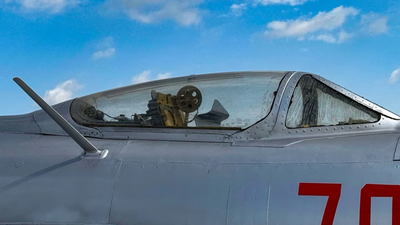
China has stationed converted fighter jets, now repurposed as attack drones, at multiple air bases close to the Taiwan Strait, according to a new report, in what analysts see as a significant shift in Beijing’s warfighting posture around Taiwan.Satellite imagery reviewed by the Mitchell Institute for Aerospace Studies shows rows of ageing J-6 aircraft positioned across at least six bases in Fujian and Guangdong provinces. These aircraft, originally designed in the 1960s, have been modified into unmanned systems and are now being deployed as part of China’s expanding drone arsenal.Senior fellow J Michael Dahm said the People’s Liberation Army has deployed an estimated 200 or more such platforms near the strait. These jets-turned-drones are not designed for traditional air combat but for saturation attacks. “They will attack Taiwan, U.S. or allied targets in large numbers, effectively overwhelming air defenses,” Dahm said.The development comes at a time of widening global instability, with conflicts in West Asia and maritime chokepoints adding to the sense of a fragmented and strained international order.

Global disruptions from Iran to the Red Sea reshape strategic timing

China’s moves near Taiwan are unfolding against the backdrop of escalating tensions in the Middle East, particularly around the Strait of Hormuz and the Red Sea, both critical arteries of global trade.Iran’s recent actions to restrict access through the Strait of Hormuz have sent oil prices soaring and disrupted global energy flows. The strait, through which nearly a fifth of the world’s oil passes, has become a pressure point after clashes involving the United States and Israel. Analysts warn that securing Hormuz is far more complex than past operations in the Red Sea, where efforts to counter Houthi attacks proved costly and only partially effective.“There is no substitute for the Strait of Hormuz,” Kuwait Petroleum CEO Sheikh Nawaf Saud Al-Sabah said, underlining the global stakes.The Red Sea crisis offers a cautionary precedent. Despite sustained military operations, Western forces struggled to fully secure shipping lanes against drones, missiles, and asymmetric attacks. Experts say Iran, with a more advanced military and geography favouring defence, presents an even greater challenge.This broader disruption matters for East Asia. As Western military and strategic focus stretches across multiple theatres, it potentially creates windows of opportunity elsewhere. Beijing appears to be factoring this into its evolving Taiwan strategy.

Turning old jets into new weapons

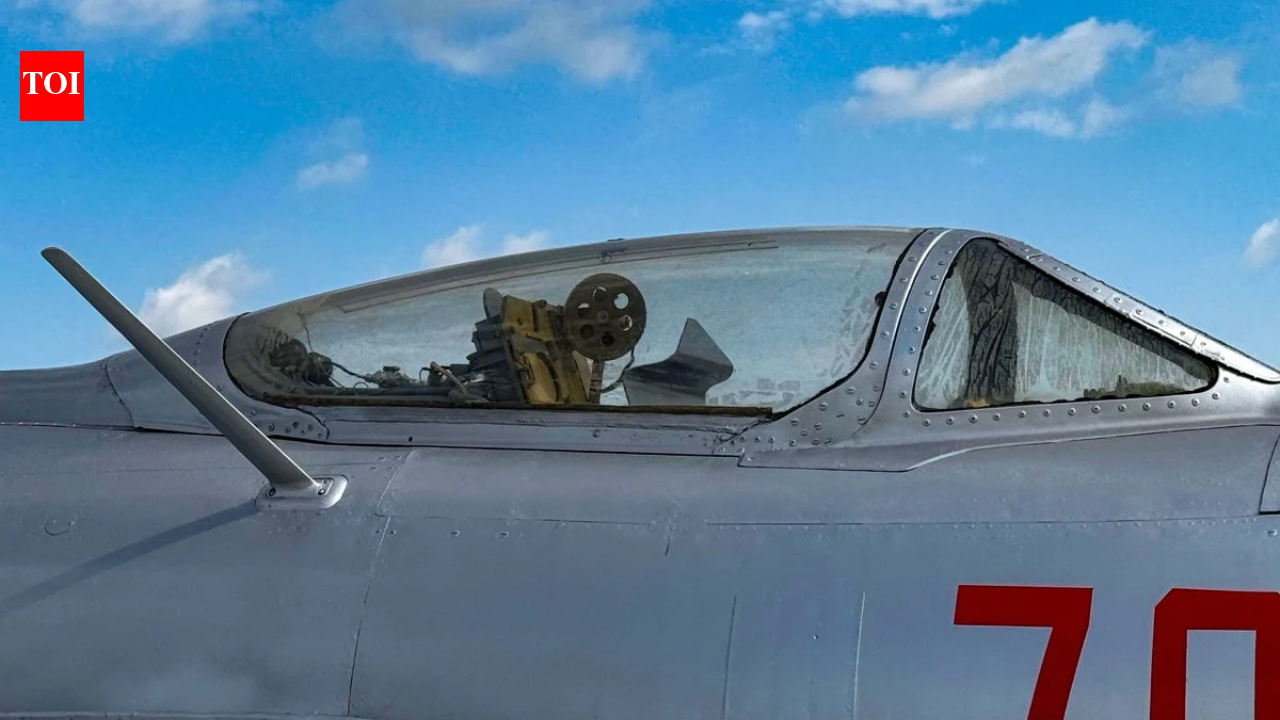
At the centre of China’s latest deployment is the transformation of obsolete aircraft into expendable attack platforms.The J-6 fighter, derived from the Soviet-era MiG-19, once formed the backbone of China’s air force. Now retired from frontline service, hundreds of these aircraft have been converted into drones, designated J-6W.These systems are not typical remotely piloted drones. Instead, they are closer to cruise missiles in concept. Stripped of their original equipment, fitted with automated flight control systems and terrain-following navigation, they are designed to fly into targets in large numbers during the opening phase of a conflict.Dahm estimates that more than 500 such aircraft may have been converted, with a significant portion now positioned near Taiwan. Their role is straightforward: overwhelm defences through sheer volume.“They would be used more like cruise missiles than autonomous or remote-controlled unmanned aerial vehicles,” Dahm said.

The logic of saturation warfare

The deployment reflects a broader shift toward what military analysts describe as saturation warfare.Rather than relying solely on advanced, high-cost platforms, China appears to be investing in large numbers of relatively inexpensive systems that can strain and exhaust enemy defences. In a Taiwan scenario, these drones would likely be part of a multi-layered assault involving ballistic missiles, cruise missiles, advanced fighter jets, and modern unmanned systems.Peter Layton, a visiting fellow at Griffith University, described the potential scenario as overwhelming. “There would be a lot of diverse things all coming at the same time,” he said. “It would be an air defense nightmare.”The objective is not necessarily precision in the first wave, but disruption. By forcing Taiwan and its allies to expend costly interceptor missiles on relatively cheap drones, China could degrade defensive capacity early in a conflict.A senior Taiwanese security official echoed this concern, noting that such drones are intended “to exhaust Taiwan’s air defense systems in the first wave of an attack.”

Cost asymmetry and the economics of war

One of the most significant aspects of this strategy is cost asymmetry.Modern air defence systems rely on expensive interceptor missiles, often costing millions of dollars per unit. In contrast, converted drones like the J-6W are far cheaper, especially since they repurpose existing airframes.This creates a dilemma for defenders. Shooting down each incoming drone with high-end missiles is financially unsustainable in a prolonged conflict. Yet allowing even a few to get through could result in significant damage to critical infrastructure.“This is a form of asymmetric warfare that cannot be ignored,” Taiwan’s defence research bodies have warned.The experience of the war in Ukraine and ongoing conflicts in the Middle East has reinforced this lesson. Drones, particularly when deployed in large numbers, can overwhelm even sophisticated defence systems.

Why Taiwan remains central to Beijing’s strategy

Beijing considers Taiwan a breakaway province and has not ruled out the use of force to bring it under its control. Taiwan, however, rejects these claims, maintaining that its future should be decided by its people.The strategic importance of Taiwan goes beyond political symbolism. Its location in the western Pacific makes it a key node in regional security architecture, particularly in relation to US alliances in Asia.Control over Taiwan would significantly alter the balance of power in the region, giving China greater access to the Pacific and potentially constraining US military operations.Recent assessments have offered mixed signals about Beijing’s timeline. While some US intelligence estimates suggest China is not currently planning an invasion by 2027, Pentagon assessments indicate that China aims to be capable of conducting and winning such a conflict within that timeframe.

A layered and evolving airpower mix

The J-6 drones are only one component of China’s broader military modernisation.Beijing is simultaneously investing in advanced unmanned systems, including stealth drones capable of operating from aircraft carriers. It is also expanding its arsenal of ballistic and cruise missiles, as well as modern fighter aircraft.The integration of older, converted platforms with cutting-edge systems reflects a layered approach to warfare. Each element serves a specific role, from initial saturation attacks to precision strikes and sustained operations.Military analysts say China is also experimenting with deception tactics using drones, potentially rehearsing elements of a Taiwan conflict.

Vulnerabilities and risks

Despite their potential advantages, the deployment of these drones is not without risks.The airbases hosting them, located close to the Taiwan Strait, are themselves vulnerable to counter-attacks. In a conflict, Taiwan and its allies could target these facilities early, attempting to neutralise the threat before the drones are launched.Moreover, while effective in large numbers, these converted drones lack the sophistication of newer systems and may be more susceptible to advanced countermeasures.Still, their value lies not in survivability, but in expendability.

A signal beyond Taiwan

China’s actions near the Taiwan Strait are not occurring in isolation. They are part of a broader recalibration of strategy in a world where multiple crises are unfolding simultaneously.From the Strait of Hormuz to the Red Sea, the global order is under strain. Supply chains are disrupted, military resources are stretched, and geopolitical rivalries are intensifying.In this environment, Beijing appears to be positioning itself to take advantage of shifting dynamics.Amid a disrupted global order, China is not merely reacting. It is adapting, experimenting, and preparing.The deployment of jets-turned-drones near Taiwan is a signal of that intent. It reflects a strategy that blends old platforms with new thinking, leveraging scale, cost, and timing to reshape the battlefield.Whether this remains a posture of deterrence or evolves into something more consequential will depend on how the broader geopolitical landscape continues to unfold.


Source link

Dhurandhar 2: Did Ranveer Singh’s character Jaskirat smoke while wearing a turban in ‘Dhurandhar 2’? Aditya Dhar clarifies |


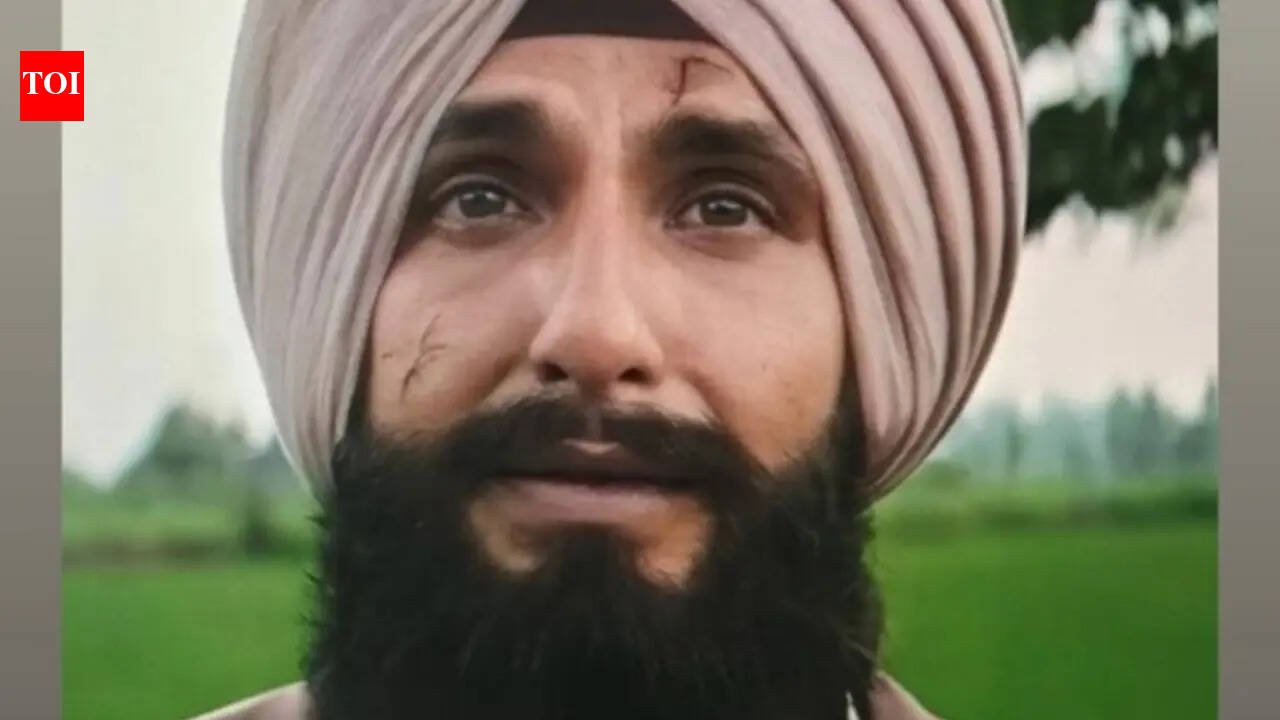
Aditya Dhar’s ‘Dhurandhar: The Revenge’, starring Ranveer Singh, R Madhavan and others continues its phenomenal run at the global box office. However, amid its success, the film has landed in controversy after an image allegedly showing Ranveer smoking while wearing a turban went viral on social media, sparking outrage and hurting sentiments. The Sikh community filed an FIR against the team for this, and also alleged that Madhavan was scene reciting lines from Guru Govind dasam granth. Dhurandhar 2 Movie ReviewAddressing the issue, Aditya Dhar shared a detailed clarification, stating that the viral visuals are not authentic but digitally manipulated. “I am deeply grateful & indebted for the overwhelming love that Dhurandhar The Revenge has received from audiences across the country and the world. However, it has come to my attention that certain individuals are circulating manipulated visuals, by morphing officially released promotional material using artificial intelligence to create false and misleading narratives,” reads his note.

Watch

‘Dhurandhar 2’ Earns Praise from Vicky, Kangana, Vivek at International Film Festival Delhi 2026

He specifically responded to the image involving Ranveer’s character, Jaskirat Singh Rangi, also known as Hamza Ali Mazari and dismissed it as fake. “This is completely untrue and does not form part of the film or any official material released by us. It is a deliberate act of misrepresentation intended to provoke and create mischief,” wrote Aditya.Reaffirming his stance, the filmmaker added, “Let me state this unequivocally: I hold the highest respect for the Sikh community, and every portrayal in the film has been handled with utmost sensitivity, dignity, and responsibility. Any attempt to suggest otherwise through any doctored content is malicious and dishonest.”Concluding his statement, he urged viewers to trust only verified sources and not be misled by such content. “I urge audiences to rely only on official content and watch the film as it is intended, and not fall prey to AI-generated misinformation being circulated with ulterior motives. Such acts will be dealt with firmly.”R Madhavan also has addressed the controversy after the Sikh community filed an FIR. In a video shared on social media, he explained that there may have been a misunderstanding regarding the scene. He said, “Dhurandhar ke pure parivar ke taraf se aapko bohot dhanyawaad ke aapne hamari film ko itna pyaar diya. Haal hi mein mujhe pataa chala hai ke kuch logon ko iss baat se takleef pahunchi hai ke Guru Govind ke dasam granth se kuch lines bolte waqt maine cigarette smoke ki hai aur isse un logon ko takleef pahunchi hai. Main aapko batana chahta hu ke yeh bilkul sahi nahi hai. Thodi galat faimi hai kyunki mujhe pura yakeen hai iss scene ke daruan aur bolte huye, Aditya Dhar ji ne joh ki mujhse zyada dhyaan rakhte hai in sab cheezon ka. Unhone kahaa tha mujhse ke yeh line bolte waqt aap cigarette bujha dijiyega aur naahi screen mein dhuaan dikhaaye dega aur naahi aapke haath mein cigarette hogi kyunki yeh hamare liye paak aur Pavitra hai. Maine bakaayda cigarette bujha diya tha aur naahi mere munh se dhuaan hai aur naahi pure scene mein cigarette ka naam o nishaan hai. (On behalf of the entire Dhurandhar team, I sincerely thank you for giving our film so much love. Recently, I came to know that some people were hurt by the perception that I was smoking a cigarette while reciting lines from Guru Gobind Singh’s Dasam Granth. I want to clarify that this is absolutely not true. There seems to be a misunderstanding because I am certain that during this scene, while delivering those lines, Aditya Dhar—who is even more mindful about such matters than I am—had clearly instructed me to put out the cigarette. He ensured that there would be no smoke visible on screen and that I would not be holding a cigarette while reciting those lines, as they are sacred and pure for u. I had properly extinguished the cigarette, and there is no smoke coming from my mouth, nor is there any trace of a cigarette in the entire scene).”


Source link

Gujarat Titans IPL 2026 Full Schedule: Date, Time & Venues of GT matches


Gujarat Titans (GT) head into IPL 2026 with a balanced schedule that combines a challenging start, strong home advantage, and key tactical phases throughout the season. Their campaign begins on March 31 with an away fixture against Punjab Kings (PBKS) at the Maharaja Yadavindra Singh International Cricket Stadium in New Chandigarh. This opening match, set for a 7:30 PM start, will immediately test the Titans against a competitive side in unfamiliar conditions.

After the opener, the focus quickly shifts to their home base – the Narendra Modi Stadium in Ahmedabad. GT will play seven matches at this venue, which has become a fortress for the franchise over the years. Their first home game comes against Rajasthan Royals (RR) on April 4, followed by a busy and crucial home stretch in late April and early May. During this period, they will face top teams like Kolkata Knight Riders (KKR), Mumbai Indians (MI) and Chennai Super Kings (CSK). This run of home games could play a decisive role in shaping their campaign, as strong performances in familiar conditions often build momentum and confidence.

On the leadership front, Shubman Gill continues as captain, guiding a squad that blends youth and experience. He will be supported by head coach Ashish Nehra, with Matthew Hayden joining the setup as batting coach. The squad itself looks strong and well-rounded, featuring match-winners like Rashid Khan, Jos Buttler, Mohammed Siraj, Kagiso Rabada and Rahul Tewatia.

With the league stage running from March 28 to May 24, GT have a clear opportunity to build momentum through their home fixtures while managing key away challenges. If they can strike the right balance and maintain consistency, they will once again be among the strong contenders for the IPL 2026 playoffs.

Also READ: IPL 2026 – Matthew Hayden picks Gujarat Titans star worthy of his iconic mongoose bat

GT IPL 2026 Full Schedule

  • March 31 – Punjab Kings vs Gujarat Titans – New Chandigarh – 7:30PM IST
  • April 4 – Gujarat Titans vs Rajasthan Royals – Ahmedabad – 7:30PM IST
  • April 8 – Delhi Capitals vs Gujarat Titans – Delhi – 7:30PM IST
  • April 12 – Lucknow Super Giants vs Gujarat Titans – Lucknow – 3:30PM IST
  • April 17 – Gujarat Titans vs Kolkata Knight Riders – Ahmedabad – 7:30PM IST
  • April 20 – Gujarat Titans vs Mumbai Indians – Ahmedabad – 7:30PM IST
  • April 24 – Royal Challengers Bengaluru vs Gujarat Titans – Bengaluru – 7:30PM IST
  • April 26 – Gujarat Titans vs Chennai Super Kings – Ahmedabad – 3:30PM IST
  • April 30 – Gujarat Titans vs Royal Challengers Bengaluru – Ahmedabad – 7:30PM IST
  • May 3 – Gujarat Titans vs Punjab Kings – Ahmedabad – 7:30PM IST
  • May 9 – Rajasthan Royals vs Gujarat Titans – Jaipur – 7:30PM IST
  • May 12 – Gujarat Titans vs Sunrisers Hyderabad – Ahmedabad – 7:30PM IST
  • May 16 – Kolkata Knight Riders vs Gujarat Titans – Kolkata – 7:30PM IST
  • May 21 – Chennai Super Kings vs Gujarat Titans – Chennai – 7:30PM IST

Note: IST= GMT+ 5:30 hrs

Also READ: SWOT analysis of Gujarat Titans – GT’s report card ahead of IPL 2026


Source link

‘Josh Hazlewood returns but…’: RCB coach gives key fitness update before SRH clash | Cricket News


‘Josh Hazlewood returns but…’: RCB coach gives key fitness update before SRH clash
Royal Challengers Bengaluru’s Josh Hazlewood (PTI Photo/Kamal Kishore)

Andy Flower has offered a balanced view on the much-debated Impact Player rule, calling it a positive addition to the Indian Premier League even as opinions remain divided within the cricketing fraternity. Ahead of Royal Challengers Bengaluru’s IPL 2026 opener against Sunrisers Hyderabad, Flower described the rule as an “interesting innovation” that adds a new tactical layer to the game. While prominent names like Shubman Gill and Rohit Sharma have criticised the rule for reducing the importance of all-round skills, Flower believes it enhances strategic decision-making. “I think it has been a good innovation, it’s interesting to be part of it. You’re making decisions on the impact player, and I think it’s interesting for the audience to debate what’s right and what’s wrong, so tactically it’s quite an interesting addition to the game,” Flower said. However, he also acknowledged that the rule comes with its own complications. According to Flower, one of the traditional challenges of cricket — balancing a playing XI — becomes slightly diluted. “I must say that one of the things I love about cricket is that when you select an 11, one of the challenges you have is balancing your 11 — the length of the batting order, balancing, perhaps, some guys that can’t field that well and it’s one of the things that makes selection a little bit tricky.” “The impact player rule hides that selection problem a little, so I think one of the great things about cricket is some of the debates around selection and when you select single-skilled players, you weaken another area of your game, the impact player can hide that, so there are pros and cons I think to it,” he added. From an RCB standpoint, team combination has been further complicated by the absence of key pacers. Josh Hazlewood, who was the franchise’s leading wicket-taker last season, has only just rejoined the squad after arriving in Bengaluru. “Hazlewood did arrive yesterday, he’s looking fit. I did comment to him that he looks even younger than I remember. So, he’s enjoyed some good downtime but he’s worked hard to get himself back up to full fitness, we’ve been liaising closely with Cricket Australia on his fitness. So, it’s great to have him in our dressing room and in the meetings.” “But he won’t be ready for tomorrow, he’s just got off the plane, but we’ll be monitoring his fitness very closely and looking forward to him making his entrance into the IPL,” Flower said. In the meantime, Flower expressed confidence in the available pace options stepping up in Hazlewood’s absence, especially with Yash Dayal also unavailable. “Yash is not with us unfortunately. So, we have Mangesh, Abhi and Rasik all competing for a place. We’re happy with recruiting Mangesh, a left-arm seamer to replace Yash. We’re also happy with Abhinandan’s progress, he’s bowled a lot more in matches just recently, played in the recent DYP competition.” “I think Rasik is a better bowler than he was last year, he’s obviously been working very hard and he shows a lot of qualities that could stand him in really good stead if he gets a chance in this tournament, so we’re happy with those three Indian seamers,” he added. As RCB gear up to begin their title defence, Flower’s comments reflect both the opportunities and challenges that come with modern T20 innovations.


Source link

Limited success? US strikes destroyed one-third of Iran’s missile arsenal – what intel reveals


Limited success? US strikes destroyed one-third of Iran’s missile arsenal - what intel reveals

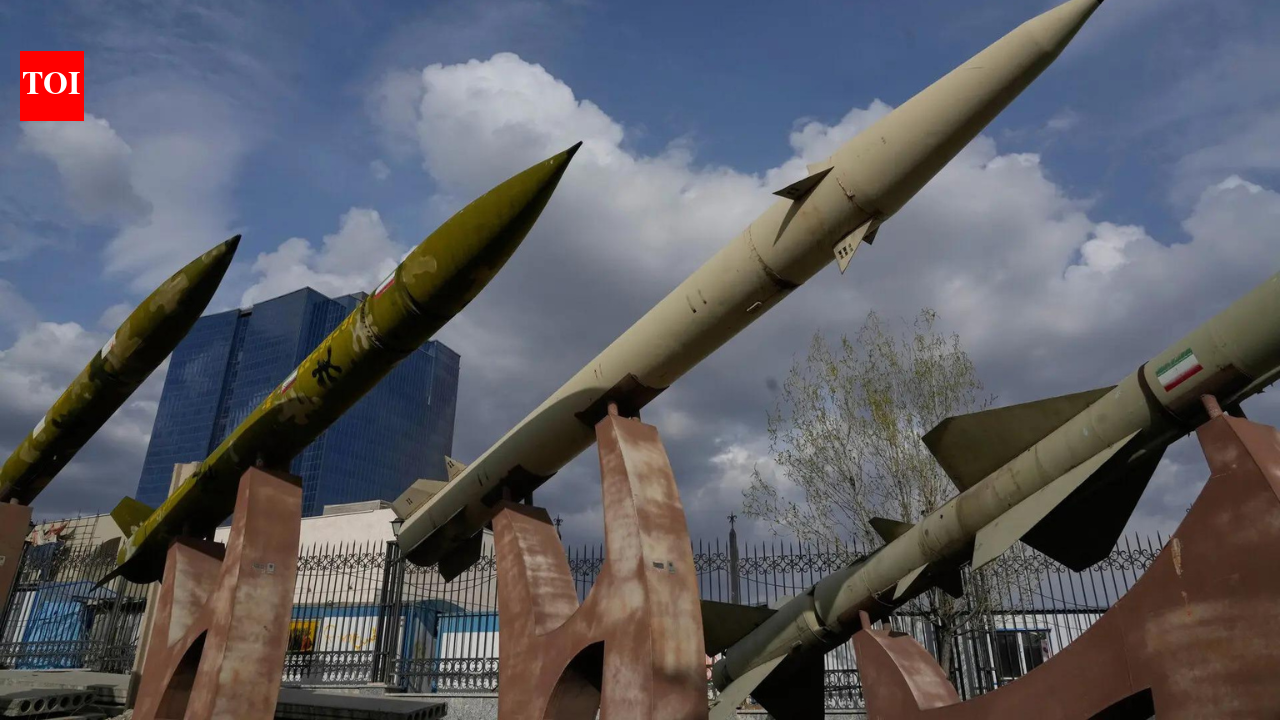
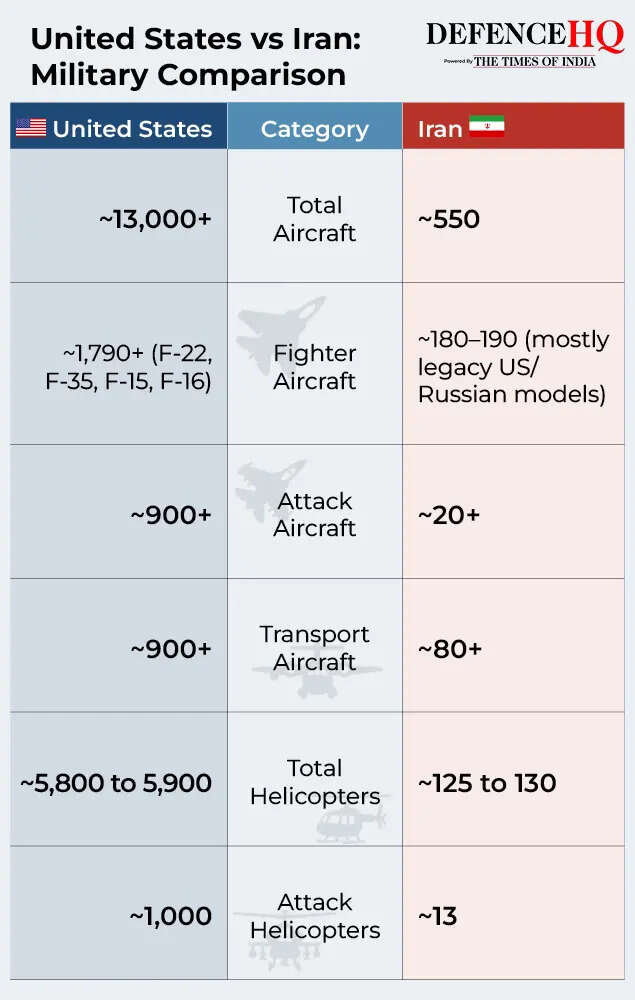
The United States has destroyed roughly a third of Iran’s missile arsenal, according to a previously unreported intelligence assessment cited by Reuters, offering the clearest picture yet of the impact of nearly a month of sustained US-Israeli strikes. The assessment contrasts with public remarks by President Donald Trump, who said Iran had “very few rockets left”. Even as he hinted at progress in ceasefire talks, Trump acknowledged the risks posed by even a small number of surviving missiles, warning that “1% is unacceptable” given the potential damage to high-value targets such as commercial shipping in the Strait of Hormuz.Five sources familiar with US intelligence told Reuters that Washington can “only determine with certainty” that about one-third of Iran’s missiles have been eliminated. Another third is believed to have been damaged, buried or rendered inaccessible in underground facilities, though officials admit the true extent remains uncertain. The remaining stockpile—potentially still substantial—continues to fuel Iranian strikes on regional targets.

Intelligence gaps expose limits of US success

Despite the scale of the US campaign, officials concede that accurately measuring Iran’s remaining missile capability is inherently difficult, largely due to its extensive use of underground storage and launch systems.

  • Around one-third of missiles are confirmed destroyed, according to US intelligence
  • Another third likely damaged or buried in tunnels and bunkers
  • Remaining inventory still operational, with potential for recovery post-conflict

One senior US official admitted: “I don’t know if we’ll ever have an accurate number,” pointing to the uncertainty surrounding Iran’s pre-war stockpile. Estimates vary widely from about 2,500 missiles cited by Israel to as many as 6,000 suggested by independent analysts.

-

Defence Secretary Pete Hegseth also acknowledged the challenge, comparing Iran’s tunnel networks to those used by militant groups elsewhere. He said the US was targeting these systems “methodically, ruthlessly and overwhelmingly,” though without offering precise figures on weapons destroyed.

‘Epic Fury’: Targeting Iran’s military backbone

The US-led campaign has focused not only on missile stockpiles but also on the infrastructure that sustains them.According to the US CENTCOM:

  • More than 10,000 Iranian military targets have been struck
  • 92% of Iran’s large naval vessels have been destroyed
  • Over two-thirds of missile, drone and naval production facilities damaged or eliminated
  • Missile and drone launch rates have dropped by over 90%

US forces have carried out more than 10,000 combat flights, including heavy bomber missions deploying up to 70,000 pounds of munitions. The strategy aims to cripple Iran’s ability to rebuild its arsenal, not just reduce its current stockpile.Still, Central Command has avoided specifying exactly how much of Iran’s missile and drone capability has been neutralised—reflecting the same intelligence uncertainties highlighted in the Reuters report.

Iran still striking as war risks widening

Despite the damage, Iran has continued to demonstrate its offensive reach. In one recent barrage, it fired ballistic missiles and drones at Gulf targets, while also expanding the range of its operations.

  • Missiles and drones launched at the United Arab Emirates and Saudi Arabia
  • Ports in Kuwait reported material damage
  • Long-range strike targeted the US-UK base at Diego Garcia

These attacks come as tensions escalate across multiple fronts. Israel has warned it will “escalate and expand” its strikes, targeting weapons production sites deep inside Iran, including in Tehran. Meanwhile, the conflict has spilled into Lebanon, with casualties reported after Israeli strikes in Beirut.At the same time, the strategic Strait of Hormuz remains a flashpoint. Iran’s disruption of shipping has rattled global markets, with oil prices surging and fears of a broader energy crisis mounting. The US has pushed for a ceasefire proposal that includes reopening the waterway, while simultaneously deploying additional troops to the region.Humanitarian concerns are also growing. Aid agencies report widespread damage across Iran, with tens of thousands of civilian buildings hit and warnings that millions could be displaced if the conflict continues.


Source link

Forex reserves drop $11.41 billion to $698.35 billion as gold holdings decline


Forex reserves drop $11.41 billion to $698.35 billion as gold holdings decline

India’s foreign exchange reserves declined by $11.413 billion to $698.346 billion in the week ended March 20, mainly due to a sharp fall in gold reserves, according to data released by the Reserve Bank of India (RBI) on Friday, PTI reported.In the previous reporting week, the reserves had dropped by $7.052 billion to $709.759 billion.The country’s forex kitty had earlier surged to an all-time high of $728.494 billion in the week ended February 27, before the onset of the West Asia conflict.During the latest reporting week, foreign currency assets (FCA) — the largest component of the reserves — increased by $2.127 billion to $557.695 billion, the RBI data showed.Expressed in dollar terms, FCAs include the effect of appreciation or depreciation of non-US currencies such as the euro, pound and yen held in the reserves.However, gold reserves saw a sharp decline, falling by $13.495 billion to $117.186 billion during the week, the central bank said.The Special Drawing Rights (SDRs) dipped by $65 million to $18.632 billion, according to the RBI.India’s reserve position with the International Monetary Fund (IMF) rose by $19 million to $4.833 billion in the reporting week, the data showed.


Source link

PM Modi to inaugurate Noida Jewar Airport: Project cost, facilities & more – all you need to know


PM Modi To Inaugurate Noida International Airport Phase 1 On March 28: All You Need To Know

Glimpse of Noida International Airport (Shared by PM Modi on X)

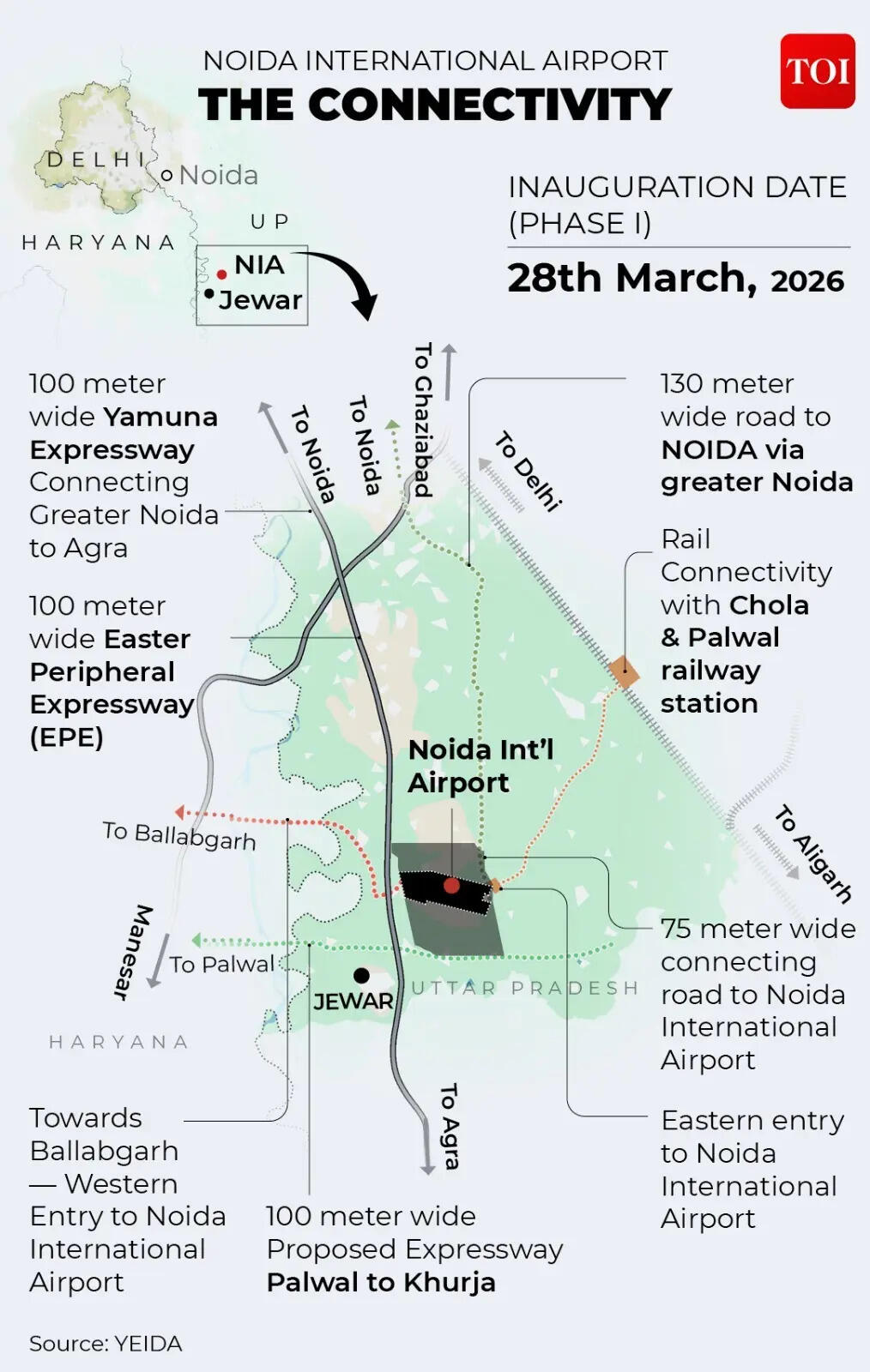
NEW DELHI: The Noida International Airport at Jewar in Uttar Pradesh will be inaugurated on Saturday, with Prime Minister Narendra Modiopening the first phase of the project that is set to add capacity to the National Capital Region’s aviation network.“Tomorrow, 28th March is a day of immense importance for the people of Uttar Pradesh and the NCR. Phase I of Noida International Airport will be inaugurated. This will boost commerce and connectivity. It will ease congestion at the IGI Airport in Delhi,” said the PM in a post on X.

Watch

PM Modi To Inaugurate Noida International Airport Phase 1 On March 28: All You Need To Know

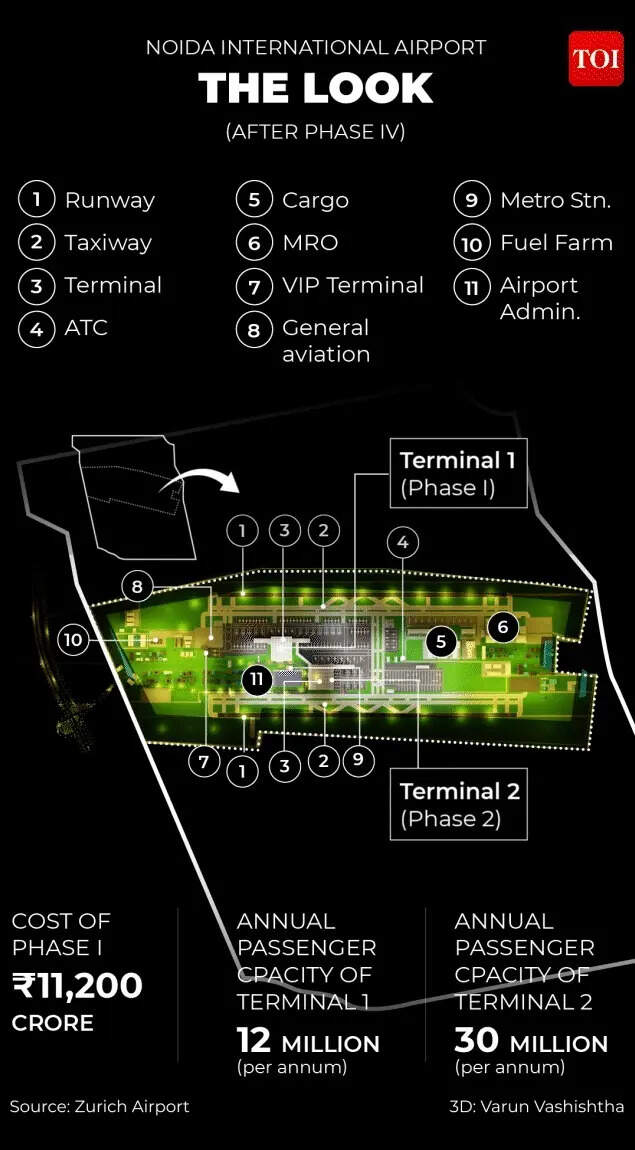
Located in Gautam Buddha Nagar district along the Yamuna Expressway, the airport has been developed as the second international gateway for Delhi-NCR, after the Indira Gandhi International Airport, which currently handles the bulk of the region’s air traffic.Project scope and costPhase I of the airport has been built at an investment of around Rs 11,200 crore under a public-private partnership model. It is designed to handle 12 million passengers per annum initially, with provision to scale up capacity to 70 million passengers annually in subsequent phases.

.

Infrastructure and operationsThe airport has a 3,900-metre runway capable of handling wide-body aircraft. It is equipped with Instrument Landing System (ILS) and airfield lighting to support all-weather, round-the-clock operations.The project is among the largest greenfield airport developments in India.Cargo and support facilitiesApart from passenger operations, the airport includes cargo infrastructure with an integrated cargo terminal and logistics zones. The facility is designed to handle over 2.5 lakh metric tonnes of cargo annually in the first phase, expandable to around 18 lakh metric tonnes.A 40-acre maintenance, repair and overhaul (MRO) facility is also part of the project.

.

Role in NCR aviation networkOnce operational, the Noida airport is expected to function in conjunction with Delhi’s IGI Airport to distribute passenger and cargo traffic, addressing capacity constraints in the region.Inauguration scheduleAccording to the official programme, PM Modi will visit the airport on March 28, undertake a walkthrough of the terminal building and then at around 12 noon, inaugurate Phase I before addressing a public gathering.The airport is expected to begin operations with its initial capacity, with further expansion planned in phases.


Source link

‘IPL se better offer mila aur woh chale gaye’: Ex-Pakistan star questions PSL’s decline – WATCH | Cricket News


'IPL se better offer mila aur woh chale gaye': Ex-Pakistan star questions PSL's decline - WATCH
Ahmed Shehzad (Image credit: Agencies)

NEW DELHI: Veteran Pakistan batter Ahmed Shehzad has launched a sharp critique of the Pakistan Super League (PSL), placing the Indian Premier League well above Pakistan’s premier T20 competition. Shehzad pointed out how several overseas players continue to commit to the PSL but eventually opt for the IPL when better offers come their way – a trend he believes is hurting Pakistan’s premier T20 competition.

Watch

IPL 2026: Mukesh Kumar on Shami’s influence & India comeback plans

“Ek taraf duniya ki sabse powerful, ameer league IPL hai, aur doosri taraf Pakistan Super League – PSL. Aaj baat karte hain ki kyun bahut saare players PSL ke saath contract hone ke bawajood IPL mein khelte hue nazar aate hain. Players commitment dete hain ki woh PSL mein khelenge, lekin baad mein kai dafa dekha gaya hai ki wahi players IPL choose kar lete hain. Is par baat karni zaroori hai. PSL ka graph kahan ja raha hai, pehle kahan tha, kitni tezi se upar gaya aur phir kitni tezi se neeche aaya – yeh sab bhi discuss hoga. [On one side, there is the IPL – the most powerful and richest league in the world – and on the other side is the Pakistan Super League (PSL). Today, let’s discuss why many players, despite having PSL contracts, end up playing in the IPL]” Shehzad said.Shehzad, who played 13 Tests, 81 ODIs and 59 T20Is for Pakistan between 2009 and 2019, stressed that the issue goes beyond just league dynamics and directly impacts Pakistan cricket as a whole.“Kyuki yeh matter karta hai. Pakistan ki team bhi isi system par depend karti hai. Isliye is par baat karna zaroori hai – kyuki mulk ka maamla hai. Phir stadium ke andar players ki kya soch hoti hai? Kya woh sach mein khelna chahte hain ya nahi? Kya unhe sirf financial benefit mil raha hai ya aur bhi kuch fayda hai? [Because this matters. Pakistan’s national team depends on this system. So this discussion is necessary – it’s about the country. What is the mindset of players inside the stadium? Do they really want to play in the PSL? Do they benefit beyond just financial gains? ]”The former Pakistan batter also gave multiple examples of high-profile withdrawals, including Dasun Shanaka and Azmatullah Omarzai.“Har dafa ki tarah, is baar bhi lagbhag 45 bade naamon ne PSL ke liye commitment diya, lekin woh aaye hi nahi. Aap Dasun Shanaka ko dekh lijiye – Sri Lanka aur Pakistan ke relations acche hone ke bawajood, unhe IPL se better offer mila aur woh udhar chale gaye. Phir Azmatullah Omarzai jaise players, jo kisi bhi team ke liye asset hote, woh bhi chale gaye. South African players ne bhi commitment diya, lekin baad mein pull out kar gaye. Abhi bhi kai players hain jinke upar question mark hai – aayenge ya nahi. [Like every year, around 45 big-name players committed to the PSL this time as well, but many didn’t show up. Take Dasun Shanaka for example — despite strong cricketing ties between Sri Lanka and Pakistan, he chose the IPL after receiving a better offer. Players like Azmatullah Omarzai, who could have been key assets, also opted out. South African players too pulled out after committing. Even now, there are several players whose participation remains uncertain].”According to Shehzad, the PSL’s declining trajectory is closely linked to the expanding global footprint of the IPL and its franchise ecosystem.“Yahi wajah hai ki PSL ka graph neeche ja raha hai. Competition bahut zyada badh gaya hai. IPL ab sirf India tak limited nahi hai. Indian franchise owners ne duniya bhar ki leagues mein apni jagah bana li hai. Har league mein unki teams hain. Itna hi nahi, kuch players ne paison ke chalte international cricket se retirement tak le liya, taaki woh franchise leagues ke liye loyal reh sakein. Aap Nicholas Pooran ko dekhiye, Kieron Pollard ko dekhiye, Andre Russell – yeh sab isi trend ka hissa hain. Aur Jos Buttler jaise players bhi ab zyada tar franchise cricket par focus karte nazar aate hain. [This is exactly why PSL’s graph is declining. Competition has increased significantly. The IPL is no longer limited to India – Indian franchise owners now have stakes in leagues across the world. In fact, some players have even retired from international cricket to stay loyal to franchise leagues due to financial incentives. Players like Nicholas Pooran, Kieron Pollard, Andre Russell have followed this path, and even Jos Buttler is increasingly focused on franchise cricket].”


Source link

Synergy, Team India spirit: What was discussed in key PM Modi-CMs meet amid Iran war | India News


Synergy, Team India spirit: What was discussed in key PM Modi-CMs meet amid Iran war

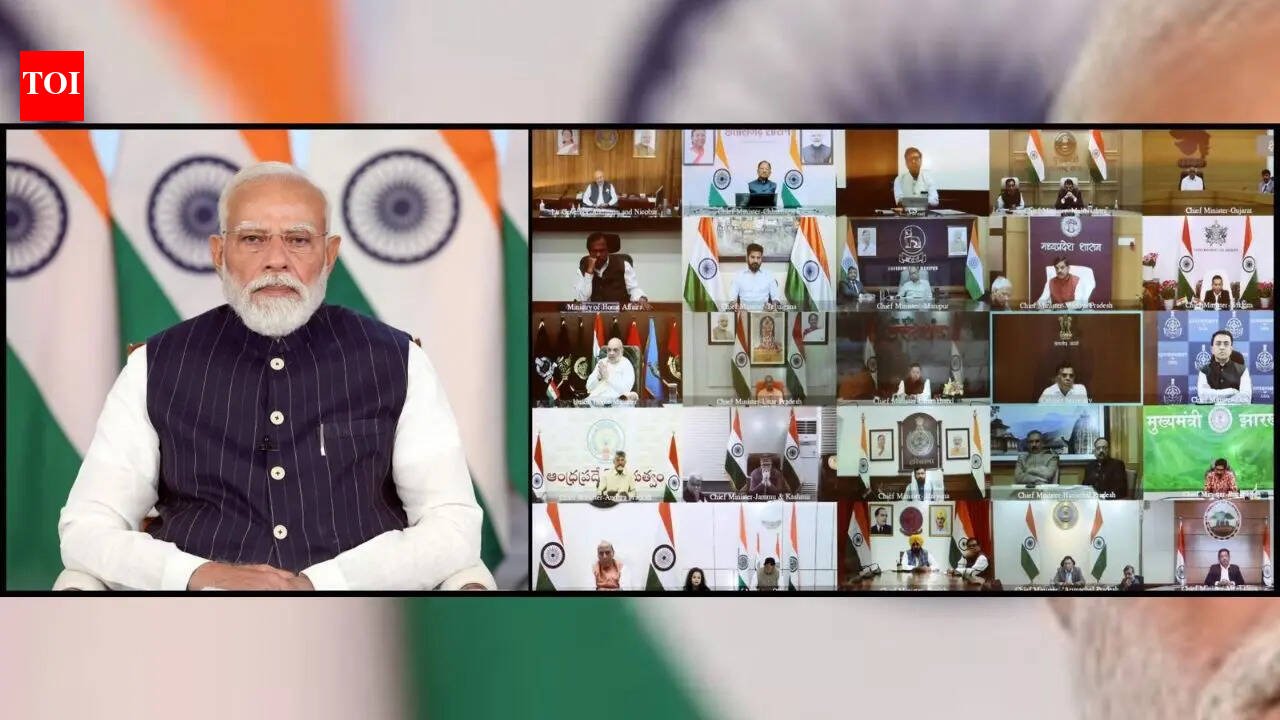
NEW DELHI: Prime Minister Narendra Modi on Friday chaired a virtual meeting with chief ministers to review the impact of the ongoing Middle East conflict, with discussions centred on fuel supply, inflation and logistics amid rising global tensions.The meeting focused on ensuring coordinated action between the Centre and states to manage potential disruptions triggered by the crisis, particularly in energy supplies and supply chains. The Prime Minister is chairing the meeting with CMs as part of efforts to assess preparedness and maintain stability in essential sectors.The discussions also included a review of states’ readiness to handle any fallout from the conflict, including contingency planning for fuel availability and price pressures. With global energy markets already under strain, the Centre emphasised the need for close coordination and timely response mechanisms.Officials indicated that the interaction was aimed at reinforcing a “Team India” approach, ensuring that both the Union government and states work in synergy to address emerging challenges.Chief ministers of poll-bound states did not participate in the meeting due to the model code of conduct. A separate meeting for Chief Secretaries of election-going states will be conducted through the Cabinet Secretariat to ensure administrative coordination without violating election norms.


Source link

Stock markets today (March 27, 2026): Which are the top gainers and losers in Nifty50 and BSE Sensex today? Check list


Stock markets today (March 27, 2026): Which are the top gainers and losers in Nifty50 and BSE Sensex today? Check list

Equity benchmark indices Sensex and Nifty plunged over 2% on Friday, snapping a two-day rally, as global weakness and rising geopolitical tensions dented investor sentiment.The 30-share BSE Sensex dropped 1,690.23 points, or 2.25%, to close at 73,583.22. During the session, it fell as much as 1,739.04 points, or 2.31%, to 73,534.41. The NSE Nifty declined 486.85 points, or 2.09%, to settle at 22,819.60.Market breadth remained weak, with 3,544 stocks declining, 822 advancing and 135 remaining unchanged on the BSE. In the holiday-shortened week, the Sensex lost 949.74 points, or 1.27%, while the Nifty slipped 294.9 points, also down 1.27%.Analysts attributed the sell-off to a mix of global and domestic headwinds, including elevated crude oil prices, a sharp fall in the rupee and continued foreign fund outflows.

Nifty50 top gainers

  • ONGC (4.35%)
  • Wipro (1.35%)
  • TCS (0.53%)
  • Bharti Airtel (0.50%)
  • Coal India (0.31%)
  • Power Grid (0.17%)

Nifty50 top losers

  • Shriram Finance (-5.47%)
  • Tata Motors (-4.64%)
  • RIL (-4.60%)
  • InterGlobe Aviation (-4.55%)
  • Bajaj Finance (-4.42%)
  • SBI (-3.88%)
  • Eternal (-3.73%)
  • Adani Enterprises (-3.38%)
  • HDFC Bank (-3.34%)
  • Bajaj Finserv (-2.95%)

BSE Sensex top gainers

  • TCS (0.53%)
  • Bharti Airtel (0.50%)
  • Power Grid (0.17%)

BSE Sensex top losers

  • RIL (-4.60%)
  • InterGlobe Aviation (-4.55%)
  • Bajaj Finance (-4.42%)
  • SBI (-3.88%)
  • Eternal (-3.73%)
  • HDFC Bank (-3.34%)
  • Bajaj Finserv (-2.95%)
  • HUL (-2.83%)
  • M&M (-2.78%)
  • Asian Paints (-2.77%)

“Investor sentiment remained fragile due to a lack of clarity surrounding geopolitical tensions between the US and Iran, which once again pushed crude oil prices above the USD 100 mark. In addition, persistent FII outflows and sharp weakness in the rupee further weighed on risk appetite,” Ajit Mishra – SVP, Research, Religare Broking Ltd, said, PTI quoted.Broader markets also came under pressure, with the BSE MidCap Select index falling 2.12% and the SmallCap Select index declining 1.77%.All sectoral indices closed lower. PSU Bank index dropped 3.88%, realty fell 3.10%, services 2.86%, auto 2.79%, Bankex 2.70%, financial services 2.69%, consumer discretionary 2.52% and consumer durables 2.50%.Brent crude, the global oil benchmark, rose 1.72% to USD 109.9 per barrel, adding to inflation concerns and dampening market sentiment.The rupee weakened sharply, tumbling 86 paise to settle at a fresh all-time low of 94.82 (provisional) against the US dollar.Global cues remained negative. In Asia, South Korea’s Kospi and Japan’s Nikkei 225 ended lower, while Shanghai’s SSE Composite and Hong Kong’s Hang Seng closed in positive territory. European markets were trading in the red, and US markets had ended sharply lower on Thursday.“Profit booking set in after the recent two-session rally as the rupee fell to an all-time low amid sustained FII selling, while escalating tensions in the Middle East heightened caution among investors ahead of the weekend,” Vinod Nair, Head of Research, Geojit Investments Limited, said, PTI quoted.Markets were closed on Thursday on account of Ram Navami.Foreign Institutional Investors (FIIs) sold equities worth Rs 1,805.37 crore on Wednesday, while Domestic Institutional Investors (DIIs) bought stocks worth Rs 5,429.78 crore, according to exchange data.“Indian markets witnessed a sharp and uneasy session, with heavyweight energy stocks leading the decline amid a complex mix of policy changes, rising crude prices, and persistent geopolitical uncertainty.“Adding to the pressure, the Indian rupee weakened further to record lows against the US dollar, underscoring the macro stress building beneath the surface,” Hariprasad K, Research Analyst and Founder, Livelong Wealth, said.In the previous session on Wednesday, the Sensex had surged 1,205 points, or 1.63%, to close at 75,273.45, while the Nifty gained 394.05 points, or 1.72%, to end at 23,306.45.


Source link