Breaking News
‘Umpires ne bola side ho jaayein’: First-hand account of PSL ball-tampering controversy | Cricket News


'Umpires ne bola side ho jaayein': First-hand account of PSL ball-tampering controversy

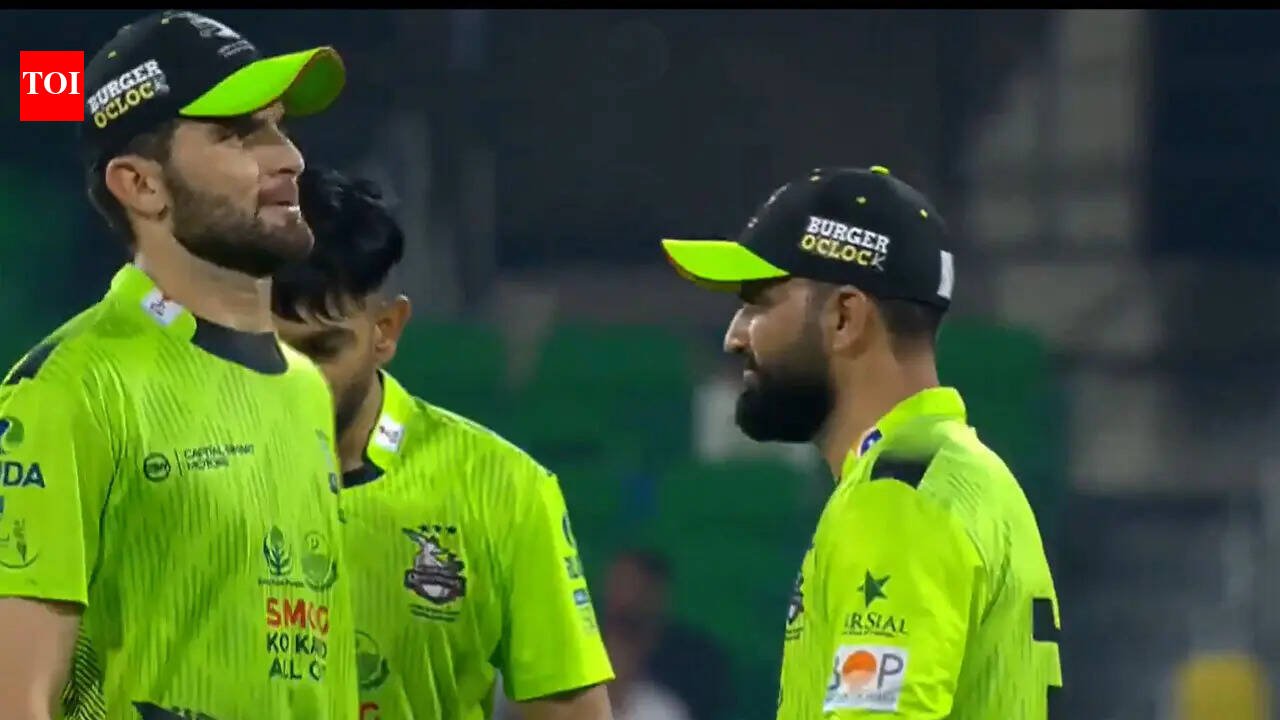
NEW DELHI: Pakistan cricket has been rocked by a ball-tampering scandal in the Pakistan Super League (PSL). The major controversy erupted during the match between Lahore Qalandars and Karachi Kings, putting captain Shaheen Afridi, opener Fakhar Zaman and fast bowler Haris Rauf under the scanner.The incident occurred in the final over of the match, with Karachi Kings needing 14 runs off six balls.Haris Rauf was set to bowl the last over, and just before it began, Afridi and Fakhar joined him for a brief discussion to chalk out a plan.What raised eyebrows was Fakhar appearing to be caught on camera altering the ball.On-field umpire Faisal Afridi then called for the ball, inspected it, and held a lengthy discussion with fellow umpire Sharfuddoula of Bangladesh.After deliberation, the umpires concluded that the ball had been deliberately altered and awarded five penalty runs to Karachi Kings, reducing the target to nine runs off six balls. The ball was also changed.Lahore Qalandars eventually lost the match by four wickets.‘UMPIRES NE BOLA SIDE MEIN HO JAAYEIN’After the game, Lahore Qalandars sent their overseas player Sikandar Raza to address the media in the post-match press conference, where questions around the controversy were inevitable.“Umpires ne hume bola tha ki aap side mein ho jaayein because they were talking with the third umpire. Exact reason toh unhi ke paas hoga. Agar aapko clear answer chahiye, you’ll have to ask the umpires jinke paas walkie-talkie thi ya phir third umpire se pooch sakte hain. Unhone bas itna hi kaha tha ki aap side mein ho jaayein. Humse sirf itni request ki gayi thi ki aap log apni field positions par khade rahein, aur captain ko bhi yahi bola gaya tha,” Raza said.“I can only speak for myself — meri taraf se kabhi bhi ball ki condition change karne ka koi intention nahi tha, not even to try. I remember I was trying to shine the ball ya thoda dry karne ki koshish kar raha tha, especially boundary ropes ke paas jahan thodi dew thi. Main long-on pe tha aur wahan thodi si dew thi, toh bas yeh kaha gaya tha ki ball ko shirt ke andar dry karne ki koshish na karein. So we started doing it with the sleeves,” he said.“Ab jo clips chal rahe hain aur jo allegations lag rahe hain, jab tak proper proof nahi aata, I think it’s a big decision to say something like this. Main abhi changing room mein gaya hoon, aur main yeh guarantee de sakta hoon ki mujhe kisi enquiry ke liye nahi bulaya gaya hai,” Raza added.FAKHAR DENIES BALL-TAMPERING CHARGESStar opener Fakhar Zaman was charged on Sunday by match referee Roshan Mahanama with a Level 3 offence under Article 2.14 of the PSL Code of Conduct for Players and Player Support Personnel. He was found to have violated Article 41.3 of the PSL playing conditions, which prohibits any action that alters the condition of the ball.Appearing before the former Sri Lankan cricketer, Zaman denied the charges against him.The match referee is expected to hold another hearing within the next 48 hours before delivering a verdict.If the offence is confirmed, Zaman — and potentially the Lahore Qalandars as a team — could face serious penalties.



Source link

Phones, TVs, ACs: India’s electronics are quietly getting a lot more expensive


Phones, TVs, ACs: India's electronics are quietly getting a lot more expensive

Charu is carefully picking electronics for her new home. She said, “I have to buy a lot of electronic products. I will put carpet on the floor so I will need a vacuum cleaner. I bought an ac. I am making a play area for Ziana, so I plan to put the ac the there. I found a very good fridge but it is quite expensive. I will buy a few things less to save expenses to buy the required items. I have to cut down on expenses. I also have to get geysers for Ziana and my bathrooms.”

Entry-level consumer electronics prices in India are climbing back to levels last seen six to eight years ago, reversing a long-standing industry trend of making technology progressively more affordable. According to a report by The Economic Times, manufacturers say that they can no longer absorb rising input costs, leaving consumers to bear the full brunt of price increases across smartphones, televisions and large appliances.Even mass-market air conditioners, refrigerators and washing machines are set to hit record highs from next month, raising concerns about a demand slowdown in the segments that drive volume for most brands, claims the report. “Prices are hitting record highs,” Kamal Nandi, who heads the appliances business at Godrej Enterprises, told the publication. “There is concern that entry-segment demand could weaken unless a harsh summer boosts sales.”The numbers tell the story starkly. Entry-level 5G smartphones, which were available for under ₹10,000 around Diwali, now retail between ₹13,000 and ₹14,000. Industry executives told the paper they expect prices to cross ₹17,000–18,000 in the next quarter, back to levels last seen in FY21, with some brands privately indicating to trade partners that prices could approach ₹20,000 within two to three months.Televisions and appliances tell a similar story. A 32-inch smart TV that sold for around ₹6,500 last year now goes for ₹8,500 and could touch ₹10,000 by May — matching what consumers paid in 2017–18. A 3-star, 1.5-tonne air conditioner, the default choice for first-time buyers, is set to cost between ₹37,000 and ₹40,000 from April, up sharply from ₹32,000–34,000 last summer.This marks a meaningful break from how the industry has long operated. Electronics prices have historically fallen over time as manufacturers scaled up and component costs dropped, with brands often absorbing whatever residual hikes remained to protect demand at the bottom of the market. That model has broken down. A sustained rise in memory chip prices over the past five to six months, combined with cost pressures from the Gulf conflict and a weakening rupee, has made absorption increasingly untenable.Retailers are feeling it too. Kailash Lakhyani, founder chairman of the All India Mobile Retailers Association, which represents over 150,000 retailers, said that brands including Vivo, Oppo, Samsung and Xiaomi have signalled fresh price increases of up to 10% on select models. Some of the damage is hidden in plain sight. “Some new models from Vivo and Samsung, despite carrying similar specifications to their predecessors, are priced up to 36% higher,” he said.Lakhyani added that Vivo’s sales team has indicated entry-level 5G smartphone prices could reach ₹20,000 by June. Making matters worse, the routine discounts that once softened the blow for buyers have quietly disappeared. “The industry typically sees quarterly price cuts, cashback offers and trade promotions, but these are now largely absent — effectively raising consumer costs by another 10%,” he told The Economic Times. Smartphone and television prices have been rising every 30 to 60 days since November–December.Consumers are already adjusting. Cellphone retailers report growing numbers turning to second-hand and refurbished devices, while others are simply holding off on purchases. The retailers’ association plans to petition the government once again to cut GST on smartphones priced up to ₹20,000 from 18% to 5%, arguing that without some relief, demand at the entry level may not recover on its own.


Source link

‘Rohit 2.0 will worry all IPL teams’: Kumble hails MI star’s blazing return | Cricket News


‘Rohit 2.0 will worry all IPL teams’: Kumble hails MI star’s blazing return

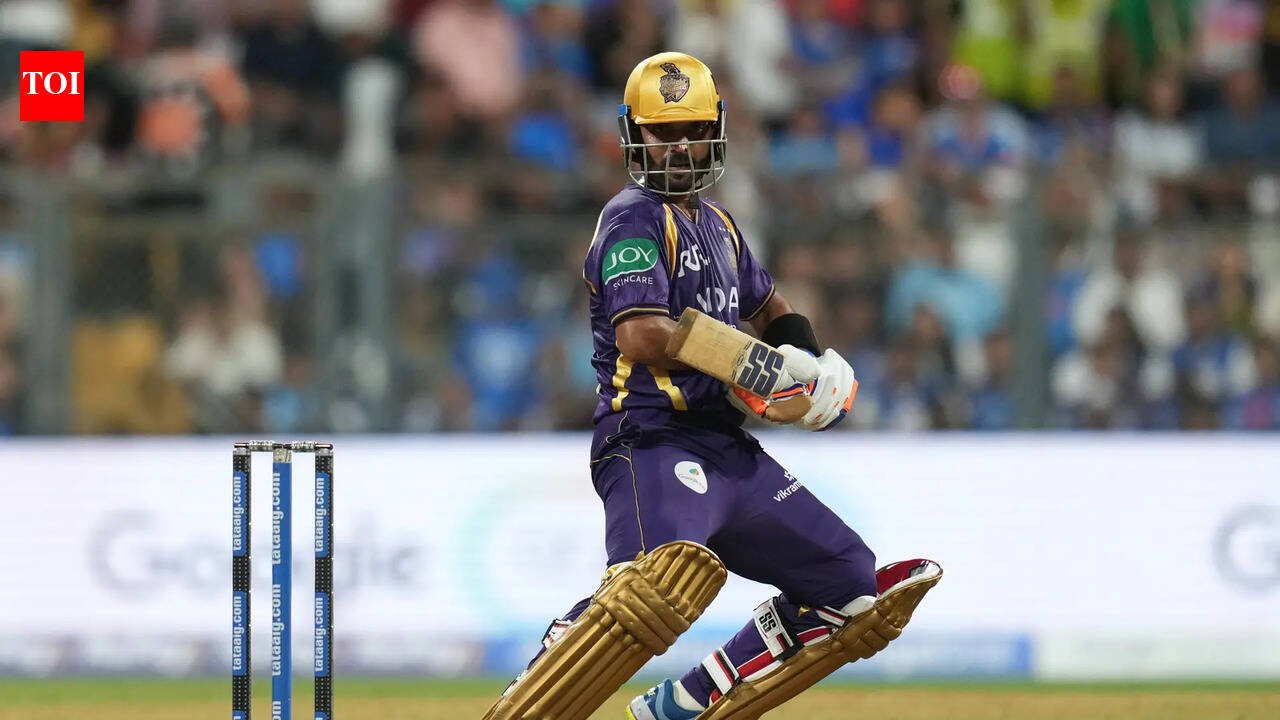
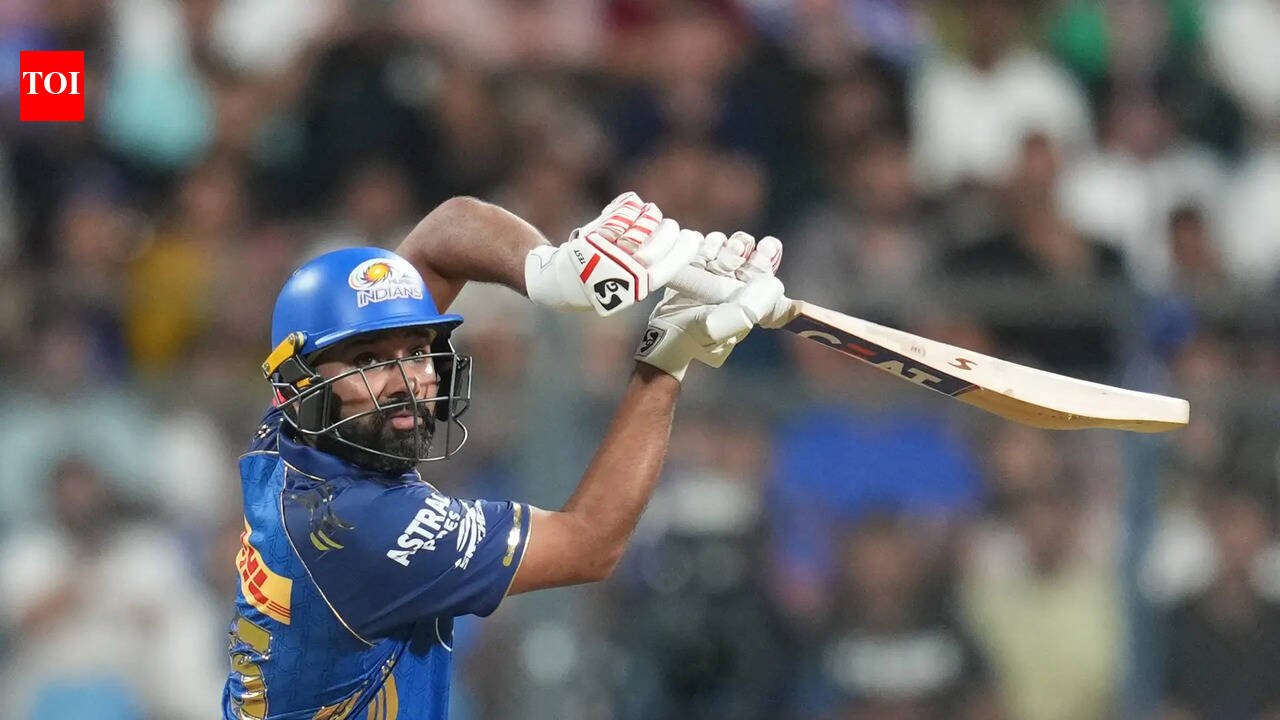
NEW DELHI: Former India captain Anil Kumble believes a resurgent Rohit Sharma could spell trouble for the rest of the IPL, after the Mumbai Indians opener announced his return in style with a match-winning knock against Kolkata Knight Riders.Rohit smashed a scintillating 78 off just 38 balls to power MI to a six-wicket win in their season opener at the Wankhede Stadium, ending their long-standing jinx of losing the first match of an IPL campaign.Go Beyond The Boundary with our YouTube channel. SUBSCRIBE NOW!Kumble was particularly struck by the authority and ease with which Rohit dominated quality bowling, calling it a sign of a dangerous new phase in his career.“Rohit Sharma seems to have arrived in his 2.0 avatar, and his innings showed he is ready to dominate again. The way he hit the ball all around the ground reminded me of his prime,” Kumble said on Star Sports.The former India coach highlighted how Rohit made light work of a potent spin attack featuring Sunil Narine and Varun Chakravarthy, along with pacer Blessing Muzarabani.“It is not easy to hit sixes against bowlers like Varun Chakravarthy, Sunil Narine and Blessing Muzarabani, but he made it look easy. He has worked a lot on his fitness… when you come back after a short break, it takes time to find rhythm,” Kumble noted.“This was a fantastic innings… the six-hitting looked easy, and even though the boundaries were small, those shots were going into the stands. This knock shows that Rohit means business and this version of him will worry all IPL teams,” he added.KKR’s spin strategy under scrutinyWhile praising Rohit, Kumble also pointed out tactical lapses from Kolkata Knight Riders, particularly their under-utilisation of key spinners.“KKR are relying too much on Sunil Narine and Varun Chakravarthy, and Narine did not even complete his quota, which was surprising. The disappointing part was that Ajinkya Rahane did not bring him on in the Powerplay,” he said.According to Kumble, the delay in introducing Narine proved costly as Mumbai’s openers had already taken control.“By the time Narine came on, the damage was already done… they need to use their resources better. When you have two world-class spinners, you need to use them well,” he added.


Source link

‘Fakhar Zaman toh gaya, Afridi ki … ‘: Pakistan greats lash out after PSL ball-tampering storm | Cricket News


Fakhar Zaman, Shaheen Afridi and Haris Rauf (Image credit: PSL)

NEW DELHI: Former Pakistan cricketers came down hard on Fakhar Zaman for his involvement in the ball-tampering episode during a Pakistan Super League (PSL) match. Not just Fakhar, Lahore Qalandars captain Shaheen Afridi and fast bowler Haris Rauf were also slammed and held equally responsible for the controversy that rocked the league.The incident took place during a PSL clash between Lahore Qalandars and Karachi Kings, with Fakhar finding himself at the centre of a major controversy.Criticising both Fakhar and Shaheen, former Pakistan cricketers Basit Ali and Kamran Akmal did not hold back in their assessment.

Watch

Axar Patel questions Impact Player rule: ‘All-rounders lose value’

“Gaya Fakhar Zaman. Fakhar Zaman to gya [It’s over for Fakhar Zaman]. Since the evidence has come out, I’m sure that he’ll be fined a huge amount,” Basit said on a live TV show.“Punishment toh milegi, mujhe lagta hai milegi. Fakhar pe bhi aur kaptaan (Shaheen) pe bhi. Zimmedari toh banti hai. Lekin captain toh hai na, captain par bhi responsibility hoti hai. [There will be punishment, I feel there will be. For Fakhar as well, and for Haris Rauf and the captain (Shaheen) too. Responsibility does come with it. After all, he is the captain, and the captain also has responsibility],” Kamran said.

PSL ball-tampering: What happened

The incident unfolded when Lahore Qalandars fast bowler Haris Rauf was set to bowl the final over, with Karachi Kings needing 14 runs for victory. As Rauf prepared for his run-up, captain Shaheen Afridi and Fakhar joined him for a brief discussion to chalk out a plan for the final over.What raised eyebrows was that Fakhar appeared to be caught on camera tampering with the ball, while Shaheen, standing beside him, was seen smiling.On-field umpire Faisal Afridi then called for the ball, inspected it, and held a lengthy discussion with fellow umpire Sharfuddoula of Bangladesh.After deliberation, the umpires concluded that the ball had been deliberately altered and awarded five penalty runs to Karachi, reducing the target to nine runs off the final six balls.The ball was also changed.Lahore Qalandars eventually lost the match by four wickets.


Source link

Georgia Wareham shines as Australia go 2-0 up against West Indies in ODI series


Australia Women continued their dominant run with a clinical 90-run victory over West Indies Women in the second ODI at Warner Park. The win not only underlined Australia’s superiority but also highlighted the all-round brilliance of Georgia Wareham, who was deservedly named Player of the Match.

After winning the toss and opting to bat, Australia put up a strong total of 269/7 in their 50 overs. Despite a slightly shaky start, the visitors showcased depth and composure, ensuring they finished with a competitive score.

Beth Mooney anchors as Australia post 269

Australia’s innings began on an uncertain note with early wickets disrupting their rhythm. However, experienced batter Beth Mooney stepped up to stabilize the innings with a well-crafted 65. Her knock was crucial in rebuilding the innings and setting a solid platform for the middle order.

Mooney found valuable support in Phoebe Litchfield, who contributed a fluent 46. Together, they ensured the scoreboard kept moving, preventing West Indies from gaining complete control during the middle overs.

The innings gained momentum in the later stages thanks to contributions from the lower order. Wareham played a vital cameo, scoring 39 at an impressive strike rate, while Nicola Carey (30 not out) and Alana King (26 not out) provided the finishing touches. Their late surge proved decisive, pushing Australia to a commanding total.

For West Indies, captain Hayley Matthews led from the front with the ball, claiming three wickets. Afy Fletcher and Ashmini Munisar chipped in with two wickets each. However, the inability to contain runs in the death overs proved costly for the hosts.

Also READ: Kashvee Gautam earns maiden call-up as India announce Women’s T20I squad for South Africa tour

Georgia Wareham leads bowling charge as West Indies collapse

Chasing 270, West Indies started positively, with Qiana Joseph and Matthews putting together a promising 57-run opening partnership. Matthews top-scored with 45, showing intent and control at the crease.

However, her dismissal triggered a dramatic collapse. Australia’s bowling attack, spearheaded by Wareham, tightened its grip on the match. Wareham’s three-wicket haul was instrumental, as she dismissed key batters including Stafanie Taylor and Deandra Dottin, effectively derailing the chase.

All-rounder Ashleigh Gardner also played a crucial role, picking up three wickets and maintaining relentless pressure. Support from Tahlia McGrath and Alana King ensured there was no respite for the West Indies batters.

Despite a fighting unbeaten 32 from Fletcher, West Indies were bowled out for 179 in 46 overs. The middle-order collapse proved decisive, as wickets fell in quick succession and the required run rate kept climbing out of reach.

With this win, Australia have taken a 2-0 lead in the three-match series, with the last ODI scheduled at the same venue on April 2.

Also READ: NZ-W vs SA-W, 1st ODI – Kayla Reyneke clinches last-ball thriller for South Africa

This article was first published at WomenCricket.com, a Cricket Times company.


Source link

LPG crisis eases: Operations back to normal in many factories as commercial LPG supplies improve; workers return


LPG crisis eases: Operations back to normal in many factories as commercial LPG supplies improve; workers return
The Centre has designated sectors such as steel, automobiles, textiles, dyes, chemicals and plastics as priorities. (AI image)

LPG crisis for factories across the country seems to be easing as the government steps up availability of commercial liquefied petroleum gas. Production disruptions are gradually subsiding as supplies of commercial LPG improve and migrant workers return to factories, supported by companies providing meals or alternative cooking solutions.This improvement follows the government’s move on Friday to raise the allocation of commercial LPG by an additional 20 percentage points, taking it to 70 per cent of pre-disruption levels that had been affected by the Gulf conflict and Iran’s near blockade of the Strait of Hormuz.The Centre has designated sectors such as steel, automobiles, textiles, dyes, chemicals and plastics as priorities, given their labour-intensive operations and strong interlinkages with other industries, according to an ET report.Companies operating in these sectors have started to see operations gradually stabilise.Liquefied petroleum gas is extensively used across industries such as automobiles and electronics, particularly in processes like brazing and paint shop operations, as well as in segments like food processing.

Availability of Commercial LPG supplies

Industry players indicated that LPG availability has become more stable.“Earlier we had visibility of one-two days; now it’s about a week,” said Kamal Nandi, head of the appliances business at Godrej Enterprises. “There are no issues with labour or raw materials, and production is running at full throttle,” he was quoted as saying.An executive from the automobile sector noted that supply constraints at smaller vendors are easing, while larger manufacturers have managed to limit disruptions by adopting alternative fuel options.“The higher allocation for non-domestic LPG and inclusion of automobiles as a priority sector is a big help,” he said.Mayank Shah, vice president at Parle Products, said improved LPG availability is enabling previously impacted plants to move back towards optimal production levels. He added that companies have urged the government to include packaged foods among the priority sectors.Ajay DD Singhania, chief executive of Epack Durable, noted that supplies have recovered to nearly 60 per cent of normal levels and are likely to rise to around 80 per cent this week. “The new normal is that we have to follow up daily to secure LPG supplies, but availability has improved,” Singhania said. “Workforce retention is no longer a challenge with us offering meals or cooking support. However, production losses over the past three-four weeks are not recoverable.Attendance levels have also improved as several firms introduced canteen meals, reducing reliance on LPG for cooking. Earlier, supply disruptions had led to absenteeism among migrant workers and a temporary outflow, as higher black market prices and the shutdown of small eateries and mess facilities made food access difficult.A senior executive in the auto components sector said companies are now providing meals across shifts or offering incentives of up to Rs 5,000 to offset higher LPG costs and retain workers. “Attendance has returned to normal,” he said.Avneet Singh Marwah, chief executive of Super Plastronics, said the migrant workforce has returned as supply pressures have eased. The company produces televisions under the Kodak, Thomson and Blaupunkt brands.


Source link

‘Not here to show how talented I am’: Rahane unfazed by noise around his future | Cricket News


‘Not here to show how talented I am’: Rahane unfazed by noise around his future
Kolkata Knight Riders captain Ajinkya Rahane plays a shot during the IPL match against Mumbai Indians. (AP Photo)

NEW DELHI: Kolkata Knight Riders captain Ajinkya Rahane has brushed aside the constant chatter surrounding his career, insisting he is focused on personal growth rather than proving his talent to critics.Rahane’s composed 67 off 40 balls against Mumbai Indians in their IPL clash on Sunday once again brought him into the spotlight, but the veteran batter made it clear that external opinions hold little relevance to him.Go Beyond The Boundary with our YouTube channel. SUBSCRIBE NOW!“Let people talk about me. They have been talking about me since like what, 20 years now. Let them talk,” Rahane said when asked if his innings was a statement knock. “I am not here to show anyone how talented I am and what’s my game. People are watching. Let them watch. Let them talk.”The 37-year-old, who last played for India in 2023, has faced persistent scrutiny, especially after stepping down from Mumbai’s Ranji Trophy captaincy and skipping leadership roles in domestic white-ball tournaments. Yet, Rahane underlined that his focus remains firmly on evolving as a cricketer.“I am really happy, in the last 2-3 years, the way I have improved my game in white-ball formats. It’s important to grow as a cricketer and that’s what I am trying to do. People will keep talking and let them talk,” he added.‘Bumrah made the difference’Despite Rahane’s effort, Kolkata fell short as Mumbai chased down 221 with ease. The skipper revealed he was hampered by cramps in the latter half of the game.“I was just cramping. It’s a very bad feeling to sit outside with cramps… but first I’m really happy with the way I batted,” he said.Rahane also acknowledged the impact of Jasprit Bumrah, whose late overs restricted Kolkata from pushing towards a bigger total.“We thought 220 was a good total, we were on track for 235-240, but those two overs from Bumrah made a lot of difference. That’s why he’s such a great bowler,” Rahane noted.He admitted that KKRs relatively inexperienced bowling attack will take time to settle, especially with injuries affecting team balance. “It is challenging because our bowlers are inexperienced and some are injured, but it’s also an opportunity for others to step up and make a name,” he said.Backing under-fire spinner Varun Chakravarthy, Rahane urged patience. “Every player goes through this phase… he should not think too much about what is happening,” he added.


Source link

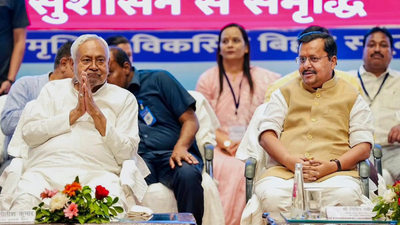
Bihar CM Nitish Kumar and BJP national presidient Nitin Nabin resign from legislative council ahead of Rajya Sabha entry | India News


Bihar CM Nitish Kumar and BJP national president Nitin Nabin resign from legislative council ahead of Rajya Sabha entry

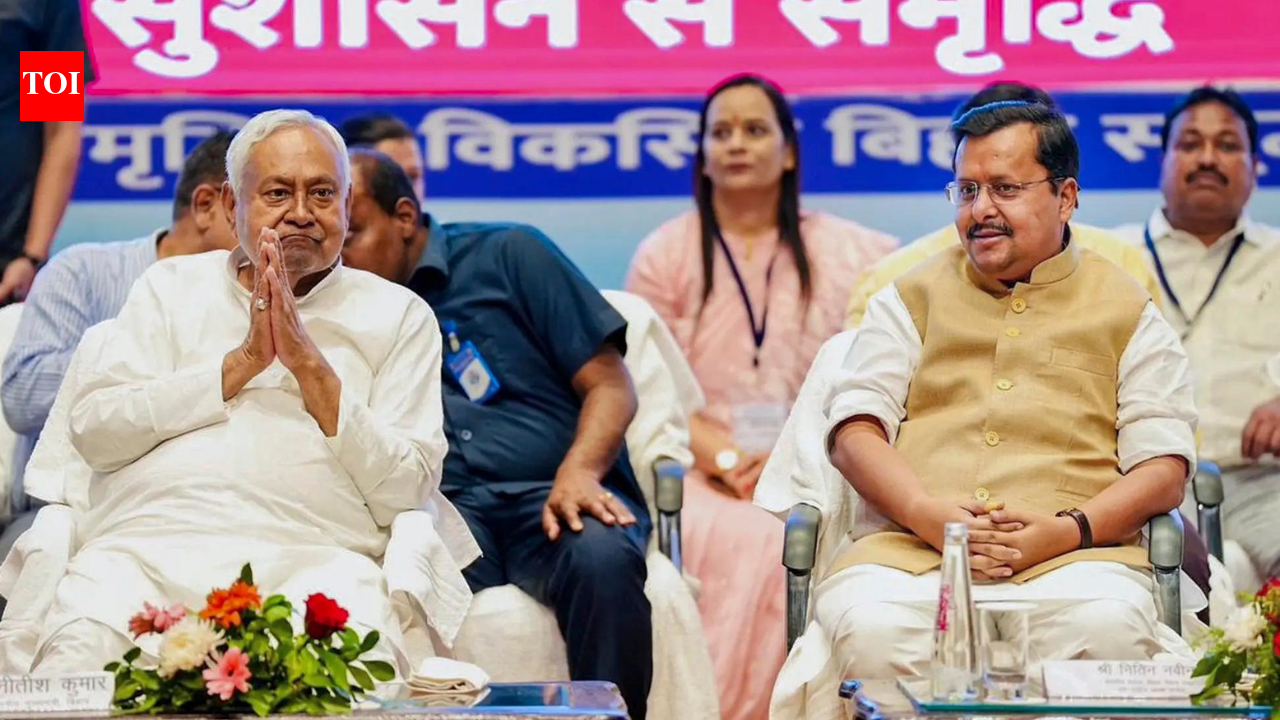
PATNA: Bihar CM Nitish Kumar and BJP national presidient Nitin Nabin on Monday vacated their seats in the state legislative council and assembly, respectively, 14 days after being elected as member of the Rajya Sabha. Both were elected to the Rajya Sabha on March 16.While Nitish sent his resignation letter to the Bihar legislative Council’s chairman, Nitin sent his letter to the Bihar assembly speaker.Nitish Kumar’s resignation letter was brought to the lgislative council by the state’s parliamentary affairs minister Vijay Kumar Choudhary and JD(U) MLC Sanjay Kumar Singh alias Gandhiji.BJP national president Nitin Nabin’s resignation was submitted by the state BJP president Sanjay Saraogi to the Vidhan Sabha Speaker Prem Kumar. Nitin had handed over his resignation to the Saraogi before leaving for Assam on Sunday.The Vidhan Sabha Speaker Prem Kumar, however, clarified that if Nitish Kumar wishes, he can continue as the chief minister for the next six months.Nitish was elected to the Rajya Sabha on March 16, along with four other NDA leaders namely Nitin Nabin, Union minister Ram Nath Thakur, RLM President Upendra Kushwaha and BJP state general secretary Shivesh Kumar.As per the provisions in the Prohibition of Simultaneous Membership Rules-1950, the members are required to vacate their seats in the Bihar Legislative Council or the state assembly within 14 days of being elected to the Rajya Sabha.Reacting over Nitish’s resignation from the council, the parliamentary affairs minister Vijay Kumar Choudhary said, “The Chief Minister has been elected as a member of the Rajya Sabha. This is a constitutional process. He had to resign today.”


Source link

Income tax overhaul: Key changes you should watch for from April 1, 2026


Income tax overhaul: Key changes you should watch for from April 1, 2026
One of the most notable changes is the introduction of a unified ‘Tax Year’. (AI image)

By Sunil BadalaAs we approach FY 2026-27, the country stands at the cusp of one of the most significant overhauls of its income-tax framework in decades. With the introduction of the new Income-tax Act, 2025 and the Income-tax Rules, 2026, the Government aims to make the system even further simplified, streamlined, transparent, and taxpayer-friendly.For salaried individuals, this transition marks more than just a procedural change. It signals quite a shift in how income is reported, assessed, and taxed. The reforms seek to simplify compliance, reduce ambiguity, and align India’s tax administration with global best practices.Some key changes that salaried individuals should look out for are mentioned below:A unified ‘Tax Year’ conceptOne of the most notable changes is the introduction of a unified ‘Tax Year’, replacing the long-standing distinction between Previous Year (PY) and Assessment Year (AY). This move is expected to eliminate confusion, particularly among individual taxpayers, by aligning income earnings, assessment periods and other aspects (like due dates, time limits etc.) with a single reference point.Expanded house rent allowance (HRA) benefits and disclosure normsThe HRA benefits have also been expanded. Salaried taxpayers residing in rented premises in cities such as Bengaluru, Hyderabad, Pune, and Ahmedabad may now be eligible for higher exemption limits (reference amount being increased from 40 per cent of basic salary to 50 per cent of basic salary), bringing them at par with traditionally classified metro cities like Mumbai, Delhi, Chennai, and Kolkata.Additionally, a stricter disclosure requirement has been introduced. Taxpayers must now declare their relationship with the landlord. This measure is aimed at curbing potential misuse and improving transparency in claims.Enhanced allowances for education and meal expensesIn a move likely to benefit middle-class households, the tax exemption limits for children’s education and hostel allowances have been significantly increased. Education allowance limits have been increased from Rs 100 per month to Rs 3,000 per month per child, while hostel allowance limits have been increased from Rs 300 to Rs 9,000 per month per child. While this may still be only a fraction of the cost of education in certain cities and towns it is a welcome move to enhance these age-old limits.Similarly, the tax-free limit for employer provided meals and non-alcoholic beverages as well as food coupons has been enhanced from Rs 50 per meal to Rs 200 per meal. This increase reflects inflationary trends and aims to improve employees’ take-home pay.Revised perquisite valuation for employer provided carsThe valuation of perquisites for employer provided cars has also been substantially revised and a valuation mechanism has been introduced for electric vehicles as well. Monthly taxable values range from Rs 2,000 to Rs 7,000 per month, with an additional Rs 3,000 per month where a chauffeur is provided. These updated slabs replace the earlier valuations of Rs 600 to Rs 2,400 (plus Rs 900 for chauffeur), potentially increasing the tax liability for employees availing such benefits.Broader changes to perquisites and exemptionsSeveral employee related exemptions and perquisite thresholds have been revised upward. These include higher transport allowances for differently abled employees, increased limits for tax-free employer provided gifts and vouchers, updated valuation rules for education benefits, and expanded exemptions for employer provided loans.Procedural overhaul and new compliance requirementsThe reforms are not just limited to tax computation, they also introduce procedural changes. Key tax forms have been replaced or consolidated, for instance, Form 130 has replaced Form 16 (popularly known as salary certificate), while Form 124 has taken the place of Form 12BB (employee declaration). Additionally, various TDS forms and PAN application processes have been streamlined.A new declaration requirement under Form 157 has been introduced for individuals leaving India, enhancing reporting obligations in cross-border scenarios where either no PAN or income below taxable limit. Furthermore, taxpayers claiming foreign tax credit exceeding Rs 100,000 would now need certification from a Chartered Accountant in Form 44 which is a replacement of Form 67 under the current law required when a taxpayer is claiming foreign tax credit.Additionally, certain Budget 2026 recommendations (which is yet to receive the Presidential assent) are also noteworthy, which are expected to impact the salaried taxpayers effective 1 April 2026:Extended timelines for filing ReturnsTo provide greater flexibility, revised tax returns filing deadline is proposed to be extended to March 31 of the next tax year, instead of the earlier December 31 deadline, subject to a nominal fee.Similarly, the due date for filing original returns for taxpayers with non-audit business income is proposed to be extended from July 31 to August 31, offering additional time for compliance.Rationalisation of TCS and relief measuresIt is also proposed that for overseas tour packages and education/ medical purposes remittances, TCS rates may be reduced to 2% from the current 5% or 20%. This change is expected to provide cash flow relief to families incurring such expenses.Foreign Assets Disclosure SchemeAnother noteworthy initiative is the proposed Foreign Assets Disclosure Scheme for small taxpayers. This would offer a six-month window for voluntary disclosure of previously unreported foreign assets, allowing taxpayers to regularise their filings upon payment of applicable taxes and levies.The proposed reforms signal a decisive shift toward simplification, transparency, and improved compliance. While the transition may require adjustment, these changes are aimed to reduce complexity and enhance efficiency, ultimately aimed at creating a more streamlined and taxpayer friendly system aligned with India’s evolving economic landscape.(Sunil Badala is Partner and National Head of Tax, KPMG in India)


Source link

Rameez Raja questions PSL ball-tampering on air; Afridi says ‘we’ll check camera’ | Cricket News


Rameez Raza and Shaheen Afridi (PSL Photo)

NEW DELHI: After the ball-tampering scandal rocked the Pakistan Super League (PSL), Lahore Qalandars captain Shaheen Afridi expected the burning question to come his way – and it did. Following Lahore Qalandars’ defeat, Afridi was asked about the dramatic final over that involved alleged ball tampering by his teammate and star opener Fakhar Zaman.Here’s how the post-match presentation conversation went:Rameez Raja: That last over was quite dramatic, especially with the ball being changed due to suspected ball tampering. Your thoughts on that incident?

Watch

Axar Patel questions Impact Player rule: ‘All-rounders lose value’

Afridi: Actually, I don’t know much about it. We’ll have to check what exactly happened on camera. We’ll discuss it and see who did what, because it did hurt us badly. The five penalty runs made a big difference. But right now, we can’t say much until we are sure.The incident took place during a PSL match between Lahore Qalandars and Karachi Kings, with Fakhar finding himself at the centre of the controversy.The issue surfaced when Lahore Qalandars fast bowler Haris Rauf was set to bowl the final over, with Karachi Kings needing 14 runs for victory.Rauf was preparing to bowl when captain Shaheen Afridi and Fakhar joined him for a brief discussion to chalk out a plan for the final over.What raised eyebrows was that Fakhar appeared to be caught on camera altering the ball.On-field umpire Faisal Afridi then called for the ball, inspected it, and held a lengthy discussion with fellow umpire Sharfuddoula of Bangladesh.After deliberation, the umpires concluded that the ball had been deliberately altered and awarded five penalty runs to Karachi, reducing the target to nine runs off the final six balls.

Poll

Should there be stricter rules against ball tampering in cricket?

The ball was also changed.Lahore Qalandars eventually lost the match by four wickets.


Source link