Breaking News
‘Modi controls Kerala CM’: Rahul Gandhi counterattacks Pinarayi Vijayan with same BJP ‘B-team’ barb ahead of elections | India News


'Modi controls Kerala CM': Rahul Gandhi counterattacks Pinarayi Vijayan with same BJP 'B-team' barb ahead of elections
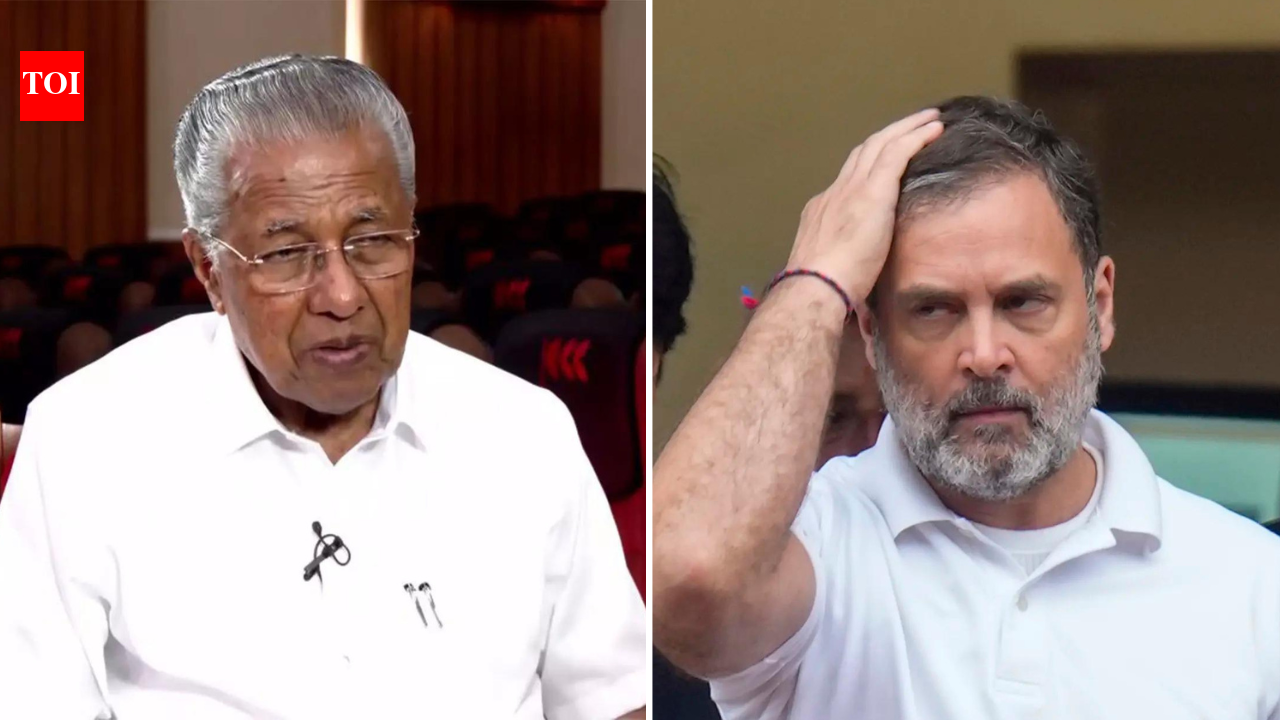
Pinarayi Vijayan and Rahul Gandhi (R)

NEW DELHI: The term “BJP B team” has emerged as a central allegation as both major fronts, the incumbent LDF and the main opposition bloc UDF—trade accusations in Kerala, drawing parallels with the distant third party and the state’s leading BJP.At a poll rally in Kerala’s Pathanamthitta, Rahul Gandhi launched a heavy charge, saying, “LDF is completely supported by BJP.” This came days after LDF face and Kerala chief minister Pinarayi Vijayan labelled the Congress-led UDF as the “BJP B team” in poll-bound Kerala.

Watch

Kerala Polls: VD Satheesan Alleges Collusion Between CPM And BJP, Calls CM Vijayan A Dictator

Rahul Gandhi sharply criticised the incumbent Left government, stating, “The LDF does not behave like a left front in Kerala… It is no longer a left government, but a corporate-funded government…”He added, “We are fighting here in the elections against the LDF which is completely supported by the BJP. On one side is UDF and on the other side is the combination of the LDF and BJP… There is a hidden hand of the BJP in the Kerala elections and it does not want the UDF here because they know the only force that challenges them in the country is the Congress party.”Rahul further claimed, “BJP knows that if they are in power in Delhi, then any LDF government in Kerala is fully under their control… The first proof of this is that the people who fight the BJP get attacked and threatened by them. I myself have been attacked, and have 36 cases against me… There is no attack on the CM of Kerala by the BJP.”“The truth is that Narendra Modi is compromised by Donald Trump and everyone knows it. The same way, Narendra Modi controls your Chief Minister. Pinarayi Vijayan is controlled by his corruption,” he saidRahul also criticised Prime Minister Narendra Modi for ignoring the Sabarimala gold theft in his Palakkad address on Sunday. “In every speech, he talks about temples and religion, but somehow, he forgot about what happened in Sabarimala. He forgot that the left front leaders took the gold of the Ayyappa temple and replaced it with brass,” Rahul said.He accused the Left government of abandoning its ideological roots, calling it a “corporate-funded government.” “The LDF does not behave like a left front in Kerala. It is no longer a left government, but a corporate-funded government,” he added.

Poll

What matters most to you during elections?

Last week, Kerala CM Pinarayi Vijayan made a similar charge, lambasting Rahul Gandhi and the Congress as the BJP’s “B-team”:“Rahul Gandhi is a national leader, yet he lacks the basic awareness of even a common local Congress worker in Kerala; he simply refuses to learn from experience or mistakes. It is hard to understand how such a downfall is happening to him,” he said.“Rahul Gandhi and his Congress are the ‘B-team’ of the BJP in the country, and yet their stance is being adopted across India,” he added.


Source link

RR vs CSK, IPL 2026: 5 players to watch in today’s match | Cricket News


RR vs CSK, IPL 2026: 5 players to watch in today’s match
L-R: Vaibhav Sooryavanshi, Riyan Parag, Sanju Samson, Ayush Mhatre, Kartik Sharma

An emotional subplot will headline Monday’s IPL clash as Sanju Samson faces Rajasthan Royals for the first time after leading them for over a decade. Now with Chennai Super Kings, Samson — RR’s former captain and all-time leading run-scorer — returns in top form following a stellar T20 World Cup campaign, where he struck three successive half-centuries.Go Beyond The Boundary with our YouTube channel. SUBSCRIBE NOW!His move, part of a high-profile swap that saw Ravindra Jadeja rejoin Rajasthan, adds further intrigue. With MS Dhoni sidelined due to injury, Samson will share leadership duties with Ruturaj Gaikwad at the top.CSK appear in transition, bolstered by emerging talents and a varied bowling attack. Meanwhile, Rajasthan begin a new era under Riyan Parag, with Yashasvi Jaiswal leading the batting alongside Shimron Hetmyer.While RR boast explosive batting options, concerns linger over their bowling consistency. Both sides, coming off underwhelming 2025 campaigns, will view this clash as a chance to reset and rebuild momentum.

Top 5 players to watch in RR vs CSK clash

Vaibhav Sooryavanshi (15 years old)The Rajasthan Royals opener enters his second IPL season carrying significant expectations after a sensational debut year. At just 14, he scripted history by becoming the youngest centurion in men’s T20 cricket, hammering 101 off 38 balls against Gujarat Titans in IPL 2025. His century came off just 35 deliveries, making it the second-fastest in IPL history. Across seven matches, he piled up 252 runs at a staggering strike rate of 206.55, underlining his fearless approach at the top. Against Chennai Super Kings last season, he scored a brisk 57 off 33 balls, including four sixes and four fours. His explosive powerplay batting makes him a key figure for RR once again.Riyan Parag (24 years old)Riyan Parag begins his first full season as Rajasthan Royals captain following Sanju Samson’s exit, taking charge at his home ground. One of the youngest captains in IPL history, Parag has steadily grown into a central figure for the franchise since his debut in 2019. In IPL 2025, he led the side in eight matches and scored 393 runs, emerging as RR’s second-highest run-getter with a strike rate of 166.52. His breakthrough came in 2024 when he amassed 573 runs in 16 matches at an average of 52.09. Overall, Parag has 1566 runs from 84 games at a strike rate of 141.84. Against CSK, he has scored 122 runs in eight matches, with a highest score of 47.Sanju Samson (31 years old)Sanju Samson will be in the spotlight as he turns out in Chennai Super Kings colours for the first time after being the face of Rajasthan Royals for over a decade. Having played 11 seasons with RR, he remains their all-time leading run-scorer with over 4000 runs. Overall, Samson has accumulated 4704 runs in 177 IPL matches at an average of 30.94 and a strike rate of 139.04, including three centuries and 26 fifties. He comes into the season in excellent touch after a Player-of-the-Tournament performance in the T20 World Cup 2026. His first outing against RR adds emotional weight, making him one of the biggest attractions in this contest.Kartik Sharma (19 years old)Kartik Sharma is a young wicketkeeper-batter, known for his power-hitting abilities. He became the joint-most expensive uncapped Indian player in IPL auction history when Chennai Super Kings signed him for Rs 14.2 crore. After being part of CSK’s wider squad in IPL 2025, he has now broken into the main squad for the 2026 season. If included in the playing XI, Sharma could make his debut, bringing with him the reputation of an aggressive young finisher.Ayush Mhatre (18 years old)Ayush Mhatre, another exciting young talent, enters his second IPL season after making a strong impression in 2025. He scored 240 runs in seven matches at an average of 34.28 and a remarkable strike rate of 188.97, including a high score of 94. Initially unsold at the IPL 2025 auction, Mhatre earned a mid-season call-up to Chennai Super Kings due to an injury to Ruturaj Gaikwad and made an immediate impact. Against Rajasthan Royals, he struck 43 off 20 at a strike rate of 215, showcasing his aggressive batting style.


Source link

Lok Sabha passes Bill to amend Insolvency and Bankruptcy Code; here’s what it means


Lok Sabha passes Bill to amend Insolvency and Bankruptcy Code; here's what it means

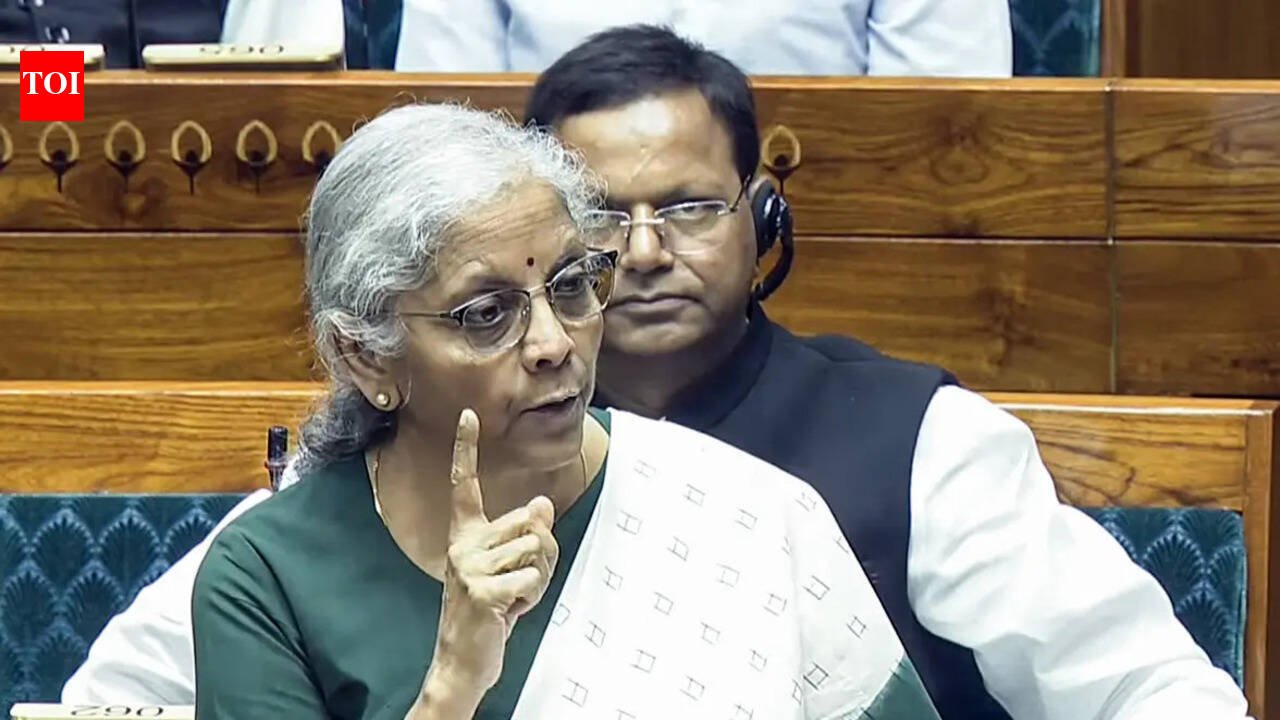
The Lok Sabha on Monday cleared the Insolvency and Bankruptcy Code (Amendment) Bill, 2025, as finance and corporate affairs minister Nirmala Sitharaman highlighted the law’s role in reshaping the country’s banking landscape. Speaking in the House, Sitharaman said that the Bill, introduced a decade back in 2016, has been instrumental in improving the health of the banking sector, particularly through the recovery of non-performing assets. She further stressed that more than half of such stressed assets have been resolved under the framework. The FM stated that the resolution process has also had a wider impact on companies, noting that firms coming out of insolvency have shown improved performance along with stronger corporate governance practices.The amendment Bill, which contains 12 proposed changes, was taken up after being examined by a Select Committee that submitted its report in December 2025. The legislation had originally been introduced in the Lok Sabha on August 12, 2025.Among the changes, the Bill seeks to streamline the admission of insolvency cases by making it mandatory for applications to be admitted within 14 days once a default is established. According to Sitharaman, prolonged litigation has been a key factor behind delays in the resolution process, and the amendments aim to address this by introducing penalties to curb misuse of the system.With this Bill, the IBC has now undergone seven amendments since it first came into force.


Source link

‘Biplomacy’: The ‘crypto bro’ who found Pakistan a seat at Trump’s table


'Biplomacy': The 'crypto bro' who found Pakistan a seat at Trump’s table

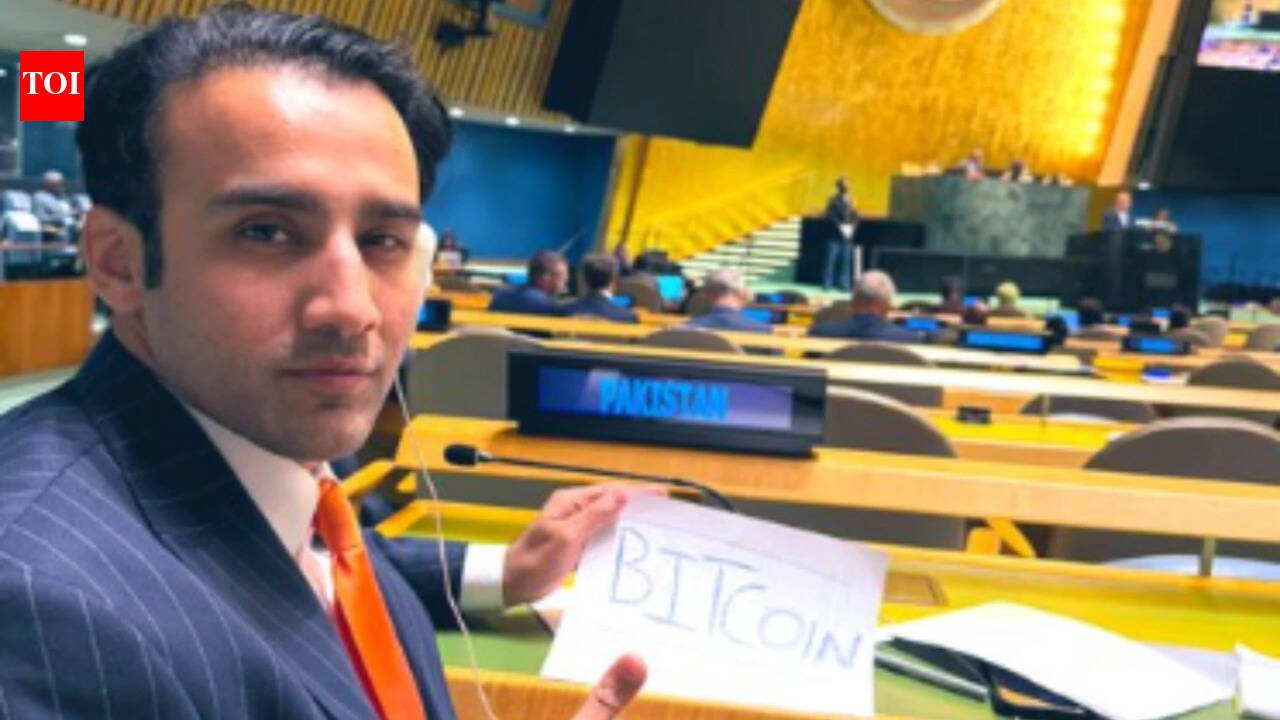
Bilal Bin Saqib (Photo credit: X/@Bilalbinsaqib)

In January 2026, Pakistan’s top civilian and military leadership hosted Zachary Witkoff, CEO of the crypto platform World Liberty Financial, for an engagement that closely resembled a state-level visit. While the formal centerpiece was a non-binding letter of intent to explore stablecoin integration for cross-border payments, the high-profile attendance of Pakistan’s prime minister Shehbaz Sharif and army chief Asim Munir underscored the event’s deeper geopolitical significance.According to Bloomberg, a group photograph from the event, showing Witkoff flanked by Pakistan’s top leadership, reinforced the quasi-official nature of the engagement. Also present was Bilal Bin Saqib, a central figure in the country’s crypto push, self-described as ‘crypto-bro’, who described the visit as helping to “put Pakistan on the map.”The episode highlights Pakistan’s growing use of digital assets as a diplomatic lever—what Saqib has termed “biplomacy.” By engaging with World Liberty Financial, a platform co-founded by the family of US President Donald Trump, Islamabad appears to be aligning itself with influential figures in Washington’s emerging crypto ecosystem while seeking to deepen ties within Trump’s orbit.At the same time, Pakistan has been viewed as a potential intermediary between the United States and Iran amid rising regional tensions. According to Steve Witkoff, Islamabad has presented a 15-point framework and has been discussed as a possible venue for talks ahead of a US deadline for Iran to reach an agreement or face escalation. Analysts caution that such a role remains contingent on shifting geopolitical dynamics, but note that personal connections within the Trump administration may be shaping the pace of engagement. Trump has also publicly praised Munir in recent months, underscoring the growing personal dimension of the relationship.Observers, including Michael Kugelman, have noted that Pakistan’s outreach—particularly its ties with Zachary Witkoff—may have helped it gain influence in Washington at a time when personal relationships play an outsized role in policymaking.Much of this outreach has been driven by Saqib, who rose rapidly within Pakistan’s policy ecosystem in 2025. He has played a key role in connecting the country with prominent figures in the global crypto industry, including Changpeng Zhao, who has faced regulatory scrutiny in the US, as well as Cathie Wood and Michael Saylor.The diplomatic push coincides with a broader domestic shift. After years of regulatory caution driven by concerns over fraud, money laundering, and financial instability, Pakistan has moved to formalize its approach to digital assets. Authorities have introduced legislation governing virtual assets, established a dedicated regulator, proposed a national crypto reserve, and allocated approximately 2,000 megawatts of power—about 5% of the grid—for crypto mining.The timing also aligns with a tentative improvement in US–Pakistan relations. The two countries are engaging on areas such as energy, critical minerals, and counterterrorism, while trade ties have also progressed, including reduced tariffs on Pakistani exports.Even so, risks remain. Pakistan continues to face obligations to the International Monetary Fund, which has historically taken a cautious view of sovereign crypto initiatives. Regional instability—including potential energy disruptions linked to tensions in the Strait of Hormuz—and the unpredictability of US foreign policy could also affect the trajectory of these efforts.For Saqib, however, the strategy is ultimately economic. He has emphasized the potential of digital assets to build domestic capacity, expand financial inclusion, and reduce Pakistan’s long-term reliance on external financial support.


Source link

Less shower time, no elevators & more: How the Middle East war is seeping into daily life worldwide


Less shower time, no elevators & more: How the Middle East war is seeping into daily life worldwide

The Middle East conflict has now crossed the one-month mark, with its effects causing ripples far beyond the region and into everyday life across the globe. What began as a confrontation between Iran and Israel is increasingly disrupting global supply chains, pushing up costs, and forcing governments and individuals to adjust.The war entered a new phase on Saturday as Yemen’s Houthi rebels launched their first strike on Israel since the conflict began, opening a fresh front in a crisis that has already spread across multiple countries and unsettled trade and energy markets. As the geopolitical situation intensifies, its impact is increasingly being felt across continents: from farmers scaling back production to governments enforcing energy-saving measures, highlighting how drastically the war is reshaping daily lives, not just in the Middle East but across the globe.AustraliaAs fertiliser prices climb, farmers in Australia are forced to plant less wheat. Farmers further called on the federal government for tax relief and support in fertiliser purchases to cope with rising fuel costs, as the national cabinet prepares to consider further assistance for businesses. While details of the meeting remain undisclosed, state premiers have urged stronger national coordination. The government is not expected to support petrol rationing, with health minister Mark Butler favouring minimal intervention despite looming fuel supply concerns.Concerns have intensified as a third of the world’s fertiliser is shipped through the Strait of Hormuz, which is currently under Iran’s chokehold. In response, the United States has lifted sanctions on Venezuela to allow fertiliser exports. South KoreaSouth Korean citizens are forced to cut down bathing time, appliance usage as the country has rolled out a nationwide campaign to curb energy use, asking people to take shorter showers, opt for bicycles for short journeys, and avoid charging phones and electric vehicles at night.The push comes as concerns grow over oil and gas supply disruptions linked to the US-Israeli war on Iran. The country relies entirely on imports for its energy needs, with nearly 70% of its crude oil supply previously moving through the Strait of Hormuz, a route where tanker traffic has nearly come to a halt since the conflict began.This has intensified pressure on the economy, as surging oil prices and a weakening won against the dollar together weigh on South Korea’s energy-dependent manufacturing industries.ThailandIn Thailand, energy-saving measures are being reinforced both symbolically and practically. The prime minister has begun wearing short-sleeved shirts to work, encouraging the public to follow suit, while government offices have been told to cut back on air conditioning. Civil servants have also been instructed to use stairs instead of elevators and choose lighter attire over formal suits to help reduce overall energy use.Philippines Efforts to reduce energy consumption are being stepped up elsewhere as well. In the Philippines, civil servants have been asked to avoid using elevators, even as President Ferdinand Marcos declared a state of “national energy emergency”, warning that the Middle East war poses “an imminent danger of a critically low energy supply”.The emergency, set to last for an initial year, was announced hours after the country’s energy secretary said the Philippines would increase output from coal-fired power plants to keep electricity costs in check as the conflict disrupts gas shipments.EgyptEgypt has also moved to curb energy use, cutting shopping days to five a week as part of wider restrictions introduced amid rising fuel costs. Retail outlets, restaurants and cafes are now required to shut by 21:00 each night, alongside measures such as reduced street lighting and limits on remote working.The government has described these as “exceptional measures” to ease mounting pressure on energy supplies. Egyptian PM Mostafa Madbouly said that the country’s petrol expenditure has more than doubled in recent months. While tourism-related businesses have been exempted, the broader economy continues to feel the strain, particularly due to its reliance on imported fuel.BangladeshIn Bangladesh, cancelled flights have disrupted textile exports, causing a build-up of garments at airports. The country exports nearly $50 billion annually, with ready-made garments making up more than 80% of total shipments.The risks are especially high for Dhaka, as nearly 90% of its fuel imports come from the Middle East. At the same time, its biggest markets, the European Union and the United States, rely heavily on shipping routes that are now facing disruptions.UAE and QatarFears are mounting over delays in critical medical supplies, with cancer drugs at risk of missing delivery timelines as cargo movement slows in key hubs such as Dubai and Doha.At the same time, tightening fuel supplies are driving up the cost of everyday goods. Track suits made from petrochemicals could become more expensive, while party balloons may be harder to source as disruptions hit Qatar, which produces a third of the world’s helium as a by-product of natural gas.Bahrain and Saudi ArabiaThe conflict has also begun to disrupt global events, with Formula 1 races in Bahrain and Saudi Arabia scrapped due to missile threats targeting Gulf nations.United StatesIn the United States, rising oil prices are stoking fears of higher inflation, driving up mortgage rates and making home buying more expensive.Consumers are likely to feel the strain in multiple ways, both through domestic commerce and the interconnected nature of global trade. With supply chains stretching across regions, where raw materials are sourced in one place, manufactured in another, and then shipped to consumers, disruptions are expected to filter through to everyday goods and services.BrazilSugar prices are seeing mixed trends as Brazil’s mills adjust production. While high energy prices are pushing some towards biofuel, supply disruptions linked to the Strait of Hormuz are offering some support to sugar prices.However, prices fell on Friday due to higher production in Brazil, where mills are using more cane for sugar instead of ethanol. Data from Unica showed that 2025–26 Centre-South sugar output (October to mid-March) rose 0.7% year-on-year to 40.25 MMT, with 50.61% of cane used for sugar, up from 48.08% last year.Sri Lanka and LaosSome governments have taken more stringent steps to manage the crisis. Sri Lanka, for instance, has declared Wednesdays a public holiday to reduce commuting and conserve fuel, while Laos has moved to a three-day school week.Sri Lanka remains particularly exposed, importing around 60 per cent of its energy needs and holding reserves that last only about a month. In response, authorities have reintroduced a QR-based fuel rationing system, similar to the one used during the 2022 economic collapse. Under this system, motorbikes receive eight litres of petrol per week, three-wheelers 20 litres, cars 25 litres, buses 100 litres of diesel, and lorries 200 litres.As the conflict drags on, its effects are becoming harder to contain, cutting across borders and sectors with growing intensity. What began as a regional crisis is now steadily reshaping global trade flows, energy use, and everyday life, leaving countries to navigate a widening web of economic and logistical challenges.


Source link

Car on wrong way kills 2 on scooter in Bengaluru | Bengaluru News


Bengaluru: A 29-year-old man, allegedly driving his car in the wrong direction on the one-way Cunningham Road, fatally knocked down two people on a scooter in the early hours of Sunday.The deceased have been identified as Zubair Ahmed, 42, a resident of Rehmat Nagar in RT Nagar, and his employee Abdul Musaveer Pasha 16, of Frazer Town.According to a complaint filed by Ahmed’s relative Umar Iqbal, the car driven by Aiyappa AC was involved in the head-on collision in front of the Waqf Board Cross around 2am.Ahmed was on the way to Pasha’s home to drop him off when the accident took place. Aiyappa was driving rashly and negligently under the influence of alcohol, Umar said in his complaint.After hitting the scooter, the car dragged them for around 100 metres, rammed the pavement, and crashed into a pole before coming to a halt. Both Ahmed and Pasha sustained severe injuries. Bystanders called in an ambulance and shifted them to the nearby Bowring Hospital, where the doctors declared them brought dead.A senior officer said that Aiyappa, a native of Kodagu, is involved in the business of supplying herbal coffee powder, while Zubair runs a lathe workshop near KR Market.During interrogation, Aiyappa claimed that he failed to notice the scooter due to heavy rain. His blood samples have been collected to medically confirm whether he was under the influence of alcohol or any other substances, the officer added.A case has been registered against Aiyappa at the High Grounds traffic police station.


Source link

Unruly passenger filmed smoking on Mumbai airport tarmac, threatens airline staff | Mumbai News


A passenger was filmed smoking on the airport tarmac and inside a terminal, disregarding staff warnings

MUMBAI: In a serious breach of aviation safety norms, video circulating on social media shows a man smoking on the airport tarmac and inside terminal premises.While the video posted on X says the incident occurred at the Mumbai airport, officials said one of the shots of the terminal building doesn’t look like it is in Mumbai.The visuals clearly capture the individual casually smoking in restricted airside areas, where such activity is strictly prohibited. In one shot he is seen walking on the tarmac with an aircraft in the background. In another clip shot from inside an airline office, he is seen standing outside the glass partition blowing smoke into the speak-thru manned by a female employee. In both the clips a staff can he heard warning him that smoking is prohibited. He counters, demanding to be shown non-smoking signage. In a third clip, the unruly passenger is seen throwing cash at an airline employee and walking away, boasting about his salary. “At Mumbai airport, a passenger was filmed smoking on the tarmac and inside a terminal, ignoring staff warnings. He exhaled smoke at a female employee and abused her while boasting about his salary,” says the post on X.Smoking on tarmac is unruly passenger behaviour and under the updated provisions, an airline can ban the unruly passenger straight away for a period of 30 days. Under the updated Civil Aviation Requirement (CAR), the Directorate General of Civil Aviation (DGCA) identifies an unruly passenger as one “who fails to respect the rules of conduct at an airport or on board an aircraft or to follow the instructions of the airport staff or crew members and thereby disturbs the good order and discipline at an airport or on board the aircraft”. Smoking on the tarmac is considered a major safety violation due to the presence of aviation turbine fuel (ATF) and highly flammable vapours around aircraft. Even a small ignition source can pose a fire hazard, particularly during refuelling or ground handling operations.Aviation regulations in India prohibit smoking not just inside aircraft but across operational zones of airports, with violations attracting penalties and possible legal action under safety and security provisions.A look at the past incidents show authorities treat such violations seriously. Passengers caught smoking on flights have been detained and booked, as it is classified as behaviour that can endanger aircraft safety and trigger emergency responses.


Source link

WATCH: Anukul Roy’s stunning catch ends Rohit Sharma’s blitz in MI vs KKR IPL 2026 clash


The buzz around IPL 2026 had already reached fever pitch following the high-voltage opener between Mumbai Indians and Chennai Super Kings, two of the league’s most celebrated franchises. The context between the two sides delivered yet another thrilling spectacle. The contest had everything—big runs, fearless batting, and a moment of brilliance in the field that instantly went viral.

While Mumbai Indians eventually pulled off a historic chase, one moment that stood out during the game was the breathtaking catch by Anukul Roy to dismiss Rohit Sharma, cutting short what had been a sensational innings.

Anukul Roy pulls off a blinder to dismiss Rohit Sharma

The turning point arrived on the fifth ball of the 12th over when Vaibhav Arora delivered a full toss outside off. Rohit, who was in sublime touch, attempted to whip it across the line but failed to time it cleanly. The ball ballooned towards wide mid-on, where Anukul Roy sprinted in from inside the circle.

For a split second, it seemed the ball might fall safely, but Roy had other plans. Showing exceptional awareness and athleticism, he tracked the ball while running backwards before launching into a full-stretch dive. The left-arm all-rounder managed to cling onto the ball inches above the turf, completing a spectacular catch that left players and fans stunned.

Rohit’s dismissal brought an end to a commanding knock of 78, and as he walked back, the Wankhede crowd rose in unison to applaud the effort. Even in dismissal, the veteran batter’s impact on the game was undeniable.

Here’s the video:

Also READ: MI Coach Mahela Jayawardene explains why Suryakumar Yadav played as impact player in IPL 2026 clash against KKR

Mumbai Indians script history with record-breaking chase

Despite losing Rohit after a dominant start, Mumbai Indians showed remarkable composure to chase down a daunting 221-run target. The chase turned into a historic milestone, marking the franchise’s highest successful run chase in IPL history, surpassing their previous best of 219 against Chennai Super Kings in 2021.

It was also the highest successful chase ever recorded at the Wankhede Stadium in the IPL, underlining the magnitude of the achievement. The foundation was laid by Rohit and Ryan Rickelton, whose massive 148-run opening stand dismantled Kolkata’s bowling attack.

The victory held even greater significance as it ended a long-standing streak. Mumbai Indians had not won their opening match of an IPL season since 2012, making this triumph their first opening-game win in 14 years—a gap of 5,107 days. Remarkably, this was only the fifth time in 19 IPL seasons that Mumbai managed to win their first match, with all previous instances coming between 2009 and 2012.

Also READ: Fans erupt as Rohit Sharma, Ryan Rickelton guide MI to record-breaking win over KKR in IPL 2026


Source link

Access Denied


Access Denied

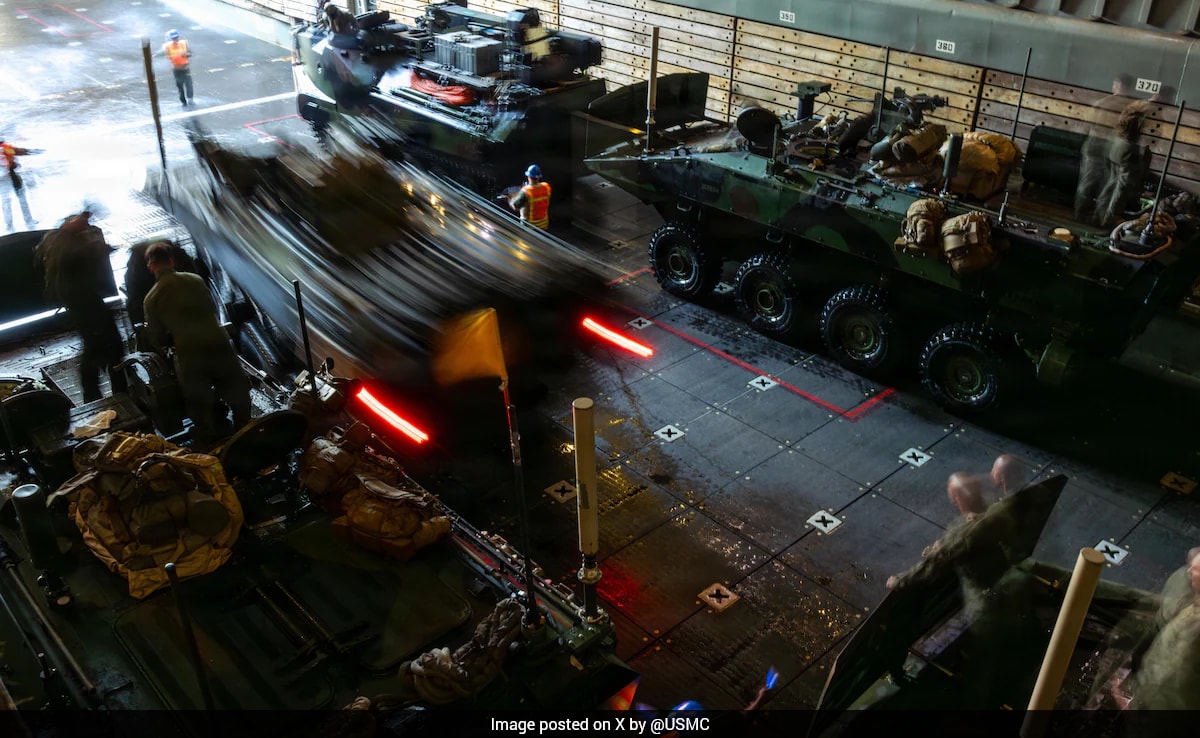
You don’t have permission to access “http://www.ndtv.com/world-news/us-iran-war-us-boots-on-the-ground-american-troop-movements-middle-east-11285015” on this server.

Reference #18.f5493417.1774864438.3abebe6e

https://errors.edgesuite.net/18.f5493417.1774864438.3abebe6e


Source link

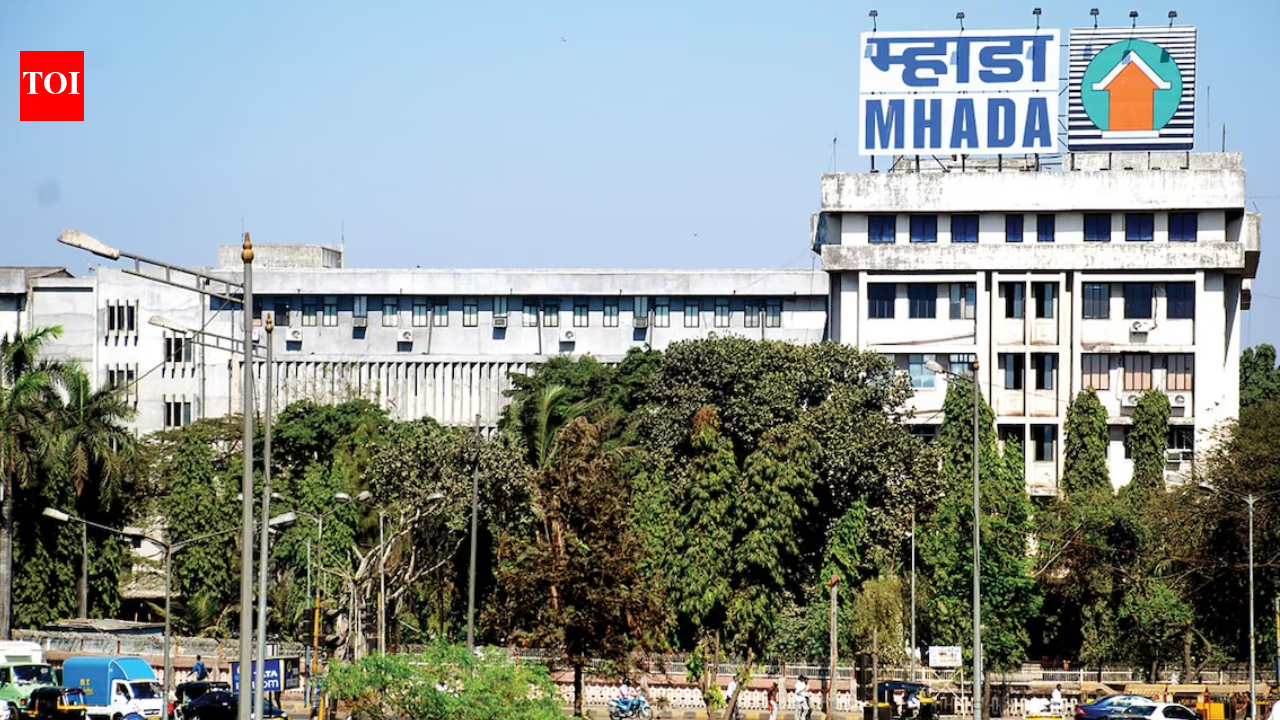
MHADA Mumbai lottery 2026: 2,640 flats on offer, applications open today; draw on May 15 | Mumbai News


MHADA’s Mumbai Board has launched a lottery for 2,640 apartments across various city locations, with applications opening today, March 30

MUMBAI: MHADA’s Mumbai Board has announced a lottery for the sale of 2,640 apartments in the city. The application process begins today March 30 and the lottery draw will be conducted at 11.00 am May 15.These flats are located across Kannamwar Nagar in Vikhroli, Patra Chawl in Siddharth Nagar Goregaon, Old Magathane in Borivli, Gorai Borivli, Subhash Nagar in Chembur, Gandhi Nagar in Bandra, Pant Nagar in Ghatkopar, Girgaum, Wadala, Kopri in Powai, Mazgaon, Tunga in Powai, Lokmanya Nagar in Dadar, Pahadi Goregaon and Antop Hill Wadala. Of these 145 apartments are available for the Economically Weaker Section (EWS), 858 apartments for the Lower Income Group (LIG), 1,408 apartments for the Middle Income Group (MIG), and 229 apartments for the Higher Income Group (HIG).The online application registration and form filling process will begin today at 3:00 pm after a formal inauguration by MHADA vice president and CEO Sanjeev Jaiswal.The advertisement is published in today’s newspapers and on the MHADA website https://housing.mhada.gov.in. An information booklet detailing the lottery process will be uploaded there.Registered applicants will also be able to apply online. The deadline for submitting online applications is April 29. Online acceptance of earnest money will end April 30. Payment of earnest money through RTGS/NEFT can be made upto banking hours on April 30. The provisional list of applications received will be published May 5. The deadline for filing online claims and objections after publication of the provisional list is May 8. The final list of accepted applications for the lottery will be published May 12 before the lottery is held May 15.This lottery includes 1,762 houses under construction by the Mumbai Board, 371 flats received by MHADA as housing stock from developers under redevelopment projects under DCR (Development Control Regulation) 33(5), 188 apartments received as housing stock from developers under redevelopment projects under DCR 33(7), as well as 319 scattered apartments received under redevelopment projects under DCR 33(5), 33(7) and 58 that remained vacant due to various reasons in previous lotteries.A mobile app named ‘MHADA Housing Lottery System’ is available too.Applicants must have a mobile number linked to Aadhaar and an email ID for registration and form filling. For registration and eligibility, applicants require Aadhaar card, PAN card, domicile certificate of Maharashtra and income proof.The annual family income limit for participation is: up to Rs 6 lakh for EWS, up to Rs 9 lakh for LIG, up to Rs 12 lakh for MIG, and more than Rs 12 lakh for HIG.


Source link