Breaking News
Pathan explains ‘identification of talent’ as reason why DC, PBKS haven’t won IPL yet | Cricket News


Pathan explains ‘identification of talent’ as reason why DC, PBKS haven’t won IPL yet
Delhi Capitals (ANI Photo)

Delhi Capitals and Punjab Kings will once again begin their quest for a maiden Indian Premier League title when the 2026 season kicks off on March 28. Both franchises, despite nearly two decades in the competition, are yet to lift the trophy. Former India all-rounder Irfan Pathan, who has represented both teams, reflected on their journeys and highlighted key reasons behind their prolonged title drought. Speaking on JioStar, Pathan pointed out that Delhi struggled with talent identification during the early 2010s, which hindered their progress. “When I was in Delhi, Eric Simmons, who is now with CSK as the bowling coach, was the coach, and there was an effort to bring stability. But when you let go of players like AB de Villiers, and you have Andre Russell, starting from scratch is not easy. I played alongside Russell in the same dressing room, and there were a lot of discussions about giving him more opportunities, but they just couldn’t find a place for him consistently in the XI. So, identification of talent is very important, and I feel Delhi used to fall short in that area,” Pathan said. Punjab, on the other hand, have shown signs of progress in recent seasons. Ahead of IPL 2025, the franchise made significant changes by appointing Australian great Ricky Ponting as head coach and signing Shreyas Iyer for ₹26.75 crore. The team enjoyed a strong campaign and reached the final before falling short against Royal Challengers Bengaluru. Pathan credited Punjab’s improved leadership and strategic planning for their resurgence. “Leadership has played a huge role in Punjab’s turnaround. You win half the IPL at the auction table. Big purses don’t necessarily mean you will always get what you want, but they did, and they reached the final. Even in the mini-auction, they took bold but important calls, like letting go of players who were not performing, such as Glenn Maxwell,” he explained. He also referred to the situation involving Josh Inglis, noting how circumstances impacted their plans. “They were a bit unfortunate with the Josh Inglis situation, given he would miss most of the season, but then you see another team going after him for a huge price. In that respect, they are making a lot of the right decisions,” Pathan added. Another key improvement, according to Pathan, has been Punjab’s focus on strengthening their squad depth. “Look at the backup players. In the past, Punjab struggled with that when the focus was entirely on building the first XI, but now you see all-rounders like Azmatullah Omarzai, Marco Jansen and Marcus Stoinis, along with a young Indian batting core. Apart from that, they went all-out for Shreyas Iyer after deciding he would be the Captain. So, there is clarity of thought, and I feel Punjab have started to move in the right direction,” he concluded. As IPL 2026 approaches, both Delhi and Punjab will be aiming to finally break their title drought, armed with lessons from the past and renewed optimism for the future.

Banner Insert


Source link

Russian oil tanker MT Aqua Tita arrives off Mangaluru port amid Middle East tensions | India News


Russian oil tanker MT Aqua Tita arrives off Mangaluru port amid Middle East tensions

A Russian oil tanker chartered by Mangalore Refinery and Petrochemicals Ltd (MRPL) arrived off the Indian coast on Sunday, underscoring ongoing concerns over global energy supplies amid escalating tensions in Middle East. The vessel, MT Aqua Titan, is currently anchored around 10 nautical miles off the coast of Mangaluru in the Arabian Sea, having been expected a day earlier.The arrival comes as international energy markets remain volatile, with supply chains disrupted by the intensifying conflict in the region, now in its fourth week. Key maritime routes, particularly through the Strait of Hormuz, continue to face uncertainty, affecting the steady flow of crude oil and liquefied gas.Earlier today, a cargo ship transporting liquefied petroleum gas (LPG) from Texas in the United States docked at New Mangalore Port, further boosting India’s energy imports. In a move aimed at facilitating smoother operations, the Shipping Ministry recently announced a waiver of cargo-related charges for crude oil and LPG shipments at the port between 14 and 31 March. Officials have also confirmed that there is currently no congestion at any Indian port.Providing an operational update, Rajesh Kumar Sinha, Special Secretary at the Shipping Ministry, stated that all 22 Indian vessels and 611 sailors operating in the Persian Gulf region remain safe. He added that authorities are closely monitoring developments and have reported no maritime incidents in the past 24 hours.Meanwhile, India’s broader energy logistics continue to adapt to the evolving situation. The Indian-flagged tanker *Jag Laadki* recently reached Mundra port in Gujarat, while LPG carriers *MT Shivalik* and *MT Nanda Devi* safely navigated the Strait of Hormuz earlier this month, delivering over 92,000 metric tonnes of LPG.Domestically, officials have sought to reassure the public over fuel availability. The Ministry of Petroleum and Natural Gas reported a significant drop in panic LPG bookings, with 5.5 million recorded on Thursday, indicating stabilising consumer sentiment. Authorities maintain that adequate stock levels are available nationwide, despite rising concerns and a reported 25 per cent increase in industrial diesel prices.Elsewhere, Prime Minister Narendra Modi also chaired a high-level review meeting on Sunday, focusing on ensuring uninterrupted supply, stable logistics, and efficient distribution of critical energy resources across the country.


Source link

‘Dhurandhar 2’ actor Mustafa Ahmed who played Hamza’s aide Rizwan, started his journey with Rs 10,000 a month as a gym trainer |


'Dhurandhar 2' actor Mustafa Ahmed who played Hamza's aide Rizwan, started his journey with Rs 10,000 a month as a gym trainer

Celebrity trainer turned actor Mustafa Ahmed got a lot of love for his role in ‘Dhurandhar 2’. He played Rizwan, Hamza’s trusted aide in the film. But his journey to the spotlight has been anything but easy. Years ago, he was earning just Rs 10,000 a month as a gym trainer in Delhi’s Janakpuri. Nearly 15 years later, he would go on to train none other than Hrithik Roshan.Mustafa’s path was far from conventional. He wasn’t someone people expected to “make it big.” Much like the protagonist in Taare Zameen Par, he struggled with dyslexia and eventually dropped out of formal education.

Watch

From Protests To Bans, Dhurandhar 2 Becomes Bollywood’s Biggest Off-Screen Drama

Speaking on the Jag Of All Trades podcast, Mustafa Ahmed recalled, “I was not a bright kid. I was dyslexic and come from an Afghani background. But I was always physical—I was good at sports, picked up dancing naturally. Anything that involved using my body, I was good at it.”At just 21, he was already earning Rs 1 lakh a month as the youngest team leader at a call centre in 2001—a dream job for many. But a seemingly small moment ended up changing his life completely. While working out at a gym in Janakpuri, he noticed a woman in her 40s being ignored by a trainer. He stepped in to help her, unaware of how pivotal that moment would become.On the Alpha Coach podcast, he shared, “A couple of months later, she handed me an envelope and asked me to read it at home. It scared me. But in that letter, she wrote that working out had brought the spark back into her marriage. She told me this was my life calling—and not following it would be criminal.”That message stayed with him. Soon after, Mustafa made the bold decision to quit his high-paying job. “My manager called me crazy,” he said. His mother, too, stopped speaking to him after he left a stable career, especially given that he had already stepped away from academics.Starting from scratch, he took up a job at a West Delhi gym for Rs 10,000 a month, waking up at 4 am daily to open the shutters. Around the same time, a visit to Fitness First in Connaught Place became another turning point. Despite lacking formal qualifications, his honesty and passion earned him a job.“They offered me Rs 18,000 plus Rs 600 per session out of which, they kept Rs 300 and gave me the other Rs 300. I couldn’t believe people would pay me that for an hour. That’s when I felt—sky is the limit,” he said.What followed was sheer grit and consistency. Within three months, Mustafa became the No. 1 trainer for Fitness First in Asia. He was conducting up to 14 sessions a day, six days a week—clocking nearly 400 hours a month and earning over Rs 1.4 lakh. By 2009, he had firmly established himself.As his career progressed, so did his vision. Seeing international trainers dominate the Indian fitness space, Mustafa questioned why Indian trainers weren’t given the same recognition. “I believed I was at par with them. So why not me?” he said.Before the release of Dhurandhar, Mustafa had penned an emotional note for Aditya Dhar in 2025: “‘Main hoon na. Tu kar.’ He would say this whenever I doubted myself. ‘Tu theek hai na’ when I wasn’t okay. ‘Tu khush hai na’ when I got emotional.” Reflecting on his acting debut, he added, “Aditya Dhar, you took me on a journey I never imagined. You saw in me what I didn’t know existed. But most importantly, you gave me your friendship and love—and for that, you have my loyalty for life.”


Source link

Access Denied


Access Denied

You don’t have permission to access “http://www.ndtv.com/world-news/iran-israel-war-iran-says-will-completely-close-strait-of-hormuz-if-us-targets-power-plants-11251446” on this server.

Reference #18.4cfdd417.1774198464.522450fc

https://errors.edgesuite.net/18.4cfdd417.1774198464.522450fc


Source link

‘Pop a pill and carry on’: The workplace silence on India’s menstrual leave debate | India News


'Pop a pill and carry on': The workplace silence on India's menstrual leave debate

Is it that time of the month? No issues. Pop a pill and get to work with a hot water bag! It sounds casual, almost harmless. But behind this everyday remark lies a deeper reality, one that millions of women silently go through every month.Modern work life is designed around a predictable, almost mechanical rhythm, but a woman’s body doesn’t follow the clock.A typical day for a man begins with waking up, moving through structured hours of productivity, peaking somewhere in the middle, and gradually winding down before sleep. The cycle repeats, day after day, with little room for deviation.But for women, the body does not always comply with this uniform pattern.Instead, it operates on a hormonal cycle that fluctuates across the month with energy levels rising and falling. Physical strength and emotional resilience ebb and flow. And yet, the expectation remains unchanged.Show up, perform, deliver. There is no pause button!Fatigue, mood shifts, and slight discomfort during menstruation are often considered natural. But intense, debilitating pain? That is not supposed to be “so normal.”And yet, it has become so common that it is often dismissed. Still, the response society expects is remarkably simple. Pretend nothing is happening!

What is menstruation?

Menstruation is a biological process in which the inner lining of the uterus sheds when an egg released during ovulation is not fertilised. This leads to the discharge of blood and tissue through the cervix and vagina, typically at monthly intervals.The first menstrual cycle, known as menarche, usually occurs between the ages of 8 and 15. On average, cycles repeat every 28 days, though variations are common.For some women, menstruation is not just a few days of discomfort, but also conditions like PCOD (Polycystic Ovarian Disease) or PCOS (Polycystic Ovary Syndrome) that can lead to severe cramps, irregular cycles, prolonged bleeding, and hormonal imbalances.As Sneha Srivastava noted, “Every woman’s body is different. While some may experience minimal discomfort, others go through intense pain, nausea, and fatigue.” On a personal note, she added, “I have experienced significant discomfort due to PCOS. My periods can last for more than three weeks… managing this while working can be extremely challenging.”Tithi Pramanik from Odisha echoes the reality saying, “I have PCOD and experience severe cramps during my periods.” Yet workplaces rarely accommodate this spectrum of experience.

,

The menstrual leave debate in India

Most working women already know the unspoken rules.You go to work despite cramps that make it difficult to sit upright. You continue meetings through waves of nausea. You push through fatigue that clouds your concentration. Because acknowledging the pain feels risky.Ask for leave, and you may be seen as unreliable. Take time off, and you might miss opportunities. Speak openly about menstrual symptoms, and you risk being labelled “difficult.” So the safer option becomes silence.The idea of menstrual leave, time off granted to women during their periods has increasingly entered discussions around workplace rights, gender equality, and employee welfare.But, Should India have a nationwide law mandating menstrual leave?On March 13, the Supreme Court of India declined to entertain a public interest litigation seeking a uniform policy for menstrual leave across workplaces and educational institutions.

,

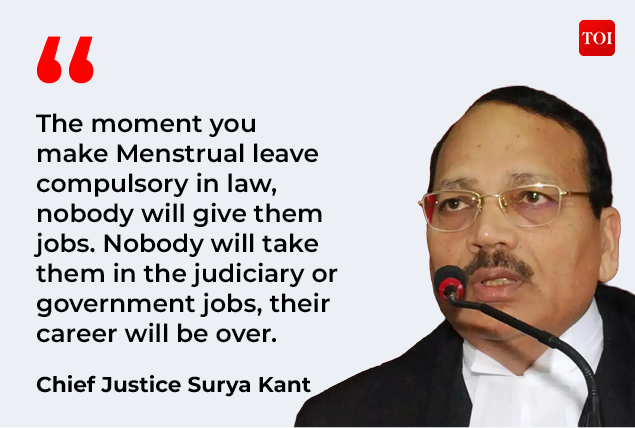
The court did not dismiss the issue outright but raised concerns about potential unintended consequences.The bench observed that making menstrual leave compulsory could discourage employers from hiring women. As Chief Justice Surya Kant noted during the hearing, “Voluntarily given is excellent. The moment you make it compulsory in law, nobody will give them jobs.”The court also warned that such a policy might reinforce stereotypes, portraying women as less productive or less reliable.Another point raised was that such decisions fall within the domain of policymakers, not the judiciary. The court suggested that the government should examine the issue after consulting stakeholders.

Will such a policy make employers hesitant to hire women?

For some, the solution may not lie in a strict leave policy.Raveena Newatia, a communications manager from Gurugram, said, “There might be a widespread belief that this would affect work so employers might,” acknowledging the hesitation that often surrounds such policies.“Although on the basis of right judgements and awareness, this could be changed in the longer run,” she added. Recalling her own experience and discomfort, Raveena said, “I have faced discomfort working and sitting on a chair in the office, and not being able to lay my back on a hot water bag even when desperately needed.”“I still believe that Work from Home norms or mobility flexibilities could be considered by the Supreme court in issuing some mid-solution law so that even the work doesn’t compromise and the females also don’t have to suffer at least physically,” she added.Ranjit, a Delhi-based entrepreneur, suggests flexibility saying, “I do not fully agree with the Supreme Court’s decision. Companies should at least be made to offer options like work from home and flexible working hours.”Ajit, a college professor from Gujarat, questions the logic of making such support optional. “How can a legal right be optional? Does that make sense? Women should have a choice whether to take the leave or work.”

Women should have a choice whether to take the leave or work.

Ajit, a college professor

“Discrimination comes in all forms and sizes in society. Some employers might hesitate to hire women, at least initially, but I believe it’d quickly become clearer to them that better employee care translates into better output,” he added.Further addressing concerns that such policies might discourage employers from hiring women, Biswarupa Das, a PhD scholar in HR studies said, “honestly, in a time when organisations are implementing measures towards sustainable workplaces and acknowledging diverse needs, this shouldn’t even be a question.”“The focus should shift from seeing this as a ‘cost’ to responding with empathy and understanding. Women already take leave when the pain becomes physically and mentally overwhelming, it was just not always acknowledged openly.”“I don’t believe employers will hesitate, because an employee’s calibre cannot be judged on the days she is struggling with something she hasn’t chosen, it’s simply a part of biology,” she added.Not everyone is convinced that menstrual leave as a labelled policy is the right approach.Pankaj Jha, senior manager at an insurance firm said, “I think the idea of menstrual leave sounds progressive on the surface, but it’s worth asking why it hasn’t been widely adopted in developed countries like the US, UK, or Germany.”He points to a deeper issue: privacy. He said, “There is still significant stigma around menstruation, especially in smaller towns and cities. In such an environment, formally labeling a leave as “menstrual leave” could unintentionally expose women to judgment or ridicule.”“I’ve personally observed situations where women taking such leave became the subject of insensitive remarks by male colleagues behind their backs,” he added.

How do you define eligibility? What about women who have reached menopause, or those who experience only mild discomfort?

Pankaj Jha, senior manager at an insurance firm

Jha also noted that there are practical challenges in the implementation of such laws. “How do you define eligibility? What about women who have reached menopause, or those who experience only mild discomfort?” he said. He suggested a more nuanced approach by integrating menstrual leave within existing sick leave policies rather than creating a separate category.“Instead of introducing a separate, labeled category, I believe a more inclusive and respectful approach would be to incorporate it within existing sick leave policies, give women a couple of extra sick leaves per month,” he added.But on the ground, the reality is different. For many women, the debate is not theoretical, It is physical!As Tithi Pramanik said, “In my previous company, my manager said he would not hire women because of these issues.”“That’s why I feel making menstrual leave mandatory could increase bias and discourage employers from hiring women,” she added.As, Sneha Srivastava argued that leaving menstrual leave optional often defeats its purpose. “When something is optional, many women hesitate to avail it, often fearing judgment or being perceived as less committed at work,” she said.

A medical perspective: Do women really need leave?

Adding another layer to the debate, obstetrician and gynaecologist Nimmi Rastogi offers a clinical viewpoint.“Menstruation is a normal biological process. It is not a disease. It is not even a period of incapacitation. It is simply a reflection of how a woman’s physiology works,” Dr Nimmi said.While acknowledging that some women experience severe symptoms, she cautions against generalising, saying “It is true that some women experience PMS, pain, dysmenorrhea, clotting or heavy bleeding, but this is not the case for everyone. So, I don’t think it is a good idea to mandate menstrual leave.”Her advice is counterintuitive to many: stay active!

Medically, staying active actually helps ease most symptoms. We usually encourage patients to remain active and not refrain from work, school or studies. Even simple movements like walking can reduce pain.

Gynaecologist Nimmi Rastogi

“Medically, staying active actually helps ease most symptoms. We usually encourage patients to remain active and not refrain from work, school or studies. Even simple movements like walking can reduce pain,” she said. “If you lie down or remain sedentary during periods, it can be counterproductive for your health,” she added.For her, work itself can help. “Working is a good distraction. Symptoms like mood swings, PMS and irritability can be relieved through physical activity and engagement,” she said.

What most men think?

Iqbal Singh said, “Leave must be there because I have seen my wife bearing lots of pain and cramps. The story is different for every girl, but also seen some people are not cooperating towards it, when women really need a policy decision like this.”Hadi Khan echoes the same sentiment and said, “I’ll be honest, I do think menstrual leave is necessary. For women, periods aren’t just a minor inconvenience. They can be physically draining, sometimes even debilitating.”Yet, he also acknowledges the dilemma saying, “Yes, I do think that’s a real possibility that employers might hesitate to hire women if such a policy is enforced.”“Even if it’s not openly admitted, some employers might quietly factor it into their hiring decisions. In competitive or cost-sensitive industries, there’s often a tendency to view anything that could affect productivity or increase compliance requirements as a drawback,” he added.Shubhanshu Dwivedi frames it more sharply saying, “Menstrual leave is a basic workplace support measure and not a privilege.”“The argument that such a policy may discourage hiring rests on accepting discrimination as a given. That is a slippery position,” he added.

The cultural silence and stigma

The challenge is not just policy, it is also cultural. But how can one go and seek menstrual leave when we don’t even speak about menstruation in the open!In many parts of India, menstruation remains a taboo subject. Women are often discouraged from speaking about it openly. In some households, restrictions still exist.Pari (name changed) from Assam describes her reality, “On the three days of my period, I sit and sleep on the floor. I eat on a separate plate as I am not allowed to enter the kitchen or touch any utensil or other furniture. I do not touch any male member be it my father, brother or husband. These customs have been followed for a very long time in my household and me, my mother and sister have applied the same in our lives.”Yash Sonkar further points to a lack of awareness, saying, “Menstruation isn’t even properly explained in our school curriculum… teachers skip the chapters at times.”

,

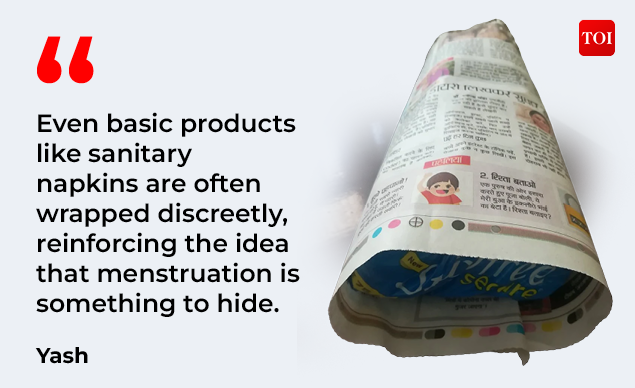
Even basic products like sanitary napkins are often wrapped discreetly, reinforcing the idea that menstruation is something to hide.Interestingly, menstruation was not always viewed this way.In ancient India, it was often associated with fertility, renewal, and the cycles of nature. Some traditions even treated it as a time for rest and reflection.Over time, however, colonial influences, patriarchal interpretations, and cultural shifts transformed this perception into one of impurity and shame.What was once a period of care became a period of silence.

Global and Indian policy landscape

Globally, countries like Japan, Spain, South Korea, and Indonesia have menstrual leave policies.But even there, challenges remain.As Pankaj Jha points out, “Even in places like Japan, menstrual leave is often unpaid, which raises questions about how effective or empowering it truly is.” In India, efforts are scattered. Some states and companies have introduced policies, but there is no unified national framework.

The productivity paradox

There is a growing body of research suggesting that workplaces with better gender inclusion perform better overall. Companies with more diverse leadership often show stronger financial and governance outcomes.In simple terms, when women are supported, they deliver. So the real question is not whether menstrual leave reduces productivity.It is whether ignoring biological realities is sustainable in the long run.

Rethinking the workplace?

Imagine a different system. A workplace that acknowledges biological differences instead of ignoring them. One where women can align tasks with their natural energy cycles, high-focus work during peak phases, lighter tasks during physically demanding days.A system where taking care of health is not seen as a weakness, but as part of being human. Biswarupa captures this sentiment saying, “Menstrual leave is absolutely necessary. Such leaves would be a meaningful step towards acknowledging what all the women go through silently.” The debate on menstrual leave is not just about policy. It is about recognition. Recognition that biology is not uniform. For now, the Supreme Court of India has left the matter to policymakers. But the conversation is far from over.Because every month, across offices, classrooms, factories, and homes, millions of women continue to work through pain, quietly, invisibly, and without acknowledgment.




Source link

‘Rtd woman SC or HC judge must lead state panel’ | Mumbai News


Kolhapur: Social activist Pramod Zinjade has urged the state govt to appoint a retired woman judge from either Supreme Court or high court to the post of chairperson of Maharashtra State Commission for Women and refrain from political appointments.NCP’s Rupali Chakankar resigned last week as the commission’s chief over links to a trust run by Ashok Kharat. Zinjade is known for steering a campaign to ban unfair practices related to widows and working towards making villages caste-free.In a letter to the CM, he said the commission plays an important role in protecting women’s rights and helps them get justice, and its chairperson, therefore, must be unbiased. “The chairperson is usually a woman politician, raising doubts about the commission’s independent functioning and decision-making… A non-political appointment will ensure transparency and trust in the commission as well as effective justice for victims.” —Abhijeet Patil


Source link

Irfan Pathan highlights ‘concerning factor’ for KKR ahead of IPL 2026


With the Indian Premier League (IPL) 2026 set to kick off on March 28, excitement among fans has reached fever pitch. As one of the most celebrated franchises in the tournament’s history, Kolkata Knight Riders (KKR) are once again in focus. The two-time champions, who last lifted the trophy in 2014, are aiming to script a fresh chapter this season after a disappointing campaign in 2025.

KKR’s loyal fanbase will be hoping for a strong comeback, especially after the franchise underwent noticeable changes in its squad composition. While the team has invested in dynamic all-rounders and power hitters, questions remain about whether the balance is right to challenge consistently throughout the tournament.

Irfan Pathan points out major concern for KKR

Former India all-rounder Irfan Pathan has raised a significant concern regarding KKR’s squad, highlighting what he believes could be a persistent weakness in IPL 2026. Speaking on his YouTube channel, Pathan pointed out that the franchise has failed to adequately address its struggles against spin bowling—particularly in the middle overs.

According to Pathan, KKR’s issues began after the departures of key players like Shreyas Iyer and Nitish Rana, who were capable of stabilizing the innings and handling spin effectively. He stressed that the current middle-order lacks batters who can confidently rotate strike and attack spinners.

“The real problem for Kolkata, which I think they did not properly address in the auction, has been: playing spin well. Since Shreyas Iyer left, since Nitish Rana left, they have not bought the middle-order players who can handle spin in the auction. That has actually been the biggest issue, and this is why we saw last year’s results,” said Pathan.

He further elaborated on Ajinkya Rahane’s role, noting that while the veteran thrives at the top of the order, his effectiveness drops when he bats in the middle overs, particularly against spin where his strike rate dips significantly. Pathan also assessed the roles of Rinku Singh and Ramandeep Singh, suggesting that both players are more comfortable against pace rather than spin. This creates a tactical gap, especially on slower pitches where spinners dominate proceedings.

“Ajinkya Rahane is very good when batting at the top. But when he comes in the middle, the problem appears. His strike rate against spin drops significantly, almost around 100. Then can you say that Rinku Singh is a good hitter of spin or a good hitter of fast bowling? He is a good fast-bowling hitter. Ramandeep also comes in towards the end, ideally against fast bowling. If he can play well against spin, then that will definitely be an advantage. So actually, the issue Kolkata should have addressed, they did not. The spin problem, I think, will remain this year as well,” added Pathan.

Also READ: After Harshit Rana, another Indian KKR pacer ruled out of IPL 2026

Can KKR realistically push for a fourth IPL title?

Despite the concerns, KKR are not without hope. The franchise has taken what many experts describe as a ‘structural reset’ rather than a complete rebuild. By investing in high-impact all-rounders, the team has added flexibility and depth, which could prove crucial in high-pressure situations.

KKR do have the potential to compete strongly in IPL 2026, but they are currently seen more as playoff contenders rather than outright favourites. Their success may largely depend on how quickly the middle order adapts to challenging conditions, particularly against quality spin attacks.

If the team can find solutions—either through tactical adjustments or unexpected player performances—they could emerge as serious contenders for a fourth IPL title. However, unless the spin vulnerability is addressed on the field, it could once again derail their campaign.

Also READ: SWOT analysis of Kolkata Knight Riders: KKR’s report card ahead of the IPL 2026


Source link

Man arrested from Agra in Rohit Shetty bungalow firing case had introduced shooter to Bishnoi gang: Mumbai Police | Mumbai News


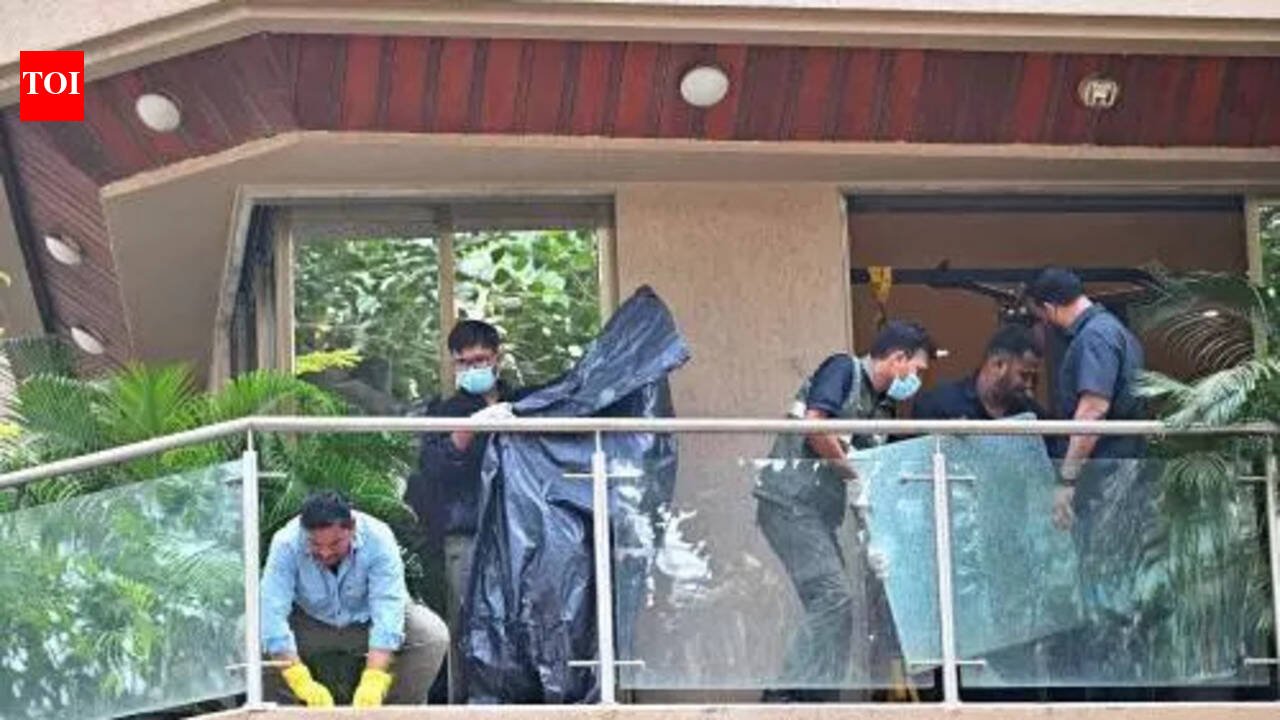
Mumbai: Uttar Pradesh resident Pradeep Sharma (20) alias Golu, arrested on Saturday in connection with the firing at filmmaker Rohit Shetty’s Juhu residence on February 1, had introduced the shooter to Lawrence Bishnoi gang associates, alleged police.On Sunday, Sharma was produced before the holiday court, which remanded him in police custody till April 1.Sharma, a school dropout, was tracked to Agra under the Bah police station jurisdiction and apprehended in a joint operation by the Mumbai Crime Branch and Uttar Pradesh Special Task Force on Saturday. Sharma is the 14th accused to be arrested in the Shetty bungalow firing case.During the probe, police learnt that Sharma was arrested in a firing case in Rajasthan in 2025. “After he was released on bail in January, the Bishnoi gang contacted him and asked him to arrange for a shooter. Sharma said he introduced them to Deepak,” said the crime branch official.On February 1, Deepak travelled to Mumbai and allegedly shot at Shetty’s residence. Police said five rounds were fired outside the building and one bullet struck a glass panel.Police said Sharma was arrested for conspiracy in the firing case. “At the time of the incident, Sharma was not present in Mumbai.” Sharma went into hiding and changed his contact details. He was caught after Joint Commissioner of Police (Crime) Lakhmi Gautam supervised a team, including additional commissioner Shailesh Balkawade, DCP Raj Tilak Roshan and others, that traced his location through technical surveillance.Police are still trying to find who got the contract to supply the weapon.


Source link

Cristiano Ronaldo ‘not obsessed with 1,000th goal’, Martinez breaks silence | Football News


Cristiano Ronaldo ‘not obsessed with 1,000th goal’, Martinez breaks silence
Portugal’s Cristiano Ronaldo (AP Photo/Armando Franca)

Portugal national football team head coach Roberto Martinez has brushed aside claims that Cristiano Ronaldo is chasing the landmark of 1,000 career goals, insisting that the veteran forward remains driven by team success rather than individual milestones.Ronaldo, who has already netted over 950 goals across his career and continues to spearhead both Portugal and Al Nassr, is currently recovering from a muscle injury that has ruled him out for a few weeks. As a precaution, the 41-year-old was not included in Portugal’s squad for the ongoing international friendlies.Even with the injury setback, Ronaldo has been in strong form this season, consistently finding the net for his club and maintaining an excellent scoring rate. His performances have strengthened expectations of his involvement in the upcoming FIFA World Cup 2026, where he is set to play a crucial role.Dismissing the idea that Ronaldo is preoccupied with records, Martinez pointed to his selfless displays in recent competitions.“I don’t agree with that. If Cristiano had played the European Championship focused on scoring a goal to break another record, the assist against Turkey for Bruno Fernandes wouldn’t have happened,” he said as quoted by Goal.com.The coach underlined that the mindset within the Portugal camp, particularly among senior players, revolves around collective responsibility and performance.“It’s not true that our players have records or personal goals in mind. The only thing I saw at the European Championship was a different kind of responsibility in the more experienced players, a maximum responsibility to have a top performance in the tournament,” he added.When questioned about any personal targets set by Ronaldo, Martinez reiterated that such narratives do not reflect reality.“No, because I don’t see Cris playing with the anxiety or intention of reaching 1,000 goals. Whether he has 950 or 1,050 goals, he has the same legacy. It won’t change anything. That’s outside talk,” he said.Martinez also highlighted Ronaldo’s intelligence in the final third, stressing that his decision-making and ability to create chances for teammates remain key assets.“We’re talking about a striker who has 25 goals in 30 games. But I value behaviour inside the box much more. And Cristiano doesn’t have the obsession that people talk about from the outside regarding his 1,000th goal. Because his behavior isn’t like that. I can’t say for the club, but here with the national team it’s not like that,” he concluded.Meanwhile, Portugal have been drawn in Group K alongside Uzbekistan and Colombia for the 2026 World Cup, with their campaign set to begin on June 17. Ronaldo is expected to lead the side as they chase their maiden World Cup title.

Banner Insert


Source link

Will Trump’s 48-hour ultimatum to Iran leave him red-faced again?


Will Trump's 48-hour ultimatum to Iran leave him red-faced again?

As President Donald Trump’s 48-hour deadline ticks down, Tehran has responded to his threat to “obliterate” Iranian power plants with a threat of its own — and shown no signs of backing down. Iran’s Revolutionary Guards have now declared that energy facilities in countries hosting US bases will be “lawful targets” if Trump follows through.Writing on Truth Social, Trump warned he would “hit and obliterate” Iran’s power plants “starting with the biggest one first” unless Tehran fully reopened the Strait of Hormuz by 23:44 GMT on Monday. Around 20% of the world’s oil passes through the narrow waterway, which has been effectively blocked since the US and Israel launched attacks on Iran on Feb. 28.Iran showed no sign of backing down on Sunday as Col. Ebrahim Zolfaqari, spokesman for Iran’s Khatam al-Anbiya military command, warned, “If Iran’s fuel and energy infrastructure is attacked, then fuel, energy, information technology systems and desalination infrastructure used by America and the regime in the region will be struck.”Parliament speaker Mohammad Bagher Ghalibaf threatened to destroy critical infrastructure across the region irreversibly.“Immediately after the power plants and infrastructure in our country are targeted, the critical infrastructure, energy infrastructure, and oil facilities throughout the region will be considered legitimate targets and will be destroyed in an irreversible manner, and the price of oil will remain high for a long time,” he posted on X.The war, now in its fourth week, has already spread beyond Iran’s borders. Iran targeted a joint UK-US base in the Indian Ocean on Saturday, while nuclear sites in both Iran and Israel were struck. The death toll has risen to more than 1,500 in Iran, over 1,000 in Lebanon, 15 in Israel and 13 US military members, with millions displaced across the region.Now, with the clock running down, the question is whether Trump’s ultimatum will hold — or hand Tehran a win. For a president who came to power vowing to avoid “stupid” wars, the conflict he helped set in motion now risks slipping beyond his control. His administration’s messaging has been openly contradictory- talking de-escalation while deploying three more amphibious assault ships and roughly 2,500 additional Marines to the region. The US attacked Iran’s Natanz nuclear facility again, even as Tehran had clearly warned against any strikes on its energy infrastructure.Trump has repeatedly called on China, Japan and NATO to help clear the strait. None have moved.The economic pressure at home is real. Gas prices have risen 93 cents per gallon and US crude oil is up more than 70% since the start of the year. In a paradox, the Trump administration has quietly begun easing restrictions on Iranian crude, allowing allies to buy the very oil that funds Tehran — the resource it is simultaneously trying to cut off.Iran’s top diplomat has made clear what any path to peace would require “guarantees” that the US and Israel won’t attack the Islamic Republic again, and assurances that its “sovereignty and national security won’t be violated.” The comments came in a phone call with EAM Jaishankar on Saturday.


Source link