Breaking News
‘3 more women go to cops’; priest, guard questioned | Mumbai News


Mumbai/Nashik: The SIT probing rape, human sacrifice and black magic charges against astrologer Ashok Kharat on Sunday questioned the priest of Ishaneshwar Mahadev temple, with which the accused is linked, and a watchman in Nashik, officials said.On Saturday, a staffer of Kharat’s office was questioned for more than seven hours by the SIT led by IPS officer Tejaswini Satpute, they said. The probe has revealed the alleged power Kharat wielded among a set of political leaders as well as transactions linked to land in Sinnar and some other areas in Nashik district. “On Sunday, the SIT team questioned Pramod Gadakh, caretaker priest of Ishaneshwar Mahadev temple in Mirgaon, and a watchman,” an official said. He said CCTV digital video recorders have been seized from Kharat’s Mirgaon farmhouse, Tikde Colony bungalow and Canada Corner office in Nashik.The official said Kharat is named in cases filed at Vavi, Shirdi and Sarkarwada police stations for alleged extortion, blackmail, rape and black magic practices. Kharat has filed a complaint against two persons at Vavi police station accusing them of blackmailing him over obscene photos. Investigators are reaching out to potential victims and more cases are expected to be filed, said the official. Sources in Nashik said three women have approached police. Allegations of Kharat and his kin possessing documents of 52 properties are also being probed, they added. Water resources minister Radhakrishna Vikhe Patil on Saturday cancelled a 2020 govt resolution allowing Kharat-linked Shivanik Sansthan trust in Mirgaon to lift 3.9 million litres of Darna dam water daily for “drinking purposes”. It is alleged that Kharat diverted this water to his mango orchards. Vikhe Patil has also ordered a probe into the antecedents of the GR that led to Kharat’s trust getting dam water. Meanwhile, officials said residents of Mirgaon, Kharat’s village, are angry at the way its reputation has been “tarnished”, with some of them seeking “capital punishment” for the accused. They also sought that Kharat’s properties be sized and the temple his trust runs be handed over to residents. PTI


Source link

Candace Owens speaks out after Joe Rogan calls Erika Kirk behavior bizarre as resurfaced video raises new questions


Candace Owens speaks out after Joe Rogan calls Erika Kirk behavior bizarre as resurfaced video raises new questions
Candace Owens speaks out after Joe Rogan calls Erika Kirk behavior bizarre as resurfaced video raises new questions (Image via Getty)

Candace Owens has stepped into the middle of a fresh online storm after a clip of Joe Rogan talking about Erika Kirk started spreading again. This time, the focus is not just on what Rogan said, but on how Owens reacted to it. Rogan, on his podcast, questioned Erika Kirk’s behavior and appearance in an old video linked to national security discussions. His comments quickly caught attention. Soon after, Owens posted her response on X, backing the idea that people are simply reacting to what they see. Her reply has now become the center of the story, with many debating whether she defended free speech or added fuel to the controversy.

Candace Owens backs Joe Rogan as Erika Kirk ‘behavior’ debate grows after resurfaced video

Candace Owens did not hold back when she reacted to Joe Rogan’s remarks. After watching the clip, she posted directly on X and wrote,“Oh no! Another commentator to send a cease and desist to for the stating the obvious fact that Erika’s behavior, demeanor, and history is bizarre. Ever wonder how Joe Rogan stays on top? Because his conversations reflect how everyday people feel about various topics.”Her message was clear. She believes Rogan is popular because he says what many people are already thinking. Instead of criticizing him, she supported his right to speak openly.

Watch

Joe Kent Suggests Israel Angle In Charlie Kirk Assassination, Sparks Debate

The whole situation began when Joe Rogan talked about a resurfaced video showing Erika Kirk discussing serious topics like EMP attacks and power grids. During the podcast, Rogan said the clip felt “very weird” and pointed out that such topics are usually handled by defense experts, not someone with a pageant background.He also commented on her expressions in the video, saying, “She’s an odd duck. Have you ever seen the compilation of her making crazy eyes?” He even described a viral edit where her expressions were matched with intense music, calling it strange.That clip quickly made rounds online again, bringing fresh attention to Erika Kirk. While some people agreed with Rogan’s take, others felt his comments were too harsh.Candace Owens, however, focused on a different angle. She framed the issue as one of honesty and public opinion. According to her, Rogan is not creating a narrative but simply voicing what many viewers already notice.This has turned the moment into a bigger debate. It is no longer just about Erika Kirk or the video. It is now about how far public figures can go when commenting on others, and whether calling out someone’s behavior crosses a line.As the discussion continues, Candace Owens’ response has clearly pushed the conversation forward. Instead of calming things down, it has made more people join in, picking sides on whether Joe Rogan was being real or being unfair.


Source link

Gold, silver rate outlook: Precious metals may see mild rebound after sharp correction; PMI data, crude oil to guide trend


Gold, silver rate outlook: Precious metals may see mild rebound after sharp correction; PMI data, crude oil to guide trend

Precious metal prices may stabilise and witness a mild recovery next week after a steep correction, although the upside could remain capped due to elevated interest rates and a firm US dollar, analysts said.Market participants are expected to track key macroeconomic indicators, including provisional manufacturing and services PMI readings from the US, UK and Japan, as well as consumer sentiment data and jobless claims for direction.Traders will also closely watch crude oil price movements for further cues amid concerns over inflation and monetary policy, reported PTI.“In the week ahead, gold price may see some consolidation and slight recovery before prices make their next move either side,” Pranav Mer, Vice President, EBG – Commodity & Currency Research at JM Financial Services Ltd, said.Domestic precious metal prices recorded sharp losses last week. On the Multi Commodity Exchange, silver fell by Rs 32,663, or 12.59 per cent, to settle at Rs 2.26 lakh per kilogram, while gold declined by Rs 13,974, or 8.82 per cent, to close at Rs 1.44 lakh per 10 grams.Mer said the correction in gold prices continued through the week, with domestic prices slipping below Rs 1.45 lakh per 10 grams, reflecting a fall of about 9-9.5 per cent.The sell-off gathered pace mid-week after policy signals from major central banks — including the US Federal Reserve, Bank of Japan, Bank of England and the European Central Bank — highlighted concerns over rising crude oil prices and inflationary pressures, suggesting that monetary easing may not materialise soon.In global markets too, precious metals saw notable declines. Silver futures on Comex dropped by $11.68, or 14.36 per cent, to $69.66 per ounce, while gold fell by $486.8, or 9.6 per cent, to $4,574.9 per ounce over the week.NS Ramaswamy, Head of Commodity & CRM at Ventura, said gold may trade in a moderately bearish to sideways range in the coming weeks, with prices likely to stabilise after the sharp fall but remain susceptible to volatile intraday swings.He noted that the strong US dollar, hovering around the 99–100 range, and elevated interest rates continue to weigh on gold’s recovery prospects.The US Federal Reserve’s pushback against expectations of rate cuts, along with rising energy costs complicating inflation control, has led markets to push out hopes of monetary easing to 2026, reducing the appeal of gold as a safe-haven asset, Ramaswamy said.However, he added that global central banks are unlikely to change their long-term gold accumulation strategies, indicating that structural demand for the metal remains intact.Geopolitical developments have provided limited support to prices, though gold continues to act as a safe-haven asset, offering a cushion to downside risks.Seasonal demand from the upcoming wedding season and festivals such as Akshaya Tritiya may also support domestic prices in the near term.


Source link

Access Denied


Access Denied

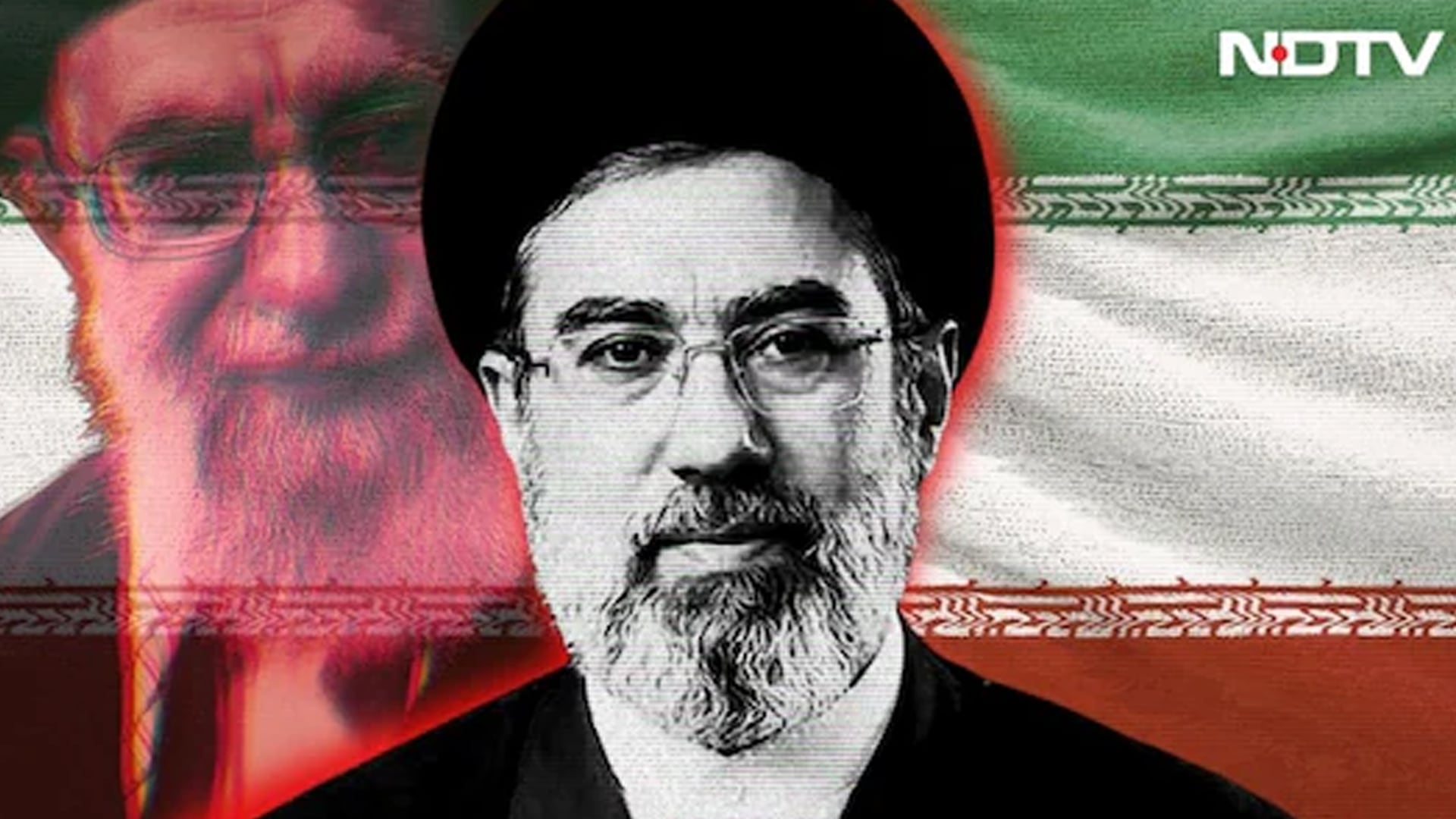
You don’t have permission to access “http://www.ndtv.com/world-news/israel-iran-war-cia-mossad-eyes-fixed-on-iran-spy-agencies-hunt-for-irans-unseen-leader-11251094” on this server.

Reference #18.14092017.1774190685.117873d6

https://errors.edgesuite.net/18.14092017.1774190685.117873d6


Source link

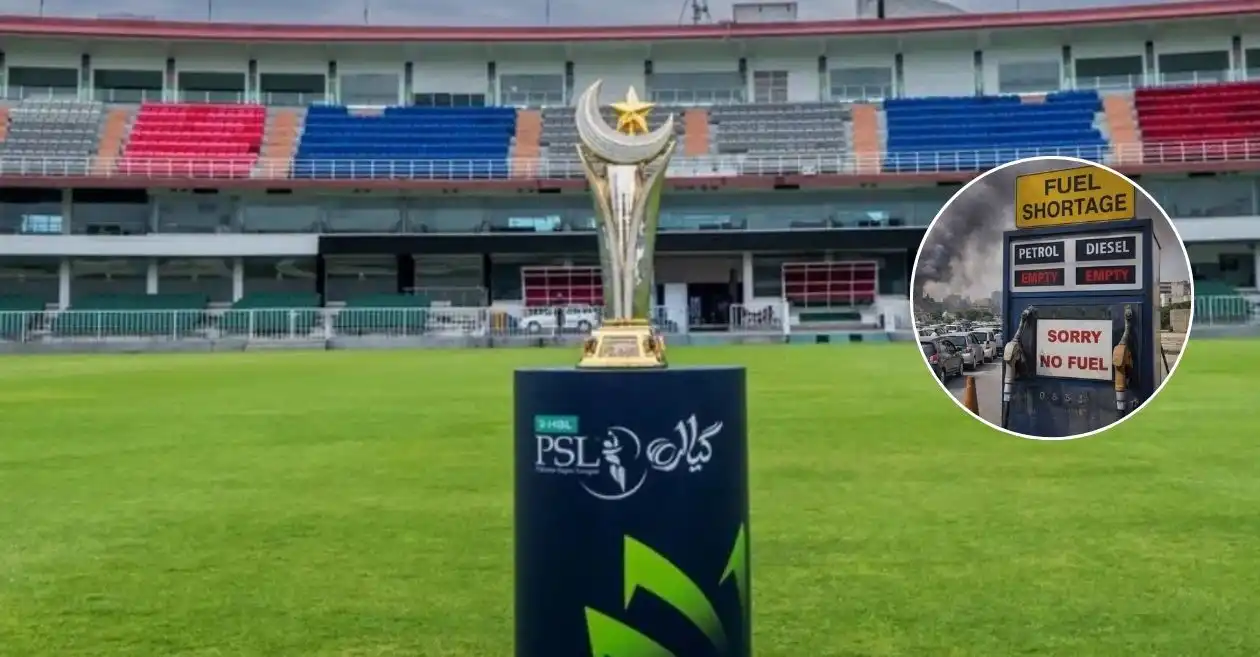
PSL 2026 to be held behind closed doors amid Pakistan’s oil crisis


The Pakistan Super League (PSL) 2026 will go ahead under unprecedented conditions, with all matches set to be played behind closed doors due to a worsening fuel crisis and ongoing security concerns in the country. As per media reports, the Pakistan Cricket Board (PCB) has opted for a scaled-down approach, limiting venues and eliminating public attendance to ensure the tournament proceeds without disruption.

PSL 2026 restricted to two cities

Originally planned as a multi-city event spanning Multan, Peshawar, Faisalabad, Karachi, Rawalpindi, and Lahore, the tournament will now be held exclusively in Karachi and Lahore. This decision significantly reduces travel requirements and operational costs at a time when fuel availability has become a major concern nationwide.

The PCB has also cancelled the opening ceremony, a move aimed at conserving resources and avoiding unnecessary logistical strain. Matches will take place in empty stadiums, marking a stark contrast to the electric atmospheres typically associated with the PSL.

Global tensions trigger domestic crisis

The changes come in response to disruptions in global oil supplies, driven by the ongoing conflict involving the United States, Israel, and Iran. The geopolitical tensions have had a direct impact on Pakistan’s fuel reserves, leading to widespread shortages and strict government measures to control consumption.

Authorities have introduced restrictions on public movement, including temporary school closures, extended holidays around Eid, and work-from-home directives for many sectors. These steps are part of a broader effort to manage limited fuel supplies and maintain essential services.

Also READ: Former opener predicts SRH’s leading run-scorer and highest wicket-taker for IPL 2026

Revised logistics reshape original plan

Under the original schedule, Lahore’s Gaddafi Stadium was set to host 15 matches, while Rawalpindi Cricket Stadium was allocated 11 fixtures. Faisalabad, Karachi, and Multan were also due to host multiple games across the tournament. The revised plan eliminates several of these venues, concentrating all fixtures in Karachi and Lahore. This adjustment not only simplifies logistics but also ensures better coordination of resources such as fuel, security, and transportation.

The tournament format remains unchanged, with each of the six teams playing 10 league matches. The top four sides will advance to the playoffs, which include Qualifier 1, the Eliminator, Qualifier 2, and the final. The PSL 2026 final is still set to take place in Lahore on May 3, with May 4 reserved as a backup day. While fans will not be present in the stadium, the PCB is banking on strong television and digital viewership to maintain the league’s global appeal.

Also READ: Dasun Shanaka skips PSL to join Rajasthan Royals for IPL 2026


Source link

Iran’s missile map decoded: Who falls within its expanding strike range


Iran's missile map decoded: Who falls within its expanding strike range
Representative Image (AI generated)

NEW DELHI: Iran’s missile arsenal has emerged as the cornerstone of its military doctrine, offering Tehran the ability to project power across the Middle East and shape the trajectory of any conflict it enters. Built steadily over the past three decades, the programme spans short-range tactical systems to long-range ballistic and cruise missiles, creating a layered strike capability that compensates for the country’s ageing air force.The range of these missiles is not merely a technical detail. It defines the geography of conflict, determines potential targets, and underpins Iran’s strategy of deterrence. From nearby Gulf bases to Israel and beyond, the arc of Iranian missile reach continues to influence military calculations across the region.

Short-range missiles: Immediate battlefield dominance

At the lower end of the spectrum are short-range ballistic missiles, typically with ranges between 300km and 800km. These systems form the first layer of Iran’s strike capability and are designed for rapid deployment against nearby targets.Missiles such as the Fateh-110, Zolfaghar, Qiam-1 and Shahab-1 and Shahab-2 fall into this category. Their relatively short range offers a tactical advantage. They can be launched quickly, often in large numbers, reducing warning time for adversaries and increasing the likelihood of overwhelming air defence systems.This class of missiles is particularly suited for targeting US military bases in the Gulf, naval assets, and regional infrastructure. Their role is to deliver a “first punch” in any escalation scenario, signalling capability while inflicting immediate damage.Iran demonstrated this approach in January 2020, when it launched ballistic missiles at Iraq’s Ain al-Assad airbase following the killing of General Qassem Soleimani. The attack caused significant damage and injuries, showcasing Iran’s ability to strike precisely without relying on conventional air power.

Medium-range missiles: Expanding the strategic map

The second layer of Iran’s missile arsenal comprises medium-range ballistic missiles, with ranges typically between 1,000km and 2,000km. This category marks a shift from tactical warfare to strategic deterrence.Key systems include Shahab-3, Emad, Ghadr, Sejjil and Khorramshahr. These missiles significantly expand Iran’s strike envelope, placing Israel and a wide network of US-linked military facilities within reach. Bases in Qatar, Bahrain, Kuwait, Saudi Arabia and the United Arab Emirates all fall within this radius.Among these, the Sejjil missile stands out due to its solid-fuel propulsion. Unlike liquid-fuel missiles, which require longer preparation times, solid-fuel systems can be launched more quickly, enhancing survivability in a conflict where pre-emptive strikes are a constant threat.This layer effectively turns any confrontation with Iran into a regional issue. It ensures that escalation cannot be contained to a single battlefield, as multiple countries fall within range of retaliation.

Long-range systems: The outer limits of reach

Iran’s longest-range missiles are assessed to reach between 2,000km and 2,500km, forming the outer boundary of its publicly known capabilities. Systems such as advanced variants of the Shahab series, Sejjil and Khorramshahr operate in this range band.In addition to ballistic missiles, Iran has developed cruise missiles like Soumar, which can travel up to 2,500km while flying at low altitudes. These missiles are harder to detect and intercept, particularly when used in combination with drones or ballistic systems.The geographical implications of this range are profound. A 2,000km radius from Iran encompasses not only Israel and the Gulf but also parts of southeastern Europe, Central Asia and North Africa. It allows Tehran to hold at risk a broad spectrum of military and economic targets, including ports, energy infrastructure and airbases.However, despite the reach, Iran’s missile capability does not extend to the continental United States. This limitation underscores that Tehran’s strategy is focused on regional dominance rather than global strike capability.

Diego Garcia strike attempt: Testing the boundaries

A recent development has, however, raised questions about the upper limits of Iran’s missile reach. Reports of an attempted strike on Diego Garcia—a remote island in the Indian Ocean hosting a major US-UK military base—suggest that Tehran may be experimenting with longer-range capabilities.Located roughly 4,000km from Iran, Diego Garcia lies well beyond the established range of Iran’s missile systems. According to available information, two missiles were reportedly launched towards the island, though neither successfully struck the target.While the attempt did not succeed, its implications are significant. It points either to an experimental extension of Iran’s missile technology or a strategic signalling effort aimed at deterring Western forces by demonstrating intent rather than proven capability.If Iran were to develop reliable systems capable of reaching such distances, it would fundamentally alter the strategic balance, extending its reach into the Indian Ocean and potentially into parts of Europe and the Indo-Pacific.

The geography of threat: A layered coverage

The image of Iran’s missile ranges illustrates a layered pattern of concentric reach. Short-range systems dominate the immediate neighbourhood, covering the Persian Gulf and nearby states. Medium-range missiles extend this reach to Israel and deeper into West Asia, while long-range systems push the boundary outward to cover an even wider arc.This layered structure ensures that Iran can respond across multiple distances simultaneously. It also complicates defence planning for adversaries, who must account for threats arriving from different ranges, trajectories and speeds.In practical terms, this means that no major US military installation in the Gulf region lies outside Iran’s reach. Energy infrastructure, shipping lanes and urban centres across the region are also within striking distance.

Volume and survivability: Beyond range

While range defines reach, Iran’s missile strategy is equally dependent on volume and survivability. The country has invested heavily in underground facilities, often referred to as “missile cities”, where weapons are stored and prepared for launch away from surveillance.Mobile launch platforms further enhance flexibility, allowing missiles to be fired from multiple locations. This dispersal makes it difficult for adversaries to neutralise Iran’s arsenal in a single pre-emptive strike.The use of combined tactics—ballistic missiles, cruise missiles and drones—adds another layer of complexity. Drones can be used to saturate air defences, while cruise missiles fly low to evade detection, and ballistic missiles deliver high-speed strikes.This integrated approach increases the likelihood that at least some weapons will penetrate defensive systems, ensuring that Iran retains credible retaliatory capability.

Strategic implications: Deterrence and escalation

Iran’s missile range is central to its deterrence strategy. By demonstrating the ability to strike across a wide geographical area, Tehran seeks to discourage adversaries from initiating attacks or escalating conflicts.At the same time, this capability raises the stakes of any confrontation. The broader the range, the wider the pool of potential targets, increasing the risk of a regional conflict spiralling into a larger war.The attempted strike on Diego Garcia, even if unsuccessful, underscores this dynamic. It signals that Iran may be willing to expand the geographical scope of its operations, challenging assumptions about the limits of its reach.Iran’s missile programme is not just about weapons—it is about shaping the battlefield. From short-range systems designed for immediate impact to long-range missiles that define regional power projection, the range of Iran’s arsenal determines how conflicts unfold.As tensions persist, this range ensures that any military engagement involving Iran will not remain confined. Instead, it will play out across a vast and interconnected region, where distance offers little protection and escalation carries far-reaching consequences.




Source link

Another PSL exit, Dasun Shanaka set to replace Sam Curran in Rajasthan Royals for IPL 2026 | Cricket News


Another PSL exit, Dasun Shanaka set to replace Sam Curran in Rajasthan Royals for IPL 2026
Dasun Shanaka (Image: IANS)

Sri Lanka captain Dasun Shanaka is set to join the Rajasthan Royals (RR) for the upcoming IPL 2026 season as a replacement for injured England all-rounder Sam Curran.RR have been forced into a late squad change after Sam Curran was ruled out of the tournament due to a groin injury. The franchise quickly moved to secure Shanaka, with sources indicating that the deal is nearly complete, pending minor paperwork related to his commitments in the Pakistan Super League (PSL).

Watch

Is T20 ruining India’s test cricket?

Another PSL-to-IPL Switch

Shanaka’s move marks yet another instance of players switching from the PSL to the IPL. Recently, Zimbabwe pacer Blessing Muzarabani left his PSL stint to join Kolkata Knight Riders as a replacement for Mustafizur Rahman. This growing trend highlights the IPL’s continued dominance as the most lucrative and competitive T20 league in world cricket. RR, the inaugural IPL champions, will begin their IPL 2026 campaign against five-time winners Chennai Super Kings at ACA Stadium in Guwahati on March 30. “The conversations are ongoing for Shanaka to join RR for the upcoming IPL season. Barring a few formalities which are yet to be completed, this seems to be a done deal and it’s pretty much going in that direction,” a franchise official told IANS on Sunday.

Shanaka’s Recent Form

Under Shanaka’s leadership, co-hosts Sri Lanka had crashed out in the Super Eight stage of the T20 World Cup, Shanaka scored 165 runs including a 31-ball 76 not out against Pakistan, while he also took three wickets in the T20 World Cup. Having gone unsold at the IPL’s mini-auction last December, Shanaka was picked up by PSL franchise Lahore Qalandars. Shanaka previously played in IPL 2023 for Gujarat Titans as a replacement for the injured New Zealand batter Kane Williamson, where he made 26 runs in three games. He was signed again by Gujarat Titans in 2025 as a mid-season replacement player for injured New Zealand batting all-rounder Glenn Phillips, but didn’t get a game to play. While Sri Lanka legend Kumar Sangakkara is the Royals’ head coach, former India batting coach Vikram Rathour is the assistant coach of the side. Rathour was the consulting batting coach of Sri Lanka during the T20 World Cup.

Banner Insert


Source link

Sri Lanka increases fuel prices around 25% as Middle East tensions disrupt global oil supplies


Sri Lanka increases fuel prices around 25% as Middle East tensions disrupt global oil supplies

Sri Lanka on Sunday raised fuel prices by around 25 per cent, marking the second increase within a week as the ongoing Middle East conflict continues to disrupt global energy markets, news agency PTI reported.The price revision, effective from midnight, comes as tensions triggered by joint US–Israel strikes on Iran and retaliatory action by Tehran have spread across the Gulf region, leading to the closure of the Strait of Hormuz — a key global energy transit route.According to official announcements, the price of auto diesel rose 26.1 per cent from Sri Lankan rupees (LKR) 303 to LKR 382 per litre, while super diesel increased 25.5 per cent from LKR 353 to LKR 443. Petrol 92 octane climbed 25.6 per cent from LKR 317 to LKR 398, petrol 95 octane rose 24.7 per cent from LKR 365 to LKR 455, and kerosene jumped 30.8 per cent from LKR 195 to LKR 255.This is the third fuel price hike since March 1 and comes as the conflict, which has unsettled global oil markets, entered its fourth week.With the latest revision, retail fuel prices in Sri Lanka are set to return close to levels seen during the 2022 economic crisis, when the country declared its first-ever sovereign default since independence in 1948. The unprecedented financial turmoil at the time forced then president Gotabaya Rajapaksa to resign amid widespread civil unrest.The steep increase has sparked concern among transport operators. Non-state bus owners warned that up to 90 per cent of their fleet could be taken off the roads unless fares are revised.“This is the biggest rise of diesel ever. We will not be able to operate buses without an adequate fare revision. We need a minimum 15 per cent fare hike to stay afloat,” Gamunu Wijeratne, chairman of the Lanka Private Bus Owners’ Association, told reporters.The association threatened a nationwide strike if authorities fail to announce a scheduled fare revision.Responding to the developments, the National Transport Commission (NTC) said the latest diesel price increase, when applied to its fare formula, translates into a rise of more than 10 per cent in current bus fares. NTC Director General Nilan Miranda said Cabinet approval is expected on Monday to implement revised fares, according to media reports.Private operators account for about 65–75 per cent of the island nation’s public transport fleet, while the state-run share stands at around 25–35 per cent.Three-wheeler taxi operators, many of whom use petrol vehicles dominated by India’s Bajaj brand, said the price of commonly used petrol had risen to nearly LKR 400 per litre.“Who would want to ride with us at this rate?” a three-wheeler driver said, as quoted news agency PTI.Apart from state-owned Ceylon Petroleum Corporation (CPC), fuel retailing in Sri Lanka is also carried out by Lanka IOC — a subsidiary of IndianOil –as well as China’s Sinopec and Australia’s United Petroleum. Following CPC’s decision, LIOC and Sinopec also revised their retail fuel prices, media reports said.Opposition leaders criticised the government’s tax policy, claiming that authorities collect about LKR 119 per litre of petrol and LKR 93 per litre of diesel in taxes. They demanded that these levies be scrapped to provide relief to consumers.Analysts warned that the fresh fuel price hike could push inflation higher by 5–8 per cent.Earlier, government spokesman and minister Nalinda Jayatissa said that despite the price revisions, the government continues to bear a monthly subsidy burden of around Rs 20 billion by subsidising diesel by Rs 100 per litre and petrol by Rs 20 per litre.He said that without the revision, the state would have faced an additional financial burden of approximately $1.5 billion. Jayatissa urged the public to consume electricity and fuel “mindfully” and warned against hoarding, calling on citizens to report any such attempts.


Source link

‘Can’t survive without terrorism’: BJP reacts to ex-Pakistan envoy’s remarks on striking India | India News


'Can’t survive without terrorism': BJP reacts to ex-Pakistan envoy's remarks on striking India
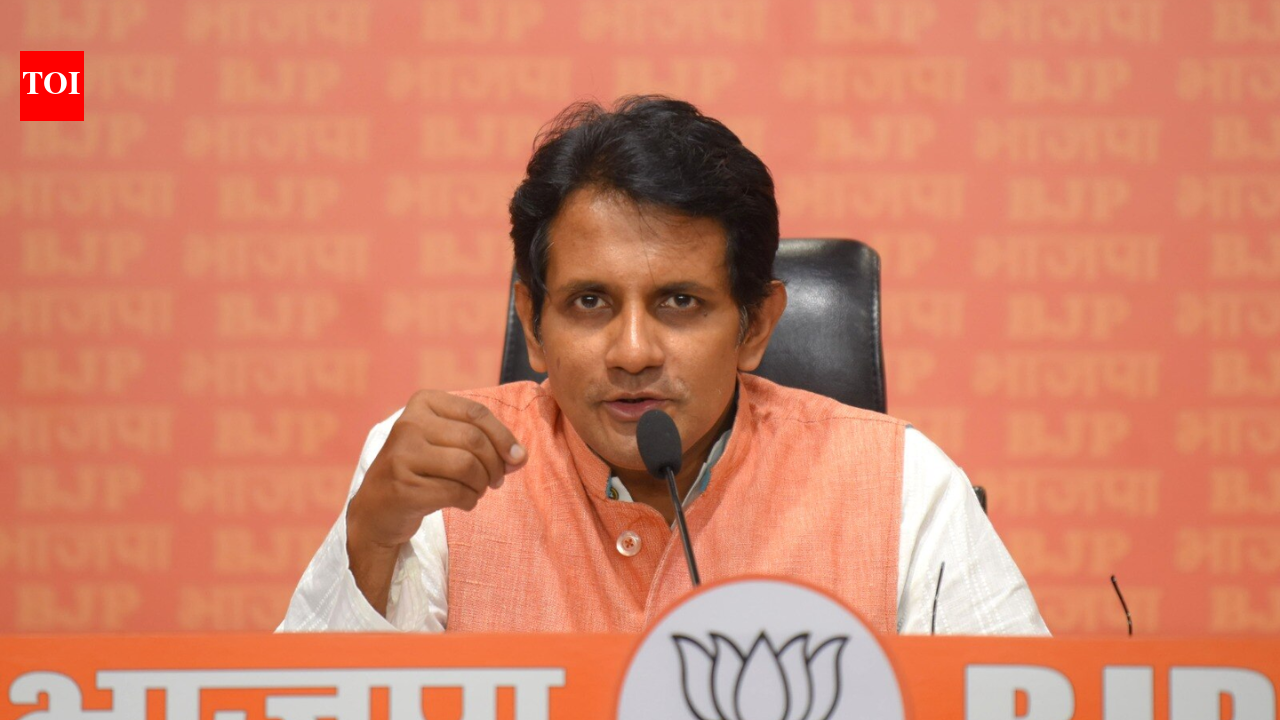
BJP National Spokesperson Tuhin Sinha

NEW DELHI: The Bharatiya Janata Party (BJP) on Sunday said former Pakistani diplomat Abdul Basit’s recent remarks against India showed that Pakistan “cannot survive without terrorism.”Basit, former Pakistani envoy to India, said in an interview that in a hypothetical scenario where the US tried to destroy Pakistan’s nuclear capabilities, Islamabad would have to strike Mumbai or New Delhi.Reacting sharply to the remarks, BJP National Spokesperson Tuhin Sinha told IANS, “Abdul Basit’s threat that Delhi and Mumbai will be blown up with bombs from Pakistan shows that even today, Pakistan is rattled by strikes during Operation Sindoor. It has lost its mental balance.”Terming Pakistan a “terrorist state”, Sinha said, “It is a terrorist state and now we don’t even have to say it. Last year, (Pakistan Army Chief) Asim Munir had told the US that if needed, the oil refineries in Jamnagar would be blown up. Now, the country’s former envoy has used this kind of language. It shows that terrorism is ingrained in their nature. Pakistan can’t survive without terrorism.”Basit had said, “Suppose there is a scenario where the US views our nuclear programme in a negative light or tries to destroy our nuclear capability.It is unlikely, but I am talking about a worst-case scenario. Let’s imagine that the US tries to attack us. Even if the US is not within our nuclear range, what options do we have?”When asked if India would be involved, he replied, “India. We would not have to do anything else. Even if we do not have the range to target the US, we would have to strike India’s Mumbai and New Delhi without thinking. We have no other option, since the US is not within our range, then we would have no choice but to attack India. Then let’s see what happens. We do not want that to happen.”Basit’s comments came amid tensions in the Middle East over Iran’s nuclear programme, following joint US-Israeli strikes on Tehran on 28 February. The attacks triggered a wider conflict in the region, which has now entered its third week. Donald Trump has also warned Iran to reopen the Strait of Hormuz or face military action.


Source link

Jannik Sinner faces unexpected drama in Miami Open win as fan disrupts Damir Dzumhur and sparks apology | International Sports News


Jannik Sinner faces unexpected drama in Miami Open win as fan disrupts Damir Dzumhur and sparks apology
Jannik Sinner and Damir Dzumhur (Image Via Getty)

Jannik Sinner started his 2026 Miami Open run with a calm win, but the match did not stay simple for long. On March 21, at the main stadium court in Miami, the Italian beat Damir Dzumhur 6-3, 6-3. The score looked easy, but there was a strange moment in the middle that caught everyone’s attention. A fan from the crowd kept shouting, and it began to affect the players on court.The situation quickly turned tense. Even though the fan seemed to support Jannik Sinner, the way he was shouting disturbed Damir Dzumhur during points. Both players looked uncomfortable. The chair umpire had to step in, and for a few minutes, the match felt more about the crowd than the tennis. After the match ended, Sinner showed respect by apologizing to his opponent for what had happened.

Jannik Sinner and Damir Dzumhur face disruption as crowd incident forces umpire intervention

The incident happened during an important stage of the match. Damir Dzumhur first raised the issue. He pointed out a fan in a green shirt and told chair umpire Renaud Lichtenstein that the shouting was affecting him. Jannik Sinner also agreed that the fan’s behavior was not right, even if it sounded like support.Renaud Lichtenstein then spoke to the match supervisor during the game. He said, “Damir is upset with the guy with the green shirt and Jannik is telling me he’s baiting on the back. I don’t know what we should do. Maybe we could talk to him to relax.” The supervisor replied, “We’ve got security on the way. So… I think he’s just an idiot.”Security was sent to handle the situation, and the match continued without further trouble. Still, the moment stayed in focus. When the match ended and both players met at the net, Jannik Sinner took a moment to say sorry to Damir Dzumhur. It was a small gesture, but it showed his sportsmanship.Apart from the incident, Sinner’s performance was strong. With this win, he reached 24 straight sets won at ATP Masters 1000 events, matching a record once set by Novak Djokovic. Speaking after the match, he said, “I feel like the scoreboard matters at times. For me, I try to improve as a player and put myself in the position to play as many matches as possible. I always treat every opponent in the same way, trying to come on court and do my best with a great attitude and trying to go for it.” Sinner will now face Corentin Moutet in the next round, where he has a chance to break that record.

Banner Insert


Source link