Breaking News
Sky‑high losses: Iran war drives airlines to biggest crash since Covid – $50bn gone


Sky‑high losses: Iran war drives airlines to biggest crash since Covid – $50bn gone

Global airlines have suffered their worst financial shock since the COVID‑19 pandemic as the ongoing war involving US Israel and Iran has disrupted industry operations, wiping more than $50 billion off the market value of the world’s largest carriers amid rising fears of fuel shortages.The conflict, now entering its fourth week, has grounded flights, disrupted key Gulf hub airports and driven jet fuel prices sharply higher, compounding pressure on an industry that was rebounding strongly following pandemic‑related losses.According to Financial Times calculations, the 20 largest publicly listed airlines have collectively lost about $53 billion in market capitalisation since the war began. In response, airline executives have warned of a potential rise in ticket prices as carriers seek to protect shrinking profit margins.Jet fuel, which accounts for roughly a third of operating costs for airlines, has doubled in price since the United States and Israel launched attacks on Iran at the end of February. Many carriers had hedged against fuel price swings, but the rapid rise is expected to force airlines to pass on costs to passengers.“Fuel spiked quite heavily after the Ukraine invasion in 2022 as well, but this has gone further north,” easyJet chief executive Kenton Jarvis told FT, describing the current crisis as the most significant upheaval since the pandemic closed global skies in 2020.Executives also point to broader structural challenges, including the risk that sustained high fares may dampen demand. Carsten Spohr, CEO of Lufthansa, said higher ticket prices were unavoidable but expressed concern that they could weaken long‑term demand. “Our average profit is about €10 per passenger, there’s no way you can absorb the additional cost,” he said.In addition to passenger traffic pressures, airlines are preparing contingency plans for possible jet fuel shortages. Air France‑KLM CEO Ben Smith said the carrier is drawing up measures to cope with potential supply squeezes, including scaling back services on some Asian routes.The crisis has hit Middle Eastern carriers particularly hard. Carriers such as Emirates, Etihad and Qatar Airways have had to sharply reduce schedules due to airspace closures and a collapse in regional tourism, industry officials say. Despite the severity of the current disruption, Willie Walsh, head of the International Air Transport Association (IATA), noted that it still falls short of the pandemic’s impact but is reminiscent of the downturn in transatlantic demand after the 9/11 attacks, according to FT.The conflict’s ripple effects are also visible in cargo operations, as freight traffic shifts from disrupted shipping routes to air cargo, straining airport facilities. At Geneva airport, for example, freight re‑routing has led to overflow onto services bound for Paris.Industry observers remain hopeful that airline valuations and demand will rebound once the conflict abates. “The share price has moved against all airlines since the start of the conflict,” Jarvis said, adding that short sellers would likely close positions quickly if a ceasefire is announced.


Source link

Jess Kerr, Sophie Devine power New Zealand to series-clinching win over South Africa in 4th T20I


New Zealand Women delivered a clinical performance in Wellington, sealing a six-wicket win over South Africa Women in the fourth T20I and clinching the five-match series in dominant fashion. The match belonged to Jess Kerr, whose outstanding spell with the ball set the tone for the hosts and earned her the Player of the Match award.

Jess Kerr shines with ball for New Zealand

After being put in to bat, South Africa managed 159/6 – a competitive total on paper, but one that always felt slightly under par given the conditions. A big reason for that was Kerr’s exceptional control with the ball. She returned figures of 3/16 in her four overs, consistently breaking partnerships and never allowing the visitors to build real momentum.

Kerr made an early impact by trapping Chloe Tryon lbw, before striking again to remove captain Laura Wolvaardt. She later dismissed Tazmin Brits, a key wicket that halted South Africa’s progress during a crucial phase. Her disciplined line and length forced errors, keeping the scoring rate in check throughout the innings.

She was well supported by Amelia Kerr and Sophie Devine, who chipped in with timely wickets. The New Zealand bowling unit worked as a cohesive group, applying pressure from both ends and ensuring South Africa never got away.

Despite the setbacks, Annerie Dercksen stood tall for the visitors with an unbeaten 55 off 32 balls. Her aggressive approach helped South Africa recover from early losses, with useful contributions from Nadine de Klerk and Kayla Reyneke towards the end. However, the lack of sustained partnerships meant they couldn’t fully capitalize, finishing with a total that always looked slightly vulnerable.

Also READ: Alana King steers Australia to series-clinching win over West Indies in 2nd Women’s T20I

Sophie Devine leads the chase as New Zealand seal the series

Chasing 160, New Zealand approached the target with confidence and composure. While they lost an early wicket in Isabella Gaze, there was never any sense of panic in the camp. Georgia Plimmer and Amelia Kerr steadied the innings, building a solid foundation with a partnership that kept the scoreboard ticking.

Plimmer’s brisk 29 provided early momentum, while Amelia Kerr played a composed knock of 31, ensuring the chase stayed on track. But it was all-rounder Sophie Devine who truly took control of the game.

Devine’s explosive 64 off 34 balls turned the contest decisively in New Zealand’s favour. Mixing power with precision, she attacked the bowlers with authority, finding boundaries at will and putting South Africa under immense pressure. Her innings effectively took the game away from the visitors, leaving little doubt about the outcome.

Even after Devine’s dismissal in the later stages, the job was nearly done. Brooke Halliday and Maddy Green calmly guided the team home, finishing the chase with nine balls to spare and ensuring a comfortable victory.

Also READ: Sophie Devine’s all-round show powers New Zealand to emphatic win over South Africa in 3rd Women’s T20I

This article was first published at WomenCricket.com, a Cricket Times company.


Source link

Brace for megablock on Trans Harbour line today; another block for Thane platform extension | Mumbai News


Commuters faced disruptions today as Central Railway implemented a megablock on the Trans Harbour line between Thane (File Photo)

MUMBAI: Commuters could be inconvenienced today due to megablock on Trans Harbour line of Central Railway.The block is being carried out on the line between Thane and Vashi/Nerul stations from 11.10 am to 4.10 pm for carrying out various engineering and maintenance works today, an official said.The Up and Down Trans-Harbour line services will remain suspended between Vashi / Nerul and Thane stations during the block period. The Down line services for Vashi / Nerul / Panvel leaving Thane from 10.35 am to 4.07 pm and the Up line services for Thane leaving Panvel / Nerul / Vashi from 10.25 am to 4.09 pm will remain cancelled.On the Main line, Central Railway carried out a special traffic and power block overnight for extension of platform no 3 and 4 at Thane station and extension of platform 1A, 1 and 2 at Dombivli station for accommodating 15 coach rakes. The block was from midnight to 10 am.Suburban services were cancelled during the block period and it also impacted running of long distance trains crossing Thane.


Source link

Poor illumination at Mumbai’s Mahim beach is putting public safety at risk’ | Mumbai News


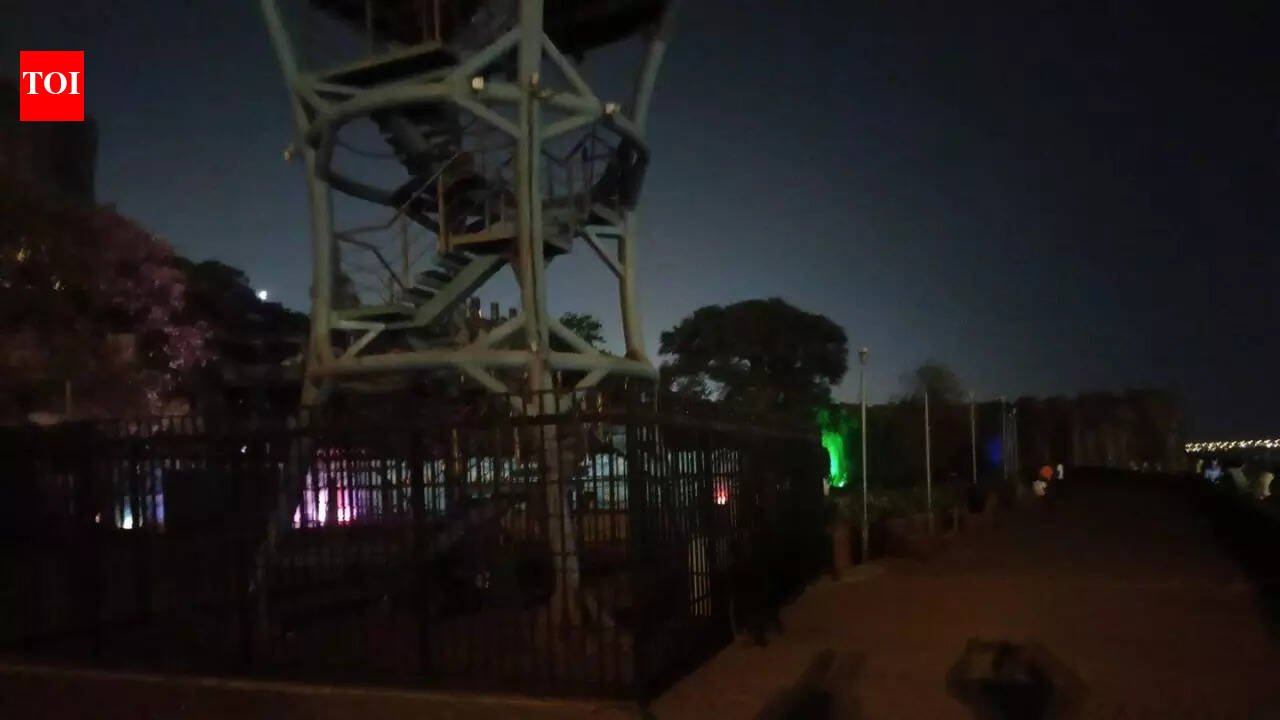
Safety concerns mount as Mahim Reti Bunder Beach lacks lighting

MUMBAI: Mahim social worker Syed M. Ismail has urged the BEST electricity wing and the Brihanmumbai Municipal Corporation to immediately restore and expand street lighting at Mahim’s Reti Bunder Beach, warning that poor illumination is putting public safety at risk.According to Ismail, several street lights along the beach are non-functional, leaving large stretches of the area in darkness after sunset. He said the lack of proper lighting has created an unsafe atmosphere for residents, visitors and families who frequent the beach, particularly during the evening hours.“The absence of adequate lighting makes the area vulnerable and increases the possibility of untoward incidents or criminal activity,” Ismail said, stressing that the issue requires urgent civic attention.He also pointed out that the current lighting infrastructure is insufficient, with only a few working lamps covering the beach. In addition to repairing faulty lights, he has called for the installation of more street light poles in the inner sections of Reti Bunder Beach.Ismail has appealed for high-focus street lights to be installed to improve visibility and deter anti-social activities. Local residents have supported the demand, saying better lighting would significantly enhance safety and make the beach more accessible and secure for the public.


Source link

IPL 2026: Five pacers in race as KKR look for Harshit Rana replacement | Cricket News


IPL 2026: Five pacers in race as KKR look for Harshit Rana replacement
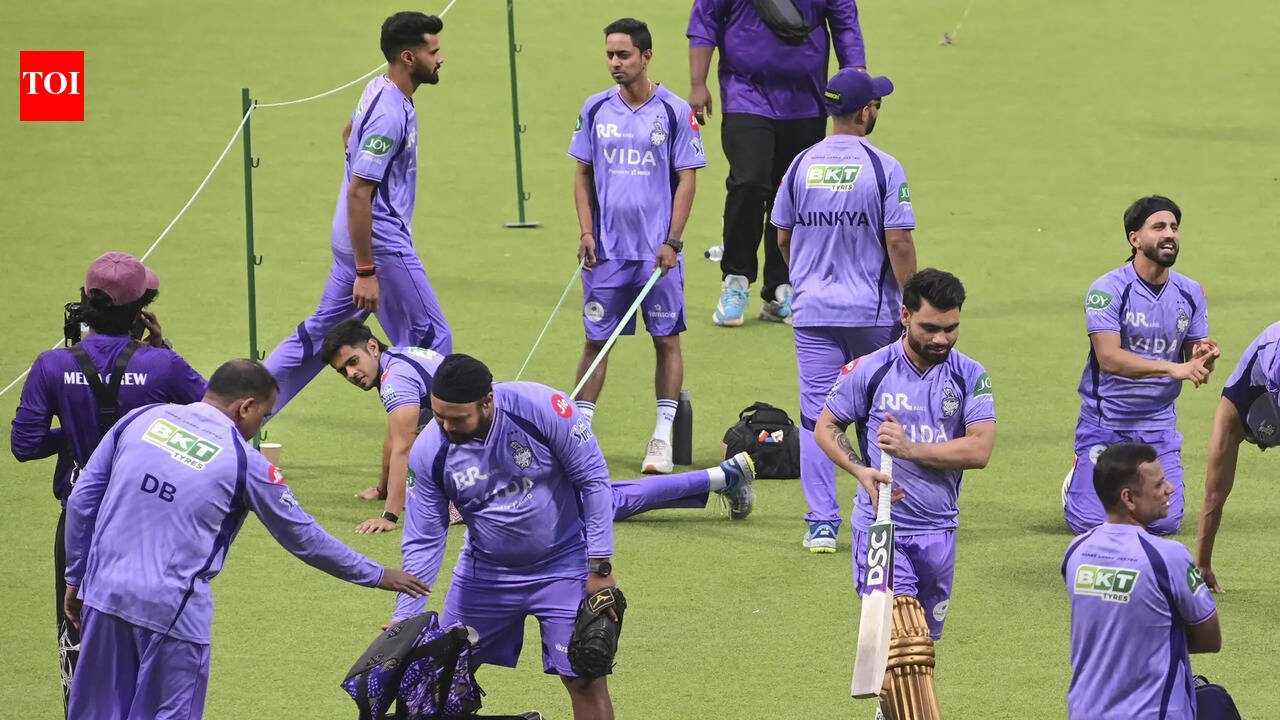
Kolkata: Kolkata Knight Riders’ players during a practice session ahead of IPL at Eden Gardens, in Kolkata. (PTI Photo)(PTI03_19_2026_000288A)

The Kolkata Knight Riders (KKR) have been forced into urgent action ahead of the Indian Premier League (IPL) 2026 season after a major injury blow to promising pacer Harshit Rana. With their bowling attack suddenly weakened, the franchise has turned to mid-preseason trials at Eden Gardens to identify a suitable replacement.His absence has left a significant gap in both the powerplay and death overs, forcing the team management to rethink their pace combination just days before the tournament.

Trials Begin: Five Pacers Under Scanner

In response, KKR have invited a group of Indian fast bowlers for trials, hoping to find a reliable replacement:

  1. Navdeep Saini
  2. Akash Madhwal
  3. Simarjeet Singh
  4. Sandeep Warrier
  5. KM Asif

Among them, Navdeep Saini has attracted attention for his raw pace and bounce, while Akash Madhwal has also put himself in strong contention following his impactful performances for Mumbai Indians in previous IPL seasons. Simarjeet Singh, meanwhile, who has previously been part of Chennai Super Kings and Sunrisers Hyderabad squads, has taken 11 wickets in 14 IPL appearances. The Kerala medium-pacer duo of Warrier and Asif were also seen at the trials. Adding an element of intrigue is Sunil Kumar from Jammu & Kashmir. The left-arm seamer, who has impressed in longer formats.

KKR’s Bowling Concerns Grow

KKR’s worries extend beyond just one injury. Kolkata Knight Riders (KKR) will be without Akash Deep for IPL 2026 after the seamer failed to recover in time from a lower-back stress injury. The franchise had already released Mustafizur Rahman and brought in Blessing Muzarabani as a replacement. While Muzarabani is a strong addition, the tall Zimbabwean pacer has limited experience in the IPL. There is, however, some positive news for KKR fans. Sri Lankan speedster Matheesha Pathirana is reportedly nearing full fitness after injury concerns.The three times IPL champion KKR have several other domestic medium-pace bowling options in their squad, their Indian seam options currently comprise Vaibhav Arora, Umran Malik and Kartik Tyagi, with Cameron Green providing a seam-bowling allrounder option.

Banner Insert


Source link

South Africa 0/0 in 0.0 Overs | NZ vs SA Live Score, 4th T20I: South Africa win toss, opt to bat vs New Zealand


New Zealand (Playing XI): Tim Robinson, Katene D Clarke, Dane Cleaver(w), Nick Kelly, Bevon Jacobs, James Neesham(c), Josh Clarkson, Cole McConchie, Zakary Foulkes, Kyle Jamieson, Ben Sears

South Africa (Playing XI): Wiaan Mulder, Tony de Zorzi, Connor Esterhuizen(w), Rubin Hermann, Jason Smith, Dian Forrester, George Linde, Gerald Coetzee, Keshav Maharaj(c), Prenelan Subrayen, Ottneil Baartman


Source link

A Rajya Sabha rummy: How BJP manages ‘floating majority’ with bellwether backings | India News


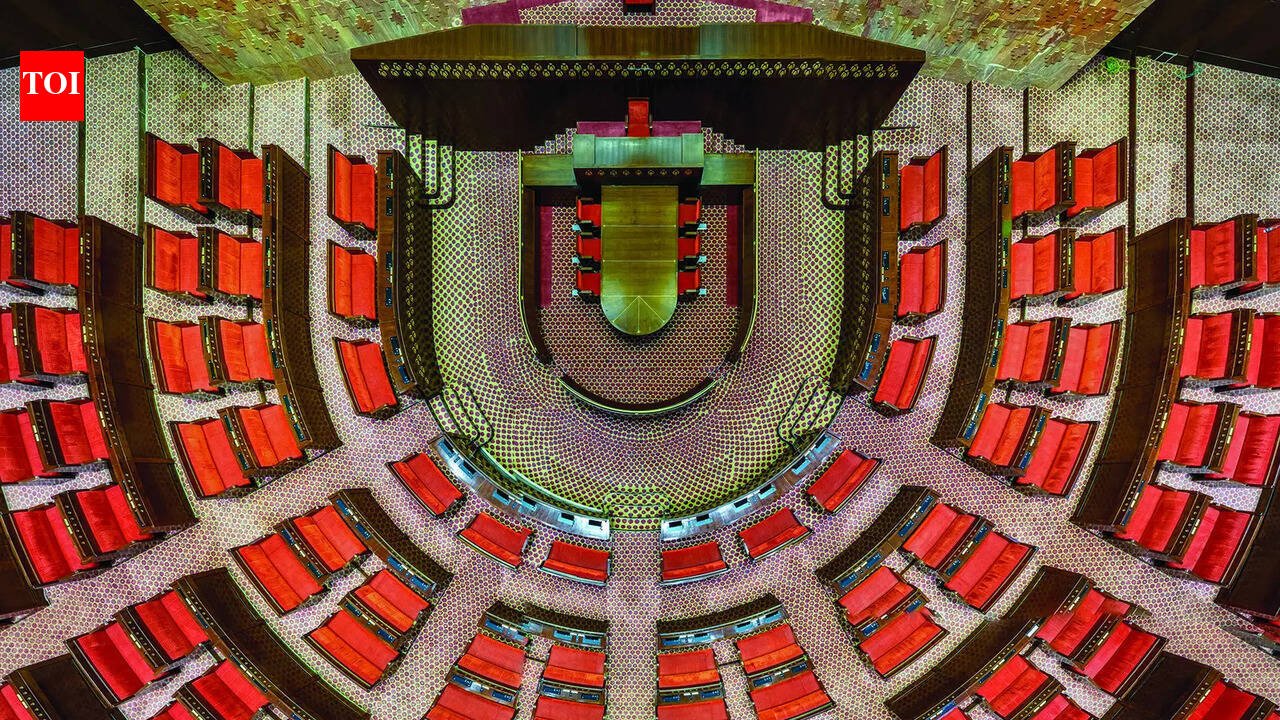
The new Rajya Sabha is 1.5 times larger than the old Rajya Sabha. Inspired by the traditional red tint of the Upper House, the leitmotif here is the lotus, India’s national flower.

Monday’s Rajya Sabha elections did more than just fill a handful of Upper House vacancies. They told a familiar political story in a fresh setting, one where numbers, not noise, determine outcomes.Absentee legislators in Bihar cost the opposition a seat it should have won. Cross-voting in Odisha rewrote a settled arithmetic. And in Haryana, invalid ballots and defections turned what should have been a straightforward contest into a midnight cliffhanger.

Watch

NDA Victory in Rajya Sabha Polls Triggers War Of Words As Opposition Split Widens In Bihar

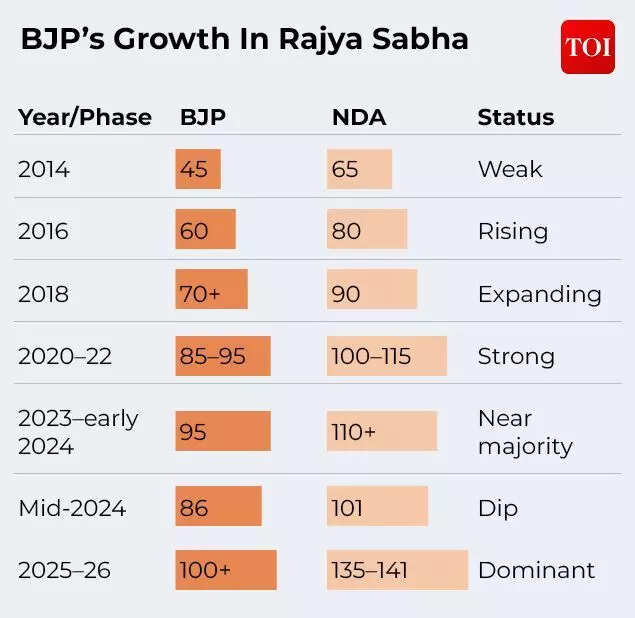
Individually, these may appear as state-specific disruptions. Taken together, they underline a deeper and more enduring pattern. The Bharatiya Janata Party’s (BJP) growing “mastery” over the Rajya Sabha’s numbers game, and the opposition’s continuing inability to hold its ranks when it matters most.This is not a new story. It has been unfolding, quietly but decisively, since 2014.

The Upper House paradox

When the BJP swept to power in 2014 with a decisive majority in the Lok Sabha, it did not carry that dominance into the Rajya Sabha. The Upper House, by design, is insulated from electoral waves. Its members are elected by state assemblies, and their terms are staggered, ensuring continuity and preventing sudden shifts.This meant that even as the BJP commanded brute strength in the Lower House, it remained a minority in the Upper House for years. That imbalance mattered!
Non-NDA Support For BJP4

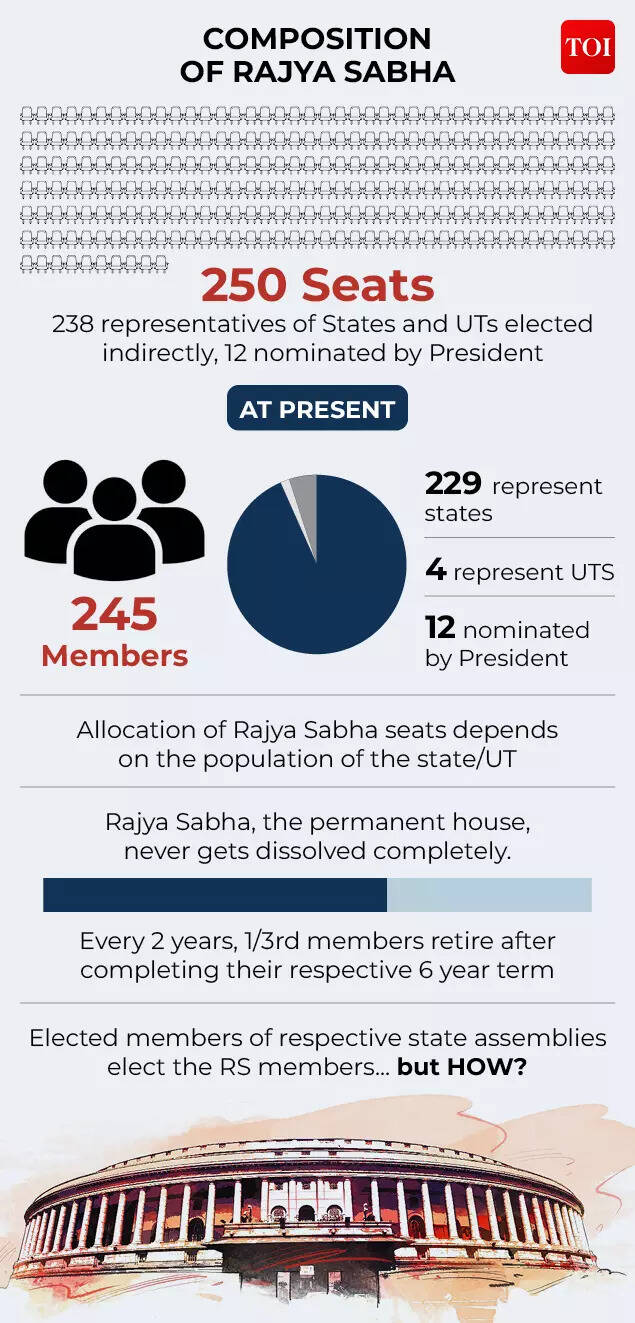
Composition of Rajya Sabha

Unlike the Lok Sabha, where a majority can push legislation through with relative ease, the Rajya Sabha demands negotiation, persuasion and, at times, political ingenuity. For the BJP, this became both a constraint and an opportunity. A constraint because it could not legislate unilaterally, and an opportunity because it forced the party to develop a different kind of political playbook.

The slow climb

From 2014 onwards, the BJP began a steady climb in the Rajya Sabha through a mix of electoral expansion and strategic positioning. Each state election victory translated, over time, into incremental gains in the Upper House.States like Uttar Pradesh, Maharashtra, Assam and later parts of the Northeast became critical to this expansion. But no state illustrates this mechanism better than Uttar Pradesh.With 403 MLAs, Uttar Pradesh is the single biggest contributor to the Rajya Sabha, sending 31 members. After the BJP’s sweeping victory in the 2017 assembly elections, it dramatically improved its Upper House numbers through successive election cycles.This is the core mechanic of the Rajya Sabha, which mandates political parties to control state assemblies, and over time, it leads to the reshaping of the composition of the Upper House in favour of the party with most numbers of seats in the state assemblies.Yet, even as the BJP’s numbers improved, it still did not consistently cross the majority mark on its own. And still, legislation kept moving.

-

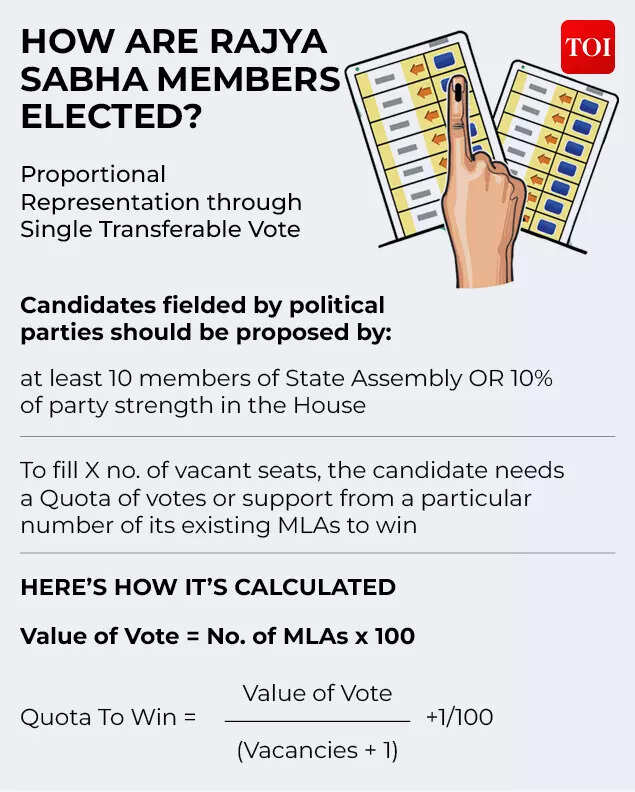
How Rajya Sabha election really works

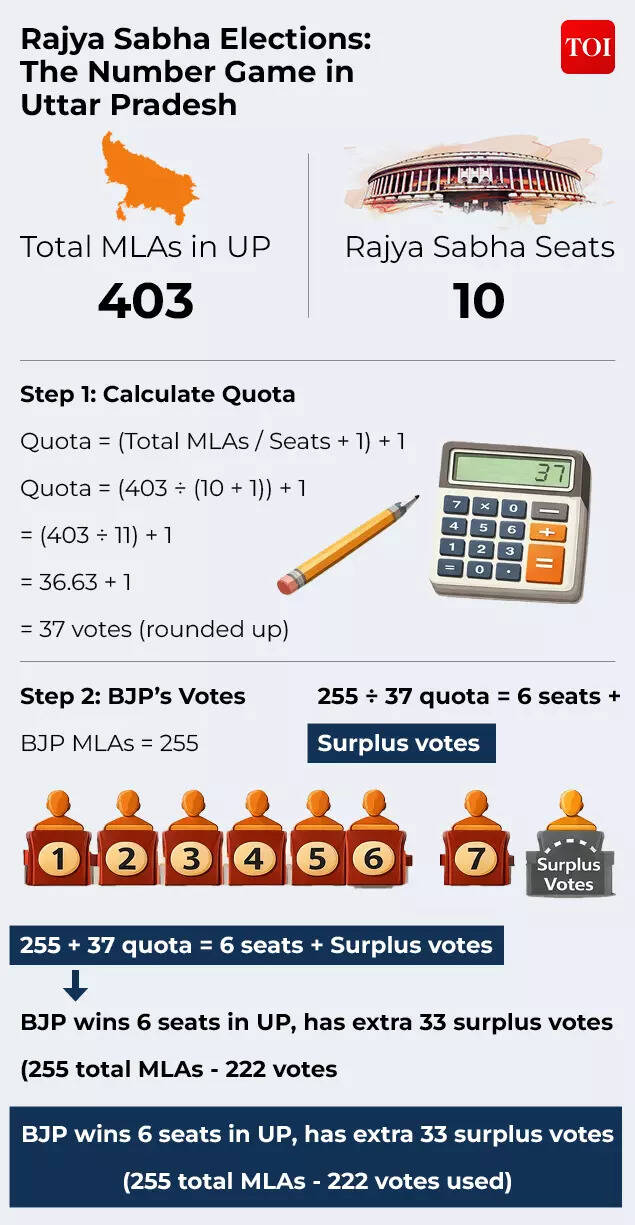
Rajya Sabha elections are not direct. MLAs vote using proportional representation through the single transferable vote (STV) system.
Non-NDA Support For BJP5

Rajya Sabha formula

And this is where the system becomes politically sensitive.A handful of cross-votes, a few abstentions, or even incorrectly marked ballots can flip outcomes. The events in Bihar, Odisha and Haryana this week demonstrate just how fragile and fluid these calculations can be.The heart of this system lies in a deceptively simple formula.An Uttar Pradesh Example:
Non-NDA Support For BJP6

How votes are calculated in Rajya Sabha

Managing the numbers: The BJP playbook

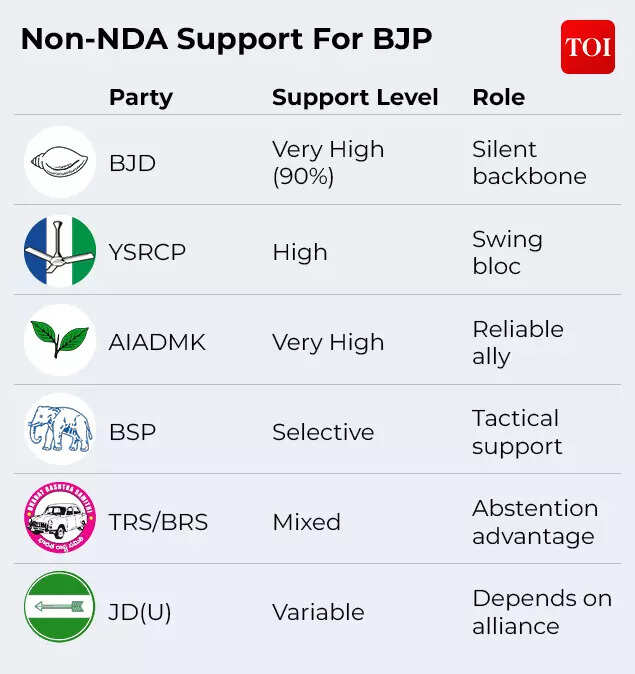
Over the past decade, the BJP has demonstrated a consistent ability to navigate the complexities of the Rajya Sabha’s numbers game, relying not on a single strategy but on a “combination of approaches” that together create a working majority even without a formal one. A key pillar of this has been the steady expansion of its electoral base, with victories in state assemblies translating into incremental gains in the Upper House over time. Where it has fallen short, the party has built tactical, often issue-based understandings with regional players such as the Biju Janata Dal (BJD), YSR Congress Party (YSRCP) and AIADMK, whose support, though not always formal, has proved decisive in crucial votes.
Non-NDA Support For BJP

Non-NDA support for BJP

At the same time, the BJP has benefited from cross-voting and dissidence within opposition ranks, a recurring feature of Rajya Sabha elections that has tilted outcomes in its favour, as seen in the recent Odisha contest. The party has also shown flexibility in candidate selection, at times backing independents or accommodating allies to maximise its chances, while complementing these efforts with careful floor management inside the House. By timing the introduction of key legislations, ensuring attendance when it matters, and navigating debates with a close eye on arithmetic, the BJP has repeatedly managed to secure passage of bills despite lacking a clear majority of its own.

Passing laws ‘without a majority’

The BJP has, over the past decade, managed to secure passage of several key legislations through a calibrated mix of political support, timing and procedural strategy. This has often involved backing from non-NDA regional parties, abstentions and walkouts by sections of the opposition, and careful scheduling of debates when the numbers were favourable. For instance, during the passage of the Muslim Women (Protection of Rights on Marriage) Act, 2019, the government did not have the required numbers on its own, but abstentions by parties such as the JD(U), AIADMK and TRS reduced the effective strength of the House, allowing the bill to pass with a comfortable margin. Similarly, the Jammu and Kashmir Reorganisation Bill, 2019, which paved the way for the abrogation of Article 370, saw active support from parties like the Biju Janata Dal, YSR Congress Party and AIADMK, despite their not being part of a formal alliance with the BJP. The Citizenship Amendment Act (CAA), 2019 followed a comparable pattern, with regional parties backing the government and helping it secure a majority in a tightly contested vote. In other cases, procedural tools have played a role, as seen during the passage of the farm laws in 2020, where a voice vote was used amid opposition demands for division, effectively sidestepping a potentially uncertain headcount. Walkouts, too, have frequently lowered the voting threshold, turning what might have been close contests into manageable ones for the government. Taken together, these instances highlight a recurring paradox reflecting how a government without a formal majority in the Upper House rarely found its legislative agenda blocked, largely due to a combination of opposition fragmentation and strategic floor management.

The opposition’s missed moment

If the BJP’s story is one of adaptation and strategy, the opposition’s is one of missed opportunities.For much of the past decade, the opposition had, at least numerically, the ability to influence legislation in the Rajya Sabha. It could have demanded deeper scrutiny, negotiated amendments, or even stalled contentious bills. That potential has frequently gone unrealised.The reasons are structural as well as political:

  • Fragmentation across regional and national parties
  • Factionalism within parties
  • Coordination failures in key moments
  • Strategic missteps such as walkouts and absences

The Haryana episode is particularly revealing. Despite having sufficient numbers, Congress saw its margin shrink dramatically due to cross-voting and invalid ballots, turning a comfortable win into a narrow escape.In Bihar, absence cost a seat. In Odisha, cross-voting overturned arithmetic. These are not isolated failures, but recurring patterns.

Cross-voting: Symptom of deeper issue

Cross-voting has long been part of Indian politics, but its recurring impact in Rajya Sabha elections points to deeper issues of party discipline and internal cohesion.In tightly contested elections, even a handful of defecting votes can alter outcomes. For the BJP, such moments have often translated into unexpected gains. For the opposition, they have exposed organisational weaknesses.The recent elections have once again highlighted how fragile opposition unity can be under pressure.

Why Rajya Sabha still matters

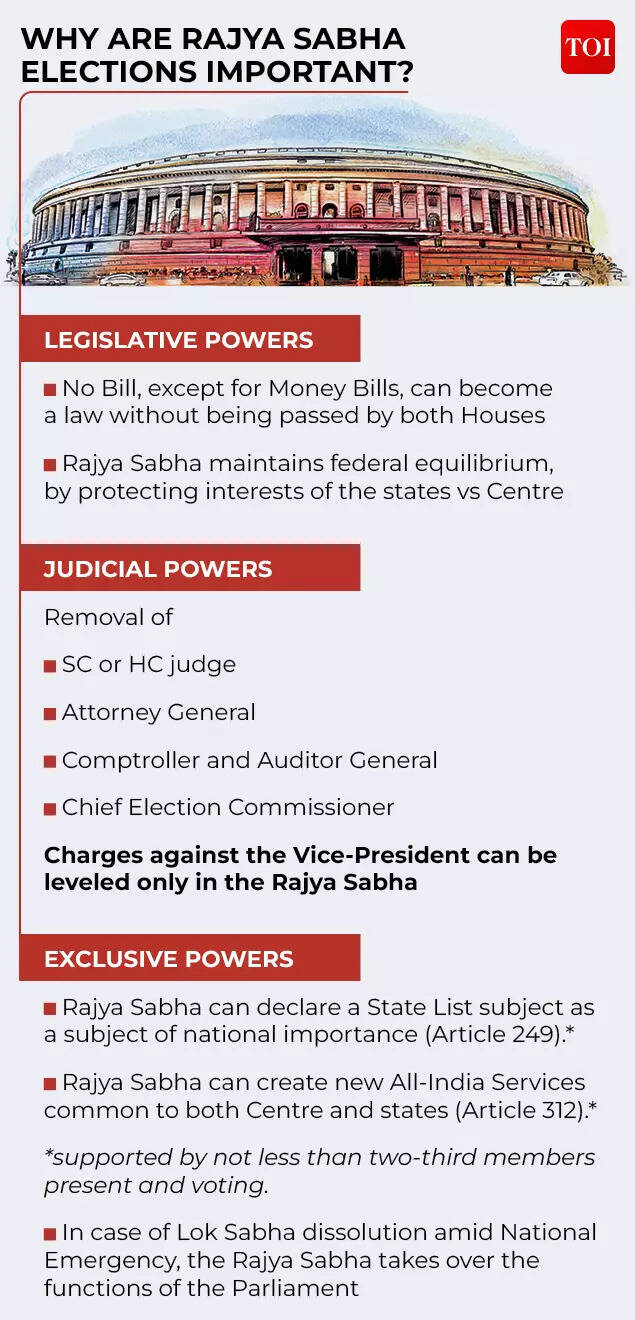
In public discourse, the Lok Sabha often dominates attention. But the Rajya Sabha remains crucial to India’s parliamentary system.It serves as:

  • A legislative check on the executive
  • A forum for representing state interests
  • A continuing body that ensures institutional stability

In theory, it is designed to deepen debate and improve legislation. In practice, its effectiveness depends on how political actors engage with it.
Non-NDA Support For BJP3

Why Rajya Sabha elections mattter

Power beyond numbers

The BJP’s experience in the Rajya Sabha over the past decade offers a broader outlook about how parliamentary politics functions beyond simple arithmetic. Power in the Upper House is not determined solely by numbers, but by how those numbers are mobilised, negotiated and, at times, fragmented across parties. The BJP, despite starting from a position of numerical disadvantage, has used issue-based support, timing and floor coordination to advance its legislative agenda. At the same time, this phase has also highlighted the challenges before the opposition. While opposition parties have often had the combined strength to influence or slow down legislation, differences in political priorities, regional considerations and coordination gaps have limited their ability to act as a cohesive bloc. In several instances, this has resulted in either support from non-NDA parties or reduced resistance through abstentions, shaping outcomes in the government’s favour. The overall trend, therefore, reflects not just the ruling party’s strategy, but also the opposition’s struggle to consistently translate its numerical presence into sustained parliamentary leverage.A few absent MLAs in Bihar. A handful of cross-votes in Odisha. Invalid ballots and factional cracks in Haryana. Each episode reinforces the same underlying truth that in the arithmetic of the Rajya Sabha, discipline and coordination matter as much as numbers.The Rajya Sabha was envisioned as a counterbalance, a chamber where legislation would be tested through debate and consensus. Over the past decade, it has instead become a space where strategy often determines outcomes as much as structure.The BJP may not have had a majority of its own in the Upper House for much of this period. But it has repeatedly found ways to create one when it matters.And as recent events show, the difference between victory and defeat in this House is often not a sweeping mandate, but a handful of votes that stay, stray or simply do not show up!



Source link

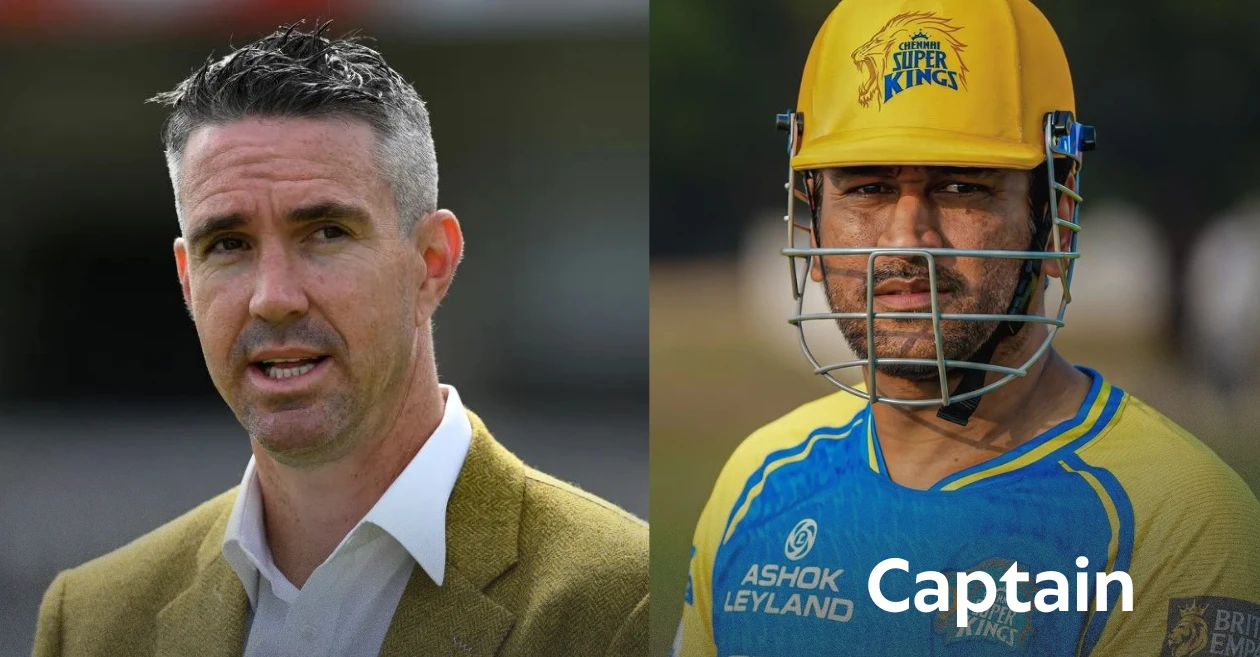
Kevin Pietersen picks his dream IPL XI, names MS Dhoni as captain


With IPL 2026 just around the corner, former England captain Kevin Pietersen has reignited cricket debates with his all-time IPL dream XI. Speaking on the For The Love Of Cricket YouTube channel alongside Jos Buttler, Pietersen revealed a star-studded lineup that blends legendary performers with some bold calls.

Kevin Pietersen reveals his dream IPL XI ahead of the 2026 season

At the top of the order, Pietersen went with a nostalgic yet explosive combination: Chris Gayle and Virat Kohli. The duo, synonymous with Royal Challengers Bengaluru (RCB)’s golden years, edged out other iconic openers like Rohit Sharma and David Warner. Their chemistry and dominance during their peak years clearly left a lasting impression.

The middle order features two of the most consistent IPL performers – AB de Villiers at No. 3 and Suresh Raina at No. 4. Both players have crossed the 5,000-run mark in the tournament and are widely regarded as pillars of their respective franchises.

But the centerpiece of Pietersen’s XI is the leadership choice. MS Dhoni was named both captain and wicketkeeper, a decision Pietersen described as the “only non-negotiable” in his team. It’s a nod to Dhoni’s unmatched legacy as a leader, having guided Chennai Super Kings (CSK) to multiple IPL titles and remaining one of the most influential figures in the league’s history.

The all-rounders’ slot is equally power-packed, featuring Andre Russell, Ravindra Jadeja, and Sunil Narine. Pietersen’s faith in Narine was particularly strong, insisting that the mystery spinner “would walk into every IPL XI” – a statement that reflects Narine’s long-standing impact with both bat and ball.

Big omissions and bold calls that divided fans

While Pietersen’s XI is packed with legends, it’s the omissions that have created the biggest buzz. The absence of Rohit Sharma stands out the most. With five IPL titles as captain and over 7,000 runs, Rohit’s credentials are undeniable. Yet, Pietersen chose Gayle and Kohli ahead of him without hesitation – a decision that has divided opinions across the cricketing community.

Similarly, Hardik Pandya and Suryakumar Yadav also missed out despite being key contributors to Mumbai Indians’ success over the years. Instead, Pietersen opted for the proven match-winning abilities of Russell, Jadeja and Narine in the all-rounders’ department.

Also READ: Shreyas Iyer’s comeback story – From hospital bed to IPL dreams

The bowling attack, however, leaves little room for argument. Yuzvendra Chahal, the IPL’s all-time leading wicket-taker, leads the spin department. He is joined by two of the finest fast bowlers in the tournament’s history – Lasith Malinga and Jasprit Bumrah – forming a lethal combination capable of dominating any batting lineup.

Pietersen also explained his decision to leave out KL Rahul from the XI, offering an interesting insight based on his recent experience. “We fought so hard to get him to the top of the order [for Delhi Capitals] last season. He did, and got a hundred that next game. I was like, ‘Maybe you should listen,’” he said. His reasoning suggests that Rahul’s true value lies as an opener, making it difficult to accommodate him in the middle order of such a stacked lineup.

Ultimately, Pietersen’s dream XI reflects both personal preference and cricketing logic -but it also highlights just how difficult it is to pick an all-time IPL team. With so many legends across eras, every selection inevitably leaves out another great.

As IPL 2026 is all set to kicks off from March 28, debates around this XI will intensify. Whether fans agree or disagree, one thing is certain – Pietersen’s picks have once again reminded everyone of the incredible talent the IPL has showcased over the years.

Also WATCH: Shubman Gill trolls Abhishek Sharma and SRH in fun segment with Sahiba Bali


Source link

Blocks on Western Railway over night, no day block today | Mumbai News


MUMBAI : There will be no day block on the Western Railway suburban today and this will be a relief to several commuters.A block was undertaken overnight between Vasai Road and Virar from 12.15 am to 4.15 am, while a major block was also carried out at Prabhadevi station from 1.30 am to 6 am for de-launching of girder of Prabhadevi Road Over Bridge.During the Vasai Road – Virar block, all slow line trains ran on the fast line between Virar/Vasai Road and Borivali. During the block at Prabhadevi, some suburban services were cancelled, short-terminated and reversed from Dadar and Bandra, and no suburban train services ran between Churchgate and Prabhadevi station and also at Matunga Road and Mahim stations during the block period, an official said.


Source link

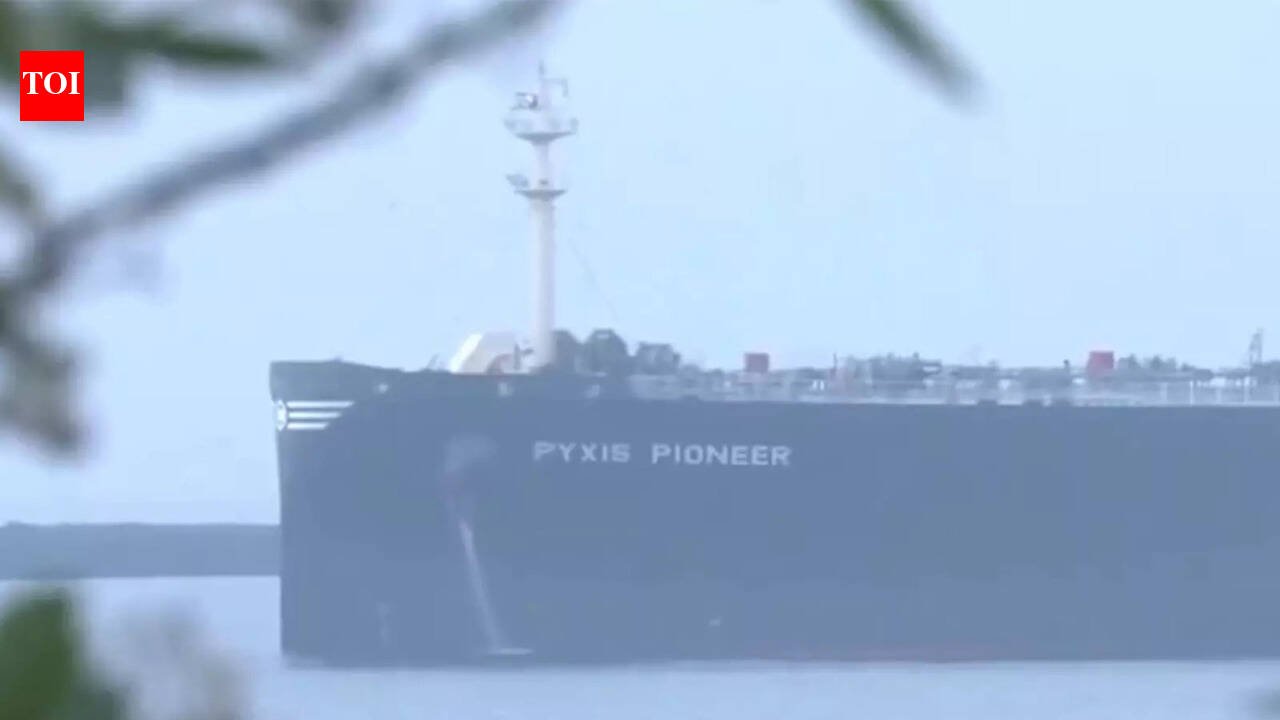
Watch: Cargo ship Pyxis Pioneer, carrying LPG from US, arrives at Mangalore Port


Watch: Cargo ship Pyxis Pioneer, carrying LPG from US, arrives at Mangalore Port
Karnataka: LPG cargo ship from US arrives at New Mangalore Port

NEW DELHI: The Pyxis Pioneer, a Singapore-flagged cargo vessel carrying liquefied petroleum gas (LPG) from Texas in the United States, docked at New Mangalore Port in Karnataka’s Mangaluru on Sunday.The tanker, built in 2019, arrived a day after the Aqua Titan, which is transporting 1.1 lakh tonnes of Urals crude, reached the port. The Aqua Titan had initially set sail from Primorsk in Russia for Rizhao Port in China before diverting to India.On Friday, the Shipping Ministry said that New Mangalore Port has waived cargo-related charges for crude oil and LPG between March 14 and 31 amid the ongoing Middle East conflict.

Watch

High Risk Voyage: India LPG Tankers Set To Cross Strait Of Hormuz After Diplomatic Push By Modi Govt

Earlier this week, three Indian-flagged vessels — Shivalik, Nanda Devi, and Jag Laadki — docked at Gujarat’s Mundra Port carrying LPG. While Shivalik arrived on Monday, Nanda Devi and Jag Laadki reached on Tuesday and Wednesday, respectively.On February 28, the United States and Israel launched coordinated strikes on Iran, triggering the current conflict. In response, Iran has carried out retaliatory attacks on Israeli territory and on Gulf states hosting U.S. military bases.Tehran has also effectively disrupted traffic through the Strait of Hormuz — a critical global chokepoint through which around 20% of the world’s oil supply passes — raising concerns over energy security and global markets. At an interministerial briefing on Friday, Shipping Ministry Special Secretary Rajesh Kumar Sinha said all 22 Indian ships and 611 sailors in the Persian Gulf are safe amid the ongoing conflict.“There has been no report of any maritime incident in the last 24 hours. All our 22 ships and 611 Indian sailors in the Persian Gulf region are safe, and we are continuously monitoring them… There is no congestion in any port… New Mangalore Port has issued a circular for waiver of all cargo-related charges for crude and LPG from March 14 to 31,” Sinha told reporters.Meanwhile, the Petroleum Ministry said panic booking of LPG cylinders has eased significantly, with 55 lakh bookings reported on Thursday.“There is no panic booking now. Only 55 lakh LPG bookings were reported yesterday. There is adequate stock available, and no outlets are running dry,” Joint Secretary Sujata Sharma said at the briefing.However, she acknowledged that concerns persist.


Source link