Breaking News
Legends, rising stars shine as TOISA celebrates sporting glory | More sports News


Legends, rising stars shine as TOISA celebrates sporting glory

LUCKNOW: Bringing together India’s finest athletes to celebrate a remarkable year in sports, the Times of India Sports Awards (TOISA) recognised excellence, dedication and the spirit of top achievers by felicitating them in a glittering ceremony here in Lucknow on Saturday.Uttar Pradesh chief minister Yogi Adityanath was welcomed by Indian sporting legends Leander Paes, Bhaichung Bhutia, and PT Usha at an awards ceremony which brought the stars together under one roof.

Watch

Shashi Tharoor & Samson’s Redemption Story: From Setbacks to Glory

The CM presented the Mentor of the Year award to 1996 Atlanta Olympics tennis bronze medallist Leander Paes even as movie reels of Paes’ early days of action and glory running in the background gave goosebumps to the audience.Emotional chords continued to resonate as the women’s World Cup-winning team, led by women’s cricket team skipper Harmanpreet Kaur, stepped on to the stage to receive the Best Team trophy from the chief minister. Yogi also felicitated the blind cricket team.The UP CM also honoured stalwarts Mithali Raj and PR Sreejesh, along with TOISA jury members.This was followed by the Federation of the Year Award, which was presented to the BCCI and received by Rajeev Shukla.For its continuous promotion to sports, Uttar Pradesh bagged the State of the Year Award, which was received by secretary, sports, Suhas LY.Indian professional shooter Samrat Rana was awarded the Sportsperson of the Year (male), while Para Sportsperson of the Year (male) was awarded to javelin thrower Sumit Antil. Para Sportsperson of the Year (female) went to Sheetal Devi.UP sports minister presented awards for Special Recognition for Athletes from UP to Kuldeep Yadav, Suhas LY, Deepti Sharma and Jagbir Singh.In the ‘Athletes Who Shaped Indian Sports in Last Decade’ category, Paes and Bhutia honoured Manika Batra, Deepa Karmakar, Sumit Antil, PR Sreejesh, Suhas LY, Avani Lekhara, Deepa Malik and Sakshi Malik.Saina Nehwal felicitated men’s badminton mainstay Lakshya Sen.Ceremony hosts Angad Bedi and Neha Dhupia added the fun quotient to the event by calling members of the World Cupwinning women’s team, captain Harmanpreet Kaur, Shafali Verma, Deepti Sharma and Harleen Deol on to the stage and engaging them in an impropmtu quiz, at one point even prompting them to shake a leg.TOISA ambassadors Tapsee Pannu and sports minister Girish Chandra Yadav honoured other awardees.The galaxy of sports veterans present during the ceremony included Sandeep Patil, Madan Lal, Jasbir Singh, Virendra Singh, Yogeshwar Dutt and Mirabai Chanu.

Banner Insert


Source link

Under the sea: How Iran’s invisible fleet of ‘midget submarines’ is turning Strait of Hormuz into danger zone


Under the sea: How Iran's invisible fleet of 'midget submarines' is turning Strait of Hormuz into danger zone
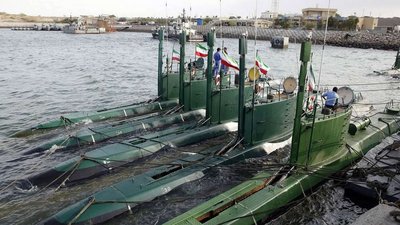
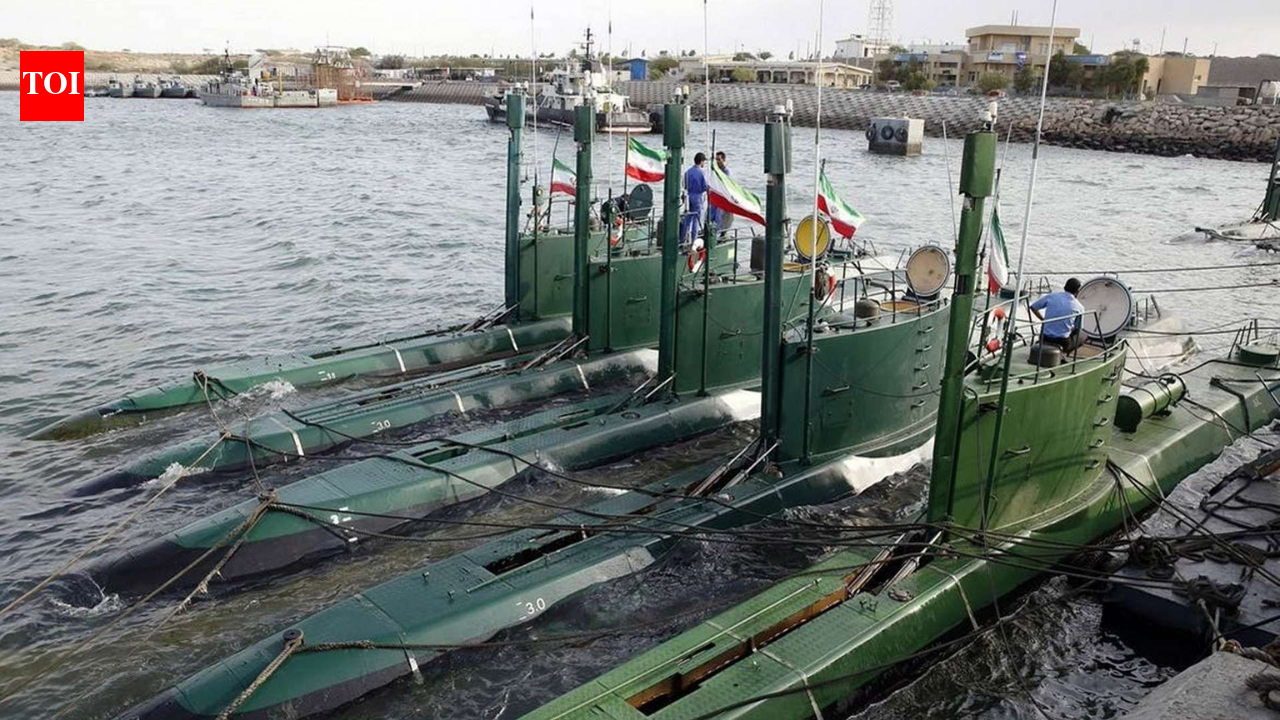
Ghadir class submarines (Image/X)

As the Middle East war intensifies, the battle is not limited to airstrikes and surface attacks. Even beneath the waters of the Strait of Hormuz, a hidden threat continues to loom and it is far harder to detect and neutralise.The United States has deployed A-10 attack aircraft and Apache helicopters over the Strait of Hormuz, targeting Iranian speedboats and underground weapons facilities. These operations are aimed at weakening Iran’s ability to disrupt maritime traffic and ensuring the safe passage of oil tankers. However, analysts warn that the most serious threat may not come from weapons that can be easily intercepted, but from submarines that remain largely undetected underwater.The Strait of Hormuz is one of the world’s most important oil transit routes, located between the Persian Gulf and the Gulf of Oman. The waterway carries nearly 20% of global energy supplies. Any disruption in this narrow waterway can have immediate global consequences, including rising oil prices and supply shortages. Iran’s geographic position along the Strait has allowed it to develop strategies and capabilities aimed at controlling or disrupting maritime movement in the region.

Iran Claims Indigenous Air Defence Successfully Targeted F-35 Stealth Fighter | Watch

Iran’s mini submarines: Ghadir-class midget

At the centre of this conflict is Iran’s fleet of Ghadir-class midget submarines. These submarines are much smaller than conventional ones, measuring about 29 metres in length and weighing around 120 tons.Their compact size allows them to operate in shallow waters, as little as 30 metres deep, which matches the average depth of key shipping channels in the Strait of Hormuz, according to The Telegraph.Iran has up to 10 Ghadir-class midget submarines. Their miniature size allows them to evade detection and operate in waters as shallow as 30 metres, the average depth of key shipping channels through the Strait of Hormuz.In contrast to midget submarines, the United States’ Ohio-class nuclear submarines weigh around 18,750 tons and measure 170 metres in length. These submarines are extremely difficult to detect due to the naturally noisy environment caused by heavy ship traffic and offshore activity. These mini submarines are capable of launching torpedoes and more importantly, laying naval mines. Experts believe their mine-laying capability poses the greatest risk, as even a small number of mines can disrupt shipping routes for extended periods. Clearing such mines is a slow and complex process, which can effectively block the movement of vessels through the strait. Iran has spent decades studying the Gulf’s geography and training its naval personnel in these waters, enhancing the effectiveness of these operations.

Other submarines in Iran’s arsenal

In addition to the Ghadir-class, Iran operates several other types of submarines. The Fateh-class submarines weighing around 600 tonnes are larger and equipped with improved sensors, allowing them to operate in deeper waters while still maintaining a relatively small profile. Iran also possesses Russian-built Kilo-class submarines (Taregh, Yunes and Nooh), which are more powerful but less suited to the shallow waters of the Gulf. Other submarines including the Nahang midget were also purchased from Russia in the 1990s. Alongside these, Iran has developed specialised underwater systems such as the e-Ghavasi and Al-Sabehat swimmer delivery vehicles. These are designed for covert operations, allowing naval commandos to carry out missions such as mine-laying in shallow coastal waters.

Iran’s speedboat and drones

Iran’s naval strategy also relies heavily on fast-attack vessels operated by the Islamic Revolutionary Guard Corps (IRGC). These boats are designed for swarm tactics, enabling them to overwhelm larger ships in confined waters. The fleet includes more advanced platforms such as the Zulfaghar-class boats, which are equipped with air defence systems and represent some of Iran’s most capable fast-attack vessels.Iran has also developed unconventional platforms such as the Bavar-2, a “flying boat” that can rise slightly above the water surface, increasing speed while reducing its radar.A major long-term threat comes from Iran’s anti-ship missile systems, which are deployed along its coastline. These include short-range missiles capable of targeting nearby vessels, as well as longer-range cruise and ballistic missiles that can strike ships across the Strait of Hormuz and beyond. Many of these systems are mobile, mounted on trucks or hidden in tunnels and bunkers, making them difficult to locate and target through conventional airstrikes.A major long-term threat comes from Iran’s extensive range of anti-ship missile systems deployed along its coastline. Short-range missiles such as the Kowsar and Nasr-1 are capable of targeting vessels operating close to shore.For longer distances, Iran has developed cruise missiles which can strike targets across the Strait of Hormuz and into the Gulf of Oman. The Abu Mahdi cruise missile significantly extends this range, reportedly capable of hitting targets up to 1000 kilometres away.In addition, Iran has developed anti-ship ballistic missiles such as the Gulf and Hormuz-2, designed to strike moving vessels using satellite guidance.

Naval mines: The biggest risk to global trade

Military experts believe that Iran’s most effective tool may be its extensive stockpile of naval mines. These include contact mines that explode on impact, magnetic mines that detect a ship’s hull, acoustic mines triggered by propeller noise and pressure mines that respond to water movement. Some advanced variants are designed to target large commercial vessels specifically. Even limited deployment of such mines could halt maritime traffic and take weeks to clear, severely impacting global trade.While US forces continue to target visible threats, the underwater dimension of the conflict remains a significant challenge. Submarines and mines are far harder to detect and neutralise, giving Iran the ability to disrupt global shipping routes without engaging in direct large-scale naval battles.


Source link

Oil Price Forecast: Oil prices cross $100 — what lies ahead as the Middle East crisis intensifies?


Oil prices cross $100 — what lies ahead as the Middle East crisis intensifies?

The Middle East crisis has left oil markets on edge, and the volatility is expected to continue. Prices are likely to stay high, even as forecasts vary on how long the surge will last, with the ongoing conflict still disrupting global supplies. Prices edged lower on Friday but held firmly above the $100 mark, reflecting the impact of damaged energy infrastructure and restricted flows through the Strait of Hormuz. Brent crude slipped 0.1% to $108.5 a barrel after earlier touching $110, while US crude remained largely steady at around $95.6.The big question is, how high and long can this hike stretch?Market projections suggest the current price levels could persist, especially if supply disruptions continue. Goldman Sachs said oil that markets could remain under pressure for years, warning that prolonged outages may keep prices elevated well beyond the immediate term. “The persistence of several prior large supply shocks underscores the risk that oil prices may stay above $100 for longer in risk scenarios with lengthier disruptions and large persistent supply losses,” Goldman analysts wrote in a note Thursday.With the key shipping route in the Strait of Hormuz largely blocked for nearly three weeks, the bank expects prices to move higher and has indicated that Brent could even surpass its previous peak of about $147 per barrel recorded in 2008 if the disruption worsens.Goldman outlined different scenarios based on how the situation evolves. In a more severe case, where oil flows remain heavily restricted for over two months and production recovers only gradually to 2 million barrels per day, Brent could be around $111 per barrel by the final quarter of 2027. However, in a more optimistic scenario, involving a gradual restoration of flows from April, could see prices ease to the $70 range by the end of 2026.Other forecasts point to a softer trajectory over time. The US Energy Information Administration expects Brent to stay above $95 per barrel in the near term, before dropping below $80 in the third quarter of 2026 and settling around $70 by the end of that year. It projects an average price of $64 per barrel in 2027, noting that outcomes will depend on how long the conflict lasts and the extent of supply disruptions.In a staff memo, United Airlines chief executive Scott Kirby said the airline is factoring in the possibility of oil prices rising to as much as $175 per barrel and staying above $100 through the end of 2027. At those levels, United’s annual fuel expenses could increase by about $11 billion, more than twice the profit it recorded in its best year, he said, even as strong travel demand allows carriers to raise fares. United Airlines said that it will reduce unprofitable flights over the next two quarters as it prepares for elevated jet fuel prices linked to the war involving Iran. The impact of the crisis is already being felt across the energy sector. QatarEnergy said that missile strikes have cut liquefied natural gas export capacity at Ras Laffan by 17%, with repairs potentially taking up to five years, affecting supplies to Europe and Asia.Overall, projections underline a wide range of possible outcomes, but point to one common factor, oil prices are likely to remain sensitive to how the conflict unfolds and how quickly disrupted supply routes are restored.


Source link

From training with reserves to senior team, Raynier tries to find his feet again | Goa News


Raynier Fernandes believes he’s getting there, slowly, steadily, but surely

Panaji: At the start of the season, Raynier Fernandes didn’t know where he would end up.The former India midfielder had another year left on his existing contract with FC Goa, but having been loaned to Odisha FC last season, he was surplus to requirements at the club. There was no spot for him in a crowded midfield that had Ayush Chhetri, Sahil Tavora, Harsh Patre, Prachit Gaonkar, besides the two foreigners, David Timor and Borja Herrera.When Goa kicked off their campaign in the AFC Champions League Two, Raynier waited at home, hoping someone would call. The uncertainty surrounding Indian football didn’t help, and it was not until December that he was told he can start training again, not with seniors, but the developmental team of FC Goa.Raynier, 30, trained earnestly, not even knowing if he would play in the top tier of Indian football. A month later, with foreigners parting ways with the club, he was asked to return to the senior team.“I was just waiting for an opportunity to be called back to the (senior) team,” Raynier told TOI during the pre-match media interaction on Friday. “With the reserves, I got some training; I was out of football for seven months. Training with the development team helped me. It got my confidence back. It wasn’t there for quite some time. After the coach and staff called me, it helped. As player, we need to keep faith, cannot afford to give up.Manolo too appears to trust Raynier more than at the start of the campaign. For the away clash against Punjab FC last week, the midfielder was a second-half substitute and kept the ball moving. His 19 forward passes in the final third were more than any other player.“At the start, it was a new experience for me, training with the development team, trying to get my rhythm and fitness back. Individually you can do a lot, but you require a team to play, so that helped me get my confidence back,” said Raynier.Raynier is nowhere close to the form that made him such an invaluable player with Mumbai City when they won the double, or when Stephen Constantine and Igor Stimac handpicked him for the national team. He was also an automatic starter during Manolo Marquez’s first season at Goa, starting 11 of the first 12 games, a fantastic run that saw the club remain unbeaten and on top of the league ladder.But Raynier believes he’s getting there, slowly, steadily, but surely.“I am trying to do my best. The coach always wants the best for the team, for the players. I’m trying to win the coach’s confidence, trying to do well for the team. Obviously, I had a couple of chances to score which I could not. I am not 100 % happy (with my performance), I still have to improve,” said Raynier.It would have been music to Raynier’s ears to hear from Manolo – seated next to him for the media interaction – that the coach was happy with his second-half performance against Punjab FC, even though the 1-1 result was disappointing in the end.“Training with the development team is not good, but it’s better than training individually,” said Manolo, sympathising with Raynier. “I had similar cases in Spain when players who are (still) contracted or on loan trained with the reserves. It’s not easy. The best thing is to train with a team. We have examples here of Ishan (Pandita) and Daniel (Lalhlimpuia), and it’s very clear that physically they are not in the same situation as other players.


Source link

Potholes to poor lighting: AI Dashcams to detect 30 types of highway defects | India News


Potholes to poor lighting: AI Dashcams to detect 30 types of highway defects

NEW DELHI: National Highways Authority of India (NHAI) will deploy AI-powered dashcam analytics services (DAS) on approximately 40,000 km of the NH network which are under operation and maintenance contracts. The decision comes amid complaints of commuters against riding quality and road conditions.For effective monitoring, NHAI has divided the country into five zones and contracts have been awarded for two years.This week, highway ministry informed Rajya Sabha that the number of public complaints over the quality of highway construction and condition of riding surface of NHs has registered over 60% increase this year compared to last year. Till March 12, such complaints increased to 11,340 from 7,030 in 2024-25. The ministry also said that this year, 9,977 grievances have been resolved.An NHAI official said the dashcams will be installed in every highway patrol vehicle and these will record all details, including 30 types of defects and anomalies on highways. The primary focus will be on pavement condition, including potholes, cracks, rutting, and surface deterioration, along with issues such as faded lane markings, damaged crash barriers, and non-functional street lights.“The recordings will be fed into a specialised IT platform that features dedicated modules for data management and AI analytics. This will generate reports within a day and identify the defects. Based on this instructions will be issued for fixing the issues to agencies and officials concerned,” said an official.The system will also identify other safety concerns, including illegal median openings, unauthorised signboards, encroachments, and illegal parking.The surveys will be conducted at least once a week, with night time inspections conducted at least once a month to assess the performance of road signage, pavement markings, road studs, and highway lighting. It will also cover critical issues such as water stagnation, missing drainage covers, vegetation growth, and the condition of bus bays.


Source link

Access Denied


Access Denied

You don’t have permission to access “http://www.ndtv.com/hyderabad-news/hyderabad-doctor-wanted-to-adopt-a-cat-family-said-no-she-died-by-suicide-11249572” on this server.

Reference #18.c7f5d217.1774156665.c0151dbe

https://errors.edgesuite.net/18.c7f5d217.1774156665.c0151dbe


Source link

Alana King steers Australia to series-clinching win over West Indies in 2nd Women’s T20I


Australia Women produced a composed all-round performance to secure a 17-run victory over West Indies Women in the second T20I at Arnos Vale Ground, taking control of the series in what turned out to be a closely fought contest. Despite a spirited chase led by Hayley Matthews, the hosts fell short as Australia’s bowlers held their nerve in the crucial phases.

Australia post a competitive total after strong middle-order effort

After winning the toss and opting to bat first, Australia Women put up a solid total of 164/5 in their allotted 20 overs. The innings was built around impactful contributions from multiple batters, with Georgia Voll providing early momentum through a brisk 39 off 23 balls, striking six boundaries and a six.

Beth Mooney had a relatively quiet outing, managing 17 off 20 deliveries, but Phoebe Litchfield steadied the innings with a fluent 35 off 29 balls. The backbone of Australia’s innings, however, came from the experienced Ellyse Perry, who played a commanding knock of 42 off just 28 deliveries, laced with six boundaries.

Towards the end, Georgia Wareham and Nicola Carey chipped in with quick cameos to push the total beyond the 160-mark, giving Australia a strong platform to defend.

For West Indies Women, the bowling effort was disciplined but lacked breakthroughs at regular intervals. Deandra Dottin, Matthews, Afy Fletcher, Karishma Ramharack, and Jahzara Claxton picked up one wicket each, but none were able to significantly halt Australia’s scoring momentum.

Hayley Matthews leads the fightback in chase

In response, West Indies Women finished at 147/4, falling 17 runs short despite a promising start and a determined middle-order effort. Qiana Joseph began positively but was dismissed early after scoring 11. Matthews once again showcased her class with a superb knock of 56 off 41 balls, striking seven fours and three sixes. She anchored the innings and kept the required run rate within reach for a major part of the chase.

Stafanie Taylor supported her with a steady 22 off 27 balls, while Dottin injected late hope with an aggressive 39 off 28 deliveries, including two fours and two sixes. However, the lack of acceleration in the middle overs and the inability to find boundaries consistently towards the end proved costly.

Also READ: Beth Mooney’s explosive innings powers Australia to dominant win over West Indies in Women’s T20I opener

Alana King shines as Australia defend successfully

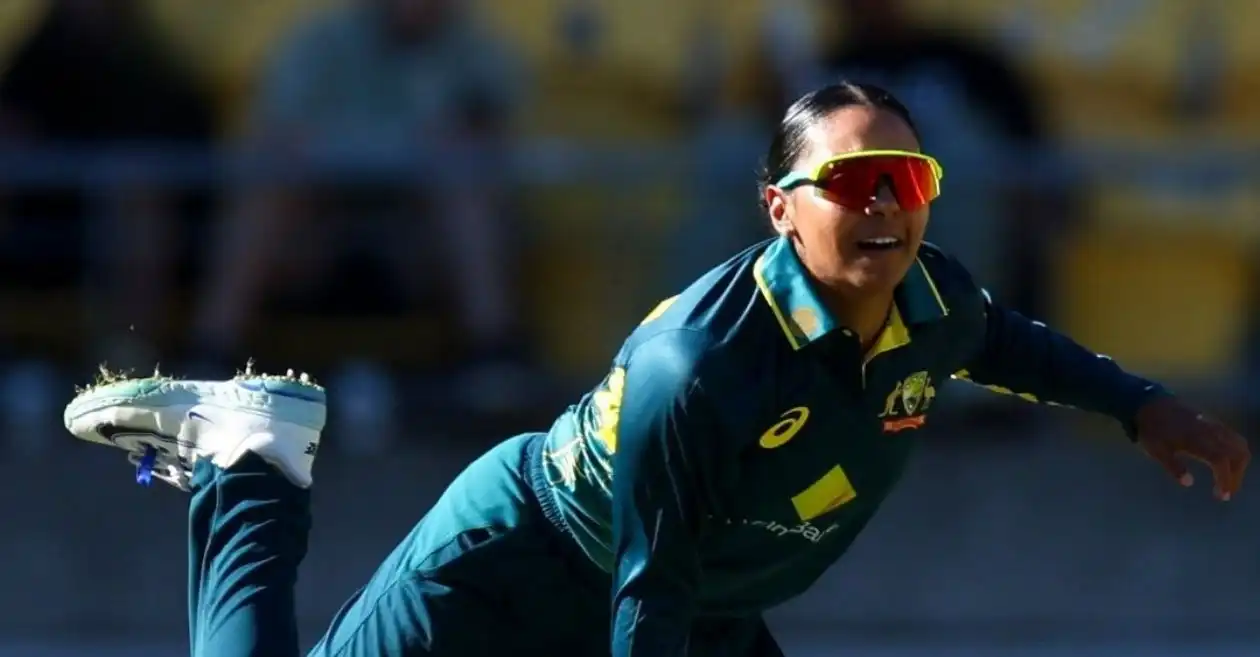
Australia’s bowling unit delivered a disciplined performance, with Alana King emerging as the standout performer. She claimed two crucial wickets while conceding just 25 runs in her four overs, effectively breaking partnerships and slowing the scoring rate.

Georgia Wareham also made an impact with the ball, picking up one wicket and maintaining tight lines, conceding only 16 runs in her spell. The rest of the bowling attack, including Kim Garth and Darcie Brown, played their roles in containing the opposition despite going wicketless. Eventually, Aussies ended up winning the contest by 17 runs and taking a 2-0 lead in the 3-match series.

Also READ: West Indies vs Australia, Women’s T20I Series: Schedule, Squads, Broadcast and Live Streaming details

This article was first published at WomenCricket.com, a Cricket Times company.


Source link

IPL 2026 | ‘Iss baar No. 6’: Rohit Sharma’s big promise to Mumbai Indians fans – WATCH | Cricket News


IPL 2026 | 'Iss baar No. 6': Rohit Sharma's big promise to Mumbai Indians fans - WATCH
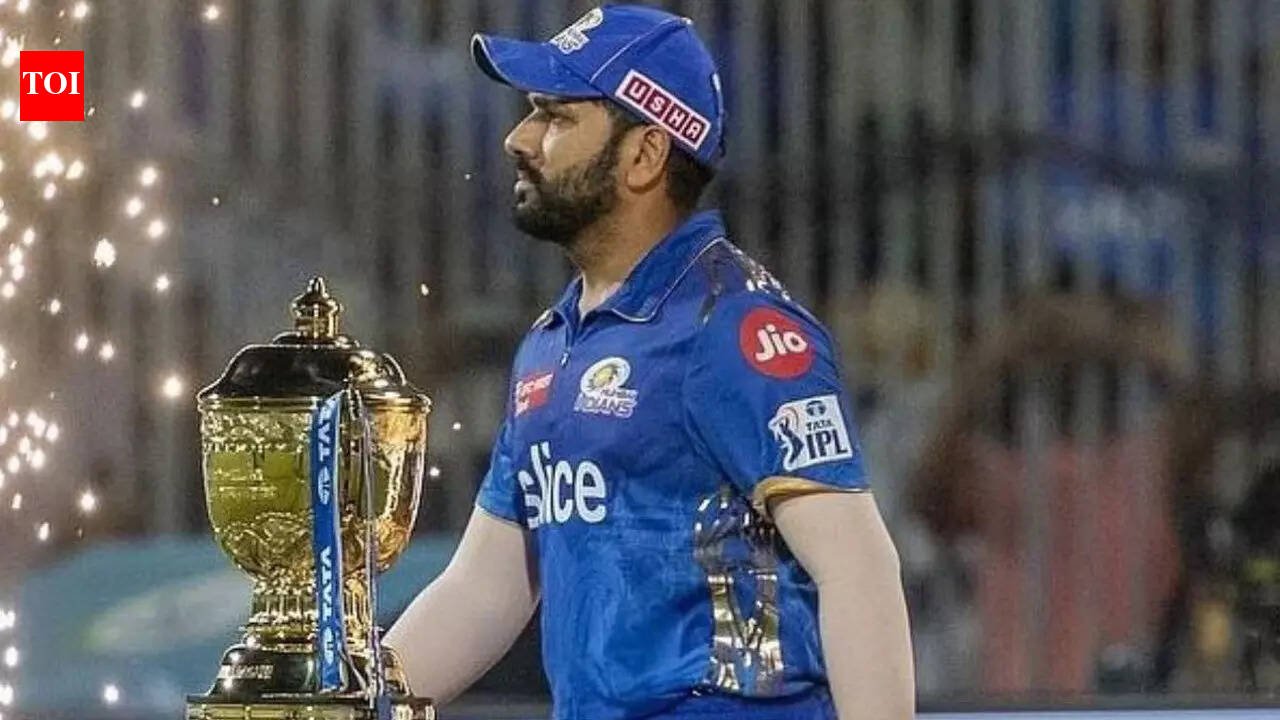
Rohit Sharma (Image credit: BCCI/IPL)

NEW DELHI: The crowd erupted in loud cheers the moment Rohit Sharma took the mic, with the noise reaching a crescendo when he declared, ‘iss baar No. 6 aapke paas’.Mumbai Indians are five-time Indian Premier League champions, having lifted the trophy in 2013, 2015, 2017, 2019 and 2020. However, Mumbai Indians have not won the title in the last five years. Notably, all five championships came under Rohit’s leadership.

Watch

Shashi Tharoor & Samson’s Redemption Story: From Setbacks to Glory

Rohit, who was addressing fans at a Mumbai Indians event — MI Mix — held at the Jio World Garden on Saturday, was joined by Suryakumar Yadav and Hardik Pandya.“I want to thank you all on my team’s behalf. Keep supporting us like you do every year. We love it. And in return, we will try to make it IPL 2026 | ‘Iss baar No. 6’: Rohit Sharma’s big promise to Mumbai Indians fans – WATCH | Cricket News number 6. Iss baar Number 6 aapke paas laakar rakhein,” Rohit said.Are Mumbai Indians the greatest IPL team?Former India cricketer Irfan Pathan believes Mumbai Indians hold a slight edge over Chennai Super Kings as the ‘greatest team in IPL history’, even though both franchises have won the same number of titles.Pathan argued that MI’s impact on Indian cricket has been more significant, highlighting the number of top-quality players the franchise has produced for the national team.“CSK started winning the IPL title from 2010 onwards. They won back-to-back titles in 2010 and 2011 and were the first team to do so. But when Mumbai Indians started winning from 2013, they kept winning after every alternate year. Then they won the IPL trophy back-to-back in 2019 and 2020.”“What I like about Mumbai is their contribution to Indian cricket. The number of match winners they have produced for the Indian team is absolutely tremendous. How do you achieve that? First, you make your franchise big. Second, you deliver results with the team you have. Even now, Mumbai Indians had a great squad last season that could have easily won the trophy, but they couldn’t for different reasons.”While MI can take credit for identifying and nurturing talents like Jasprit Bumrah, Hardik Pandya, Ishan Kishan and Tilak Varma, CSK can point to their role in developing players such as Ravichandran Ashwin, Murali Vijay and Ruturaj Gaikwad.“CSK don’t have four Indian captains, Mumbai Indians do. In that respect, assembling a team and contributing to a bigger cause, I think Mumbai Indians are the greatest IPL team. I know CSK will always say they are also the greatest, having won five trophies too. There is no doubt. There will always be a debate and it is a fair debate. But I think Mumbai Indians take the edge because they have given so many wonderful cricketers and young talents to Indian cricket,” Pathan concluded.

Banner Insert


Source link

Ulfa(I) Attack In Assam: Several Assam Police commandos injured in suspected ULFA(I) attack in Tinsukia | Guwahati News


Several Assam Police commandos injured in suspected ULFA(I) attack in Tinsukia

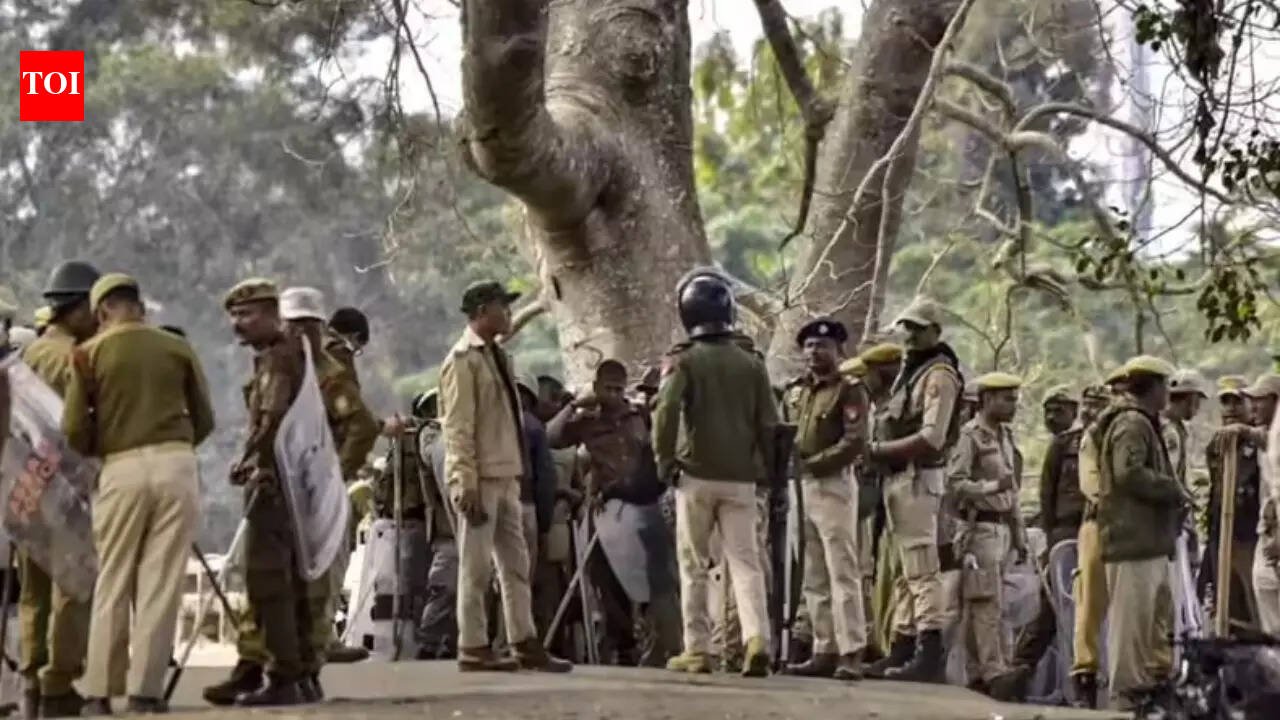
GUWAHATI: Several Assam Police commandos were injured in an attack by suspected ULFA(I) militants in Assam’s Tinsukia district early on Sunday morning, officials said.The incident took place in Jagun in Assam’s Tinsukia district at around 2 am.According to initial reports, at least five rocket propelled grenades (RPG) were lobbed at the police commando camp, followed by an exchange of fire between both sides that lasted for nearly 20 minutes.The injured commandos were rushed to a nearby medical facility, though their condition is yet to be confirmed.Security forces have launched a search operation in the area to track down the attackers.(This is a developing story)


Source link

Rohit Sharma, Hardik Pandya OUT! Ex-England star picks IPL XI, names ‘worst decision’ in history | Cricket News


Rohit Sharma, Hardik Pandya OUT! Ex-England star picks IPL XI, names 'worst decision' in history
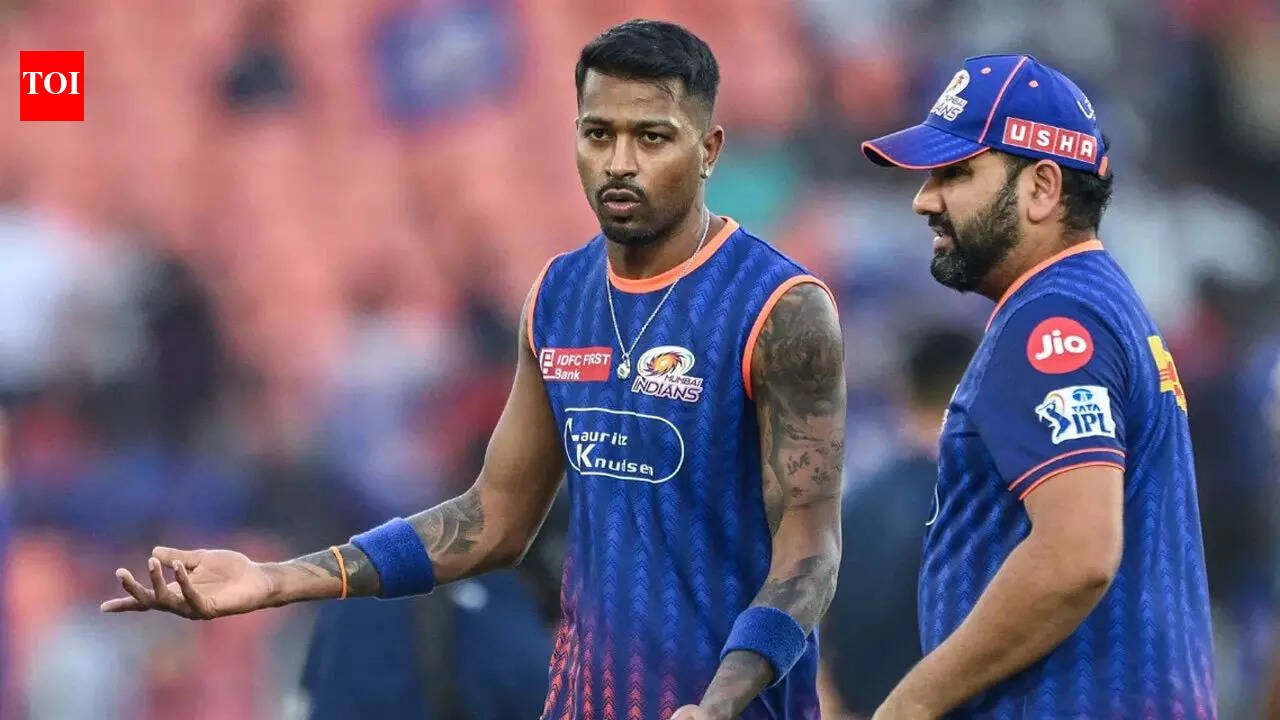
Rohit Sharma and Hardik Pandya (BCCI/IPL Photo)

NEW DELHI: Former England batter Kevin Pietersen has named his all-time IPL XI, leaving out several big names, including Rohit Sharma, who captained Mumbai Indians to five IPL titles. Pietersen, who represented Royal Challengers Bengaluru, Delhi Daredevils (now Delhi Capitals), and Rising Pune Supergiants during his IPL career, also left out star all-rounder Hardik Pandya.While unveiling his XI, Pietersen described Yuzvendra Chahal’s release by Royal Challengers Bengaluru as the ‘worst decision’ in the league’s history.

Watch

Shashi Tharoor & Samson’s Redemption Story: From Setbacks to Glory

On For the Love of Cricket, Pietersen and Jos Buttler selected their all-time IPL XI.Pietersen referred to MS Dhoni as the “only non-negotiable” pick in his side.He included Yuzvendra Chahal in the XI and reiterated that Royal Challengers Bengaluru’s decision to release him was “the worst in IPL history”.Pietersen’s IPL XI:Chris Gayle, Virat Kohli, AB de Villiers, Suresh Raina, MS Dhoni (c & wk), Andre Russell, Ravindra Jadeja, Sunil Narine, Yuzvendra Chahal, Lasith Malinga, Jasprit Bumrah.Pietersen also overlooked a key IPL rule while finalising his XI, selecting more than the permitted four overseas players in the lineup.Royal Challengers Bengaluru are the defending champions, having won the IPL 2025 title after defeating Punjab Kings in the final.

Banner Insert


Source link