Breaking News
‘See medium term shift in traffic flows to, from India; have upped capacity here due to demand:’ Lufthansa | India News


Frank Naeve, Lufthansa senior VP (sales, distribution and marketing)

MUMBAI: The Israel-Iran war will “in the medium term” alter traffic international flows to and from India and also some other parts of the world. When the Gulf carriers, which have a lion’s share of this traffic, are able to resume their pre-crisis schedules remains to be seen. Lufthansa senior VP (sales, distribution and marketing) Frank Naeve says the option of bringing more group airlines to India is being evaluated. At present, only Lufthansa, SWISS and ITA (erstwhile Alitalia) operate here. Speaking exclusively to TOI’s Saurabh Sinha, Naeve spoke about the group’s India strategy and travel trends seen here in the past year shaped by geopolitical realities. Ques. How are airlines tackling the challenges posed by the ongoing was in West Asia?Ans. Airlines are by nature agile in tackling various challenges that keep are coming with unfailing regularity in past few years. Safety remains the priority and with that basic principle, the operations are carried out.Right now our focus is on bringing people home to safety from West Asia and also ensure continued connectivity in the current times. India is especially important to us as it is the second biggest international market for us after the US. We are close to utilising the maximum traffic rights in India. Still (this month we are investing with significant capacity increases by deploying bigger aircraft here given the demand.We have deployed (500-seater) Airbus A380 instead of the (280-seater) A350 between Munich and Delhi, and Mumbai and Munich. There are additional frequencies between Chennai and Frankfurt.Ques. Your partner Air India has also added extra extra flights in view of the demand. How do you plan to grow in the India market going ahead?Ans. As of now only three group airlines — Lufthansa, SWISS and ITA — fly to India. There are others carriers in the group that do not fly here as of now including Austrian, brussels airlines, discover and Eurowings. While these are early days, we are evaluating bringing more of our group airlines here.Our partnership with Air India is progressing well. AI-Lufthansa recently signed a joint business agreement to increase cooperation and further develop our network. For customers, this will mean increased seamless connectivity to an ever growing network with partner airlines aligning their schedules to offer convenient connections.We have a growing staff base in India. Both Lufthansa Technik Service India and Lufthansa Systems have their global capability centres in Bengaluru that together have over 1,000 employees. We bring our latest planes and cabin products to India now including our Allegris business class.Ques. Lufthansa Group enjoys a significant share in the travel market between India and North America. In the last one year, have you seen that demand shrink?Ans. We have seen both way travels demand slacked on India-Canada market in the last few years. However recently (with improvement in ties between the two countries and Canadian Prime Minister Mark Carney visit to India) that demand has stopped falling and is steadying now.As far as the US is concerned (given visa issues, including for students, with India) the demand for travel to the US from India has been subdued. But that is more than compensated by the spurt in travel out of the US.

Source link

‘Reason and coordinate’: Jaishankar reveals how India secured passage for 2 tankers in Strait of Hormuz amid Iran war | India News


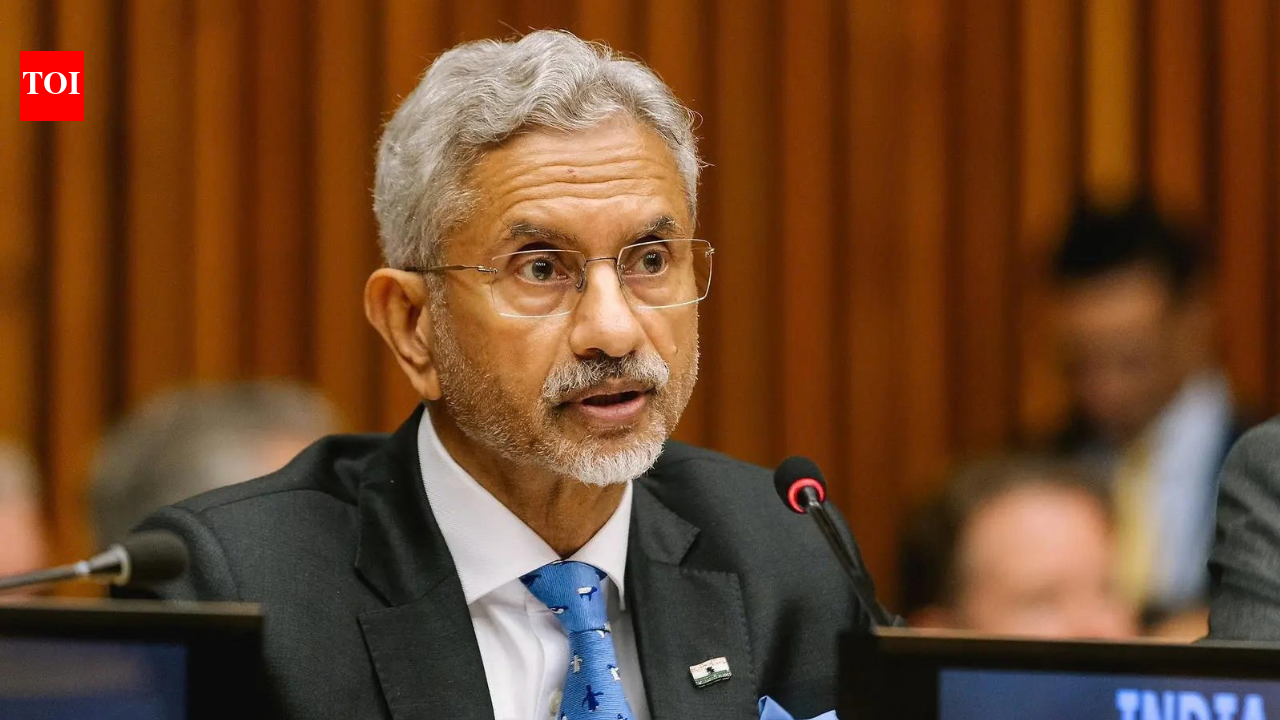
'Reason and coordinate': Jaishankar reveals how India secured passage for 2 tankers in Strait of Hormuz amid Iran war
S Jaishankar (PTI file photo)

NEW DELHI: India hailed its direct talks with Iran as the “most effective way” to restart shipping through the disrupted Strait of Hormuz, which has affected global supplies, while Tehran allowed Indian-flagged vessels to pass through the route.In an interview with the Financial Times, external affairs minister S Jaishankar praised the direct dialogue with Iran’s leadership, saying, “My talking has yielded some results,” referring to renewed access to the crucial Strait of Hormuz, after Donald Trump called on about seven countries to deploy warships to police the key waterway vital for global energy markets.Follow for live updates on Iran warTrump urged countries such as China, France, the United Kingdom and others to protect the Iran-controlled waterway as “their own territory”. His demand comes as governments, hit by surging energy prices after Tehran closed the route, weigh their options — including talks with Iran or possible military involvement that could risk dragging them into the spiralling Middle East conflict.Jaishankar told Financial Times that negotiations between New Delhi and Tehran, which allowed two Indian-flagged gas tankers to pass through the Strait of Hormuz on Saturday, showed what diplomacy could achieve.“I am at the moment engaged in talking to them and my talking has yielded some results,” he said in the FT interview. “This is ongoing. If it is yielding results for me, I would naturally continue to look at it.”Jaishankar also outlined India’s approach to handling the crisis and indirectly suggested a similar path for other countries. “Certainly, from India’s perspective, it is better that we reason and we co-ordinate and we get a solution than we don’t,” he said. “So if that sort of allows other people to engage, I think the world is better off for it.”Oil prices closed above $100 last week for the first time since August 2022, with some industry analysts expecting further increases as the conflict stretches into the spring. Iran’s new supreme leader, Mojtaba Khamenei, said last week that the country’s military would continue to block the narrow waterway, through which roughly one-fifth of the world’s oil and gas previously transited.France and Italy are among the European countries that have opened talks with Tehran on a possible diplomatic solution that could allow energy shipments to resume.Iran’s foreign minister Abbas Araghchi told CBS on Sunday that Iran was “open” to countries that want to discuss “safe passage of their vessels”.Jaishankar spoke ahead of his participation in a meeting of European Union foreign ministers in Brussels on Monday, where discussions are expected on whether to expand the mandate of the EU’s Aspides naval mission in the Red Sea to include the Strait of Hormuz. The mission currently comprises three warships from France, Italy and Greece.“Each relationship frankly, in a way stands on its own merits,” he said when asked whether European countries could replicate India’s arrangement. “So now, it’s very hard for me to compare this with some other relationship which may or may not have these.”“I’d be happy to share with [EU capitals] what we are doing . . . I know many of them have had conversations [with Tehran] as well,” he added.Jaishankar said there was no “blanket arrangement” with Iran for Indian-flagged vessels and that “every ship movement is an individual happening”.The veteran diplomat also denied that Iran had received anything in return, citing a “history of dealing with each other . . . which is the basis on which I engaged”.“It’s not an exchange issue,” he said. “India and Iran have a relationship. And this is a conflict that we regard as something very unfortunate.”“These are still early days. We have many more ships there. So while this is a welcome development, there is continuing conversation because there is continued work on that,” he added.


Source link

Pakistan lodge complaint over controversial DRS call as Bangladesh clinch series with thrilling win in 3rd ODI


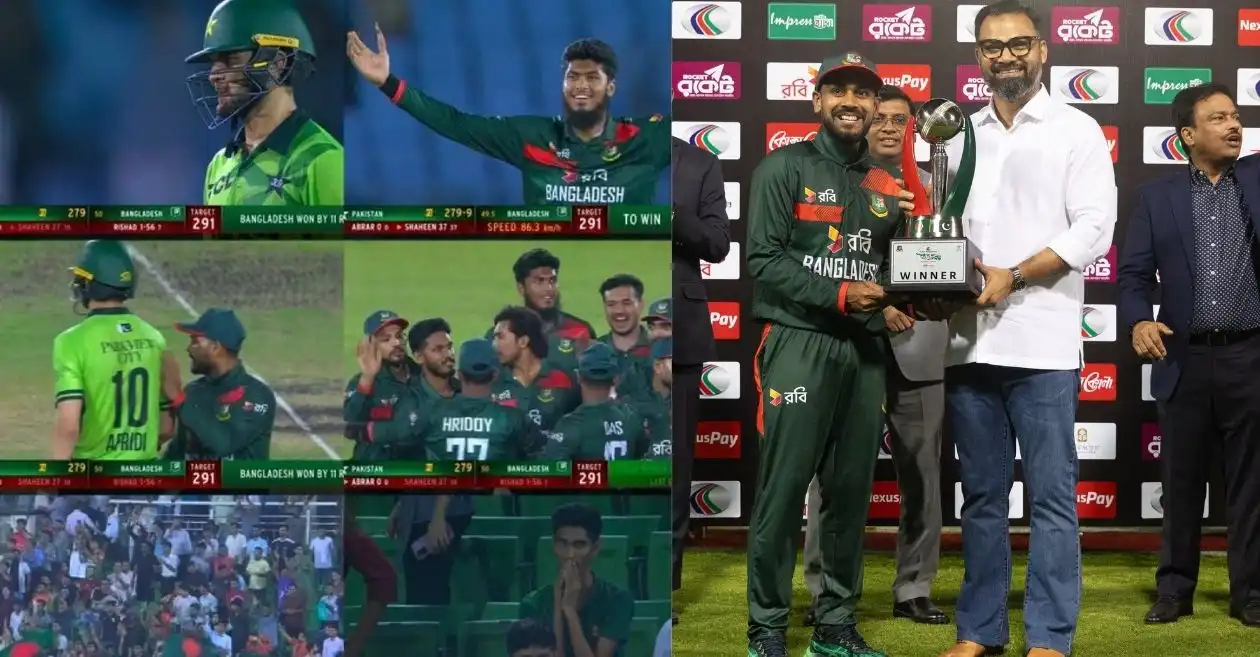
Pakistan have officially raised concerns with match referee Neeyamur Rashid after a controversial Decision Review System (DRS) moment involving on-field umpire Kumar Dharmasena during the third ODI against Bangladesh national cricket team in Mirpur.

The incident occurred during the tense closing moments of the match and has now sparked debate over whether proper DRS procedures were followed before Bangladesh were allowed to review an LBW decision. The hosts eventually won the thrilling contest by 11 runs to secure a 2-1 series victory over Pakistan national cricket team.

DRS controversy erupts during the final over of 3rd ODI

The disputed moment took place on the second-last delivery of the 50th over while Bangladesh spinner Rishad Hossain was bowling to Pakistan’s tailenders. At that stage, Pakistan required 12 runs from the final two balls to complete a remarkable chase.

Rishad delivered a flighted ball on leg stump that spun away from Shaheen Afridi towards the leg side. The on-field umpire initially signalled the delivery as a wide, seemingly ending any chance of an LBW appeal.

However, moments later, Bangladesh opted to review the decision for LBW, which immediately triggered confusion on the field. Replays on the stadium’s big screen showed the ball making contact with the bat before passing the pad, forcing the umpire to overturn the original call.

The sequence left Shaheen visibly frustrated as the match situation suddenly shifted dramatically. Pakistan now required 12 runs from just one delivery.

Pakistan allege replay influenced Bangladesh review

According to reports, Pakistan’s team management formally complained that Bangladesh may have decided to take the review only after watching a replay of the delivery on the stadium screen. Under normal DRS protocols, teams are expected to decide whether to review an on-field decision before any replays are shown to players. This rule exists to prevent teams from using televised footage to guide their review decisions.

Pakistan believe that this process might not have been followed in Mirpur. The replay displayed on the big screen reportedly showed the ball passing close to Shaheen’s bat, which may have alerted Bangladesh players to a possible edge and prompted them to challenge the decision. The visiting side has therefore asked match officials to examine whether the replay influenced the decision to review.

Pakistan have also raised another concern regarding the time taken by Bangladesh to signal the review. According to playing conditions, teams have only 15 seconds to request a DRS review after an umpire’s decision. However, no visible timer appeared on the television broadcast during the moment in question, making it impossible for viewers to verify whether the review was taken within the permitted window. Pakistan’s management has reportedly questioned whether the review exceeded the allowed time frame, adding another layer to the controversy.

Also READ: BAN vs PAK – Mohammad Kaif shares his verdict on Salman Agha’s controversial run-out

Bangladesh clinch dramatic series win

Despite the late drama, Bangladesh held their nerve to complete a memorable victory and seal the ODI series 2-1. Batting first, the hosts posted a competitive total of 290/5 thanks to a brilliant maiden ODI century from Tanzid Hasan, who scored an impressive 107. His knock provided the foundation for Bangladesh’s strong total in front of a passionate Mirpur crowd.

Pakistan’s chase got off to a disastrous start as they slumped to 17/3 early in the innings. However, Salman Ali Agha produced a fighting effort with a magnificent maiden century of 106 that kept Pakistan in contention deep into the final overs. In the end, Bangladesh’s death bowling proved decisive. Fast bowler Taskin Ahmed delivered a crucial spell, finishing with figures of 4/49 as Pakistan were bowled out for 279 in the last over.

The victory marked Bangladesh’s first ODI series triumph over Pakistan since 2015, making the result even more significant for the hosts despite the post-match controversy.

Also READ: ICC punish Salman Agha for his furious reaction after the controversial run-out in BAN vs PAK 2nd ODI


Source link

EPL: Late Richarlison goal rescues Tottenham at Liverpool; Manchester United beat Aston Villa 3-1 | Football News


EPL: Late Richarlison goal rescues Tottenham at Liverpool; Manchester United beat Aston Villa 3-1
Tottenham’s Richarlison celebrates after scoring during the Premier League match against Liverpool. (AP Photo)

Tottenham Hotspur snatched a dramatic 1-1 draw at Liverpool thanks to a last-minute equaliser from Richarlison, while Manchester United strengthened their push for a Champions League spot with a 3-1 win over Aston Villa in Premier League action on Sunday.Go Beyond The Boundary with our YouTube channel. SUBSCRIBE NOW!At Anfield, Liverpool looked set for victory after Dominik Szoboszlai curled in a superb free-kick in the 18th minute that slipped past Tottenham goalkeeper Guglielmo Vicario. The hosts dominated large spells of the match, but Tottenham fought back in the second half to keep the contest alive.Their persistence paid off in the 90th minute when Richarlison pounced from close range after a long punt from Vicario caused confusion in Liverpool’s defence. A misjudgment by Andrew Robertson and Virgil van Dijk allowed the Brazilian forward to slot home and end Tottenham’s run of five straight defeats.The point was the first for interim manager Igor Tudor, whose side remain in 16th place, just one point above the relegation zone. Tottenham are still winless in 12 league matches — their worst run in more than nine decades — but Tudor hailed the team’s resilience. “It is an amazing, incredible point we take here. The team spirit was amazing,” he said.Liverpool’s players were booed off after the draw left them fifth in the table, two points behind fourth-placed Villa.Earlier at Old Trafford, Manchester United bounced back from defeat at Newcastle with a convincing win over Aston Villa. Veteran midfielder Casemiro headed United in front in the 53rd minute before Ross Barkley equalised for Villa.However, United finished strongly as Matheus Cunha and Benjamin Sesko struck late to seal the victory for interim boss Michael Carrick. The result kept United third in the standings, three points clear of Villa in the race for Champions League qualification.Captain Bruno Fernandes also reached a milestone, recording his 16th league assist of the season and his 100th assist for the club in all competitions since joining in 2020.

Banner Insert


Source link

Gas supply crunch a worry for AC makers ahead of peak season


Gas supply crunch a worry for AC makers ahead of peak season

MUMBAI: Ahead of the onset of peak summers, a brisk business season for consumer durables companies, some AC makers are feeling the heat of the West Asia war as restricted supplies of LPG and shortage of petrochemicals are beginning to hit production, industry executives said. LPG is used in processes such as brazing of copper and curing of powder-coating while petrochemicals is key to the manufacturing of polymers which are used in the plastic mechanical parts of AC units. To be sure, there’s no major disruption on ground as of now but if things do not get better, it could be a challenge heading into the season. For consumers who will already be paying more for new AC stock which will hit the shelves around April-May on the back of price hikes, the war led supply crunch could pose an added burden on pockets. “We are facing certain challenges related to production–first is availability of LPG and PNG which are required for certain manufacturing processes in ACs and other product categories. Also, scarcity of petrochemicals. It is causing some disruption in day to day production. We are working with our vendors to curb wider impact,” said Vikas Gupta, MD (operations) at PG Electroplast which manufactures ACs and a range of other white goods for brands. Given the likelihood of an extended summer, Gupta hopes the war will subside by then, helping demand. Temperatures have already started rising in parts of India and some forecasts have hinted at the possibility of El Niño later this year. “Geopolitical tension in the Middle East has started creating some supply-side constraints across certain input materials used in AC manufacturing,” said Kamal Nandi, business head and EVP at appliances business of Godrej Enterprises Group which is working with vendors to optimise procurement strategies and ensure continuity of production. Besides limited supply of LPG, availability of key plastic raw materials like Polypropylene and Polystyrene has been meagre, accompanied by sharp price increases, Nandi said. Epack Durable is looking at alternatives for brazing copper for ACs even though that will push up the cost of production, said MD & CEO Ajay Singhania. There has been no loss in production till now but gas agencies have said that there could be challenges going ahead if supply crunch remains. The company is now focusing on ramping up induction cooktops given the surge in demand, said Singhania. New energy norms have already pushed up AC prices by about 5% with another 8%-10% hike on the back of high commodity costs, said B Thiagarajan, MD at Blue Star. “There is apprehension within the industry about supply challenges,” said Thiagarajan. The vulnerability arises from supply concentration–about 88% of India’s LPG imports come from the Middle East and that equals roughly about 54% of the country’s total LPG demand. “If disruptions continue, the supply gap could be significant,” said Sumit Pokharna, VP, fundamental research at Kotak Securities.


Source link

Why Kharg Island matters: The oil lifeline Trump just put in his crosshairs


The Kharg Secret: Why Iran Could Set Gulf Oil Fields On Fire To Protect This ‘Forbidden Island’

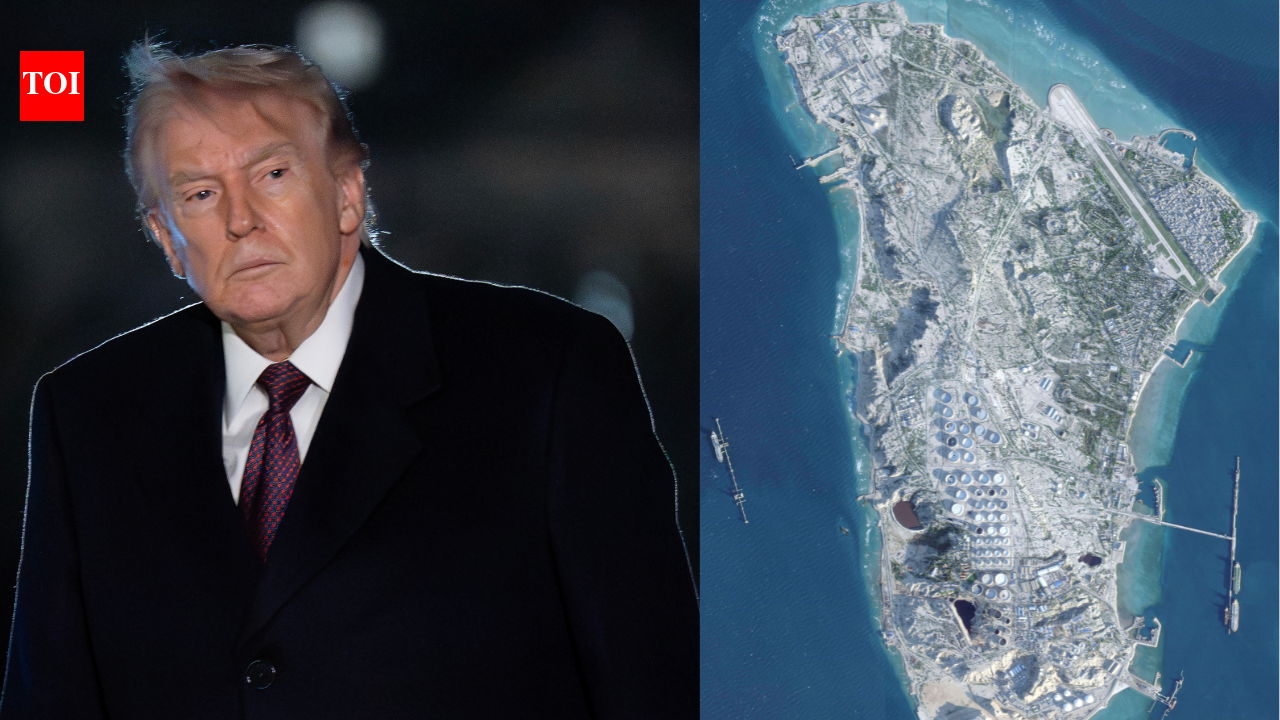
Iran’s economic jugular: Why Kharg Island is a key target for Trump. (AP images)

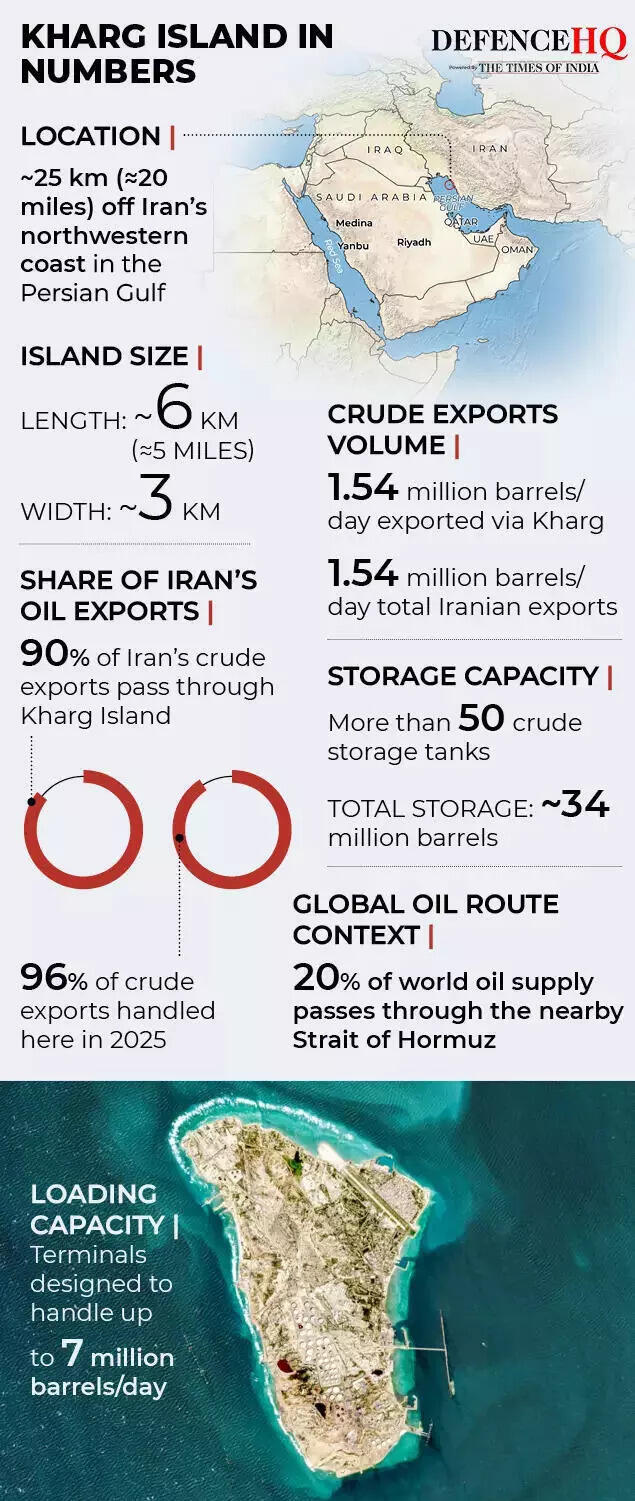
A small rocky island in the Persian Gulf has suddenly become central to the escalating tensions between the United States and Iran.Kharg Island — located just 15 nautical miles (about 24 km) off Iran’s southern coast — may be tiny in size, but it is one of the most strategically important points in the country’s economy and energy infrastructure.

The Kharg Secret: Why Iran Could Set Gulf Oil Fields On Fire To Protect This ‘Forbidden Island’

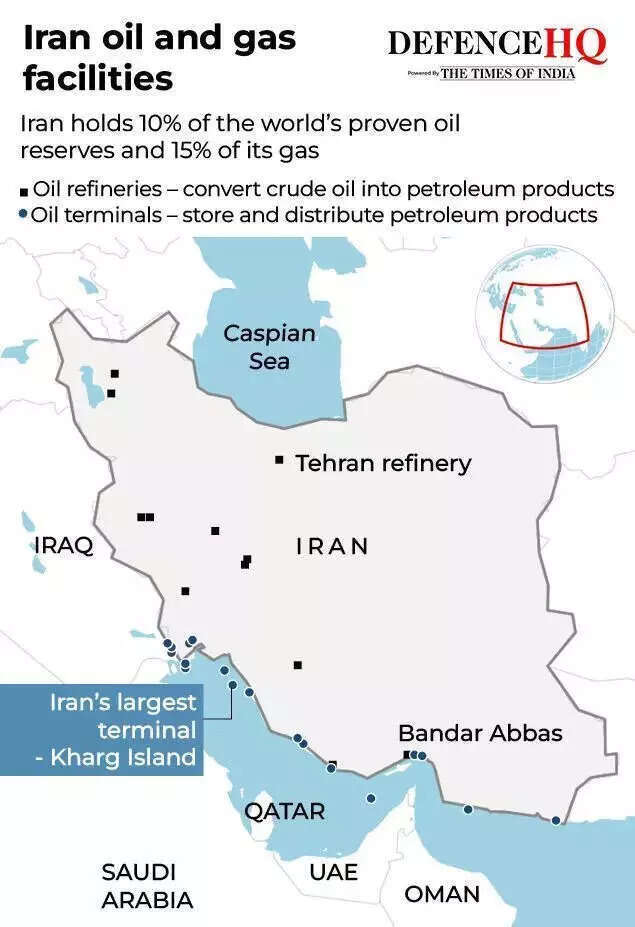
According to Axios, US President Donald Trump is working to assemble a coalition of countries to reopen the Strait of Hormuz and is hoping to announce it later this week.Why Kharg Island mattersDespite its modest geography, Kharg Island functions as the heart of Iran’s oil export system.Roughly 90% of Iran’s crude oil exports move through a massive oil terminal on the island. Pipelines transport crude from mainland Iran to Kharg, where it is loaded onto huge tankers.The island’s coastline sits close to deep waters in the northern Gulf, allowing very large crude carriers to dock at its long jetties and load tens of millions of gallons of oil. According to BBC, these tankers then sail south through the Gulf and pass the crucial maritime chokepoint of the Strait of Hormuz before heading mainly to Asia — particularly China, the largest buyer of Iranian oil.Because of this role, analysts often describe Kharg Island as Iran’s economic lifeline. The oil revenue flowing through the terminal also provides a key financial stream for the powerful Islamic Revolutionary Guard Corps (IRGC).

jpeg

Why Trump targeted the islandAccording to Donald Trump, US forces struck military installations on Kharg Island, including missile storage sites, naval mine facilities and other defence infrastructure.The strikes were carried out by the US regional command, United States Central Command, which said more than 90 military targets were hit while oil facilities were deliberately spared.Strategically, hitting Kharg’s military assets sends a powerful message without immediately crippling Iran’s economy. Targeting the island is often compared to aiming at Iran’s economic jugular — a signal that the US could severely disrupt the country’s oil exports if tensions escalate.Trump himself warned that the decision not to strike oil infrastructure could change if Iran interferes with shipping in the Strait of Hormuz, one of the world’s most critical energy corridors.Why the oil terminal wasn’t bombedDestroying Kharg Island’s oil facilities would represent a dramatic escalation.A strike on the export terminal could cut off the majority of Iran’s oil revenue, but it could also send global oil prices soaring and trigger retaliatory attacks across the Middle East.Iran has already warned that if its energy infrastructure is targeted, it would respond by attacking oil and energy facilities belonging to companies working with the US.Tehran also retains the ability to launch large numbers of drones and missiles at Gulf infrastructure and shipping routes — raising fears that the conflict could expand far beyond Iran’s borders.

jpeg (1)

The bigger pictureBy striking military sites but sparing the oil terminal, Washington appears to be signalling both restraint and leverage.Kharg Island’s central role in Iran’s oil exports means it remains a powerful pressure point in the conflict — one that could rapidly escalate the economic and geopolitical stakes if the island’s energy infrastructure becomes a target.


Source link

Meet Tim Sweeney: The Epic Games billionaire who quietly bought 50,000 acres of forest to save it from developers |


While many tech billionaires are known for lavish homes, private islands or luxury yachts, one gaming executive has spent years quietly doing the opposite. Tim Sweeney, the founder and chief executive of Epic Games, has used a significant portion of his wealth to buy vast stretches of forest in North Carolina. His goal has not been development or profit, but protection. Over nearly two decades, Sweeney has purchased more than 50,000 acres of land across 15 counties, making him one of the largest private landowners in the state.The purchases began quietly in 2008, just as the global financial crisis disrupted real estate markets and forced developers to abandon ambitious resort and housing projects. Sweeney saw a different opportunity. Instead of building on the land, he began acquiring forests and wilderness areas that were at risk of being transformed into golf resorts or luxury communities, with the intention of preserving them for wildlife and future generations.

How Tim Sweeney quietly began buying forests to keep developers away

Sweeney’s conservation effort began during the aftermath of the housing market collapse. At the time, many real estate developers who had purchased land in the Appalachian foothills were forced to sell after financing dried up.Rather than letting those landscapes return to the development pipeline later, Sweeney started buying them himself. One of the most significant purchases was Box Creek Wilderness, a roughly 7,000-acre forest in the Blue Ridge foothills. The area is known for its ecological richness and contains more than 130 rare or threatened plant and animal species.Sweeney reportedly paid about $15 million for the property after the crash, when prices had fallen sharply and there were few competing buyers.

A quiet strategy through a little-known company

Many of the land acquisitions have been handled through an LLC called “130 of Chatham.” Through this structure, Sweeney purchases land and holds it for years while conservation groups or public agencies arrange long-term protection.Eventually, the land is often donated or sold at a steep discount to conservation organisations, state parks or federal agencies such as the U.S. Fish and Wildlife Service.According to conservationists, this strategy allows ecologically valuable land to be secured quickly before development pressures return.

Forest bought by Tim Sweeney

One of the largest land donations in North Carolina history

Sweeney’s conservation work became widely known in 2021 when he donated around 7,500 acres in the Roan Highlands to the Southern Appalachian Highlands Conservancy. The donation is considered the largest private land gift in North Carolina’s history.Carl Silverstein of the conservancy described the impact of the donation in a statement at the time, saying the land would remain permanently protected for wildlife, hikers and future generations.“This extraordinary gift ensures that these remarkable mountain landscapes will remain intact forever,” the organisation said when the land transfer was announced.The Roan Highlands are known for their rare spruce-fir ecosystems and spectacular rhododendron blooms, making them one of the most biologically diverse regions in the southern Appalachians.

Turning temporary ownership into permanent protection

In recent years, Sweeney has acknowledged that rising land prices have made it harder to continue buying new properties. Instead, he has shifted his focus to ensuring the tens of thousands of acres he already owns can never be developed.Through conservation easements and legal agreements with land trusts, the forests are being placed under permanent protection, meaning they must remain preserved regardless of who owns them in the future.Speaking to the News & Observer, Sweeney explained the goal simply:“If you can protect land permanently, it will outlast any one person.”

A billionaire choosing forests over fame

Sweeney’s approach stands out even among wealthy philanthropists. Rather than funding buildings, institutions or public monuments, he has quietly invested in land that will remain largely untouched.His wealth comes primarily from Epic Games, the company behind the global gaming phenomenon Fortnite and the widely used Unreal Engine game development platform. The company’s success has made Sweeney one of the richest figures in the gaming industry, with an estimated fortune of several billion dollars.Yet much of that fortune has been channelled into forests, mountains and wilderness areas that many people may never know he helped protect.

A legacy measured in landscapes

For conservationists, Sweeney’s quiet campaign has helped preserve large stretches of biodiversity across the Appalachian region. By buying land when markets were weak and development seemed inevitable, he effectively removed thousands of acres from the commercial real estate pipeline.Unlike buildings or monuments that age and depreciate, forests grow, regenerate and continue to support wildlife for centuries.And in the mountains and forests of North Carolina, tens of thousands of acres will remain wild largely because a video game billionaire decided that some places should never be built on at all.


Source link

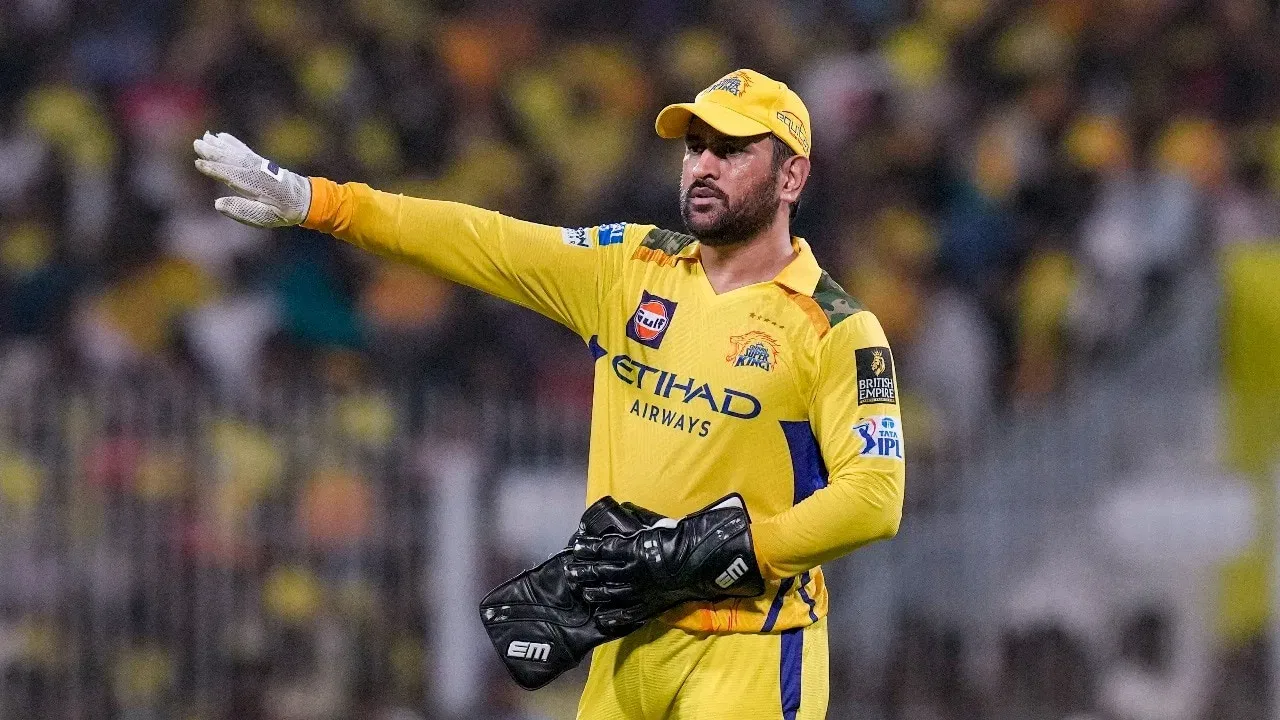
Ex-CSK star IGNORES MS Dhoni, reveals best wicket-keeper and captain of all time!


Former CSK wicket-keeper batter Sam Billings went on to pick his best batter, bowler, wicket-keeper and captain of all time, and he shockingly did not pick his former captain MS Dhoni in any of the following categories.

Chennai Super Kings have been honoured by the legacy of the Indian veteran MS Dhoni, who has been part of the franchise for all 16 seasons they have played in the IPL. Despite retiring from international cricket in 2020, he led them to titles in 2021 and 2023, respectively.

The Super Kings have picked many players over all these years, and they have shared the dressing room with the Indian legend. Many among them have claimed to have learned a lot from the great, while some claim that they were obliged to share the dressing room with MS Dhoni.

Your daily dose of cricket!

next

Ex-CSK batter picks RCBian as the best batter of all time

Former CSK batter Sam Billings has been widely known as a specialist T20 cricketer across several franchise leagues around the world. He plays in the Big Bash League, the Men’s Hundred, the PSL and the ILT20 as well.

However, the last time he played in the IPL was back in 2022 for the Kolkata Knight Riders. Before that season, he had spent two seasons with the Chennai Super Kings in 2018 and 2019, and was part of the title-winning side in 2018 under MS Dhoni.

In an interview with Crictracker, he was asked to pick the best batter of all time in cricket. He claimed that growing up, it was Sachin Tendulkar, but his favourite batter is AB de Villiers from South Africa.

He also had to pick the best bowler of all time, and he ignored the likes of English greats and picked Australian legend Shane Warne.

Not MS Dhoni: CSK batter names Australian legend as greatest captain ever

After the choice for the batter and bowler, Sam Billings was asked to make a quick choice on the best-ever captain in cricket, and he chose another Australian on this occasion as well.

Despite having played for the Chennai Super Kings over the years, he has observed MS Dhoni’s captaincy very closely. He himself has led teams at times after moving out to several other leagues in the world.

However, Ricky Ponting too was undoubtedly one of the greatest ever Captains in the game. His red ball record, added to the white ball supremacy for Australia under him, makes him the greatest ever captain in cricket history.

English keeper picked over Adam Gilchrist and MS Dhoni as the best wicket-keeper of all time

Sam Billings’ most unconventional choice came during picking the Best wicket-keeper of all time. He sidelined the likes of legendary Australian gloveman Adam Gilchrist and former Indian captain MS Dhoni.

Undoubtedly, for players who have played alongside Dhoni, they are well aware of the wonderful things the CSK star can do with the gloves on, and hence, they most often tend to pick him over Gilchrist in the closely fought contest.

However, Billings, despite his CSK lineage, picked former English wicket-keeper Jack Russell as the best wicket-keeper of all time.

ALSO READ: Ex-Pakistan cricketer MOCKS PCB for turning cricket into politics


Source link

Stock market today (March 16, 2026): Nifty50 opens below 23,150; BSE Sensex down around 100 points


Stock market today (March 16, 2026): Nifty50 opens below 23,150; BSE Sensex down around 100 points
Stock market today (AI image)

Stock market today: After a week of selloff, Nifty50 and BSE Sensex opened flat in trade on Monday. While Nifty50 was below 23,150, BSE Sensex was down around 100 points. At 9:17 AM, Nifty50 was trading at 23,127.30, down 24 points or 0.10%. BSE Sensex was at 74,472.58, down 91 points or 0.12%.Market analysts expect volatility to remain high in the near term as geopolitical tensions in West Asia continue to disrupt the energy sector and push crude oil prices higher. Uncertainty surrounding shipping routes through the Strait of Hormuz has also kept investor sentiment fragile. Asian markets rose on Monday after oil prices erased earlier gains as investors attempted to stabilize following the US strike on Iran’s main export hub. The dollar also weakened during the session.Oil prices slipped on Monday following a call by US President Donald Trump urging other countries to help safeguard the Strait of Hormuz, a crucial route for global oil and gas shipments.Gold prices were steady after recovering from an earlier drop of nearly 1%. US stocks closed lower on Friday, ending a volatile week during which sharp swings in crude oil prices repeatedly unsettled equity markets. In Indian markets, foreign portfolio investors remained net sellers, offloading shares worth Rs 10,716 crore on Friday. Domestic institutional investors provided some support as they were net buyers of equities worth Rs 9,977 crore.(Disclaimer: Recommendations and views on the stock market, other asset classes or personal finance management tips given by experts are their own. These opinions do not represent the views of The Times of India)


Source link

‘Fabrication of clips using AI’: UAE orders action against 19 Indians over misleading posts amid Iran war


'Fabrication of clips using AI': UAE orders action against 19 Indians over misleading posts amid Iran war
Source: Emirates news agency WAM

The UAE, grappling with continued strikes from Tehran, on Sunday ordered the arrest of 35 individuals, including 19 Indians, for allegedly publishing video clips on social media containing misleading and fabricated content using AI amid rising regional tensions due to the Israel-US-Iran war.The accused have been referred for an expedited trial, according to a report by the United Arab Emirates’ official news agency, WAM.The move comes as Iran’s strikes continue to keep key UAE cities, Dubai, Sharjah, and the capital Abu Dhabi, within their potential target range.The individuals of various nationalities have been charged with filming videos of incoming missiles and drones, including their passage and interception, and circulating them online with added commentary and sound effects that authorities said created panic and heightened public anxiety.The latest list includes 25 individuals of various nationalities, among them 17 Indians, booked under different sections. This is separate from the earlier case involving 10 people, including two Indians, who were named and ordered to be arrested on Saturday.According to a statement issued by attorney-general Hamad Saif Al Shamsi, the action followed intensive monitoring of digital platforms to curb the spread of fabricated information and artificial content aimed at inciting public disorder and undermining stability.“Investigations and electronic monitoring revealed that the defendants were divided into three groups that committed various acts. These included the publication of real clips related to current events, the fabrication of clips using AI, and the promotion of a state practising acts of military aggression while glorifying its leadership and military actions,” the statement said.The first group, comprising 10 accused, allegedly published and circulated authentic video clips showing the passage and interception of missiles in the country’s airspace or the resulting impact. They also filmed gatherings of people watching these developments and added commentary and sound effects suggesting active aggression, which authorities said could incite public anxiety and panic.Officials said such footage risked exposing the country’s defensive capabilities and enabling hostile accounts to push misleading narratives. This group includes five Indians, one Pakistani, one Nepali, two Filipinos and one Egyptian.The second group shared fabricated visual content generated using AI or recirculated footage of incidents from outside the UAE while falsely claiming they occurred within the country. The clips depicted synthetic scenes of explosions and missile strikes, often including national flags or specific dates to make the false claims appear credible.This group consists of seven individuals, five Indians and one each from Nepal and Bangladesh.The third group, comprising six accused, allegedly published content glorifying a hostile state and its political and military leadership, portraying its regional military aggression as achievements. Authorities said the posts praised leaders of that state and amplified propaganda narratives harmful to national interests.Five of the six accused in this group are Indians, while one is Pakistani.In addition, two other individuals, both Indians, are also facing charges for similar offences, the statement added.Earlier on Saturday, a report by the UAE’s official news agency WAM said the public prosecution had begun interrogating the 10 defendants and ordered their remand in custody.Attorney-General Shamsi said such acts constitute offences punishable by imprisonment of at least one year and a minimum fine of AED 100,000.“Such events have been exploited to disseminate misinformation intended to deliberately mislead the public while undermining national security, order and stability,” he said.Shamsi added that some of the accused circulated AI-generated footage falsely suggesting explosions, attacks on prominent landmarks, or massive fires with smoke rising across various parts of the UAE.“The incidents also involved exploiting children’s emotions in videos falsely implying security threats. Other clips claimed the destruction of military facilities within the country or attributed foreign incidents to locations in the UAE, with the aim of misleading public opinion and spreading anxiety,” he said.


Source link