Breaking News
‘Wounded and likely disfigured’: How US reacted to Iran’s Supreme Leader Mojtaba Khamenei’s first statement


'Wounded and likely disfigured': How US reacted to Iran's Supreme Leader Mojtaba Khamenei's first statement

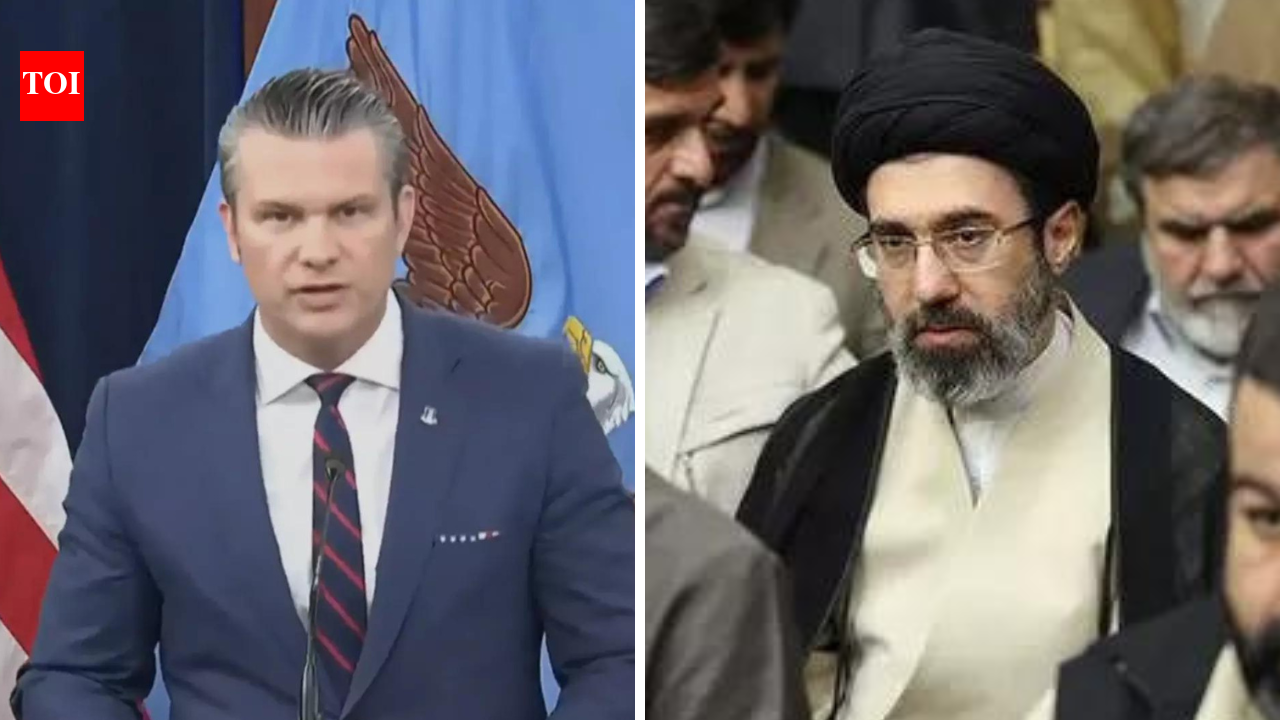
US secretary of war Pete Hegseth on Friday claimed that the newly appointed Supreme Leader of Iran Mojtaba Khamenei is wounded and “likely disfigured” after being critically wounded in an air strike.In a press briefing on the ongoing conflict with Iran, Hegseth reacted to Mojtaba’s first statement amid the war, saying the absence of a voice or video message was telling.“We know the new so-called not-so-supreme leader is wounded and likely disfigured,” Hegseth said.“He put out a statement yesterday – a weak one actually – but there was no voice and no video. It was a written statement. He called for unity. Apparently, killing tens of thousands of protesters is his kind of unity. Iran has plenty of cameras and plenty of voice recorders. Why a written statement? I think you know why. His father is dead. He’s scared, he’s injured, he’s on the run, and he lacks legitimacy. It’s a mess for them. Who’s in charge? Iran may not even know,” he added.During the press briefing, Hegseth also ridiculed, Mojtaba’s warning that Iran should continue using Strait of Hormuz as leverage in the conflict. Hegseth said that Iran has been “exercising sheer desperation in the Straits of Hormuz,”“We have been dealing with it, and don’t need to worry about it,” he said.“Of course, for decades, Iran has threatened shipping in the Strait of Hormuz. This is always what they do, hold the strait hostage,” he added.Earlier on Thursday, Iranian state TV broadcast what it claimed to be his first statement since coming into power in an attempt to cover up his condition. The statement, read out by a news anchor, said Iran would not hesitate to “avenge the blood of Iranians” who had been killed, and vowed to continue attacks on Dubai and block off the vital Strait of Hormuz.The new Iranian leader said Iran would not hesitate to retaliate for the killing of Iranian civilians. He specifically referenced the attack in the southern Iranian city of Minab, where a missile strike destroyed a girls’ school.In his remarks, the new Iranian leader also thanked Iran’s network of allied armed groups across the Middle East. He said the “resistance” movement in Yemen and armed groups in Iraq would continue to play a role in the war against Iran’s adversaries.Mojtaba Khamenei, the son of Iran’s former supreme leader, assumed power after his father, Ali Khamenei, was killed in joint US-Israeli strikes on February 28.Meanwhile, soon after the statement, several media reports claimed that was in a state of coma after being critically wounded in an air strike.Sources told The Sun that Mojtaba Khamenei, 56, the second son of Iran’s late Supreme Leader Ayatollah Ali Khamenei, lost one leg and suffered serious stomach or liver damage. The source said Mojtaba Khamenei was under intensive care at the Sina University Hospital in Tehran’s historic quarter after a section of the building was sealed off and surrounded by massive security. He said he was not a medic but knew members of the hospital’s trauma team who told him Mojtaba was in “very serious” condition under the care of Mohammad Reza Zafarghandi.Meanwhile, Yousef Pezeshkian, the son of Iranian President Masoud Pezeshkian and a government adviser, said that the new supreme leader is “safe and sound”.


Source link

Energy shock jolts Asian equities as AI-led rally leaves South Korea most exposed


Asian equity markets are facing heightened volatility after geopolitical tensions in the Middle East triggered sharp swings in oil prices and global risk sentiment, exposing uneven vulnerabilities across the region, according to a report by Moody’s Analytics.The report said the conflict sent “shock waves through global financial markets”, with Brent crude briefly surging to around $120 per barrel during early Asian trading before easing back toward $90. Equity markets whipsawed in response, but the reaction in Asia -“especially in South Korea– was more severe”.Trading halts were triggered on the KOSPI on March 4 and March 9 after the benchmark index dropped more than 8%, forcing temporary suspensions. Although equities have recovered some ground, the report noted that “trading conditions are unsettled, and investor sentiment is fragile”.

AI-driven surge left valuations stretched

Moody’s said the turbulence followed a strong rally in January and February led by technology-heavy markets such as South Korea and Taiwan, fuelled by optimism around artificial intelligence.Gains were concentrated in sectors linked to semiconductor demand, particularly memory chips where South Korean firms hold dominant global positions. By early 2026, the benchmark index had “nearly tripled relative to early 2025”, leaving valuations stretched and markets vulnerable to sudden risk-off moves.The geopolitical shock proved to be “exactly such a trigger”, the report said, as investors reassessed elevated valuations amid rising macroeconomic uncertainty.

Energy dependence amplifies downside risks

Developed Asian markets remain particularly sensitive to commodity price shocks because of their reliance on imported energy. Moody’s said economies such as South Korea, Japan and Taiwan import most of the oil and gas they consume, making them vulnerable to inflation risks and potential policy tightening if energy costs remain elevated.Foreign investors, aware of this sensitivity, sold South Korean equities, adding downward pressure. The report observed that “with valuations inflated by the AI-driven rally, South Korean equities recorded some of the steepest declines across the region”.Elsewhere in Asia-Pacific, equity declines were more contained. China and India saw pullbacks broadly in line with normal market swings, supported by structural buffers such as lower foreign investor participation and, in China’s case, capital controls.

Volatility set to stay elevated

Moody’s expects market volatility to remain high in the near term. Realised volatility across most Asia-Pacific markets has moved close to the upper end of historical ranges, comparable to levels seen during earlier episodes of global trade tensions.Under its baseline scenario, the report assumes the Middle East conflict will be limited in duration and commodity flows will eventually normalise, allowing oil and gas prices to fall back toward pre-conflict levels.However, it warned of downside risks if tensions persist. Sustained high energy prices could inflict greater economic damage across the region and trigger sharper equity sell-offs, particularly in markets where AI-driven optimism had already pushed valuations to elevated levels.


Source link

139 crore widening work begins for 5-lane Padi rail over bridge in Chennai | Chennai News


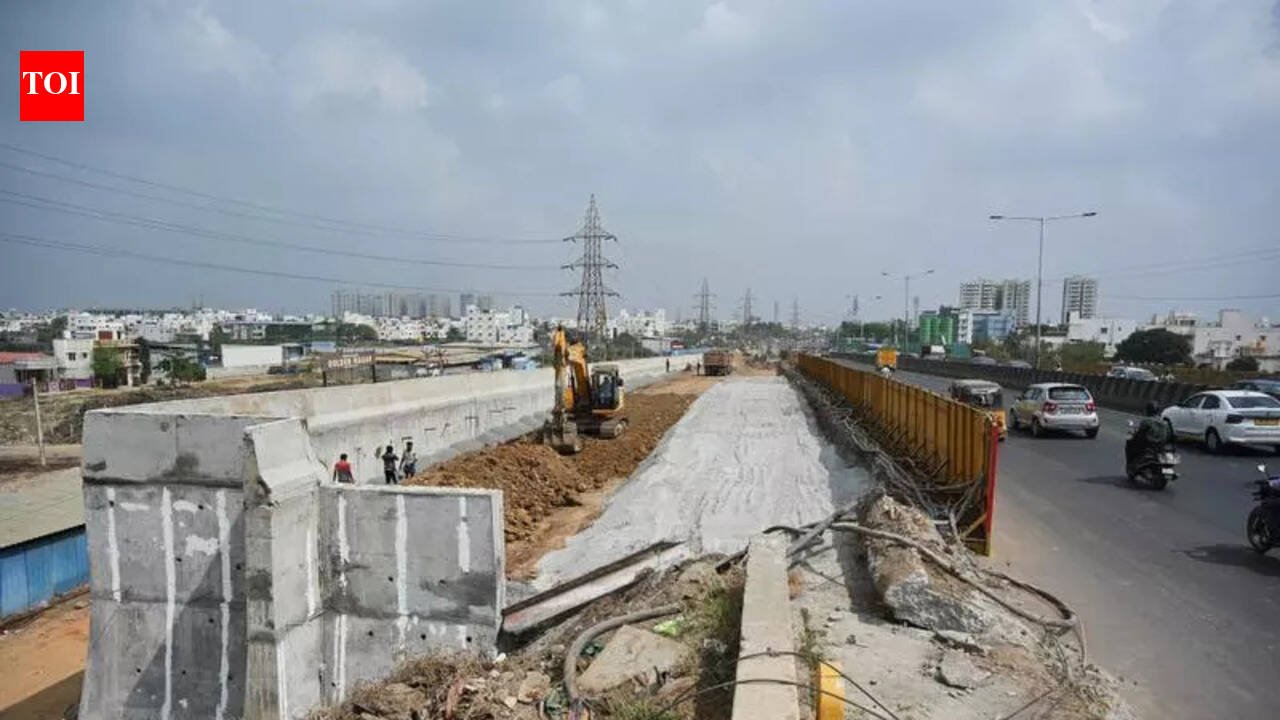
Chennai: The state highways department has begun major widening works at the Padi rail overbridge (ROB) on Jawaharlal Nehru Salai (Inner Ring Road).The ongoing work, worth 139 crores, will expand the existing three-lane bridge into a dual five-lane structure and widen the narrow approach stretch towards Padi, a long-standing traffic bottleneck on the corridor.Highways chief engineer Jawahar Muthuraj said the department will lay the portions of road and place girders within their land. “The stretch crossing the railway tracks will be done by Southern Railway. They are sourcing the girders from their yard in Arakkonam,” he said, adding that some electrical line shifting is also involved.The width will increase from 27m to 53m, including footpaths on both sides. The approach road and adjoining stretches are also being widened to five lanes with a central median to streamline traffic movement. “The work will be completed by April,” he added.The ROB, located between Villivakkam and Korattur railway stations, currently forms a choke point on the Inner Ring Road. While most stretches of the arterial corridor from Manali to Guindy have five lanes on either side, the 1.1-km stretch near Padi narrows sharply, reducing to just two lanes near the railway station and leading to frequent traffic snarls and accidents.The highways is also building two U-shaped service roads beneath the Villivakkam ROB for 14 crore. The 7.5m wide roads will allow vehicles to take U-turns towards North Korattur and Padi without entering the busy junction.Once built, the service roads are expected to ease congestion near the North Korattur signal and allow light vehicles to bypass the intersection. The National Highways Authority of India is expanding other stretches of the Inner Ring Road as well.


Source link

BAN vs PAK [WATCH]: Tawhid Hridoy plucks a spectacular catch to remove Sahibzada Farhan during 2nd ODI


The cricketing world witnessed a moment of pure athletic brilliance at the Shere Bangla National Stadium in Dhaka during the high-stakes 2nd ODI between Bangladesh and Pakistan on Friday, 2026. As the two Asian giants clashed in a pivotal encounter of the series, the spotlight shifted from the bat to the field, courtesy of a jaw-dropping effort from Bangladesh’s rising star, Tawhid Hridoy.

Tawhid Hridoy produces a sensational catch to dismiss Sahibzada Farhan in Second ODI

The momentum of the match took a dramatic turn in the 18th over of the Pakistani innings. Sahibzada Farhan, who had looked composed during his 46-ball stay at the crease, was beginning to shift gears alongside the middle order. However, the experienced Taskin Ahmed had other plans.

On the fourth delivery of the 17.4 over, Taskin bowled a full-length ball that angled sharply into the off-stump. Looking to break the shackles with a big hit, Farhan attempted a wild slog over the leg side. The execution, however, was far from perfect. The ball caught the outer half of the bat, slicing high into the overcast Dhaka sky toward the deep third region.

While the ball seemed to be hanging in the air forever, Hridoy tracked it with the precision of a hawk. Running a considerable distance and maintaining his gaze despite the swirling winds, Hridoy reached the ball just in time. He plucked the leather out of the air and, showing immense awareness of the boundary ropes, tumbled over safely to complete a catch that left the Mirpur crowd in a frenzy. Farhan departed for 31 (including two boundaries), leaving Pakistan at 121/2 and giving the Tigers a much-needed breakthrough.

Here’s the video:

Also READ: Explained: Why the Bangladesh vs Pakistan ODI series matters for World Cup 2027 qualification?

Pakistan falters in the end of the 1st innings against Bangladesh

Despite Hridoy’s brilliance in the field and the disciplined bowling of Mehidy Hasan Miraz—who delivered a masterful spell of 10 overs, returning figures of 2/34—Pakistan displayed remarkable resilience. The foundation of their innings was laid by an explosive opening stand, highlighted by Maaz Sadaqat’s blistering 75 off 46 balls, which included six towering sixes.

As the innings progressed into the final ten overs, the Pakistani middle order capitalized on the platform. Salman Agha played a crucial anchor role, scoring a well-paced 64 off 62 deliveries, laced with seven boundaries and two maximums. He was ably supported by the veteran Mohammad Rizwan, whose steady 44 kept the scoreboard ticking during the middle overs.

By the 43rd over, Pakistan had reached 259/7, scoring at a healthy run rate of 6.02. Although Bangladesh managed to spark a late collapse by dismissing Hussain Talat and Abdul Samad, the visitors still looked well on course to breach the 300-run mark. However, Bangladesh applied sustained pressure in the closing stages, preventing Pakistan from accelerating. Power-hitters Faheem Ashraf and Shaheen Shah Afridi also failed to make an impact, and the final overs of Powerplay 3 turned into a nightmare for the visitors, who were eventually bowled out for 274 in 47.3 overs.

Also READ: Nahid Rana, Tanzid Hasan Tamim shine as Bangladesh crush Pakistan in the first ODI


Source link

‘No one can exclude us’: Iran hits back at Trump’s ‘Skip FIFA World Cup’ remark | Football News


‘No one can exclude us’: Iran hits back at Trump's 'Skip FIFA World Cup' remark
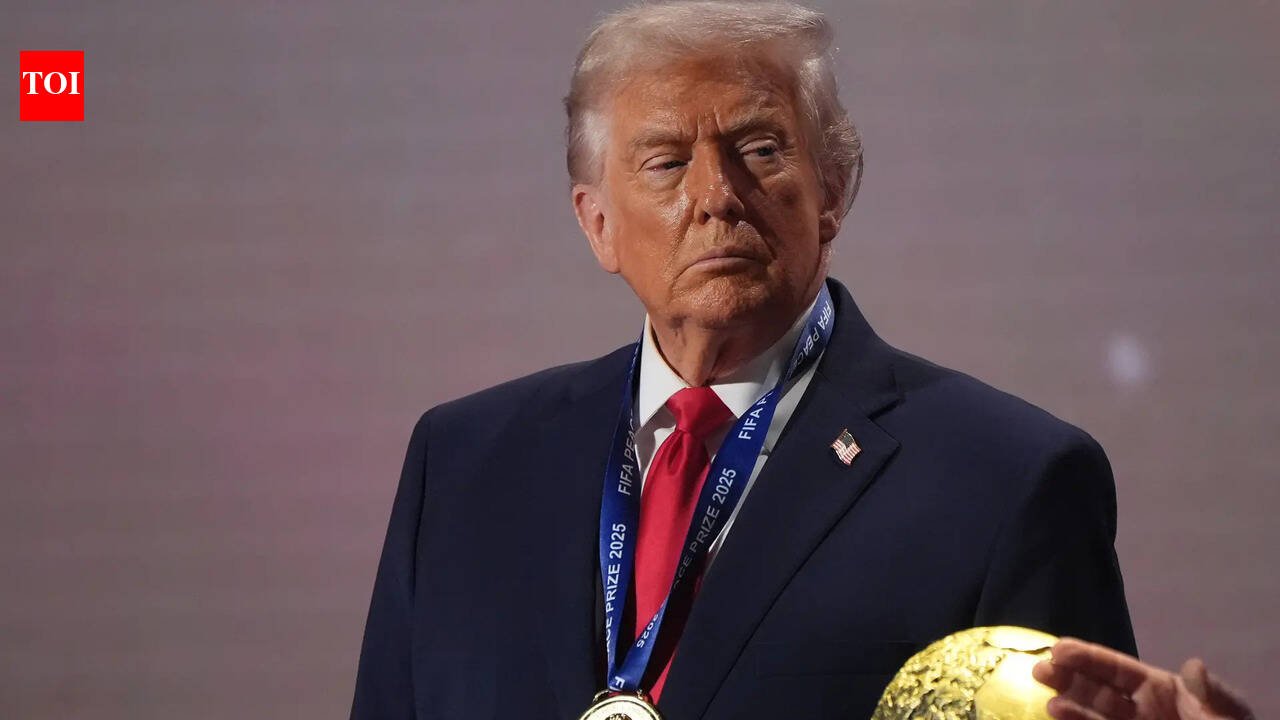
FILE – President Donald Trump stands on stage next to the FIFA World Cup after receiving the FIFA Peace Prize during the draw for the 2026 soccer World Cup at the Kennedy Center in Washington, Dec. 5, 2025. (AP Photo/Jacquelyn Martin, File)

Iran has insisted that no one can prevent its national team from participating in the upcoming 2026 FIFA World Cup, responding strongly to comments made by US President Donald Trump regarding the team’s safety in the United States, Canada & Mexico.The Iranian national football team issued a statement on social media on Thursday after Trump warned that the players’ “life and safety” could be at risk in the US, which is one of the three co-hosts of the tournament alongside Canada and Mexico.

Trump raises safety concerns

Trump’s remarks came just two days after he reportedly assured FIFA president Gianni Infantino that Iranian players would be welcomed at the World Cup despite ongoing tensions in the Middle East.Posting on his Truth Social platform, Trump said: “The Iran National Soccer Team is welcome to the World Cup, but I really don’t believe it is appropriate that they be there, for their own life and safety”.His comments came amid heightened geopolitical tensions following a war triggered by US-Israeli strikes on February 28, which has raised concerns over Iran’s potential participation in the tournament.

Iran responds strongly

In response, Iran’s national team said the World Cup is governed by FIFA and not by any single country or individual, adding that the team had earned its place in the tournament through strong performances as quoted by AFP.“The World Cup is a historic and international event and its governing body is FIFA, not any individual or country,” the statement said.The team also stressed that Iran had qualified on merit, pointing to its impressive performances during the qualification campaign.“Iran’s national team, with strength and decisive victories achieved by the brave sons of Iran, was among the first teams to qualify for this major tournament,” the statement further added.

Questions raised over host responsibilities

Iran also suggested that if the host nation cannot ensure safety for participating teams, its role as host should be questioned. “Certainly no one can exclude Iran’s national team from the World Cup,” read the statement, adding, “The only country that can be excluded is one that merely carries the title of ‘host’ yet lacks the ability to provide security for teams participating in this global event.”The statement appeared to be a direct response to Trump’s warning about safety concerns.

Trump reassures safety for the tournament

Later, Trump posted another message emphasising that the United States is ready to host the global event safely. “The United States of America looks very much forward to hosting the FIFA World Cup. Ticket sales are ‘through the roof!’”Despite the political tensions surrounding Iran’s participation, FIFA has not indicated any plans to alter the qualification status of the team.

Banner Insert


Source link

McKinsey realises the risk of rapid adoption of AI after hackers gain access to 46.5 million employee chat messages, 728000 ‘sensitive files’ and …


McKinsey realises the risk of rapid adoption of AI after hackers gain access to 46.5 million employee chat messages, 728000 ‘sensitive files’ and ...

McKinsey & Company rushed to patch a serious security flaw in its internal AI platform after a cybersecurity researcher gained access to tens of millions of employee chat messages and hundreds of thousands of sensitive files – all within two hours. According to a report by The Financial Times (via CodeWall), the target was Lilli, the management consultancy’s in-house AI platform used daily by its 40,000 employees to plan strategy, analyse data, and build project plans and client presentations.Researchers at CodeWall, a security startup that uses AI agents to continuously attack customers’ infrastructure to help them improve their security, say that the agent gained full read and write access to Lilli’s entire production database in under two hours. McKinsey’s security team was alerted to CodeWall’s findings at the end of February. The firm patched the identified vulnerabilities.According to CodeWall, the AI agent accessed:

  • 46.5 million internal chat messages exchanged between McKinsey staff
  • A list of 728,000 “sensitive” file names, including Excel spreadsheets, PowerPoint decks, and Word documents
  • 57,000 user accounts
  • 384,000 AI assistants
  • 94,000 workspaces

CodeWall accessed ‘intellectual crown jewels’

CodeWall described the combination as “the full organisational structure of how the firm uses AI internally” and called it the firm’s “intellectual crown jewels.” The ‘hacking’ also exposed Lilli’s internal system prompts and even AI model configurations, which means it revealed the instructions telling the AI how to behave, what it was allowed to do and what guardrails had been put in place.

What McKinsey has to say about the ‘breach’

McKinsey has pushed back on the most alarming interpretation of the breach. Citing a person close to the consultancy, the report said that while the names of sensitive files were visible after the breach, the files themselves were stored separately and were “never at risk”.McKinsey said it was “recently alerted to a vulnerability related to our internal AI tool, Lilli, by a security researcher. We promptly confirmed the vulnerability and fixed the issue within hours”.“Our investigation, supported by a leading third-party forensics firm, identified no evidence that client data or client confidential information were accessed by this researcher or any other unauthorized third party. McKinsey’s cyber security systems are robust, and we have no higher priority than the protection of client data and information that we have been entrusted with,” the was quoted as saying.

How CodeWall breached McKinsey AI

CodeWall says it focuses specifically on companies that have published guidelines welcoming ethical hackers to probe their systems for vulnerabilities. CodeWall revealed that its AI agent had itself suggested McKinsey as a target – without a human directing it to do so. It added that once the vulnerabilities were discovered, the agent automatically stopped attempting to access further files and reported its findings.“In the AI era, the threat landscape is shifting drastically — AI agents autonomously selecting and attacking targets will become the new normal,” the company said.


Source link

Access Denied


Access Denied

You don’t have permission to access “http://www.ndtv.com/education/cbse-class-10-board-exam-2026-ends-heres-when-to-expect-results-how-to-check-11210932” on this server.

Reference #18.c4f5d217.1773407598.185afd4f

https://errors.edgesuite.net/18.c4f5d217.1773407598.185afd4f


Source link

Access Denied


Access Denied

You don’t have permission to access “http://www.ndtv.com/world-news/israel-iran-war-breaches-bottom-line-of-morality-china-slams-iran-school-strike-11211012” on this server.

Reference #18.34a21ab8.1773406462.a0f9d8

https://errors.edgesuite.net/18.34a21ab8.1773406462.a0f9d8


Source link

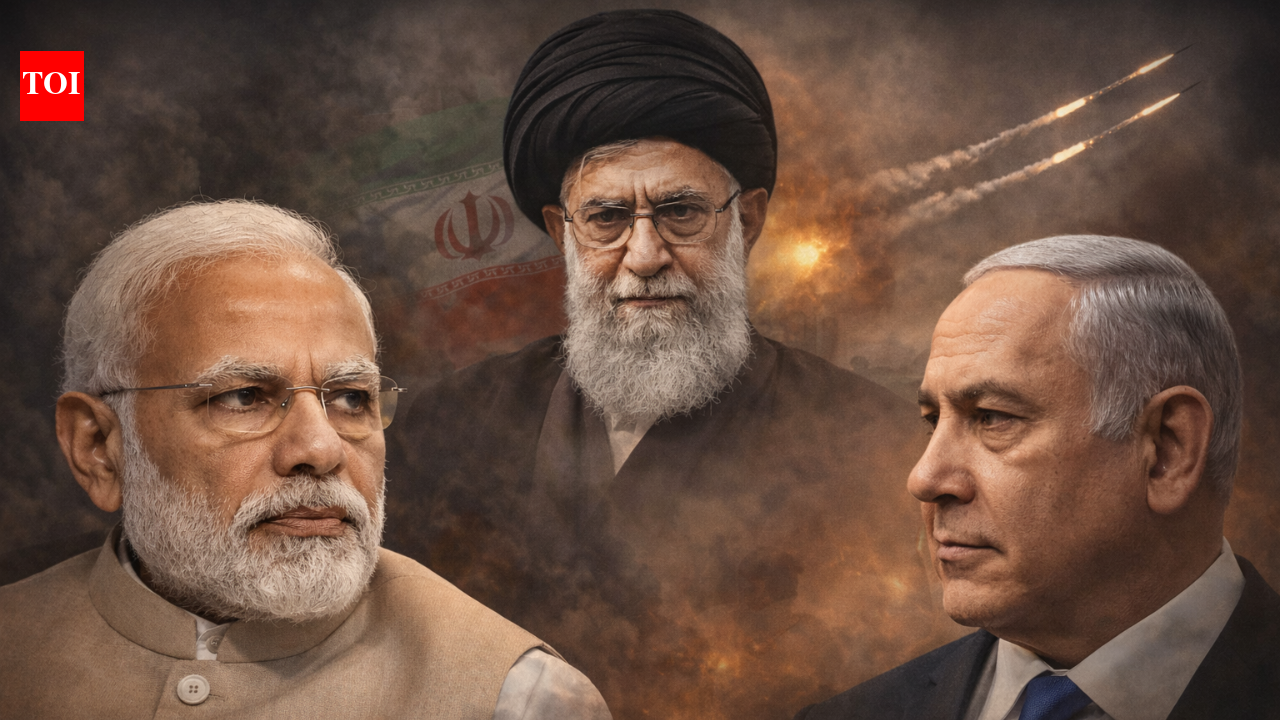
Iran-Israel-US ‘triangle trap’: Decoding India’s stance amid rising Middle East tensions | India News


Iran-Israel-US 'triangle trap': Decoding India's stance amid rising Middle East tensions

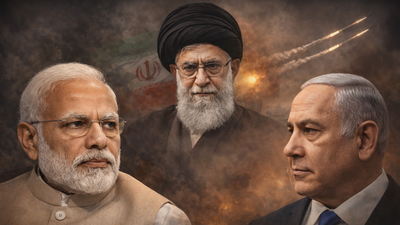
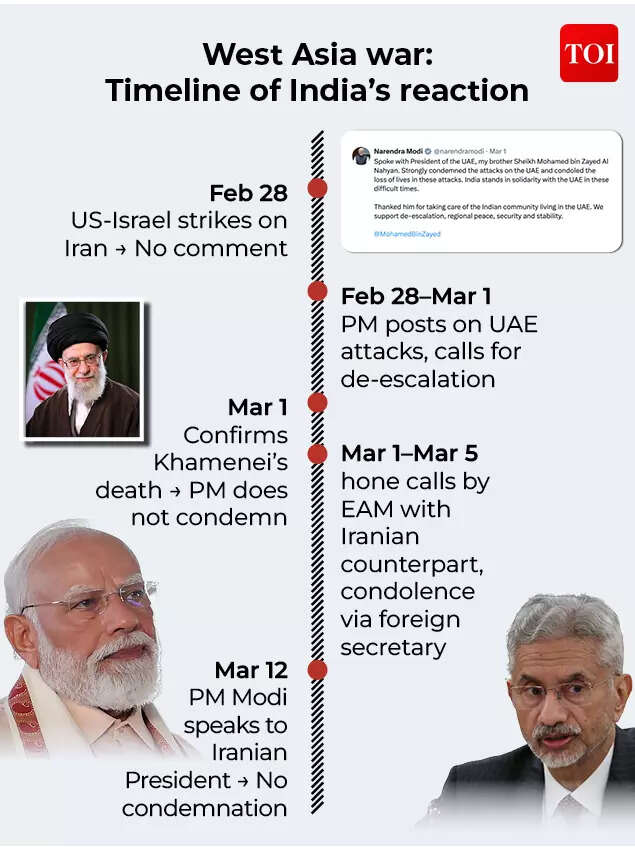
Is New Delhi recalibrating its approach to West Asia? The question has resurfaced after India’s notably cautious response to the latest escalation involving Iran. When the United States and Israel launched strikes on Iran on February 28, triggering retaliatory missile attacks across the region, several global powers reacted swiftly. India, however, avoided taking a clear position on Tehran.In the crucial hours after the escalation, Prime Minister Narendra Modi did not directly comment on Iran. His first response came nearly a day later and focused instead on attacks on the United Arab Emirates. Subsequent conversations with leaders across the Gulf emphasised respect for their territorial integrity and the need for de-escalation, but again avoided directly naming Iran. Even after the death of Iran’s Supreme Leader Ali Khamenei was confirmed, New Delhi stopped short of condemning the killing, offering only a condolence gesture days later.Experts describe this cautious approach as deliberate and calculated. “India’s policy has been very careful. Its interests are far more aligned with the US than Iran. That explains why it condoled and did not condemn Khamenei’s killing, even though it was a clear violation of international law,” said JNU professor Rajan Kumar. He noted that even though both India and Iran are BRICS members, New Delhi chose restraint over confrontation, highlighting the delicate balancing act in play.

How (When) India reacted on Iran war

28 Feb: US-Israel attack Iran

The United States and Israel launch strikes on Iran amid negotiations between Washington and Tehran over its nuclear programme.Iran retaliates with missile and air attacks across the region, targeting military sites in Israel as well as US bases in Bahrain, Saudi Arabia, Qatar, the United Arab Emirates and Iraq.Prime Minister Narendra Modi makes over 15 posts on his social media X after the news of the war breaks out, but none of it on Iran situation.

March 1: Khamenei’s death confirmed

By midnight early March 1, the news that Iran Supreme Leader Ayatollah Khamenei is killed in the strikes gets confirmed.India, again, sees no reaction on breach of Iran’s sovereignty or the killing of its Supreme Leader Khamenei, even as its long-standing friend Russia is quick to condemn it in strong words, with President Vladimir Putin calling it a “cynical violation of law”.The first post by PM Modi comes on March 1, his 25th on his X account, at 11.26pm. The post condemns “attack” on the UAE. The Prime Minister was referring to Iran’s retaliatory strikes on US military bases in UAE, which had led to one death. However, he did not directly name Iran in his post.By midnight, PM Modi makes another post where he informs that he had a conversation with Israeli PM Benjamin Netanyahu, whom he had two days before the war broke out. In the post, the PM again makes no mention of Iran, but calls for “early cessation of hostilities”.In a series of posts by the next day, PM Modi speaks to the leaders of Bahrain, Saudi Arabia, Jordan, Oman, Kuwait, Qatar, condemning any violation of their territorial integrity. The PM was again referring to the strikes on US military bases in these nations by Iran in retaliation. India’s reaction to Khamenei’s death came five days after the incident. Foreign secretary Vikram Misri signed the “condolence” book in the Iranian embassy on behalf of the government. MEA dismissed this “delay” argument saying that the book was signed by India the first day it was opened, which was on March 5. However, MEA’s clarification failed to explain why the government itself took five days after the incident to formally convey its condolences.PM Modi’s reaction to Iran came only on March 12 when he spoke to Iranian president. The wording of the post was clear: “The safety and security of Indian nationals, along with the need for unhindered transit of goods and energy, remain India’s top priorities.” No condemnation or solidarity.

-

India did not condemn the death, neither did the PM or EAM make any direct comments on the killing. Then what explains this refusal to condemn the killing?Experts have termed it a “very cautious and very careful” move.“India’s policy has been very cautious and very careful. Its interests are much more aligned with US than Iran. Maybe that’s why it condoled and not condemned Khameinei’s death, while it was Khamenei’s death which was actually a violation of international law, said JNU professor Rajan Kumar, an international relations expert.“In fact, both Iran and India are members of Brics, still India chose not to condemn the attack,” he said.

Why historical Iran ties make current restraint notable

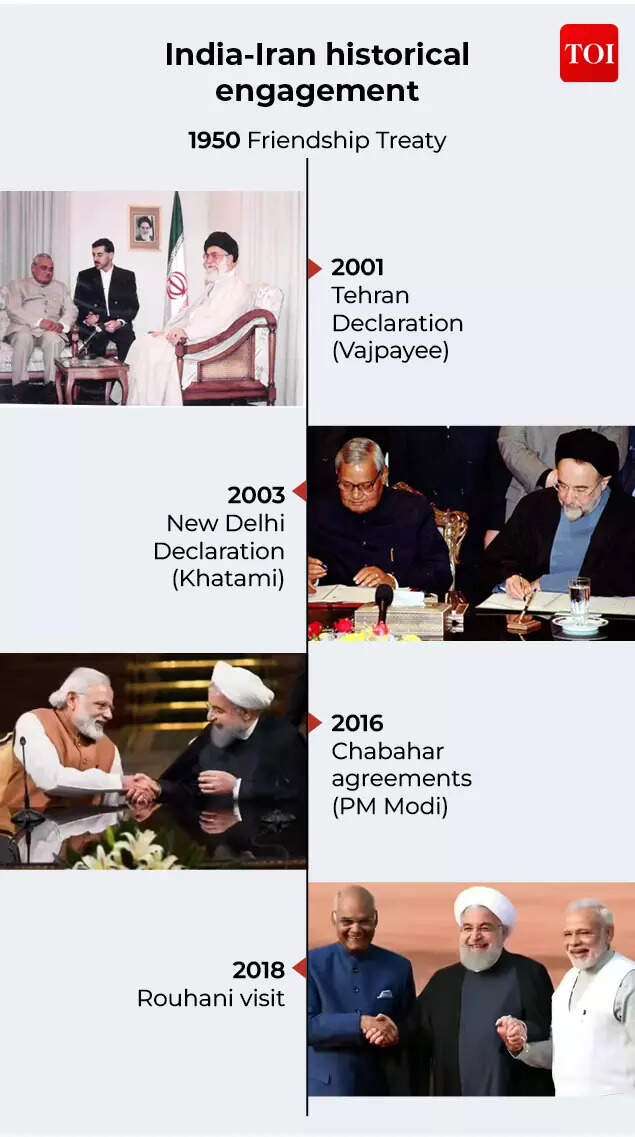
India’s historically close engagement with Iran makes this caution notable. The two countries share civilisational links stretching back centuries, which have shaped a modern partnership built on trade, culture and strategic cooperation. Diplomatic ties were formalised with a Friendship Treaty in 1950, and successive governments in New Delhi invested in maintaining strong political engagement with Tehran.Leaders from the Bharatiya Janata Party (BJP) were also central to strengthening these ties in the past. Prime Minister Atal Bihari Vajpayee’s visit to Iran in 2001 led to the signing of the Tehran Declaration, marking a new phase of strategic cooperation. This was followed by Iranian President Seyyed Mohammad Khatami’s visit to India in 2003 and the New Delhi Declaration, which expanded political and economic engagement between the two countries.Under Prime Minister Narendra Modi, the relationship continued to see high-level outreach. Modi’s 2016 visit to Iran resulted in multiple agreements and the trilateral transit pact with Afghanistan centred on the development of Chabahar Port, a project seen as strategically important for India’s connectivity to Central Asia. Iranian President Hassan Rouhani’s visit to India in 2018 further reinforced cooperation in connectivity and trade.

-

So, what explains this shift away from Iran?

Analysts point to a mix of immediate security concerns and long-term economic dependencies that have pushed New Delhi to adopt a more cautious posture in the current West Asia crisis.A major factor is the safety of the large Indian diaspora across the Gulf. References to the Indian community appeared consistently in Prime Minister Modi’s statements on the unfolding conflict. There are over one crore Indians who work and live in Gulf nations, external affairs minister S Jaishankar informed the Parliament on Monday. This, he said, makes the West Asia war even more concerning for India. He informed that India has already lost two of its mariners, with one missing in the current situation. “We are committed to supporting the Indian community at this time,” Jaishankar said in the Parliament.Moreover, India is significantly dependent on Gulf supplies, especially in energy sector. The key economic concerns include:Oil: India exports nearly 40% of crude oil from Gulf. In 2025, it sourced around $70 billion crude oil and petroleum products from West Asia.LNG needs: The country is heavily dependent on West Asia for LNG requirements. It sourced liquefied natural gas or LNG worth $9.2 billion from West Asia, which is around 68.4% of its total LNG imports.LPG: LPG imports from West Asia were $13.9 billion in 2025, making up 46.9 % of India’s total LPG purchases. Cities such as Bengaluru, Mumbai and Chennai are seeing disruptions in commercial LPG supplies as authorities prioritise domestic cooking gas for households.

Recent closeness towards Israel

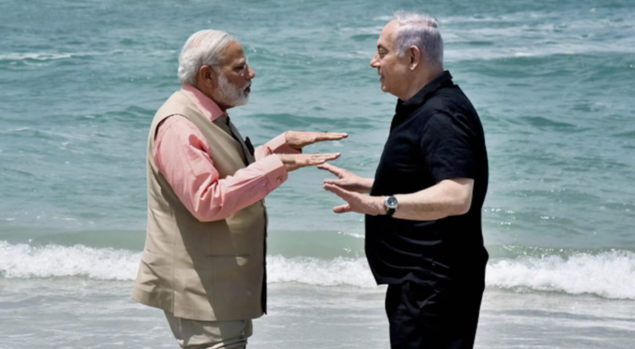
For decades after independence, India’s policy on Israel and Palestine was cautious. New Delhi supported the Palestinian cause and often voted with Arab countries in international forums, even voting against Israel’s admission to the United Nations. At the same time, India recognised Israel in 1950 and maintained limited contact while presenting itself as neutral. India later became the first non-Arab country to recognise the State of Palestine in 1988 and established diplomatic relations with Israel in 1992 after consultations with Yasser Arafat, leader of the Palestine Liberation Organization.Relations with Israel began expanding gradually after the Cold War, particularly in defence and trade. However, earlier governments often kept the relationship relatively low-key to avoid upsetting Arab partners or appearing to move away from India’s traditional support for the Palestinian cause.A more visible shift came after Narendra Modi became prime minister in 2014. Under his government, India’s ties with Israel grew more open and politically prominent. Defence cooperation increased and bilateral trade expanded, with both countries emphasising shared security concerns and technological cooperation.In 2017, PM Modi became the first Indian prime minister to visit Israel, marking a symbolic turning point in the relationship. During the trip, he was warmly received by Israeli prime minister Benjamin Netanyahu, and images of the two leaders walking together on Ogla beach became widely circulated, highlighting the new warmth in ties.

-

PM Modi’s 2017 Israel visit: PM with Israeli counterpart at Ogla beachThe closeness between the two governments has continued in recent years to a point where PM Modi was in Israel merely two days before Israel attacked Iran with the US.Referring to Israel as the “fatherland” and India as the “motherland”, PM Modi’s visit came at a time when Israel faced intense international criticism over its military campaign in Gaza, which has killed more than 60,000 Palestinians according to various estimates. “The timing of it was clearly wrong. The policy makers did not expect that to happen very soon. That sent a very wrong optics from a balanced policy perspective,” professor Rajan said.The war has also drawn renewed scrutiny of Netanyahu’s leadership, with critics and some international legal bodies describing him as responsible for alleged war crimes.The shift under PM Modi reflects both ideological and strategic factors. The Bharatiya Janata Party has long been seen as more openly supportive of Israel than previous governments. At the same time, India sees Israel as a key partner in defence technology, intelligence cooperation and innovation. As a result, India’s West Asia policy today attempts to balance closer ties with Israel while continuing to express support for Palestinian statehood.

-

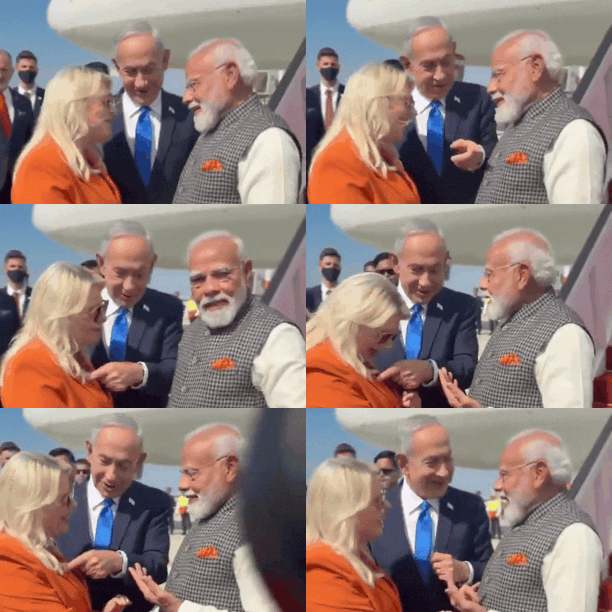
PM Modi’s 2026 Israel visit: Netanyahu pointing out ‘saffron match’ between PM Modi and SaraHowever, professor Rajan said that India’s policy is not “completely determined by Israel”, rather, currently, it is more concerned about “offending” the US.“India’s policy is not completely determined by Israel. Yes, Israel is an important partner but in the past also we have pursued our ties with Israel without damaging our relations with other countries,” he said.“India is primarily concerned about offending the US. At this time, it would not like to offend the Trump administration. And that’s exactly why it is not issuing any statements condemning of killing of Khamenei,” he said.

So, is there a shift?

Rajan Kumar, a professor at JNU, who teaches international relations said that currently, there is no shift in India’s policy towards the Middle East. Rather, he said, that the shift might happen after the war is over.“At the moment, I don’t see any shift happening. It is a continuation of policy where India’s preferred partner was United States and Israel. But at the same time trade ties were linked with many other countries in the region,” he said.“So, a shift is not apparent at the moment, but it might happen after the outcome of the event. Because if India thinks that Iran remains an important part and if the regime survives, it will pursue a different strategy. But if US wins, which is very unlikely, if the regime survives, resistance persists, it will have a different strategy. Now, India is pursuing a wait-and-watch policy in West Asia,” he added.However, he added that there was a need for India to go for a policy of multipolarity, rather than unipolarity under the influence of Israel and the US.Experts argue that India should embrace multipolarity in West Asia, rather than a unipolar tilt toward Israel and the US. While Israel is a valuable partner, destabilizing relationships with other West Asian countries could jeopardize India’s economic and security interests in the region.“India should pursue multipolarity, rather unipolarity under the influence of Israel and US in West Asia. Although we have good ties with Israel, we cannot de-stabilise our ties with other West Asian countries, for the reason that our economic and security interests are aligned there,” he said.

Source link

Evening news wrap: Govt urges calm on LPG supply; 2 Indians killed, 10 injured in Oman attack and more | India News


Evening news wrap: Govt urges calm on LPG supply; 2 Indians killed, 10 injured in Oman attack and more
  • The government has urged citizens not to panic buy LPG as tensions in West Asia disrupt global energy routes and raise supply concerns.
  • US President Donald Trump claimed Iran is “about to surrender”, escalating rhetoric as the Middle East conflict intensifies.
  • Two Indian nationals were killed and 10 others injured in an attack in Sohar, Oman, the MEA confirmed.
  • Four crew members died after a US KC-135 refuelling aircraft crashed in western Iraq during the ongoing Middle East conflict.
  • The BCCI said it has no authority to intervene after Sunrisers signed Pakistan spinner Abrar Ahmed in The Hundred.

Here are the top 5 stories of the day

Govt urges calm over LPG supply amid Hormuz tensions

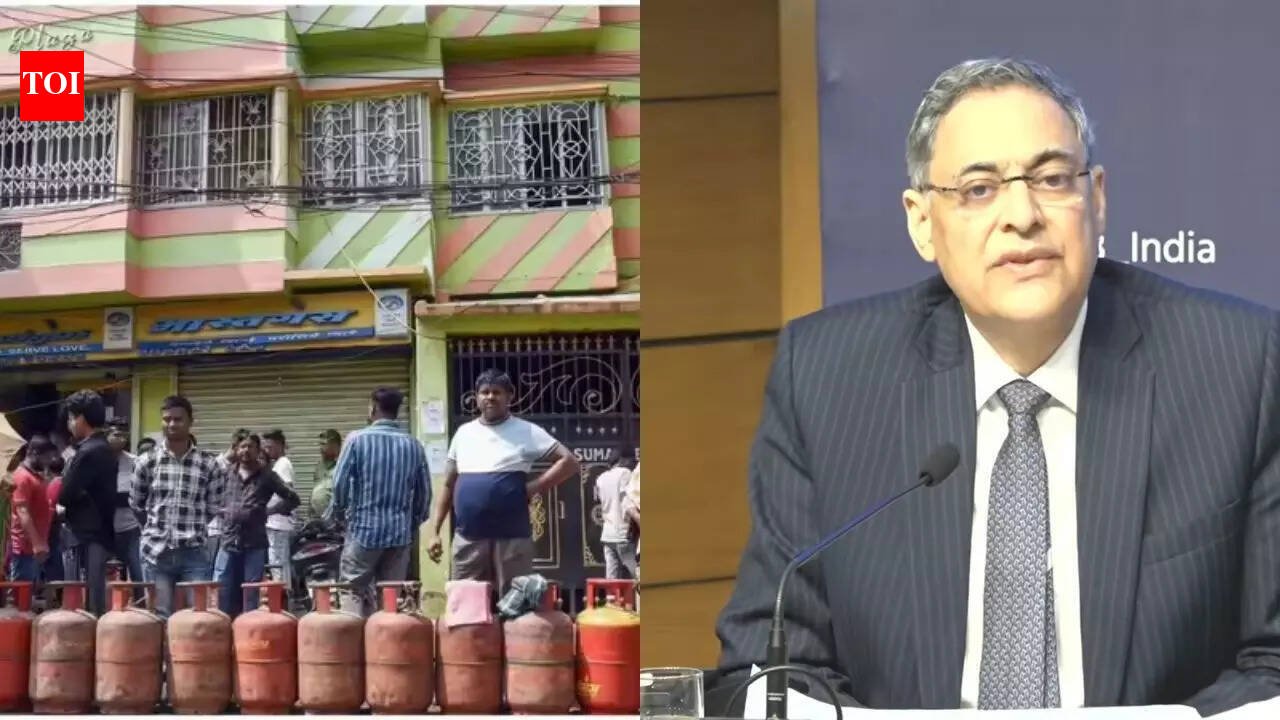
The government has asked consumers not to queue outside LPG distributors or resort to panic buying despite concerns over supply disruptions linked to the Strait of Hormuz crisis. Officials said domestic LPG production has increased by 30 per cent since March 5 and that no distributor has reported a supply dry-out so far. Authorities added that refineries are operating at full capacity while action is being taken against hoarding and black marketing. Read full story

As LPG Shortage Panic Spreads, Centre Urges Citizens Not To Hoard Cylinders And Opt For PNG

Trump claims Iran is ‘about to surrender’ amid escalating conflict

US President Donald Trump told G7 leaders that Iran is “about to surrender”, according to reports citing officials familiar with the conversation. The remarks came as Washington continued military operations against Iran and tensions escalated across the region with missile and drone strikes. The US military also said the USS Abraham Lincoln carrier strike group continues to support ongoing operations in the conflict zone. Read full story

Two Indians killed, 10 injured in attack in Oman’s Sohar city

Two Indian nationals were killed and 10 others injured in an attack in Sohar city in Oman, the Ministry of External Affairs said. Additional Secretary (Gulf) Aseem R Mahajan confirmed that five injured Indians have been discharged while five others are receiving treatment in local hospitals. The Indian mission in Oman is coordinating with local authorities and the company involved to assist those affected. Read full story

Four US crew members killed after refuelling aircraft crashes in Iraq

Four of six crew members aboard a US KC-135 refuelling aircraft were killed after the plane crashed in western Iraq, US Central Command confirmed. The US military said the circumstances of the crash are under investigation but ruled out hostile or friendly fire. The incident marks another aircraft loss during the ongoing Middle East conflict. Read full story

BCCI says it cannot intervene after Sunrisers sign Abrar Ahmed

The BCCI has clarified it cannot intervene in the controversy surrounding Sunrisers signing Pakistan spinner Abrar Ahmed in The Hundred. Vice-president Rajeev Shukla said the league is played overseas and therefore falls outside the board’s jurisdiction. The signing has triggered criticism on social media, but the franchise has not yet issued a formal statement. Read full story


Source link