Breaking News
‘Gautam Gambhir fought everyone’: Shoaib Akhtar’s stunning reveal on Sanju Samson’s comeback | Cricket News


'Gautam Gambhir fought everyone': Shoaib Akhtar's stunning reveal on Sanju Samson's comeback
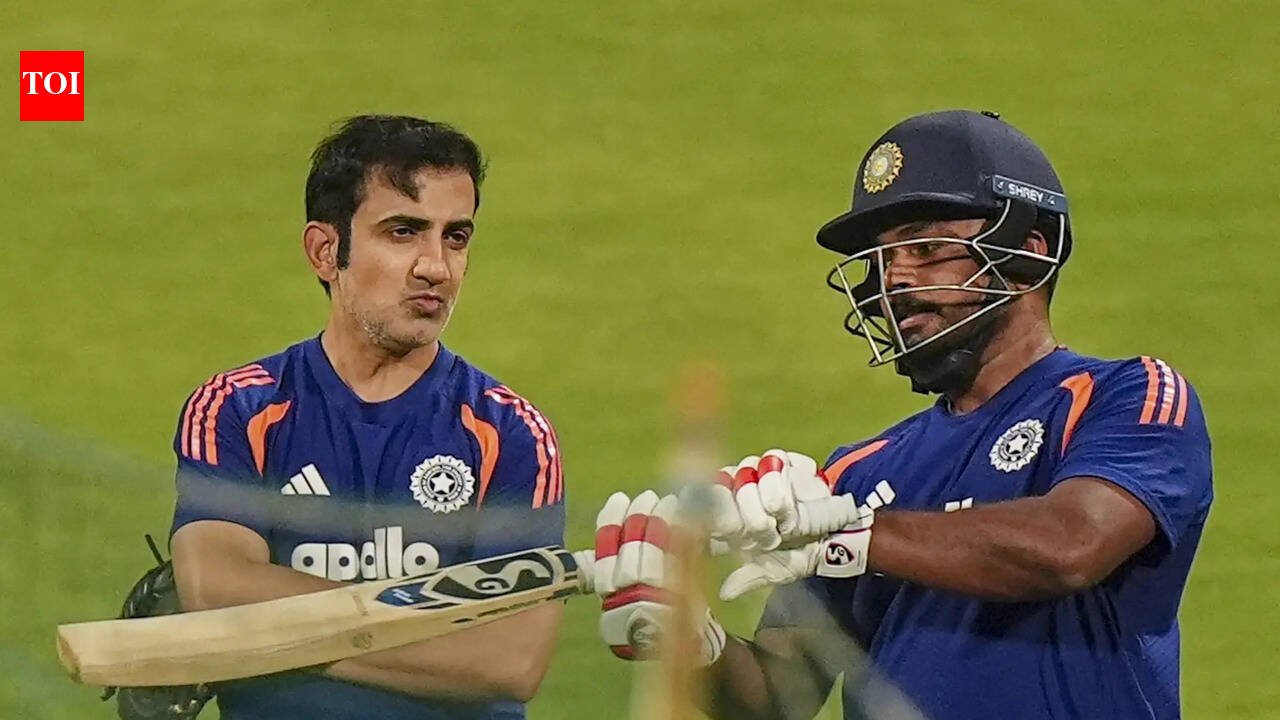
India’s Sanju Samson with head coach Gautam Gambhir (PTI Photo/Kunal Patil)

Former Pakistan speedster Shoaib Akhtar has praised India head coach Gautam Gambhir for backing Sanju Samson, whose red-hot form with the bat has become one of the biggest talking points of the ongoing ICC Men’s T20 World Cup 2026.Samson was drafted back into the Indian playing XI after the team lost to South Africa, in what was effectively a knockout clash against the West Indies cricket team. The wicketkeeper-batter seized the opportunity in style, smashing a superb 97 during a tense chase to guide India to victory. He carried that momentum into the semi-final, producing a blistering 89 off just 42 balls as India defeated the England cricket team to book a place in the final against the New Zealand national cricket team.

T20 World Cup Final: Greenstone Lobo predicts India vs New Zealand winner | Astrological analysis

Speaking on the ‘Game On Hai’ show on PTV Sports, Akhtar explained that Samson’s return to the side was not a straightforward call. According to the former pacer, Gambhir had to strongly advocate for the batter’s inclusion within the team management setup.“Samson has been in the Indian cricket circuit since 2014. Back in the days when I was working in India, around 2015, there was a lot of hype surrounding him. He had to wait for a long time to get regular chances as India had wicketkeepers like MS Dhoni, Dinesh Karthik and others. Even now, Gambhir has fought with everyone to get him into the team. Basically, his selection has been done forcefully and after a lot scrutiny. He didn’t feature in the tournament initially,” said Akhtar in a video shared by Tapmad.Samson’s numbers in the tournament underline his remarkable run of form. In four matches so far, he has accumulated 232 runs at an impressive average of 77.33 and a strike rate of 201.73, including two half-centuries. His highest score remains the unbeaten 97 against West Indies in the virtual quarter-final in Kolkata.The 31-year-old also etched his name alongside Virat Kohli after his semi-final heroics. Samson’s 89 against England equalled Kohli’s record for the highest score by an Indian in a T20 World Cup knockout match. Kohli had produced an identical 89 not out off 47 balls against the West Indies during the semi-final of the ICC Men’s T20 World Cup 2016 at the same venue.Samson has also dominated the six-hitting charts in this edition of the tournament. With 16 maximums to his name, he has already surpassed the previous Indian record of 15 sixes in a single T20 World Cup campaign, which was set by Rohit Sharma in the 2024 edition.


Source link

Peaceful Nepal elections historic, ready to work with new government: PM Modi | India News


Peaceful Nepal elections historic, ready to work with new government: PM Modi

NEW DELHI: With Rastriya Swatantra Party, led by 35-year-old rapper turned politician Balendra Shah, set to win Nepal polls by a landslide, PM Narendra Modi warmly congratulated the people and govt of Nepal on the successful and peaceful conduct of elections.“It is heartening to see my Nepali sisters and brothers exercise their democratic rights so vibrantly,” said Modi in a post on X. With counting still in progress, the PM didn’t name Shah, the likely new leader whose party RSP is dominating the count in the elections that were held six months after the violent, so-called Gen-Z protests that toppled Nepal’s govt and left 77 dead.“This historic milestone is a proud moment in Nepal’s democratic journey,” said Modi in a post on X.“As a close friend and neighbour, India remains steadfast in its commitment to working closely with the people of Nepal and their new govt to scale new heights of shared peace, progress and prosperity,” added the PM.A former mayor of Kathmandu, Shah hasn’t given much away in terms of what his foreign policy is going to be like, except that it will most likely be driven by his Nepal First hyper-nationalism. He has projected himself as someone who won’t succumb to foreign influence – unlike the established political parties – when it comes to ties with countries like India, China and the US.Shah lashed out at all three countries in a Facebook post last year but later deleted it. In 2023, in his mayoral office, Shah placed a map of “Greater Nepal” – that showed Indian territory as part of Nepal – apparently as a counter to a mural in Parliament depicting the geographical spread of the ancient Ashoka empire.Shah has cultivated the image of an outsider who views all three major powers (India, China, and the US) with equal skepticism and believes in neutrality. His party maintains that it will pursue balanced relationships with major powers.


Source link

Government to hire 1,000 professionals to help exporters | India News


Government to hire 1,000 professionals to help exporters

NEW DELHI: Government is planning to hire 1,000 young professionals to engage with businesses and exporters across the country to push greater utilisation of benefits under FTAs and help India diversify its product basket and export markets.While recently implemented agreements such as those with Australia and UAE have seen high utilisation of preferences, those with Asean, Japan and South Korea have recorded relatively low use, which govt has argued is partly due to poorly drafted agreements.With businesses in India focusing more on growing domestic market, the government wants an additional push for goods moving out of the country using lower duties under FTAs so that manufacturing gets a boost.The professionals are proposed to fan across India, interacting with business chambers and exporters to help them tap the overseas markets and identify potential exporters.


Source link

‘Consistency over intensity’: Lucknow boy, working with Google in US, cracks civil services exam | Lucknow News


LUCKNOW: Lucknow boy Piyush Kapoor , 32, who secured 402nd rank in Civil Services exam on Friday, had one foot each in two continents for years. While he worked for Google in Mountain View, California, during the day, he prepared for India’s most prestigious exam at night.Preparing from abroad can be isolating, especially after setbacks, but Piyush’s family became his anchor through multiple attempts. “I’m extremely proud of Piyush’s feat,” said Arun Kapoor, 66, a retired banker. “We turned the odds into his assets and kept pursuing the goal. It was his fifth attempt, but he never let a setback define him.”

Lucknow: Law And Order Transformation, Qatar Conflict Stranding, Accidental Condolences & More

A computer science grad from IIT-BHU, Piyush joined Google as a software engineer, where he contributed to Gmail’s spam and phishing protection mechanisms.Preparing for the exam while handling a leadership role at Google required a strategy rooted in realism. “My mantra was simple: consistency over intensity. Instead of chasing unsustainable 12-hour study sessions, I focused on two to three hours of deeply concentrated preparation every day,” said Piyush, who spent his free time in the gym.Interestingly, the 13-hour time difference between the United States and India became an unexpected advantage. “When newspapers, current affairs updates, and coaching materials were published in India each morning, it was evening in California. This allowed me to access the latest information almost in real time without disrupting his work schedule. By the time my American workday began, I had already completed my focused study session, staying aligned with developments back home,” said Piyush, who had opted Maths as an optional subject in the UPSC exam.Asked why the shift, Piyush said he felt a growing desire to apply his skills closer home. “I wanted to move from building products to building the nation,” he said. The idea was not about abandoning technology but about expanding its impact from digital platforms to administrative systems that shape everyday lives, he added.Piyush approached the vast UPSC syllabus like a system-design problem. “I relied heavily on digital notemaking tools and online resources, ensuring that the physical distance of 10,000 miles did not hinder my preparation,” added Piyush, who misses Lakhnavi food and wants to return home soon.


Source link

Suryakumar Yadav labelled minnow basher by ex-KKR star before T20 World Cup final


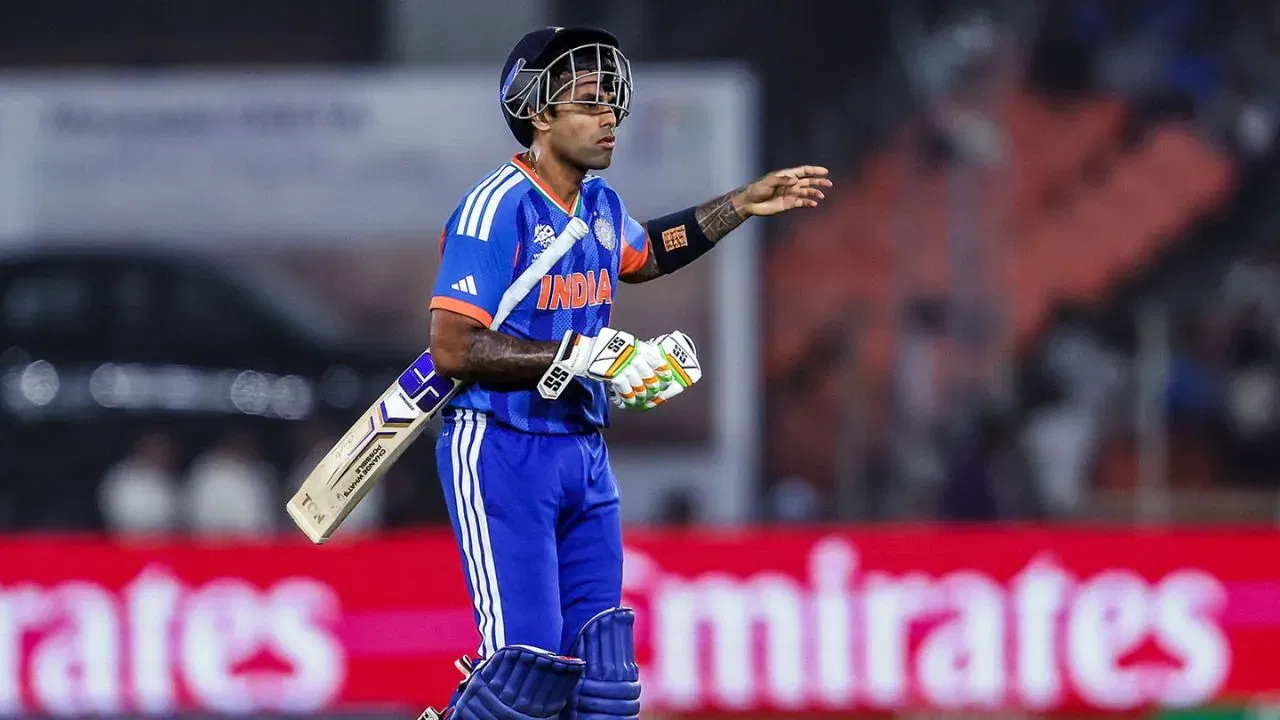
All eyes are on Suryakumar Yadav as the India National Cricket Team gears up to take on the New Zealand National Cricket Team in the T20 World Cup 2026 Final on March 8 in Ahmedabad. The Men in Blue have shown great form in the last couple of matches, but their captain, Suryakumar Yadav, remains the big concern for the defending champions.

The Indian captain Suryakumar Yadav has been facing massive criticism for his inconsistent performance in the ongoing T20 World Cup 2026, especially against the top teams. Suryakumar scored 11 runs in the must-win Super 8 clash against West Indies and then could manage only 18 runs in the semifinal against England.

Aakash Chopra warns India of Suryakumar Yadav’s poor World Cup record ahead of the final

Adding fuel to the fire, the former Indian batter Aakash Chopra has admitted that Suryakumar has not produced many big knocks against stronger teams in recent World Cups. However, the cricket pundit mentioned how the Indian captain smashed 84 runs and gave India a strong start against the USA.

Your daily dose of cricket!

next

Read Also: India stars clash in team bus before T20 World Cup 2026 final

Chopra even went on to call the criticism “slightly unfair” while calling the Indian captain’s 32-run knock against Pakistan his best knock in this tournament because that was required at that stage; otherwise, India might not have been able to bat 20 overs.

Aakash Chopra hopes Suryakumar Yadav will deliver in T20 World Cup 2026 Final

However, in the matches that followed, the stylish right-hander did not produce another big inning, amassing over 240 runs. Well, the commentator has pointed out that Surya’s record against top teams in World Cup matches has not been very strong so far.

Aakash Chopra said in a video posted on his YouTube channel: “However, it’s true that he hasn’t scored too many runs against big teams. This is his fifth World Cup. He has scored only two half-centuries against top 10 teams, one against South Africa at Perth and one against Afghanistan in the last World Cup. Maybe in the final.”

Aakash Chopra predicts a possible demotion for Suryakumar Yadav against New Zealand

Now, with India set to face New Zealand in the final, Chopra hopes the captain can deliver a big innings when it matters the most. However, he feels Suryakumar might come to bat at number 5 in the title clash, just like in the semifinal clash against England.

Read Also: “Clutch is Hardik Pandya”: India star flexes insane confidence, makes big statement about girlfriend, son

There is also a chance that India might adjust their batting order depending on the situation, with power hitters like Shivam Dube possibly being used to attack New Zealand’s spin attack, comprising Mitchell Santner, Rachin Ravindra, and Cole McConchie.

Chopra signed off by saying, “So, hopefully, he will score a big one, although we saw him even demoting himself in the batting order in the last match as the spinners were bowling. That can happen in this match as well.

It could be Mitchell Santner, Rachin Ravindra, or Cole McConchie, so you might ask Shivam Dube to go and take them down. So that can also happen. I am not saying that a 70-run knock needs to come, but a knock needs to come. That’s what I am hoping for.”


Source link

T20 World Cup: From trump card to major concern? Varun Chakravarthy losing grip at the wrong time | Cricket News


T20 World Cup: From trump card to major concern? Varun Chakravarthy losing grip at the wrong time
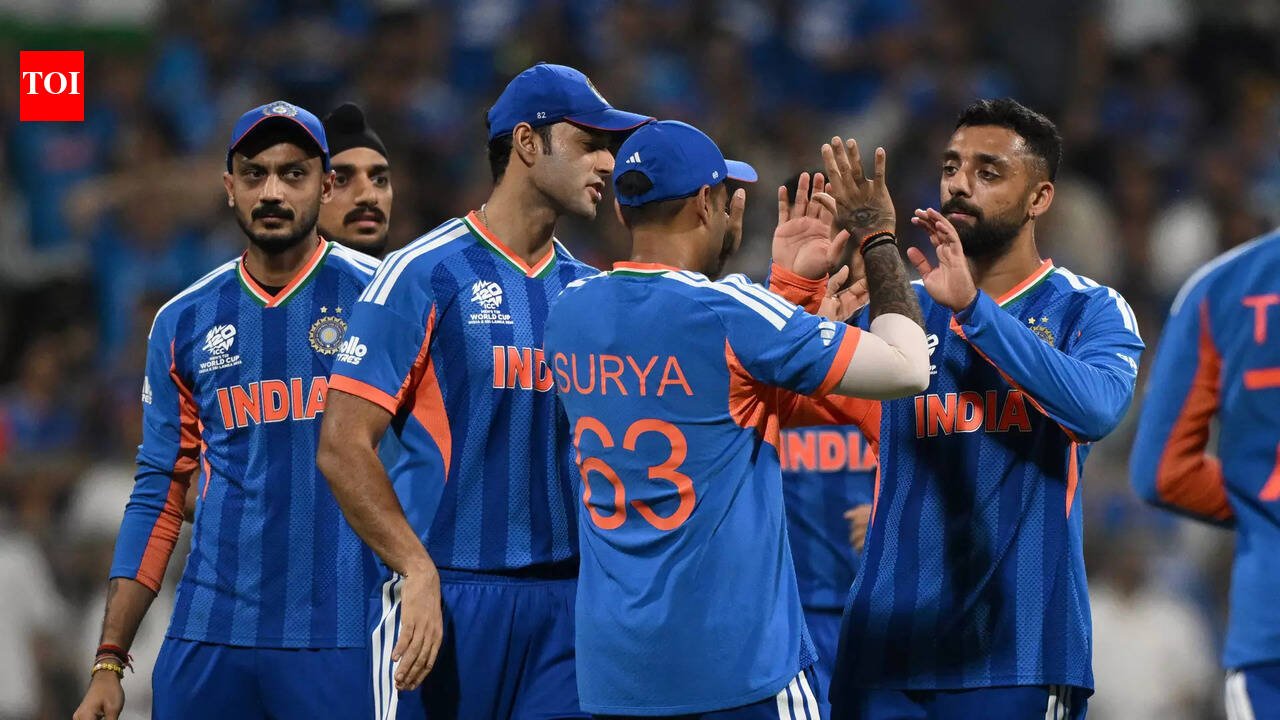
Varun Chakravarthy of India celebrates with teammates after dismissing Jos Buttler of England during the ICC Men’s T20 World Cup India & Sri Lanka 2026 Semi-Final match between India and England at Wankhede Stadium on March 05, 2026 in Mumbai, India. (Photo by Prakash Singh/Getty Images)

NEW DELHI: For the first half of the T20 World Cup, Varun Chakravarthy looked like India’s biggest weapon with the ball. He was hitting the right notes, batters were struggling to read him and the wickets followed. But as the tournament has progressed, the mystery spinner’s control has slipped. With his lengths going astray and runs flowing freely, his dip in form is an alarming sign for India ahead of the final against New Zealand, to be played at the Narendra Modi Stadium on Sunday.That concern grew after what happened in the semi-final against England at the Wankhede Stadium. The red soil pitch should ideally have suited the spinner, instead he went for plenty. His bowling figures read 4-0-64-1. Varun struggled to find the right length and it appeared that his confidence had also taken a beating, which is an area of concern for captain Suryakumar Yadav and coach Gautam Gambhir.

Suryakumar Yadav’s childhood friend backs him to win World Cup for India

With 13 wickets to his name, Varun is currently the joint-leading wicket-taker of the 2026 T20 World Cup. In the first four matches, he picked up nine wickets with an impressive economy rate of 5.17. In the last four games, he has leaked runs at an economy rate of 11.63 while picking up just four wickets.Overall, Varun has been hard to go after when he has pitched the ball in the good length area while trying to attack the stumps. In 118 balls where he has hit that good length, he has conceded only 128 runs at an economy rate of 6.50 and also picked up 10 wickets. Whenever he has gone full or bowled short, basically when he has erred in hitting that 5 to 6 metre length, he has bowled bled runs. In the 27 balls where he has attempted to bowl full, he has conceded 66 runs at an economy rate of 14.66. The short of good length area has cost him 50 runs off 22 balls at 13.63.
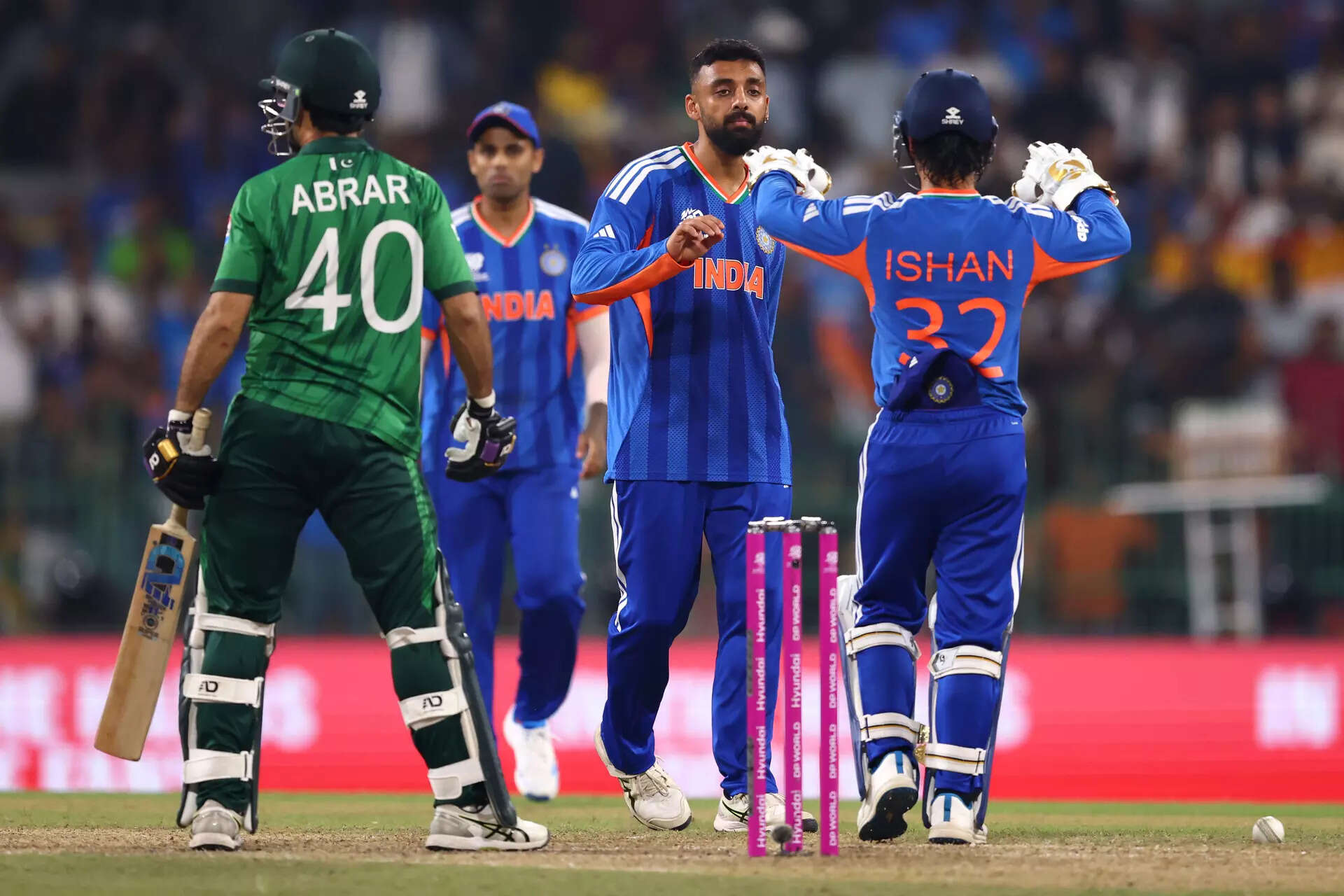
India v Pakistan:  ICC Men´s T20 World Cup India & Sri Lanka 2026

Varun Chakaravarthy of India celebrates the wicket of Abrar Ahmed of Pakistan during the ICC Men’s T20 World Cup India & Sri Lanka 2026 match between India and Pakistan at R. Premadasa Stadium on February 15, 2026 in Colombo, Sri Lanka. (Photo by Robert Cianflone/Getty Images)

The good phase

Now let us divide Varun’s numbers into two phases, pre-South Africa and post.Before India’s first Super Eight match against South Africa, Varun was a batter’s nightmare. He bowled 51 balls in that good length area and conceded only 37 runs and picked up seven wickets. Even the fuller and shorter lengths did not cost him much, and his economy rates read 7 and 5.25, respectively.After the Namibia match at the Arun Jaitley Stadium, where he picked up 3 for 7 in two overs, Varun had spoken about his new variations and the ones he was working on.“I have worked on my overspin rather than sidespin and more speed and zip off the wicket,” he told reporters in the ICC mixed zone.“I have been working on a few things, but that has been my process all along. I have always had some deliveries coming up, so I will always have something coming up. But it is up to me. It is actually about whether I am courageous enough to try it in the next match, but it depends.
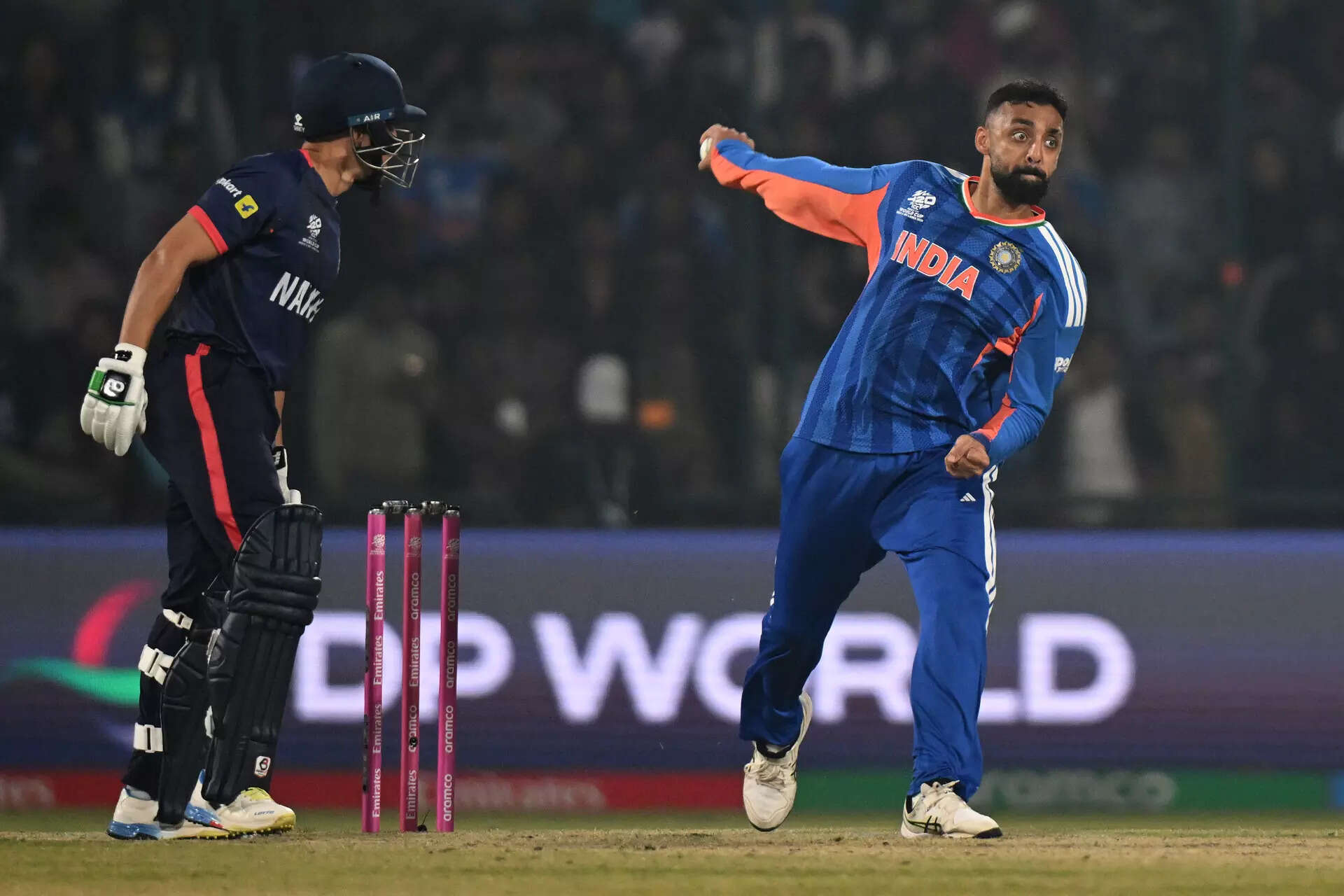
India v Namibia:  ICC Men´s T20 World Cup India & Sri Lanka 2026

Varun Chakravarthy of India bowls during the ICC Men’s T20 World Cup India & Sri Lanka 2026 match between India and Namibia at Arun Jaitley Stadium on February 12, 2026 in Delhi, India. (Photo by Prakash Singh/Getty Images)

“There are a few balls that just clicked for me in the matches and there have been a few variations which I have been trying for the last six years that did not come out earlier. So it just depends on the complexity of the delivery,” he added.It is also worth noting that in the group stage India had played three Associate teams – USA, Namibia and the Netherlands. The match against Pakistan, in Colombo, was played on a two paced surface.

The flat phase

In the first four games, Varun’s bowling figures were 1/24 against USA, 3/7 against Namibia, 2/17 against Pakistan and 3/14 against Netherlands. In the next four matches, his figures read 1/47 against South Africa, 1/35 against Zimbabwe, 1/40 against West Indies and, most recently, 1/64 against England.In the 96 balls Varun bowled in the three Super Eight matches and the semi-final, he conceded 186 runs and picked up four wickets. Out of those four wickets, three came when he tried to hit the stumps from a good length. He conceded 91 runs off 67 balls at an economy rate of 8.14. Meanwhile, in the 29 deliveries where he tried something different by bowling fuller or shorter, he was sent for plenty. In 15 full deliveries, Varun conceded 52 runs, and in 14 shorter length balls he leaked 43 runs.
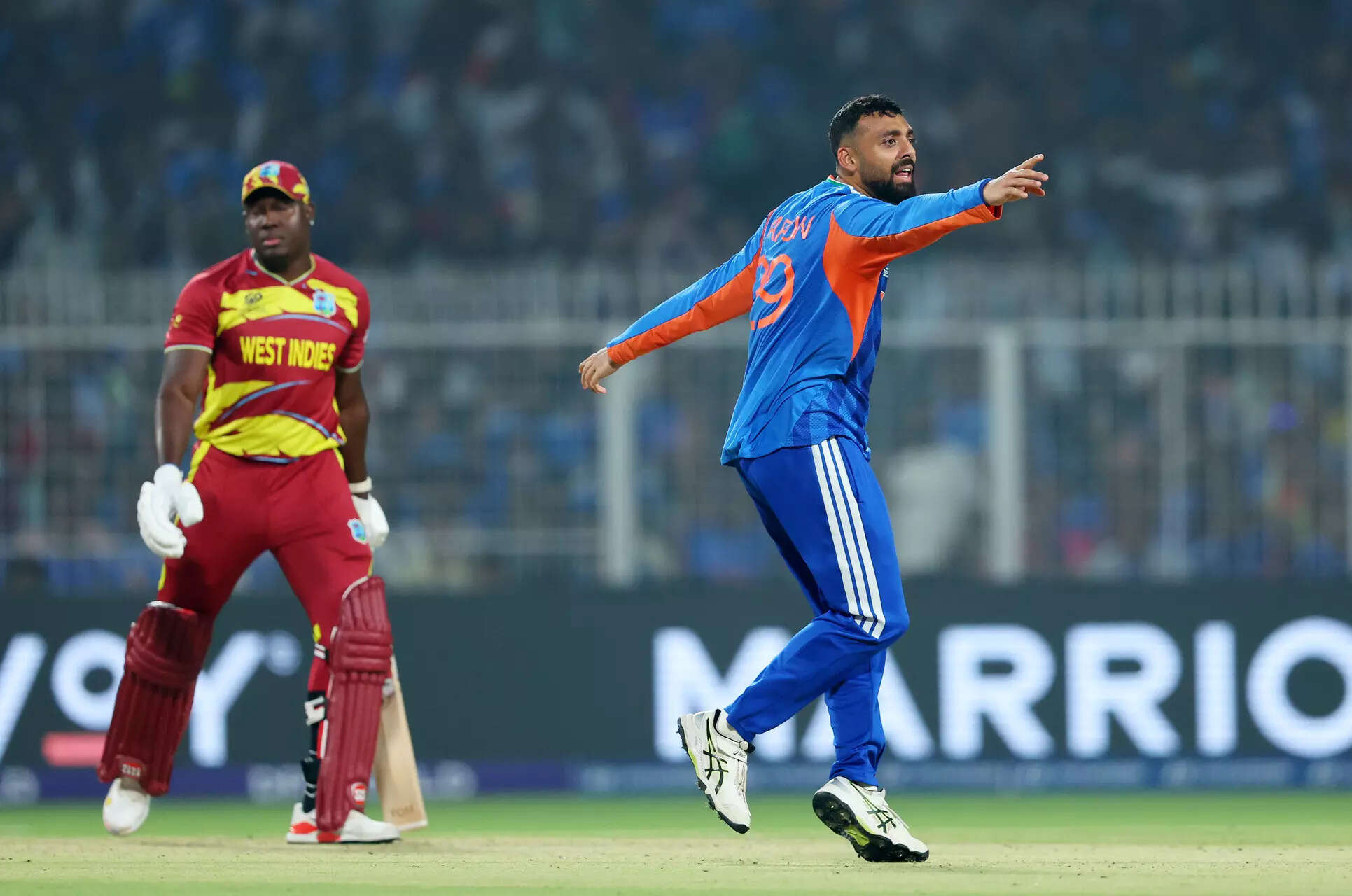
India v West Indies: ICC Men´s T20 World Cup India & Sri Lanka 2026

Varun Chakravarthy of India unsuccessfully appeals for the LBW of Rovman Powell of West Indies during the ICC Men’s T20 World Cup India & Sri Lanka 2026 Super 8 match between India and West Indies at Eden Gardens on March 01, 2026 in Kolkata, India. (Photo by Pankaj Nangia/Getty Images)

Bethell storm hits Varun

England came prepared against Chakravarthy and he was not allowed to settle into any rhythm by centurion Jacob Bethell, who smashed him for three sixes in his opening spell. Chakravarthy was guilty of bowling either too short or too full. Bethell smashed Chakravarthy for 42 runs off just 13 balls on his way to a special hundred, albeit it couldn’t steer them into the final.On the eve of the contest at the Wankhede Stadium, former India cricketer Dinesh Karthik, replying to a TimesofIndia.com query during a JioStar media day, had said that Varun had shortened his length to extract more bounce. Karthik had expected Varun to do well at the Wankhede.“First up, statistics tell you that Varun has shortened his length. When somebody shortens their length, you need to understand why they could have done it. It could also mean that he has bowled a couple of fuller balls which have gone for boundaries. In trying to readjust his length and pull it back, he has probably gone shorter.
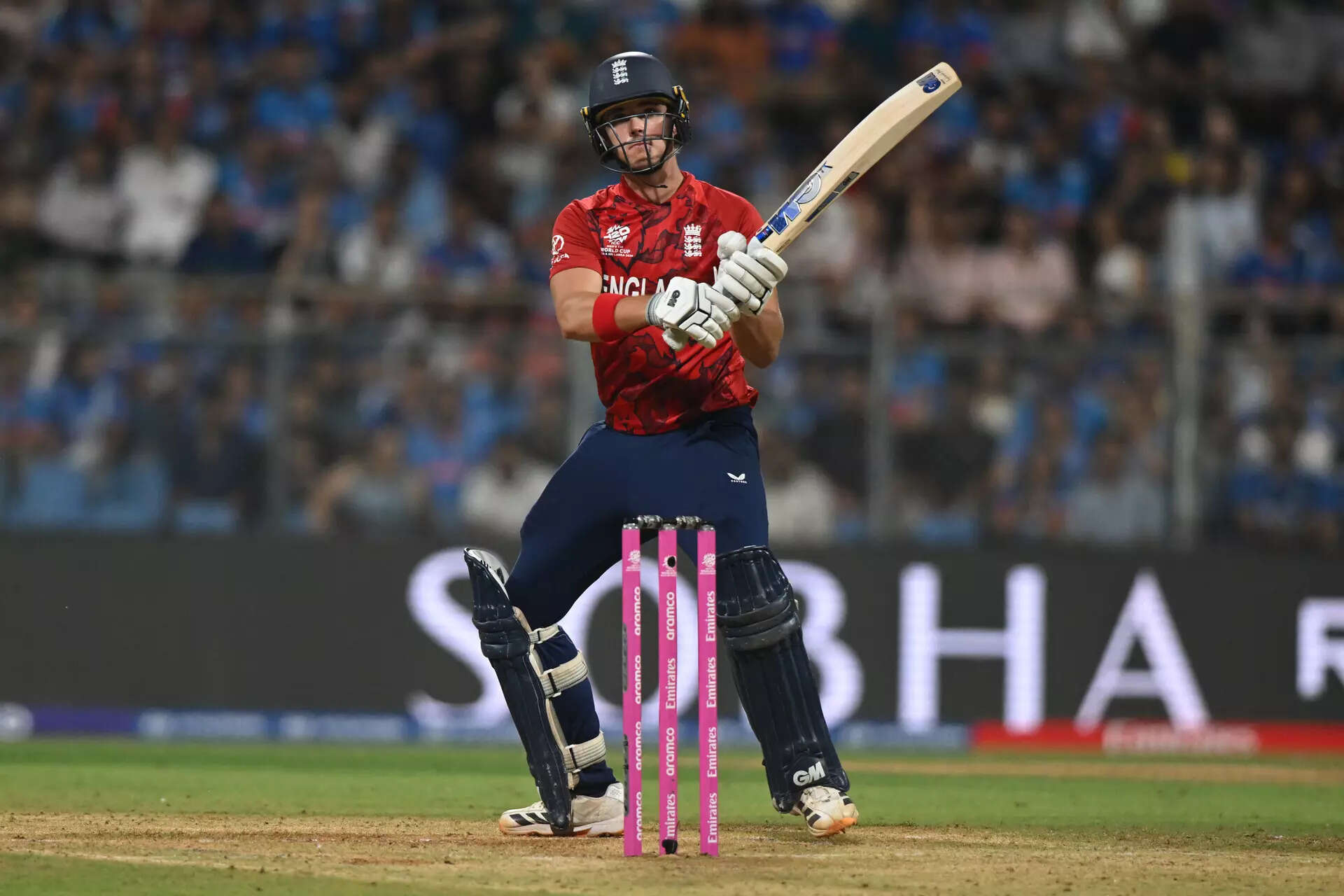
India v England: ICC Men's T20 World Cup India & Sri Lanka 2026 Semi-Final

Jacob Bethell of England bats during the ICC Men’s T20 World Cup India & Sri Lanka 2026 Semi-Final match between India and England at Wankhede Stadium on March 05, 2026 in Mumbai, India. (Photo by Prakash Singh/Getty Images)

“So with Varun, the fact that he has been playing on pitches that probably did not have as much bounce means that at times he has gone slightly shorter to try and get the ball to bounce up. Or probably he has bowled so much on the stumps and wants to attack them a lot more,” said Karthik.“He has tried to pull the length back a bit because people tend to play what is called a step hit from the crease. So maybe he has gone slightly shorter to avoid getting step hit. But yes, can he bowl a little fuller and challenge the batter? I feel he is very capable of doing it. Has he gone slightly shorter? Statistics do tell you that he has pulled his length back a bit,” he added.

Still a trump card?

After the 2024 T20 World Cup, when Gambhir took charge, Varun found a new lease of life. Under Surya and Gambhir, he emerged as India’s trump card and has picked up 70 wickets in 38 matches so far. He was also instrumental in India’s 2025 Champions Trophy triumph, where he picked up nine wickets in three games.Meanwhile, India vice-captain Axar Patel has defended the under fire world number one bowler.“We have talked about it. We have played a lot of knockout games at this moment, so it is very important to have the right mindset. Yes, there is skill and everything, but what we tell him is that when you go for runs, do not change your plan even if the batter is targeting you,” Axar said in the mixed zone.
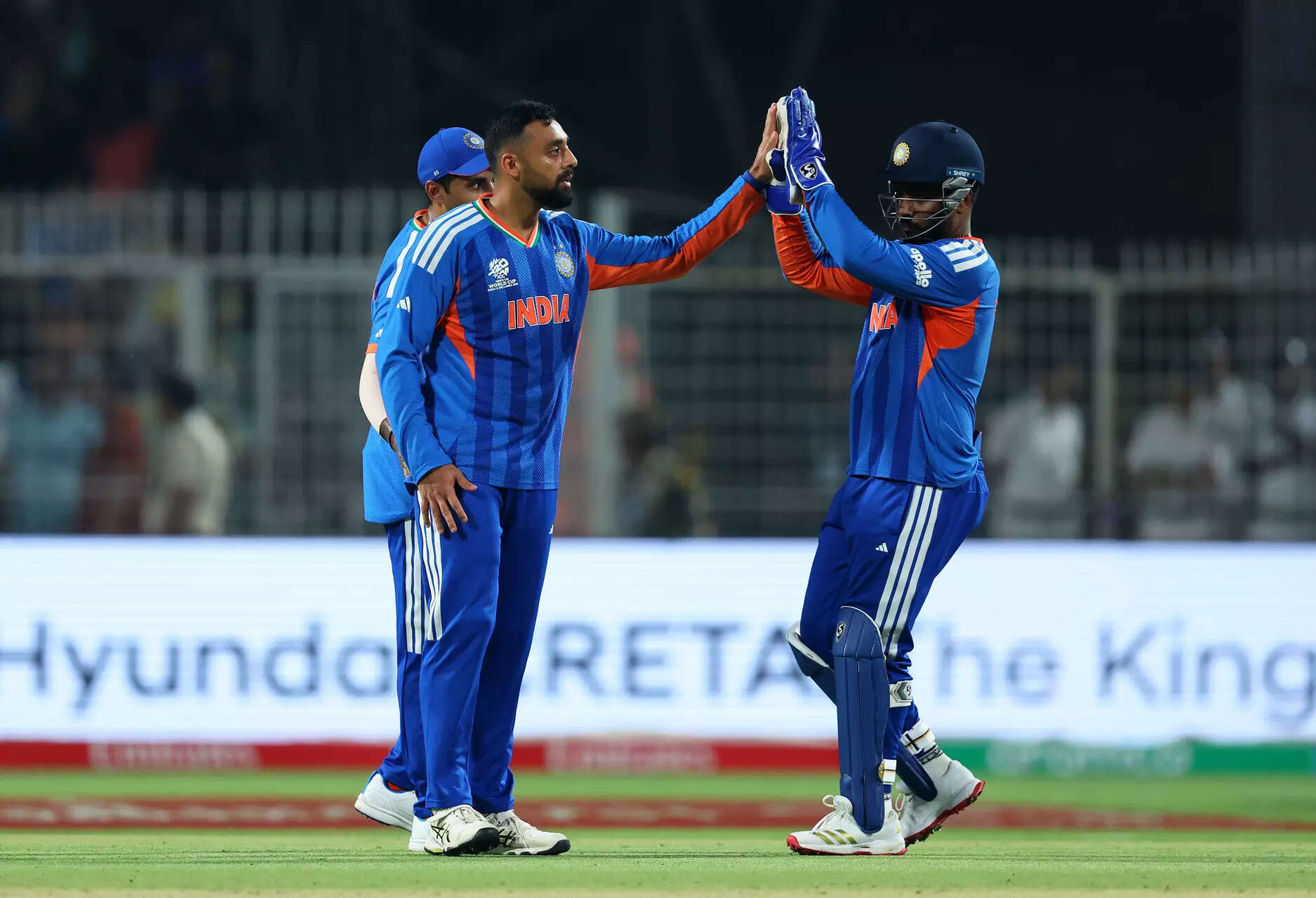
India v West Indies: ICC Men´s T20 World Cup India & Sri Lanka 2026

Varun Chakravarthy of India celebrates the wicket of Shai Hope of West Indies during the ICC Men’s T20 World Cup India & Sri Lanka 2026 Super 8 match between India and West Indies at Eden Gardens on March 01, 2026 in Kolkata, India. (Photo by Pankaj Nangia/Getty Images)

“You have a plan to put the ball on the stumps first, and then suddenly you change the line. Yes, there could be mistakes in pressure situations. We keep telling him that he is the X factor and that he should trust himself. When it comes to bowling, it is all about confidence.“If you look at it, even after being hit for a few sixes, he got the wicket of Jos Buttler. He is the number one T20 bowler and he knows what he is doing. It is a matter of mindset. We have one more match and maybe he will deliver a match winning performance in the final,” added Axar.

Poll

How concerned are you about Varun Chakravarthy’s recent dip in form?

Varun’s dip in form may have raised questions, but he is no stranger to bouncing back from difficult times. The 34-year-old has built his career on resilience and has often found ways to respond when the pressure is at its peak. The final now offers him that opportunity.Against a formidable New Zealand side, India will look to their mystery spinner not just for wickets but also for control in the middle overs. If Chakravarthy can rediscover his rhythm and trust his plans, Sunday night could yet become the stage for another compelling comeback story.

Source link

Explosion scare in Dubai Marina: UAE emirate confirms tower hit by falling debris from aerial interception amid Iran and US-Israel clashes


Explosion scare in Dubai Marina: UAE emirate confirms tower hit by falling debris from aerial interception amid Iran and US-Israel clashes
Dubai Confirms Dubai Marina Incident Was Caused by Aerial Interception: What Really Happened In The UAE Emirate

Dubai authorities have confirmed that the recent incident in the Dubai Marina area was caused by debris from a successful aerial interception, reassuring residents that the situation has been contained and that public safety remains intact. The event occurred amid rising regional tensions linked to the ongoing conflict involving Iran, the United States and Israel, which has led to missile and drone activity across parts of the Middle East that host US military bases.While the incident sparked concern after videos of smoke and damage circulated on social media, officials emphasised that it was a minor incident caused by falling debris rather than a direct attack on the city. The clarification has helped calm fears in one of Dubai’s busiest residential and tourist districts.

What happened in Dubai Marina

According to the Dubai Media Office, debris from a projectile that had been successfully intercepted by air defence systems struck the façade of a tower in Dubai Marina. Authorities confirmed that emergency teams responded quickly and secured the area. Officials said the incident was limited in scale and no injuries were reported at the tower, with the damage mainly affecting the building’s exterior.Dubai Marina is one of the emirate’s most densely populated neighbourhoods, home to luxury residential towers, hotels and popular waterfront attractions. Due to its visibility and international profile, even a small incident there quickly drew attention online and in international media. Authorities stressed that the situation was brought under control rapidly and that residents could resume normal activities.The incident did not occur in isolation. It comes during an ongoing wave of missile and drone attacks linked to the escalating Iran-US-Israel conflict, which has spilled into several Gulf states. Since the conflict intensified in late February 2026, the UAE’s air defence systems have intercepted hundreds of drones and missiles, preventing most of them from reaching populated areas. However, fragments from intercepted projectiles sometimes fall back to the ground, creating secondary risks.Experts say this is a common challenge during missile interceptions. When defence systems destroy incoming threats in mid-air, pieces of debris can scatter over wide areas before falling to the ground. In this case, authorities say that the debris that struck the building in Dubai Marina was the result of one such interception.

Dubai air defence and public safety measures

The UAE’s Ministry of Defence has been actively responding to incoming threats using a network of advanced air defence systems designed to detect and intercept missiles and drones. These systems include radar detection, early-warning alerts, and interceptor missiles that destroy incoming projectiles before they reach their targets.Authorities have also taken additional precautionary steps during the conflict, including:

  • Issuing public safety alerts warning residents of potential missile threats
  • Temporarily closing airspace during active interceptions
  • Deploying emergency response teams across key areas
  • Monitoring critical infrastructure such as airports, ports and residential zones

During the recent event, residents across parts of the UAE reportedly received mobile alerts advising them to seek shelter temporarily while interceptions were underway. Shortly afterward, officials issued an “all clear” message confirming that the situation was safe.

Why interception debris can still cause damage

Even when air defence systems work as intended, interceptions can still create risks for civilians. When a missile or drone is destroyed in the air, it breaks apart into fragments. These fragments can include:

  • Pieces of the missile body
  • Fuel tanks
  • Electronics and guidance systems
  • Fragments of the interceptor missile itself

Depending on the altitude of the interception, these fragments may fall back to the ground across a wide radius. Military analysts note that this phenomenon has been seen in several conflicts worldwide, including missile defence operations in Israel, Ukraine and Saudi Arabia. In many cases, the debris causes limited structural damage but can still pose dangers to people and vehicles on the ground.

Dubai’s rapid emergency response

Authorities credit the quick containment of the Dubai Marina incident to the emirate’s well-developed emergency response infrastructure. Emergency teams including Dubai Civil Defence, police units, and medical responders were dispatched immediately after reports of the incident emerged.Their responsibilities included securing the affected building, assessing structural damage, assisting residents if evacuation was necessary and ensuring that no unexploded debris remained. Officials later confirmed that the damage was minor and that residents were safe.Videos and photos from the scene spread rapidly on social media, showing smoke rising from a tower in Dubai Marina. These images led to speculation that the city had been directly targeted. However, authorities quickly clarified the situation, explaining that the damage resulted from interception debris rather than a successful strike.The Dubai Media Office urged residents and media outlets to rely on official sources for accurate information, particularly during periods of heightened regional tensions. Misinformation during security incidents can spread quickly online, sometimes causing unnecessary panic.

The bigger picture: Gulf security during Iran and US-Israel conflict

The Dubai Marina incident reflects the broader security challenges facing Gulf countries during the current regional crisis. Since the escalation began, several countries in the region, including the UAE, Qatar and Bahrain, have reported missile or drone threats linked to the Iran-Israel-US conflict. Many of these attacks have targeted military facilities or strategic infrastructure but defence systems have intercepted the majority before impact.According to official figures, hundreds of drones and missiles have been intercepted over the UAE since the conflict began, significantly limiting the potential damage. However, the falling debris from interceptions remains an unavoidable risk in densely populated urban environments.Security analysts say that the next situation will depend largely on how the wider conflict evolves in the coming weeks. If tensions escalate further, Gulf states may continue to strengthen air defence readiness, early-warning systems and coordination with allied defence forces. At the same time, authorities are likely to continue issuing public safety alerts whenever interception operations occur.For now, officials in Dubai stress that the city remains safe and that the recent Dubai Marina incident was quickly controlled and limited in scope.


Source link

‘Census-style’ 45-day assessment signals early learning turnaround in Haryana schools | India News


'Census-style' 45-day assessment signals early learning turnaround in Haryana schools

NEW DELHI: At a time when India is struggling to ensure children can read and do basic arithmetic by Class III – a core goal of the National Education Policy (NEP) 2020 – Haryana has reported a sharp turnaround in govt school-level learning outcomes (grade-level competencies). A statewide “census-style” assessment, exclusively accessed by TOI, showed the share of high-performing govt schools rising from 7% in Sept to 53% in Dec last year after a targeted remediation drive addressing foundational literacy and numeracy gaps.Haryana’s initiative marks a move from sample-based assessments to a “census-style diagnostic approach” that measures the competency of every child individually. The exercise covered over 4.35 lakh students across nearly 8,600 govt primary schools, using a digital teacher-led assessment system under NIPUN (National Initiative for Proficiency in Reading with Understanding and Numeracy) Haryana mission.The first assessment conducted in Sept 2025 revealed significant learning gaps across the system. Most schools were classified in Category C (the lowest), where fewer than half the students had achieved grade-level competencies.Following the diagnosis, districts designed their own 45-day remediation strategies, grouping students by competency and targeting specific learning gaps. Peer-learning approaches were also used to support weaker students. “Every district made their own strategy for 45 days which also included category A students helping lower category students as all the students were already mapped,” NIPUN Haryana programme officer Pramod Kumar said.The state repeated the assessment in Dec 2025 using same teachers who conducted first round. “Data made a completely significant shift showing unimaginable progress,” the official said.Learning gains were visible across literacy and numeracy. Class II literacy rose from 46.5% to 67%, while Class III literacy increased from 44.2% to 61.4%. Numeracy performance also improved, with Class II scores rising from 63.7% to 78.8% and Class III numeracy improving from 50.5% to 71%. The results translated into a major shift in school performance categories. Number of Category A schools increased from 621 to 4,545, while Category C schools fell from 6,385 to 1,973.Officials said the next phase will focus on sustaining the gains and expanding the programme. The state plans to extend the NIPUN model to Classes IV and V, with around seven lakh students expected to be assessed this year.The shift is significant against the backdrop of India’s persistent foundational learning challenge. National learning surveys have shown only gradual improvements in basic reading and arithmetic. For instance, the proportion of Class III children in govt schools able to read a Grade II-level text increased from 16.3% in 2022 to 23.4% in 2024, while proficiency in basic subtraction rose from 20.2% to 27.6% during same period.


Source link

Karnataka woman, lover held after autopsy of exhumed body reveals husband died of smothering, not ‘heart attack’ | Bengaluru News


A Bengaluru man, initially reported to have died of a heart attack, was actually smothered to death

BENGALURU: Carrying out an autopsy on the exhumed body of a 50-year-old daily wage worker, who, according to his wife, had died of a heart attack, revealed that the victim was smothered to death. Police arrested his wife, P Asha, 46, and her alleged lover, Chandrappa, 48, on charges of murdering K Paramesh inside the latter’s Hebbur home in Tumakuru district.According to police, Asha, who worked as housekeeping staff, had an affair with Chandrappa, a cook. As Paramesh discovered it, they decided to eliminate him. An alcoholic, Paramesh downed a few pegs before going to sleep every night. When he was asleep on Jan 29 night, Asha and Chandrappa allegedly smothered him to death. The next morning, Asha called the relatives, saying Paramesh died of a heart attack. He was buried.

Iran War Escalates, US Waiver On Russian Oil, Rahul Targets Centre And More

However, Paramesh’s elder sister, K Nagamma, filed a police complaint on March 4, suspecting foul play.“Seeing Asha unaffected by Paramesh’s death and her closeness with Chandrappa, Nagamma questioned Asha, asking for details on Paramesh’s death. When Asha made contradictory statements, Nagamma filed the police complaint,” an investigating officer said.


Source link

Top legal experts split on social media ban for kids | India News


Top legal experts split on social media ban for kids

NEW DELHI: At a time when parents are worried about the downside of screen addiction among adolescents, legal experts including former CJI Ranjan Gogoi appreciated the intent behind proposed move by Karnataka and Andhra Pradesh to ban social media access to children below certain age but doubted the pertinence and effectiveness of legislative or executive intervention.TOI spoke to a spectrum of other experts – former attorney general Mukul Rohatgi, and senior advocates A M Singhvi, Rakesh Dwivedi, and Devadatt Kamat – on the problem, efficacy of a law enacted by a state to prevent children below certain age from accessing social media platforms when telecommunication and information technology fall squarely within the law making domain of Centre and the possible ways and means to pull the children off the social media quagmire.Gogoi, with grandchildren of impressionable age, spoke more like a wise elderly head of a family than a legal expert: “Social media is here to stay. Instead of banning children from accessing it, it would be better to educate them about its constructive usage. Older generation must teach them its benefits because it provides instant reach to a vast knowledge base. Why should children be deprived of its tremendous benefits?”When pointed out that Australia has banned under-16s from accessing Tiktok, Facebook, Instagram, YouTube, Snapchat and Threads, Gogoi said, “We have very different social values and structures compared to Australia. We do not have to follow other countries blindly. Our strong social bonds and parental relations would be helpful in guiding the children to use social media beneficially.”Rohatgi was sceptical about the working and implementation of states enacting different laws prescribing different age limits for children to access social media: “Telecommunication and IT are central subjects. States should not enact laws individually. It will create confusion. It should be left to govt which can bring a legislation in Parliament to address the issue pan-India.”Singhvi said in principle the objective behind the proposed regulatory framework is laudable and desirable. “Across political spectrum, suffering parents, teachers and elders will endorse the deleterious impact of unlimited social media access on impressionable young minds.”What should be the mechanism to regulate it? Singhvi said, “As always both God and Devil reside in the details. The real test will depend on proper implementation without harassment and unrelated ulterior acts.” Dwivedi said, “The ban should not be absolute as children too have a fundamental right to communication and information. The ban should be on putrid content being placed on social media without adequate safeguards to prevent children from accessing such undesirable content.”Kamat, with two children of impressionable age, said mental health of the next generation should be safeguarded from the deleterious impact of unlimited access to social media. He said though communication is exclusively within the legislative competence of Centre, states can bring in regulatory mechanisms under the broad subject of health.


Source link