Breaking News
Lasers, satellites and cyberattacks: How US is crippling Iran’s arsenal


Lasers, satellites and cyberattacks: How US is crippling Iran's arsenal

Fragments of Iranian weapons, shattered in flight or rendered useless by electronic disruption, have been falling from the skies across the Middle East. Behind many of these failures is a network of advanced technology developed in the US, including heat-tracking satellites, cyber warfare tools and cutting-edge laser systems designed to neutralise aerial threats.Military observers believe some of these capabilities are being used in Operation Epic Fury, a campaign that began on 28 February. One of the most closely watched developments is the suspected deployment of a ship-mounted laser weapon aboard a US Navy destroyer operating off the Middle Eastern coast.Videos released by US Central Command appear to show a vessel equipped with the High-Energy Laser with Integrated Optical Dazzler and Surveillance system, commonly known as HELIOS. The system features a steerable laser that can focus a powerful beam of energy on aerial targets, enabling it to disable drones and other threats within seconds.Laser-based defence is not limited to US forces. Footage circulating from the skies near the Israel–Lebanon border shows rockets being launched only to explode seconds later. Analysts widely believe these interceptions may involve Israel’s experimental Iron Beam system, an advanced laser defence designed to destroy rockets before they reach their targets.Neither the US Navy nor the Israeli military has officially confirmed the use of laser weapons in the current operation. However, the Navy acknowledged earlier in February that HELIOS successfully destroyed four drones during testing, suggesting that the technology is already operational.The opening phase of the campaign has been intense. Within the first 72 hours, US forces reportedly struck around 1,700 targets. More than 200 Iranian ballistic missile launchers, roughly half of the country’s inventory, were destroyed while dozens more were rendered inoperable. Hundreds of missiles were eliminated before they could be launched.Much of this precision has been enabled by assets operating far above the battlefield. The US Space Force, established in 2019, plays a crucial role in providing real-time intelligence for air and naval operations.According to Brent David Ziarnick, a former US Air Force officer and past lecturer in the Space Force programme at Johns Hopkins University, satellites equipped with infrared sensors detect the heat signatures produced when missiles launch.“These sensors can immediately identify where rockets are fired from,” he explained. “Once the launch point is located, missile defence systems can intercept the projectile and field units receive early warnings to take shelter.”The detection happens within seconds. Infrared sensors track the intense heat generated by missiles, allowing defence networks to calculate their trajectory and likely destination almost instantly. Reports suggest this system has already helped destroy hundreds of Iranian missiles during the conflict.Although the fighting is taking place in the Middle East, much of the monitoring work is carried out thousands of kilometres away. Personnel in the United States operate from facilities housing large radar domes known as radomes. These spherical structures resemble giant golf balls and collect satellite data in real time. Analysts use the information to determine missile trajectories and likely targets.Sam Eckhome, host of the YouTube programme Access Granted, describes the arrangement as a layered defence system combining satellites, radar installations and command centres.“The network is designed so that if a missile is ever launched, the United States will know first,” he said.Another important dimension of the operation is cyber warfare. Working alongside Space Force units is US Cyber Command, which focuses on disrupting enemy systems before missiles or aircraft are launched.Ziarnick said that once surveillance systems identify key radar installations, cyber teams attempt to disable them digitally.“They infiltrate the systems and shut them down,” he said. “In some cases they can even take control of the software, essentially turning the enemy’s equipment into a useless piece of hardware.”Joint Chiefs of Staff chairman General Dan Caine confirmed that cyber operations began even before the first missiles were fired. Cyber Command targeted communications networks and sensor systems across Iran to “disrupt, disorient and confuse the enemy”.Israeli intelligence operations appear to have played a role as well. Reports suggest cyber operatives spent years quietly accessing traffic cameras across Tehran, allowing them to monitor the movements of Iranian Supreme Leader Ayatollah Ali Khamenei and identify members of his security detail.By analysing footage from these cameras, intelligence agencies were reportedly able to map the guards’ routines, their vehicles and even their home addresses.One unusual aspect of the conflict involves Iran’s own response to the attacks. As soon as the operation began, Iranian authorities shut down internet access across much of the country. The tactic has previously been used during domestic protests to prevent citizens from organising demonstrations.While the shutdown may limit public communication, experts believe Iranian leadership continues to operate through secure internal networks. Such systems would likely become prime targets for cyber infiltration.“Cyber Command can reach out and touch systems anywhere,” Ziarnick warned. “It has become a formidable force.”The relatively low number of casualties among US and allied forces reflects the technological nature of the campaign. Former Space Force officer Bree Fram believes modern warfare increasingly relies on sophisticated systems rather than large ground armies.“The absence of mass formations of troops on the battlefield shows how advanced the technology has become,” she said. “It is a combination of powerful systems and the expertise required to operate them.”Together, satellites, lasers, cyber weapons and precision intelligence illustrate how modern conflict is increasingly fought across invisible domains far beyond the traditional battlefield.
Source link

Uttarakhand CM Pushkar Singh Dhami celebrates Holi with public at official residence | India News


Uttarakhand CM Pushkar Singh Dhami celebrates Holi with public at official residence
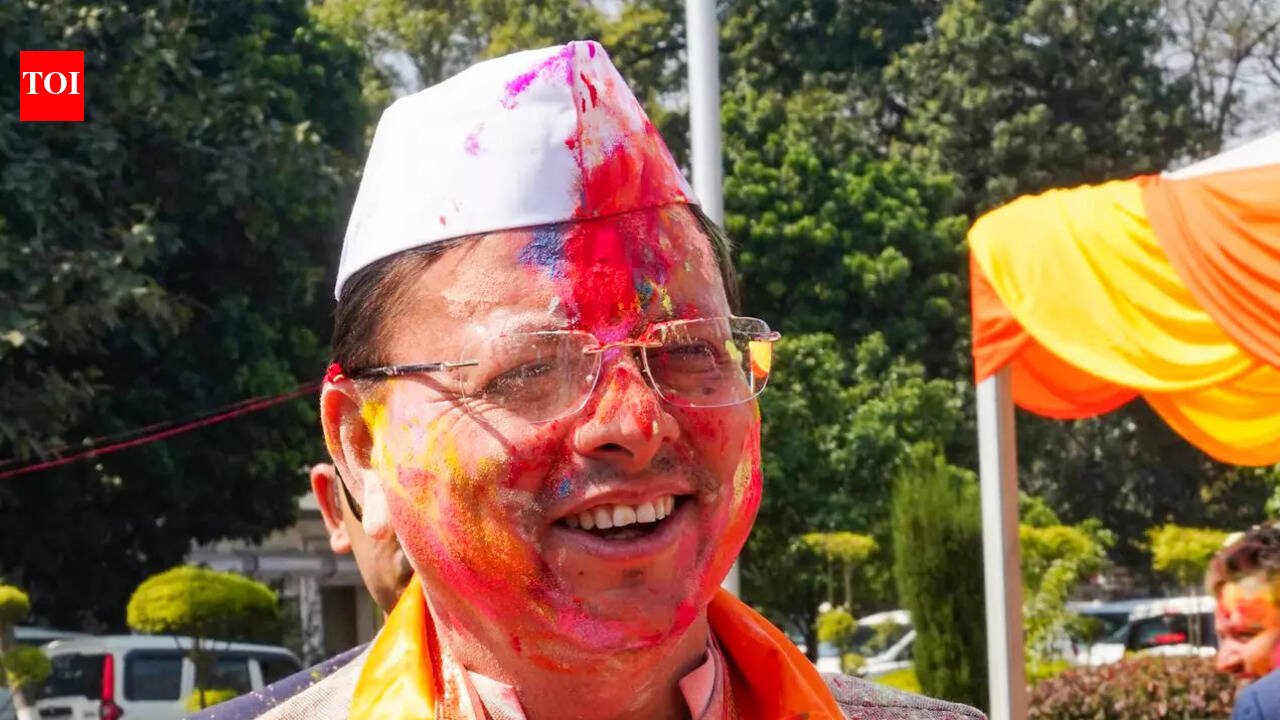
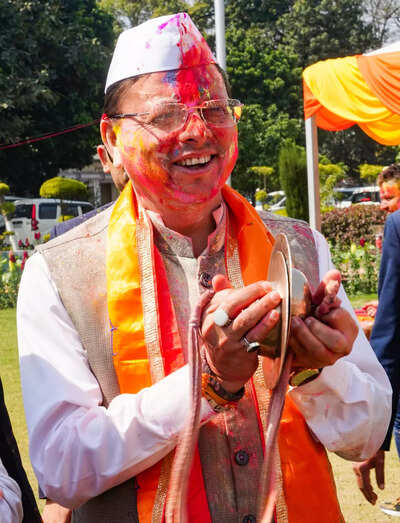
Dehradun, Mar 04 (ANI): Uttarakhand CM Pushkar Singh Dhami celebrates Holi during a Holi Milan Samaroh, at his official residence, in Dehradun on Wednesday. (@pushkardhami X/ANI Photo)

Uttarakhand chief minister Pushkar Singh Dhami on Wednesday participated in various programmes and celebrated Holi with the people of the state, conveying his commitment to promoting folk culture, faith, and development.The festival of Holi in Uttarakhand this year was not merely a celebration of colours but also reflected the message of the state’s culture, faith, and development.A unique glimpse of Uttarakhand’s rich folk culture was seen during the Holi Milan ceremony organised at the chief minister’s residence in Dehradun. Folk artists from different regions of the state, Garhwal, Kumaon, Jaunsar, and the Terai, presented their traditional performances, creating a festive atmosphere.According to the Uttarakhand CMO, artists from the Jaunsar region performed the traditional Harul dance, while Holyar groups from Kumaon filled the environment with joy through their traditional Holi songs. The beats of drums, manjira, and other traditional musical instruments echoed with folk songs, immersing the chief minister’s residence in the vibrant colours of Uttarakhand’s cultural heritage.During the event, CM Dhami enthusiastically joined the folk artists. He danced with them, played traditional musical instruments, and enjoyed the folk songs. The moment was not only a celebration but also reflected the government’s commitment to preserving the state’s folk culture and traditional art forms.Alongside the Holi Milan ceremony, the chief minister also carried forward the tradition of political courtesy and respect for senior leadership. He visited the residences of former chief ministers Bhuvan Chandra Khanduri, Ramesh Pokhriyal Nishank, and Trivendra Singh Rawat to extend his Holi greetings.The chief minister’s visit to Champawat during the Holi period was also significant in many ways. The large gatherings at various events reflected the public’s strong confidence in the work of the Dhami government.During the visit, the chief minister inaugurated the fair at Maa Purnagiri Dham and informed the public about the ongoing development works in the temple area. Facilities such as parking, drinking water, and crowd management are being modernised for the convenience of devotees.Chief Minister Pushkar Singh Dhami also participated in the Kali Kumaon Holi Rang Mahotsav and the Holi Milan ceremony organised in Lohaghat. He interacted warmly with the public. The beats of traditional drums and songs, along with the large crowd present at the events, created a vibrant and festive atmosphere.The Holi Milan ceremony organised in Khatima also became a strong symbol of public support and trust.A large number of people gathered to celebrate Holi with their chief minister. The sound of drums, the colourful atmosphere, and slogans of “Dhami Zindabad” reflected a deep emotional connection between the people and their leader.In his address, the chief minister said that the state government is continuously working for the protection and development of Sanatan culture and religious centres.He emphasised that preserving the original character and cultural identity of Devbhoomi Uttarakhand is the government’s top priority.The programmes organised on the occasion of Holi were not merely festive celebrations but also conveyed a message of harmony between faith, culture, development, and public trust. The large participation of people in these events indicated that the people of Uttarakhand are ready to move forward together with their chief minister towards development, while preserving their cultural identity.


Source link

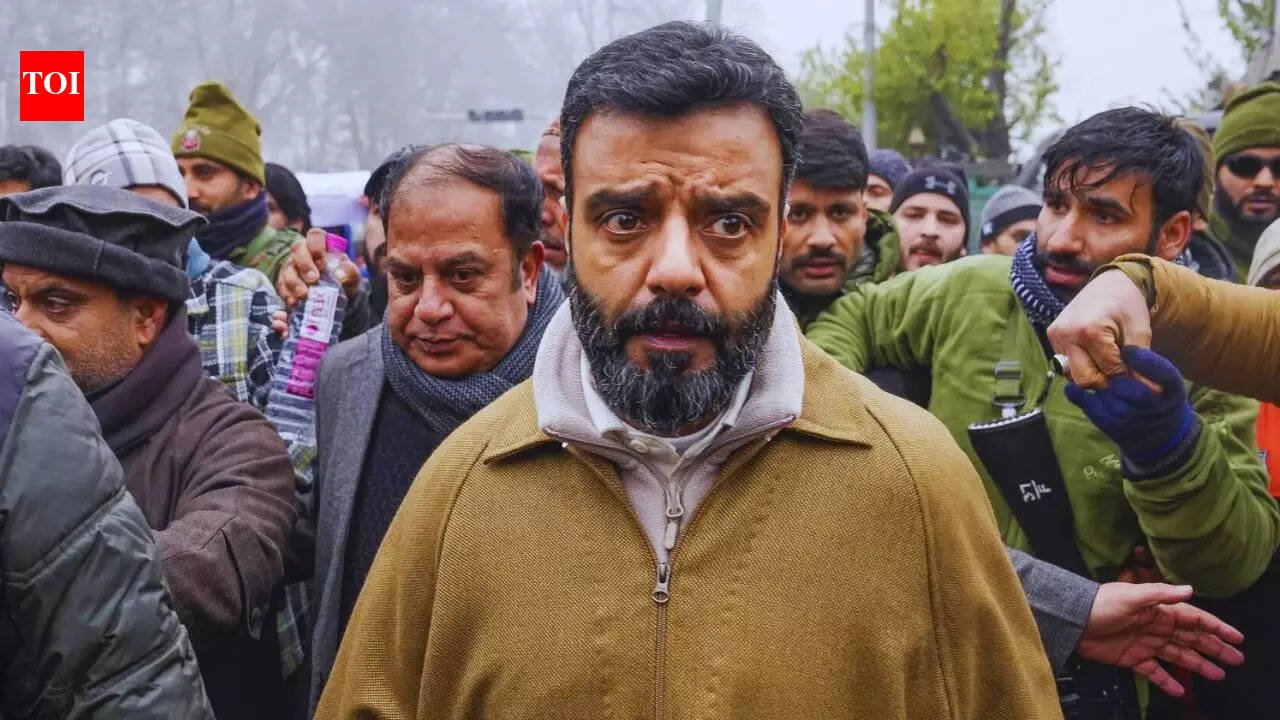
Protests over Ayatollah Khamenei’s killing in Kashmir: Meta blocks media pages, MP Ruhullah Mehdi booked for ‘misleading content’ | Srinagar News


As Protests Break Out In India, A Look At Why Ayatollah Khamenei Was Spiritual Anchor For Shia Muslims

Syed Ruhullah Mehdi (File Photo)

SRINAGAR: After large-scale protests over the past two days against the killing of Iran’s supreme leader, Ayatollah Ali Khamenei, the Jammu and Kashmir government extended the closure of schools and colleges across the Valley until Saturday.At the same time, Meta blocked several newspaper accounts in the Valley, evoking condemnation from political parties.Former chief minister Mehbooba Mufti and Peoples Conference leader Sajad Lone asked Meta to uphold freedom of expression.

As Protests Break Out In India, A Look At Why Ayatollah Khamenei Was Spiritual Anchor For Shia Muslims

Mehbooba said she was concerned over the recent censorship of news organisations such as @GreaterKashmir, @KashmirLife, and @RisingKashmir, whose Facebook and Instagram pages have been taken down.“Such actions not only silence legitimate voices but also undermine the fundamental right to freedom of expression. The Jammu & Kashmir government must also immediately end any censorship of media in the region,” she said.Sajad Lone said that the Facebook and Instagram handles of some media institutions had been blocked. “Most of them are responsible, mature institutions and include Greater Kashmir, Kashmir Life and Rising Kashmir. Their absence will do more harm,” he said.In a statement issued here, weekly newspaper Kashmir Life said that its verified Facebook and Instagram pages had become inaccessible in India since Monday afternoon after Meta restricted access at the request of law enforcement authorities.The paper said Meta posted an auto-response to the page stating that it had restricted access to the content in India “pursuant to a notice from ‘The Government of India – Law Enforcement’ under Section 79(3)(b) of the Information Technology Act, 2000.”The communication advised the organisation to contact the issuing authority for further information and stated that details regarding content restrictions based on local law are available through Meta’s Transparency Centre. Section 79(3)(b) of the Information Technology Act, 2000, empowers authorities to require intermediaries to disable access to content upon receiving actual knowledge through a court order or government notification.NC MP, former mayor bookedPolice late Tuesday evening registered cases against National Conference MP Aga Syed Ruhullah Mehdi and former Srinagar mayor Junaid Azim Mattu, accusing them of being involved in “the circulation of false, fabricated and misleading content across digital and social media platforms with the intent to create fear, disturb public order, and incite unlawful activities.” The FIR was registered under various sections of the Bharatiya Nyaya Sanhita (BNS) at the Cyber Police Station, Srinagar.Early Wednesday, Mehdi responded, saying that “the same administration that couldn’t find the courage to condemn a sovereign nation’s leader being martyred now finds the courage to book the one man who did.” “The people of Srinagar did not elect their MP to recite government-approved condolences. They elected him to speak the truth. That mandate does not expire with an FIR,” he added.LG asks for calmIn a related development, Lieutenant Governor Manoj Sinha chaired two high-level meetings on Tuesday. He chaired a meeting at the Police Control Room in Srinagar to review the law-and-order situation. Sinha, who oversees law and order in J&K, appealed to citizens and community leaders to uphold harmony and contribute to an atmosphere of calm and goodwill in society.He also chaired a high-level meeting at Lok Bhawan, holding “in-depth deliberations on the prevailing security scenario in the UT of J&K.” The meeting was attended by Lieutenant General Pratik Sharma, General Officer Commanding-in-Chief (GoC-in-C), Northern Command; Nalin Prabhat, DGP, J&K; Lieutenant General Prashant Srivastava, GoC 15 Corps; and Major General Balbir Singh, MGGS, Northern Command.Jammu and Kashmir Police on Tuesday stated that some elements were systematically attempting to spread distorted narratives and unverified content with the clear intent to incite unrest, disturb public order, and create disharmony in society. “Such malicious misinformation campaigns pose a grave threat to peace, security, and the integrity of the nation,” the police said, adding that they had registered an FIR at the Cyber Police Station and that strict legal action would follow.Protests in KashmirProtests erupted across Kashmir on Sunday morning as news of Khamenei’s death spread, with large numbers of people in Srinagar marching toward Lal Chowk. Chanting anti-U.S. and anti-Israel slogans, protesters turned the iconic Clock Tower at Lal Chowk into the centre of demonstrations.Many protesters carried black and red flags symbolising grief and martyrdom, beat their chests in mourning, and held portraits of Khamenei and Iran’s founding leader, Ayatollah Ruhollah Khomeini. Some banners were placed at the clock tower.It was the first time since the abrogation of Article 370 on August 5, 2019, that such large-scale protests have erupted in the Valley. Police have now sealed Lal Chowk.Despite heavy restrictions on Monday and Tuesday, demonstrations continued in several areas. Police fired tear gas at multiple locations to disperse crowds. Police sources said incidents of stone-throwing were reported in some places. More than a dozen people were injured in Monday’s protests.Ruling National Conference spokesperson Tanvir Sadiq on Tuesday appealed to the Union home minister and LG Sinha to consider releasing the youths who have been detained over the past two days. He also appealed to Shia protesters to “confine our protest and expression of grief and anger to peaceful means within our homes, mosques, and Imambaras, so that no unrest or unfortunate situation arises.”


Source link

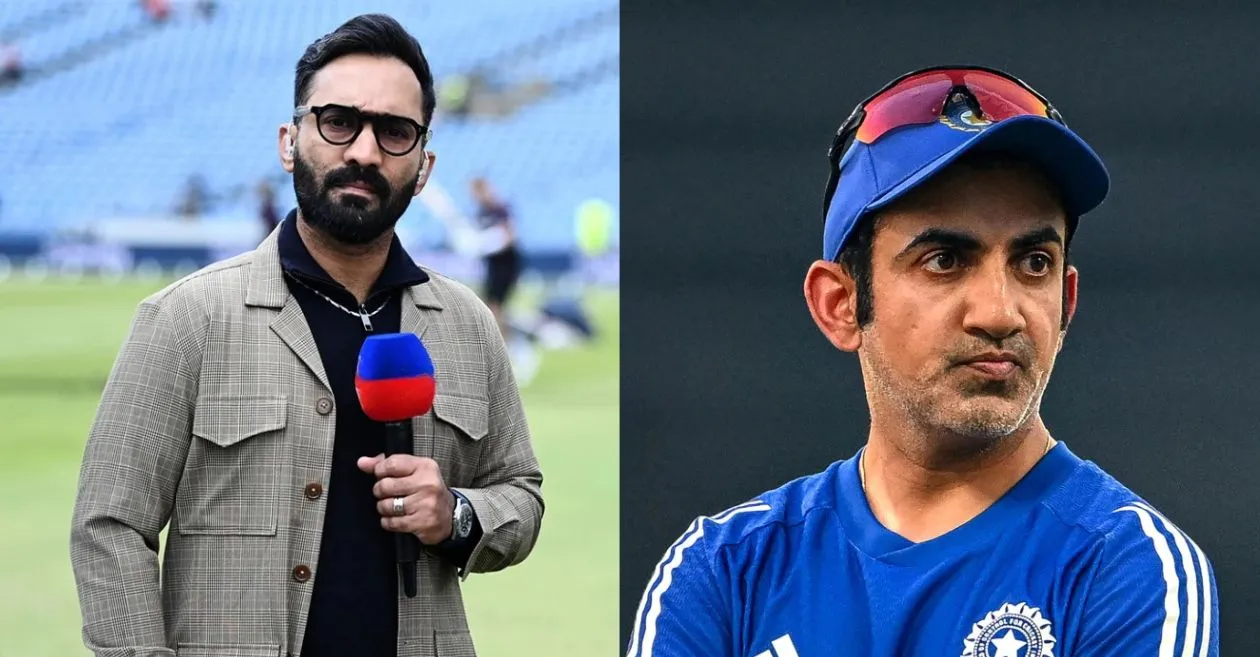
T20 World Cup 2026: Dinesh Karthik calls on Gautam Gambhir to back India’s star opener before IND vs ENG semi-final


The stage is set at the iconic Wankhede Stadium in Mumbai for a high-octane showdown as England face defending champions India in the second semi-final of the ICC Men’s T20 World Cup 2026 this Thursday, March 5. While the ‘City of Dreams’ prepares for a repeat of the 2022 and 2024 semi-final fixtures, the primary conversation surrounding the Indian camp isn’t just about the opposition, but the volatile form of their young opening sensation, Abhishek Sharma.

Despite India’s successful surge into the knockouts, Abhishek’s tournament has been a statistical nightmare. The left-hander, who entered the World Cup as the world’s top-ranked T20I batter, endured a horrific group stage with three consecutive ducks against the USA, Pakistan, and the Netherlands. While a fighting 55 off 30 balls against Zimbabwe offered a glimpse of his destructive potential, a meagre score of 10 in the virtual quarter-final against the West Indies have left fans and pundits questioning his spot in the XI.

Dinesh Karthik advises Gautam Gambhir to stick with India’s star opener ahead of semi-final

Amidst growing calls to reshuffle the top order, former India wicket-keeper and ICC expert Dinesh Karthik has issued a firm ‘stick to your guns’ message to head coach Gautam Gambhir. Speaking at the JioStar Media Day ahead of the clash, Karthik dismissed the notion of dropping the youngster for such a monumental game. He argued that the tactical advantage of the Abhishek-Sanju Samson left-right opening combination is too valuable to discard based on recent individual blips.

In a big tournament like a World Cup, you have to trust the players who have got you there, I believe they need to stick to Abhishek, Sanju, and Ishan Kishan. Give themselves the best chance of success on the big day,” Karthik emphasized.

Karthik’s reasoning stems from Abhishek’s unique ‘X-factor’, the ability to take the game away from the opposition within the Powerplay, a trait Gambhir himself famously championed during his playing days.

Also READ: Top 5 fastest centuries in T20 World Cup history ft. Finn Allen

Wankhede stadium memories and the Sanju Samson factor

The decision to retain Abhishek is bolstered by his historic record at the Wankhede. It was at this very venue last year that the Punjab batter dismantled the English attack, smashing a record-breaking 135 off just 54 deliveries. Even England’s Sam Curran has admitted that the defending champions remain wary of the threat Abhishek poses, recalling that 37-ball century from the pre-World Cup bilateral series.

While Abhishek seeks redemption, his partner Samson has become the bedrock of the Indian innings. Samson’s ‘Kohli-esque’ unbeaten 97 at Eden Gardens was the catalyst that secured India’s semi-final berth. By absorbing pressure when early wickets fell and finishing the chase with surgical precision, Samson has provided the stability that allows the team management to take a calculated risk on Abhishek’s high-risk, high-reward approach. For Gambhir and captain Suryakumar Yadav, the choice is clear: back the explosive potential of their young opener to fire on the grandest stage of them all.

Also READ: Aiden Markram reveals key reasons behind South Africa’s crushing defeat to New Zealand in T20 World Cup 2026 semi-final


Source link

Middle East heat may ripple across India’s energy supply chain, flags Goldman Sachs


Middle East heat may ripple across India's energy supply chain, flags Goldman Sachs

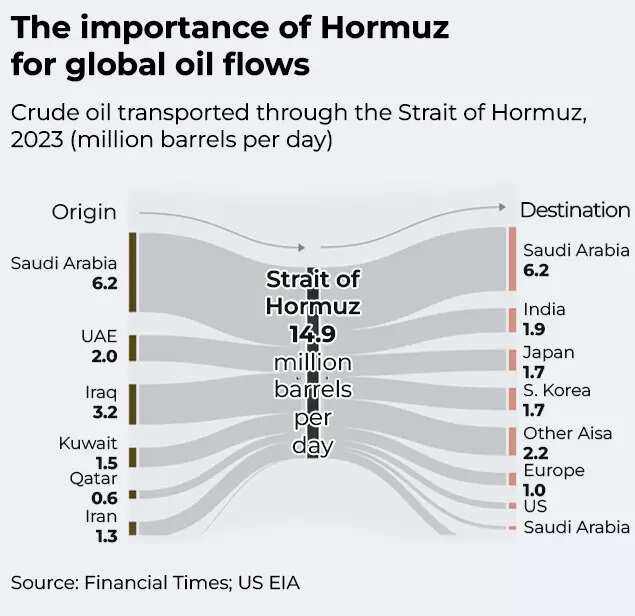
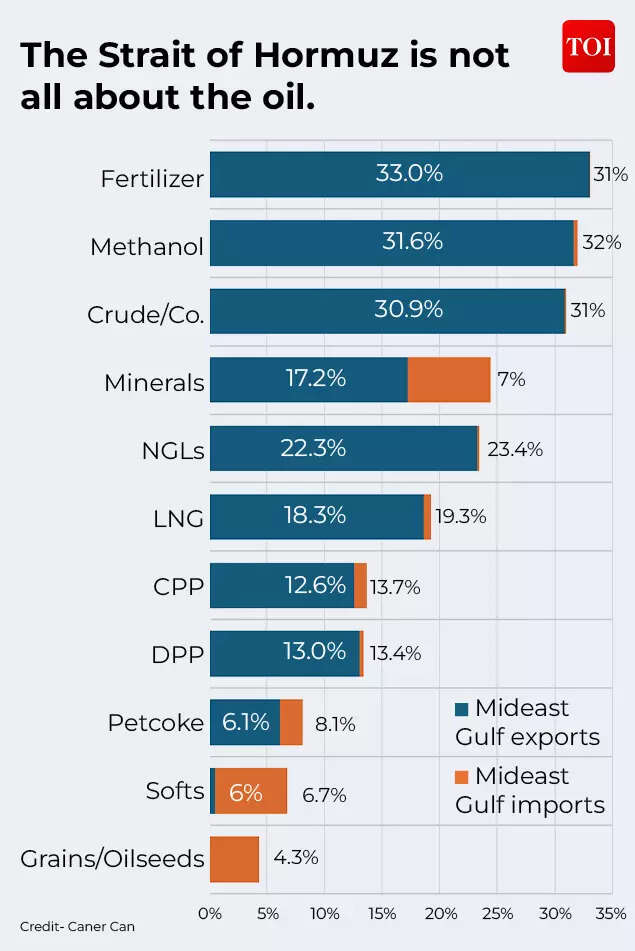
As tensions continue to heat up in the Middle East, concerns are raising about disruptions to one of the world’s most critical energy shipping routes, the Strait of Hormuz. Any disruption could significantly affect major oil-importing countries such as India, as the narrow Strait of Hormuz is central to global energy trade. The strait sees almost 20 million barrels of oil passing through each day, or about a fifth of the world’s consumption, pass through the route. The waterway also carries roughly 19% of global liquefied natural gas (LNG) shipments, making it a crucial corridor for energy-importing economies.A recent report by Goldman Sachs has flagged early signs of stress in the region. The report warned that tanker traffic through the Strait of Hormuz has already begun showing signs of disruption, with shipping firms, oil producers and insurers adopting a cautious approach following reports of damaged vessels in nearby waters.

India Confident To Evade Fuel Crisis Amid War As Russia Offers Energy Support Despite Trump Threats

According to the firm, financial markets have already begun factoring in the geopolitical risk. Oil prices currently carry an estimated risk premium of $18-per-barrel, reflecting the potential market impact if energy flows through the Strait of Hormuz were disrupted for about a month.

The importance of Hormuz for global oil flows

Even is the oil facilities are not directly damaged, a shutdown of the shipping route could expose a significant portion of global supply. The report estimates that in an event of full closure, about 16 million barrels per day of oil flows could be affected, despite the availability of some pipeline routes designed to bypass the strait.And the risks are not limited to crude oil shipments with almost 80 million tonnes of LNG exports annually, much of it from Qatar, moving through the passage. Any prolonged disruption could tighten gas supply globally and potentially drive European benchmark gas prices back to levels seen during the 2022 energy crisis.

The Strait of Hormuz

Asian economies stand among the most exposed to such disruptions. Major importers such as China, India, Japan and South Korea depend heavily on oil and LNG shipments that transit through the strategic corridor.While global oil inventories and spare production capacity could help cushion short-term shocks, the report warned that sustained disruption to Gulf shipping routes could trigger sharp volatility in global energy markets and push prices higher across oil, gas and refined fuel products.Market participants and governments are closely watching tanker traffic in the Strait of Hormuz, along with diplomatic and military developments involving the United States, Iran and Gulf nations, to assess whether the current disruptions remain temporary or escalate into a broader energy supply shock.


Source link

Mike Hesson under fire as Pakistan players unhappy after T20 World Cup fiasco | Cricket News


Chaos in Pakistan camp! Players unhappy with Mike Hesson after T20 World Cup fiasco
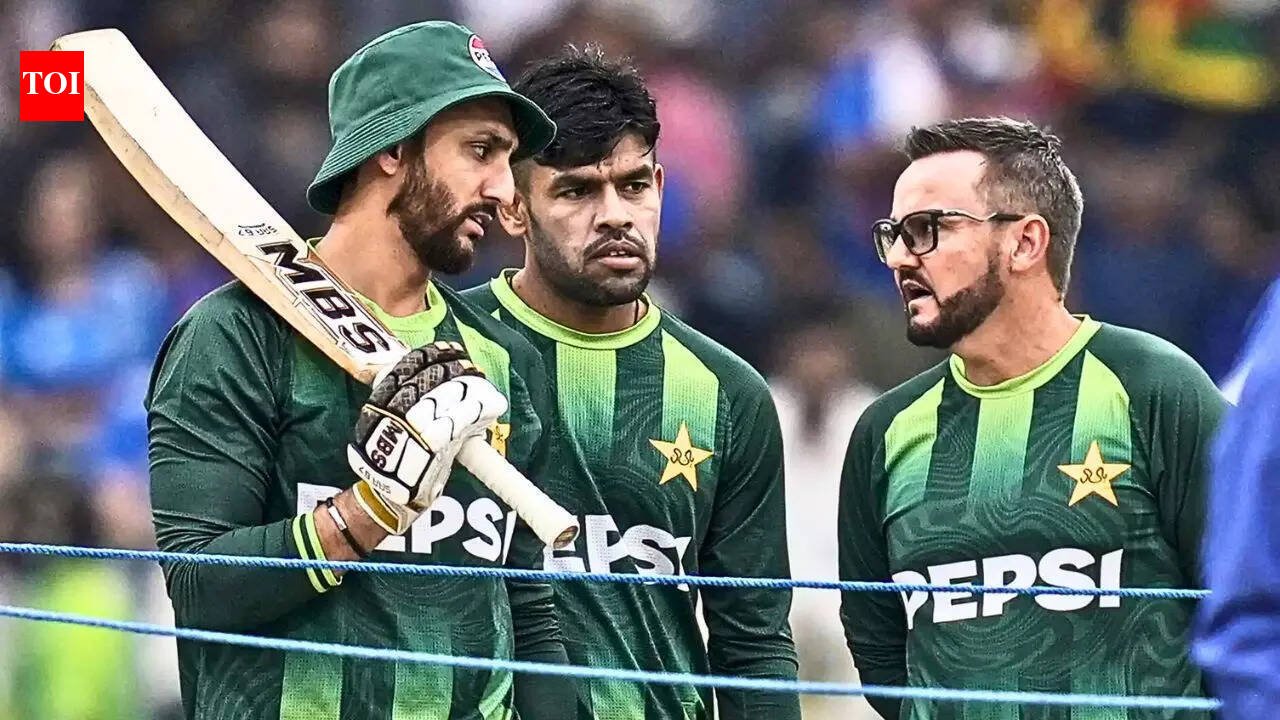
Pakistan cricket team (AP Photo)

NEW DELHI: Pakistan’s early exit from the T20 World Cup Super 8 stage has pushed the team into another period of uncertainty. Led by captain Salman Ali Agha, the side delivered disappointing performances and suffered heavy defeats against archrivals India and England. Because of the poor campaign, reports say players could face heavy fines and the captain’s position might also be under threat, while discussions about possible changes in the coaching setup have begun.

Reliving 2024 T20 WC win with Vimal Kumar: How Rohit Sharma, Virat Kohli created history

Amid the fallout, a report by Geo Super claimed that tensions inside the dressing room grew during the tournament, with several players unhappy with head coach Mike Hesson’s way of running the team. According to the report, some players directly raised their concerns with Pakistan Cricket Board (PCB) officials while the tournament was still going on.“During the tournament, several Pakistan players are said to have individually approached PCB officials to complain about the coach’s behaviour,” the report stated.Sources quoted in the report said Hesson’s strict style and the way he made decisions without discussing them with players created discomfort in the team environment. “Insiders allege that his rigid approach and decisions taken without consultation unsettled the dressing room. It is further claimed that key matters were decided without consulting the captain, with Hesson frequently intervening in all aspects of team management,” it added.PCB officials are now reviewing what happened during the tournament and examining Hesson’s conduct before deciding the next steps. “Senior officials are currently reviewing his conduct with the squad and are expected to examine the tour report before holding detailed discussions with the coach,” the report stated.The report also suggested that neither the selection panel nor captain Salman Ali Agha felt able to challenge Hesson’s authority during the World Cup.It continued, “Well-placed sources claim that both the selection panel and captain Salman Ali Agha were unable to challenge Hesson’s authority, with the coach reportedly exercising sweeping control over team affairs.”However, despite the controversy, Hesson may still keep his job because he recently signed a long-term deal. “Hesson is understood to have signed a two-year contract with the PCB, and the board remains committed to maintaining stability in the head coach’s role,” the report concluded.


Source link

Middle East conflict raises near-term risks for India but long-term growth outlook remains strong: RBI MPC member


Middle East conflict raises near-term risks for India but long-term growth outlook remains strong: RBI MPC member

The ongoing conflict in the Middle East could pose short-term challenges for the Indian economy by pushing up oil prices and disrupting trade flows, though the country’s long-term growth trajectory is unlikely to be significantly affected, according to Nagesh Kumar, an external member of the Reserve Bank of India’s Monetary Policy Committee (MPC).In an emailed interview with PTI, Kumar said the immediate economic risks stem from higher energy prices, potential export disruptions and possible effects on remittances from Indians working in the region.“The breakout of the Middle East conflict poses some immediate-term challenges for the Indian economy by raising oil prices, disrupting exports destined to the region and the potential loss of remittances, besides threatening security of the Indian diaspora in the region,” Kumar said.

US-ISRAEL-IRAN WAR: How Will It Impact India’s Oil, Trade & Air Travel| EXPLAINED

He noted that the conflict has escalated following US-Israel strikes and that oil prices could remain firm in the near term.“In the immediate short run, the conflict is escalating with US-Israel strikes and oil prices are likely to harden,” he said.“Hopefully, the crisis will be resolved soon, given the high stakes that the world has in the region.”Kumar said diversification of crude oil sourcing could help cushion the impact of the crisis on India’s energy supplies.“The opening up of Venezuelan oil supplies for India is also likely to be helpful, as it diversifies the options,” he said.He added that if the Middle East tensions ease and sanctions on Iran are lifted, India could benefit from access to cheaper oil.Despite the geopolitical risks, Kumar said inflation remains under control and does not currently pose a threat to macroeconomic stability.“Headline CPI stood at 1.3 per cent in December 2025 and is projected to be around 2.5 per cent in FY2026, even under the new data series,” he said.“The inflation outlook is not showing any concerns of overheating.”Kumar said the combination of stable inflation and improving growth prospects could allow India to remain in the so-called “Goldilocks” zone– a phase of steady growth with manageable inflation.“The upshot of these trends, namely brightening economic growth outlook amid a continued benign inflationary trend, provides an opportunity for India to stay in the ‘goldilocks’ zone for longer, except for the challenges posed by the conflicts in the immediate-term,” he said.He added that India has the potential to move from around 7 per cent growth to nearly 8 per cent, supported by expansion in manufacturing alongside the continued dynamism of the services sector.“Going forward, fiscal and monetary policies should work in a coordinated manner to support the transition of the economy to a higher GDP growth trajectory,” Kumar said.“It is this higher growth trajectory underpinned by a robust manufacturing sector that will be needed for the creation of adequate decent job opportunities and durable prosperity.”


Source link

Jaya Bachchan smiles wide as she attends Arjun Tendulkar’s wedding, Amitabh Bachchan makes a rare appearance as the couple twins in white – WATCH VIDEO | Hindi Movie News


Jaya Bachchan smiles wide as she attends Arjun Tendulkar's wedding, Amitabh Bachchan makes a rare appearance as the couple twins in white - WATCH VIDEO

Sachin Tendulkar’s son Arjun Tendulkar tied the knot on Thursday, March 5 with Saaniya Chandhok. One saw several celebs attend this grand wedding and bless the couple. As far as the cricketers are concerned, one saw Sunil Gavaskar, Rahul Dravid, Yuvraj Singh, MS Dhoni, Zaheer Khan, Yusuf Pathan, Harbhajan Singh with their respective wives. Many other celebs also graced the wedding. Amitabh Bachchan made a rare appearance and was spotted by the paps. He was seen in a classy white kurta pyjama teamed with a shawl. Jaya Bachchan was seen twinning with him in a white saree with embroidery and a gajra. The actress looked beautiful and was seen in a good mood as she smiled wide. Though the veteran couple did not pose for the paps and straight away walked in. Abhishek Bachchan and Aishwarya Rai Bachchan were also seen arriving together. Shah Rukh Khan wore an ivory ethnic wear while Gauri Khan along with Suhana Khan were seen twinning in yellow outfits. Khan was all smiles as he posed with his family. Legendary singer Asha Bhosle also attended the wedding, dressed in a white saree paired with a pearl necklace. The couple’s sangeet ceremony, hosted on Tuesday evening, turned into a glittering affair with an impressive mix of cricketing stars and prominent names from the film fraternity in attendance. Among those who joined the pre-wedding festivities were filmmaker Vidhu Vinod Chopra, along with cricketer Yuvraj Singh and his wife Hazel Keech. The guest list also featured Harbhajan Singh and Geeta Basra, Zaheer Khan with Sagarika Ghatge, Ajit Agarkar and his wife Fatima Ghadially, as well as Irfan Pathan with Safa Baig. Yusuf Pathan was also present, accompanied by his wife Afreen.The evening was marked by music, celebration and a strong show of camaraderie from both the sports and entertainment worlds.


Source link

Gautam Gambhir attends Arjun Tendulkar’s wedding hours before India vs England T20 World Cup semifinal – Watch | Off the field News


Gautam Gambhir attends Arjun Tendulkar's wedding hours before India vs England T20 World Cup semifinal - Watch
Gautam Gambhir and Tendulkar family at Arjun Tendulkar’s wedding celebrations (Agency Image)

Gautam Gambhir was spotted attending the wedding celebrations of Arjun Tendulkar in Mumbai just hours before India’s crucial semifinal against England cricket team in the ICC Men’s T20 World Cup. The Indian head coach arrived at the ceremony dressed in traditional attire, drawing attention ahead of the high-pressure knockout fixture.India, under Gambhir’s guidance, had earlier faced a tense moment during their Super 8 encounter but managed to rise to the challenge and eliminate the two-time champions to secure a place in the last four of the tournament. With the semifinal clash approaching, Gambhir was seen making a brief appearance at the wedding event.

Stars shine at Arjun Tendulkar’s Sangeet | Mumbai witnesses grand celebration

According to reports, a few members of the Indian squad were also present at the function. The timing made it possible because the ceremony was being held at the same hotel where the Indian team was staying before the semifinal match.The wedding attracted several well-known personalities from across the country who gathered to celebrate the occasion.Arjun married Saaniya Chandhok, with the couple having announced their engagement in August last year. Saaniya comes from a prominent business family and is the granddaughter of Ravi Ghai, chairman of the Graviss Group. She has also shared a close friendship with the Tendulkar family for years, especially with Arjun’s sister Sara Tendulkar.The 26-year-old Arjun has had limited appearances in the Indian Premier League so far. Playing for Mumbai Indians, he has featured in five matches, taking three wickets while conceding 114 runs and scoring 13 runs with the bat.At the domestic level, Arjun currently represents Goa cricket team after making his debut for the Mumbai cricket team in 2021.Ahead of the IPL 2026 mini-auction, Arjun was traded from Mumbai Indians to Lucknow Super Giants and is set to turn out for the franchise in the upcoming season.He was originally bought by Mumbai Indians in the IPL 2021 mini-auction for ₹20 lakh, although he did not get a chance to feature in a match during that season.


Source link

Salaried taxpayers alert! What is your year-end tax readiness? Check list of important documents & top things to keep in mind


Salaried taxpayers alert! What is your year-end tax readiness? Check list of important documents & top things to keep in mind
With March 31, 2026, serving as the definitive cut-off, only those investments and expenditures completed on or before this date qualify for tax benefits. (AI image)

As the financial year draws to a close, millions of salaried taxpayers across India enter a decisive phase. What was once a routine process of submitting investment proofs to the employer has now evolved into something far more strategic. Year-end tax planning today directly affects your take-home salary, refund timelines, and even the likelihood of receiving automated notices from the Income tax department.With March 31, 2026, serving as the definitive cut-off, only those investments and expenditures completed on or before this date qualify for tax benefits for the relevant financial year (FY) 2025-26. These transactions are subsequently reflected in Form No. 16, Form No.26AS, and the Annual Information Statement (AIS). Consequently, any lapse before the deadline: whether an unreported investment, missing documentation, or an unreconciled transaction- can directly affect the taxpayer’s outcome, potentially leading to delayed refunds or automated mismatch notices. In a system that is increasingly digital and data-driven, even minor gaps can have consequences.

Old vs New Personal Tax Regime: The Choice That Shapes Your Tax Bill

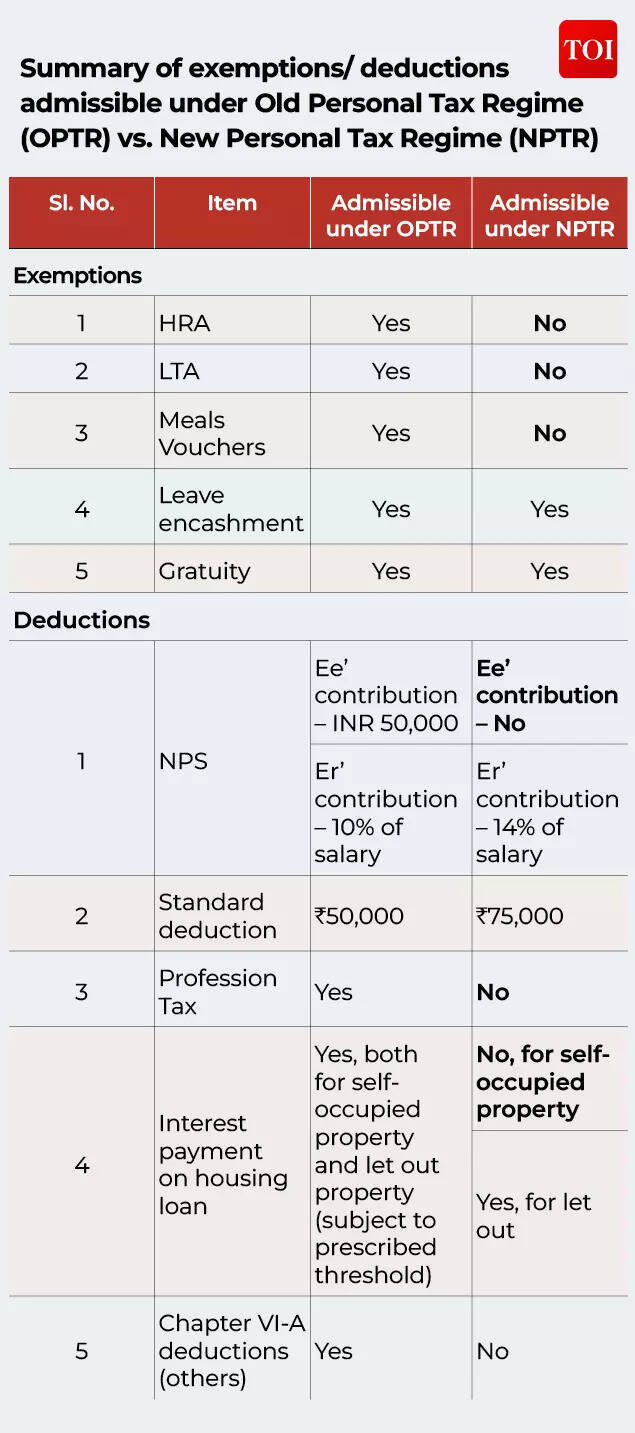
India currently offers two parallel tax systems for individuals – Old Personal Tax Regime and New Personal Tax Regime. While the new regime is now the default option, the choice remains with the taxpayer.The old tax regime continues to benefit those individuals who have significant deductible expenses and structured investments that qualify for exemptions. It permits a broad range of deductions and exemptions, including investments such as Life Insurance, Equity Linked Savings Schemes (ELSS), and Public Provident Fund (PPF) contributions; Health Insurance premiums; as well as benefits like House Rent Allowance (HRA), Leave Travel Allowance (LTA), and home loan interest deductions.The old tax regime provides a Rs 50,000 standard deduction and a rebate up to Rs 5 lakhs, but permits a wide array of deductions and exemptions, as outlined earlier. For taxpayers whose total eligible deductions are substantial, the old tax regime may result in greater overall tax savings despite its higher slab rates.However, these advantages come at the cost of higher slab rates and the need for meticulous record-keeping to substantiate each claim.The new regime offers lower slab rates, an increased standard deduction of Rs 75,000, and a full tax rebate for income up to Rs 12 lakh. It removes most exemptions and deductions, making compliance simpler. For individuals, especially those without significant deductible expenses, housing loans, or tax-saving investments -this option appears straightforward and attractive.This simplicity has driven widespread adoption. As per recent Income tax department’s official statement, 88% of individual taxpayers have opted for the new regime. Ultimately, the choice between the two regimes hinges on a careful evaluation of one’s financial profile. For a simplified view and easy reference, the table below provides a consolidated summary of exemptions and deductions permissible under each tax regime:

Summary of exemptions & deductions

The key message is simple: there is no universal “better” option. The optimal choice depends entirely on your income level and eligible deductions. The Government’s online tax calculator can help compare both regimes, and every salaried individual should perform this exercise at least once before the FY closes.

Documentation: The Backbone of the Old Regime

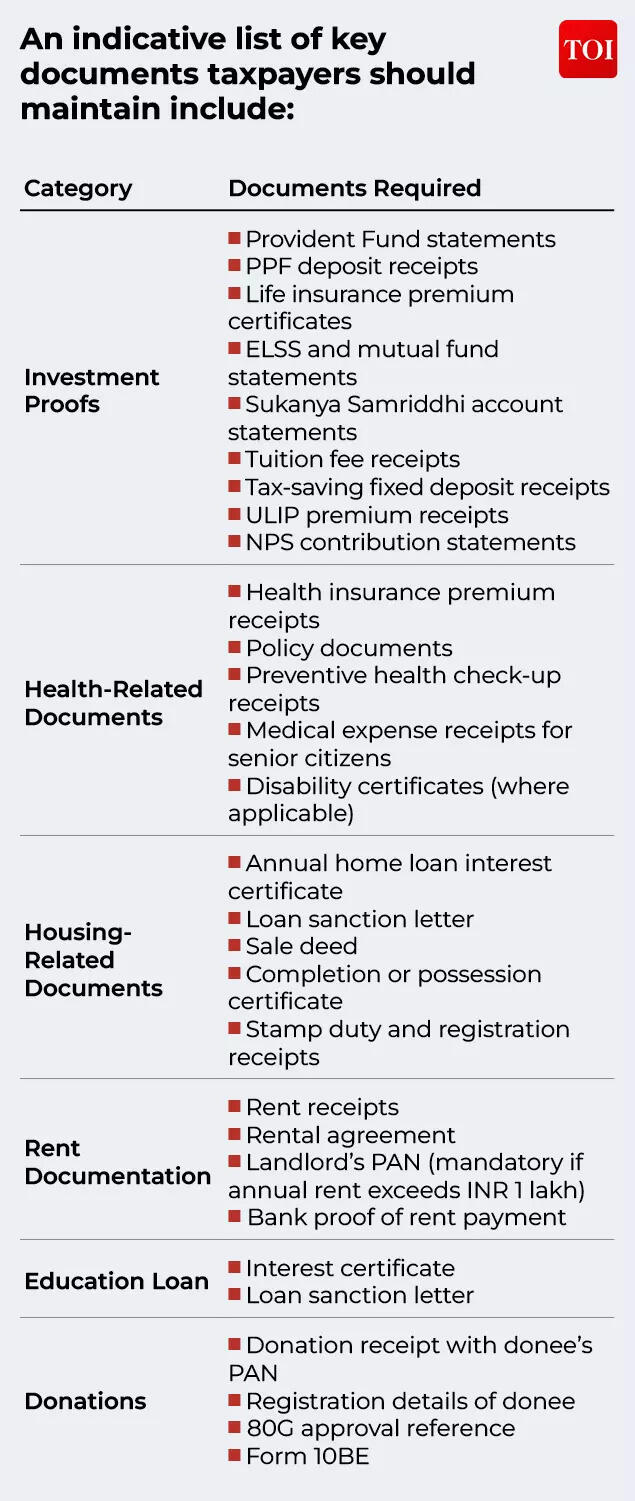
For those opting for the old regime, documentation is not optional, it is critical. Every deduction claimed must be backed by valid documentary evidence. Employers rely entirely on proofs submitted by employees, and the Income tax department now cross-verifies claims through third-party reporting.An indicative list of key documents taxpayers should maintain include:

Key documents taxpayers should maintain

Under the old regime, documentation is your first line of defence. Incomplete records can lead to disallowance of deductions, additional tax, and interest liability.

March Payroll: Why It Matters More Than You Think

Employers play a significant role in the year-end tax outcome. During March, companies conduct the final TDS (Tax Deducted at Source) adjustment based on:

  • The tax regime selected
  • Investment proofs submitted
  • Other income declared by the employee

If supporting documents are not submitted within prescribed timelines, employers are required to compute tax without considering exemptions/ deductions. This often leads to a higher TDS deduction in March -resulting in a lower take-home salary for the final month.Importantly, once TDS is deposited with the government, corrections typically happen only when you file your Income tax return (ITR). This means excess tax may remain locked until refund processing -which can take months.Beyond salary-linked deductions, employees may also declare income from other sources—such as bank interest, dividends, Tax Collected at Source (TCS) on foreign remittances, and income arising from Restricted Stock Units or Employee Share Purchase Plans etc. so that these are appropriately factored into the final tax computation.Employers rely entirely on the declarations and supporting documents submitted during the year to compute accurate TDS. Failure to declare such income and furnish valid proof, employers are obligated to recompute taxes without considering those deductions or credits. This often results in a higher/lower TDS deduction in the final month of the FY.

TDS on Rent: A Frequently Missed Compliance

One of the most overlooked obligations by rent paying individuals relates to tax withholding on high value rent payments. If monthly rent exceeds Rs 50,000, the tenant must deduct TDS at 2%, even if the tenant is a salaried individual with no business income.The rule varies depending on the landlord’s residential status:If the landlord is a resident: TDS at 2% should be deducted once in a FY – typically in March or at the time of vacating the property what comes earlier.If the landlord is a non-resident (NR): TDS must be deducted at the time of each rent payment. The rate is significantly higher – 30% plus surcharge and cess, unless a lower deduction certificate is obtained by the landlord.Failure to deduct or deposit TDS can attract interest, late fees, and penalties. With automated systems now identifying such gaps, ignoring this requirement can be costly.Tenants should obtain/ maintain records of the following:

  • Landlord’s PAN
  • TAN, only if the landlord is a NR
  • Confirmation of residential status
  • Rent agreement
  • Proof of rent payment
  • TDS deposit challans
  • Form 26QC and Form 16C (as applicable)

This is an area where many salaried individuals unknowingly slip into non-compliance.

You Can Change the Tax Regime at the Time of Filing

A widespread misconception is that the tax regime chosen with the employer is final. This is not entirely correct. A salaried taxpayer may choose one regime for TDS purposes at the beginning of FY and switch to other regime while filing the ITR – subject to conditions. However, this flexibility is available only if the ITR is filed within the prescribed due date. Filing a belated ITR may restrict this option. This provision offers valuable relief to taxpayers who may have miscalculated their optimal regime at the start of the FY.

Investment Deadlines Are Non-Negotiable

While regime selection offers flexibility, investment deadlines do not. Only investments completed on or before March 31, 2026, qualify for deduction for FY 2025–26. A transaction initiated but not successfully executed before the deadline does not count. Delays due to banking cut-offs, settlement cycles or technical glitches can result in lost deductions.Taxpayers must ensure:

  • Payments are fully processed
  • Acknowledgement receipts are generated
  • Bank entries are reflected before the deadline

Waiting until the final day increases risk.

The Era of Automated Scrutiny

India’s tax administration has undergone a structural shift. With digitisation and real-time data integration, the Income tax department now cross-verifies income and deductions using:

  • Form No. 16
  • Form No. 26AS
  • AIS
  • Taxpayer Information Summary (TIS)
  • Data from banks, insurance companies, and other financial institutions

Any mismatch can trigger automated notices. AIS provides a comprehensive view of reported financial transactions—salary, interest, dividends, securities trades, rent, and other high-value entries while TIS and Form No. 26AS summarises income and tax credits such as TDS, TCS, and advance/self-assessment tax. These records must be carefully reconciled at the year-end along with personal financial documents.Common triggers include:

  • HRA claimed without rent income reflected for landlord
  • Non-deduction of TDS where landlord is NR or monthly rentals exceed Rs 50,000
  • Section 80C claims not matching with investments reported in AIS or by financial institutions
  • Health insurance premiums not traceable to insurer data
  • Donation claims without valid acknowledgement reference number
  • Unreported bank interest, especially when TDS from banks appears in AIS leading to automatic income‑mismatch alerts.

A practical example: A taxpayer declared Rs 18,000 as interest income, while AIS reflected Rs 42,500 due to fixed deposit interest reported by the bank. This mismatch triggered an automated notice proposing additional tax. The issue was resolved only after filing a revised return.The lesson is clear : disclosures must align fully with digital financial records. Taxpayers should periodically review AIS, TIS and Form No. 26AS on the e-filing portal to reconcile discrepancies before filing their ITR.

The New Reality of Compliance

India’s tax system has moved firmly into a data-driven era. Compliance is no longer about intent -it is about accuracy and documentation.Pre-filled returns now mirror information available with the tax department. Salary details, investments, deductions, and tax credits reflect in the AIS, TIS, Form No. 26AS, and other third-party reporting platforms, compliance has become a continuous, year-round responsibility rather than a last-minute March exercise.Claims are validated through third-party reporting. Automated systems flag inconsistencies instantly. Whether one chooses the simplicity of the new regime or the deduction-driven benefits of the old regime, success depends on:

  • Timely documentation
  • Transparent disclosures
  • Digital reconciliation
  • Meeting strict deadlines

With the proposed Income-tax Act 2025 and Rules 2026 on the horizon, further refinements may follow. However, one principle is already evident: documentation discipline is no longer optional.For salaried taxpayers, year-end tax planning is not merely about reducing liability – it is about ensuring seamless compliance in a system designed to validate every claim.(Vikas Narang, Director at Vialto Partners and Nathalia Rodrigues, Assistant Manager at Vialto Partners also contributed to the article. Views are personal)


Source link