Breaking News
Application & approval process for access roads from NHs goes fully digital | India News


Application & approval process for access roads from NHs goes fully digital

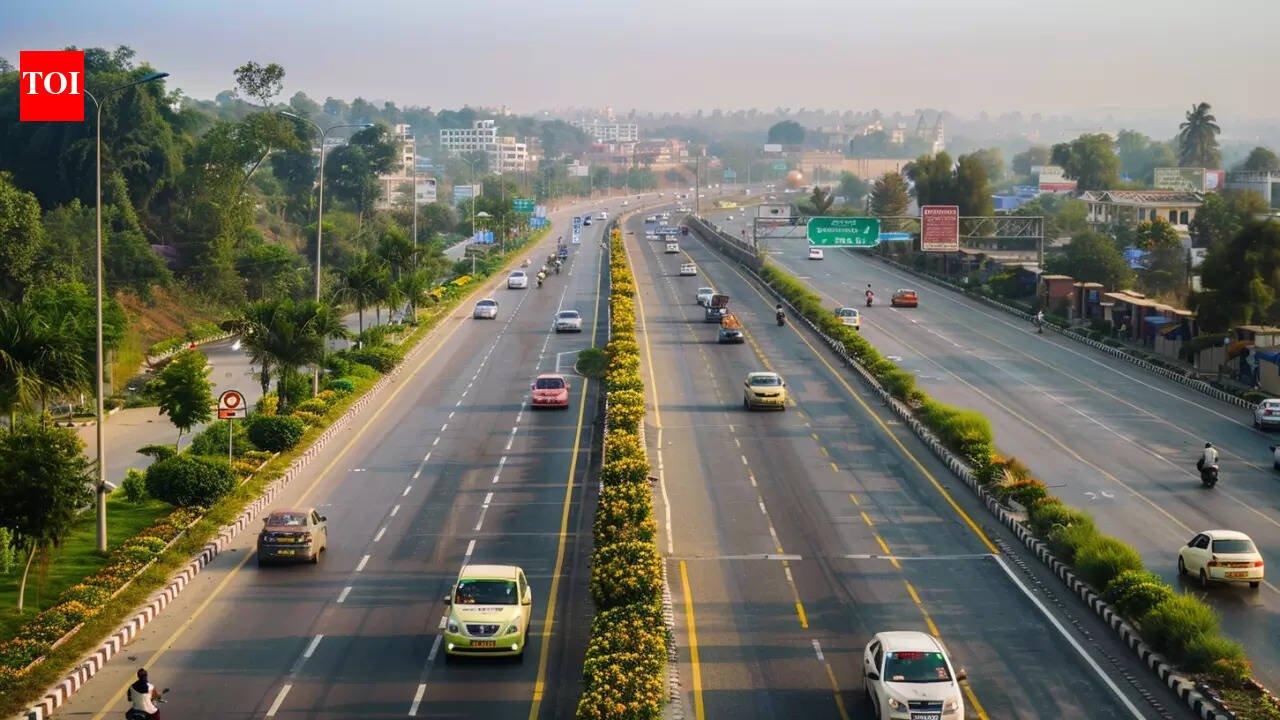
NEW DELHI: People seeking access roads from National Highways (NHs) for fuel stations, wayside amenities, industries, private properties and rest area complexes won’t need to visit govt offices to get an NOC anymore. They will be able to apply online and get the approval without any physical interface with the system.Road transport minister Nitin Gadkari has launched a new one-stop digital platform — http://rajmargpravesh.morth.gov.in — to process all such applications. The portal can also be used by govt and private entities to obtain permissions for laying utilities such as water pipelines, gas pipelines, optical fibre cables, electrical lines and other services along or across NHs.Gadkari said the new portal will make the approval process more convenient, transparent and time-bound, helping citizens and businesses save time and effort. Officials said the portal allows fully digital submissions and attachments and automated routing of applications to the authority concerned. “There are specific timelines for initiation, processing and completion of the exercise by the authority concerned. Delays at any stage will be monitored to fix accountability,” an official said.


Source link

US stocks today: Wall Street rebounds as oil prices ease and strong economic data lift sentiment


US stocks today: Wall Street rebounds as oil prices ease and strong economic data lift sentiment

US stock markets rebounded on Wednesday after two days of sharp volatility, supported by easing oil prices and encouraging economic data that improved investor confidence.The S&P 500 rose 0.8 per cent in midday trading and was on course to recover most of the losses recorded since the war with Iran began. The Dow Jones Industrial Average gained 301 points, or 0.6 per cent, while the Nasdaq Composite climbed 1.3 per cent, AP reported.The recovery followed a turbulent start to the day in global markets. South Korea’s Kospi index plunged 12.1 per cent earlier, marking the worst single-day fall in its history, as uncertainty over the conflict in the Middle East triggered intense volatility across financial markets.Oil prices moderated as trading shifted from Asia to Europe and the United States. Brent crude, the global benchmark, eased 0.6 per cent to $80.88 a barrel after briefly rising above $84. US benchmark crude also declined 0.6 per cent to $74.14 a barrel.Investor sentiment was also supported by fresh economic data pointing to resilience in the US economy.One report showed business activity in services sectors such as real estate and finance accelerated last month at the fastest pace since the summer of 2022. The report also indicated that prices charged by these businesses rose at a slower pace, at least before the escalation of the Iran conflict.Another report suggested US employers outside the government increased hiring last month, potentially signalling strength ahead of the official employment report due from the US government later this week.Despite the rebound, investors remain focused on how long the conflict with Iran could last and the impact of rising oil prices on inflation and corporate earnings.Historically, the US stock market has tended to recover relatively quickly from military conflicts in the Middle East, provided oil prices do not surge excessively. Some investors therefore see the current volatility as temporary.Not all market participants share that optimism.“I think the Iran situation is getting out of hand, and I think that US President Donald Trump miscalculated enormously,” said Francis Lun, CEO of Venturesmart Asia. “The situation is very grim.”On Wall Street, crypto-linked stocks rallied as bitcoin rose back above $73,000. Coinbase Global surged 15.3 per cent, while Robinhood Markets advanced 7.8 per cent.Retail and travel stocks also gained on expectations that easing fuel costs and a stable economy could support consumer spending. Ross Stores rose 7.4 per cent after reporting better-than-expected profit and revenue and saying it is entering 2026 with “solid momentum.” Expedia Group added 3.6 per cent.Big technology companies were among the biggest contributors to the market’s gains. Nvidia advanced 1.5 per cent and Amazon climbed 3.1 per cent, with their large market capitalisation giving them significant influence on the S&P 500.In overseas markets, European indices recovered after sharp losses in Asia. France’s CAC 40 rose 0.8 per cent and Germany’s DAX jumped 1.7 per cent. Earlier in the day, Hong Kong’s Hang Seng had fallen 2 per cent and Japan’s Nikkei 225 declined 3.6 per cent.Bond markets were relatively stable after earlier volatility. The yield on the 10-year US Treasury note held steady at 4.06 per cent.The encouraging economic data offered some relief for the Federal Reserve, which is balancing efforts to keep inflation under control while supporting employment.However, the recent surge in oil prices complicates that task because higher energy costs can push inflation higher.The Fed had earlier indicated that it could resume interest rate cuts later this year to support economic growth. But rising oil prices and geopolitical tensions have led traders to push expectations for the next rate cut further into the summer.


Source link

Road ministry proposes Centre’s authority to set speed limits for NHs | India News


Road ministry proposes Centre’s authority to set speed limits for NHs

NEW DELHI: Seeking to end confusion among commuters over speed limits on national highways and expressways, the road transport ministry has proposed that the authority be with the Centre to set these restrictions while state govts retain the power to notify the norms for all other roads within their jurisdiction.The ministry recently shared a host of proposed changes, including this, to end ambiguities over speed limits that state govt and local police put on NHs and expressways. As speed limits are set by local authorities, commuters, who don’t use NHs frequently, fail to note this and end up paying fines.At present, the road transport ministry notifies the maximum speed limit for all categories of roads, but state agencies can reduce this.People aware about the plan said that the ministry proposes to amend Section-112 of the MV Act, which empowers state govts to set both minimum and maximum speed limits. Similarly, Section 113, which empowers states to regulate, restrict, or prohibit the use of vehicles based on weight, would be amended.To bring clarity, it has been proposed that in the case of NHs, the power to specify the norms will rest with the ministry, and states will be free to set limits for their roads.“While, the notified speed norms on NH for cars is 100 kmph, states and local police often reduce this to 60-70 kmph on NH stretches passing through urban areas. This causes a lot of compliance issues for commuters. The proposed amendments will address this. Under the Control of National Highways (Land and Traffic) Act, highway administrations appointed by NH agencies have the authority to control land, manage traffic, and remove unauthorised occupations on highways. Hence, there will be no more confusion,” said an official.


Source link

8th Pay Commission: Why employee unions want family units raised to 5 and what it means for fitment factor


8th Pay Commission: Why employee unions want family units raised to 5 and what it means for fitment factor

A proposal to increase the number of family units considered in salary calculations from three to five could significantly boost pay revisions under the 8th Pay Commission, according to central government employee organisations. They argue that if the government accepts the demand, the fitment factor used to revise basic salaries could cross 3, potentially leading to a much higher pay hike for employees.During last month’s National Council (Staff Side)–Joint Consultative Machinery (NC-JCM) meeting, unions pressed the government to increase the number of family units considered in wage calculations from three to five.Major central government employee and pensioner associations are backing this demand. Their argument is that expanding the family unit size could significantly raise the fitment factor, which ultimately determines how much salaries increase under a pay commission.According to several employee organisations, if the proposal is accepted by the central government, the fitment factor under the 8th Central Pay Commission (CPC) could potentially cross 3.0.

Why pay commissions consider family units

C. Srikumar, secretary general of the All India Defence Employees’ Federation (AIDEF), says the idea of calculating wages based on family units dates back to the 15th Indian Labour Conference (ILC) in 1957, as reported ET.At that conference, need-based wage norms were discussed and the concept of three family units was adopted while estimating minimum wage levels.Under this framework, a family unit includes:Since then, most pay commissions have used three family units as the base for determining wage structures.

Why employee bodies want family units raised to five

Employee associations now argue that the current framework does not reflect present social and legal realities.Srikumar notes that the Maintenance and Welfare of Parents and Senior Citizens Act, 2007 makes it a legal responsibility for children to support their parents. Because of this obligation, employee bodies believe parents should be considered part of the family unit calculation.Manjeet Singh Patel, National President of the All India NPS Employees Federation, adds that with the rise of nuclear families, elderly parents increasingly depend on their children financially. Including parents as additional units would better represent real household expenses.

How this change could affect salaries under the 8th Pay Commission

Employee groups estimate that increasing family units from three to five could raise the base salary calculation by roughly 66%.This estimate comes from the logic that each family unit corresponds to about 33.33% of the wage calculation. Adding two more units would therefore increase the calculation by about 66%.Below are three illustrative scenarios showing how this could influence the fitment factor and revised salaries.In the first scenario, calculations assume no change in family units and consider only DA increases and annual increments.Basic salary: Rs 78,800Current DA: 58%Estimated DA rise: 8%Annual increments: 12%Fitment factor calculation:1 (basic pay) + 0.66 (DA) + 0.12 (annual increments) = 1.76

Salary outcome

Particulars Details
Current Basic Salary Rs 78,800
Current DA 58%
Expected DA Rise 8%
Total DA Considered 66%
Salary increase after 2 annual increments 12% approximately
Fitment Factor Formula 1 + 0.66 + 0.12
Fitment Factor 1.76
Revised Basic Salary (Estimated) Rs 1,38,688

Scenario 2: If family units rise from 3 to 5In this case, the additional family unit factor of 0.66 is added to the base fitment factor calculated above.Total fitment factor:1.76 + 0.66 = 2.42

Salary outcome

Particulars Details
Current Basic Salary Rs 78,800
Base Fitment Factor (Earlier Calculated) 1.76
Additional Fitment (Family Units 3 to 5) 0.66
Total Fitment Factor 2.42
Revised Basic Salary (78,800 × 2.42) Rs 1,90,676

Pay commissions also include a salary growth factor. In the 7th Pay Commission, the government granted a growth factor of 15%.Employee organisations are seeking a 25% growth factor, but even assuming the earlier 15% level, the numbers could change significantly.Calculation steps:

  1. Salary at 1.76 fitment = Rs 1,38,688
  2. Per family unit (for three units) = Rs 46,230
  3. Salary for five family units = Rs 2,31,150
  4. Derived fitment factor = 2.94

Adding a 15% growth factor:2.94 + 0.15 = 3.09

Salary outcome

Particulars Calculation Amount
Current Basic Salary Rs 78,800
Revised Salary at 1.76 Fitment Factor 78,800 × 1.76 Rs 1,38,688
Per Family Unit (3 Units) 1,38,688 ÷ 3 Rs 46,230
Revised Salary for 5 Family Units 46,230 × 5 Rs 2,31,150
Derived Fitment Factor 2,31,150 ÷ 78,800 2.94
Add Salary Growth Factor (15%) 2.94 + 0.15 3.09
Final Revised Salary at 3.09 Fitment 78,800 × 3.09 Rs 2,43,492

Particulars Scenario 1 (Base 1.76 FF) Scenario 2 (Family Units 5) Scenario 3 (Family Units 5 + Growth Factor)
Current Basic Salary Rs 78,800 Rs 78,800 Rs 78,800
Total DA Considered 66% 66% 66%
Base Fitment Factor 1.76 1.76 1.76
Additional Family Unit Factor 0.66 Derived via per unit method
Intermediate Fitment Factor 1.76 2.42 2.94
Salary at Intermediate Fitment Rs 1,38,688 Rs 1,90,676 Rs 2,31,150
Salary Growth Factor (15%) 0.15
Final Fitment Factor 1.76 2.42 3.09
Final Revised Salary Rs 1,38,688 Rs 1,90,676 Rs 2,43,492


Source link

Panel: Hear us before deciding on 3 languages | Mumbai News


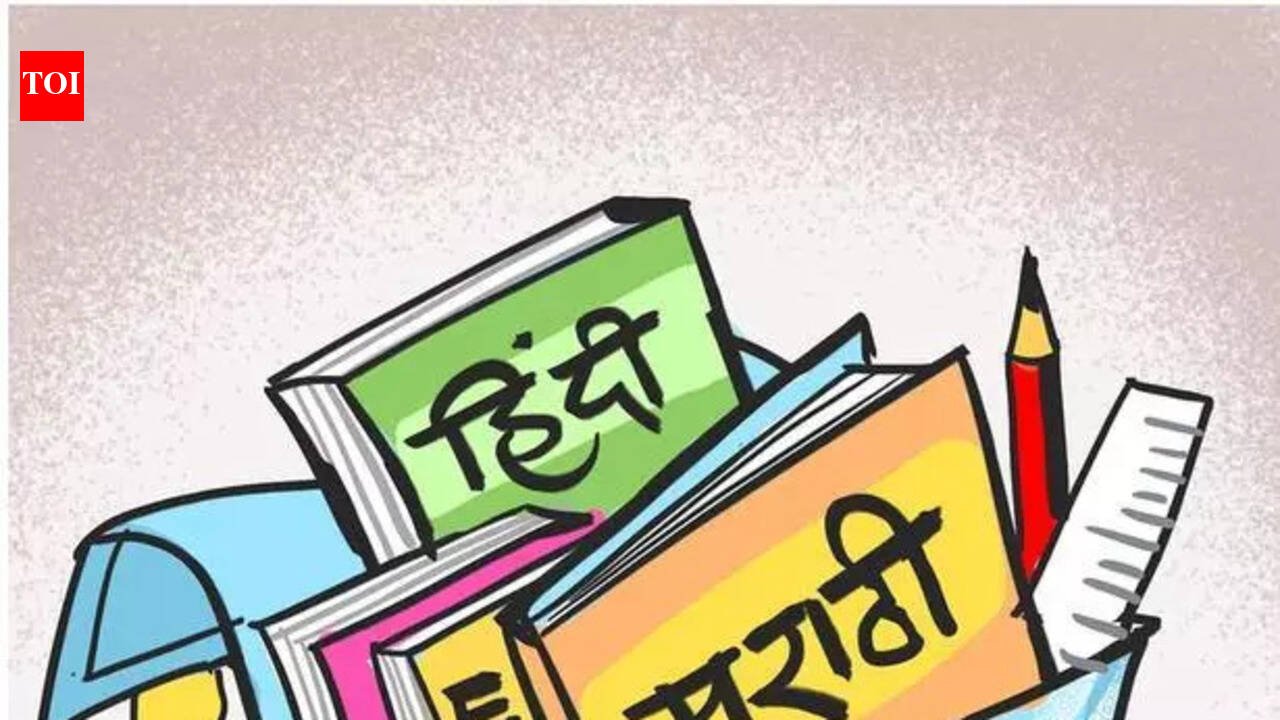
Mumbai: Laxmikant Deshmukh, chairman of the state’s language advisory committee, has written to the CM seeking a meeting to present the panel’s views before govt takes a decision on the proposed three-language policy. The three-language policy panel, headed by economist Narendra Jadhav, submitted its report to the CM on Feb 18 after months of deliberations. Deshmukh said making a third language must from Class 1 will place an additional burden on children at the foundational stage. He said established principles of education and child psychology emphasise strengthening the mother tongue in early years. He said improving Marathi and English instruction should be the priority instead. —Mahiyar Patel


Source link

‘I don’t believe’: Harry Brook makes bold claim ahead of IND vs ENG T20 World Cup semi-final game | Cricket News


'I don't believe': Harry Brook makes bold claim ahead of IND vs ENG T20 World Cup semi-final game

NEW DELHI: England captain Harry Brook says unity, belief and staying calm under pressure have helped his team reach the T20 World Cup semi-finals — and they don’t need to play a “perfect game” to win the title.England, two-time champions, will face fellow two-time winners India in the semi-final for the third straight edition. While India were labelled favourites at the start, both teams have had ups and downs in the tournament.

India arrive for final net session before T20 World Cup semifinal

When asked if England would need a flawless performance to beat India at home, Brook said: “No, I don’t believe that we need a perfect game to win the competition to be honest.” He added, “The games that we have won have been nowhere near perfect and we’ve still managed to get the wins convincingly in some of them and then tight (in) the other games.”Brook credited team spirit. “But it’s just the unity that we’ve had to be able to get across the line, the belief that everybody’s shown throughout the games and the calmness that we’ve had when the bowlers have stood at the top of the mark,” he said.Calling the clash special, he said, “It’s up there for sure. It’s a dream come true for most of us to play in a World Cup semifinal against the home nation on a very iconic ground, so we’re all really looking forward to it.”Though confident, he admitted, “we haven’t quite played that perfect performance (yet) and I feel like it’s just around the corner… Hopefully, it’s tomorrow (Thursday) night.”Brook also backed out-of-form former captain Jos Buttler, saying, “There should be no reason to question why he’s on the team.”He dismissed concerns about playing spin and said one big individual effort could decide the match: “We don’t feel like we’re ever out of a game so far… I feel like there’s a big individual performance to come.”


Source link

Russia ready to redirect crude to India as Hormuz fallout hits flows


'Full Control Achieved': IRGC Claims 10 Ships Hit For Violating Hormuz Blockade Orders

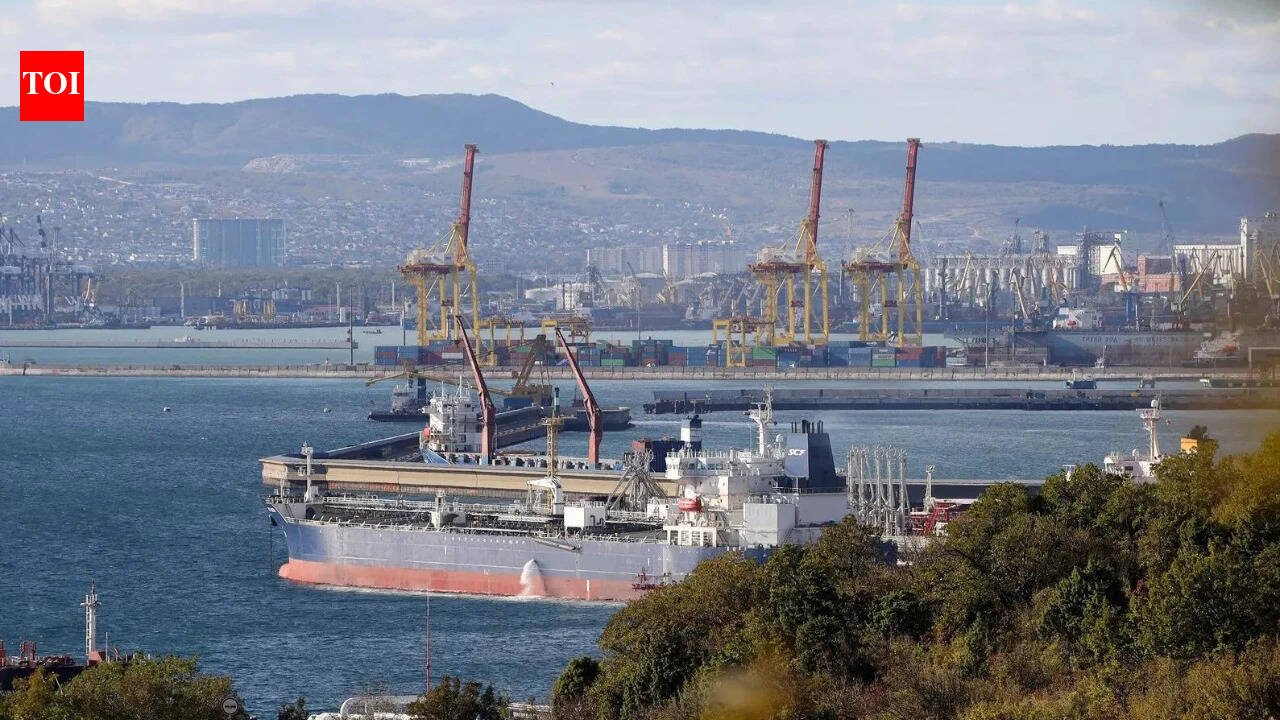
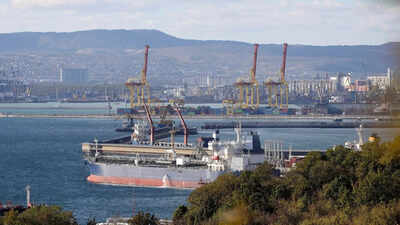
Russia is prepared to redirect crude shipments to India to offset supply disruptions caused by escalating conflict in the Middle East, Reuters reported, citing sources. Nearly 9.5 million barrels of Russian oil are now positioned near Indian waters and able to arrive within weeks.The emergency supply push comes as the near-closure of the Strait of Hormuz — through which some 40% of India’s crude imports transit — threatens to choke the country’s energy security following Iranian strikes on vessels in retaliation for recent US and Israeli attacks on targets inside Iran.

‘Full Control Achieved’: IRGC Claims 10 Ships Hit For Violating Hormuz Blockade Orders

The report citing confirmation from a government official said that New Delhi is urgently scouting for alternative oil supplies to cover at least the next 10–15 days, anticipating further turbulence in the region.India, the world’s third‑largest crude consumer, maintains only modest reserves, with national stocks covering roughly 25 days of demand, and similarly shortfalls in refined fuel inventories.Reuters, citing an industry insider with direct knowledge of the matter, reported that Russia has indicated readiness to meet up to 40% of India’s crude requirement if Middle Eastern flows remain constrained. The person declined to specify the original destination of the diverted tanker fleet but noted that the cargoes can be discharged at Indian ports within weeks, offering refiners short-term relief.India’s state and private refiners together process around 5.6 million barrels of crude per day and are in regular touch with traders marketing Russian barrels. However, any fresh increase in Russian intake would depend on government direction, given that trade discussions with Washington remain sensitive.Russia’s oil supply to IndiaRussian crude’s share of India’s imports had dropped to about 1.1 million barrels per day in January, the lowest since November 2022, as New Delhi sought to ease friction with the United States over sanctions exposure.By February, volumes had rebounded to around 30% of total imports, according to market data.US President Donald Trump last month announced a suspension of punitive tariffs on Indian imports after claiming that New Delhi had agreed to “stop buying Russian oil” — a position India has denied. Officials insist the country’s energy strategy remains driven by diversification and prevailing market conditions rather than geopolitics.India’s foreign ministry, oil ministry and the Russian embassy in New Delhi did not immediately respond to requests for comment. Indian sources said that, even days before tensions escalated into direct hostilities with Iran, no advisory had been issued instructing companies to avoid Russian crude.


Source link

IISc, Pratiksha Trust launch ‘Moonshot’ project on brain co-processors | India News


IISc, Pratiksha Trust launch ‘Moonshot’ project on brain co-processors
IISC Bengaluru (File photo)

Bengaluru: The Indian Institute of Science (IISc) Wednesday said it has launched a “moonshot” project to develop brain co-processors that combine neuromorphic hardware with AI algorithms to enhance or restore brain function. The initiative is funded by the Pratiksha Trust, founded by Kris Gopalakrishnan and his wife Sudha.An MoU formalising the partnership was signed at IISc in the presence of Gopalakrishnan, Prof G Rangarajan, Director of IISc, and Prof B Gurumoorthy, chief executive, Foundation for Science, Innovation and Development (FSID), along with other faculty members and deans.“The project aims to develop both implantable and non-invasive brain co-processors capable of decoding neural activity from brain recordings, processing these signals using AI algorithms, and re-encoding them into the brain through neural stimulation or neurofeedback,” IISc said. The devices are expected to support cognitive rehabilitation, particularly for stroke survivors who have lost functions such as goal-directed reach and grasp.Gopalakrishnan said: “India is emerging as a global leader in neuroscience by uniting foundational research with clinical applications through collaborative, international partnerships. Supported significantly by the Pratiksha Trust, the Brain Co-Processors Moonshot Project accelerates the development of innovative medical technologies.”Ultimately, he said, these innovations aim to provide world-class transformative neurological treatments to the global population. The initiative builds on a pilot effort under IISc’s Brain, Computation and Data Science programme, a cross-departmental initiative involving more than 20 faculty members. That programme is also supported by the Pratiksha Trust.According to IISc, brain co-processors represent an emerging class of technologies designed to augment or restore the brain’s natural functions in real-world contexts. The current project seeks to build an AI-driven, closed-loop device that interfaces with different regions of the brain to restore coordinated movement.A key focus of the project is to develop indigenous capacity. The team plans to indigenise implant design, hardware systems and AI software stacks compatible with clinical infrastructure in low-resource settings. It also aims to create India-specific databases of stereo EEG and ECoG recordings, and to develop open-source AI tools, datasets and visualisation platforms as digital public goods.“In its first phase, the team will develop and validate a non-invasive neural co-processor to provide sensorimotor feedback for goal-directed reaching in stroke survivors. Parallel groundwork will be laid for an invasive implantable version,” IISc said.The second phase will focus on developing a minimally invasive embedded co-processor intended to restore sensorimotor coordination in individuals with chronic, multi-domain deficits following middle cerebral artery stroke.The IISc team will collaborate with medical professionals and researchers across India to clinically validate and deploy the devices in line with national and international standards, IIScs said, adding that feedback from neurologists, therapists, patients and caregivers will be incorporated throughout development. The institute will also work with research partners in India and abroad.Prof Rangarajan said the moonshot project brings together expertise across neuroscience, electrical engineering, bioelectronics and neuromorphic computing to address stroke rehabilitation.


Source link

Apple MacBook Neo with A18 Pro chip, Liquid Retina display, and macOS Tahoe launched: Price starts at Rs 69,900


Apple MacBook Neo with A18 Pro chip, Liquid Retina display, and macOS Tahoe launched: Price starts at Rs 69,900
Apple unveils its most budget-friendly laptop, the MacBook Neo, priced Rs 69,900. Featuring the powerful A18 Pro chip, a vibrant 13-inch display, and a sleek aluminum build, it promises impressive performance for everyday tasks and AI workloads. This eco-conscious device, running macOS Tahoe with Apple Intelligence, is available for pre-order now.

Apple has announced the MacBook Neo, its most affordable laptop to date, starting at Rs 69,900 in India. The Neo is powered by the A18 Pro chip, the same silicon found in the iPhone 16 Pro, and features a 13-inch Liquid Retina display with 500 nits brightness and support for 1 billion colors. It comes in four colours: blush, indigo, silver, and a new citrus.At 1.23 kgs, the MacBook Neo is lighter than it sounds, and the aluminum build keeps it feeling premium despite the lower price tag. Two USB-C ports, Wi-Fi 6E, Bluetooth 6, a headphone jack, a 1080p FaceTime camera, and dual side-firing speakers with Spatial Audio round out the hardware.

Apple’s new Mac Pro first look

Apple’s iPhone chip now powers its most affordable MacBook

The A18 Pro brings some serious grunt for this price bracket. Apple claims the MacBook Neo is up to 50% faster for everyday tasks than a comparable Intel Core Ultra 5 Windows laptop, and up to 3x faster for on-device AI workloads. The 16-core Neural Engine handles Apple Intelligence features locally, keeping things private. The 5-core GPU is capable enough for casual gaming and photo editing. And since the whole thing is fanless, it runs completely silent. Battery life is rated at up to 16 hours.

macOS Tahoe, iPhone Mirroring, and Apple Intelligence out of the box

MacBook Neo ships with macOS Tahoe, giving users access to Apple Intelligence features like Writing Tools and Live Translation right out of the box. iPhone Mirroring is supported too, letting users interact with their iPhone directly from the MacBook screen—useful for anyone already deep in the Apple ecosystem.On the sustainability front, Apple says the MacBook Neo is its lowest-carbon Mac yet, made with 60% recycled content including 90% recycled aluminum.Pre-orders open today, with availability starting March 11.


Source link

28 seats and a Rajya Sabha berth: Congress seals Tamil Nadu poll pact with DMK | India News


28 seats and a Rajya Sabha berth: Congress seals Tamil Nadu poll pact with DMK
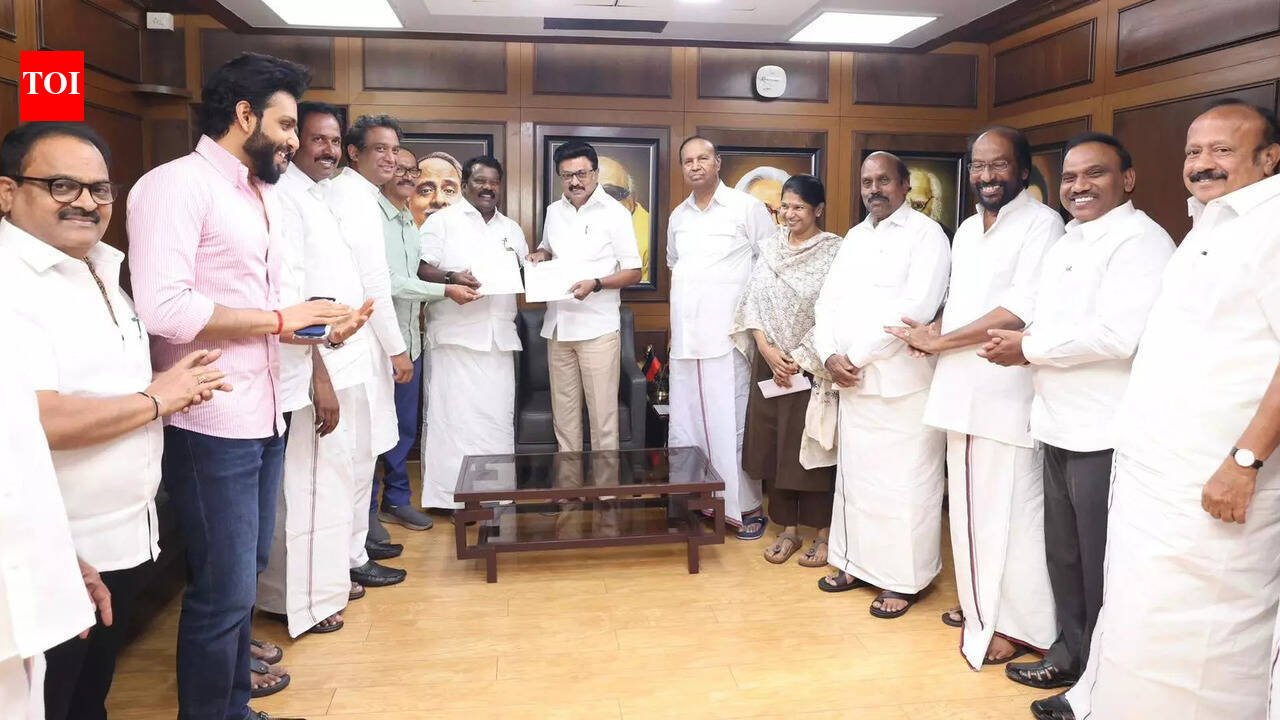
DMK and Congress leaders after seat0sharing agreement was finalised

CHENNAI: Putting an end to speculations, the DMK and the Tamil Nadu Congress Committee (TNCC) on Wednesday finalised a seat-sharing arrangement for the 2026 Tamil Nadu assembly election, under which the Congress will contest 28 constituencies and receive one Rajya Sabha berth.The decision was taken at a meeting between chief minister and DMK president MK Stalin and TNCC president K Selvaperunthagai in Chennai, according to a joint statement issued by the parties.In the 2021 assembly polls, the Congress contested 25 seats as part of the Secular Progressive Alliance and won 18 seats. Party leaders had in recent weeks indicated that they were seeking a higher number of constituencies this time.Speaking to reporters after signing the deal, TNCC president K Selvaperunthagai said he was “relieved” after the deal. Asked about the Rajya Sabha candidate, Selvaperunthagai said the All India Congress Committees would release the name of the candidate.


Source link