Breaking News
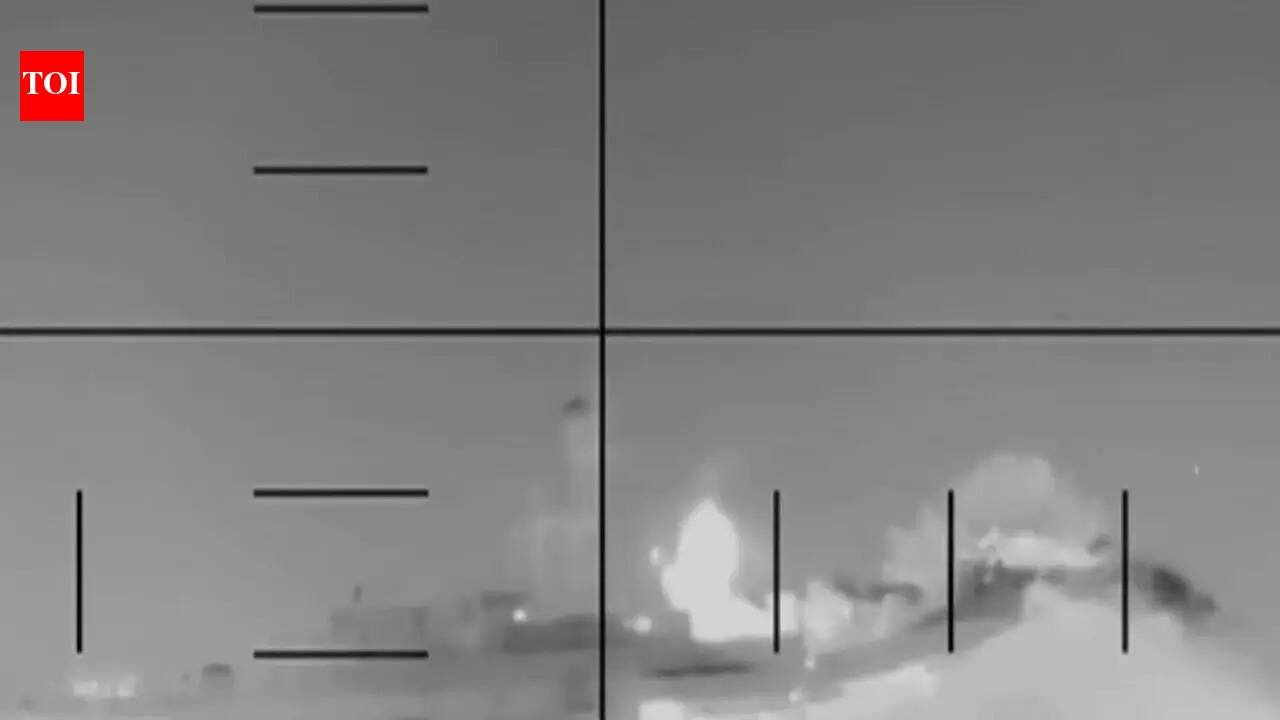
Watch: Exact moment US strike hits Iranian ship, killing over 85


At least 85 Iranian sailors were killed after a US submarine torpedoed an Iranian warship in the Indian Ocean, with the Pentagon releasing footage of the moment the vessel was struck and sank.The ship, identified as the Iranian frigate IRIS Dena, went down early Wednesday after being hit by a torpedo fired from a US submarine. The strike comes amid the escalating US-Israel military campaign against Iran.

America Hit Hard: $2 BN Wiped Out As U.S. Loses Jets, Radars, Sat Equipment Amid Iran War

“An American submarine sunk an Iranian warship that thought it was safe in international waters. Instead, it was sunk by a torpedo,” US Defense Secretary Pete Hegseth told reporters. The Pentagon described the strike as part of its broader effort in the ongoing war against Iran and said it demonstrated Washington’s military reach across global waters.Hegseth called the attack “quiet death” and the first US sinking of an enemy ship by torpedo since World War II.“Like in that war,” he said, “we are fighting to win.”Sri Lankan authorities said 32 sailors from the Iranian frigate were rescued after the vessel issued a distress call at dawn. However, officials said 148 other crew members remain missing and hopes of finding survivors are fading.Sri Lanka’s foreign minister Vijitha Herath told parliament that rescue vessels reached the site about 40 kilometres south of the southern port of Galle less than an hour after the distress call was received.By the time rescuers arrived, the frigate had already sunk, leaving only an oil patch on the water’s surface.“We are keeping up a search, but we don’t know yet what happened to the rest of the crew,” a Sri Lankan defense official told AFP.Sri Lankan navy spokesman Buddhika Sampath said the navy responded as part of its maritime obligations.“We responded to the distress call under our international obligations, as this is within our search and rescue area in the Indian Ocean,” Sampath told AFP.He added that bodies had already been recovered from the site of the sinking.“We have found a few bodies from the area where the ship had gone down,” Sampath.Sri Lankan police later said that 87 bodies of Iranian sailors had been recovered as search operations continued in the waters off the southern coast.Authorities said the rescued sailors were taken to a hospital in southern Sri Lanka while naval vessels and aircraft continued searching the area.The frigate had earlier taken part in a military exercise near India’s Visakhapatnam before moving through the Indian Ocean, according to officials.Sri Lanka has maintained a neutral stance in the widening conflict and has repeatedly called for dialogue to resolve the Middle East crisis.


Source link

Day 5: US assets hit across Mid-East; Israel launches fresh strikes on Iran, Lebanon


Explosions rocked Iran’s capital before dawn Wednesday as the country’s escalating conflict with the United States and Israel entered its fifth day, marking one of the most intense periods of fighting in the region in decades. The latest blasts in Tehran came after days of sustained US-Israeli airstrikes on Iranian military and nuclear sites and sweeping retaliatory attacks by Tehran on Israeli territory and US assets across the Gulf.Iran’s foreign minister, Seyed Abbas Araghchi, reiterated Tehran’s determination to defend itself and confront what it calls US-Israeli aggression. “Bombings in our capital have no impact on our ability to conduct war,” he wrote on X, highlighting Iran’s decentralised “Mosaic Defence” system that allows it to dictate when and how the conflict concludes. Senior adviser to the late Supreme Leader Mohammad Mokhber told state television that Iran “has no trust in the Americans and sees no grounds for negotiations with them,” adding, “We can continue the war for as long as we deem necessary.”Meanwhile, explosions were reported across Tehran as daylight broke, with Israel saying its air defenses had been activated against incoming Iranian missile fire. Israel described its operations as a “broad wave” of strikes targeting Iranian defense systems, missile launch sites, and underground nuclear research facilities. The Israeli military also struck a building in Qom associated with clerics where they were meeting on selecting Iran’s next supreme leader.Israel’s defense minister, Israel Katz, warned that the individual chosen as Iran’s next supreme leader would be “a target for elimination,” following airstrikes on the Assembly of Experts, the body responsible for selecting Khamenei’s successor. Earlier strikes had targeted Supreme Leader Ayatollah Ali Khamenei, who was killed in recent US-Israeli attacks. Iran is holding a three-day state funeral, with public memorials at the Imam Khomeini Grand Mosque in Tehran and burial planned in Mashhad, intensifying tensions across the region.

Iran retaliates across Israel and the Gulf

The Islamic Revolutionary Guard Corps (IRGC) launched 17th waves of Operation True Promise 4, deploying over 230 drones against multiple targets, including locations in the Occupied Territories, US military bases in Erbil and Kuwait. Iran reported significant damage to a US airbase in Bahrain and claimed more than 680 American casualties across various sites during the first two days of the conflict. The IRGC emphasised that “this operation will continue relentlessly until the enemy is decisively defeated,” asserting that all US assets in the region are legitimate targets.In addition to drone strikes, Tehran has fired dozens of ballistic missiles at Israel, most of which were intercepted, resulting in at least eleven Israeli fatalities since the conflict began. Iran also confirmed attacks on multiple locations in Bahrain, Kuwait, Qatar, and the United Arab Emirates—countries hosting US military airbases, according to the Fars news agency.Drone strikes have extended to US diplomatic facilities in the region. Two drones targeted the US Embassy in Riyadh, causing a limited fire, according to Saudi Arabia’s defense ministry. The embassy temporarily closed to the public and advised Americans to avoid the compound. Another Iranian drone struck a parking lot outside the US consulate in Dubai, sparking a small fire that was quickly extinguished, officials said. Additionally, a suspected Iranian drone hit the Central Intelligence Agency’s station at the US Embassy in Saudi Arabia on Monday, according to a source familiar with the matter.‘We’ve just begun’: US says it has bombed over 2,000 targets in Iran – top developments

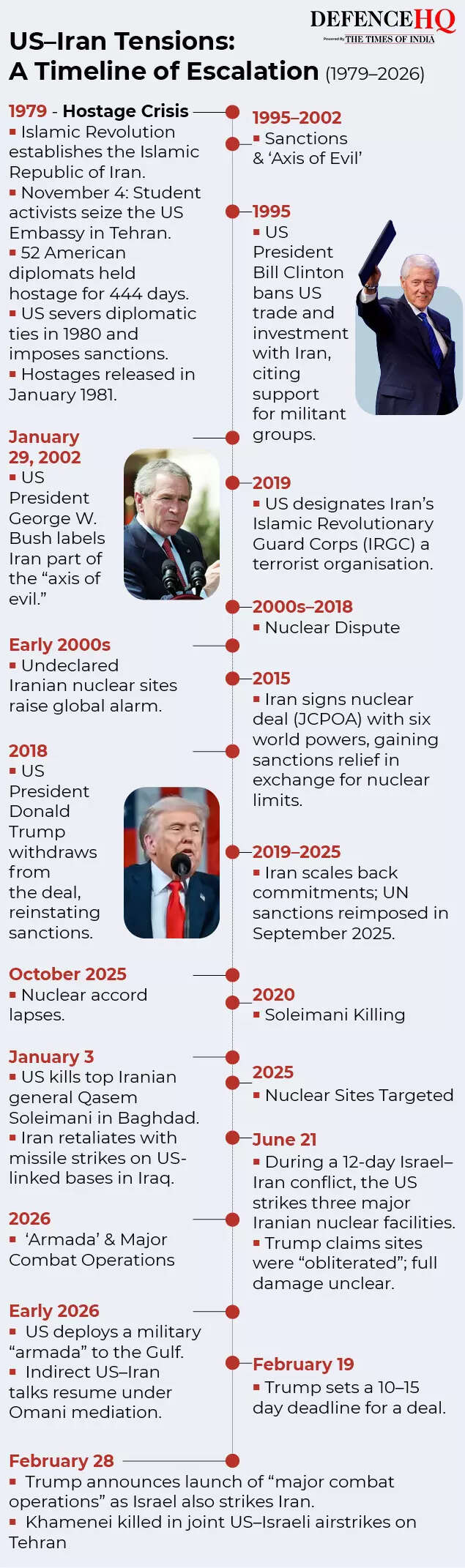
iran timeline

US evacuations and regional fallout

The US State Department authorised non-emergency US government employees and family members to leave Pakistan consulates in Karachi, Lahore and Saudi Arabia, Oman “due to safety risks,” according to advisories from the US embassies in Riyadh and Muscat.The department also ordered the evacuation of non-emergency personnel and families in Kuwait, Bahrain, Iraq, Qatar, Jordan and the United Arab Emirates. US citizens were urged to leave more than a dozen Middle Eastern countries, though many were stranded because of airspace closures. The State Department said it is preparing military and charter flights for Americans wanting to leave the region.Oman, which had played a mediation role in talks between the United States and Iran, called for a ceasefire. Riyadh condemned Iranian salvos, including the attack on the US embassy in Riyadh.India’s Ministry of External Affairs announced the establishment of a Special Control Room and issued helpline numbers for Indian nationals in view of the evolving situation in West Asia and the Gulf region.

US military campaign intensifies

Admiral Brad Cooper, commander of US Central Command, said American forces have struck nearly 2,000 targets in Iran as part of what he described as the largest firepower buildup in the region in a generation.“In simple terms, we’re focused on shooting all the things that can shoot at us,” Cooper said in a video message posted on X.“We are also sinking the Iranian navy — the entire navy,” he added. “Thus far, we’ve destroyed 17 Iranian ships, including the most operational Iranian submarine that now has a hole in its side.”“For decades, the Iranian regime has harassed international shipping. Today, there is not a single Iranian ship underway in the Arabian Gulf, Strait of Hormuz or Gulf of Oman,” Cooper said. “And we will not stop.”He added, “We’ve already struck nearly 2,000 targets with more than 2,000 munitions. We have severely degraded Iran’s air defenses and destroyed hundreds of Iran’s ballistic missiles, launchers and drones.”“The first 24 hours of this operation were nearly double the scale” of the first day of shock-and-awe strikes on Iraq in 2003, “and we continue with 24/7 strikes into Iran,” he said.The US military said it has destroyed 17 Iranian ships, including a submarine.

.

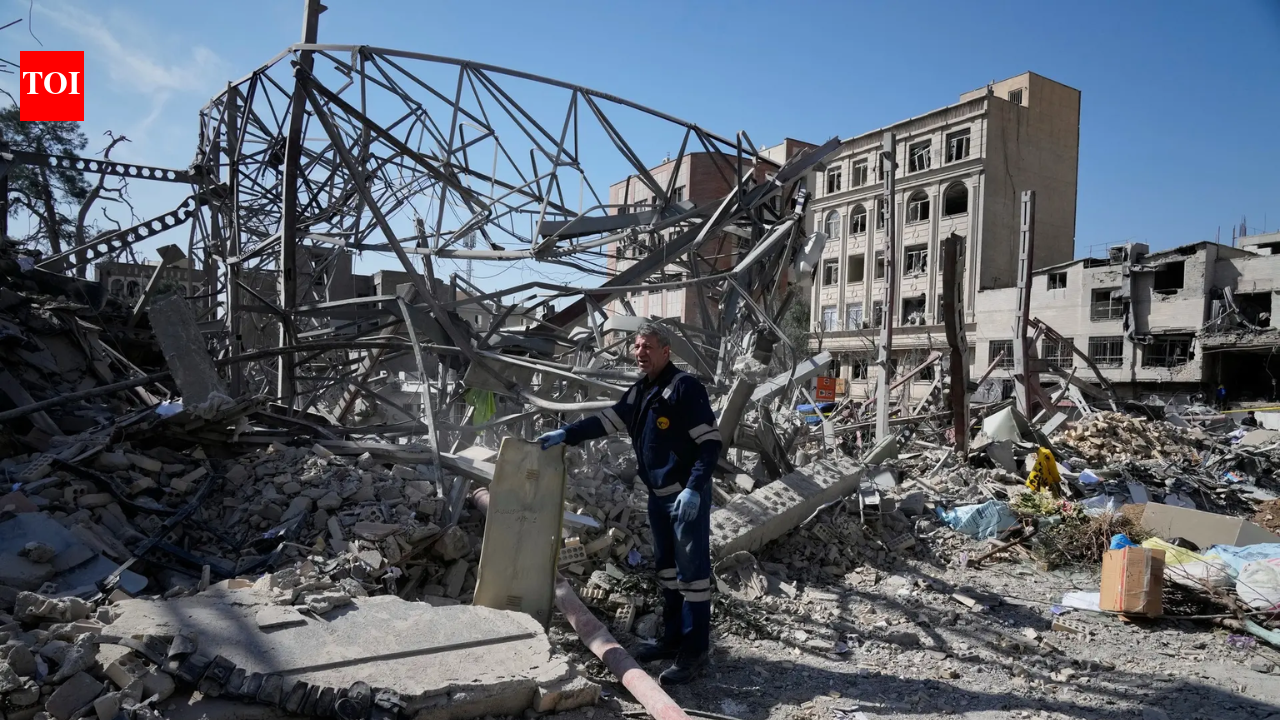
The US-Israeli strikes have killed at least 787 people in Iran, according to the Red Crescent Society. Nearly 800 people have been killed in Iran since the conflict began, including some whom President Donald Trump said he had considered as possible future leaders of the country.In Lebanon, where Israel launched retaliatory strikes against Hezbollah militants, at least 50 people were killed, including seven children, according to Lebanon’s health ministry. Lebanon’s state-run media also reported that at least four people were killed in an Israeli strike that hit a residential complex in the city of Baalbeck.The US military confirmed six American service members have been killed. Four were identified as Capt. Cody A. Khork, Sgt. 1st Class Noah L. Tietjens, Sgt. 1st Class Nicole M. Amor and Sgt. Declan J. Coady, who were assigned to the Iowa-based 103rd Sustainment Command. The Pentagon said a drone strike Sunday at a command center in Kuwait killed four US Army Reserve soldiers and two other service members.Kuwait said an 11-year-old girl was killed by falling shrapnel as its forces intercepted “hostile aerial targets.” Three people were killed in the United Arab Emirates and one in Bahrain.

Uncertainty over Iran’s leadership

US President Donald Trump said Iran’s air force and navy had been “knocked out” and that new strikes targeted Iranian leadership. He suggested the war could last several weeks or longer.As far as possible leaders inside Iran, “the people we had in mind are dead,” Trump said.“I guess the worst case would be do this, and then somebody takes over who’s as bad as the previous person, right? That could happen,” Trump said. “We don’t want that to happen.”While the initial US-Israeli strikes killed Iranian Supreme Leader Ayatollah Ali Khamenei and Trump urged Iranians to overthrow their government, senior administration officials have since said regime change was not the goal. Trump later said that “someone from within” the Iranian regime might be the best choice to take power once the campaign is finished.Israeli media reported that Mojtaba Khamenei, the 56-year-old second eldest son of Ali Khamenei, had been chosen as successor and that the Assembly of Experts was expected to formally announce him. The New York Times reported he had emerged as the leading candidate and that the Assembly allegedly elected him under pressure from the IRGC. There has been no independent confirmation from Iranian state media.

Source link

No non-agricultural tax on construction, housing societies in urban areas: Maharashtra revenue minister | Mumbai News


Mumbai: Revenue minister Chandrashekhar Bawankule admitted in the legislative assembly on Wednesday that while the decision to abolish the entire non-agricultural (NA) tax on land under residential, commercial and industrial use in urban areas was taken in the state cabinet in Oct 2024, it was not converted into law due to administrative reasons. Bawankule said in the cabinet meeting in Nov 2025, a decision was taken to abolish the provisions regarding the levy of NA tax in the state and all NA tax has been abolished in urban areas. “Accordingly, the provisions regarding the levy of NA tax have been repealed as per the Maharashtra Land Revenue (Second Amendment) Act, 2025, dated Dec 31, 2025. A lump sum conversion surcharge will be levied as mentioned in Section 47 of the Amendment Act,” Bawankule said in his reply. Bawankule said there will be no NA tax on any construction or housing societies in urban areas.Bawankule was replying to a question raised by MLA Bhimrao Tapikar. “Also, in accordance with the amendment, the revenue and forest department had in Feb 2026 instructed that the NA tax levied annually on uncultivated properties in the state should not be levied, and the arrears of NA tax levied annually up to the date of the amendment should not be recovered, instead, a lump sum conversion surcharge should be levied as mentioned in Section 47 of the amendment Act,” Bawankule said.Officials said NA tax has been permanently abolished. The reform comes nearly one-and-a-half years after it was first proposed and is expected to accelerate redevelopment and regularisation of aging housing societies in major cities like Pune, Mumbai and Thane.The notification, issued in Feb amends the Maharashtra Land Revenue Code to eliminate the annual NA tax, as well as the requirement for a separate non-agricultural land-use permission from district collector. “This is applicable provided the proposed land use is permissible under the applicable development plan, regional plan or development control regulations,” an official said.


Source link

Stock markets bleed on US-Iran war: Rs 16.32 lakh crore gone! Sensex, Nifty down over 2.7% – what should investors do?


Stock markets bleed on US-Iran war: Rs 16.32 lakh crore gone! Sensex, Nifty down over 2.7% - what should investors do?
India is not the only market to have seen losses in the wake of the Middle East situation. (AI image)

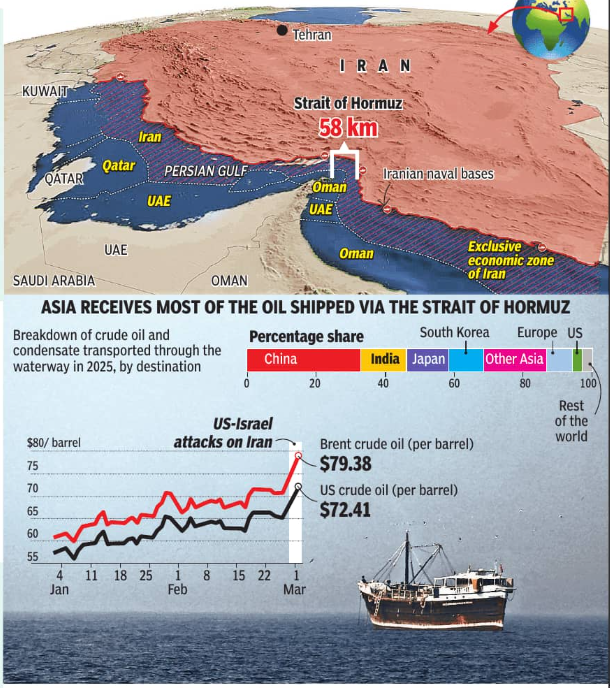
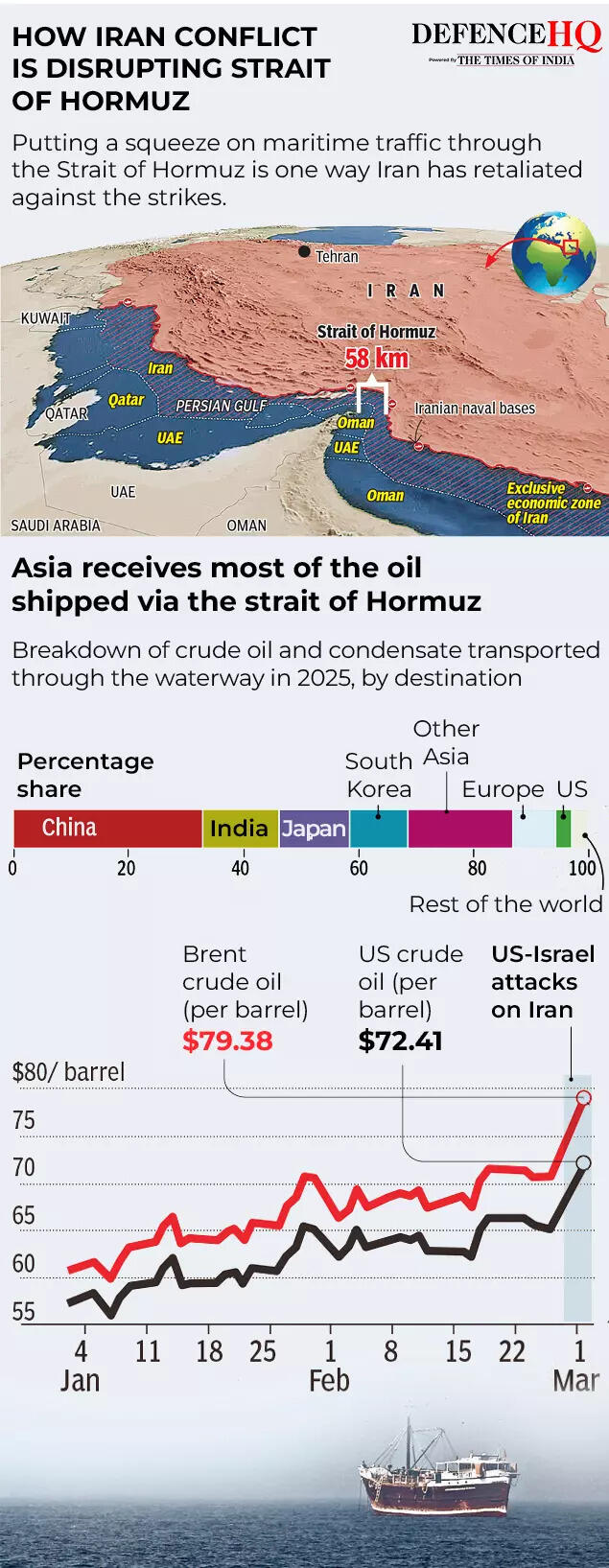
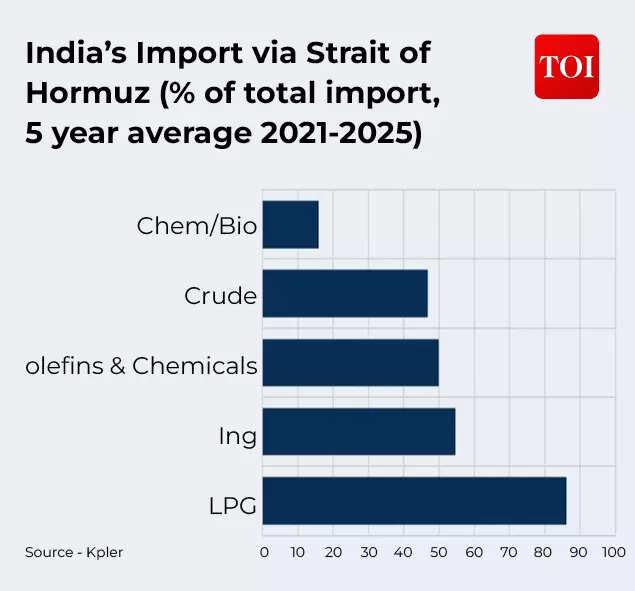
Indian stock markets have been bleeding – and multiple triggers in the last few quarters have left BSE Sensex and Nifty50 well below their record highs. The fresh negative for the stock markets is the US-Israel-Iran war that has sent ripples across global markets. Oil prices have risen to near the $80 mark and experts see them hitting $100 if the Middle East crisis does not calm down in the coming days.On Wednesday, BSE Sensex closed at 79,116.19, down over 1,100 points or 1.40%. Nifty50 ended at 24,480.50, down over 380 points or 1.55%. Both indices are down over 2.5% since the start of the conflict between US-Israel and Iran over the weekend.The drop has cost investors Rs 16.32 lakh crore in a span of two trading sessions. The stock market was closed on March 3, 2026 for Holi. The market capitalisation of BSE-listed companies has dropped from Rs 4,46,87,694.68 crore to Rs 4,47,18,243.15 crore since Friday last week. That’s a drop of Rs 16,32,428.12 crore in market cap.Middle East countries, including Iran which is at the centre of the conflict, are major suppliers of crude oil to the global economy. The Strait of Hormuz in Persian Gulf, a narrow but key passageway for the transit of oil and merchandise shipments has been closed, disrupting supplies to Asia. China and India in particular get a big chunk of their crude oil through this strait.

How Iran conflict is disrupting Hormuz

The fallout for energy markets is severe. The Strait of Hormuz accounts for roughly 30% of global seaborne crude oil, nearly 20% of jet fuel, and about 16% of gasoline and naphtha flows. The conflict has shut the strait via insurance withdrawals, putting close to 20% of global oil supply at risk, alongside critical volumes of jet fuel, LPG, and LNG.

Middle East Crisis Bleeds Global Markets

India is not the only market to have seen losses in the wake of the Middle East situation. Major stock markets around the world have tanked as uncertainty mounts.

  • Sensex has declined by about 2.7% from its February 27, 2026 closing. Similarly, Nifty50 index has dropped by about 2.8%
  • US stock market index – S&P 500 – has fallen by less than 1%
  • South Korea’s KOSPI has fallen by about 18.4% from the closing on February 27 to the closing on March 4, 2026. The fall is particularly drastic given its outperformance in the recent past.
  • Japan’s Nikkei 225 has dropped by about 7.8%
  • China’s Shanghai Composite Index has declined by approximately 1.9%

So, the question in investors minds is: what’s the road ahead? What is the best strategy in the current scenario and which sectors should they focus on?

What should investors do?

In times of uncertainty, investors look for cues on which pockets to invest in and what strategy to adopt. Market experts that TOI spoke to said that instead of panic selling, investors should adopt a wait-and-watch strategy.According to Dr. VK Vijayakumar, Chief Investment Strategist at Geojit Investments Limited, it is important to understand that stock markets are in unchartered territory in the near-term. “The major concern is the spike in crude oil and its impact. For India, which is dependent on imports for around 85% of her crude requirements, a sharp spike in crude oil prices will have negative implications for inflation, currency and economic growth. If the conflict gets resolved in two or three weeks the problem can be managed,” he says. “If, unfortunately, the conflict lingers longer the problem can aggravate leading to large trade deficits and high inflation. The market is concerned about that. Investors should wait and watch how the situation evolves. Panic selling is not advisable now. There is safety in domestic consumption themes like banking and defence,” he tells TOI.Tanvi Kanchan, Associate Director, Anand Rathi Share and Stock Brokers Limited explains the possible negative impact of the Middle East crisis on India’s macro indicators, while expressing confidence in the growth story. She is of the view that the near-term conditions are likely to remain highly volatile. The VIX has spiked, signalling heightened risk aversion, and key technical support levels have been decisively breached. Gold futures have surged on MCX as investors rushed toward safe havens. “Elevated crude prices are a fiscal challenge, though the RBI retains room to manoeuvre and domestic consumption remains resilient. IT stocks face added pressure amid AI-led disruptions – particularly from Anthropic – unsettling US tech sentiment, while banking stocks warrant close monitoring for yield-curve dynamics,” she tells TOI.

India's import via Strait of Hormuz

Tanvi Kanchan draws on historical data for perspective. “History suggests that sharp geopolitical shocks, however painful, have not derailed India’s long-term market trajectory. The underlying domestic macro backdrop remains supportive, with robust GST collections of ₹1.71 lakh crore in January 2026, an earnings recovery expected in FY27, and strong performance from PSU banks and metals,” she explains.“This is not a moment for panic selling, but for discipline. Investors should review portfolios, avoid leverage, and use any de-escalation-led rebounds to rebalance toward quality large caps. SIP investors are best served by staying the course—this is precisely the kind of volatility through which long-term wealth is built,” she advises.Thomas V Abraham, Research Analyst at Mirae Asset Sharekhan lists the risks to the Indian economy: India faces rupee depreciation, widening CAD, and elevated inflation amid the Iran-Israel-US conflict, with crude oil prices as the dominant driver. Importing 80-90% of its crude needs, India remains highly sensitive to price volatility, he says.“Markets remain in wait-and-watch mode (VIX ~17), monitoring de-escalation prospects versus escalation risks. Prolonged uncertainty risks structural inflation, lack of rate cuts (in the current scenario), and subdued growth,” the market analyst says.With the strait of Hormuz shut, and no end in sight for the geo political tension, India will need to look at all alternatives to import crude with Rupee at all time low against the dollar and crude prices increasing significantly, the expert tells TOI. He lists sectors and stocks that are likely to be impacted in the short-term and long-term.Short-Term Sector Impacts (Brief Uncertainties)•⁠ ⁠Negatives: OMCs, aviation (IndiGo), and paints face margin compression from higher crude costs. Some companies to be impacted include Indian Oil Corporation (IOC), Bharat Petroleum Corporation Ltd (BPCL).•⁠ ⁠Positives: Upstream oil firms benefit as elevated prices per barrel offset inflation. Some companies to benefit include Oil and Natural Gas Corporation (ONGC), Oil India Ltd (OIL)Longer-Term Sector Impacts (Prolonged Uncertainties)•⁠ ⁠Negatives: Autos and discretionary FMCG suffer from reduced demand due to higher fuel and financing costs.•⁠ ⁠Positives: Defence/aerospace gains from elevated border security needs; One could also tap into the defensive plays to ride out this period, he says.“Pharma sector offers capital preservation plus rupee depreciation tailwinds; gold/gold etfs hedges geopolitical volatility. Our top picks for the sector are Sun Pharma, Dr Reddys, and Lupin,” Thomas V Abraham adds.(Disclaimer: Recommendations and views on the stock market, other asset classes or personal finance management tips given by experts are their own. These opinions do not represent the views of The Times of India)


Source link

Virat Kohli, IPL franchises lead Holi wishes for fans as cricket fraternity celebrates festival of colours


As India celebrates the vibrant festival of Holi, the cricket fraternity has joined millions of fans in spreading joy and positivity through heartfelt social media messages. From legendary players like Sachin Tendulkar and Virat Kohli to IPL franchises embracing AI-powered creativity, the cricketing world came together to wish fans a colourful and safe celebration amid the ongoing T20 World Cup 2026.

Happy Holi!

Virat Kohli, who remains one of cricket’s most followed personalities, shared a story on his Instagram platform with a heartfelt message: “Happy Holi. May this festival of colours bring success, happiness, and positivity to your life.”  The former Royal Challengers Bengaluru (RCB) captain will soon be seen in action during the IPL 2026.

Taking to X (formerly Twitter), the Master Blaster Sachin Tendulkar wrote: “Happy Holi! Hope this day brings positivity, good health, and lots of happy moments your way. If you end up completely drenched, consider it a winning performance!”

India head coach Gautam Gambhir, currently preparing the team for their crucial T20 World Cup semifinal against England, also took a moment to extend warm wishes: “Wishing everyone a very happy & colourful Holi!”

ICC Chairman Jay Shah shared his wishes on the eve of Holi: “May the festival of colours bring joy, prosperity, and harmony to your life. Wishing you and your family a safe, vibrant, and blessed Holi filled with happiness and togetherness!” 

The Board of Control for Cricket in India (BCCI) secretary Devajit Saikia shared his greetings on X: “May the colours of Holi fill your life with joy, happiness, and prosperity! Wishing a fun-filled celebration.”

Also READ: Arjun Tendulkar-Saaniya Chandhok Pre-Wedding – Yuvraj Singh, Irfan Pathan And Others Attend Glittering Mehendi-Sangeet Ceremony

Also READ: Virat Kohli’s dream list – Qualities he wishes to inherit from SRK, Dhoni, Ronaldo, Messi, Tendulkar, Taylor Swift and The Rock


Source link

‘Dark oxygen’ discovered 4,000 meters below the Pacific Ocean where sunlight has never reached |


‘Dark oxygen’ discovered 4,000 meters below the Pacific Ocean where sunlight has never reached
Dark oxygen discovered under the Pacific Ocean (Image source: AI-generated)

For decades, school textbooks have explained that oxygen on Earth is mainly produced through photosynthesis, a process that depends on sunlight. Plants, algae, and some bacteria use light to turn water and carbon dioxide into oxygen. But a new study of the deep sea has made us wonder if oxygen can also be made without sunlight. Scientists exploring the Pacific Ocean seafloor have reported the presence of what they describe as “dark oxygen” in an environment where sunlight does not reach. The discovery was made during research on polymetallic nodules found thousands of metres below the ocean surface. According to the research team, the findings could reshape scientific discussions about oxygen cycles in extreme environments and even influence the search for life beyond Earth.

What is ‘dark oxygen’ discovered in the Pacific Ocean

The term “dark oxygen” is being used by researchers to describe oxygen detected in deep ocean regions where sunlight is completely absent. Traditionally, oxygen production has been closely linked to photosynthesis, which requires light energy. In the deep sea, especially at depths of around 4,000 metres, sunlight does not penetrate.According to the study published in the journal Nature Geoscience, researchers detected measurable levels of oxygen near polymetallic nodules on the Pacific Ocean floor. These nodules are mineral-rich deposits that have metals like nickel, manganese, and cobalt in them. The scientists observed that oxygen concentrations in certain sealed deep-sea experiments increased over time, even in the absence of light.

How was the oxygen detected on the Pacific seafloor

The research was carried out during deep-sea exploration missions in the Clarion Clipperton Zone of the Pacific Ocean. Scientists deployed specialised instruments to measure oxygen levels directly above the seabed.According to the authors of the study in Nature Geoscience, they used benthic chambers to isolate sections of the seafloor and monitor chemical changes. In these controlled conditions, oxygen levels unexpectedly rose instead of falling. Microbes and chemical reactions usually use up the oxygen in deep sediments. The rise indicated that some process was making oxygen in total darkness.The team took the same measurements several times to make sure the results were correct and that the equipment wasn’t to blame. We also did lab simulations to see if polymetallic nodules could make oxygen through electrochemical reactions.

What are polymetallic nodules and why are they important

Polymetallic nodules are rock-like structures that form on the ocean floor over millions of years. They have metals that are useful for batteries and electronics. They are also being looked into for possible deep-sea mining because they are valuable.According to the National Oceanic and Atmospheric Administration, these nodules are commonly found in the abyssal plains of the Pacific Ocean. A recent study by scientists suggests that the nodules may work like batteries. The minerals in them might help electrochemical reactions that break down seawater molecules into hydrogen and oxygen, even when there is no sunlight.This proposed mechanism is still being looked into, but it could be one reason why the experiments showed an increase in oxygen levels.

Why does this discovery matter for science

Scientists may need to change how they think about global oxygen cycles if they find oxygen in dark, deep-sea environments. If oxygen can be made without photosynthesis, it could mean that other extreme environments could have similar processes.Nature Geoscience says that the research team thinks the results could also have an impact on astrobiology. Scientists looking for life on other planets or moons often look for oxygen as a possible sign of life. Researchers may need to rethink how they think about oxygen in planetary atmospheres if it can form through chemical reactions that don’t involve living things in the dark.The discovery also adds to the discussion about mining in the deep sea. If polymetallic nodules help make chemical oxygen, then messing with them could hurt fragile ecosystems in the deep ocean. Environmental scientists have previously cautioned regarding the insufficient understanding of deep-sea ecological systems.


Source link

ATP cancels Fujairah tournaments amid Middle East tensions; agrees to fly players out after €5,000 charter backlash | Tennis News


ATP cancels Fujairah tournaments amid Middle East tensions; agrees to fly players out after €5,000 charter backlash
Fire caused by a shrapnel falling on the Fujairah Oil Terminal in the UAE. (AP)

The ATP Challenger tournaments in Fujairah, UAE have been cancelled amid the ongoing tensions in the Middle East. The ATP Tour vowed to cover the entire cost of flying the players out of the country after facing criticism for demanding 5,000 euros (Rs 5.36 lakh) for a chartered jet. For contrast, the prize money for the entire ATP Challenger 50 tournament – 32 singles players and 16 doubles teams – is $63,000 (54,000 euros; Rs 57.98 lakh) with the singles winner taking home less than $10,000 ($8,600; Rs 9.2 lakh).The events on the UAE’s east coast, located on the Gulf of Oman, were scheduled from March 2–8 (Fujairah 1) and March 9–15 (Fujairah 2) but will not take place after US and Israel’s war on Iran brought the entire Gulf region into danger.

Iran PUMMELS Dubai: U.S. Diplomatic HQ On Fire As Drones Struck American Consulate | WATCH

Despite the first strikes occurring on Saturday (February 28), the tournament proceeded as planned on Monday (March 2). The most striking visuals came a day later when Belarusian Daniil Ostapenkov and Japan’s Hayato Matsuoka rushed for cover mid-way into their second round qualifying match. A woman, possibly a tournament official, announced, “Everybody inside the lounge, please! Go, go, go!” Alongside the players, ball kids and officials also scrambled for safety.After some deliberation, the ATP cancelled both tournaments. “Following ongoing security concerns in the region, the ATP Challenger Tour events scheduled in Fujairah this week and next week (Fujairah 2) have been cancelled,” the ATP said in a statement.“The safety and well-being of our players and tournament personnel is our highest priority. Players remain on site and are being fully supported, with accommodation and all immediate needs covered while onward travel arrangements are explored,” it added.As if the decision to proceed with a tournament under such conditions wasn’t controversial enough, the ATP Tour reached out to players with the idea of potentially organising a charter flight for the signed-up players at €5,000 per person.

Emirates Iran US Israel

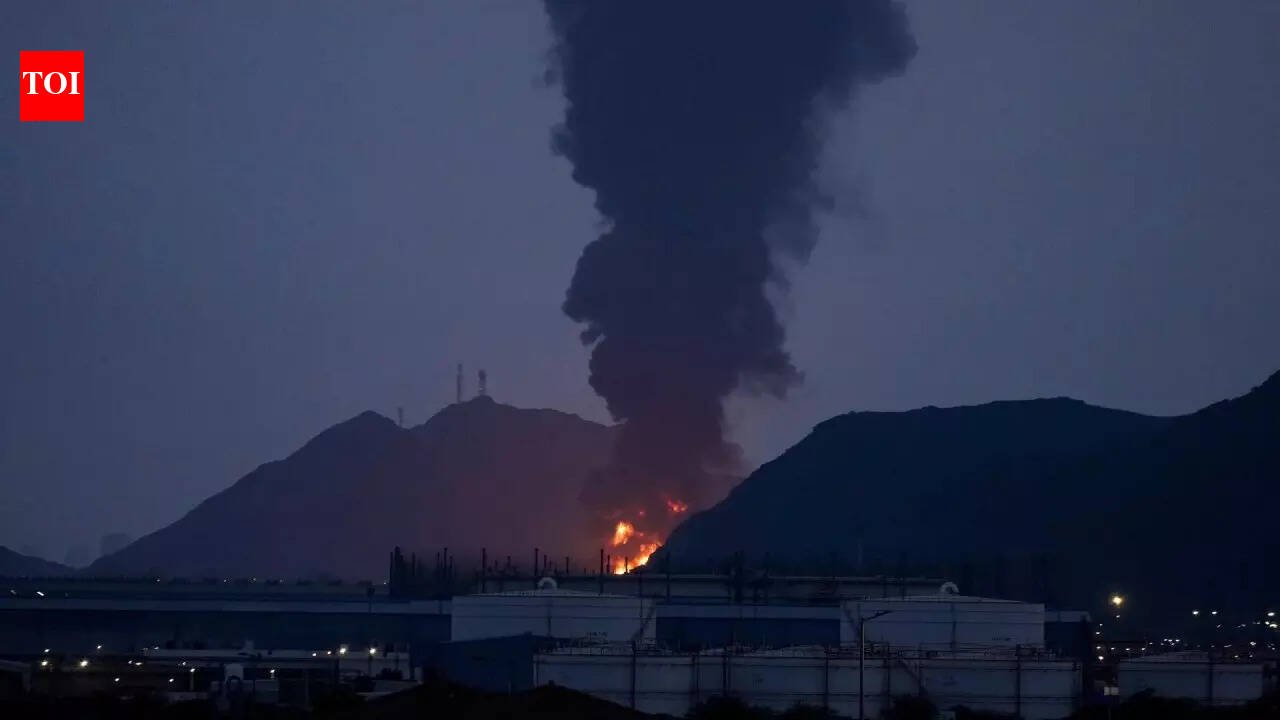
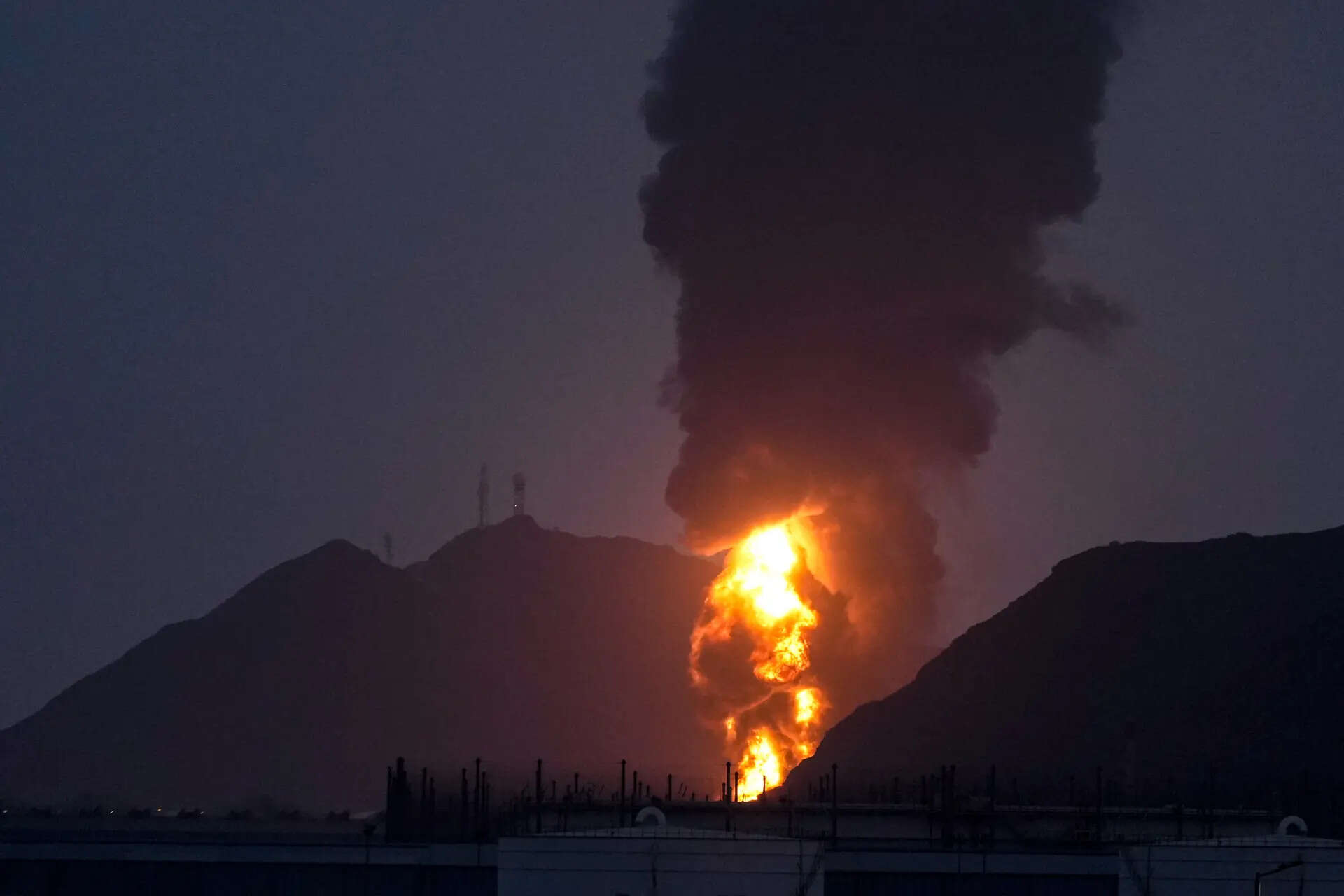
Large fire and plume of smoke is visible after, according to the authorities, debris of an Iranian intercepted drone hit the Fujairah oil facility. (AP/PTI)

“The ATP is potentially organizing a charter flight on Thursday 5th March from Muscat. Departure at 3.00pm, going to Milan, stopping on the way in Egypt. The cost is 5,000 Euro per person,” said the email that TimesofIndia.com has seen.According to this plan, while the logistics were not entirely clear, the players would have been required to take a three-hour drive from Fujairah to Muscat, Oman which would necessitate a border crossing.Two hours later, to make matters worse, another email stated that the ATP was not directly organising such a flight. Instead, it would explore “available travel options with third-party providers.”The Professional Tennis Players Association (PTPA) joined the chorus demanding the ATP work towards player safety. It also said it would reimburse the players €2,500 each to leave the UAE. “We are taking this step to ensure that no player is forced to choose between their safety and their financial stability,” it said in a statement.“We call on the ATP to join us and cover the remaining 2,500 euro per player and work collaboratively toward solutions that put players first.”After the remonstration by players and the PTPA, the ATP Tour did a U-turn and agreed to cover the costs of flying players out of the region and toward safety.‘Heard the sounds of jets’Ukraine’s Vladyslav Orlov said he heard jets during his second-round qualifying win over Ronit Karki on Tuesday.“When I was playing I heard the sounds of the jets flying here and there,“ Orlov said in a video posted on social media. ”And there is smoke going here next to the mountain, so not very safe here right now.”

Ilya.

Instargram Story by Ilya Ivashka who was competing at the ATP Challenger event in Fujairah, UAE. (Instagram)

Ilya Ivashka, who was due to play the qualifying match on Wednesday, shared a screenshot of the email on Instagram, with the caption: “no words needed @atptour” followed by the hand-clapping emojis.Russia’s Marat Sharipov wrote on Instagram: “Thank you @atpchallenger for arranging us a charter for ONLY 5000 euros! That’s slightly more than the prize money after taxes for winning the tournament, but I appreciate the gesture!”Japan’s Takuya Kamasaka posted an image of Fujairah Oil Terminal with the caption: “The intercepted drone fell on an oil facility, causing a fire. Today’s match has been cancelled. I want to go home safely…,” he wrote on Instagram.

Kumataku.

Instagram Story by Japan’s Takuya Kamasaka.

Finn Bass, who was originally scheduled to play in the tournament, was shocked that the tournament began at all.“Was meant to be playing there this week, cannot believe they’ve gone ahead and not cancelled the event. Madness,” he wrote on X before the tournament was called off.The UAE later confirmed that shrapnel had landed at the Fujairah Oil Terminal, not far from the Tennis Country Club Fujairah. It also said that the armed forces had intercepted a drone attack but no casualties were reported.After the ATP 500 Dubai Tennis Championships played last week, players were also stuck due to closed airspace in the region. Daniil Medvedev and Andrey Rublev are two of the prominent names who were affected. Both have entered the Masters 1000 tournament in Indian Wells, California, which starts on Wednesday (March 4). However, neither will play before Friday at the earliest.


Source link

Bihar CM Nitish Kumar to head to Rajya Sabha | India News


Bihar CM Nitish Kumar to head to Rajya Sabha
Nitish Kumar (File photo)_

NEW DELHI: Bihar chief minister Nitish Kumar, who currently heads the state government with support of the BJP, is likely to head to the Rajya Sabha, JDU sources told news agency ANI.The confirmation from the JDU sources was in sharp contrast to earlier reported claims that Nitish Kumar had given the nod to his son Nishant Kumar to contest the Upper House polls.As the development unfolds, senior leader and Bihar minister Vijay Chaudhary reached the residence of JDU national working president Sanjay Jha in Patna. Nitish Kumar’s close aide, JDU MLC Sanjay Gandhi, was present in the meeting.Union Minister and JDU leader Ram Nath Thakur also reached the residence of Sanjay Jha.This is a developing story…


Source link

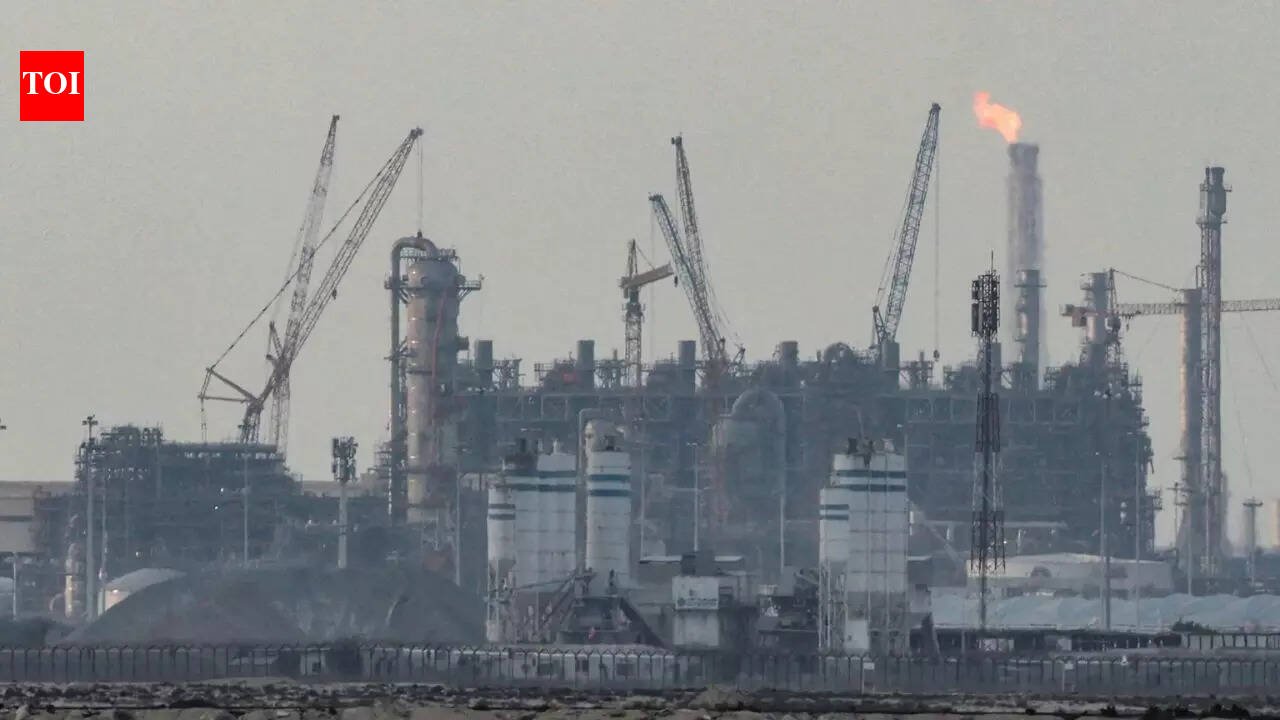
US-Israel attack in Iran: Qatar to fully shut gas liquefaction amid Tehran’s retaliatory strikes


US-Israel attack in Iran: Qatar to fully shut gas liquefaction amid Tehran's retaliatory strikes

Qatar will fully shut its gas liquefaction operations on Wednesday amid escalating tensions in the Middle East following US and Israeli attacks on Iran and Tehran’s retaliatory strikes across the region, according to Reuters sources familiar with the matter.Two Reuters sources close to the matter said that Qatar would completely halt its liquefaction facilities as security concerns grow over the widening conflict involving Iran, the United States and Israel.

America Hit Hard: $2 BN Wiped Out As U.S. Loses Jets, Radars, Sat Equipment Amid Iran War

The shutdown affects Qatar’s liquefied natural gas production infrastructure, which plays a critical role in global energy markets as the Gulf nation is among the world’s largest LNG exporters.According to the Reuters sources, restarting operations will also take considerable time once the facilities are halted.“Once restarted, Qatar would need at least another 2 weeks to reach full capacity,” the sources said.They added that early assessments indicate that the process of bringing the facilities back online after a complete shutdown will take time.


Source link

Escorts Kubota eyes South markets with paddy farming segment foray


Escorts Kubota eyes South markets with paddy farming segment foray

Hyderabad: With an eye on emerging as a pan-India player in the agricultural machinery market, Escorts Kubota Ltd (EKL) is making a serious play for the high-growth South Indian market with its foray into paddy and wetland farming segment. The company, which is a joint venture between Faridabad-based Escorts Group and Japan’s Kubota and primarily caters to the North Indian market, rolled out its first paddy farming tractor series, comprising 5 variants across the 39 HP to 52 HP category range, in Hyderabad. With its South play, EKL is aspiring to grow faster than the tractor industry, with at least 8 to 10 products to be rolled out every year until 2030-31, including offerings such as harvesters and transplanters, among others, Nikhil Nanda, Chairman and Managing Director, EKL, told newspersons at the rollout of the Powertrac Shaurya series, which will cater to the mass market. “This is not just a product launch but a strategic launch of a product we did not have in our portfolio. The southern markets—Telangana, Andhra Pradesh, Karnataka and Tamil Nadu—grew more than the markets we are strong in. We started (South focus) with Powertrac, and in the next 4 months we plan to launch a 4-wheel-drive (4WD) tractor,” he said. “We have a very strong pipeline and by the next 2 years we will cover 85% of the range in terms of application products in the Indian market. After we get the products, we are confident to grow in excess of the industry and grow market share,” Nanda said. “In the next 5 years until FY31, every year, between the 3 brands—Powertrac, Farmtrac and Kubota—and exports, we plan to launch 8 to 10 products every year,” he added. While Powertrac is aimed at the mass market, Farmtrac is for the mid-market and Kubota for the premium segment.


Source link