Breaking News
PV Sindhu returns to India after being stuck in Dubai amid Middle East conflict | Badminton News


'Back home and safe': PV Sindhu returns to India after being stuck in Dubai amid Middle East conflict
PV Sindhu (Image credit: PTI)

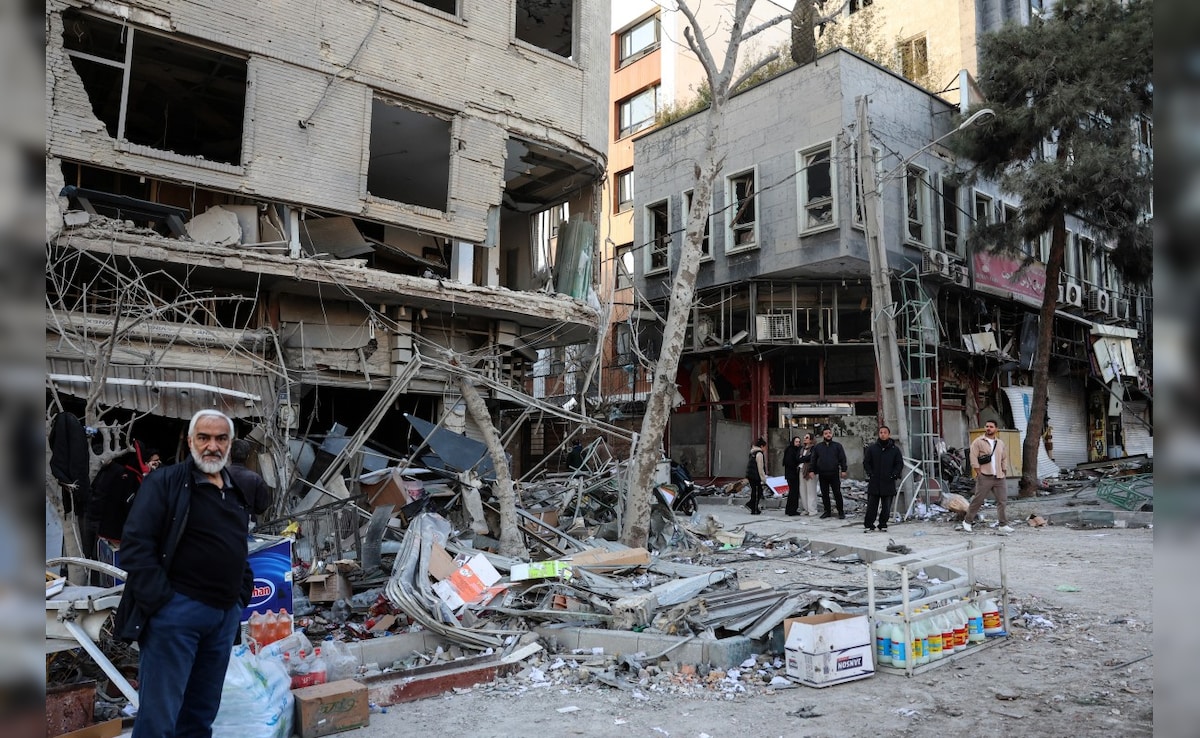
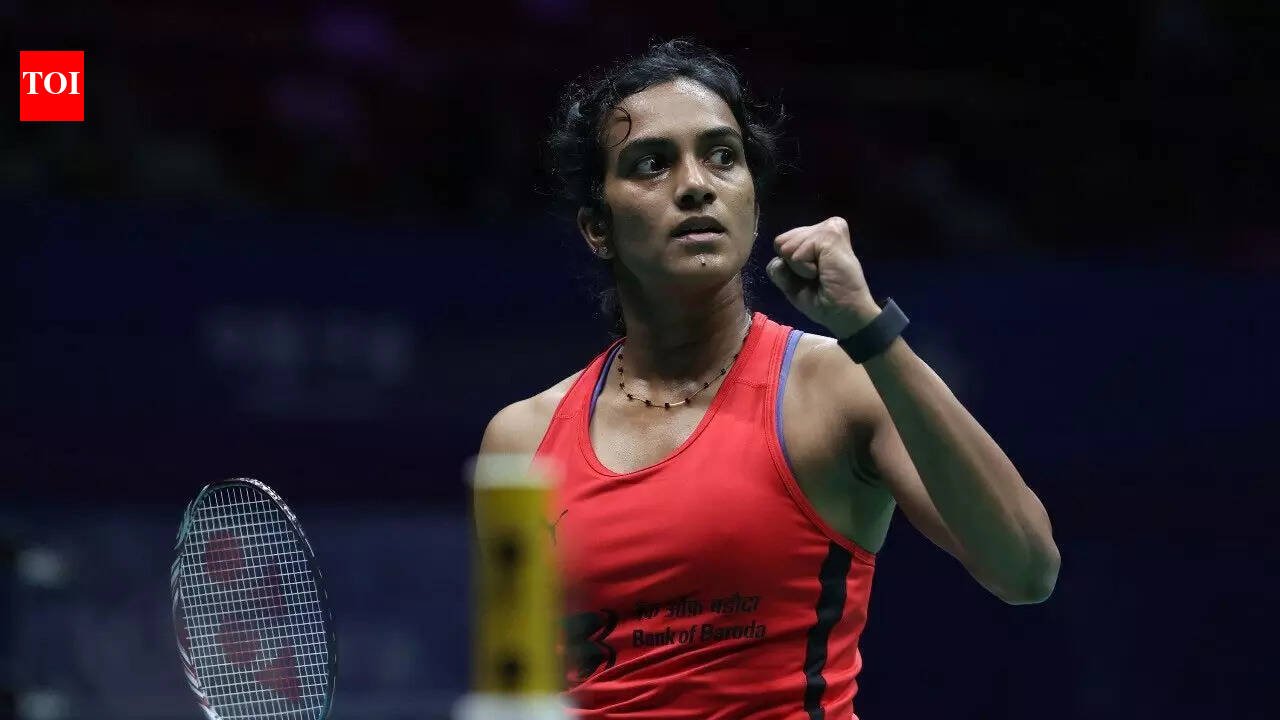
NEW DELHI: Indian badminton ace PV Sindhu has safely returned to India after a tense few days in Dubai, where she was stranded due to the escalating conflict in the Middle East.Sindhu confirmed her return through a post on social media, sharing that she is back home in Bengaluru after an anxious period abroad.

Indian cricket team leaves from Kolkata, fans go mad for Sanju Samson

“Back home in Bangalore and safe. The last few days have been intense and uncertain, but I’m truly grateful to be back. A heartfelt thank you to the incredible ground teams, Dubai authorities, airport staff, immigration, and every single person who stepped up and took such good care of us during a very difficult time. The empathy and professionalism meant more than words can say. For now, it’s time to rest, reset, and figure out the next steps,” Sindhu posted on X (formerly Twitter).Sindhu and her support staff — including Indonesian coach Irwansyah Adi Pratama — had been stranded in Dubai. They reportedly experienced a close call after an explosion occurred near the area where they were staying.Two-time Olympic medallist Sindhu is set to to miss the All England Championships, which begin on Tuesday. The Indian star was scheduled to take on Thailand’s Supanida Katethong in the opening round.


Source link

US-Israel-Iran war hits oil supplies: How India is preparing for the economic fallout


US-Israel-Iran war hits oil supplies: How India is preparing for the economic fallout
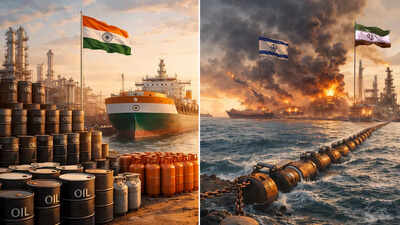
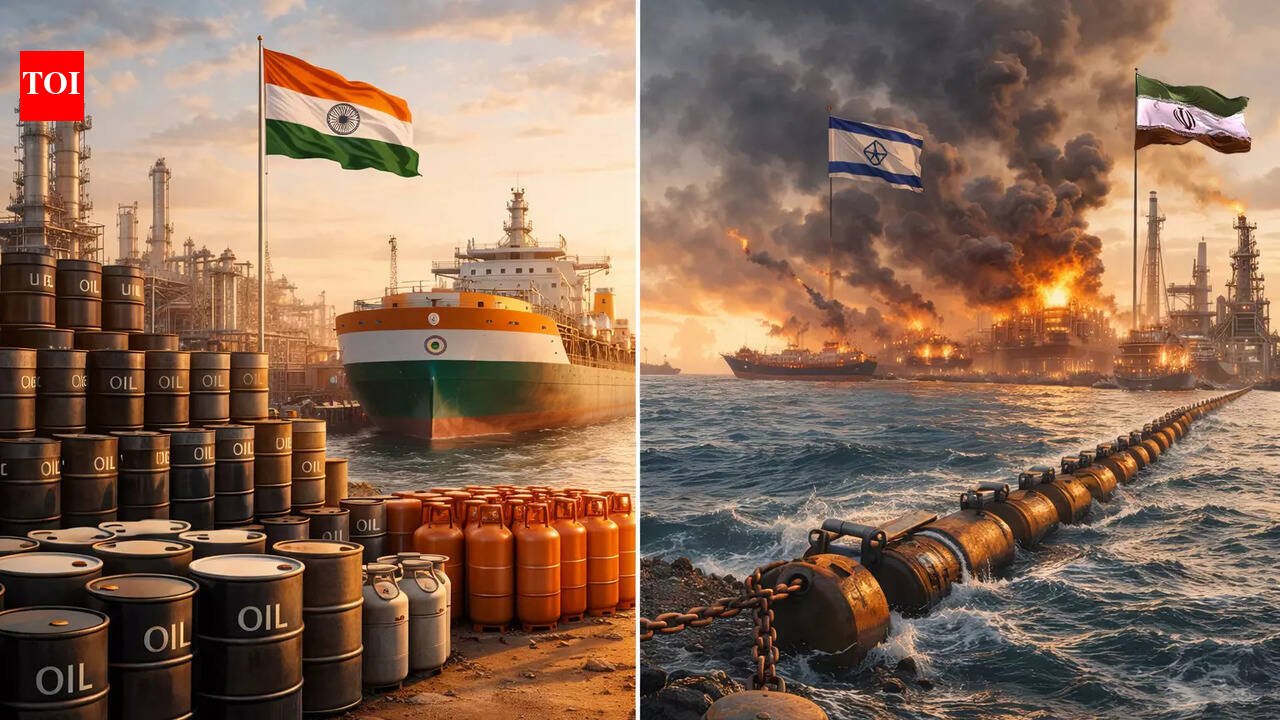
Refiners have begun scouting for alternative crude sources to offset supplies affected by the conflict in West Asia. (AI image)

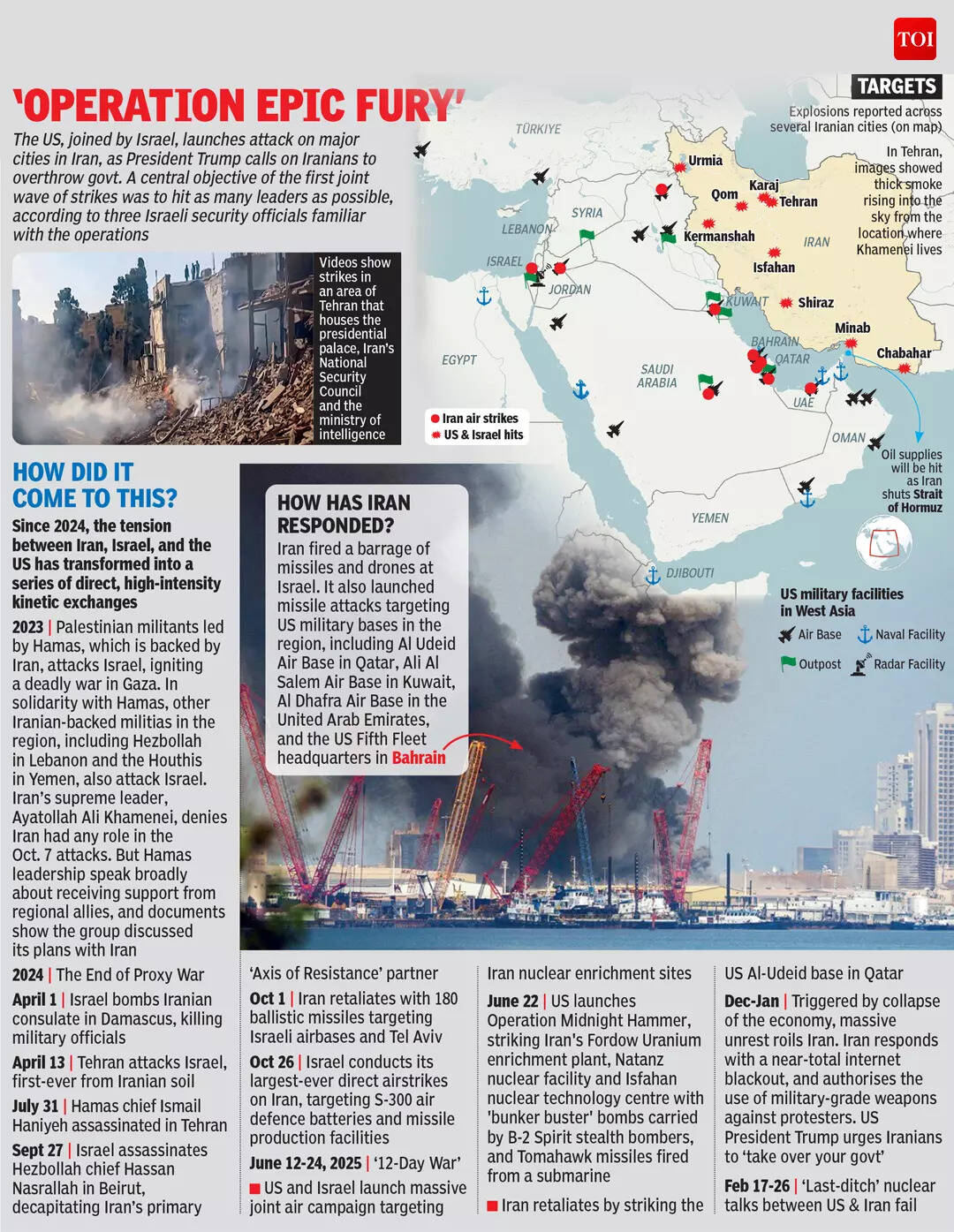
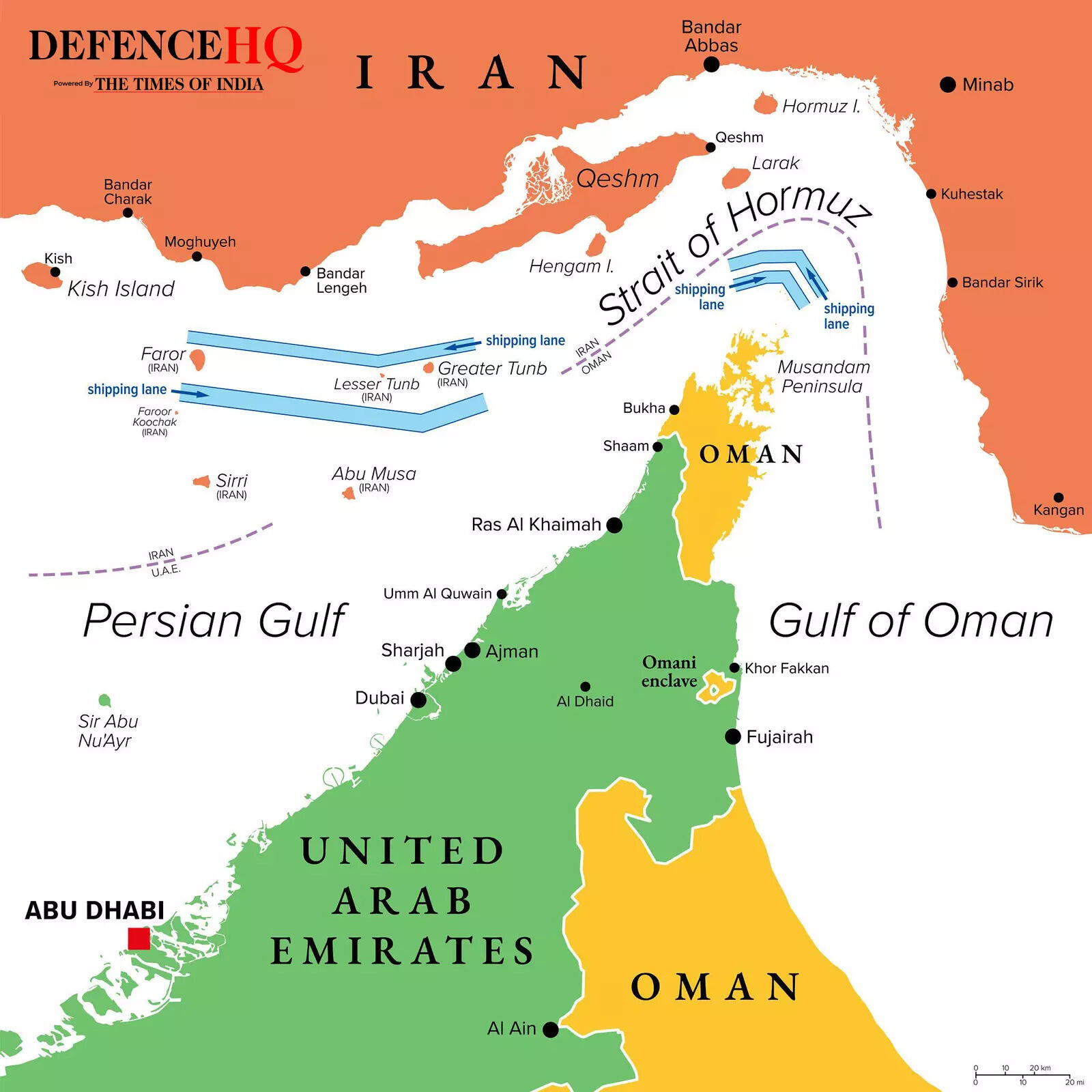
India is looking at several emergency measures to tackle the risk of fuel shortages if shipping through the Strait of Hormuz remains affected for an extended period. Strait of Hormuz in the Persian Gulf is a prominent and vital maritime route for transmit of oil and goods. According to people aware of discussions between the government and industry stakeholders, the options under consideration include curbing exports of petrol and diesel, stepping up crude purchases from Russia, and implementing demand-side steps such as rationing LPG supplies.Even as the Centre and oil firms maintained that there is no immediate scarcity, refiners have begun scouting for alternative crude sources to offset supplies affected by the conflict in West Asia. The geopolitical strain has pushed up global oil and gas prices. For India, which relies heavily on imports, this surge translates into a higher import bill and adds to inflationary pressures.

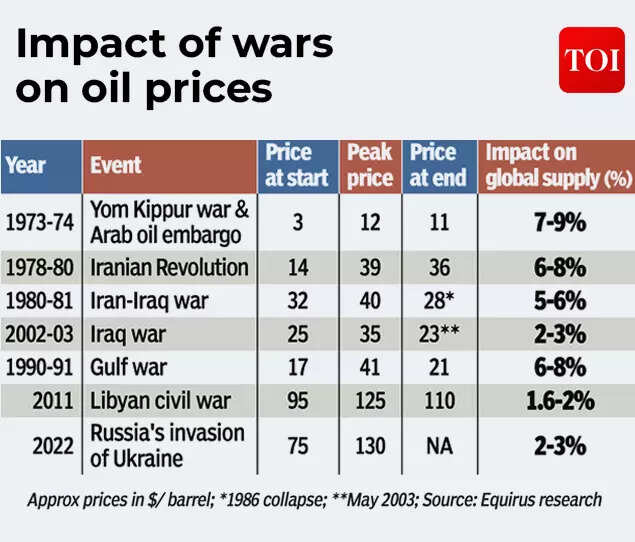
Impact of wars on oil prices

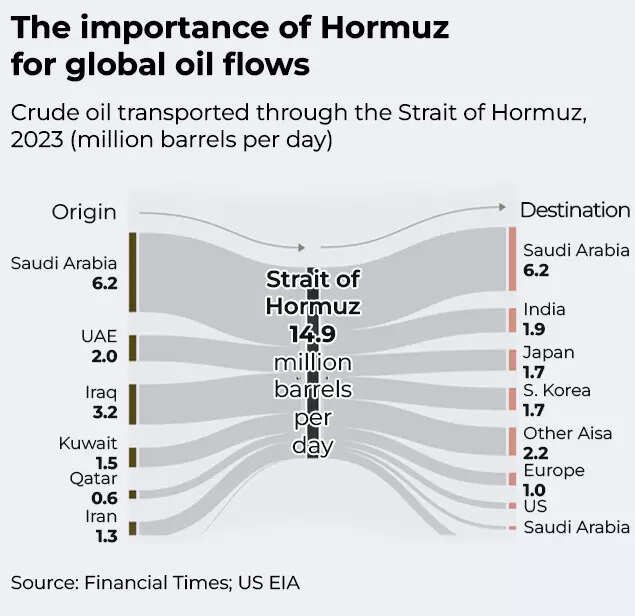
India depends on overseas purchases for almost 90 per cent of its crude oil needs. It also relies on imports to meet around 60–65 per cent of its LPG consumption and roughly 60 per cent of its LNG requirement. A significant portion of these supplies originates in West Asia and moves through the Strait of Hormuz, a vital corridor that faces the risk of disruption amid the ongoing conflict.

India to curb oil exports?

With concerns mounting over potential disruptions in crude oil availability, the government is considering measures to encourage refiners to channel a larger share of automobile fuels and LPG toward the domestic market by trimming exports, according to a TOI report. It is also exploring ways to step up cooking gas output to ensure uninterrupted supplies for local consumers.Currently, India sends abroad roughly one-third of its petrol production, about a quarter of its diesel output, and nearly half of the aviation turbine fuel it produces. If necessary, refiners can also channel excess ATF into alternative product streams, they said.

Importance of Hormuz for global oil flows

Data from the International Energy Agency shows that 5.9 per cent of India’s petroleum output was exported in 2023. During the period from April to December 2025, the country shipped petroleum products worth nearly $330 billion, with key markets including the Netherlands, the UAE, the US, Singapore, Australia and China. In 2024, petroleum gas exports totalled $454 million, largely destined for Nepal, China and Myanmar. The Reliance Industries Limited refinery at Jamnagar remains the country’s biggest exporter.An executive at an oil company said refiners have already initiated discussions with traders to secure capacity amid concerns over a potential blockade of the Strait of Hormuz. By Monday, global markets were unsettled following QatarEnergy’s decision to halt gas shipments.

LNG and LPG disruptions

The most pressing area of concern is LPG, as the country relies on imports to meet close to two-thirds of its consumption and keeps relatively limited stockpiles. Around 85–90 per cent of LPG imports originate from Gulf nations.Industry assessments indicate that existing inventories, including domestic storage and cargoes that have already passed through the Strait of Hormuz, would be sufficient for less than a fortnight if fresh supplies are halted. To prepare for such a scenario, Indian Oil Corporation, Hindustan Petroleum Corporation Limited, and Bharat Petroleum Corporation Limited have started raising LPG production at select refineries integrated with petrochemical units.Officials are also examining focused demand-management strategies, including the possibility of rationing LPG for consumers who have access to alternate cooking fuels, particularly in rural regions, the people said. India’s crude oil stockpiles are estimated to cover around 17–18 days of consumption, while reserves of refined products such as petrol and diesel could last approximately 20–21 days.LNG inventories are sufficient for about 10–12 days. Without additional shipments through the Strait of Hormuz, these reserves would gradually diminish. Increasing purchases of Russian crude is another option being evaluated, sources told ET.Another industry executive noted that while any disruption could pose short-term challenges, Indian companies maintain a diversified LNG sourcing portfolio, including supplies from the US, with vessels routed via the Suez Canal.“Even if there is a force majeure, we have other sources of supply, which we can tap. Besides, no one is going to stop supplies indefinitely,” the executive said. Although oil and gas prices climbed on Monday, efforts remain focused on keeping supply chains operational.

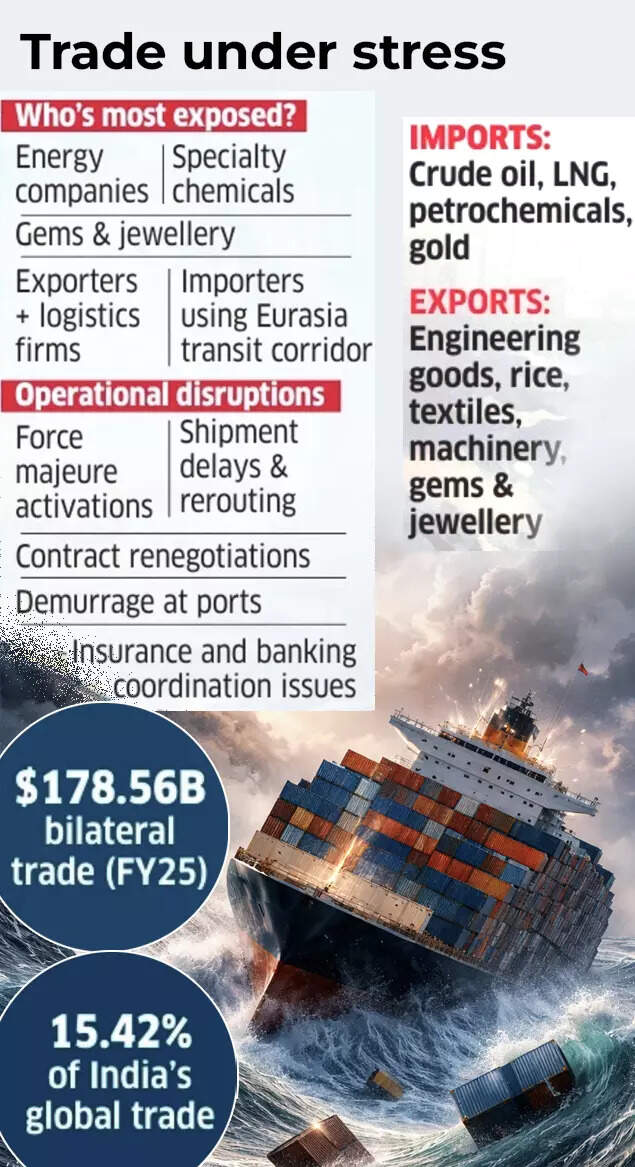
Trade under stress

No rise in petrol, diesel prices expected

Officials indicated that pump prices of petrol and diesel are unlikely to be revised upward in the near term. Oil marketing companies continue to adhere to a calibrated pricing strategy, absorbing losses when international rates climb and recovering margins when they ease. Retail fuel prices have effectively remained frozen since April 2022.On a day when Iranian drone strikes damaged sections of a Saudi Aramco refinery and QatarEnergy, the world’s largest LNG producer, announced a temporary halt to exports, Petroleum Minister Hardeep Singh Puri convened a meeting with senior officials and oil company representatives to review the status of crude and gas supplies.“We are closely tracking the fast-changing developments and will take every necessary measure to maintain both the supply and affordability of key petroleum products across the country,” the oil ministry said in a message posted on X.

Measures for Exporters

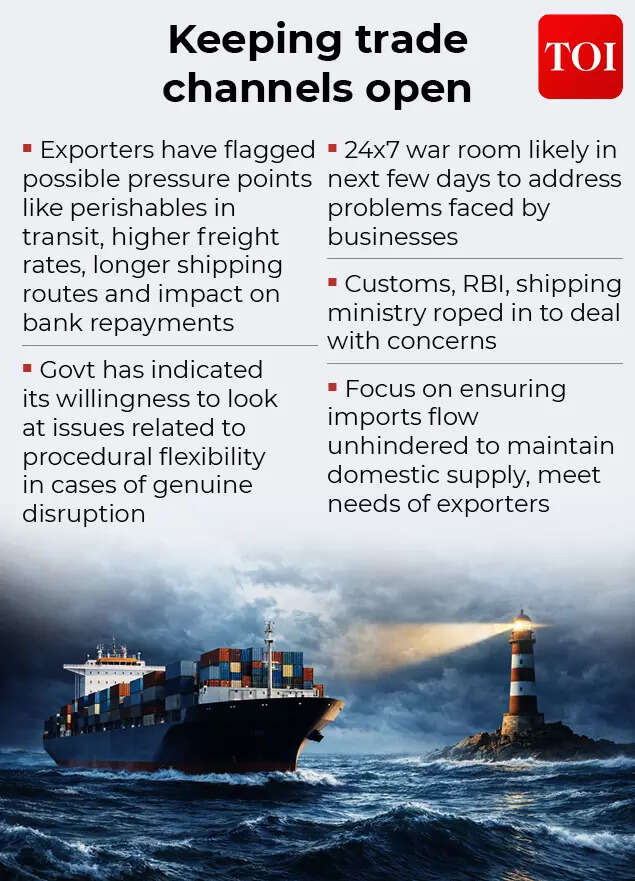
The government has sought to reassure exporters, saying that it stands prepared to extend necessary support and introduce flexible measures to ease trade operations in view of the uncertainty stemming from tensions in West Asia.At a meeting held in the commerce department and chaired by special secretary Suchindra Misra and DGFT Lav Agarwal, exporters highlighted several areas of concern.

Keeping trade channels open

These included risks to perishable consignments already in transit, escalating freight costs, demurrage charges, rerouting of shipments leading to longer transit times, dependence on imported inputs for exports, and potential strain on loan repayments to banks.According to an official statement, authorities are considering setting up a monitoring mechanism or round-the-clock control room to improve inter-agency coordination and swiftly address emerging challenges. The government reiterated its commitment to facilitating trade and signalled openness to granting procedural relaxations in instances of genuine disruption. It also indicated that it would work closely with customs officials to ensure timely clearances and coordinate with banks and insurance companies to ease operational bottlenecks.


Source link

Access Denied


Access Denied

You don’t have permission to access “http://www.ndtv.com/world-news/iran-israel-war-steve-witkoff-fox-tv-interview-why-did-us-israel-attack-iran-tehran-nuclear-programme-enriched-uranium-11162113” on this server.

Reference #18.cdf5d217.1772522430.7311d231

https://errors.edgesuite.net/18.cdf5d217.1772522430.7311d231


Source link

US strikes Iran’s ‘command and control’ facilities; Trump says war ‘can be fought forever’ – key details


Trump Reveals Nuclear Threat Was Nearly At America's Door, Outlines Four Iran War Objectives

.

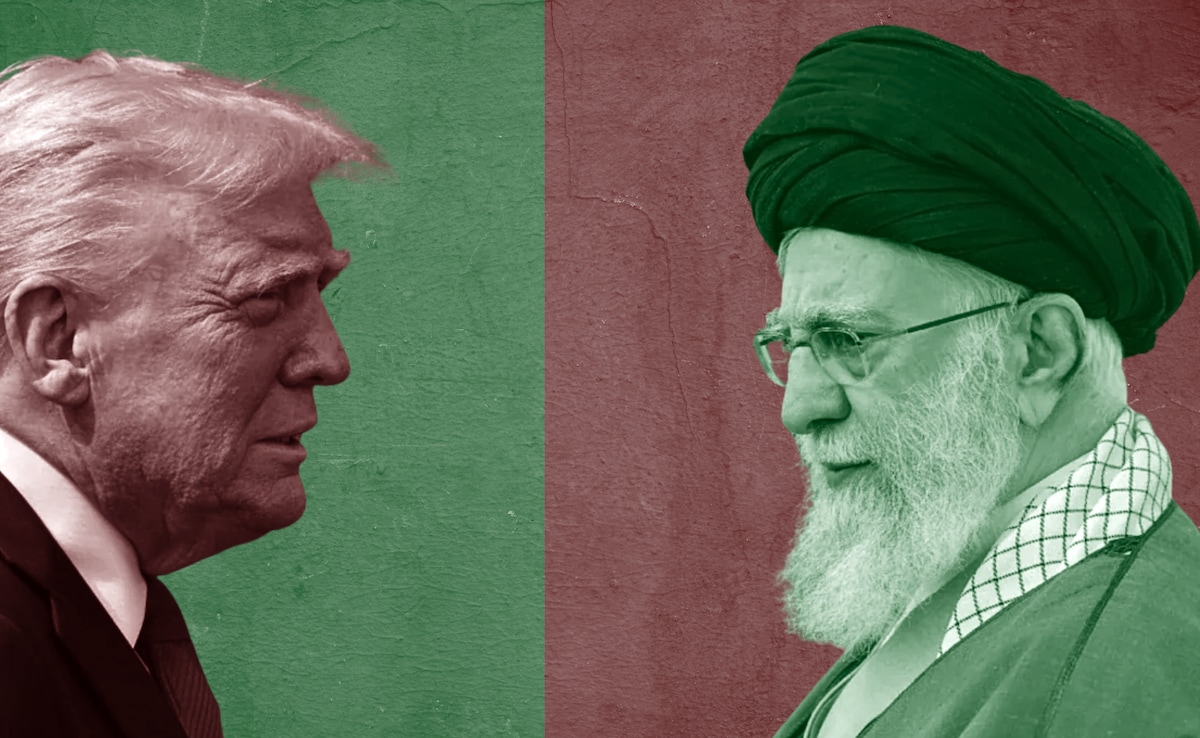
US President Donald Trump on Tuesday boasted of America’s military capability, claiming an “unlimited supply of weapons” and saying the “war can be fought forever” amid escalating tensions with Iran. The remarks came after a joint US-Israeli strike killed Iran’s Supreme Leader Ayatollah Ali Khamenei.The situation in the Middle East continues to evolve, as Iran has launched retaliatory strikes following the death of its long-serving Supreme Leader Khamenei, an operation reportedly planned by Trump.

Trump Reveals Nuclear Threat Was Nearly At America’s Door, Outlines Four Iran War Objectives

Most recently, the Khamenei-less and angered Tehran regime attacked the US embassy in Iran, while the US military said it had destroyed Iran’s “command and control” center in Tehran.Meanwhile, Israel and Hezbollah continue exchanging missile strikes, targeting each other’s positions.US-based Human Rights Activists News Agency (HRANA) has reported that more than 700 civilians have been killed in Iran since the war began, including 176 children and hundreds more were injured.

Top developments

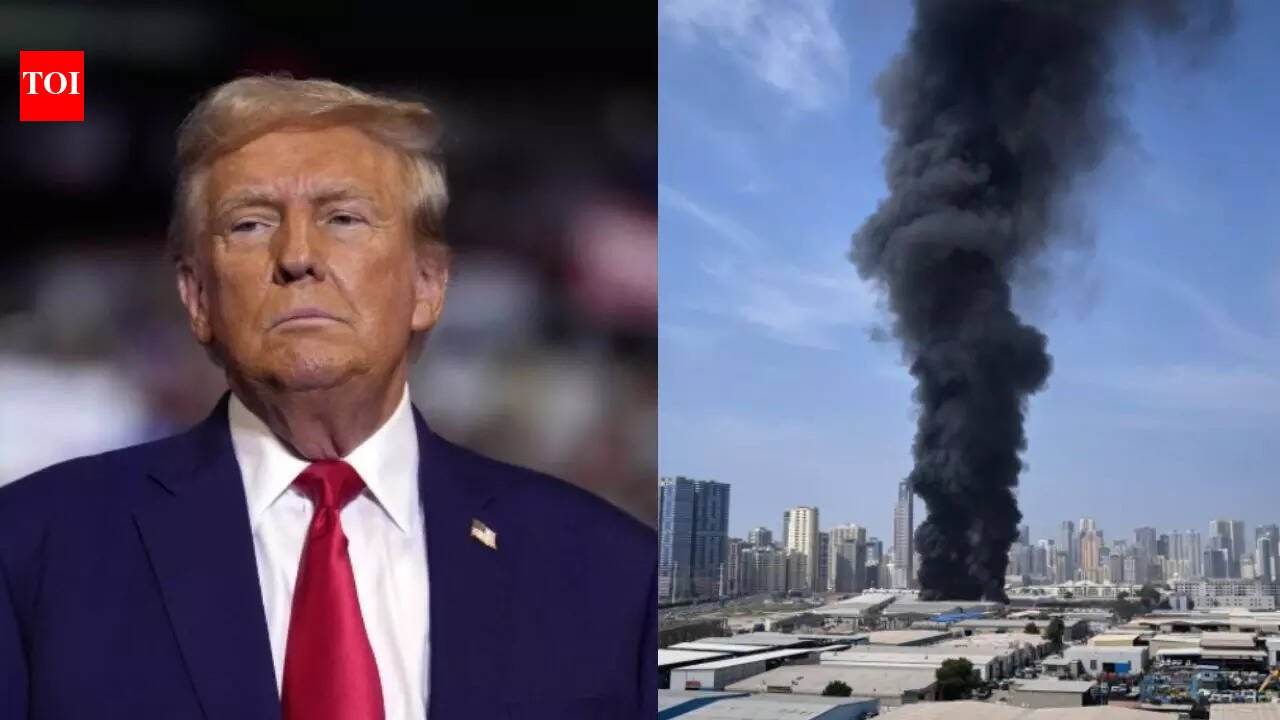
Can fight wars ‘forever’: TrumpUS President Donald Trump said on Truth Social on Tuesday that America’s munitions stockpiles at the “medium and upper medium grade” have “never been higher or better.” He claimed the United States has a “virtually unlimited supply” of such weapons and added, “Wars can be fought ‘forever,’ and very successfully, using just these supplies.”Trump said that while the country has a good supply of high-end weapons, it is “not where we want to be,” adding that additional high-grade weaponry is stored in other countries.Trump said he rebuilt the US military during his first term and continues to strengthen it. “The United States is stocked, and ready to WIN, BIG!!!” he wrote.US embassy attacked in RiyadhSaudi Arabia’s defence ministry said two drones hit the US diplomatic mission in Riyadh early Tuesday. A ministry spokesperson said preliminary assessments confirmed the embassy had been targeted. “The attack resulted in a limited fire and minor material damage to the building,” the statement noted.AFP journalists and residents reported hearing loud explosions in the diplomatic quarter, with one resident saying the blast shook homes nearby.Saudi forces also later said they intercepted and destroyed eight drones near Riyadh and Al Kharj. Trump signals retaliationUS President Trump said the US would response to the attack on its embassy in Riyadh. “If action is not taken now, it may never be possible in the future. You’ll soon find out,” he said.Trump also indicated the conflict could last longer than initially expected, saying the United States has the capability to continue operations if required.Vice President JD Vance meanwhile told Fox News the strikes were aimed at ensuring Iran “could never have a nuclear weapon.” He also said the administration did not intend to enter a multi-year conflict like Iraq or Afghanistan.

1 copy

.

Netanyahu defends actionIsraeli Prime Minister Benjamin Netanyahu said the attack on Iran was urgent. He claimed Iran had begun constructing underground bunkers that would soon make its nuclear and missile programmes immune from air strikes.“The reason that we had to act now is because after we hit their nuclear sites and their ballistic missile program… they started building new sites, underground bunkers that would make their ballistic missile program and their atomic bomb program immune within months,” Netanyahu claimed in an interview with Fox News.“If no action was taken now, no action could be taken in the future,” he added.“Iran for 47 years has been chanting death to America,” he Netanyahu.”They bombed your embassies.They tried to assassinate Donald Trump, the president of the United States, twice. They murdered their own people, they massacred so many. And they spread a worldwide web of terror,” he added.

Netanyahu: This is why we needed to act now

Israeli targets Iran’s air defencesIsraeli fighter jets have struck Iran’s air defence systems and missile launch platforms, according to Israeli military spokesperson Avichay Adraee. In a post on X, Adraee said aircraft targeted personnel operating radar installations and missile launchers, and also hit sites linked to Iran’s ballistic missile platforms.Meanwhile, United States Central Command (CENTCOM) said it destroyed facilities belonging to the Islamic Revolutionary Guard Corps, including command centres, air defence systems, and missile and drone launch sites. CENTCOM did not provide evidence but said it would continue taking “decisive action” against what it called imminent threats from Iran.War of choice’: AraghchiIran’s Foreign Minister Abbas Araghchi accused the United States of entering a “war of choice” to support Israel, responding sharply to remarks by US Secretary of State Marco Rubio. In a post on X, Araghchi said, “Mr. Rubio admitted what we all knew: US has entered a war of choice on behalf of Israel. There was never any so-called Iranian ‘threat’.”He added that “shedding of both American and Iranian blood is thus on Israel Firsters,” and said the American public “deserve better and should take back their country.” Rubio had earlier told reporters that Washington was aware of Israel’s plans to strike Iran and joined the operation, arguing that Tehran was likely to retaliate against US assets in the region. Israel’s warning in Lebanon Israel asked residents in at least 59 locations across Lebanon to evacuate immediately, citing alleged activity by Hezbollah. In a post on X, Israeli military Arabic spokesperson urged civilians to move at least 1,000 metres away from their villages to open areas for their own safety. “Anyone present near Hezbollah elements, their facilities, and their combat means is endangering their life,” it wrote, adding, “Protect your safety and the safety of your loved ones and evacuate immediately.”

Strait of Hormuz copy

.

Oil prices climbOil prices rose for a third straight day amid fears of supply disruption through the Strait of Hormuz. Brent crude crossed $79 per barrel on Tuesday as markets reacted to the escalating conflict. The situation remains fluid, with both sides signalling further military action.“With no quick de-escalation in sight, the Strait of Hormuz effectively closed and Iran showing a willingness to target energy infrastructure in the region, upside risks remain and they grow the longer the conflict drags on,” Tony Sycamore, IG market analyst, was quoted by Reuters as saying.


Source link

Telegram CEO Pavel Durov has a ‘Europe message’ for everyone worried about UAE: Given Europe’s crime rates, Dubai is statistically safer even with missiles flying, can’t … |


Telegram CEO Pavel Durov has sparked a debate online after posting a message about safety in Europe compared with the United Arab Emirates (UAE). In a post on microblogging platform X (formerly Twitter), Durov said that Dubai remains statistically safer despite the ongoing tensions in the region. Durov said in the post that he had to leave Dubai for Europe a week ago. Pavel Durov sarcastically wrote that he was missing the “free fireworks from Iran” in Dubai, adding that he was now “exposing myself to greater risk” in Europe. The Telegram CEO further stated that given Europe’s crime rates, Dubai is statistically safer “even with missiles flying,” and said he “can’t wait to be back.”

What Telegram CEO Pavel Durov said

Telegram CEO Pavel Durov wrote in the post:“Unfortunately, I had to leave Dubai for Europe a week ago — so I’m not only missing the free fireworks from Iran, but also exposing myself to greater risk. Given Europe’s crime rates, Dubai is statistically safer even with missiles flying. Can’t wait to be back”.

Gulf tensions escalate after Iran strikes

Iran’s continued missile and drone strikes across the Gulf have raised fears of a wider conflict in the region. For a second day straight, loud explosions were heard in cities of Dubai, Doha and Manama, according to AFP correspondents on Sunday, March 1. The attacks followed large-scale US and Israeli air strikes on Iran, which reportedly killed Iran’s supreme leader and other senior officials. According to an AFP report, the UAE has confirmed that four people were killed and dozens injured in the recent missile and drone attacks across the Gulf. In response, the UAE announced it was closing its embassy in Tehran and recalling its ambassador. In a statement, the UAE foreign ministry described the attacks as hostile and said civilian areas, airports, ports and service facilities were endangered. It called the strikes a serious and irresponsible escalation.


Source link

Sonia Gandhi: ‘Abdication, not neutrality’: Sonia Gandhi slams PM Modi’s silence on Khamenei assassination | India News


US-Israel-Iran War: Why Has India Not Condemned Khamenei's Death Yet?

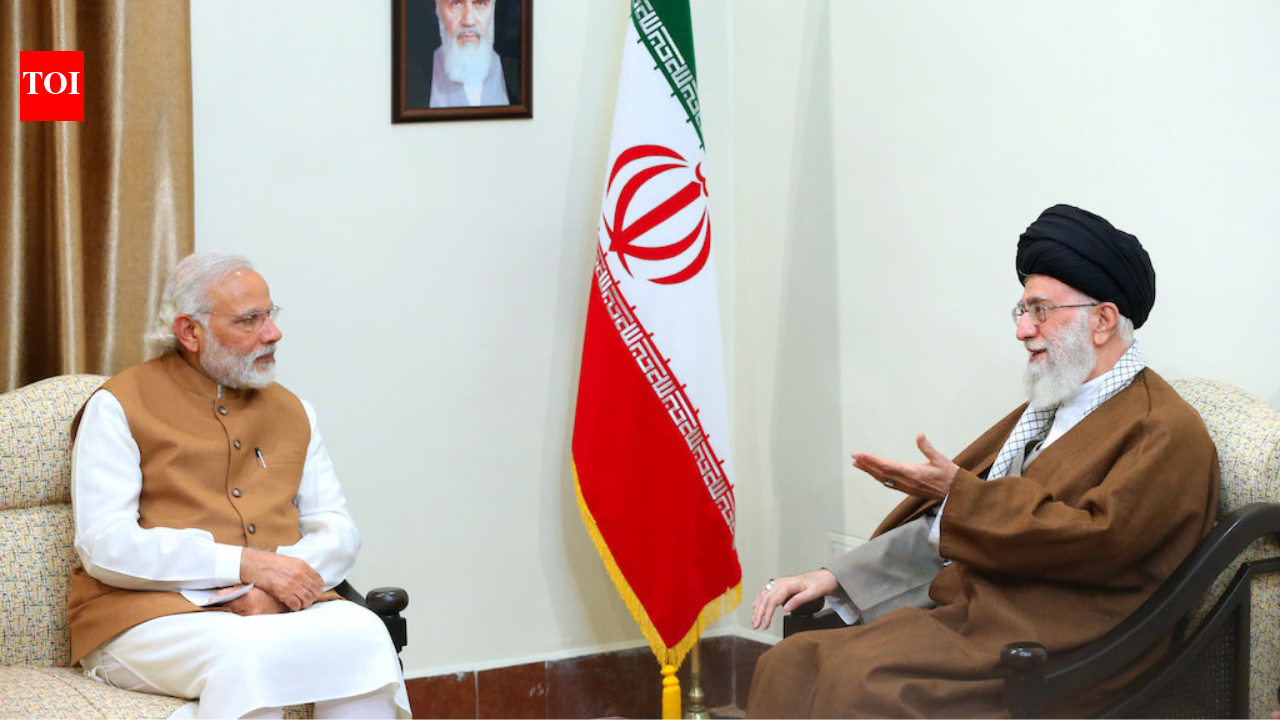
PM Modi with Iran’s Supreme Leader Ayatollah Ali Khamenei in Tehran on 23 May 2016.

Congress Parliamentary Party chairperson Sonia Gandhi on Tuesday sharply criticised the Prime Minister Narendra Modi-led government for its silence over the assassination of Iran’s Supreme Leader Ali Khamenei, calling it an ‘abdication’ rather than neutrality.In an opinion piece published in The Indian Express, Sonia Gandhi said India’s lack of a clear response to the killing “signals tacit endorsement of this tragedy.”

US-Israel-Iran War: Why Has India Not Condemned Khamenei’s Death Yet?

Referring to Iran’s confirmation on March 1 that Ayatollah Khamenei was killed in targeted strikes allegedly carried out by the United States and Israel a day earlier, Gandhi described the assassination of a sitting head of state during ongoing negotiations as a “grave rupture in contemporary international relations.”“Beyond the shock of the event, what stands out equally starkly is New Delhi’s silence,” she wrote.She criticised the Prime Minister for initially condemning only Iran’s retaliatory strike on the United Arab Emirates, without addressing the sequence of events that led to the escalation. According to Gandhi, later remarks expressing “deep concern” and calling for “dialogue and diplomacy” were inadequate, as diplomatic engagement had been under way before what she termed “massive unprovoked attacks” by the US and Israel.She argued that India’s failure to clearly defend sovereignty and international law in the wake of a targeted killing raises “serious doubts” about the credibility and direction of its foreign policy.She also pointed to the timing of PM Modi’s recent visit to Israel, where he reiterated support for the government of Benjamin Netanyahu, even as the conflict in Gaza continues to draw global criticism over civilian casualties.“The unease is compounded by the timing,” she wrote, noting that PM Modi had returned from Israel barely 48 hours before the assassination. She described India’s stance as a “high-profile political endorsement without moral clarity,” particularly when several countries in the Global South and BRICS partners such as Russia and China have maintained distance.Gandhi further demanded a discussion in Parliament during the second half of the Budget Session on what she termed the government’s “disturbing silence.”On Saturday, US and Israeli forces carried out coordinated airstrikes across multiple Iranian cities, targeting military command centres, air-defence systems, missile sites and other strategic infrastructure. The strikes reportedly resulted in the death of Ayatollah Khamenei and four senior Iranian military and security officials, with large explosions reported in Tehran and other cities.In retaliation, Iran launched ballistic missiles and drones targeting US assets and allied nations in the region, including Israel, Bahrain, Kuwait, Qatar, the United Arab Emirates and Jordan. The developments have significantly escalated tensions in the Middle East, raising concerns for regional stability and civilian safety.


Source link

Haris Rauf headlines Pakistan contingent in The Hundred longlist amid reports of snub from Indian-owned teams


In a development that has grabbed global attention, fourteen Pakistan men’s cricketers have been named in the 247-player longlist for this year’s The Hundred, amid the speculation that they might be overlooked due to geopolitical tensions.

Reports had suggested that the four Indian-owned franchises — MI London, Sunrisers Leeds, Manchester Super Giants and Southern Brave — could avoid selecting Pakistan players. However, the longlist announcement has somehow countered those claims, with Pakistan boasting the highest number of overseas representatives in the top 50 ‘hero’ players — one more than South Africa.

Adding another layer of intrigue, this year’s tournament will overlap with a Pakistan Test series, potentially creating selection and availability challenges for the players involved.

Haris Rauf among marquee international names

Leading the charge is express pacer Haris Rauf, who has been included in the prestigious ‘Marquee Players International’ category. Rauf carries the maximum reserve price of £100,000, placing him alongside some of world cricket’s biggest T20 stars.

The marquee international list also features Aiden Markram, David Miller, Daryl Mitchell and Sunil Narine. Rauf’s inclusion underlines his growing reputation as a high-impact T20 bowler capable of shifting momentum in a matter of overs.

Players had to submit themselves for auction consideration, after which the eight franchises provided 75–100 nominations each. The final longlist was then curated from those submissions.

Shaheen Afridi, Shadab Khan lead tier one category

Among the elite ‘hero’ categories, Pakistan pacer Shaheen Shah Afridi, all-rounder Shadab Khan and spinner Usman Tariq have been placed in Tier One — a reflection of their T20 pedigree and international experience.

Tier Two includes dynamic all-rounder Saim Ayub and mystery spinner Abrar Ahmed. Interestingly, Ayub has opted for the top reserve price bracket despite being listed in Tier Two, signalling confidence in his market value.

The first 30 names on the men’s longlist also feature prominent English stars such as Jonny Bairstow, Joe Root and Adil Rashid, along with international T20 specialists like Quinton de Kock and Finn Allen.

The men’s auction is scheduled to take place on March 12 in Piccadilly, London, where franchises will strategically assemble their squads. With political undercurrents, scheduling clashes and high reserve prices in play, this year’s auction promises drama even before a ball is bowled.

Also READ: Former Pakistan cricketers react after Men in Green knocked out of T20 World Cup 2026

Men’s Hundred longlist – first 30 players

  • Marquee domestic: Jonny Bairstow, Adil Rashid, James Vince, Jordan Cox, Joe Root
  • Marquee international: Aiden Markram, David Miller, Sunil Narine, Haris Rauf, Daryl Mitchell
  • Tier 1 batters: Finn Allen, Quinton De Kock, Ryan Rickelton, Tim Seifert, Zak Crawley
  • Tier 1 fast bowlers: Shaheen Shah Afridi, Josh Tongue, Luke Wood, Sonny Baker, Saqib Mahmood
  • Tier 1 allrounders: Tom Curran, Shadab Khan, Azmatullah Omarzai, David Willey, Gus Atkinson
  • Tier 1 spin bowlers: Akeal Hosein, AM Ghazanfar, Rishad Hossain, Usman Tariq, Jafer Chohan

Also READ: ‘Group of players will speak up’: Moeen Ali issues stark warning of backlash over Pakistan snub from The Hundred 2026


Source link

Claude down: Anthropic’s AI tool faces second outage in less than 24 hours |


Claude down: Anthropic’s AI tool faces second outage in less than 24 hours

Anthropic’s popular AI assistant, Claude is down again, second time in the past 24 hours. According to Downdetector.com, more than 4,000 users in the US have reported issues accessing the platform. Nearly 39% users flagged issues with Claude chat, while 36% reported issues with the app. Another 15% users flagged issues accessing the website. In India, around 500 reports have been registered so far. According to the company’s status page, “Elevated Errors” are reported in claude.ai, cowork, platform and claude code. The incident is marked as ‘unresolved’ so far.

Claude down: 2nd outage in 24 hours

As mentioned above, this is the AI platform’s second outage in less than 24 hours. Anthropic’s Claude as well as console and claude code showed elevated errors on March 2. The platform then showed two errors:HTTP 500 Error: This is a general “Internal Server Error” which indicates that something has gone wrong on Anthropic’s servers, preventing them from fulfilling any requests.HTTP 529 Error: The second error appears when the system is completely overloaded and cannot handle the current volume of requests hitting the system.

What is Anthropic Claude’s current status

At the time of writing, Anthropic Status Page reads:Update – We are continuing to investigate this issue.Mar 03, 2026 – 04:43 UTCUpdate – We are continuing to investigate this issue.Mar 03, 2026 – 04:41 UTCUpdate – We are continuing to investigate this issue.Mar 03, 2026 – 04:39 UTCInvestigating – We are currently investigating this issue.Mar 03, 2026 – 03:15 UTC(This is a developing story)


Source link

Strong earthquake strikes Indonesia’s Sumatra island


Strong earthquake strikes Indonesia's Sumatra island

A powerful 6.1-magnitude earthquake rocked Indonesia’s Sumatra island on Tuesday. According to the US Geological Survey (USGS), the tremor occurred 65 kilometres southeast of Sinabang. Indonesia is part of the Pacific “Ring of Fire,” a region known for frequent earthquakes and volcanic eruptions, making it particularly vulnerable to seismic events. Indonesia’s Sumatra region lies along a major tectonic collision zone that stretches more than 8,000 kilometres, going from Papua in the east to the Himalayan front in the west. The Sumatra-Andaman section of this zone forms a subduction megathrust along the Sunda-Java trench, where the Indo-Australia and Sunda plates converge. This movement fuels the region’s intense seismic and volcanic activity.Earlier, in November 2025, the Indonesian Meteorology, Climatology, and Geophysics Agency (BMKG) reported a strong 6.3-magnitude quake near Aceh province, striking at a depth of 10 kilometres. The tremor was felt widely, but authorities confirmed there is no tsunami threat, Reuters reported.This is a developing copy.


Source link

Access Denied


Access Denied

You don’t have permission to access “http://www.ndtv.com/world-news/israel-iran-war-live-updates-middle-east-crisis-missile-attacks-drone-strikes-tehran-death-toll-oil-market-news-khamenei-death-11157956” on this server.

Reference #18.c7f5d217.1772516195.ff60111a

https://errors.edgesuite.net/18.c7f5d217.1772516195.ff60111a


Source link