Breaking News
‘Pakistan remains in denial’: India reaffirms support for Bangladesh’s justice push over 1971 atrocities | India News


'Pakistan remains in denial': India reaffirms support for Bangladesh’s justice push over 1971 atrocities

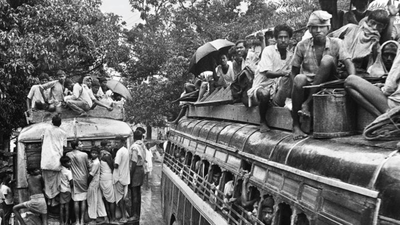
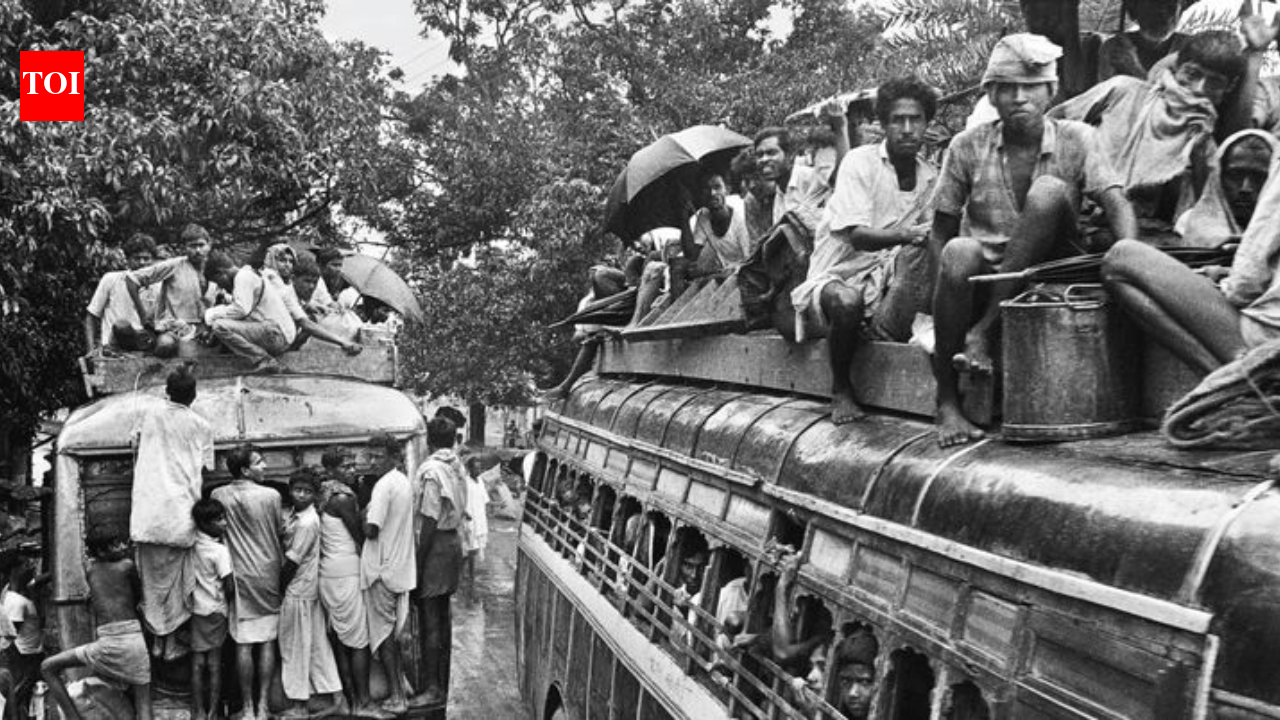
NEW DELHI: India on Friday reaffirmed its support for Bangladesh’s pursuit of justice over the atrocities committed by Pakistan during the 1971 military crackdown, saying Islamabad continues to deny its crimes.The remarks came as Bangladesh marked March 25 as Genocide Day, remembering one of the darkest chapters in its history. On that day in 1971, Pakistan launched Operation Searchlight to crush the Bangladeshi nationalist movement.At his weekly media briefing, external affairs ministry spokesperson Randhir Jaiswal said, “We all are aware of the terrible atrocities committed by Pakistan during ‘Operation Searchlight’ in 1971. The genocide involved systematic and targeted murder of millions of innocent Bangladeshi people and mass sexual crimes against women.”“It also forced millions to flee the country and seek shelter in India as refugees. These atrocities shook the conscience of the world. Pakistan however, remains in denial to this very day of its crimes,” he said.Jaiswal said India supports Bangladesh in its “desire for justice”.New Delhi’s remarks came three days after Bangladesh Prime Minister Tarique Rahman described Operation Searchlight as “one of the most heinous genocides in history” against unarmed Bangladeshi people.In a social media post a day ahead of Genocide Day, Rahman recalled the military crackdown by Pakistani forces.“In the history of freedom-loving Bangladesh, 25 March 1971 remains one of the most disgraceful and brutal days. On that dark night, the Pakistani occupation forces carried out one of the most heinous genocides in history against the unarmed people of Bangladesh in the name of ‘Operation Searchlight’,” he said.Calling it a planned assault, Rahman said the “genocide” of March 25 was a “pre-planned massacre”.India’s victory over Pakistan in the 1971 war, marked by the surrender of over 90,000 Pakistani soldiers on December 16, ended the violence and led to the birth of Bangladesh as an independent country.


Source link

West Bengal Assembly Elections 2026: Cash, care and constant connect: How the ‘Didi model’ is shaping Bengal’s ballot | India News


Cash, care and constant connect: How the 'Didi model' is shaping Bengal’s ballot

Cash, care and constant connect: How the ‘Didi model’ is shaping Bengal’s ballot

The welfare architecture of Mamata Banerjee’s government in West Bengal has emerged as a defining feature of its governance, combining large-scale social support programmes with significant political implications as the state heads toward the 2026 Assembly elections.As the state prepares for the first phase of polling on April 23, the “Didi Model” of governance is not only acting as key social welfare schemes that have redefined rural economics, but has also served as the ultimate political insurance for Mamata Banerjee’s enduring grip on power.

Lakshmi in every home

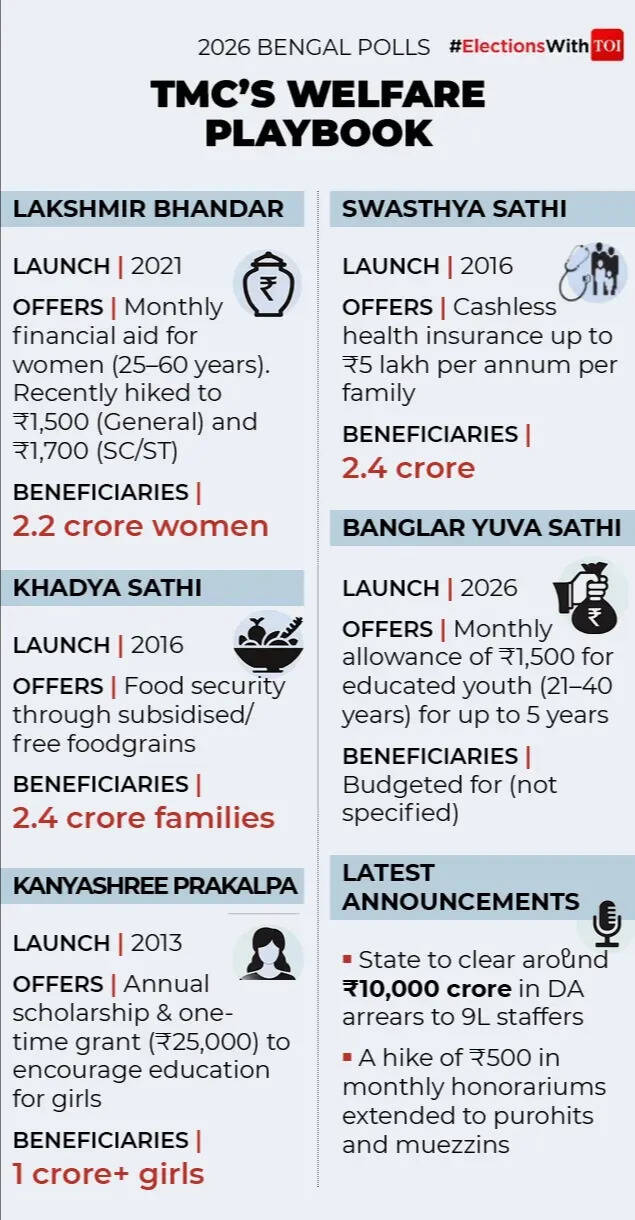
At the centre of this model is the Lakshmir Bhandar scheme, launched in 2021 to provide monthly financial assistance to women aged roughly 25 to 60. Regardless of the marital or employment status, this scheme covers all women residents of Bengal.Currently, beneficiaries receive Rs 1,000 per month, while women from Scheduled Caste and Scheduled Tribe communities receive Rs 1,200. Designed to cover household expenses and improve financial security, the scheme has gained widespread acceptance and is increasingly viewed not as a “freebie” but as an economic entitlement.The scheme has also become a major political talking point, with the ruling All India Trinamool Congress (TMC) promising to raise the assistance by Rs 500 if re-elected.However, implementation challenges persist. In a recent case from East Midnapore, around 7,000 women reportedly did not receive payments for nearly five months, prompting the Calcutta High Court to seek a report. Despite such issues, the scheme continues to expand, with approximately 1.25 lakh new beneficiaries added to an existing base of 2.2 crore women.

No one sleeps hungry

Food security remains another cornerstone of the state’s welfare strategy through the Khadya Sathi programme, launched in 2016. The scheme provides rice and wheat at subsidised rates of around Rs 2 per kilogram and currently covers nearly 9 crore people.Eligible beneficiaries are categorised based on their ration card. This constitutes the “poorest of the poor”, including landless labourers, marginal farmers, rural artisans, and households headed by widows or terminally ill persons. Families living below the poverty line (BPL) or in the economically weaker section (EWS) are also the beneficiaries of this scheme.With expenditure exceeding Rs 1 lakh crore, it is among the largest such initiatives in the country.It is complemented by the Duare Ration initiative, which delivers food grains directly to households, reaching about 7 crore people at a cost of over Rs 1,700 crore.The state government claims that these combined efforts have helped lift around 1.7 crore people above the poverty line by 2023, reinforcing its narrative of inclusive growth driven by welfare spending.

mamata populist schemes gfx

.

Cash for classroom over ‘Chhadnatola’

In education and gender empowerment, the Kanyashree Prakalpa remains a flagship programme. Launched in 2013, it provides Rs 1,000 annually to girls aged 13 to 18 who remain in school and unmarried, along with a one-time grant of Rs 25,000 at age 18 for those continuing education or training.With over 7 crore cumulative enrolments, the programme is one of the largest conditional cash transfer schemes for girls globally and was recognised with the UN Public Service Award. However, challenges remain in ensuring awareness, documentation, and sustained participation beyond eligibility.

Healthcare without bills

Healthcare coverage has been expanded through the Swasthya Sathi scheme, introduced in 2016. It offers cashless treatment up to Rs 5 lakh per family per year and covers nearly 9 crore people across 2.5 crore families.Notably, smart cards are issued in the name of the female head of the household. The scheme has recorded over 1 crore hospitalisations, with government spending exceeding Rs 13,000 crore. While it boasts one of the highest coverage rates in India, estimated at around 74.5 per cent, concerns persist regarding hospital participation, claim settlements, and out-of-pocket expenses in private healthcare facilities.

The unemployment cushion

Most recently, the government has turned its attention to unemployment with the launch of Banglar Yuva Sathi, announced in the 2026 Interim Budget. The scheme provides Rs 1,500 per month to educated unemployed youth aged 21 to 40 for up to five years or until they secure employment.Targeting Madhyamik-qualified individuals not covered under other programmes, it was fast-tracked with initial payments released on March 7, 2026. Backed by an allocation of around Rs 5,000 crore, with projections going up to Rs 15,000 crore, it is positioned as a key intervention to address unemployment ahead of the elections.Together, these schemes form the backbone of the TMC’s welfare-driven governance model, blending direct benefit transfers, food security, healthcare, and social empowerment. While the scale and reach of these programmes have drawn both national and international attention, their long-term sustainability and implementation efficiency remain under scrutiny as political stakes rise in West Bengal.


Source link

Bappi Lahiri House: Inside Bappi Lahiri’s 1,050 sq ft Mumbai home: Gold chair, 1000 Ganesh idols, Kishore Kumar’s last photo | Hindi Movie News


Bappi Lahiri’s 1,050 sq ft Mumbai home pulses with his legacy: music, memories, gold chair, 1,000 Ganesh idols, Kishore Kumar’s last photo. Grandson reveals cozy rooms, award walls, soundproof studio for Disco Dancer, heartfelt meals, faith nooks, and verandah vibes—beyond real estate, a disco era shrine.

Music director and singer Bappi Lahiri is no longer with us. But walk into his Mumbai home, and you will see his presence is still there. It stays in every corner with the music, memories, and strong personality that made him special. He bought the 1,050 sq ft house in 1983 for Rs 19.32 lakh. Today, it is much more than just land or a building. It is a personal collection of the man who changed Indian music for a whole era.

Bappi Lahiri’s grandson shares rare peek

Lately, his grandson gave a rare peek into this legendary home on Instagram, uncovering stories far deeper than fans witnessed on stage. Outside, the house looks peaceful and simple, white-painted with a classic verandah. Step inside, though, and a lively sitting room greets you, instantly revealing its famous resident. Walls packed with awards, records, and photos map Lahiri’s path from a three-year-old prodigy earning his first medal to the disco king. The room radiates a deliberate coziness. Wooden-framed glass windows, gentle lighting, and comfy blue sofas add a retro allure. In one spot sits his photo, where guests stop to honor him like a silent tradition.

Bappi Lahiri’s meals with heart

His grandson recalls that meals were far more than just eating. Lahiri, simple at heart despite his showy public image, ate lightly but gave generously. He’d divide his plate with family, offering bites like sacred prasad. The house’s core, however, pulses from a soundproof nook, his private creative den. Iconic songs like ‘Disco Dancer’ and ‘Tamma Tamma’ were born. Two chairs within, once occupied by greats like Kishore Kumar, lend a hushed historical aura.

Watch

Here is why Bappi Lahiri turned into a ‘gold-man’! Hint: It had Elvis Presley connection

Bappi Lahiri’s hall of fame

Then there is the “hall of fame,” as the family calls it. It feels like a time capsule, not just a collection. Old music instruments, some over 100 years old, sit with awards, fan art, and rare items. One sad but special thing is a photo Lahiri took of Kishore Kumar one day before he died. It is one of the last pictures of the singer. The house shows Lahiri’s love for God. He prayed to Lord Ganesha a lot. He went to Siddhivinayak Temple before every big project. At home, over 1,000 Ganesha idols are placed in rooms. It mixes music and faith. A gold velvet chair where he sat, practiced, and taught others. A gold-plated microphone from Disco Dancer time. Even after his death, family keeps his footprints on the chair, as per Bengali tradition.

Bappi Lahiri’s verandah vibes

The tour ends at the verandah, where Lahiri liked to relax. It was his favorite place for evening tea, easy music sessions, and festivals like Ganapati and Saraswati pujas.


Source link

Salaries of all team captains participating in IPL 2026


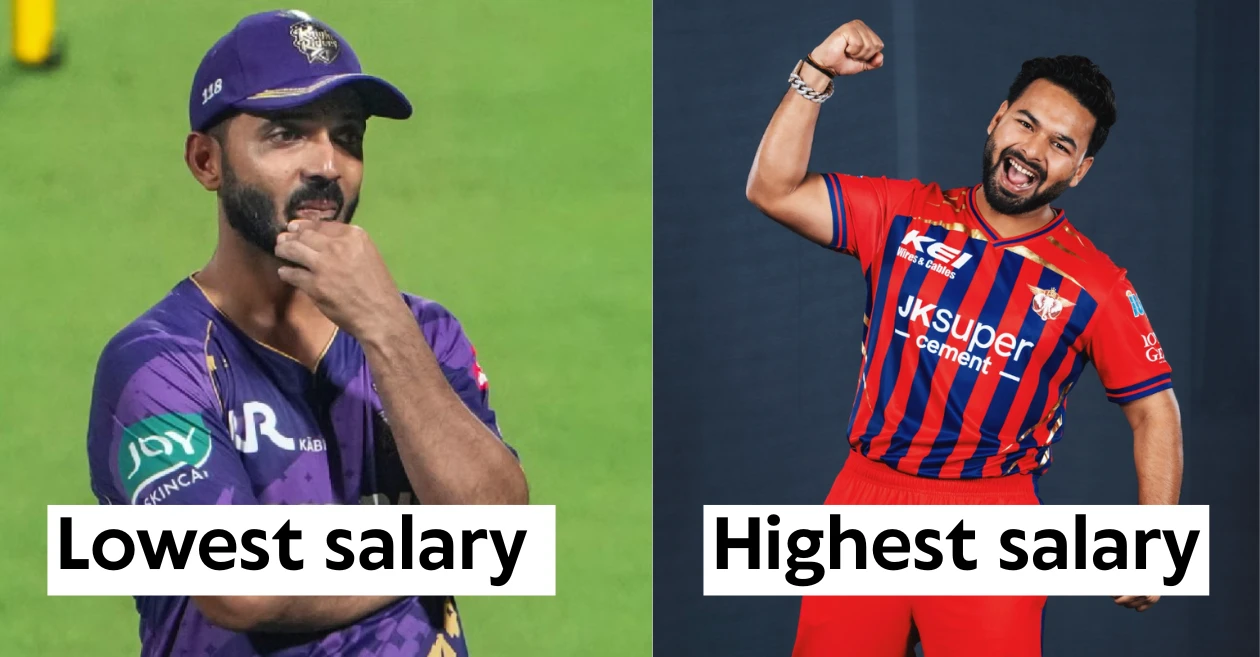
As the 19th edition of the Indian Premier League (IPL) gets underway, the spotlight isn’t just on the players with the bat and ball—it’s also on the men entrusted with leading their franchises. A graphic circulating ahead of IPL 2026 has revealed the annual salaries of all ten captains, offering a fascinating look at how teams value leadership in cricket’s most lucrative league. From established names who have commanded top rupee for years to young skippers who have risen through the ranks on modest pay packets, the list reflects the diverse paths to captaincy in the IPL.

Here is the complete breakdown of salaries of captains in IPL 2026:

Rishabh Pant leads the pack with ₹27 crore

The salary breakdown shows that Rishabh Pant, who took over the captaincy of Lucknow Super Giants ahead of IPL 2026, commands a staggering ₹27 crore – the highest among all captains this season. The wicketkeeper-batter’s massive pay packet reflects his stature as one of the most marketable and impactful players in Indian cricket. Having led Delhi Capitals (DC) in previous seasons, Pant now shoulders the responsibility of guiding a revamped Lucknow Super Giants (LSG) side that made several high-profile acquisitions at the auction.

Close on his heels is Punjab Kings (PBKS) captain Shreyas Iyer, who earns ₹26.75 crore. Iyer, who led Punjab to the final in IPL 2025, was retained by the franchise as their undisputed leader. His salary places him just ₹25 lakh behind Pant, highlighting the premium franchises place on proven leadership and middle-order stability.

The ₹18 crore club: Ruturaj Gaikwad and Pat Cummins

Two captains find themselves in the ₹18 crore bracket. Chennai Super Kings (CSK) skipper Ruturaj Gaikwad, who took over the full-time captaincy from MS Dhoni in 2024, earns ₹18 crore. The stylish opener has been CSK’s batting mainstay and is seen as the long-term leader of the franchise.

Sunrisers Hyderabad (SRH) captain Pat Cummins, though set to miss the initial matches due to a back injury, also draws ₹18 crore. The Australian pace spearhead led SRH to the IPL 2024 final and remains the cornerstone of their bowling attack when fit.

Mid-tier captains: Shubman Gill, Axar Patel, Hardik Patel in ₹16 crore range

The next bracket features three captains clustered in the ₹16 crore range. Gujarat Titans (GT) captain Shubman Gill and Delhi Capitals skipper Axar Patel both earn ₹16.5 crore each. Gill, who has led GT since 2024, continues to be the franchise’s poster boy, while Axar took over DC’s leadership after Rishabh Pant’s departure last season.

Mumbai Indians (MI) captain Hardik Pandya follows closely at ₹16.35 crore. The all-rounder, who returned to MI in 2024, has the task of adding a sixth title to the franchise’s illustrious history.

Also READ: From Mayanti Langer to Sahiba Bali – Complete list of star presenters for IPL 2026

Lower end of the spectrum: New and unexpected leaders

Rajasthan Royals (RR) captain Riyan Parag, who stepped into the role after Sanju Samson’s trade to CSK, earns ₹11 crore. The young Assamese batter will be leading an RR side that recently changed ownership in a record-breaking deal.

Defending champions Royal Challengers Bengaluru (RCB) captain Rajat Patidar also receives a pay check of ₹11 crore – a remarkable figure considering he led RCB to their maiden IPL title in 2025.

Kolkata Knight Riders (KKR) captain Ajinkya Rahane completes the list with an earning of ₹1.5 crore. The experienced batter took over KKR’s captaincy ahead of last season, tasked with leading the three-time champions.

Salary of captain in IPL 2026 (PC: X.com)

Also READ: From AB de Villiers to Suresh Raina – Star Sports unveils elite list of commentators for IPL 2026


Source link

RCB vs SRH IPL records: Head-to-head, pitch report, weather update | Cricket News


RCB vs SRH IPL records: Head-to-head, pitch report, weather update
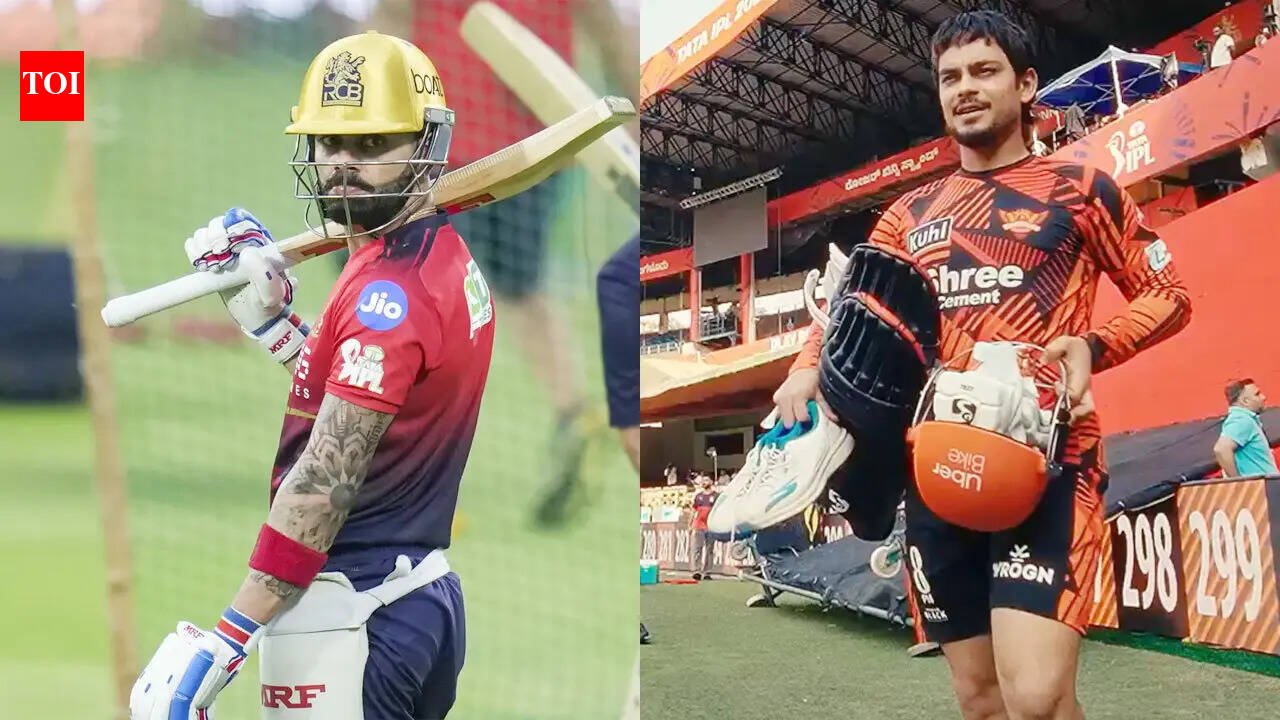
Virat Kohli and Ishan Kishan (Image credit: BCCI/IPL)

NEW DELHI: The stage is set. IPL 2026 is here, and the tournament kicks off with a mouth-watering clash between defending champions Royal Challengers Bengaluru (RCB) and 2016 winners Sunrisers Hyderabad at the M Chinnaswamy Stadium in Bengaluru on Saturday.SRH will be without their regular skipper Pat Cummins for the initial phase, with Ishan Kishan stepping in as stand-in captain.

Watch

RCB’s big changes ahead of IPL: New rules, tribute & squad update

Rajat Patidar, who led RCB to their maiden IPL title in 2025, will continue to lead the side this season.However, RCB will miss the services of key pacers Josh Hazlewood and Yash Dayal, both of whom played crucial roles in last year’s triumph. In their absence, the responsibility with the new ball will fall on Bhuvneshwar Kumar, Jacob Duffy and Mangesh Yadav.RCB’s batting, meanwhile, looks formidable on paper. With Virat Kohli at the top, the likes of Phil Salt, Jacob Bethell, Tim David, Venkatesh Iyer and Romario Shepherd add depth and firepower.SRH, too, boast an explosive batting line-up featuring Travis Head, Ishan Kishan and Abhishek Sharma at the top. Their middle order is equally strong, with Heinrich Klaasen, Nitish Kumar Reddy and Liam Livingstone capable of turning the game on its head.The IPL 2026 season will be played across 12 venues in India from March 28 to May 31, including Mumbai, Bengaluru, Chennai, Kolkata, Delhi, Ahmedabad, Hyderabad, Lucknow, Jaipur, Dharamsala, Raipur and New Chandigarh.

IPL 2026, RCB vs SRH: PITCH REPORT

The surface at the M Chinnaswamy Stadium is expected to heavily favour batters – in short, a batting paradise awaits. A high-scoring contest looks inevitable. The team winning the toss is likely to bowl first, with chasing generally easier at this venue. While no total is ever truly safe in T20 cricket, anything above 220 should be considered competitive.

IPL 2026, RCB vs SRH: Head-To-Head

Played: 25RCB won: 11SRH won: 13No result: 1

IPL 2026, RCB vs SRH: WEATHER UPDATE

Rain interruptions are quite common at Bengaluru’s M Chinnaswamy Stadium, with passing showers often playing hide and seek during matches. However, the weather for Saturday’s 7:30 PM IST start looks ideal for cricket. Clear skies are expected, with temperatures ranging between 24°C and 28°C during match hours. Humidity will hover around 60%, and a full game without any rain interruptions is likely.

IPL 2026, RCB vs SRH: PREDICTED XIs

Royal Challengers Bengaluru: Phil Salt, Virat Kohli, Devdutt Padikkal, Rajat Patidar (C), Jitesh Sharma (wk), Tim David, Romario Shepherd, Krunal Pandya, Bhuvneshwar Kumar, Jacob Duffy, Mangesh Yadav Sunrisers Hyderabad: Abhishek Sharma, Travis Head, Ishan Kishan (C/wk), Nitish Kumar Reddy, Heinrich Klaasen, Aniket Verma, Harshal Patel, Liam Livingstone, Zeeshan Ansari, Eshan Malinga, Jaydev Unadkat

IPL 2026, RCB vs SRH: FULL SQUADS

RCB: Virat Kohli, Rajat Patidar (C), Devdutt Padikkal, Venkatesh Iyer, Vihaan Malhotra, Kanishk Chouhan, Phil Salt, Jitesh Sharma, Jordan Cox, Krunal Pandya, Tim David, Romario Shepherd, Jacob Bethell, Swapnil Singh, Satwik Deswal, Suyash Sharma, Vicky Ostwal, Bhuvneshwar Kumar, Yash Dayal, Josh Hazlewood, Nuwan Thushara, Rasikh Salam, Jacob Duffy, Mangesh Yadav, Abhinandan SinghSRH: Travis Head, Ishan Kishan, Heinrich Klaasen, Smaran Ravichandran, Abhishek Sharma, Harsh Dubey, Kamindu Mendis, Nitish Kumar Reddy, Pat Cummins (c), Eshan Malinga, Jaydev Unadkat, Harshal Patel, Salil Arora, Praful Hinge, Liam Livingstone, Shivam Mavi, Jack Edwards, Brydon Carse, Sakib Hussain, Zeeshan Ansari, Aniket Verma, Amit Kumar, Krains Fuletra

Poll

Batting lineup of which team do you find more stronger?


Source link

CBIC holds outreach on import duty deferment scheme for manufacturers


CBIC holds outreach on import duty deferment scheme for manufacturers

The Central Board of Indirect Taxes and Customs (CBIC) on Friday conducted a hybrid outreach programme in the national capital to familiarise stakeholders with the Duty Deferment Scheme for Eligible Manufacturer Importers (EMI), a key trade facilitation measure announced in the Union Budget 2026-27.The session, organised in New Delhi, brought together senior officials and industry representatives to discuss the framework, benefits and operational aspects of the scheme, according to a statement issued by the finance ministry, reported news agency ANI.Yogendra Garg, Member (Customs), CBIC; Manish Kumar, Chief Commissioner, Delhi Customs; Sanjay Gupta, Chief Commissioner, Delhi Customs (Preventive) Zone; and Akhil Kumar Khatri, Chief Commissioner, DIC, were among those present, along with representatives from trade bodies and industry.The programme featured a detailed presentation followed by an interactive session to address queries from participants.Addressing the gathering, Garg said the scheme is built on a trust-based approach aimed at enabling faster clearances and reducing dwell time. He emphasised that the initiative seeks to minimise the trust deficit and promote a more efficient and collaborative compliance environment, while encouraging stakeholders to avail its benefits and provide feedback.Manish Kumar noted that the scheme improves the commercial viability of manufacturer importers by facilitating better import scheduling and more efficient working capital management.Under the EMI scheme, eligible manufacturer importers can defer payment of import duties and clear goods without upfront payment, with duties to be settled on a monthly basis. The scheme is also extended to MSMEs and is aligned with the government’s Make in India initiative, aimed at strengthening domestic manufacturing through improved liquidity and faster cargo clearance.Among the key benefits highlighted were improved liquidity, reduced dwell time, enhanced import planning and inventory management, better payment discipline, stronger global competitiveness and improved supply chain efficiency.To be eligible, a manufacturer importer must have a valid Import-Export Code (IEC), file at least 25 Export-Import Bank (EXIM) documents in the preceding financial year (10 for MSMEs), remain GST compliant with no pending returns, and demonstrate financial solvency along with a clean compliance track record.Applications can be submitted online through the AEO portal, which has been operational since March 1, 2026, with the process being fully digital and requiring no physical interface.Approved applicants will be able to avail the scheme across all customs formations from April 1, 2026. The scheme will remain in force for two years, up to March 31, 2028.


Source link

405 schools set for upgrade as state’s model institutions | Mumbai News


Mumbai: As many as 405 schools will be upgraded as Bharat Ratna Dr. Babasaheb Ambedkar Model schools. The project involves upgrading infrastructure across local body schools. Key physical improvements include the installation of RO/UV water purification systems and the creation of “Pink Rooms,” designed to provide female students with private facilities for menstrual hygiene. Additionally, the state will establish a model sports academy in every district to support athletic development.In a seperate initiative to address declining enrollment, the ministry has outlined a new outreach strategy. Teachers and education officials are mandated to conduct door-to-door visits to identify and enroll out-of-school children. Acknowledging the shifting trends, the department will place a greater emphasis on English language instruction within these govt schools. The initiative also introduces fiscal measures, including local tax exemptions at the Gram Panchayat and Zilla Panchayat levels for families sending their children to local govt schools. To formalise the start of the academic year, schools will now host an annual ‘School Pravesh’ festival on the first day of classes to welcome returning and new students. The initiative also includes alumni associations. By tapping into the expertise and resources of alumni, schools aim to upgrade physical facilities and provide mentorship. To maintain momentum, the state will formally honour schools and teachers that demonstrate exceptional performance in increasing student enrollment and overall academic excellence.


Source link

Explained: Why RCB players will wear black armbands against SRH in IPL 2026 opener | Cricket News


Explained: Why RCB players will wear black armbands against SRH in IPL 2026 opener

NEW DELHI: The IPL 2026 is just moments away, with the opening match set to be played between defending champions Royal Challengers Bengaluru and Sunrisers Hyderabad at the M Chinnaswamy Stadium in Bengaluru. RCB will be led by Rajat Patidar, while Ishan Kishan will captain SRH.RCB will also wear black armbands during their match against SRH to pay tribute to fans who tragically lost their lives in the stampede outside the venue following the team’s historic title win last year.

Watch

RCB’s big changes ahead of IPL: New rules, tribute & squad update

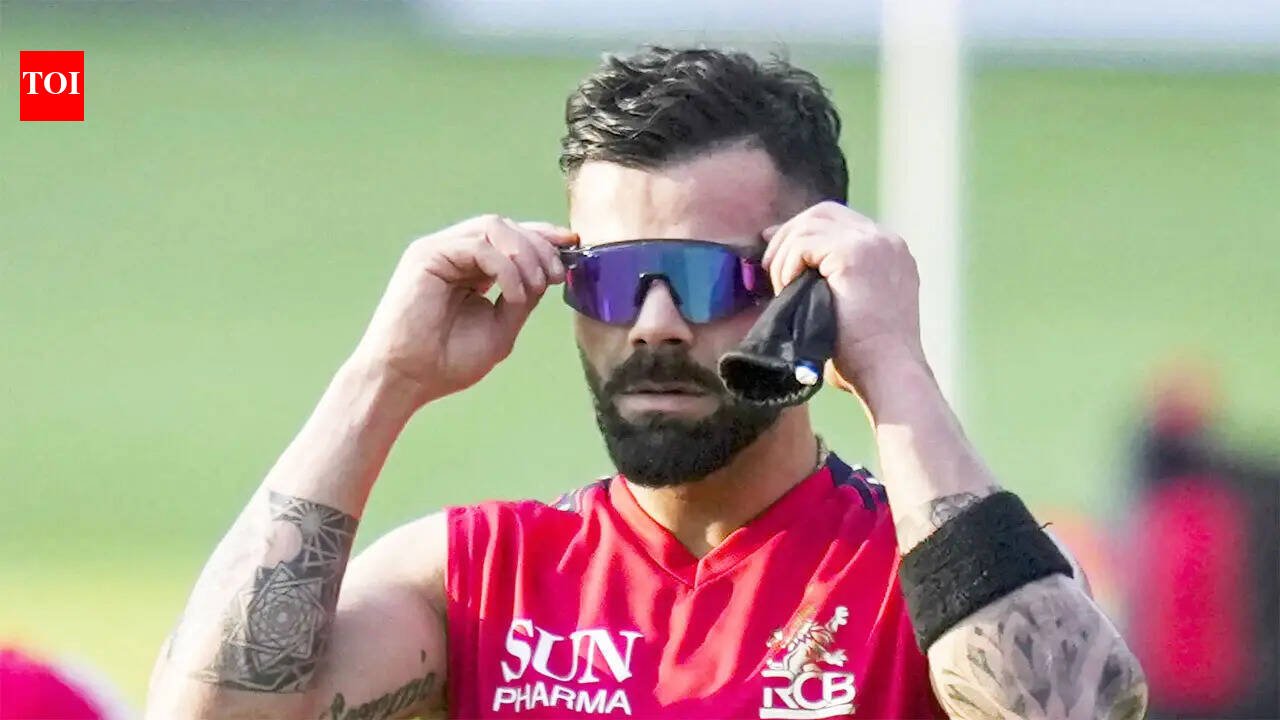
A statement from RCB said, “Royal Challengers Bengaluru will pay tribute to the eleven members of the RCB family who tragically lost their lives in the unfortunate incident on June 4.”“As a mark of respect, players will wear practice jerseys bearing the number 11 during the warm-up, followed by black armbands during the match.”“In a lasting gesture of remembrance, eleven seats at the M. Chinnaswamy Stadium will remain unoccupied, serving as a permanent tribute to the fans whose unwavering support will always be a part of the RCB family,” the statement concluded.Eleven people died and several were injured in the stampede outside the stadium during the victory celebrations last year.‘Kohli incredibly hungry’Virat Kohli is hungry and at the “peak of his powers”, with his IPL team RCB set to begin their title defence, coach Andy Flower said.Former captain Kohli, who has retired from Tests and T20 internationals, now represents India only in the 50-over format.“Virat is in a really good space mentally,” Flower told reporters.“He’s very comfortable with himself but still incredibly hungry, and watching him strike the ball in training, he looks at the peak of his powers.”“It was very satisfying professionally for everyone, of course, but a really emotional time for all sorts of reasons at the end of last season,” Flower told reporters.“It’s another time, so it’s time to move on from that.”


Source link

Access Denied


Access Denied

You don’t have permission to access “http://www.ndtv.com/offbeat/sudarsan-pattnaik-creates-sand-sculpture-at-puri-beach-to-mark-20-years-of-earth-hour-11278596” on this server.

Reference #18.c7f5d217.1774697629.8a165c11

https://errors.edgesuite.net/18.c7f5d217.1774697629.8a165c11


Source link

One month in, new front opens as Yemen’s Houthis enter Iran-Israel war


One month in, new front opens as Yemen’s Houthis enter Iran-Israel war

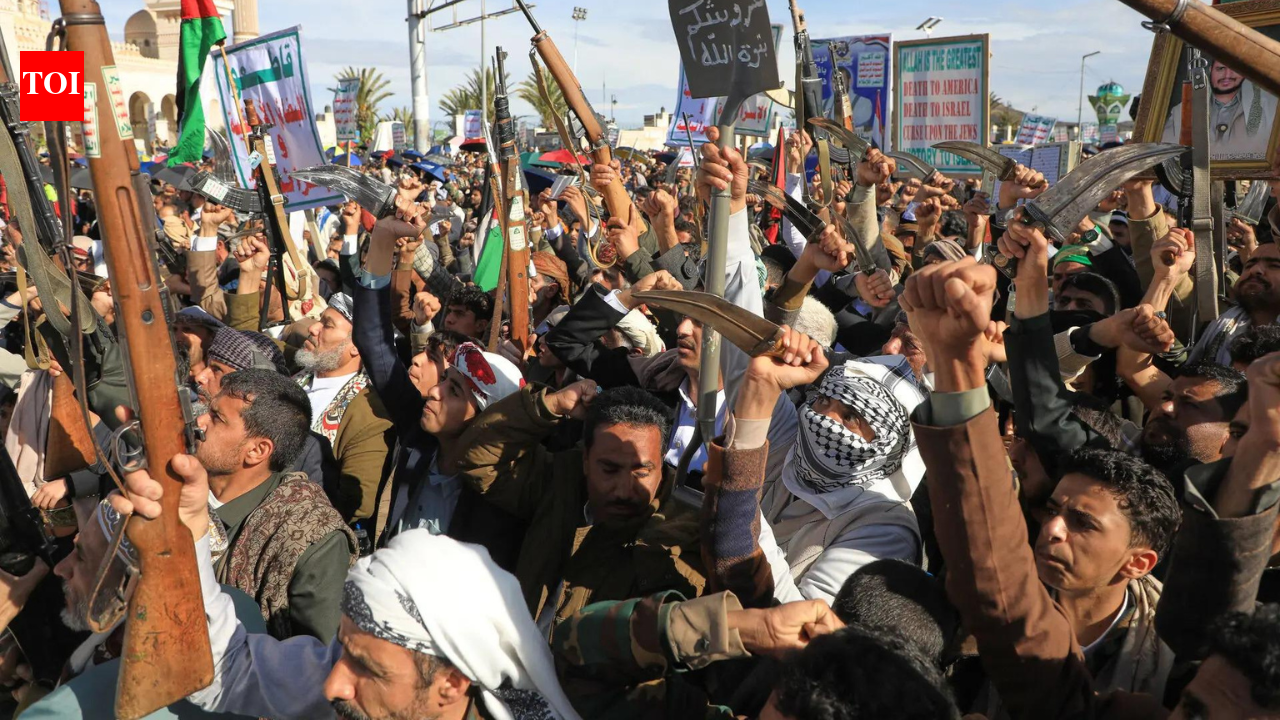
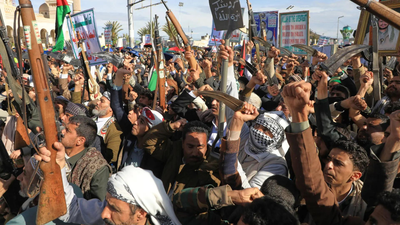
The Iran-Israel war has entered a new phase on Saturday with Yemen’s Houthi rebels launching their first strike on Israel since the conflict began. The move opens a fresh front in a war that has already spread across multiple countries and disrupted global trade and energy markets.The attack comes as the conflict marks one month, with fighting intensifying between Israel and Iran and their regional allies. Analysts warn that the Houthis’ entry could further widen the war, particularly if key shipping routes in the Red Sea are drawn into the crisis.

Houthis open new front with missile barrage

Houthi military spokesman Yahya Saree announced the operation on the group’s Al-Masirah television, claiming a barrage of ballistic missiles targeting “sensitive Israeli military sites” in southern Israel. He warned that strikes would continue until what he described as “aggression” against allied groups across the region ends.Air raid sirens sounded in Beersheba and near key Israeli installations, while explosions were reported in Tel Aviv as Iran and Hezbollah also continued overnight attacks. Israeli emergency services said they were responding to multiple impact sites.The Houthis’ involvement is seen as highly consequential. The group had previously targeted Israel during the Gaza war and attacked shipping in the Red Sea, disrupting a route through which roughly $1 trillion in goods pass annually. Their leadership has now hinted at further escalation, including the possibility of targeting vessels linked to Israel or even attempting to close the Bab al-Mandeb Strait.Experts warn such a move could severely impact global trade, especially when combined with existing tensions in the Strait of Hormuz. One regional analyst described the scenario as “a nightmare on top of a nightmare” for international shipping.

Regional conflict deepens as Iran and Israel escalate

The Houthi strike comes amid intensified hostilities between Israel and Iran. Israeli forces have recently targeted key nuclear-linked facilities, including sites associated with uranium processing and heavy water production. Tehran has vowed retaliation, with strikes already reported on regional military bases.One of the most serious incidents involved repeated attacks on Prince Sultan Air Base in Saudi Arabia, where more than two dozen US personnel have reportedly been wounded over the past week. Missiles and drones struck the base in multiple waves, damaging aircraft and infrastructure.Meanwhile, cross-border violence has expanded. In Lebanon, fighting between Israeli forces and Hezbollah has intensified, with hundreds reported killed since the war began. Israeli cities, including Tel Aviv, have faced repeated missile alerts, underscoring the widening scope of the conflict.Despite brief signs of diplomatic progress — including Iran allowing limited humanitarian shipments through the Strait of Hormuz — the latest developments suggest the war is moving further away from de-escalation.

Global trade and military risks rise sharply

The Houthis’ entry could have far-reaching implications beyond the battlefield. The Red Sea, a critical artery for global commerce, may once again become a target. During earlier conflicts, Houthi attacks forced shipping companies to reroute vessels around Africa, significantly increasing costs and transit times.There are also growing concerns over military escalation at sea. The potential redeployment of the USS Gerald R. Ford into the Red Sea could expose US naval forces to sustained attacks, similar to earlier confrontations involving other American carriers in the region.The Houthis, who have controlled Sanaa since 2014, had maintained an uneasy ceasefire with Saudi Arabia in recent years. Their decision to join the conflict now risks reigniting broader regional tensions, particularly along key maritime routes.


Source link