Breaking News
‘Total disarray’: BJP’s CR Kesavan targets Congress amid row over candidate selection in Tamil Nadu | India News


'Total disarray': BJP's CR Kesavan targets Congress amid row over candidate selection in Tamil Nadu
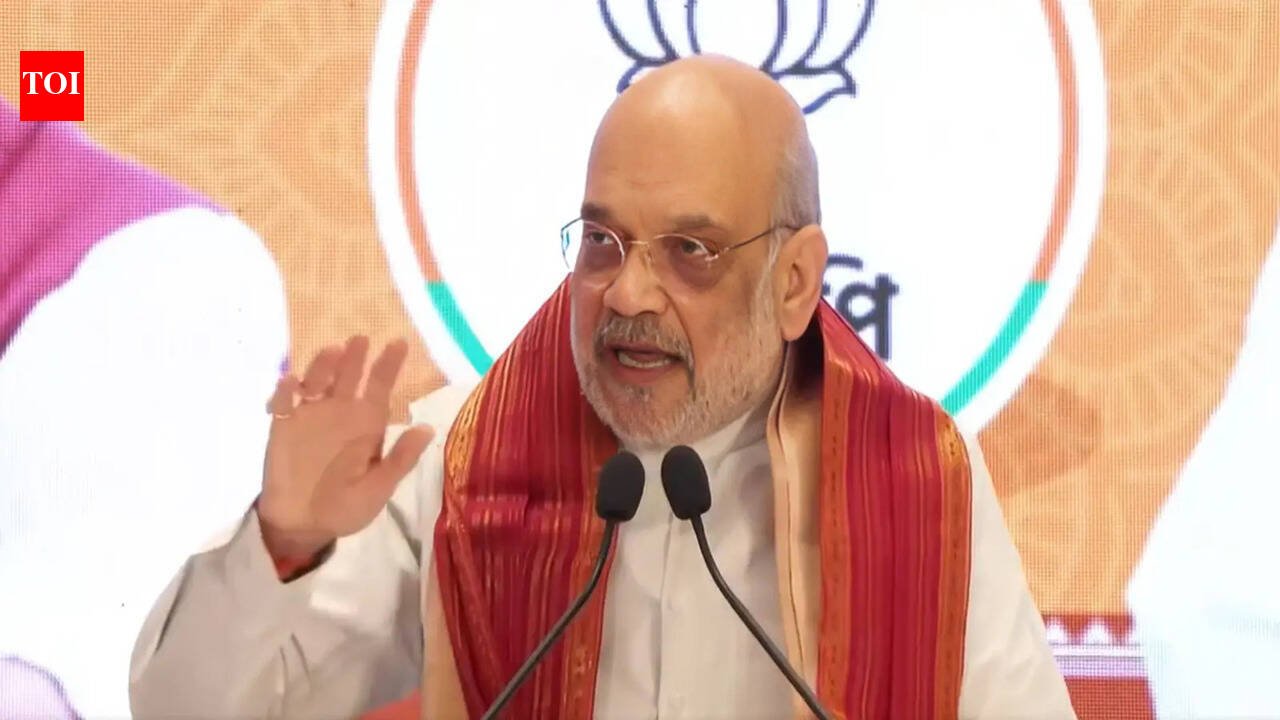
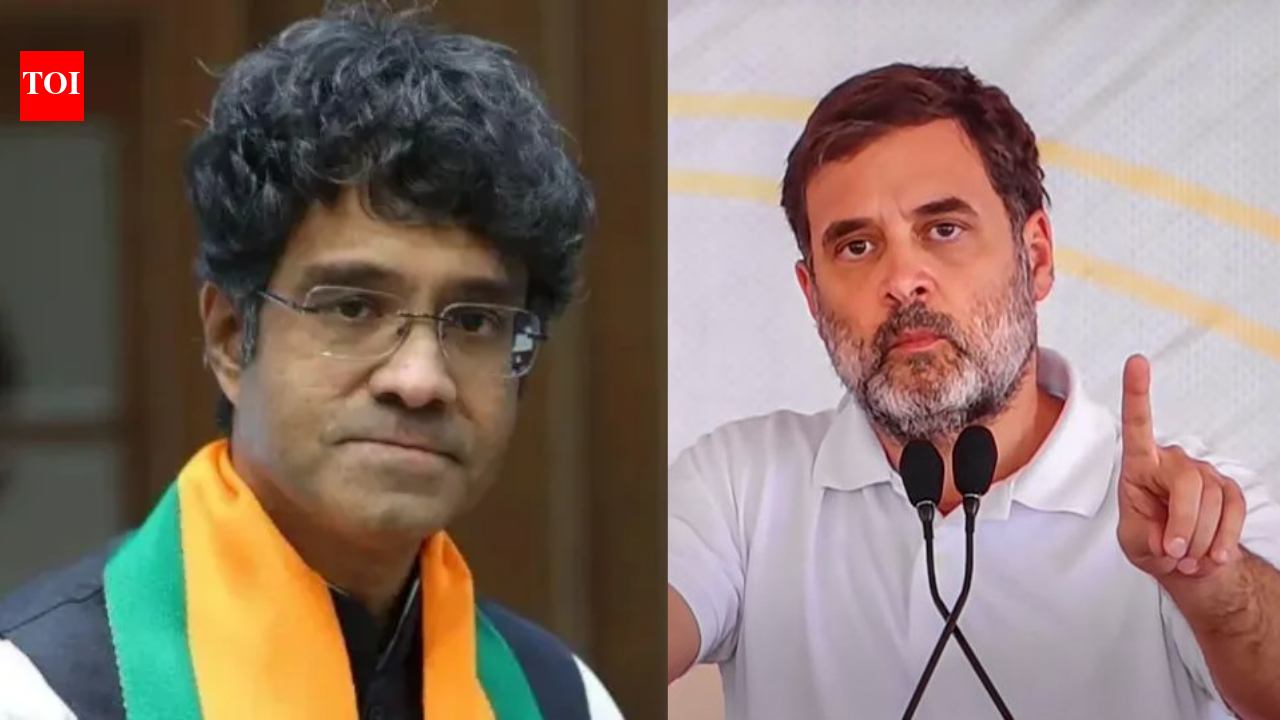
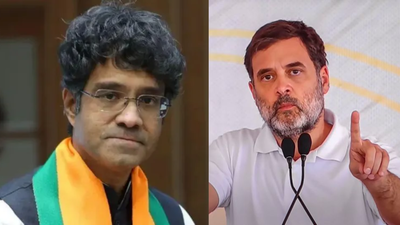
CR Kesavan, left, and Rahul Gandhi

NEW DELHI: BJP national spokesperson CR Kesavan on Saturday attacked the Congress in Tamil Nadu, alleging that the party was facing a “deep divide” after MP Jothimani publicly raised concerns over a lack of transparency in constituency selection ahead of the 2026 Assembly elections.In a post on X, Kesavan said the developments reflected a larger pattern within the party and also targeted the DMK-Congress alliance in the state.“Rahul Gandhi’s Congress is a deeply divided house and is in total disarray in Tamil Nadu. Their Party MP from TN is now publicly attacking Congress leadership for having no transparency. There is a definite pattern to this. Rahul Gandhi’s point person in the Bihar elections was gheraoed by Congress workers for allegedly selling tickets. This is why the Compromised Congress has lost credibility with people across the country. The opportunistic DMK -Congress alliance is in tatters, and the disaster model DMK Govt’s misrule, which has been one of the worst regimes in the history of Tamil Nadu, will be categorically rejected by the people in the coming elections,” the BJP leader wrote.Kesavan’s remarks came after Jothimani publicly questioned the Congress party’s constituency selection process, alleging that decisions were taken in a “highly secretive manner” and that the welfare of the party had been compromised.“There is absolutely no transparency in the Congress party’s constituency selection. Our view that constituency selection should be done only after transparency and extensive discussion has not been accepted by the responsible leaders. Everything happened in a highly secretive manner. The welfare of the Congress party has been entirely compromised. It is heartbreaking to see a few individuals, who haven’t even bothered to pluck a single feather from the decades-long hard work of genuine Congress party workers like us for the Tamil Nadu Congress Committee, now selling it off,” Jothimani wrote on X.She also warned that the party could face serious consequences in Tamil Nadu if the same approach is followed during candidate selection.“One cannot remain silent in the face of this terrible situation without raising questions. The party is not just the responsible leaders, the state president, and the legislative party leader. The sentiments and labour of lakhs of workers are what make the party. We can discuss this in detail once the list is released. If candidate selection is also going to happen with this same selling approach, no one can save the Congress party in Tamil Nadu.The political developments come as the DMK alliance continues preparations for the upcoming Tamil Nadu Assembly elections.The Dravida Munnetra Kazhagam (DMK) has announced that its ‘Rising Sun’ symbol will contest in nearly 175 constituencies in the state.So far, the DMK alliance has allotted seats to nine parties, including Congress (28), MDMK (4), IUML (2), MMK (2), KMDK (2), CPI (5), CPM (5), VCK (8), and DMDK (10). A total of 66 seats have been allocated to allies, with seven of them being contested under the DMK symbol.With remaining allocations expected, the DMK will directly contest 168 seats, while allied candidates in seven seats will also contest under the Rising Sun symbol, taking the total to 175 seats under the DMK symbol.Tamil Nadu will go to the polls in a single phase on April 23, with counting scheduled for May 4.


Source link

‘Unusual’: Two Chinese vessels abort bid to pass Strait of Hormuz despite Iran’s assurances of safe passage


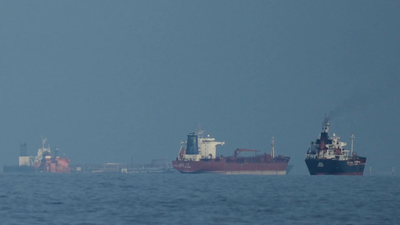
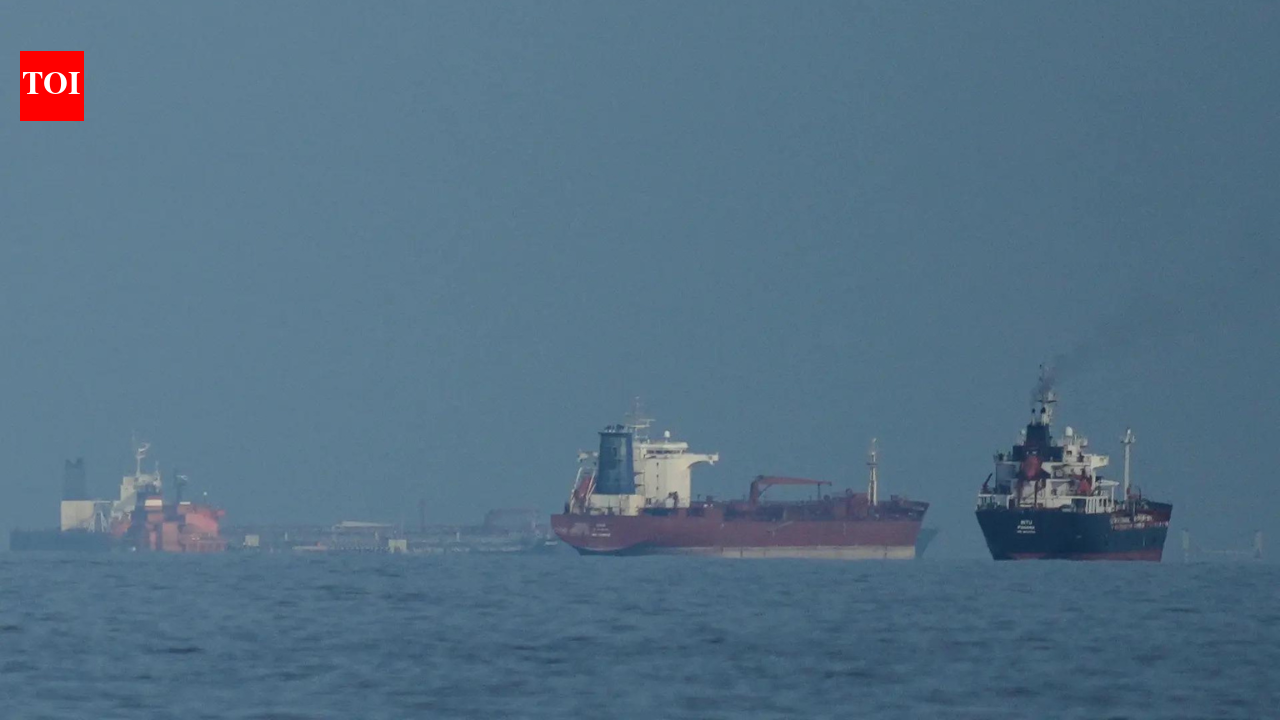
Two large Chinese-linked container ships made an abrupt U-turn near the Strait of Hormuz on Friday as Iran tightens its grip on one of the key passages for global shipping. Ship-tracking data showed the CSCL Indian Ocean and CSCL Arctic Ocean, both linked to China’s state-owned COSCO Shipping, attempted to leave the Gulf in the early hours before turning back close to Iranian waters. The move came despite Tehran’s recent assurances that vessels from “friendly nations”, including China, would be allowed to pass.Interestingly, Iran’s foreign minister Abbas Araghchi had stated just a day earlier that Tehran would permit safe passage through the Strait of Hormuz for ships from five “friendly” nations: China, Russia, India, Iraq, and Pakistan.

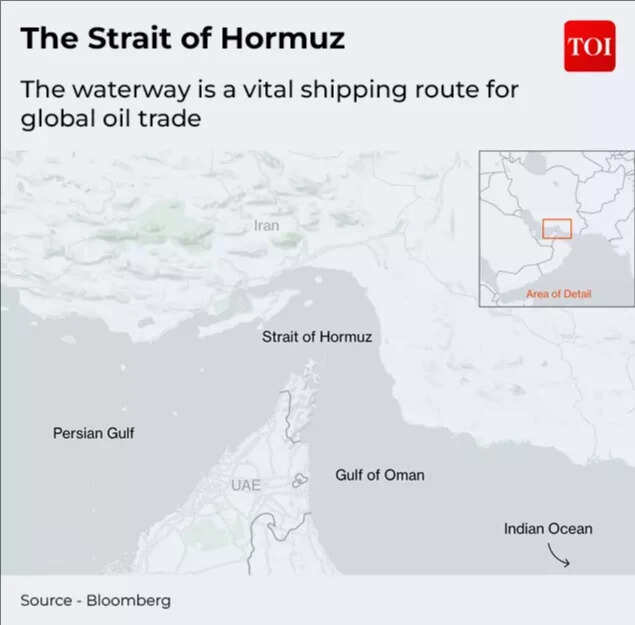
The Strait of Hormuz

According to ship-tracking data, the two vessels moved towards the narrow Strait at around 0350 GMT before reversing course near Iran’s Larak and Qeshm islands.

  • This marked the first known attempt by a major global shipping operator to exit the Gulf since the war began
  • Both ships had been stranded in the region for weeks
  • Analysts cited by WSJ described the reversal as “unusual” given prior signals that Chinese-linked vessels might be allowed through

Watch

Apocalyptic Scenes In Kuwait As Iran Punishes U.S. Ally With Huge Attacks On Twin Ports | WATCH

Rebecca Gerdes, an analyst at Kpler, told Reuters that the episode showed that “safe passage could not be guaranteed”, despite diplomatic messaging from Tehran.Bloomberg reported that the vessels had earlier altered their tracking signals to indicate Chinese ownership and crew, a tactic previously used by ships seeking to avoid confrontation in the waterway.

Iran tightens control over key chokepoint

The Strait of Hormuz, through which roughly a fifth of the world’s oil and gas normally flows, has effectively been brought under Iranian control since the conflict escalated.

  • Tehran has combined military threats with selective permissions to regulate movement
  • Iranian Revolutionary Guard forces have reportedly turned back multiple vessels
  • Shipping firms now face a patchwork system of approvals and restrictions

Iran has also indicated that vessels linked to countries seen as backing the United States or Israel could be denied passage altogether. On Friday, Iranian forces said they had warned off three container ships of different nationalities attempting to cross.

Poll

Do you think Iran's control over the Strait of Hormuz is justified?

‘Toll booth’ system emerges

Industry data and maritime reports suggest Iran is increasingly operating a de facto approval system for ships seeking transit.

  • Vessels may be required to submit cargo, ownership and crew details for clearance
  • Some ships have reportedly paid fees — in Chinese yuan — to secure passage
  • Approved vessels are sometimes escorted through Iranian-controlled routes

Shipping intelligence firms have described this as a “toll booth” model, effectively allowing Tehran to control who moves through the strait and on what terms.At least some vessels, particularly those carrying goods destined for Iran, have been allowed through in recent days, while others remain stuck.

Traffic collapses, risks surge

The broader impact on global shipping has been severe.

  • Traffic through the strait has fallen by up to 90–95% since early March
  • Only a fraction of normal daily vessel movements are currently taking place
  • At least 20,000 seafarers are believed to be stranded in the Gulf region

Security risks have also intensified. Maritime agencies report multiple attacks on commercial vessels since the conflict began, with casualties among crew members.Many ships are now switching off tracking systems while navigating the region, reflecting heightened fears of targeting.

Energy markets and geopolitics

The disruption has sent shockwaves through global energy markets, with exports of crude oil and liquefied natural gas from Gulf producers sharply curtailed.Despite the broader slowdown, Iranian oil shipments — particularly to smaller Chinese refineries — appear to have continued, suggesting Tehran is leveraging its control to maintain key export flows.Meanwhile, tensions remain high. The United States and Iran are exchanging proposals through intermediaries, but the situation on the ground — and at sea — continues to deteriorate.


Source link

WATCH: Nita Ambani left stunned by Rohit Sharma’s remarkable transformation ahead of IPL 2026


Just hours before the much-anticipated start of IPL 2026, a heartwarming moment involving Nita Ambani and Rohit Sharma has captured the internet’s attention. A viral video shared by the Mumbai Indians franchise shows the team owner interacting with players during a training session, with her candid reaction to Rohit’s transformation becoming the highlight of the clip.

Nita Ambani’s candid reaction on Rohit Sharma’s transformation goes viral

In the video, Mrs. Ambani is seen walking around the practice area, engaging with players and members of the support staff in a relaxed and encouraging manner. As she approaches Rohit, her reaction is one of genuine surprise and admiration.

“My God, Rohit, I didn’t recognise you. You look like a young boy!” she exclaims with a smile, clearly impressed by the Indian captain’s noticeable weight loss.

Rohit, known for his calm and composed demeanor, responds with a grin, making the exchange even more endearing. The light-hearted interaction quickly struck a chord with fans, who flooded social media with praise for the veteran batter’s fitness transformation ahead of the new season.

Here’s the video:

Also READ: Mumbai Indians IPL 2026 Full Schedule: Date, Time & Venues of MI matches

High expectations from the star batter in IPL 2026

Expectations will be high from Rohit heading into IPL 2026, especially after his noticeable fitness transformation. As one of the most experienced players in the league, Mumbai Indians will rely on him to provide strong starts at the top and anchor the innings when required. Fans will be hoping to see a more aggressive yet consistent version of Rohit, capable of delivering impactful performances in crucial matches. Beyond his batting, his leadership inputs and calm presence in high-pressure situations will also be key as Mumbai aim to reclaim their dominance in the tournament.

Notably, IPL 2026 season officially kicks off with an exciting opening clash between Royal Challengers Bengaluru and Sunrisers Hyderabad at the M. Chinnaswamy Stadium. Meanwhile, Mumbai Indians will begin their IPL 2026 campaign against Kolkata Knight Riders on March 29 at the iconic Wankhede Stadium. The five-time champions will be eager to start strong and set the tone for the rest of the tournament.

Also READ: SWOT Analysis of Mumbai Indians – MI’s report card ahead of IPL 2026


Source link

Phone call was only between PM Modi and Trump: MEA refutes ‘Musk joined’ claim | India News


Phone call was only between PM Modi and Trump: MEA refutes 'Musk joined' claim

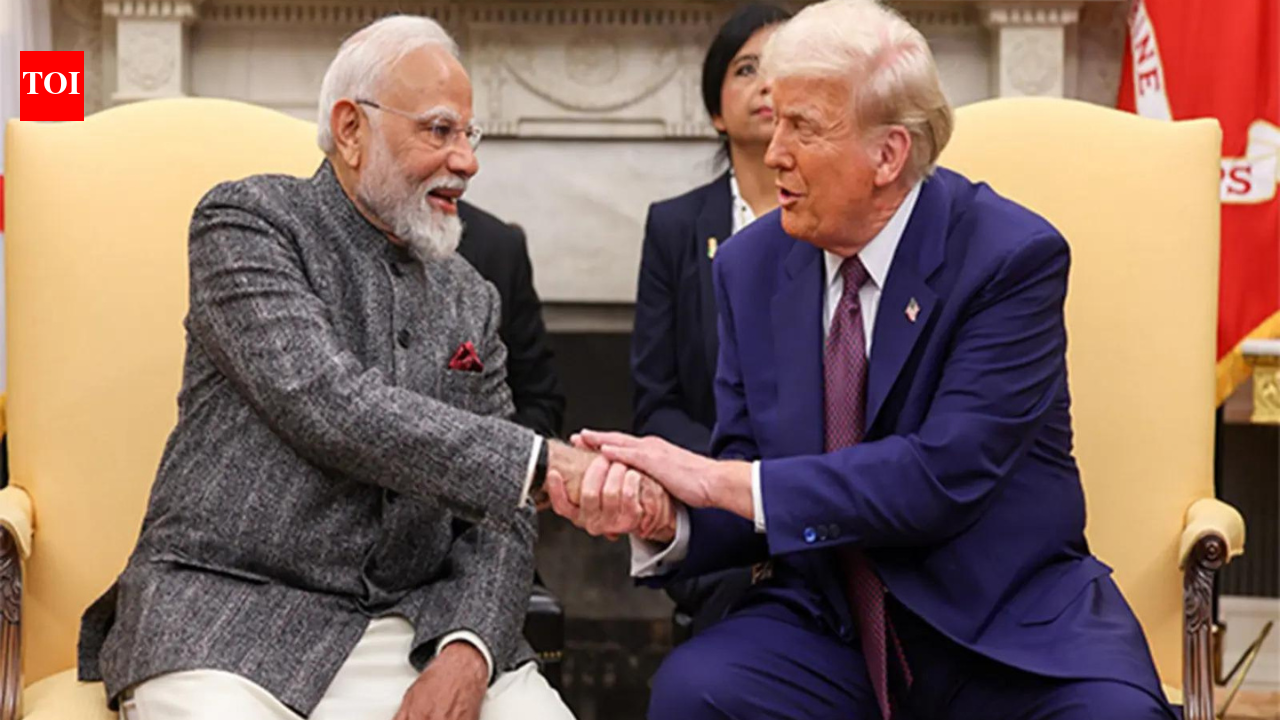
NEW DELHI: The ministry of external affairs (MEA) on Saturday stated the recent phone call over Iran war was only between Prime Minister Narendra Modi and US President Donald Trump, amid reports that SpaceX CEO Elon Musk also joined the call. “We have seen the story. The telephone conversation on 24 March was between Prime Minister Narendra Modi and President Donald Trump only. As has been stated earlier, it provided the opportunity for exchange of views on the situation in West Asia,” MEA Spokesperson, as quoted by ANI.(This is a developing story)


Source link

RCB vs SRH, IPL 2026: 5 players to watch out for in today’s clash | Cricket News


RCB vs SRH, IPL 2026: 5 players to watch out for in today’s clash
Abhishek Sharma, Virat Kohli and Ishan Kishan (Agency Image)

As Royal Challengers Bengaluru return to the Chinnaswamy Stadium as defending champions, their opening clash against Sunrisers Hyderabad promises to be a high-scoring, high-pressure contest. With both sides stacked with explosive batters and conditions expected to favour runs, individual brilliance could make all the difference.Here are five players who could shape the outcome of today’s game:

1. Virat Kohli

There is never a match where Kohli is not in focus, and this one is no different. The former RCB captain comes into the season after another prolific year, scoring 657 runs in IPL 2025 from 15 matches at an average of 54.75 and a strike rate of 144.71. Back at his home ground, Kohli will once again carry the responsibility of setting the tone. With expectations higher than ever after last season’s title win, all eyes will be on how he begins this campaign.

Watch

RCB’s big changes ahead of IPL: New rules, tribute & squad update

2. Abhishek Sharma

Abhishek’s recent form has been a mix of struggle and redemption. After a quiet T20 World Cup, he bounced back with a crucial half-century in the final. That knock could be the turning point he needed. In IPL 2025, he scored 439 runs in 14 matches, including a stunning 141 against Punjab Kings, striking at 193.39. SRH will hope he carries that attacking intent into the new season and provides early momentum.

3. Ishan Kishan

Fresh from an impressive T20 World Cup campaign where he finished as India’s second-highest run-scorer behind Sanju Samson, Ishan enters IPL 2026 with added responsibility. Leading SRH in the absence of Pat Cummins, he will be central to both their batting and leadership. Last season, he scored 354 runs in 14 matches at an average of 35.40 and a strike rate of 152.59. A strong start could set the tone for his captaincy stint.

4. Travis Head

One of the most dangerous openers in T20 cricket, Head brings aggression from ball one. The Australian left-hander scored 374 runs in 13 matches last season for SRH, maintaining a strike rate of 162.60. On a batting-friendly surface like Chinnaswamy, his ability to dominate the powerplay could put RCB under immediate pressure.

5. Phil Salt

Salt’s form coming into the IPL raises questions after a disappointing T20 World Cup, but the league offers him a chance to reset. He was a key figure in RCB’s title-winning campaign last season, scoring 403 runs in 13 innings at a blistering strike rate of 175.98, including four fifties. If he finds rhythm early, RCB could once again get flying starts at the top.With both teams boasting powerful batting units and key bowlers missing, this contest could well turn into a run-fest. For RCB, it is about starting strong as defending champions.


Source link

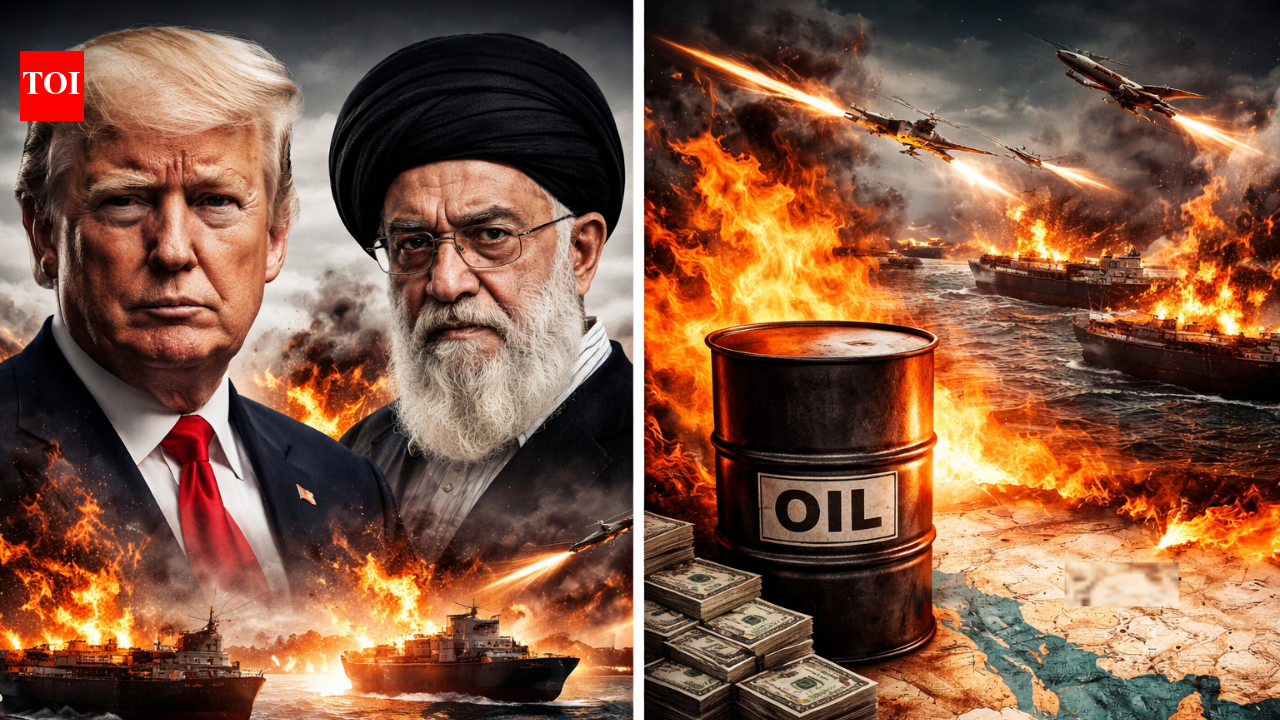
One month of Iran war: Tehran’s defiance turns Trump’s regime-change dream into nightmare


One month of Iran war: Tehran's defiance turns Trump's regime-change dream into nightmare

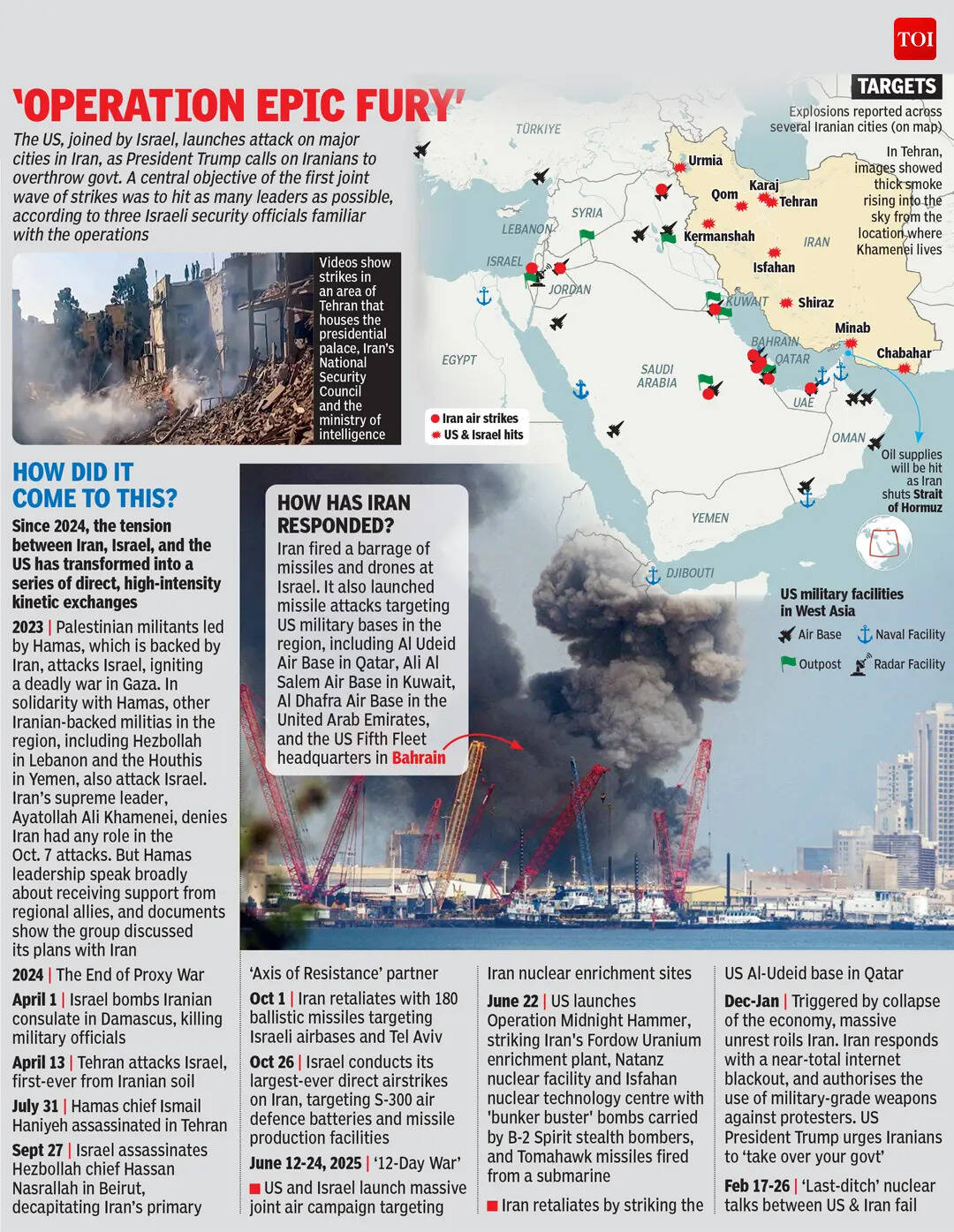
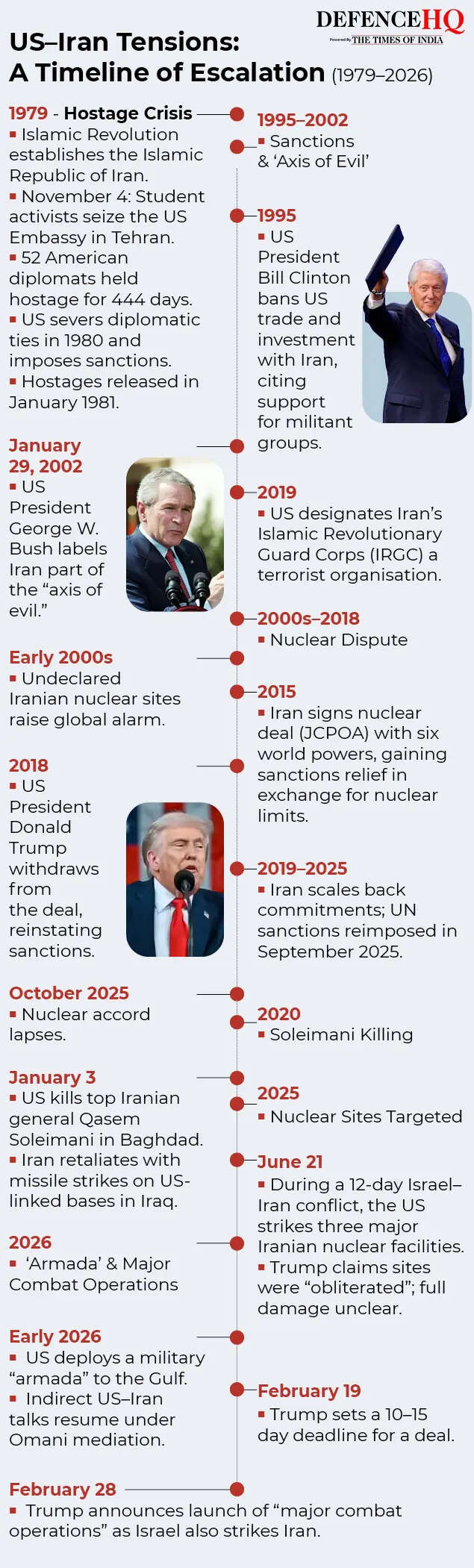
On February 28, what began as Donald Trump’s “dream” project to topple Iran’s regime under Ali Khamenei now appears to have shifted into a pressing push for a “deal”, a term the US president frequently invokes, aimed at reopening the vital oil chokepoint, the Strait of Hormuz.The narrow waterway in Gulf had been effectively choked off by raging Tehran after American-Israeli strikes that also eliminated Khamenei, the country’s longest-serving Supreme Leader on day 1.Not long ago, in February only, Trump said regime change in Iran is “the best thing that could happen”, marking one of his clearest endorsements of replacing the clerical establishment.“For 47 years, they’ve been talking and talking and talking. In the meantime, we’ve lost a lot of lives,” he said.Uncle Sam’s Operation Epic Fury has, in the end, left Donald Trump increasingly frustrated and furious. Despite a grand showcase of American military power and close coordination with Benjamin Netanyahu’s Israel, the campaign has struggled to deliver decisive results.

-

Facing pushback from Ali Khamenei’s son and successor Mojtaba-ruled Islamic Republic, MAGA supremo also sought support from Nato allies to counter Iran’s chokehold over the Strait of Hormuz. However, with little appetite for deeper involvement, allies largely stayed on the sidelines, leaving Washington to confront the crisis largely on its own.

Operation Epic Fury: Trump and Netanyahu strike Iran

A month ago, Donald Trump orchestrated a bold and highly ambitious military campaign, known as Operation Epic Fury, in close coordination with his longtime ally, Israeli Prime Minister Benjamin Netanyahu. Israel joined the offensive with its own Operation Roaring Lion, launching the first joint strikes on February 28.The campaign’s high-value objectives were achieved, as Iran’s supreme leader and Shia icon, Ayatollah Ali Khamenei, who had ruled the country’s for more than three decades, was killed.The conflict began with a massive strike on Iran, which the Pentagon described as wielding twice the firepower of the 2003 “shock and awe” campaign that marked the invasion of Iraq.

-

According to a Financial Times report, Israel had been tracking Khamenei’s movements for years, keeping him under constant surveillance. In its effort to monitor the Iranian leader, Israeli intelligence reportedly employed even unconventional methods, including using traffic lights to follow his movements.Another report suggested that Israel played a decisive role in pushing the Trump administration toward a military strike on Iran. These claims were echoed by Donald Trump’s former aide, Joe Kent, who resigned as director of the US National Counterterrorism Center.Kent strongly claimed that Israel had effectively drawn the United States into the conflict, while also dismissing reports that Iran was expanding its nuclear ambitions or plotting “9/11-style” attacks on American soil.

Tehran strikes back before smoke clears

A leaderless Iran retaliated with full force. Its arsenal lit up the skies as strikes targeted key American bases in the Gulf, while missiles and other attacks rained down on Israeli cities.The back-and-forth exchanges soon turned the region into a tense theatre of constant threat and unrest. Among Iran’s losses were top leaders, including the supreme leader’s wife.Soon, the Tehran regime escalated its campaign, launching aggressive missile and drone strikes on American bases across Qatar, Saudi Arabia, and Iraq. But its assault did not stop there.The attacks spread across the Gulf, targeting Bahrain, the UAE, Oman, and Yemen, as Iran sought to assert its reach and retaliate against its adversaries. Lebanon-based Hezbollah, grieving the loss of the Shia leader Khamenei—joined the fray, striking at Israel in a bid for revenge.The region was rapidly engulfed in a new wave of conflict, with skies streaked by missiles and tensions spiralling across multiple fronts.

Gulf states on high alert

Gulf countries have raised concerns over the prospect of attacks by Iran-backed militias and proxy armed groups in the region, fearing they could destabilise regimes and escalate the war further. In a joint statement this week, Qatar, Kuwait, the United Arab Emirates, Bahrain, Saudi Arabia, and Jordan condemned Iranian attacks on their soil, both as strikes carried out directly from Iran and “through their proxies and armed factions they support in the region.Earlier, Kuwait said it had foiled a plot to kill state leaders, arresting six suspects believed to be associated with Iran’s most powerful proxy group,Hezbollah. For decades, Iran has used proxy militias as a pillar of its foreign and security policy, employing them to export its revolution, expand regional influence, and destabilise enemy countries. The most prominent examples include Hezbollah in Lebanon and the Houthis in Yemen, but other brutal and influential Iran-backed militias also operate in Iraq and Syria.

‘Safe haven’ of Dubai under fire

The safe haven of Dubai, long regarded as a symbol of prosperity and stability, has not escaped the conflict. The sail-shaped Burj Al Arab hotel, perched on Dubai’s Gulf coast, has long embodied the city’s opulence and ambition.Residents were aghast as hundreds of drones and missiles targeted the UAE, including the capital Abu Dhabi, as well as US Gulf allies Oman, Kuwait, Qatar, and Bahrain—countries long considered refuges from regional conflict—on the first weekend after the war began.Explosions rattled windows of Dubai apartment towers, and the city’s bustling international airport was damaged, leaving four people injured.Over the course of the conflict, Iran has repeatedly struck Dubai, the so-called “Pearl of the Gulf,” a city known for its skyscrapers, luxury cars, bustling malls, and thriving business world. The attacks have raised stark questions about security and vulnerability, even as the UAE government continues to insist that the city’s skyline and infrastructure remain resilient.Millions of tourists visit Dubai each year, but in recent weeks, the city has stood on high alert, battered by missile and drone strikes from a vengeful Tehran.

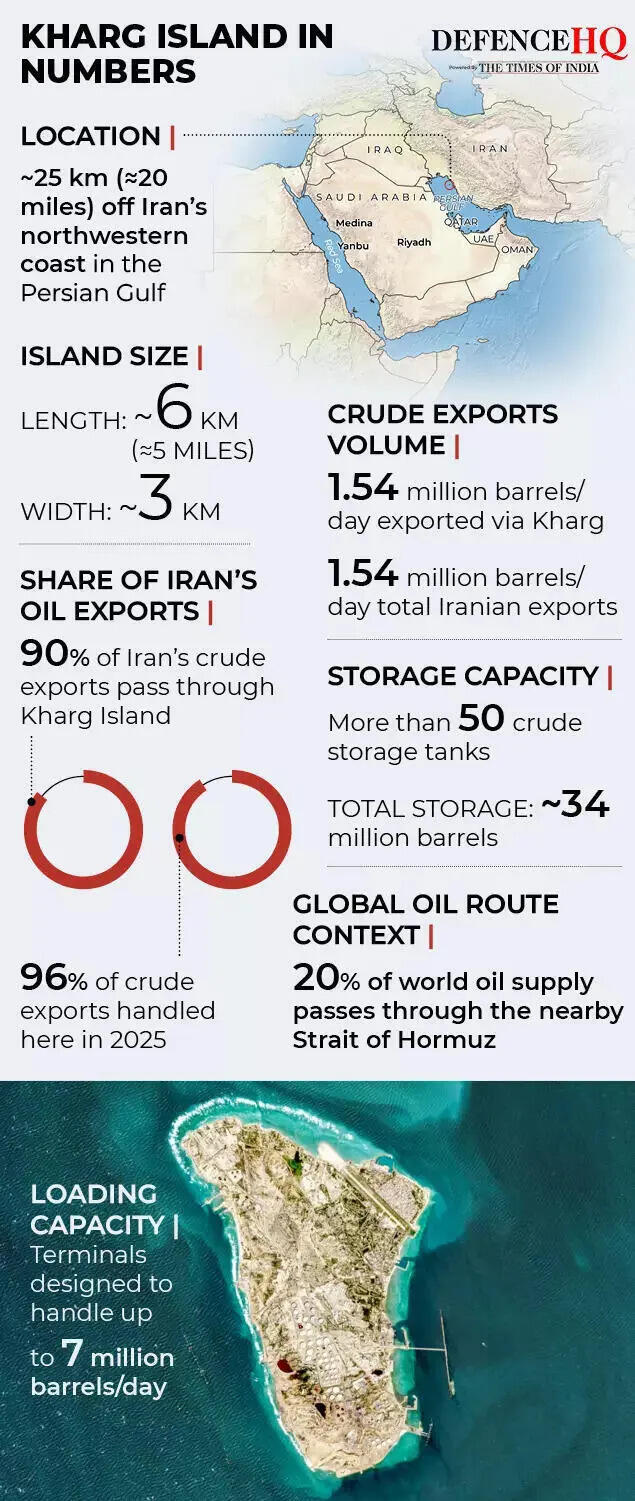
Kharg Island and the oil lifeline

The conflict intensified further when the United States struck Kharg Island, Iran’s economic lifeline and a strategic defence point in the Persian Gulf. US forces conducted heavy airstrikes on military installations, including missile storage areas and other defence sites, while largely sparing the oil export infrastructure itself.

-

In an interview with NBC News, Trump said previous US strikes had “totally demolished” most of the island’s oil infrastructure. He added, “We may hit it a few more times just for fun.” US Senator Lindsey Graham posted on X, “He who controls Kharg Island controls the destiny of this war.”Kharg’s strategic importance lies in its proximity to the Strait of Hormuz, a narrow maritime passage that connects the Persian Gulf to the Gulf of Oman and the wider Indian Ocean. Roughly 20% of the world’s oil supply passes through this chokepoint every day, making the island and strait a critical factor in global energy security.

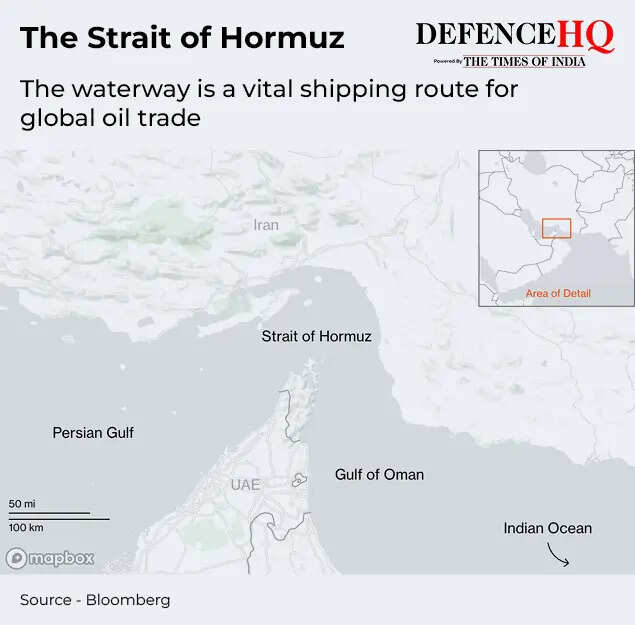
The Strait of Hormuz: A high-stakes chokepoint

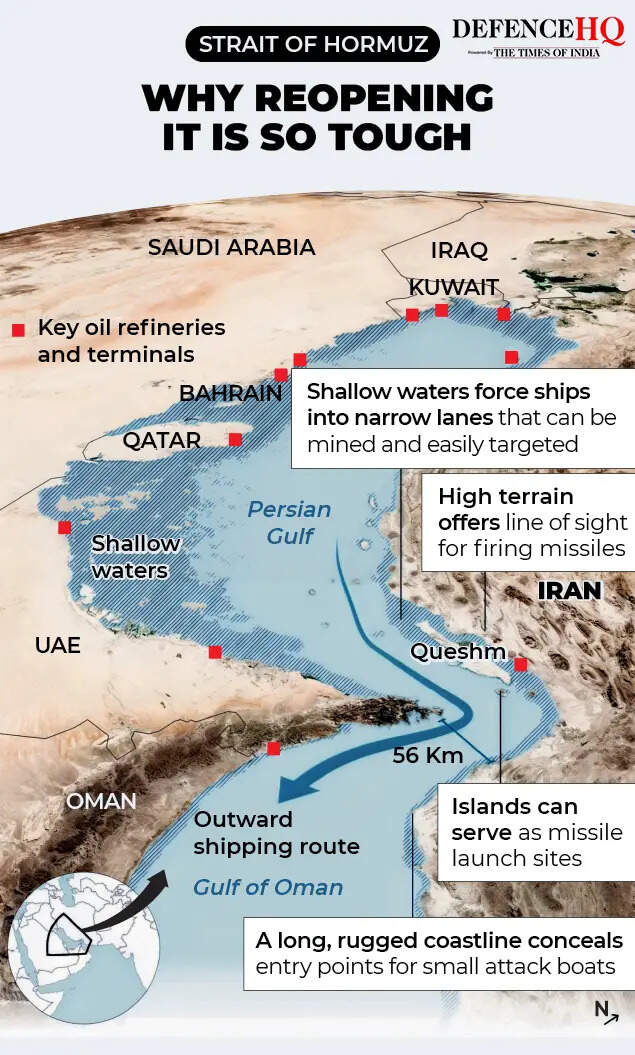
The Strait of Hormuz has become more than a shipping route—it is a strategic pressure point in a widening Middle East conflict. Narrow and shallow, the waterway forces ships within striking distance of Iran’s rugged Musandam Peninsula coastline, a terrain tailor-made for asymmetric warfare.

-

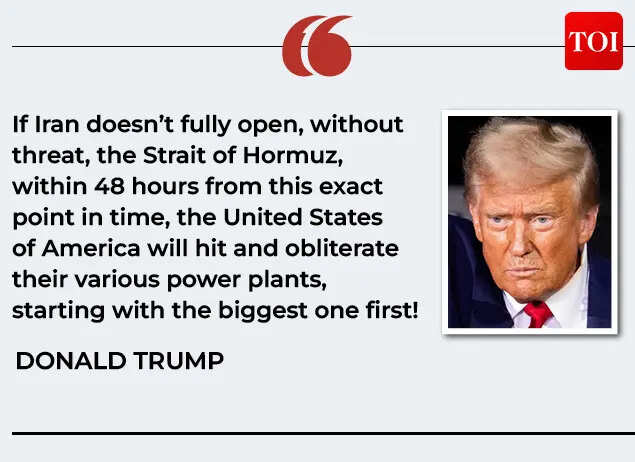
Tankers carrying crude from Saudi Arabia, Iraq, Kuwait, Qatar, and the UAE transit the strait en route to global markets. While Iran itself accounts for only 3–4% of global oil supply, its geographic position allows it to threaten far larger shares of worldwide energy flows.Despite Trump proposing joint control of the strait with Iran’s leadership, most viable solutions rely on military force. Mines, drones, and missile threats make the waters dangerous, while mine-clearing operations could take weeks, exposing crews to constant risk and keeping global supply chains on edge.Days ago, Trump issued a stern warning, giving Iran a 48-hour ultimatum: “If Iran doesn’t fully open, without threat, the Strait of Hormuz, within 48 hours from this exact point in time, the United States of America will hit and obliterate their various power plants, starting with the biggest one first!”

-

Paused strikes?

Now, however, Trump has adopted a more measured approach. While continuing to post in all caps, his tone appears softened. He has paused military strikes on Iran’s energy infrastructure for five days, describing ongoing talks with Tehran as “productive.”In a Truth Social post, he wrote in all caps:“I am pleased to report that the United States of America, and the country of Iran, have had, over the last two days, very good and productive conversations regarding a complete and total resolution of our hostilities in the Middle East. Based on the tenor and tone of these in-depth, detailed, and constructive conversations, which will continue throughout the week, I have instructed the Department of War to postpone any and all military strikes against Iranian power plants and energy infrastructure for a five-day period, subject to the success of the ongoing meetings and discussions.However, the strikes show no sign of letting up. Jets, missiles, and drones continue to crisscross the region’s skies, targeting airports, embassies and critical infrastructure, while the airspace above much of the Middle East — especially over Iran and Iraq — remains tense and highly volatile. The persistent threat of missile activity and ongoing military operations has disrupted civil aviation, forcing airspace closures and rerouted flights as authorities work to keep commercial aircraft clear of conflict zones.

Major oil facilities hit leading crisis worldwide

Iran expanded the conflict by directly targeting oil infrastructure across the Gulf, aiming to disrupt supplies and raise economic costs for its adversaries. Instead of limiting its response to military sites, Tehran focused on critical oil production, storage and export facilities.Among the key targets were installations linked to Saudi Aramco in Saudi Arabia, underscoring Iran’s ability to strike at the core of one of the world’s largest oil producers. These attacks heightened fears over the security of global oil supplies.The campaign also hit the UAE’s vital oil hub at Port of Fujairah, one of the region’s largest oil storage and export facilities. Drone strikes on oil tanks and infrastructure triggered fires and temporarily halted loading operations, exposing the vulnerability of a key alternative export route.Iran further broadened its energy offensive by striking major facilities such as the Ras Laffan liquefied natural gas plant in Qatar and an oil refinery in Israel, demonstrating its capacity to target oil and energy assets across multiple fronts.By focusing on oil infrastructure, Iran has sought to tighten pressure on global markets, disrupt supply chains and drive up prices — turning energy into a central lever in the conflict while amplifying its economic impact far beyond the region.

Trump called for help, allies said ‘not our war’

Strait 15-days into the war, Trump invited several countries to send warships to reclaim Hormuz. Much to his disappointment, none did.“This is not our war. We have not started it,” Germany said.Trump had hoped for China, France, Japan, South Korea and the UK among others to reclaim Hormuz. “Hopefully China, France, Japan, South Korea, the UK, and others, that are affected by this artificial constraint, will send Ships,” Trump said in a March 14 post.“Nobody is ready to put their people in harm’s way in the Strait of Hormuz,” European Union foreign policy chief Kaja Kallas said.Roughly one-fifth of global oil supply passes through this route. Oil prices have climbed worldwide, prompting several Asian nations to introduce fuel-saving measures, but participating in a US-Israel initiated war is not on the cards.Trump did not shy away from expressing his dissatisfaction with Nato. “They just weren’t there. We spend hundreds of billions of dollars a year on Nato, hundreds, protecting them, and we would have always been there for them, but now, based on their actions, I guess we don’t have to be, do we?” he said.

Why allies stayed away

Many US partners were wary of joining what they see as a war initiated by Washington and Israel, with little prior consultation. Officials and analysts noted that several countries felt sidelined in the run-up to the conflict, leaving little appetite to step in once it escalated.There is also lingering resentment over Trump’s treatment of allies since returning to power. From trade disputes to sharp rhetoric, relations with key partners have been strained, weakening the trust needed to quickly build a coalition in a crisis.Beyond politics, the risks on the ground are significant. Sending naval forces into the Strait of Hormuz would make those countries direct targets for Iran, a step many are unwilling to take. As security experts point out, there is little incentive for nations to expose their personnel to missile and drone attacks in a volatile war zone.Military strategy is another factor. Former officials argue the US has not yet established sufficient control over the strait to reassure allies. Without a clear security umbrella led by Washington, countries are hesitant to deploy their own ships into contested waters.

-

While many nations — including those heavily dependent on Gulf oil — are feeling the economic fallout, they appear to prefer absorbing higher energy costs over entering a direct confrontation. For them, the risks of escalation outweigh the benefits of intervention.In short, strained alliances, lack of prior coordination, and the high danger of becoming a combatant have combined to keep US allies on the sidelines — despite mounting global pressure to reopen one of the world’s most critical oil routes.

Mediation efforts falter amid deep divides

As the war drags on, tentative diplomatic efforts are beginning to take shape, but with little clarity on whether they can succeed. Donald Trump has put forward a sweeping 15-point ceasefire framework, reportedly delivered to Tehran through intermediaries like Pakistan, which has offered to host talks. While Washington insists “productive conversations” are underway, Iran has flatly denied any negotiations, dismissing the claims as the US “negotiating with itself.The proposed plan outlines an ambitious roadmap: a temporary ceasefire followed by far-reaching demands on Iran’s nuclear programme, missile capabilities and regional activities, in exchange for sanctions relief and limited civilian nuclear support. It also calls for reopening the Strait of Hormuz — a key global chokepoint — underscoring how central the waterway has become to both military and economic calculations.But the gap between the two sides remains stark. For Washington and its allies, the priority is long-term security guarantees – curbing Iran’s nuclear ambitions, limiting its missile arsenal and ending its support for regional proxies. Tehran, however, is focused on sovereignty and survival. Its leadership has demanded recognition of its rights, reparations for war damage, binding guarantees against future attacks and the lifting of all sanctions.There are also more contentious demands from Iran, including the closure of US military bases in the region and formal control over traffic through the Strait of Hormuz — conditions that are likely to be unacceptable to Washington.Even within Iran, signals are mixed. While political leaders have hinted at openness to talks under the right conditions, hardline elements such as the Islamic Revolutionary Guard Corps appear determined to continue the fight, viewing the conflict as existential.With both sides holding firm and trust in short supply, mediation efforts remain fragile. Analysts say that while backchannel contacts may be underway, any meaningful breakthrough will require significant compromises — something neither side has yet shown willingness to make.

Who is winning the cost war

The financial toll of the conflict is rapidly becoming a critical battleground, and it is one where Trump’s United States appears to be at a disadvantage.Washington is estimated to be spending up to $1 billion a day on the war, with total costs already soaring into the tens of billions, DW reported. Pentagon assessments indicated more than $11 billion was spent within the first six days alone, and analysts now believe the overall bill has likely exceeded $18 billion — with no signs of slowing.A major driver of this imbalance is the stark difference in military costs. Iran is deploying low-cost drones priced at around $20,000, while the US is countering them with interceptor missiles costing between $1.3 million and $4 million each — often using multiple missiles per target. This mismatch is steadily increasing the cost burden on Washington.Meanwhile, Iran is managing to offset some of the economic strain. By effectively controlling the Strait of Hormuz, it remains the only country able to move oil through the vital passage, benefiting from rising global prices. Its oil revenues have climbed to roughly $139 million per day in March, while exports have stayed close to prewar levels of about 1.6 million barrels per day.Tankers continue to load at Kharg Island and transit the strait, even as Tehran blocks ships linked to rival nations — tightening its grip on a key global energy route.The contrast is striking – while the US is incurring massive costs to sustain its military campaign, Iran is pursuing a far cheaper, asymmetric strategy while still generating steady oil income. In economic terms, the balance of the war may be tilting in Tehran’s favour.

Source link

‘Choice between fear and trust’: Amit Shah releases ‘chargesheet’ against TMC | India News


'Choice between fear and trust’: Amit Shah releases ‘chargesheet’ against TMC
Amit Shah releasing ‘chargesheet’ against TMC

NEW DELHI: Union home minister Amit Shah on Saturday released the BJP’s “charge sheet” against the Trinamool Congress (TMC)-led West Bengal government ahead of assembly polls in the state.Speaking at a press conference in Kolkata, Shah emphasised that the upcoming elections would be a choice between “fear and trust.” He was joined by BJP state president and Rajya Sabha MP Samik Bhattacharya and Suvendu Adhikari, the leader of opposition in the West Bengal assembly.He criticised chief minister and TMC supremo Mamata Banerjee, accusing her of fostering a “politics of lies, violence, and corruption over the past 15 years.”“Bengal has to choose between fear and trust. For the last 15 years, politics of fear and corruption have been going on. Mamata Banerjee has created a new way of politics by using lies and violence to move her politics forward. The basis of TMC coming to power is lies, fear, and violence. But since 2011, BJP has been fighting against this, and I believe that this time BJP will form the government,” Shah told reporters.He continued, “In today’s press conference, we have come with a chargesheet against the 15 years of rule by the TMC government. This chargesheet is filed against the Mamata Banerjee government on behalf of the people of Bengal, which the BJP is voicing. In a way, the people of Bengal have to decide in the coming elections whether to choose fear or to choose trust.”The senior BJP leader also lauded Suvendu Adhikari for his extensive tour of the state to address key issues.“Elections have been announced. All BJP workers, under the leadership of our state president, have stepped into Bengal with the resolve to form a BJP government. This election in Bengal is also very important for national security. The security of the entire eastern region is connected to Bengal. After the BJP government was formed in Assam, infiltration has almost ended. Now, only one route remains from where infiltrators enter the entire country, and that is Bengal,” he explained.Shah added, “Our opposition leader, Shri Suvendu Adhikari ji, has also toured the entire Bengal before the elections, taking the issues of disorder, anarchy, economic distress, and especially infiltration prevalent in Bengal to every individual.”He further criticised the TMC for failing to deliver on its promise of a “Sonar Bangla,” turning the state into a hub for criminal syndicates and stifling industrial growth, which he described as a “graveyard for industry.”The state will conduct elections in two phases, on April 23 and April 29, with counting of votes for both phases scheduled for May 4. In the first phase, elections will be held across 152 constituencies, while the remaining 142 seats will go to the polls in the second phase.(With ANI inputs)


Source link

Mumbai Police files chargesheet against sunshine developers partners; Rs18.22 crore diverted, project stalled | Mumbai News


MUMBAI: The Economic Offences Wing of Mumbai police have submitted a voluminous chargesheet against the three partners of Sunshine Developers who took a construction loan of about Rs 90 crore from LIC Housing Finance Limited in 2017 for the two projects in Bhandup. However, investigators found that of Rs 90 crores, Rs 18.22 crore was allegedly diverted into other companies and personal accounts and misused in violation of loan conditions. Due to the diversion of funds, construction work at the project stopped in 2019 and the company later went bankrupt, causing financial losses to the complainant and the lender. The EOW has filed chargesheet against Pankaj Bhuta, Kashyap Mehta and Atul Bharani under the IPC sections 420 of cheating and 406 of forgery. Police informed the court that when the officials went to serve notices to these three accused for their appearance at the time of filing the chargesheet, none of them were available and one of the accused’s wives refused to even accept the notice. The case pertains to an FIR lodged by complainant Pratik Vira, a construction and finance entrepreneur who alleged that he was deceived into investing ₹150 crore from his group into the Sunshine Group and was later defrauded through forged documents and unauthorised loans amounting to ₹250 crore.Vira and his father, Jayesh Vira, began investing in Sunshine Group in 2006 after being promised high returns and a business partnership. Over time, he became a shareholder and director in multiple companies within the group but claims he had no control over financial decisions. Vira further said that Sunshine Group secured loans from financial institutions like ICICI Prudential and LIC Housing Finance Ltd (LICHFL) under fraudulent pretences. Vira alleges that a ₹25 crore loan was taken in his name without his consent in 2015, and another ₹55 crore loan was secured in 2016. Further, in 2017, a ₹90 crore construction loan from LICHFL meant for the Samruddhi Garden project in Bhandup was taken, with ₹18.22 crore allegedly siphoned off to other entities.Tensions between Vira and Sunshine Group escalated when he began questioning financial irregularities. He was subsequently removed from company operations, and legal battles ensued in the National Company Law Tribunal (NCLT), the National Company Law Appellate Tribunal (NCLAT), and the Supreme Court.According to the EOW chargesheet, the accused — Kashyap Mehta, Atul Bharani and Pankaj Bhuta — had taken a construction loan of about Rs 90 crore from LIC Housing Finance Limited in 2017 through Sunshine Housing Pvt. Ltd. for the two projects. However, investigators found that out of Rs 19.62 crore disbursed from the loan, Rs 18.22 crore was allegedly diverted and misused in violation of loan conditions.However, the chargesheet states the investigation revealed that large amounts were transferred from Sunshine Housing Pvt. Ltd. to Mayurpankh Properties Pvt. Ltd. and other companies in multiple transactions between October and November 2017. These funds were not used for construction but were diverted to other companies and personal accounts of the accused.The EOW also found that part of the diverted funds was used to purchase flats in the Samruddhi Garden project in the names of the accused. Police have sealed these flats belonging to the accused. Due to the diversion of funds, construction work at the project stopped in 2019 and the company later went bankrupt, causing financial losses to the complainant and the lender.The chargesheet states that the accused violated loan agreement conditions, diverted project funds without permission from the lender and misappropriated company funds for personal gain. Police said notices were issued to the accused to appear in court at the time of filing of the chargesheet, but some of them did not respond to the notices.


Source link

Access Denied


Access Denied

You don’t have permission to access “http://www.ndtv.com/india-news/namrata-jain-rekawaya-narayanpur-first-top-official-to-visit-this-chhattisgarh-village-once-a-maoist-stronghold-11278284” on this server.

Reference #18.cfdd417.1774691093.858188d3

https://errors.edgesuite.net/18.cfdd417.1774691093.858188d3


Source link

Dhurandhar 2: ‘Only R Madhavan said yes immediately; Arjun Rampal, Sanjay Dutt and Akshaye Khanna weren’t sure’: Mukesh Chhabra on Dhurandhar casting | Hindi Movie News


Aditya Dhar’s Dhurandhar has been dominating conversations ever since its first instalment, winning both critical acclaim and audience love. While the film’s performances have been widely praised, casting director Mukesh Chhabra has now revealed that getting its star-studded ensemble on board wasn’t easy.

Aditya Dhar’s Dhurandhar has been dominating conversations ever since its first instalment, winning both critical acclaim and audience love. While the film’s performances have been widely praised, casting director Mukesh Chhabra has now revealed that getting its star-studded ensemble on board wasn’t easy.

‘Only R Madhavan agreed instantly’

In a recent interaction with Hindustan Times, Mukesh Chhabra opened up about the casting process.“Initially, even Arjun Rampal, Sanjay Dutt and Akshaye Khanna were not sure about being a part of the film. Only R Madhavan said yes. For the others, it took time,” he said.He added that the scale of casting evolved over time. “Aditya and I were considering so many people, and honestly, earlier we had never thought we would cast so many big stars. We had a very different kind of actors in mind. Then I pushed him to think bigger.”

Watch

Dhruv Rathee calls Dhurandhar 2 “WhatsApp-inspired”, sparks massive fact vs fiction debate

‘It all fell into place gradually’

Chhabra further explained how the ensemble slowly came together.“When you start a film, you wonder how so many big actors will come on board. At first, none of this was there, but gradually, as we discussed, it started falling into place,” he said. Talking about the hesitation among actors, Chhabra highlighted a key concern in multi-starrers — screen time.“Madhavan and Arjun were on the set only for 12 days. Most actors usually worry about how much screen time they will get. We told them that here, impact is what matters,” he shared.“If you look at Madhavan’s part, with only 12 to 14 days of work, the impact of the role is huge,” he added.


Source link