Breaking News
No block on Western Railway suburban today | Mumbai News


Image used for representational purpose only

MUMBAI : There will be rail block during daytime today over Western Railway suburban section and this will be relief to commuters travelling by local trains.Earlier, between 1 am and 4.30 am on Sunday, the WR operated a block on the Up and Down slow lines between Mahim and Santacruz stations for maintenance of track, signalling systems and overhead equipment.An official said that during the block period all Down slow line trains were operated on the Down fast line between Mumbai Central and Santacruz stations. Due to inadequate platform length, these trains will halt twice at Lower Parel, Mahim and Khar Road stations and will not halt at Mahalaxmi, Prabhadevi and Matunga Road stations for want of platform. Also, some suburban services will remain cancelled during the block period.


Source link

Brace for megablocks on Central Railway Main, Harbour lines today | Mumbai News


MUMBAI : Central Railway, Mumbai division will operate megablock on its suburban sections to carry out various engineering and maintenance works today.On Main line, the block is on Matunga-Mulund Up and Down fast lines from 11.20 am to 3.45 pm.The Up fast line services leaving Thane from 11.03 am to 3.38 pm will be diverted on Up slow line at Mulund station halting as per their respective schedule halts between Mulund and Matunga stations, will be re-diverted on Up fast line at Matunga station and will arrive destination 15 minutes behind schedule.On Harbour Line, the block will be undertaken between Kurla and Vashi stations from 11.10 am to 4.10 pm. Special suburban trains will run on CSMT Mumbai – Kurla & Panvel – Vashi sections during the block period. Harbour line passengers are permitted to travel via Thane-Vashi/Nerul route till 6 pm.


Source link

FPIs turn sellers: Foreign portfolio investors withdraw Rs 21,000 crore amid Middle East tensions


FPIs turn sellers: Foreign portfolio investors withdraw Rs 21,000 crore amid Middle East tensions

Foreign portfolio investors (FPIs) turned heavy sellers in Indian equities during the first week of March, pulling out nearly Rs 21,000 crore (about $2.3 billion) over four trading sessions as global risk appetite weakened amid escalating tensions in the Middle East The withdrawals came between March 2 and March 6 in the cash market. Trading activity during the period was limited to four sessions as March 3 remained closed for the Holi holiday. The fresh round of selling follows a strong February when overseas investors had infused Rs 22,615 crore into Indian stocks, the highest monthly inflow in 17 months. Prior to that rebound, however, FPIs had remained net sellers for three consecutive months. They withdrew Rs 35,962 crore in January, Rs 22,611 crore in December and Rs 3,765 crore in November, according to data from depositories. Analysts said the latest outflows were largely driven by rising geopolitical tensions in Middle East after the United States and Israel launched a major attack on Iran on February 28 which killed Iran’s Supreme Leader Ayatollah Ali Khamenei, triggering conflict in the region. Vaqarjaved Khan, Senior Fundamental Analyst at Angel One, said fears over possible disruptions in the Strait of Hormuz pushed Brent crude prices above $90 per barrel, triggering a global risk-off sentiment. Khan also highlighted several additional pressures influencing foreign investors. These include the depreciation of the rupee beyond the 92-per-dollar mark, rising US Treasury yields that are drawing capital back to safe-haven assets, and an uncertain early outlook for corporate earnings in the fourth quarter of FY26, particularly due to margin pressures in the IT and consumption sectors. VK Vijayakumar, Chief Investment Strategist at Geojit Investments, said, “uncertainty surrounding the Middle East conflict, the recent market correction, the Indian economy’s vulnerability to a sharp rise in crude prices, and the depreciation of the rupee have all contributed to sustained FPI selling in the cash market”. Himanshu Srivastava, Principal Manager Research at Morningstar Investment Research India, said that elevated crude oil prices raise concerns over inflation, the current account deficit and currency stability, factors that typically weaken foreign investor sentiment towards emerging markets. He also noted that global investors have been increasingly shifting funds into safer assets such as the US dollar amid growing uncertainty. The recent rise in US Treasury yields during the week further accelerated capital outflows from emerging markets. Looking ahead, Vijayakumar said overseas investors may remain cautious until the geopolitical situation becomes clearer and crude prices ease. “Brent crude trading above $90 per barrel is negative for the Indian economy and equity markets,” he said. Despite persistent selling by foreign investors, Indian markets have continued to find support from domestic institutional investors (DIIs), along with steady inflows through mutual fund systematic investment plans (SIPs).


Source link

Interstellar, Einstein and the strange elasticity of time | Mumbai News


Interstellar, Einstein and the strange elasticity of time

In Christopher Nolan’s Interstellar, astronauts land on a planet orbiting close to a black hole. They spend a few hours on its surface. When they return to their spacecraft, they discover that 23 years have passed on Earth. Children have grown up. A lifetime has slipped away.It feels like science fiction, but it’s not fantasy. Einstein’s theory of relativity showed that time is not absolute. It slows down when you move close to the speed of light. It also slows down in strong gravitational fields. The closer you are to a massive object, like a black hole, the more spacetime curves, and the slower time passes for you compared to someone farther away.Atomic clocks on fast-moving aircraft tick slightly slower than identical clocks on the ground. GPS satellites must constantly adjust for relativistic effects. Without those corrections, our navigation systems would drift by kilometres each day.Gravity bends time. The universe does not run on a single master clock. And yet, concepts like the “fourth dimension” or “time relativity” are often dismissed as abstract science fiction ideas.But a generational shift is quietly taking place. We’re moving from merely thinking about these ideas, to feeling their reality, to living in them. “Tesseract” is inspired by my 12-year-old grandson, whom we watched become completely absorbed in Interstellar. Hans Zimmer’s haunting organ theme became his favourite piece to play on the piano, and again and again, he returned to it.

(AI image)

The music itself feels like time unfolding. Slow, expansive, layered, almost architectural. It rises and circles back, like something moving through dimensions we cannot see.One evening, our conversation drifted to the film’s most mind-bending idea: the tesseract – a four-dimensional hypercube. In the movie, time is represented as a physical dimension, something you can move through, like space.To explain it, he reached for paper. Through simple folds of origami, he showed how a two-dimensional square can be unfolded into a three-dimensional cube. Then he asked: if a cube can unfold into something beyond itself, why not imagine a four-dimensional version, a hypercube, unfolding in ways our eyes cannot fully perceive?It was curiosity in motion, a physics lecture from my grandson, who teaches me something new every time I meet him, without fail. For many adults, such ideas still feel abstract. But younger generations are growing up immersed in them, through films, games, simulations, science channels and digital visualisations. They are comfortable imagining spacetime as fabric, dimensions beyond the visible, universes bending under gravity. And perhaps more importantly, they intuitively grasp something about relativity long before they encounter equations.Tell ten children to meditate for five minutes and ask them to open their eyes when they think the time is up. None will stop together, because five minutes on a clock is fixed, but five minutes in the mind is elastic.When bored, time drags. When immersed, in music, in coding, in conversation…it vanishes. Psychologists call this “flow,” a state where attention is so complete that awareness of time dissolves.There are, in fact, multiple layers of relativity in our lives. There’s physical relativity, the Einsteinian bending of spacetime through gravity and velocity. Then there’s psychological relativity, the stretching and compressing of time through emotion, mental state, and attention. And perhaps there’s generational relativity: the way each generation inhabits these ideas differently.For those raised before the digital age, the fourth dimension may feel theoretical. For those raised within immersive storytelling and interactive media, it feels experiential. They don’t merely read about warped spacetime; they visualise it, feel it hear it, model it, and in some sense, live inside it.Many of us assume that children must be taught these concepts from scratch. But often, they are already thinking about them, just in different language. They may not speak of “spacetime curvature,” but they understand that time feels different in different situations. They may not derive equations, but they can imagine moving through dimensions.They will speak about it, but only if they sense genuine curiosity. If we approach children not as teachers, but as their students; if we ask how they imagine the fourth dimension; if we ask what the music makes them feel; if we are willing to truly learn from them.Science fiction once felt like speculation about distant futures. Increasingly, it is becoming a shared cultural vocabulary for thinking about reality itself.Einstein bent time with mathematics. Filmmakers visualised it. Musicians gave it sound. And children are quietly absorbing it, not as fantasy, but as possibility. Perhaps the elasticity of time is not only a feature of black holes, but also a feature of imagination, stretching across generations, waiting to be unfolded. And sometimes, the doorway into the fourth dimension begins not with equations, but with curiosity – and a simple sheet of paper folded into something more than it first appeared.Experience “Tesseract: The Geometry of Truth”, running from 16 to 22 March 2026 at NCPA Mumbai. Book here


Source link

Nitish Kumar’s son Nishant enters politics, joins JD(U) | India News


Nitish Kumar's Son Nishant To Enter Politics, Will Join JD(U) Soon In Signal Of Big Power Shift

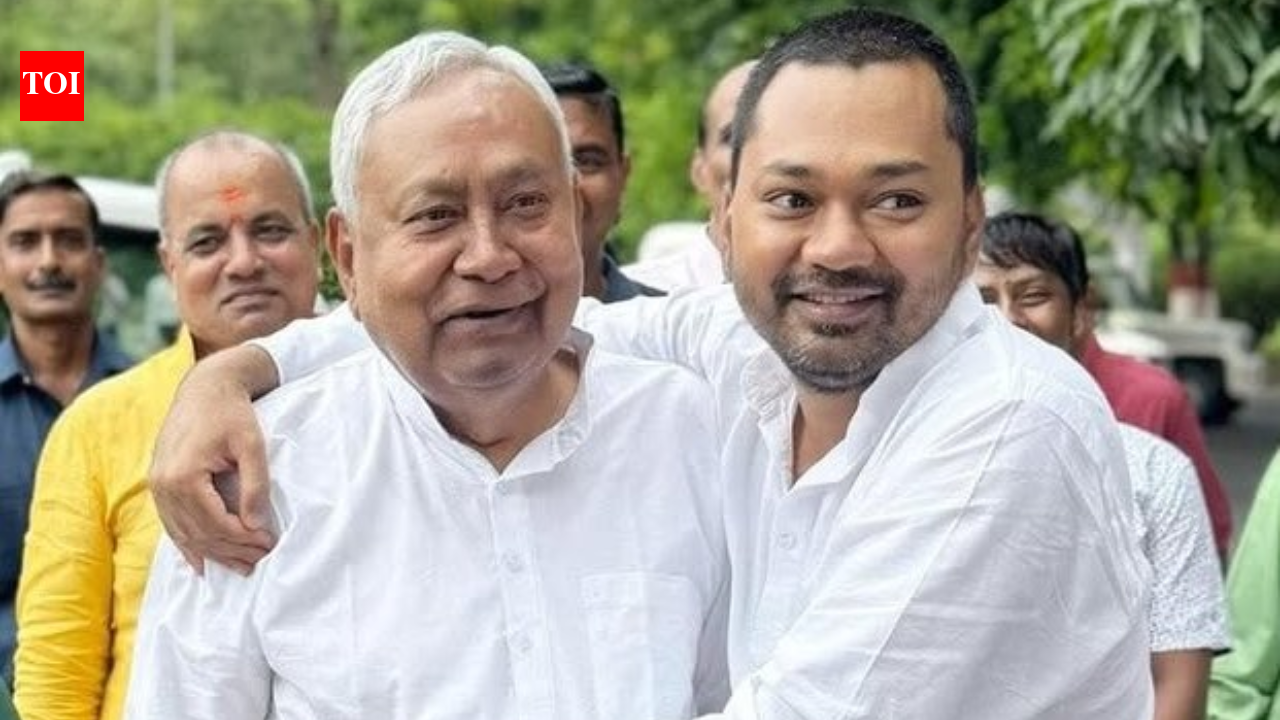
Nitish Kumar and son Nishant Kumar (Picture from X)

NEW DELHI: Bihar chief minister Nitish Kumar’s son Nishant Kumar on Sunday formally joined the JD(U), days after the party chief filed his nomination for a Rajya Sabha seat in the presence of Union home minister Amit Shah.On the rare occasions he has appeared in public, Nishant, an engineering student in his 40s, has earned goodwill for his humility. During brief interactions with the media, he has also shown that he closely follows the work carried out by his father.

Nitish Kumar’s Son Nishant To Enter Politics, Will Join JD(U) Soon In Signal Of Big Power Shift

Meanwhile, speculation is growing that Nishant could be made deputy chief minister in the new government.A close aide of Nitish Kumar claimed on Saturday that a “unanimous” decision had been taken to appoint Nishant as deputy chief minister in the government to be formed after his father’s resignation.As the longest-serving chief minister of Bihar, Nitish Kumar’s decision to step down from the top post has triggered speculation over his successor within the JD(U) and in state politics. Nishant Kumar has largely stayed away from active politics despite being the son of one of the most influential political figures in modern Bihar. Nitish Kumar’s decision to vacate the chief minister’s chair marks a key moment in the state’s political trajectory, potentially paving the way for new leadership in Bihar and possibly its first BJP chief minister. The shift could also signal the end of the long-running Lalu–Nitish era, with both leaders, political disciples of socialist veteran Jayaprakash Narayan, dominating the state’s politics for over three decades.“I seek to become a member of the Rajya Sabha in the elections being held this time. I want to assure you with complete honesty that my relationship with you will continue in the future as well, and my resolve to work together with you to build a developed Bihar will remain steadfast. The new government that will be formed will have my full cooperation and guidance,” the 75-year-old politician announced on X.Although many had anticipated the move amid speculation about his declining health, Nitish Kumar’s sudden announcement still surprised many who expected a smoother transition plan. In the coming days, he is expected to be elected unopposed to the Rajya Sabha, following which he will step down as chief minister.The Janata Dal (United) chief’s decision not only brings to a close the political lineage of leaders such as Jayaprakash Narayan, Ram Manohar Lohia and Karpoori Thakur in Bihar, but also pushes the party into uncharted territory, with no clear roadmap for the future.


Source link

South Africa players slam ICC after England fly home while SA, WI remain stranded in India | Cricket News


'Strange': South Africa players slam ICC after England fly home while SA, WI remain stranded in India
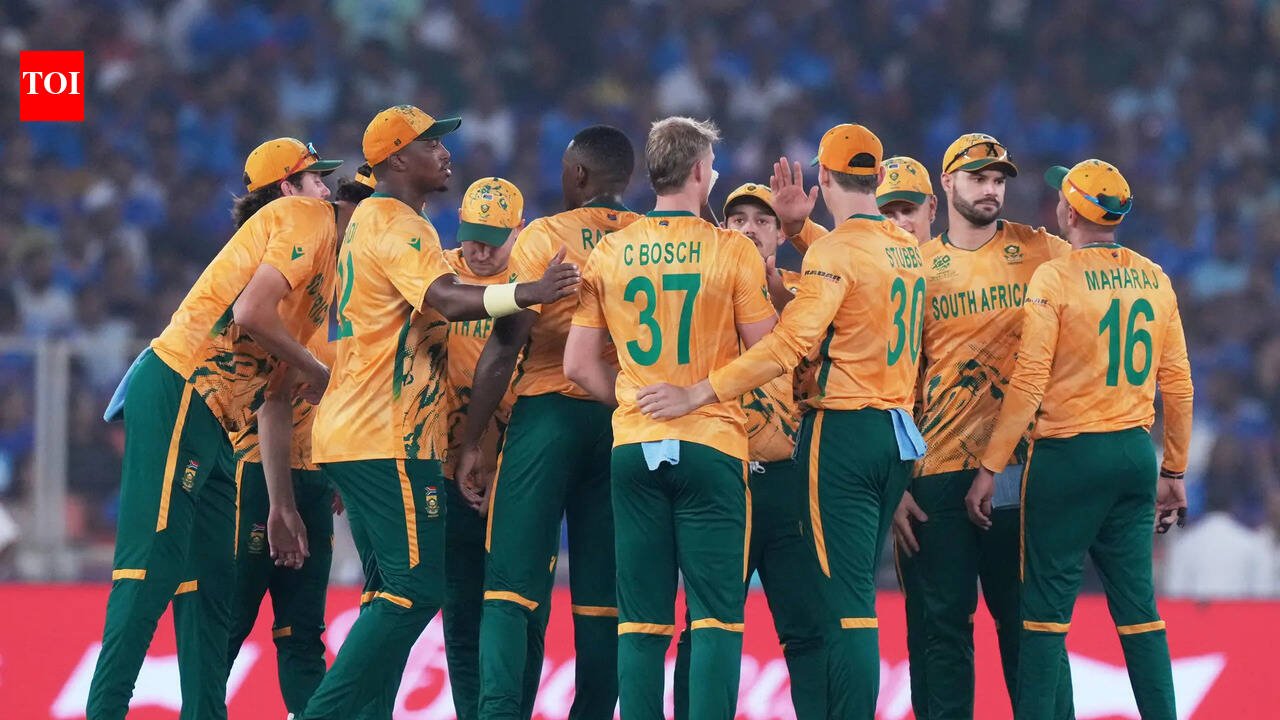
South Africa’s players (AP Photo/Ajit Solanki)

Players from South Africa and West Indies have questioned the travel arrangements after their exit from the ICC Men’s T20 World Cup 2026, claiming some teams were given priority flights home. While England national cricket team left Mumbai on a charter flight to London on Saturday after their semifinal loss, the South Africa national cricket team and West Indies national cricket team are still waiting in India due to flight disruptions linked to tensions involving the United States, Israel and Iran.

T20 World Cup: Suryakumar Yadav press conference before IND vs NZ

South Africa were knocked out after losing to New Zealand national cricket team in the first semifinal in Kolkata, while West Indies exited following a five-wicket defeat to India national cricket team at Eden Gardens. Both teams are expected to travel together on a charter flight from Kolkata, although the exact departure time is still unclear.South Africa wicketkeeper Quinton de Kock publicly criticised the situation on social media. He wrote, “Funny @icc, we have heard nothing! Meanwhile, England are leaving before us somehow? @westindies and @proteasmencsa are just in the dark! Strange how different teams have more pull than others.”His teammate David Miller echoed the frustration, commenting, “Funny that England gets eliminated after WI & SA and gets on a charter back home tonight. While WI & SA still wait for answers in Kolkata.”West Indies head coach Daren Sammy supported the criticism, replying, “@davidmillersa12 a lil louder for those in the back to hear please sir.”Former England captain Michael Vaughan also questioned the situation, writing, “So England got knocked out on Thurs, get a charter home today .. West Indies go out last Sunday and are still in Kolkata .. SA in the same position .. That’s where the power is all wrong ..”He added, “All teams in this situation should be treated the same .. just because you are more powerful at the ICC table shouldn’t count .. #JustSaying.”The South Africa and West Indies squads are expected to fly to Johannesburg first, with the Caribbean team then continuing to Antigua. Meanwhile, the tournament final between India and New Zealand is set to take place at Narendra Modi Stadium.


Source link

Bollywood celebs attend premiere of Mahesh Manjrekar’s play Animal | Mumbai News


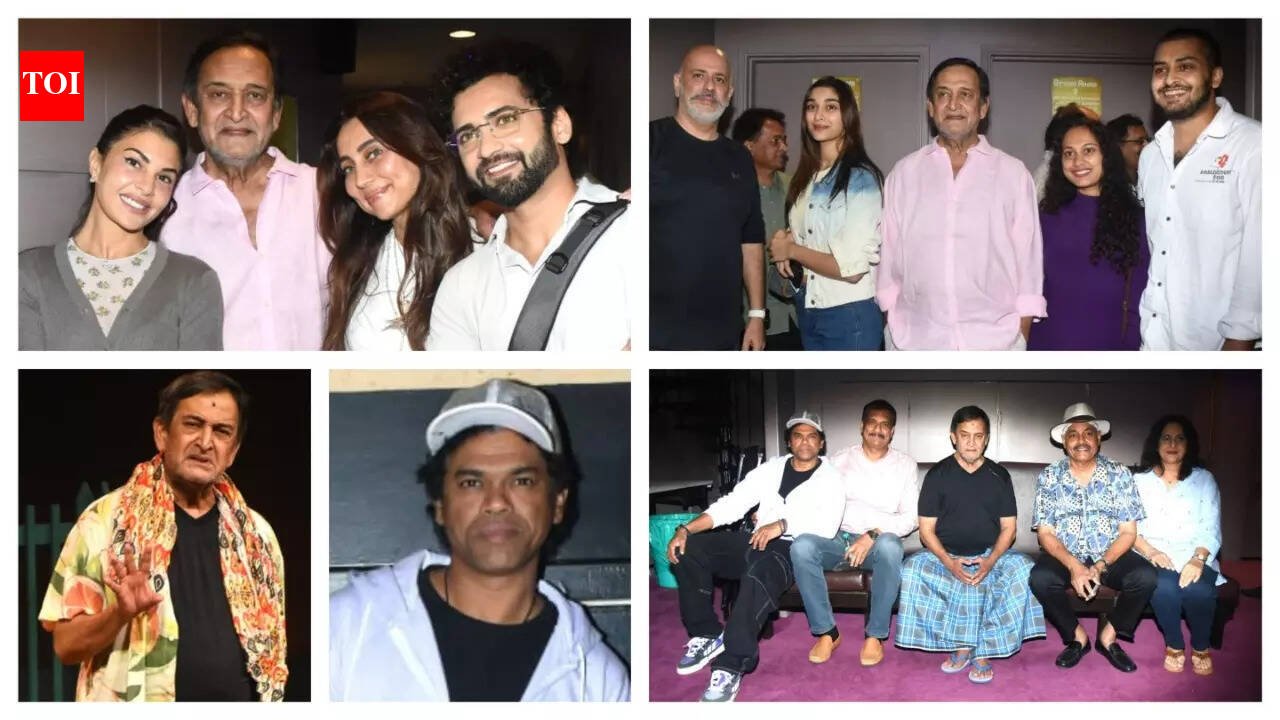
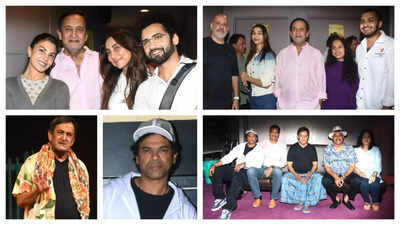
Mahesh Manjrekar’s highly anticipated one-man play, ‘Animal,’ premiered to a packed house, with actors like Jacqueline Fernandez and Saiee Manjrekar in attendance. Manjrekar delivered a powerful performance exploring ambition’s toll, drawing enthusiastic responses for its satire and pop culture references. The play, a culmination of years of work, received a standing ovation.

Actors Jacqueline Fernandez and Saiee Manjrekar were among the many well-known faces who attended the premiere of Mahesh Manjrekar’s much-awaited Hindi play Animal at the Tata Theatre on Saturday night.Moments before stepping on stage, the actor-director admitted to feeling the pressure of opening night. “I don’t have butterflies in my stomach right now… I have dragons!!!” he said. “I feel all theatre artists should have that tension. Overconfidence always brings things down. This is one show I’ve wanted to do for a long time… and I just hope I succeed because it is not an easy play.”The premiere turned into a gripping theatrical evening, with Manjrekar delivering a powerful performance that kept the audience engaged for nearly two hours. The play is presented by AGP World and produced by theatre impresario Ashvin Gidwani. Written, directed and performed by Manjrekar, Animal is an intense one-man play that explores the slow erosion of the human spirit in the pursuit of ambition.At the centre of the narrative is Dattu, played by Manjrekar — a young man from a small town near Pandharpur who arrives in Mumbai chasing dreams of stardom. What begins as belief in the city and in himself gradually turns into a struggle for survival.Speaking about the play, Manjrekar described it as “a cartoonist’s take on life in the city.” “Thousands of people come to Mumbai because they believe it is the city of dreams,” he said. “But for every person who becomes successful here, there are countless others whose dreams shatter and turn into nightmares. This play is a tribute to everyone who comes to Mumbai to make a career or earn a living. It is a large-hearted city… but even a city has its limits.Layered with satire, the play also weaves in observations on the political, financial, geopolitical and socio-cultural fabric of the country. Pop culture references, insider jokes about the film industry and witty nods to life in Mumbai drew enthusiastic responses from the audience. In a surprising twist, Manjrekar also sang and danced to multiple songs during the performance.Several personalities attended the premiere, including actors Siddharth Jadhav, Anusha Dandekar and Sumedh Mudgalkar. Manjrekar’s daughter Gauri Ingavale and son Satya Manjrekar were also present, while former Indian cricketer Dilip Vengsarkar attended with his wife Manali. For Saiee Manjrekar, watching her father perform was an emotional moment. “It was amazing,” she said. “I have been hearing about this project all my life. It’s his dream project. To see him, at this age, put in so much energy into a one-man show is such a proud moment for me. It’s incredibly inspiring.”After nearly nine years of discussion and preparation, Animal has finally reached the stage. The evening ended with a standing ovation as Manjrekar thanked his team. The play will next be staged on March 29 at the Sophia Bhabha Auditorium in Breach Candy.


Source link

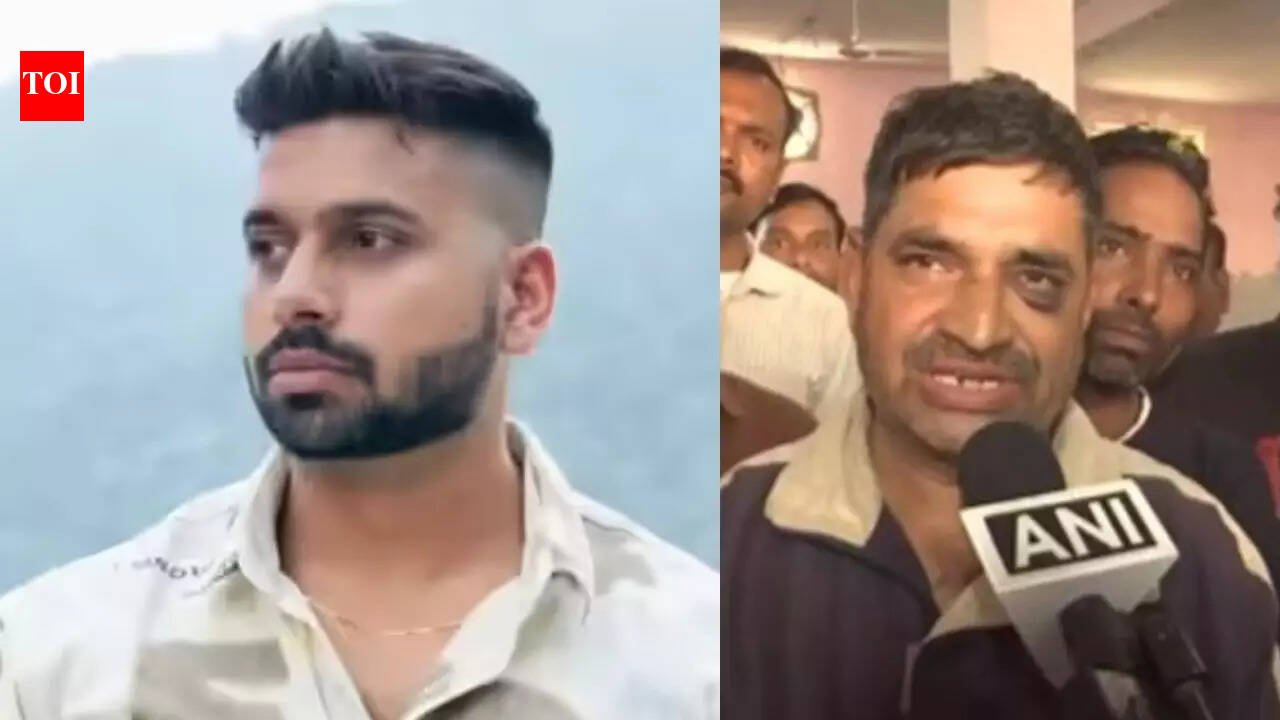
Delhi’s Uttam Nagar murder: Victim’s father says 15–20 people killed his son, seeks CBI probe citing police negligence | Delhi News


NEW DELHI: The father of 25-year-old Tarun, who was killed in a brutal attack, has demanded a Central Bureau of Investigation (CBI) probe into the matter on Saturday. The family alleged that local police have neither shared details of the arrests made so far nor conducted a proper inquiry into the incident in the national capital.Father of the deceased, while speaking to ANI, said, “We demand that our son should get justice. The police have not conducted any inquiry or asked us about him. They are saying that they have arrested 5-6 people. They did not show us who they have arrested. We want a CBI inquiry. We even went to the police station yesterday, but they closed the doors. When we went to the streets to hold a protest, they resorted to lathicharge. As son as my son came, 15-20 people attacked him and killed him on the spot. All of them were roaming here, but the police did not arrest anyone.”

Delhi’s Uttam Nagar On Edge After Holi Killing Sparks Tension, Vehicles Torched As Arrests Rise To 8

Security has been tightened in Delhi’s Uttam Nagar area after 25-year-old Tarun succumbed to injuries sustained during a fight between neighbours from different communities during Holi celebrations earlier this week.Tarun had been undergoing treatment following the altercation, which reportedly took place on March 4.According to Delhi Police, a dispute during Holi celebrations in Uttam Nagar escalated, leaving Tarun injured. He later succumbed to his injuries while undergoing treatment.Four individuals have been arrested in connection with the incident, and further investigations are ongoing.In the aftermath, Delhi Police have tightened security in the area to maintain law and order and prevent further tension.Deputy commissioner of police (DCP) of Dwarka district, Kushal Pal Singh, stated that adequate measures have been implemented to ensure peace in the locality.“In view of the incident that happened on 4th March, we have made adequate security arrangements. We have divided the area into zones, sectors and sub-sectors. Our motorcycles and vehicles are continuously patrolling,” the DCP said.He added that the police are also engaging with residents from both communities to ensure calm in the area.“We have also called people of both communities and appealed to them to maintain peace and order in the area. Apart from this, we also appeal to the people not to pay attention to rumours and not to support those who create trouble,” Singh said. (With agency inputs)


Source link

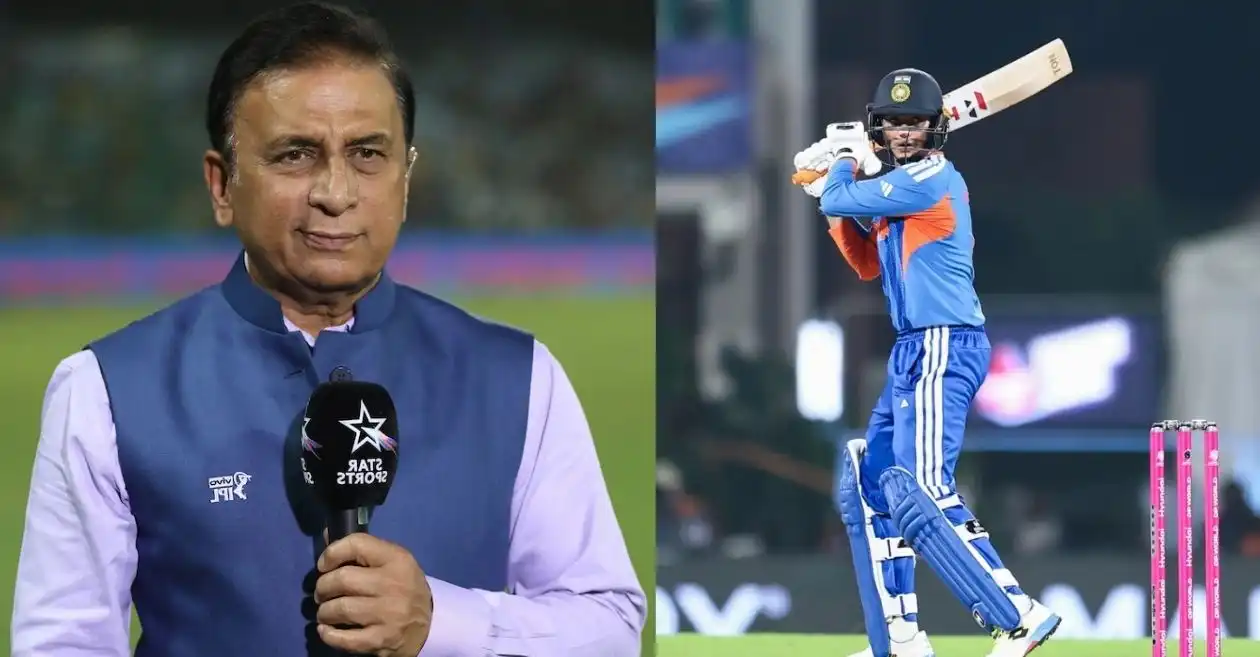
Sunil Gavaskar explains why India should drop Abhishek Sharma for T20 World Cup 2026 final against New Zealand


The excitement around the ICC Men’s T20 World Cup 2026 has reached fever pitch as India prepare to face New Zealand in a high-voltage final at the Narendra Modi Stadium in Ahmedabad on Sunday. The defending champions, led by Suryakumar Yadav, have enjoyed a dominant campaign throughout the tournament and now stand just one win away from lifting the trophy for the second consecutive time.

India’s journey to the summit clash has been marked by consistent performances from both the batting and bowling units. However, as the team gears up for the biggest match of the tournament, discussions around the playing XI have intensified. Former India captain Sunil Gavaskar has also weighed in on the debate, suggesting a few bold changes that he believes could strengthen the team’s chances against the Black Caps.

Sunil Gavaskar questions Abhishek Sharma’s place in the final

One of the most surprising suggestions from Gavaskar was regarding young opener Abhishek Sharma. Despite being the No. 1 batter in the ICC T20 rankings, Gavaskar believes the left-hander should be left out of the playing XI for the final due to his repeated dismissals in similar fashion during the tournament. According to Gavaskar, bowlers have clearly identified a weakness in Abhishek’s technique and are repeatedly exploiting it.

“It’s a very tough call. Abhishek Sharma is the No. 1 batter in the ICC T20 rankings, but he hasn’t learned from his dismissals. He keeps getting out in the same region where his arms are cramped for room. Bowlers are targeting that area and forcing mistakes. My concern is that he either hasn’t adjusted yet or is unable to change his approach,” Gavaskar said, as quoted by India Today.

The legendary batter suggested that India could reshuffle their top order by bringing Ishan Kishan as opener alongside Sanju Samson, while middle-order power-hitter Rinku Singh could also be drafted into the playing XI.

“I would like to see Ishan Kishan open the batting with Sanju Samson, with Rinku Singh coming into the side. Rinku has that belief—you’ve probably seen the ‘God’s Plan’ tattoo on his body—and sometimes things just work out for players like him,” the legendary cricketer added.

Also READ: T20 World Cup 2026 Final: Broadcast, Live Streaming details: When and where to watch in India, Pakistan, USA, UK & other countries

Gavaskar recommends Kuldeep Yadav over Varun Chakaravarthy

Gavaskar also recommended a change in India’s bowling department, urging the team management to replace out-of-form spinner Varun Chakaravarthy with left-arm wrist spinner Kuldeep Yadav for the final.

According to him, Varun has struggled in the latter stages of the tournament, especially against stronger opposition. Gavaskar believes Kuldeep’s ability to generate turn even on flat surfaces could prove valuable on the large ground dimensions of the Narendra Modi Stadium.

“The other change I would consider is bringing in Kuldeep Yadav. Varun Chakravarthy’s confidence looks shattered at the moment. Since the Super Eight stage, when he faced stronger teams, he has struggled and conceded a lot of runs. At a ground like the Narendra Modi Stadium, with big boundaries, Kuldeep Yadav could be a good option because he can turn the ball even on flat surfaces,” stated Gavaskar.

Also READ: T20 World Cup 2026 Prize Money Breakdown: From Champions to Runner Ups to Group Stage Teams


Source link

Mamata absent, no water in President Murmu’s washroom, garbage on road: Centre, Bengal govt spar over ‘lapses’ at Santal event | India News


Mamata absent, no water in President Murmu's washroom, garbage on road: Centre, Bengal govt spar over 'lapses' at Santal event
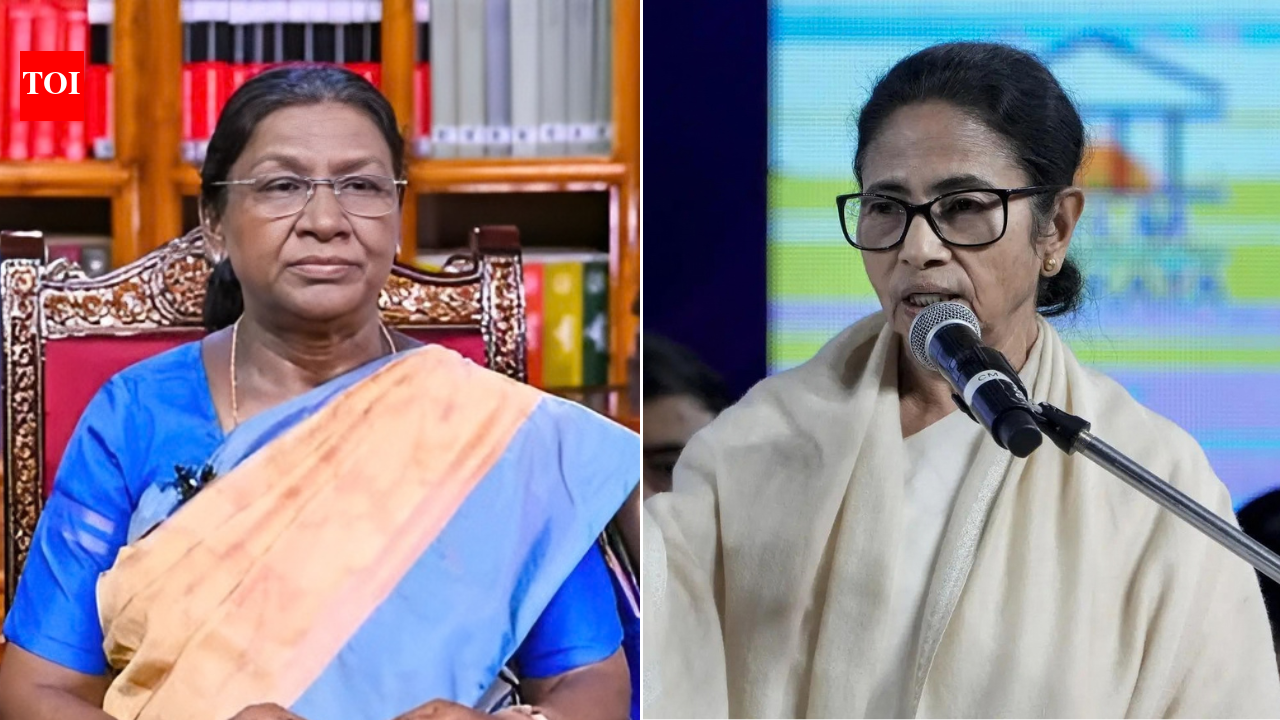
President Droupadi Murmu and West Bengal CM Mamata Banerjee (File photo)

Amid a political storm over alleged “lapses” during President Droupadi Murmu’s visit to West Bengal, the Centre has asked the state government to submit a response by 5 pm on Sunday over suspected violations of protocol related to venue and route arrangements, sources told news agency PTI.In a letter to the West Bengal chief secretary, Union home secretary Govind Mohan asked the state to furnish a detailed explanation regarding alleged violations of the ‘Blue Book’ rules governing protocol, venue and route arrangements.The ‘Blue Book’ is a confidential document that outlines security and protocol rules for the President, Vice-President, Prime Minister and their families.President Murmu on Saturday expressed dismay over the low turnout at a tribal community event near Bagdogra airport and questioned the decision to shift the venue from Bidhannagar.She also noted the absence of West Bengal chief minister Mamata Banerjee and her ministers during her visit.Highly placed sources said the communication sent to the West Bengal chief secretary also sought a response on the absence of the chief minister, the chief secretary and the director general of police at the airport to receive the President, which is considered a serious violation of the Blue Book protocol.Officials said the Centre has also taken note that only Siliguri mayor Gautam Deb was present to receive the President at the airport, which is seen as a breach of protocol.According to PTI sources, the washroom arranged for the President reportedly did not have water, for which an explanation has been sought from the state government.The state has also been asked to explain why the route chosen by the administration for ferrying the President was allegedly littered with garbage.The letter further seeks details on the action taken against the Darjeeling district magistrate, the Siliguri police commissioner and the additional district magistrate, who appear to be directly responsible for the alleged violations.President Murmu had been invited to attend the annual programme of the tribal community, which was originally scheduled to be held at Bidhannagar in Siliguri.However, citing security and logistical reasons, authorities shifted the venue to Goshaipur near Bagdogra airport, officials said.When the President arrived at the venue on Saturday afternoon, only a handful of people were present. Siliguri mayor Gautam Deb was the only representative present at the airport to receive her.“Mamata Banerjee is like my younger sister. I am also a daughter of Bengal. I do not know whether she is upset. Anyway, that does not matter. All of you stay well,” the President said.She also questioned the decision to shift the venue for the tribal community’s annual programme from Bidhannagar to Goshaipur, where the turnout was reportedly low.“Had the programme been held there (at Bidhannagar), it would have been better. There is ample space there and many people could have attended. But I do not know why the state administration did not permit the meeting there. Today’s programme is being held at such a place that it is difficult for people to come here. Perhaps the state government does not want the welfare of tribals, and that is why they were prevented from coming here,” Murmu said.According to protocol, the chief minister or a minister from the state government is usually present to receive the President.Vice President C P Radhakrishnan on Saturday described the alleged lapses during President Murmu’s visit as unfortunate, saying a high constitutional office must always be accorded the dignity it deserves.Prime Minister Narendra Modi also criticised the West Bengal government, calling the incident “shameful and unprecedented” and accusing the Trinamool Congress government of insulting the President during her visit to the state.


Source link