Breaking News
‘Very grateful’: Ireland’s Paul Stirling quits T20 captaincy after poor World Cup | Cricket News


'Very grateful': Ireland’s Paul Stirling quits T20 captaincy after poor World Cup
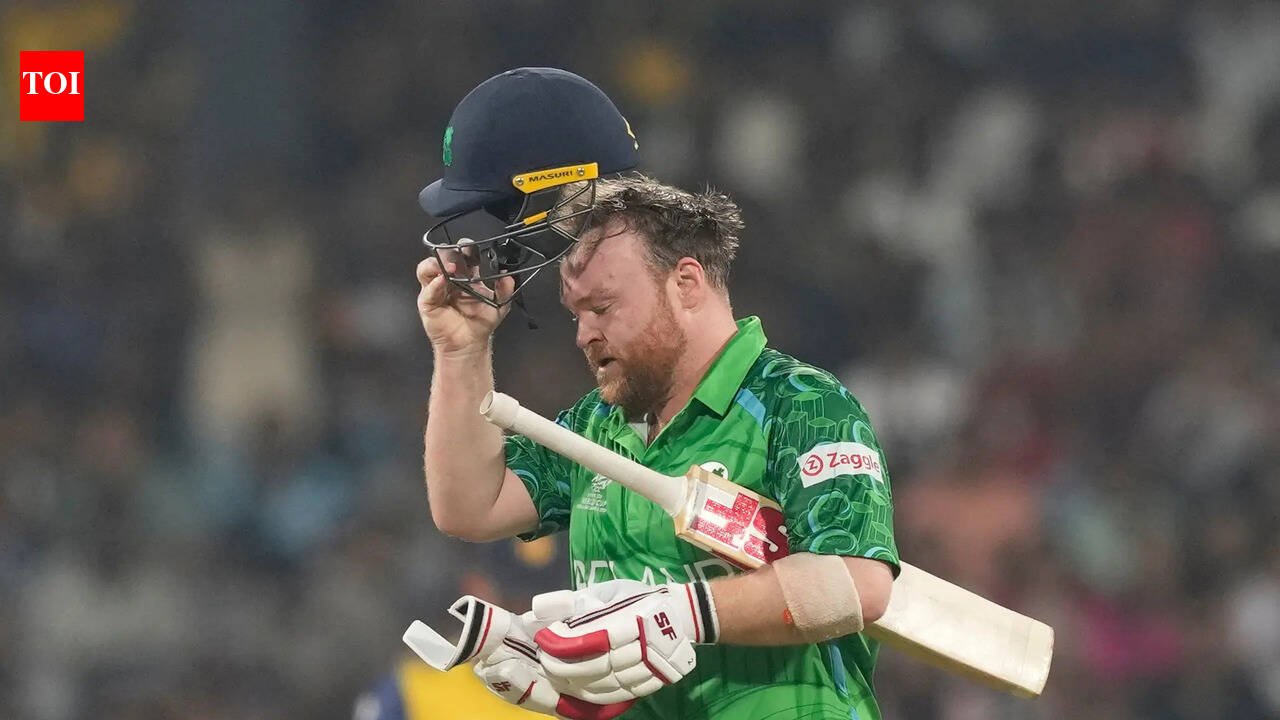
Ireland’s captain Paul Stirling (Photo by AP Photo/Eranga Jayawardena)

NEW DELHI: Ireland’s T20 cricket team is set for a leadership change as experienced batter Paul Stirling has decided to step down as T20I captain. This move is part of a bigger plan to prepare the team for the ICC Men’s T20 World Cup 2028. While he will no longer lead in the shortest format, Stirling will continue as ODI captain and remain an important player in the T20 side.Ireland’s recent outing at the ICC Men’s T20 World Cup 2026 didn’t go as hoped. The team finished fourth in their group, managing just one win along with a no-result and two losses.

Watch

Shashi Tharoor & Samson’s Redemption Story: From Setbacks to Glory

Stirling’s own tournament was also cut short after he suffered a knee ligament injury during a match against Australia national cricket team, limiting him to only two games.With Stirling sidelined, wicketkeeper-batter Lorcan Tucker stepped in to captain the team for the remaining matches. The experience highlighted the need to start building a new leadership group for the future.

Stirling’s message and what’s next

Even though he’s stepping down, Stirling made it clear how much leading Ireland meant to him. He said, “It has been a tremendous honour to lead Ireland in this format and something I have been incredibly proud to do.” He added, “Captaining your country is a privilege that carries great responsibility, and I’m very grateful for the trust and support I have received during my time in the role.”He also thanked everyone around the team, saying, “I would like to thank my teammates, the coaching staff, and everyone involved with Cricket Ireland for their continued backing, as well as the fans who have supported us throughout.”Ireland will now look to appoint a new T20I captain soon as they begin preparing for the next World Cup cycle.

Banner Insert


Source link

Explained: Why Gautam Gambhir filed a ₹2.5 crore case in Delhi High Court?


Just days after celebrating India’s T20 World Cup 2026 triumph as head coach, Gautam Gambhir has taken a serious legal step off the field.

Gautam Gambhir moves Delhi High Court

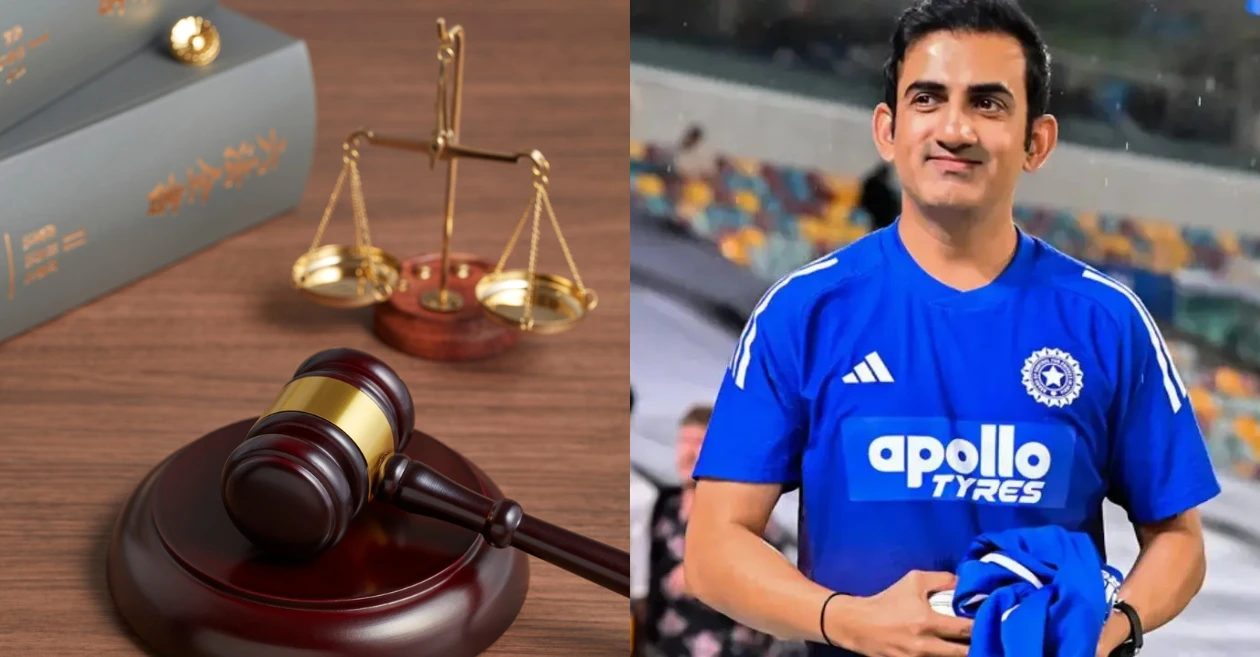
Gambhir has approached the Delhi High Court, filing a ₹2.5 crore lawsuit to protect what he calls his “personality rights” in the digital age.

At the heart of the case is a growing concern around AI-driven impersonation. Gambhir has alleged that multiple anonymous accounts and platforms have been misusing his identity – his face, voice, and name – through deepfake technology and unauthorized content.

“My identity – my name, my face, my voice – has been weaponised by anonymous accounts to spread misinformation and generate revenue at my expense,” Gambhir stated in a press release accompanying the lawsuit. “This is not a matter of personal hurt; it is a matter of law, dignity, and the protection every public figure deserves in the age of artificial intelligence.”

According to his petition, the issue escalated sharply towards the end of 2025, with fake videos and statements circulating widely across platforms like Instagram, YouTube, Facebook and X. These weren’t harmless edits – they were highly realistic deepfakes created using face-swapping and voice-cloning tools, making it difficult for viewers to tell fact from fiction.

Some of these videos even went viral, including a fake “resignation announcement” that garnered lakhs of views, misleading fans into believing he was stepping down as India’s coach. Others falsely attributed controversial remarks to him about fellow cricketers, further amplifying the damage.

What makes this case even more significant is that it goes beyond misinformation—it also involves commercial exploitation. Gambhir’s legal team has alleged that his identity was being used to sell merchandise like posters and digital content on e-commerce platforms without any authorization.

This, according to the petition, is not just impersonation but a calculated attempt to profit from his image without consent. In simple terms, his identity was being turned into a product.

Also READ: IPL 2026 – Did MS Dhoni change his jersey number? Here’s what we know

To counter this, Gambhir has invoked multiple laws, including the Copyright Act 1957, the Trade Marks Act 1999, and the Commercial Courts Act 2015. These legal provisions strengthen his argument that personality rights – especially in today’s AI-driven world – are enforceable and deserve protection.

His case also draws from previous landmark rulings where courts have sided with public figures facing similar issues. Celebrities like Amitabh Bachchan, Anil Kapoor and Sunil Gavaskar have all sought legal protection against unauthorized use of their identity, especially in the context of digital and AI misuse.

What sets Gambhir’s case apart is the timing and the scale. Coming right after a major global cricket victory, it highlights how even the biggest public figures are vulnerable to digital manipulation.

In many ways, this isn’t just a lawsuit – it’s a statement.

Also READ: Ricky Ponting lauds Gautam Gambhir’s game-changing call in India’s T20 World Cup 2026 campaign


Source link

Bse: Stock market today: Which are the top 10 losers on NSE & BSE on March 19? Check list as one Nifty stock bucks trend


Stock market today: Which are the top 10 losers on NSE & BSE on March 19? Check list as one Nifty stock bucks trend

Benchmark equity indices Sensex and Nifty suffered a sharp sell-off on Thursday, with both plunging more than 3 per cent as surging crude oil prices, weak global cues and escalating attacks on energy infrastructure in West Asia triggered a broad-based market rout. The fall was especially severe in financials, autos and industrials, while ONGC stood out as the only gainer in the Nifty50.The BSE Sensex tanked 2,496.89 points, or 3.26 per cent, to close at 74,207.24 — its biggest single-day fall since June 2024 and its lowest level since April 7, 2025. The NSE Nifty slumped 775.65 points, or 3.26 per cent, to end at 23,002.15, wiping out the gains of the previous three sessions.

Nifty50 losers

Company Name Current Price (Rs) Price Change % Change
Shriram Finance 949.80 -71.81 -7.03%
Eternal 228.74 -13.80 -5.69%
Bajaj Finance 832.20 -47.90 -5.45%
HDFC Bank 798.20 -44.85 -5.32%
M&M 3,045 -169.00 -5.27%
L&T 3,435 -173.00 -4.81%
Tata Motors PV 309.30 -15.45 -4.76%
InterGlobe 4,154 -206.00 -4.74%
Trent 3,482 -159.00 -4.37%
Bajaj Auto 8,869 -403.00 -4.35%

Sensex losers

Company Name Current Price (Rs) Price Change % Change
Eternal 228.74 -13.80 -5.69%
Bajaj Finance 832.20 -47.90 -5.45%
HDFC Bank 798.20 -44.85 -5.32%
M&M 3,045 -169.00 -5.27%
L&T 3,435 -173.00 -4.81%
InterGlobe 4,154 -206.00 -4.74%
Trent 3,482 -159.00 -4.37%
Bajaj Finserv 1,715 -76.90 -4.30%
UltraTech Cem. 10,814 -433.00 -3.85%
Axis Bank 1,207 -46.21 -3.69%

Nifty50 gainer

Company Name Current Price (Rs) Price Change % Change
ONGC 269.10 +4.11 +1.55%

Sharp reversal wipes out three-day rally

Thursday’s sell-off marked a dramatic reversal after a brief recovery in the previous three sessions. Nifty had rallied 2.68 per cent, or 626 points, over the last three sessions, while Sensex had gained 2.8 per cent, or 2,140 points. Those gains were erased in a single trading day as global risk sentiment deteriorated sharply.

Oil shock and global weakness trigger broad sell-off

The market slide came after Brent crude surged 6.75 per cent to $114.8 per barrel, as Iran intensified strikes on Gulf energy assets, including a key natural gas facility in Qatar, two Kuwaiti oil refineries and a Saudi refinery on the Red Sea.That sharp rise in oil prices heightened concerns over inflation, India’s import bill and corporate margins, especially as the country remains heavily dependent on imported crude.PTI also said all sectoral indices ended in the red, with auto, realty, financial services and banking among the hardest hit. Market breadth was decisively negative, with 3,192 stocks declining on the BSE against just 1,051 advances.

Top Nifty50 losers led by Shriram Finance, Eternal and Bajaj Finance

The sell-off in the Nifty50 was led by financial and consumption-linked counters.Shriram Finance emerged as the top loser on the Nifty50, falling 7.03 per cent to Rs 949.80. Eternal dropped 5.69 per cent to Rs 228.74, while Bajaj Finance declined 5.45 per cent to Rs 832.20.HDFC Bank, already under pressure after chairman Atanu Chakraborty’s resignation over ethical concerns, slid 5.32 per cent to Rs 798.20, as per the data provided and PTI’s broader market report.Mahindra & Mahindra fell 5.27 per cent to Rs 3,045, while Larsen & Toubro lost 4.81 per cent to Rs 3,435. Other major Nifty laggards included Tata Motors PV, down 4.76 per cent to Rs 309.30; InterGlobe Aviation, down 4.74 per cent to Rs 4,154; Trent, down 4.37 per cent to Rs 3,482; and Bajaj Auto, down 4.35 per cent to Rs 8,869.

Sensex losers mirror the broader damage

On the Sensex, Eternal was also the worst performer, dropping 5.69 per cent to Rs 228.74.It was followed by Bajaj Finance, down 5.45 per cent to Rs 832.20; HDFC Bank, down 5.32 per cent to Rs 798.20; Mahindra & Mahindra, down 5.27 per cent to Rs 3,045; and Larsen & Toubro, down 4.81 per cent to Rs 3,435.InterGlobe Aviation fell 4.74 per cent to Rs 4,154, while Trent lost 4.37 per cent to Rs 3,482. Bajaj Finserv slipped 4.30 per cent to Rs 1,715, UltraTech Cement dropped 3.85 per cent to Rs 10,814, and Axis Bank declined 3.69 per cent to Rs 1,207.The list underlines how the pain was concentrated in rate-sensitive lenders, cyclicals and discretionary names.

ONGC was the lone bright spot in Nifty50

In an otherwise deeply red market, ONGC was the only stock in the Nifty50 to end in positive territory.ONGC rose 1.55 per cent to Rs 269.10, gaining Rs 4.11 on the day, making it the lone exception.

Analysts say macro risks changed sentiment quickly

Market experts said the sharp fall reflected a rapid shift in risk appetite as geopolitical and macroeconomic concerns converged.“Indian equities witnessed a sharp and broad-based reversal, with the Nifty-50 erasing recent gains in a single session as global and domestic risks converged. The sell-off was triggered by a combination of macro headwinds that significantly altered risk perception. Crude oil prices surged above USD 111 per barrel amid escalating geopolitical tensions in the Middle East, raising concerns over sustained supply disruptions,” Hariprasad K, Research Analyst and Founder, Livelong Wealth, said, as quoted by news agency PTI.Vinod Nair, head of research at Geojit Investments Limited, also linked the decline to both oil and global monetary signals.“The domestic market ended sharply lower, giving up the gains of the past three days, as a series of attacks on energy infrastructure in the Middle East triggered a renewed spike in oil prices and dampened investor sentiment. The US Fed adopted a hawkish stance, signalling higher inflation amid elevated geopolitical uncertainty,” he said, according to PTI.

Midcaps, smallcaps and all sectors end in the red

The damage was not limited to frontline indices.The BSE MidCap Select index fell 3.34 per cent, while the SmallCap Select index declined 2.77 per cent.All sectoral indices ended lower. Auto was the worst-hit, plunging 4.07 per cent, followed by realty at 3.79 per cent, financial services at 3.66 per cent, consumer discretionary at 3.62 per cent, BSE Top 10 Banks at 3.53 per cent, industrials at 3.49 per cent, services at 3.44 per cent, BSE Focused IT at 3.41 per cent and consumer durables at 3.38 per cent, according to PTI.Market breadth also remained deeply negative, with 3,192 stocks declining on the BSE against 1,051 advances, while 161 remained unchanged.

Global weakness adds to pressure

Weakness across global markets added to the pressure on Indian equities.Asian markets including South Korea’s Kospi, Japan’s Nikkei 225, Shanghai’s SSE Composite and Hong Kong’s Hang Seng all ended significantly lower, PTI said.European markets were also trading with steep losses, while US markets had closed sharply lower on Wednesday.

FIIs continue selling, DIIs offer some support

Foreign investor flows remained under pressure.According to exchange data, Foreign Institutional Investors (FIIs) sold equities worth Rs 2,714.35 crore on Wednesday. Domestic Institutional Investors (DIIs), however, bought shares worth Rs 3,253.03 crore, partially offsetting the outflows.Thursday’s crash is one of the clearest signs yet of how sharply Indian markets are reacting to the deepening West Asia conflict.With Brent crude now above $114 a barrel and Gulf energy infrastructure under direct attack, investors are increasingly pricing in the risk of higher imported inflation, pressure on India’s current account, and the possibility of slower growth if the conflict drags on.If oil remains elevated and global risk aversion deepens, market volatility is likely to stay high in the sessions ahead.


Source link

IPL 2026: Check out new jerseys of all 10 teams | Cricket News


IPL 2026: Check out new jerseys of all 10 teams

NEW DELHI: As the Indian Premier League (IPL) 2026 season is set to kick off, the visual identity of the franchises has reached a new peak of innovation. This year’s jerseys blend high-tech athletic fabrics with deep cultural storytelling, reflecting each team’s evolution, from RCB’s defending champion look to the bold new eras in Rajasthan and Punjab.

Watch

Rajasthan Royals captain Riyan Parag watches West Ham vs Man City in London

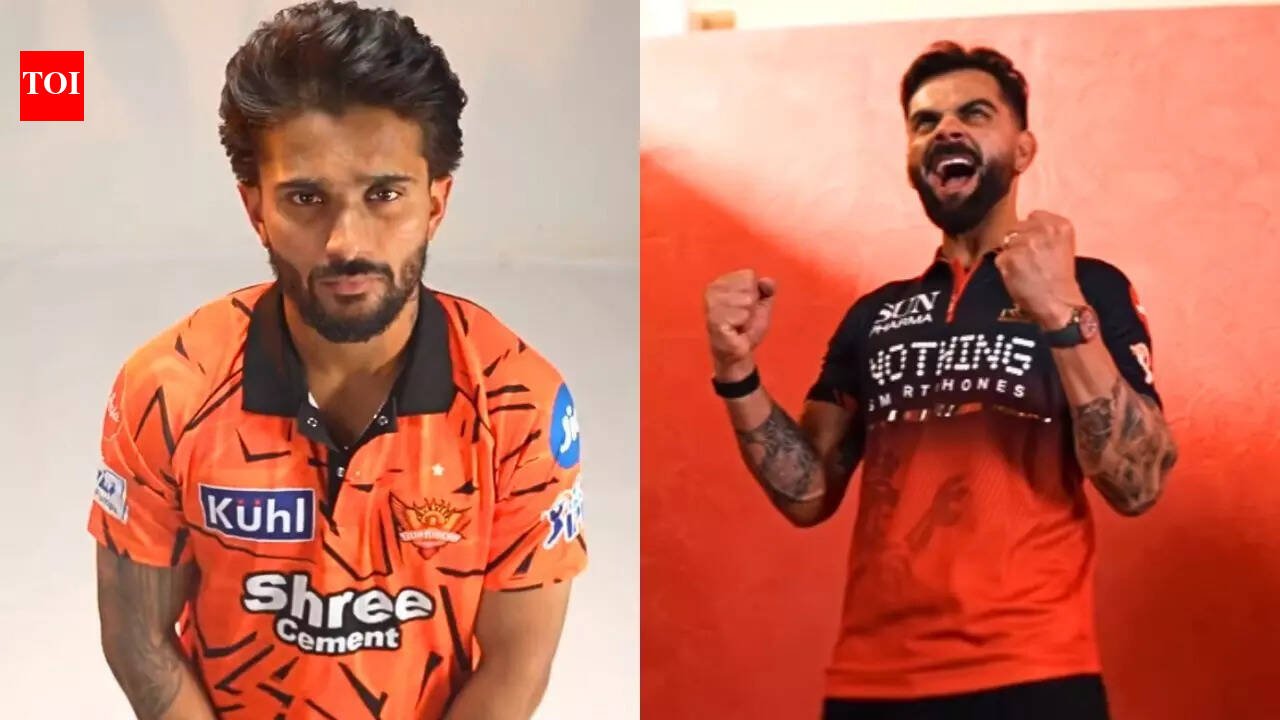
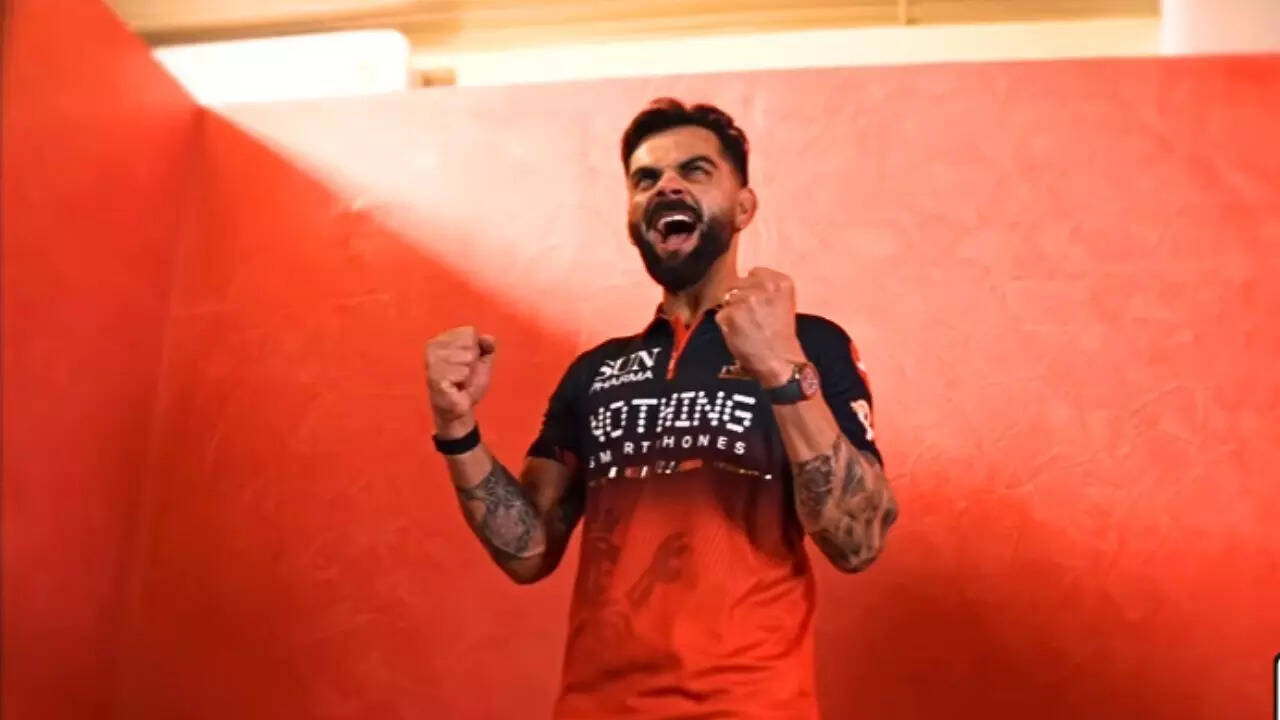
Here, we bring to you the new jerseys of all 10 teams for the new IPL season. Royal Challengers Bengaluru (RCB) Royal Challengers Bengaluru unveiled their new jersey for the Indian Premier League 2026 season with a video featuring Virat Kohli, who said, “Every time I wear this jersey, I’m all in. Ready for another special chase.”

Virat Kohli in new RCB jersey

Virat Kohli in new RCB jersey

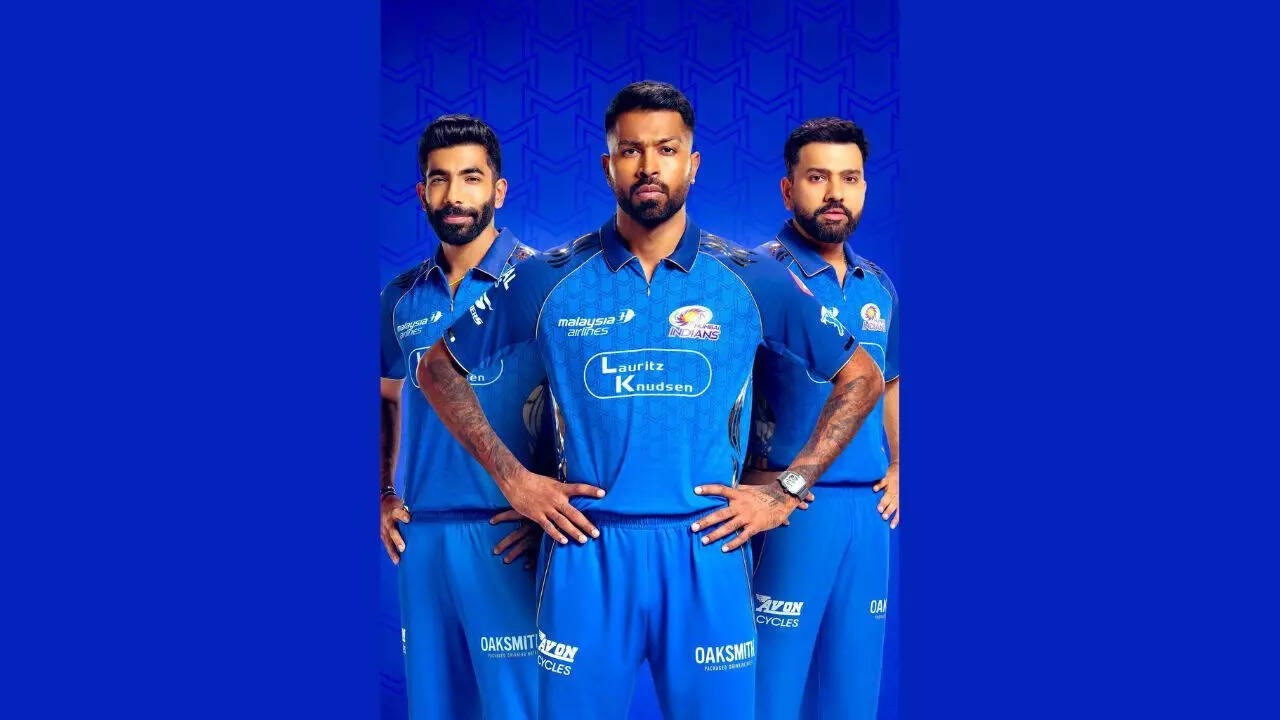
The defending champions begin their campaign on March 28 against Sunrisers Hyderabad in Bengaluru.Mumbai Indians (MI) Mumbai Indians revealed their jersey for the Indian Premier League 2026 season, featuring a repeating ‘M’ pattern symbolising mindset, momentum and unity.

MI jersey

MI jersey

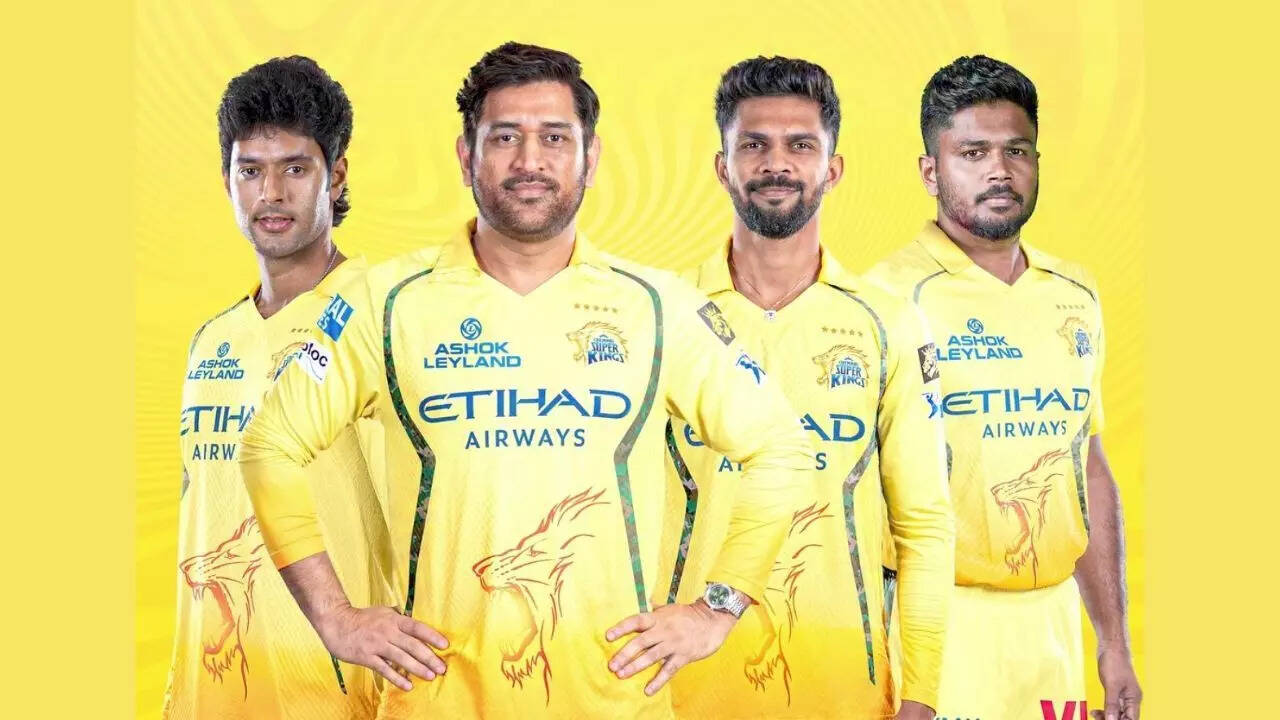
The classic blue and gold colours remain, representing Mumbai’s energy and the franchise’s legacy of success. After a five-season title drought, MI will aim for a comeback following their playoff finish last year.Chennai Super Kings (CSK) Chennai Super Kings unveiled their new jersey for the Indian Premier League 2026 season via a social media reveal, keeping their iconic yellow theme.

CSK jersey

CSK jersey

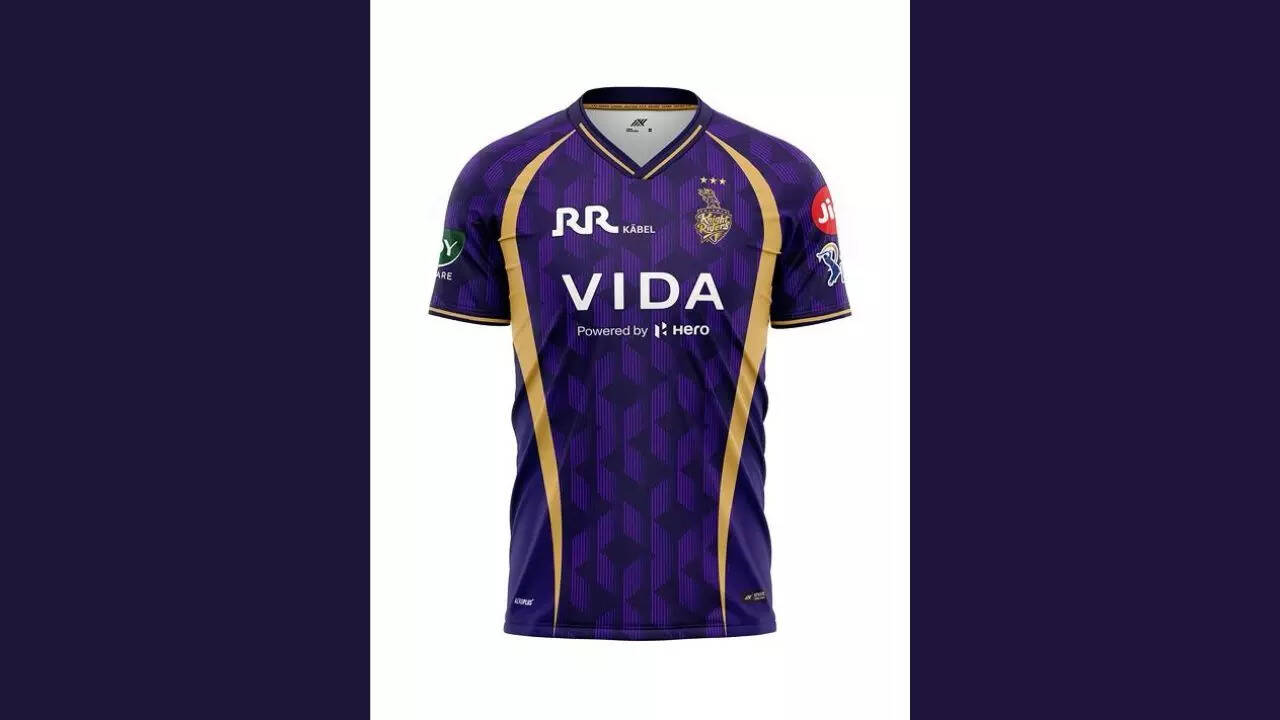
The five-time champions, who finished last in IPL 2025, head into the new season with key squad changes, including the high-profile addition of Sanju Samson in a trade involving Ravindra Jadeja and Sam Curran.Kolkata Knight Riders (KKR) Kolkata Knight Riders unveiled their new jersey for the Indian Premier League 2026 season, built around the “Lines of Legacy” theme.

KKR jersey

KKR jersey

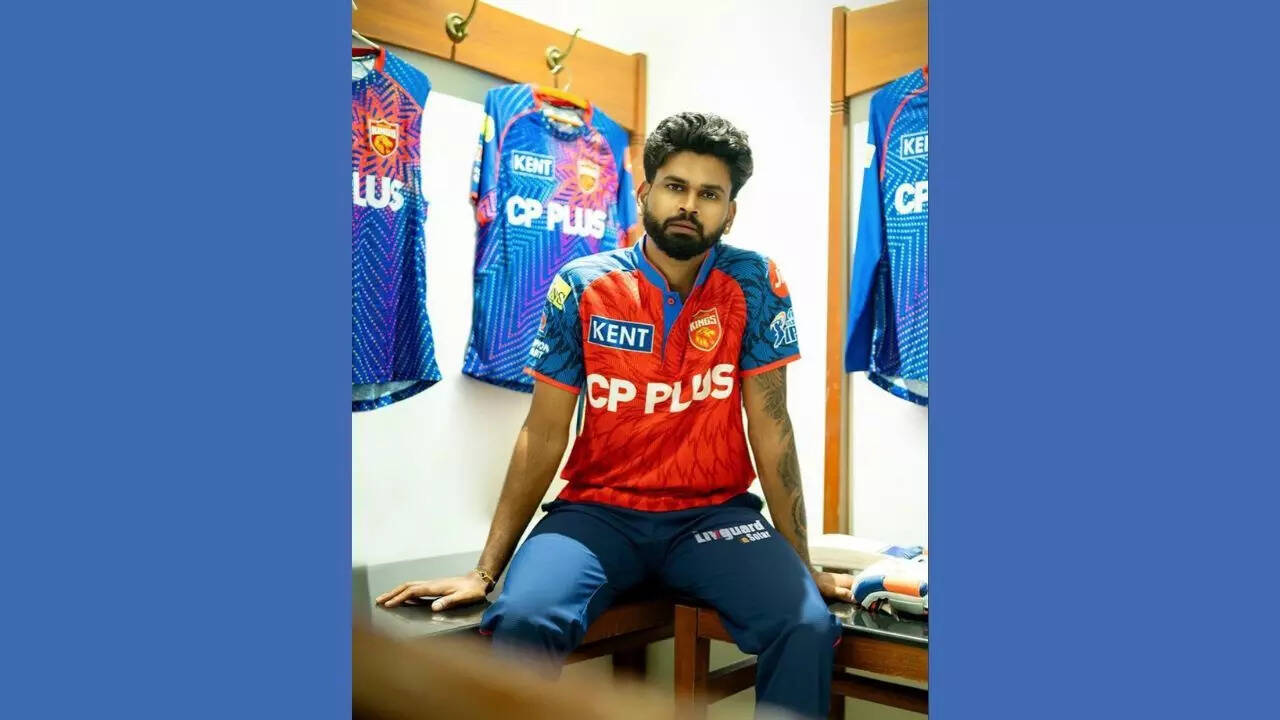
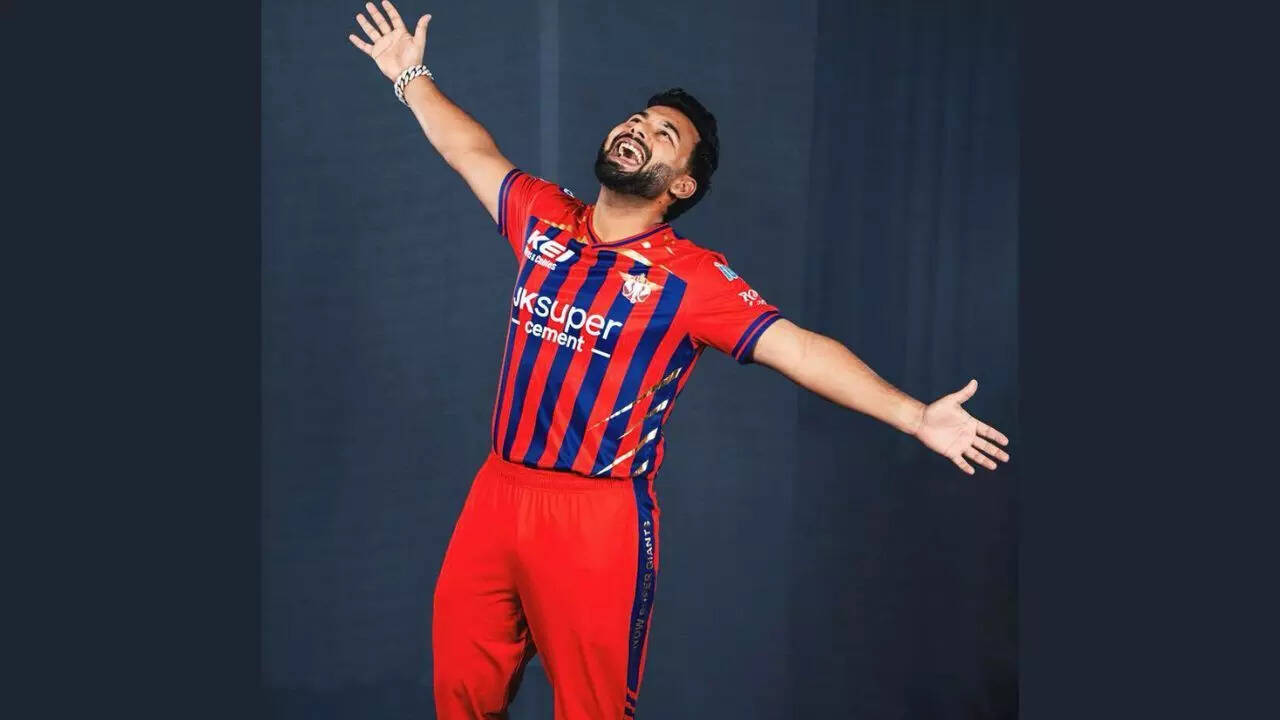
The design draws from iconic moments like Brendon McCullum’s 158* in 2008 and Rinku Singh’s five sixes, with abstract lines forming the KKR initials. CEO Venky Mysore said the jersey celebrates the franchise’s history while looking ahead to new milestones.Punjab Kings (PBKS)Punjab Kings unveiled their new jersey for the Indian Premier League 2026 season, retaining their traditional red and blue colours with subtle design updates.

PBKS jersey

PBKS jersey

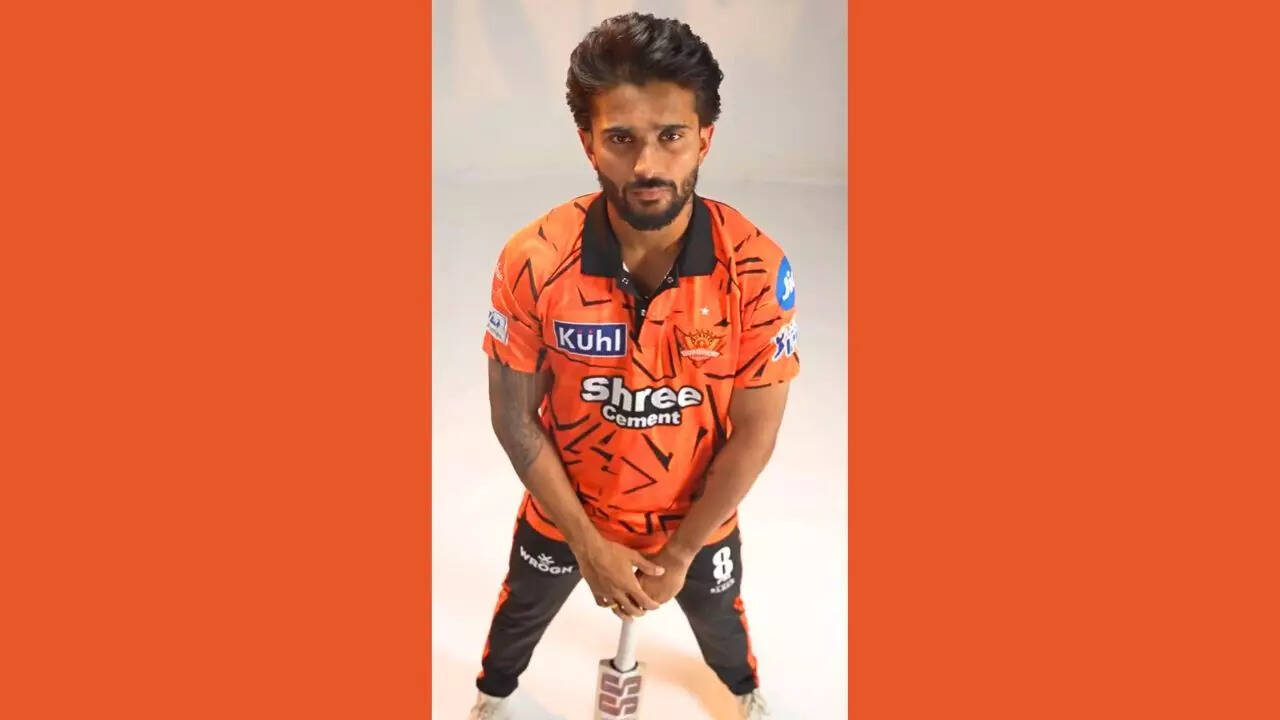
Led by Shreyas Iyer and coached by Ricky Ponting, PBKS highlighted a lion motif blending into diamond patterns, symbolising aggression and refined talent. The team enters the season after finishing runners-up in IPL 2025.Sunrisers Hyderabad (SRH) Sunrisers Hyderabad unveiled their new jersey for the Indian Premier League 2026 season, featuring a bold orange and black theme that reflects the energy of the “Orange Army.”

SRH jersey

SRH jersey

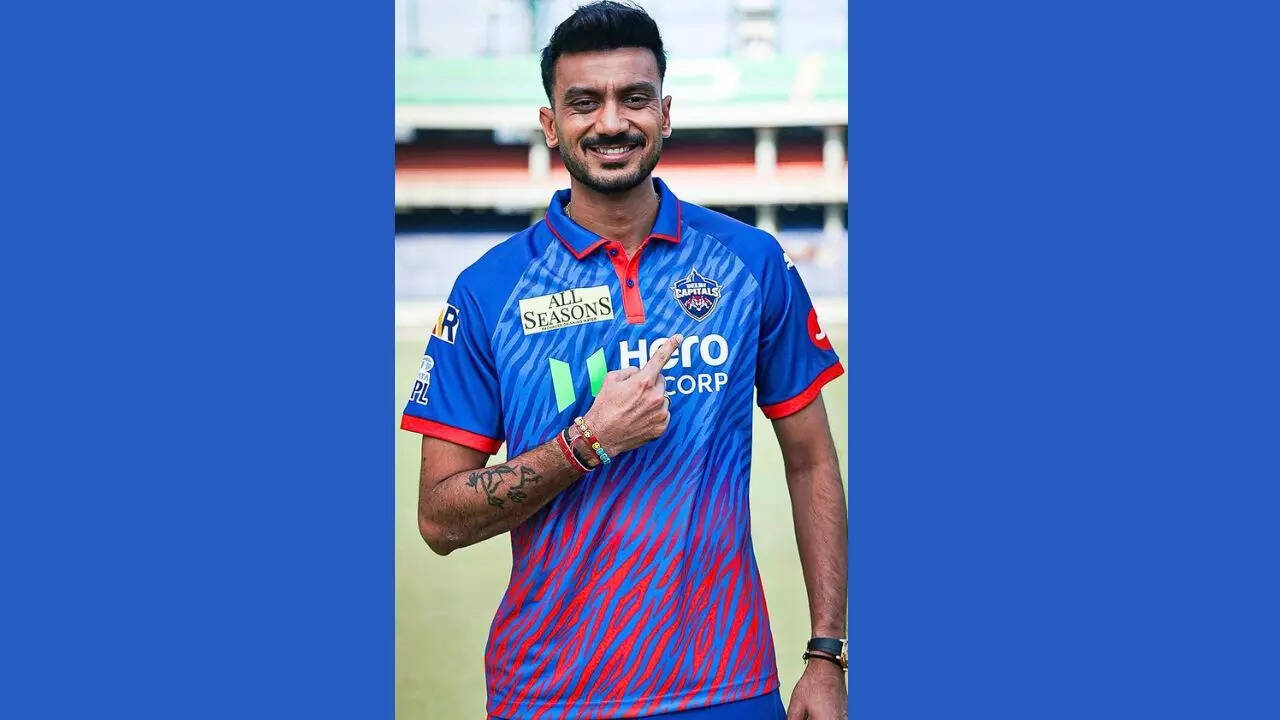
The updated design combines vibrant patterns with a high-performance build, symbolising passion, intensity and the team’s commitment to delivering strong performances in the upcoming season.Delhi Capitals (DC)Delhi Capitals unveiled their new jersey ahead of the Indian Premier League 2026 season, retaining their iconic red and blue colours with a fresh striped design inspired by a tiger’s spirit.

DC jersey

DC jersey

The kit was launched by captains Jemimah Rodrigues and Axar Patel, highlighting a unified team culture. CEO Sunil Gupta said it reflects the city’s identity and fearless approach ahead of the new season.Gujarat Titans (GT)

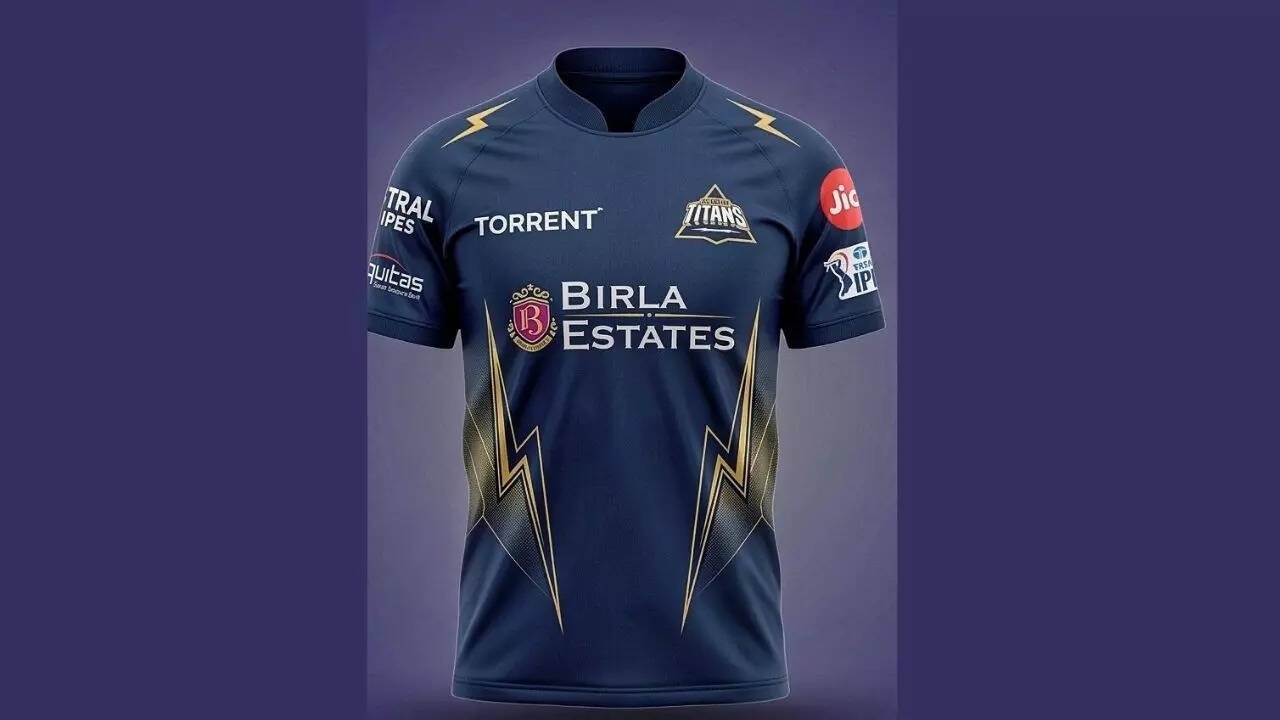
GT jersey

GT jersey

Gujarat Titans have retained their “Titans Navy” but added a luxurious trim to honour their status as the league’s most clinical unit. The jersey features a thunder pattern, symbolising the strength of Shubman Gill’s core group. It’s a clean, sharp, and corporate-cool design that reflects their business-like approach to winning.Lucknow Super Giants (LSG) Lucknow Super Giants unveiled their new jersey and refreshed colours for the upcoming Indian Premier League season, reflecting the team’s growth into a competitive force over four years.

LSG jersey

LSG jersey

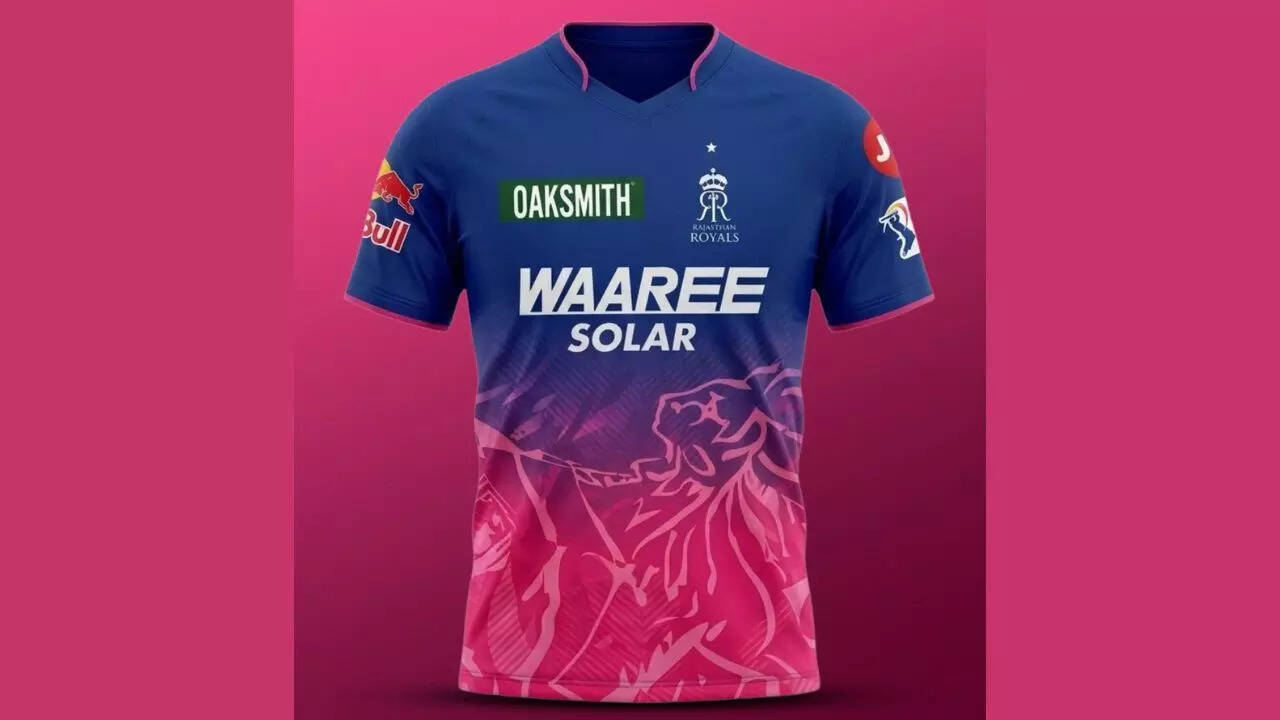
Inspired by the culture of Lucknow and Uttar Pradesh, the kit blends red, blue and gold to symbolise intensity, roots and ambition. Owner Shashwat Goenka said the jersey represents fans’ emotional connect, while signalling resilience, identity and the franchise’s long-term vision.Rajasthan Royals (RR)Rajasthan Royals unveiled their new jersey for the Indian Premier League 2026 season in Jaipur, sticking to their signature style with a refreshed look. New captain Riyan Parag, along with Vaibhav Sooryavanshi and Ravi Bishnoi, showcased the kit at the launch.

RR jersey

RR jersey

The franchise shared the reveal on social media with the caption, “New look, same Halla Bol. Jersey: RRevealed,” signalling continuity in identity despite recent squad changes.

Banner Insert


Source link

India to buy LPG from Russia? MEA says will ensure ‘people’s fuel needs are met’ | India News


India to buy LPG from Russia? MEA says will ensure 'people's fuel needs are met'

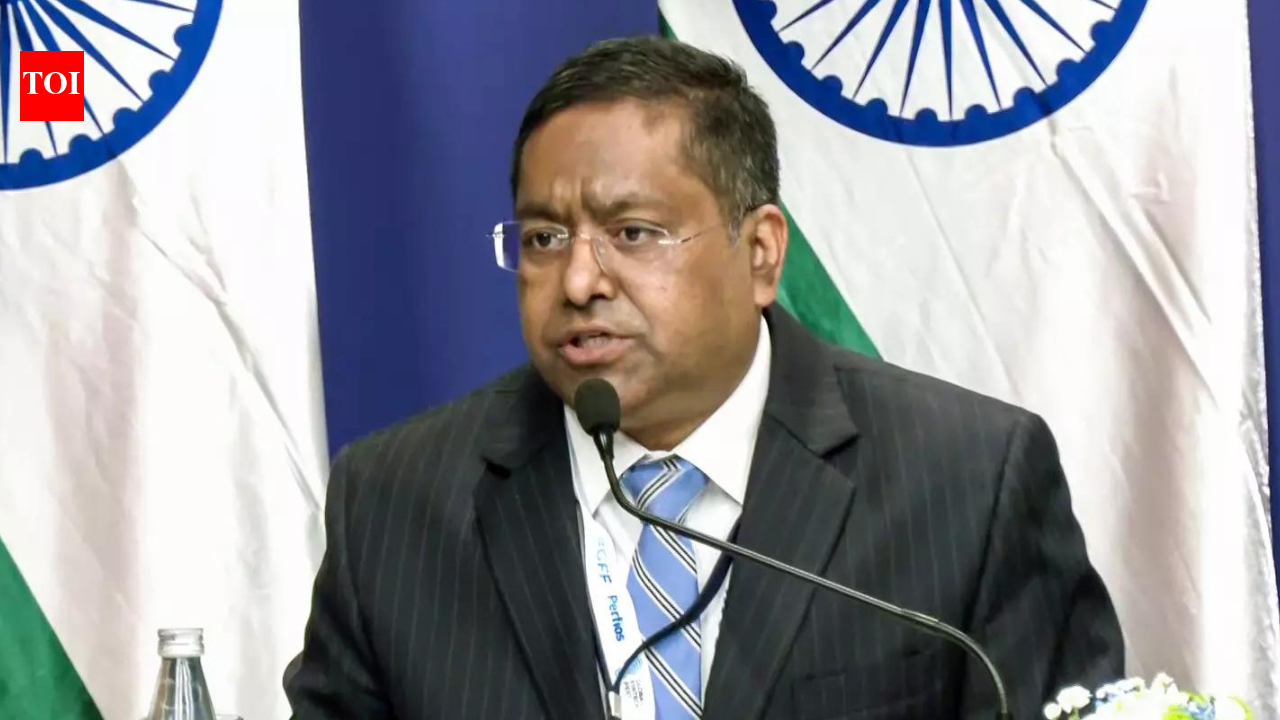
NEW DELHI: The ministry of external affairs on Thursday said that New Delhi is trying to buy LPG from everywhere to widen its range of options for energy supply amid the ongoing conflict in the Middle East.In a weekly press briefing, MEA spokesperson Randhir Jaiswal said that the government is also willing to buy LGP from Russia to meet the needs of consumers.“We’re trying to buy LPG from everywhere, wherever it’s available. So if Russia is available, we’ll go there too. Because the current situation is such that we have to ensure that our people’s fuel needs are met,” Jaiswal said.“I can say that we want to have a wide range of options,” he added.The ministry also reiterated that India has received energy requests from Bangladesh, Sri Lanka, Maldives, and other neighbouring countries.He mentioned that India has been supplying diesel to Bangladesh since 2007 through various modes of transportation and continues to assist the South Asian nation, along with other neighbouring countries.“About energy, we have received requests from several of our neighbouring countries, and I had spoken about this earlier as well. We have received requests from Bangladesh, Sri Lanka, Maldives, and some other neighbouring countries. As I had indicated earlier, India has been supplying diesel to Bangladesh since 2007 through various modes of transportation,” he said.“We are continuing to assist Bangladesh and our other neighbours even currently. This is being done while factoring in our own requirements, refining capacity, and diesel availability,” said Jaiswal.Meanwhile, government also urged consumers to use LPG judiciously and explore alternative cooking options where possible.The move comes amid escalating tensions in the Middle East involving Iran, the United States and Israel, which have disrupted global energy supply chains. Vessel movement through the Strait of Hormuz, a key route that carries about one-fifth of global oil and a significant share of LPG shipments has been affected.To curb shortages and prevent malpractice, state governments have stepped up enforcement measures, including raids to check hoarding and black marketing of LPG cylinders. At the same time, alternate fuels such as kerosene and coal are being used in sectors like hospitality and restaurants to ease pressure on LPG supplies.


Source link

From ‘freedom’ to ‘fury’: 23 years on, how US is caught in costly war loop in Middle East


From 'freedom' to 'fury': 23 years on, how US is caught in costly war loop in Middle East

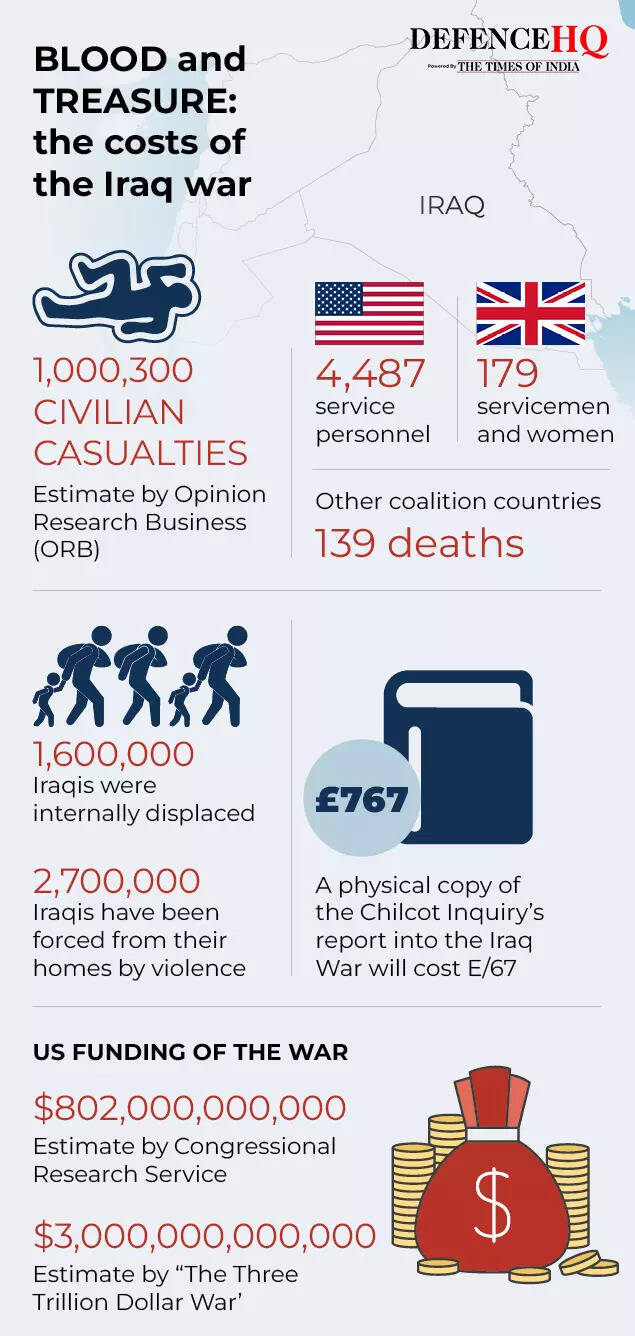
Twenty-three years ago, the United States marched into Iraq with certainty and spectacle. The opening salvos were sold as decisive, almost clinical: a display of overwhelming force that would neutralise a threat and reshape a region. Instead, what followed was a long, grinding unravelling. However, the war proved enormously costly. American military losses totalled roughly 4,500 killed and 32,000 wounded; British forces lost around 179 personnel, with many more coalition members wounded. Civilian deaths in Iraq numbered in the hundreds of thousands, and the financial toll ran into the trillions of dollars when full stabilization costs are counted. The “shock and awe” campaign that toppled Saddam Hussein quickly gave way to a long insurgency and occupation that many critics later deemed a strategic blunder.Today, the new US–Israel war on Iran is already inflicting heavy losses.Smoke billows over Tehran after intense US and Israeli air strikes. Iran’s health ministry reports at least 1,444 people killed and 18,500 injured so far with other monitors suggesting over 3,000 dead in Iran. Tens of thousands have fled across Iran. Israel and Iran’s militias have also suffered casualties: Iran’s Lebanese Hezbollah and Iraqi Shi’ite proxy forces have seen hundreds killed, and Israeli strikes on Lebanon have killed almost 1,000. US losses are comparatively light but politically sensitive: 13 US service members have been killed by Iranian attacks and accidents, and around 200 wounded. The financial cost is mounting fast, early analysis estimates about $3.7 billion were spent in the first four days and $16.5 billion by day 12 of the campaign. In short, the death and destruction are large, and escalating, reminiscent of the early stages of Iraq 2003.

Why was Iraq invaded in 2003?

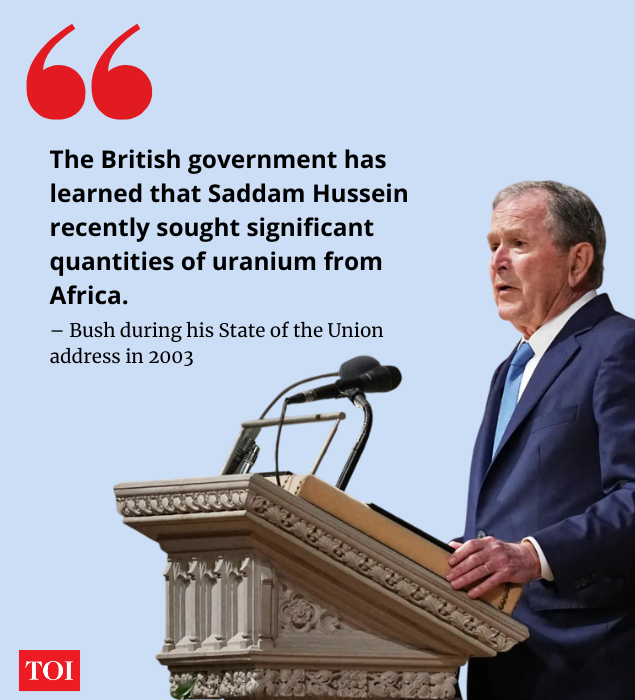
Then-President George W. Bush justified the Iraq war chiefly on security grounds after 9/11. He claimed Saddam Hussein’s regime possessed weapons of mass destruction (WMD) and had ties to al-Qaeda, making Iraq an imminent threat. In 2002 Bush warned Saddam to disarm or face “coalition of the willing.” When Iraq failed to satisfy US demands, US and British forces attacked on 20 March 2003. Both leaders insisted the goal was to disarm Iraq, though regime change quickly followed. In hindsight the WMD allegations proved unfounded, and post-invasion probes found Saddam’s nuclear and biological programs had largely shut down before the war. Nonetheless, at the time Bush argued that Saddam’s continued defiance (blocking UN inspectors) and past aggression justified force.

What Bush said in 2003

In sum, the Iraq war began as a pre-emptive strike to eliminate WMD and alleged terror links. It took out a brutal dictator, but at huge cost: the US-led coalition rapidly overran Iraqi forces (many of which “simply chose not to resist”), yet the aftermath brought years of insurgency and chaos. American intelligence failure (the so-called “stovepiped intelligence” fiasco) later became a byword for flawed war justification.

Why has the US attacked Iran in 2026?

President Donald Trump’s administration has offered several justifications for striking Iran. Officially, Trump says the strikes aim to “defend the American people by eliminating imminent threats from the Iranian regime”. He cites Iran’s alleged nuclear ambitions and advanced missile program as dangers: Trump claims Tehran could soon be close to a bomb (a claim the IAEA disputes) and alleges Iran was developing long-range missiles that “threaten our very good friends and allies in Europe” and could reach the US mainland. He also lists Iran’s support for Hamas, which attacked Israel in 2023 and historic attacks on US forces including the 1979 embassy takeover, 1983 Beirut barracks bombing as justification. In other words, the administration frames the war as targeting Iran’s nuclear/missile arsenal and punishing its proxies.

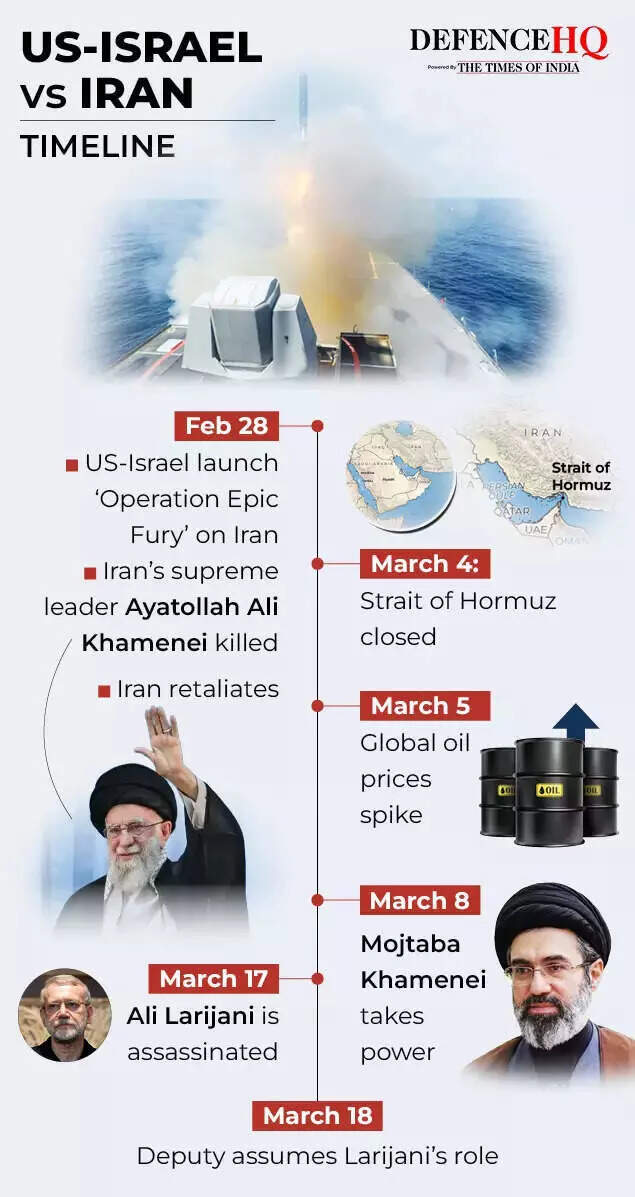
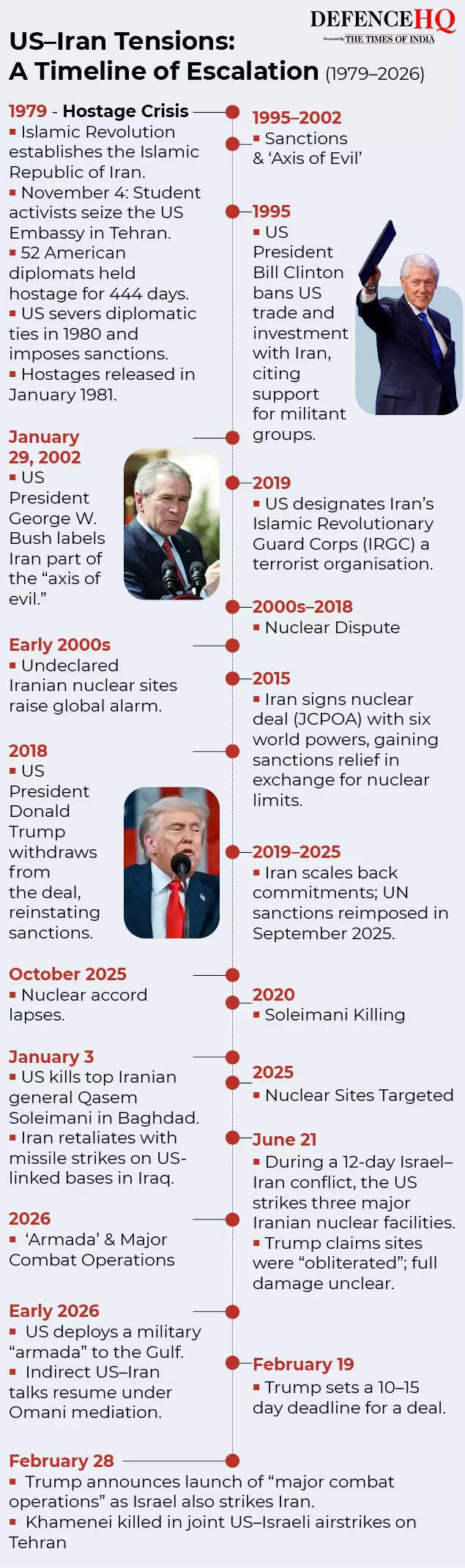
US-Israel vs Iran -  Timeline

Human rights and regime-change rhetoric have also surfaced. Trump highlighted Iran’s brutal crackdown on domestic protests (claiming “tens of thousands” killed, a figure far higher than independent counts). In his public statements, Trump has called on Iranians to “take over your government” once US forces finish bombing. However, his advisers insist the goal is not direct regime overthrow (the Pentagon publicly denied seeking regime change). This echoes 2003: then-Defense Secretary Wolfowitz famously said Saddam would “pay the price, but Iraqis will pay the cost”, while rhetorically Iraq’s democratization was a secondary goal. In 2026 Trump portrays a similar position – Iran’s nuclear program “must end” for peace – even as he openly acknowledges the regime might be toppled if it persists. Notably, these war objectives were not presented via new UN resolutions or allied consensus. Instead, Trump made his case in a brief State of the Union and a short video, with little international input.

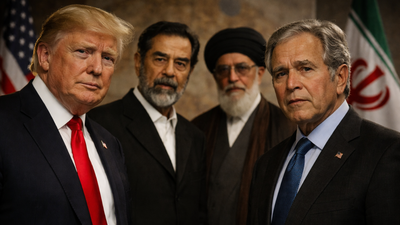
Parallels with 2003: History repeating itself

There are fine parallels between the Iraq and Iran invasion, both were pre-emptive strikes on longtime Middle Eastern foes accused of developing WMD or nuclear weapons. In 2003 the Bush administration insisted Saddam could not be allowed to pursue weapons of mass destruction; in 2026 Trump argues Iran must never obtain a bomb. In both cases the White House presented alarming intelligence assessments (Iraq’s WMD, Iran’s rapidly advancing enrichment) that skeptics would later dispute. A columnist at NPR noted at the outset of the Iran air campaign the striking “political use of intelligence” and recalled how in 2003 the public was simply told to “trust it” that pre-emptive strikes were needed. Likewise Al Jazeera remarked that world leaders’ rhetoric in late February 2026 sounded “all too familiar” to the Iraq War lead-up.

The costs of the Iraq war

Both invasions were framed in dramatic terms. Bush famously declared Saddam “out of time,” while Trump after Iran strikes declared the hour of Iranians’ freedom “at hand”. Both presidents later proclaimed early successes: Bush’s “Mission Accomplished” speech in May 2003, and Trump’s claim that Iranian nuclear sites had been “completely obliterated” by January 2026. Even the political patterns echo: A bipartisan surge of support greeted the 2003 war-resolution effort, 81 House Democrats and most Senate Democrats voted to authorize force, whereas in 2026 Democrats almost uniformly oppose Trump’s action. In short, the broad outlines of preventive attack on a perceived rogue regime, contested intelligence (like Trump’s former counterintelligence director Joe Kent contested), rapid initial successes declared, dubious WMD claims are strikingly similar.

What Iran learnt from 2003 Iraq invasion

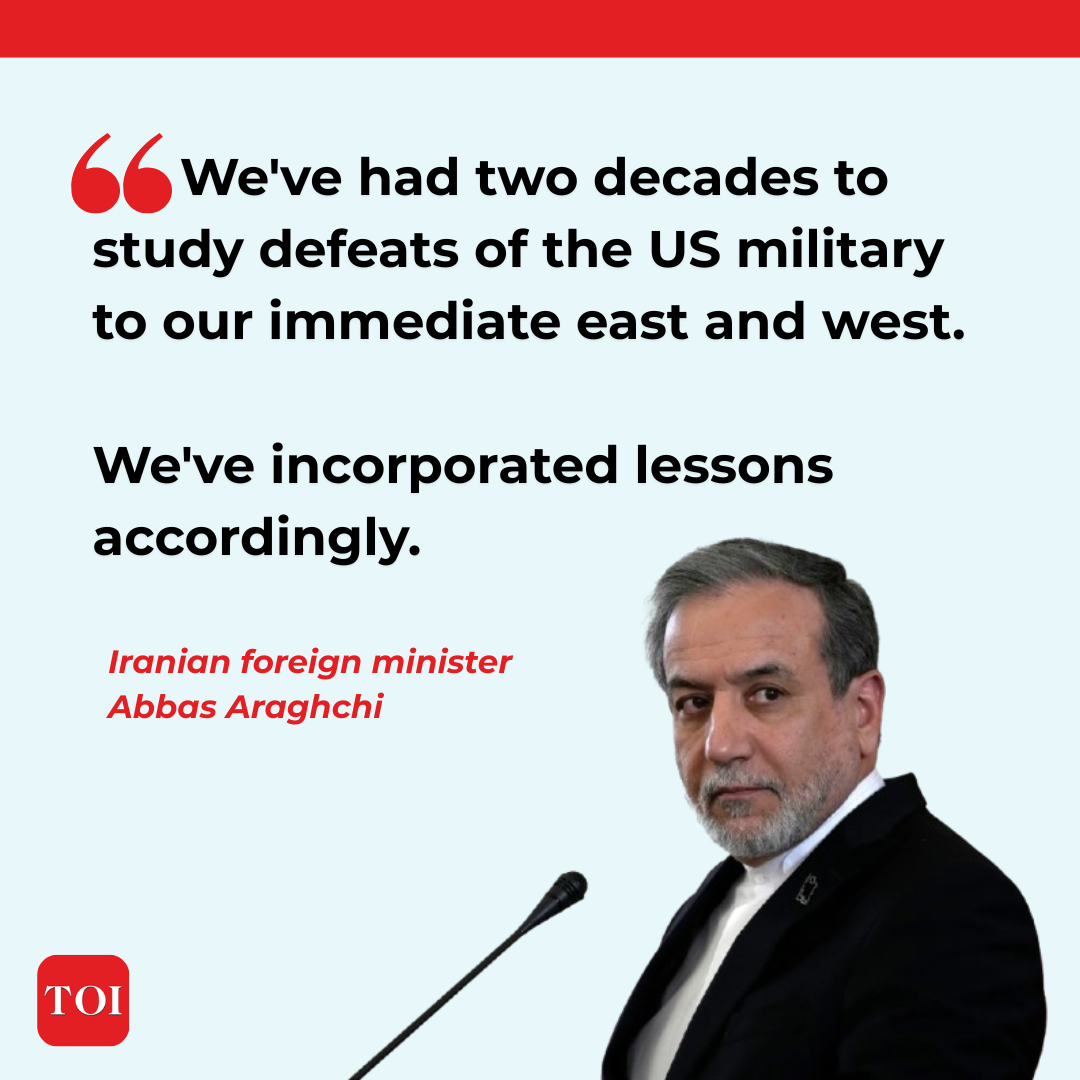
The Iraq invasion did more than topple Saddam Hussein. For Iran, it became a live case study in how a superpower fights, wins quickly, and then struggles to control what comes next. Two decades on, many of the lessons Tehran drew from that war are shaping how it operates in the current conflict.The first lesson was stark. Iraq’s highly centralised system collapsed within weeks once US forces targeted leadership and communication networks. Iran concluded that such rigidity was a fatal weakness. In response, it restructured its military thinking around decentralisation, later termed the ‘Mosaic Defence’. Command and control were dispersed, and units were trained to operate independently if senior leadership was taken out. In today’s conflict, that approach is visible. Even after targeted strikes on key figures, Iranian operations continue with little disruption, suggesting a system built to absorb shocks rather than crumble under them.

Iran's lessons from Iraq

A second lesson came from what followed the invasion. While the US military defeated Iraq’s conventional forces with speed, it became bogged down in a prolonged insurgency. Iran watched closely as smaller, irregular groups used roadside bombs, ambushes and local knowledge to stretch a far stronger opponent. The takeaway was clear. Direct confrontation with the US would be costly and likely futile. Instead, Iran invested in asymmetric warfare, relying on drones, missiles, cyber tools and unconventional tactics that exploit vulnerabilities rather than match strength.That thinking is now central to its battlefield strategy. Rather than large scale set-piece battles, Iran focuses on precise, disruptive actions. Attacks on shipping routes, energy infrastructure and strategic positions are designed not just for military effect, but for economic and psychological impact. The aim is to impose costs without exposing itself to overwhelming retaliation.Another key insight was political. The US did not leave Iraq because it lost on the battlefield, but because the war became too expensive and unpopular to sustain. Iran absorbed this lesson deeply. Its strategy is not necessarily to win outright, but to make any conflict long, unpredictable and costly by not just targeting US and Israeli assets but the gulf region including the oil and gas infrastructure.

How US-Iran got here

The Iraq war also reinforced the value of proxy forces. Iran saw how local militias could shape the battlefield and complicate US operations. Over time, it built and strengthened networks of allied groups across the region. These proxies now form an outer layer of defence and offence, allowing Iran to project influence while avoiding direct confrontation.In essence, Iran’s approach today is rooted not in how Iraq lost the war, but in how the war unfolded afterwards. The fall of Baghdad showed what to avoid. The years that followed showed how to resist.

Offensive strategy, allies: How Iran is different

Despite the parallels, major differences should not be ignored. The scale and scope of the two wars diverge sharply. In 2003 the US and allies immediately sent ground forces into Iraq, swiftly overrunning Baghdad and occupying the country. In 2026, by contrast, US policy has been air power only. As analyst Daniel Drezner notes, Trump’s attacks (nicknamed Operation Epic Fury) have “been limited to an air campaign”. Both the US and Israeli governments have explicitly ruled out a ground invasion of Iran. This reduces the risk of an open-ended quagmire – Iran has 90 million people (twice Iraq’s population in 2003) and an invasion would be enormously costly – but it also means the objectives are more limited. Without boots on the ground, it will be hard to verify that Iran’s nuclear program is truly destroyed, or to impose any kind of regime change. Drezner warns that if no ground occupation follows, doubts about Iran’s abilities will linger indefinitely.Allied cooperation is another difference. President Bush faced large demonstrations and some international opposition, but he still assembled a sizable “coalition of the willing.” Dozens of countries (46 were listed at one point) were counted as supporting the 2003 invasion. Four nations – the US, UK, Australia and Poland – actually contributed combat forces on Day 1; another thirty-some provided troops later.

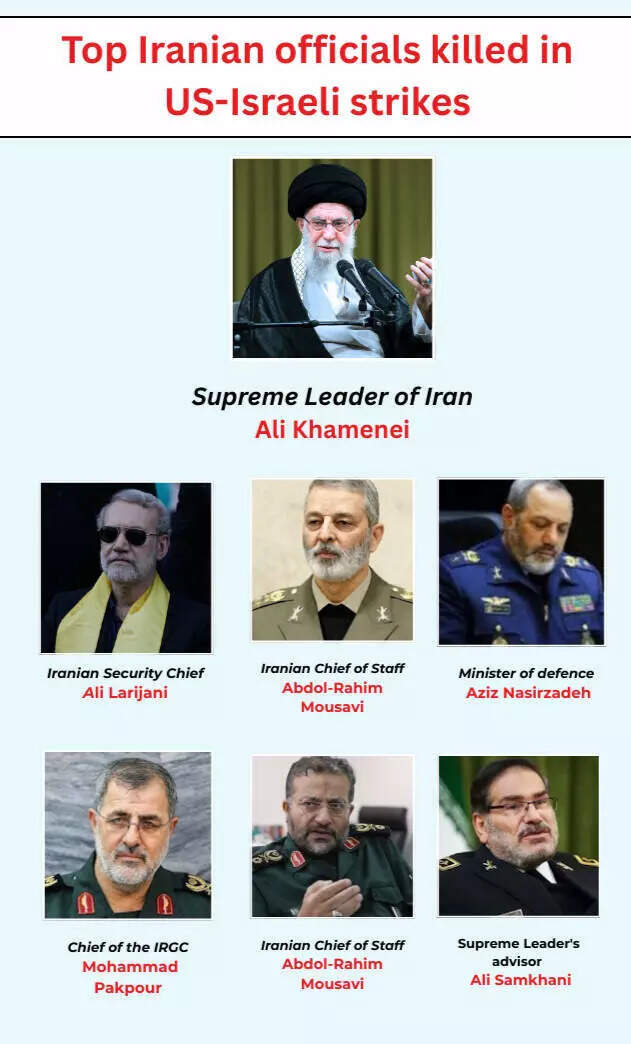
Top Iranian officials killed in US-Israeli strikes

By contrast, Trump’s Iran war so far has almost no foreign military partners beyond Israel. Most Western governments have refused to join any new fighting. Germany’s chancellor declared bluntly on 16 March 2026: “We will not participate in the US–Israel war against Iran.” Citing Germany’s constitution and lack of UN mandate, Friedrich Merz said the war is “not a matter for NATO” and criticized Washington for not consulting Berlin in advance. The UK likewise did not take part in the strikes, though it quietly helped evacuate British citizens. Other European leaders were equally uneasy: France questioned the legality and demanded UN talks, Spain refused US base access, Italy voiced legal concerns. In short, unlike 2003, the US has no “coalition” only a rump of friendly stances and some base access agreements alongside widespread diplomatic distance.Interestingly, Trump’s Director of National Intelligence Tulsi Gabbard later contradicted Trump’s original case for the war, saying she was not aware of whether Iran posed an imminent nuclear threat before the launch of Operation Epic Fury.“It is not the intelligence community’s responsibility to determine what is and is not an imminent threat,” she said, further adding, “that is up to the president, based on a volume of information that he receives”

So what’s next?

If Iraq taught Washington anything, it is that wars are rarely defined by how they begin, but by how they linger. Early dominance, technological superiority and confident messaging can create the illusion of control, yet the real test lies in what follows: whether political goals are clear, whether the enemy breaks, and whether the costs remain tolerable as the weeks turn into years. In 2003, those questions were answered slowly and painfully.The Iran conflict now sits at that same uncertain threshold. It is not yet another Iraq, but the echoes are difficult to ignore. A campaign launched on contested intelligence, limited international backing and expansive rhetoric carries risks that extend far beyond the battlefield. Iran’s resilience, the region’s volatility and the absence of a clear endgame all suggest that escalation, not resolution, may define what comes next.History does not repeat itself neatly, but it does set patterns.


Source link

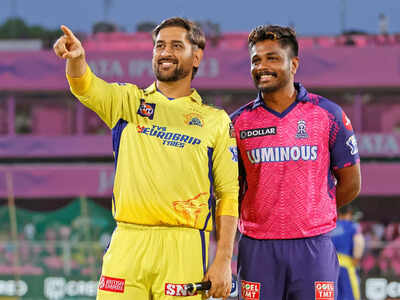
Sanju Samson: Dhoni to hand WK gloves to Samson, captaincy next? Kumble on CSK plan | Cricket News


Sanju Samson and MS Dhoni (ANI)

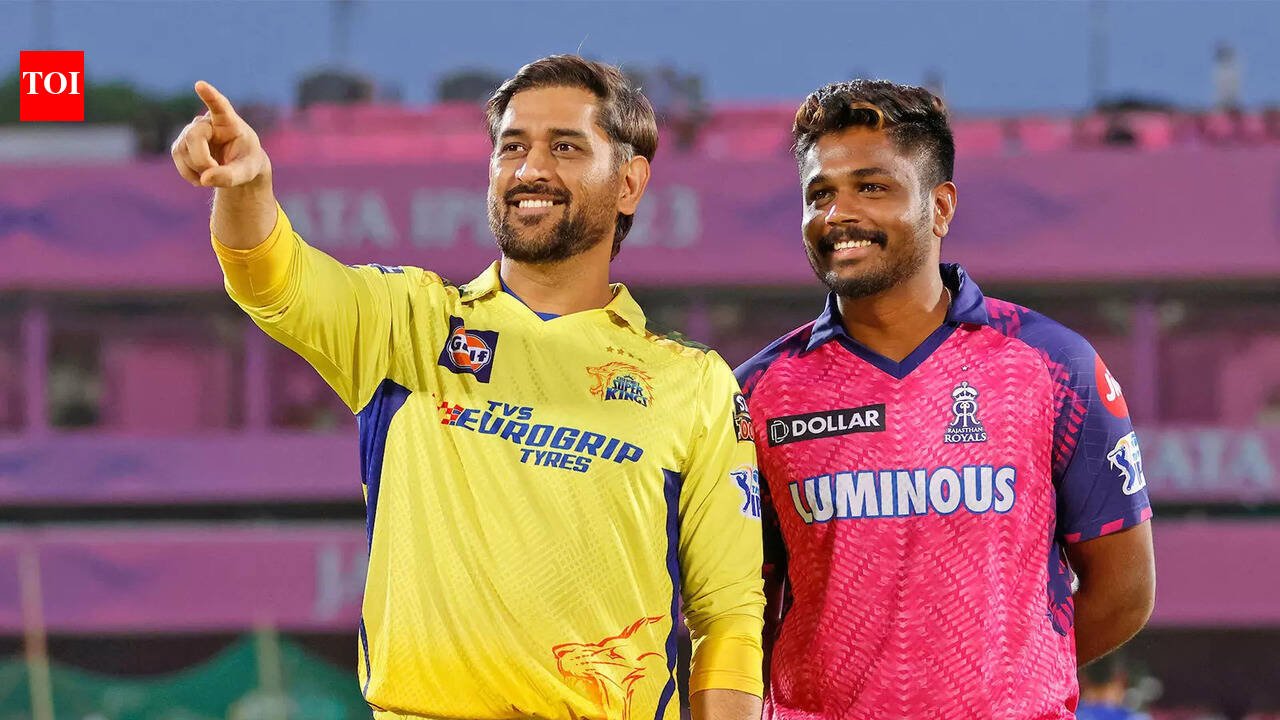
Sanju Samson is set to begin a new phase in his Indian Premier League journey after playing a key role in India’s T20 World Cup triumph. The wicketkeeper-batter has joined Chennai Super Kings, marking a significant shift after leading Rajasthan Royals in recent seasons. At CSK, he enters a different dynamic under captain Ruturaj Gaikwad, with MS Dhoni still part of the setup — a factor that could influence Samson’s chances behind the stumps.The move presents both opportunity and expectation. Joining one of the IPL’s most successful franchises places Samson in a high-pressure environment, but also gives him a broader platform to elevate his game. Adjusting to conditions at Chepauk will be a fresh challenge, while the strong CSK fan base could further amplify his profile in the coming season.
Watch

Kuldeep Yadav delighted for Sanju Samson | From Under-12 days to World Cup glory

Speaking on JioStar, Former India captain Anil Kumble believes Samson’s arrival reflects a wider transition in Indian cricket leadership, while also strengthening CSK’s squad. He pointed to Samson’s recent form and confidence as key positives heading into the IPL.“Icons from one generation to another, the baton has passed on in Indian cricket, from Sunil Gavaskar to Sachin, then to Virat, with MS Dhoni also part of that era. You had the likes of Rahul Dravid and Sourav Ganguly before the shift to MS Dhoni and Virat Kohli, who still carry that aura and continue to perform. In that sense, Sanju coming in is a great move for CSK. The icing on the cake is his fantastic form leading into the IPL and winning the World Cup for India with three back-to-back knocks,” Kumble said on CSK’s decision.Kumble also underlined that Samson’s value goes beyond his performances. His background and familiarity with the region could strengthen the franchise’s connection with its supporters, while his role as a wicketkeeper-batter adds balance to the squad.“I’m sure that will certainly contribute to the franchise’s fan following. From a Chennai perspective, he fits their need, being Kerala-born, speaks Tamil, so there’s a connect, a wicketkeeper-batter, so in a similar mould to MS, and his experience will be valuable for CSK,” he said.CSK’s leadership structure has seen frequent changes in recent years, with Dhoni stepping back into the captaincy role during injury setbacks or transitional phases. Kumble feels Samson is well-suited to provide stability in such situations, given his leadership experience with Rajasthan Royals.“I think that’s the perfect role for Sanju, handling those responsibilities almost like a vice-captain. He has captained Rajasthan for a long period of time, so that leadership role comes naturally to him, and that’s something CSK will be looking for. Last year, when Ruturaj was injured, MS had to take over, and previously, when Ravindra Jadeja was also captain, MS Dhoni came back in as captain midway through the season. So there have been some challenges in identifying who the next captain would be for MS.”“Ruturaj was identified, and it is good that he continues as captain despite Sanju coming into the scheme of things. I wouldn’t be surprised if MS Dhoni gives Sanju the keeping role at some point during the season. He will be part of the leadership group, and in case if Ruturaj is unavailable due to injury or otherwise, Sanju would probably take over rather than MS,” Kumble said.
Banner Insert


Source link

Evening news wrap: Iran hits Saudi’s Aramco and Kuwait refinery; Sensex tanks around 2,500 points & more | India News


Evening news wrap: Iran hits Saudi's Aramco and Kuwait refinery; Sensex tanks around 2,500 points & more
  • Iran strikes energy sites across the region, including facilities linked to Saudi Aramco, after Israel’s attack on South Pars, warning of global “uncontrollable consequences” as oil prices spike.
  • A projectile lands just 350m from the Bushehr Nuclear Power Plant, with the International Atomic Energy Agency flagging serious safety concerns despite no damage to the reactor.
  • Sensex crashes over 2,500 points, wiping out Rs 11 lakh crore in investor wealth as rising crude prices and US Fed’s stance trigger a broad sell-off.
  • Bharatiya Janata Party releases 88 candidates for 2026 Assam assembly elections, with CM Himanta Biswa Sarma set to contest from Jalukbari.
  • Kerala high court rejects PIL against Board of Control for Cricket in India, clearing the way for IPL 2026 to begin on March 28.

Here are the top news of the day:

Iran hits Saudi’s Aramco and Kuwait refinery following Israel attack on South Pars

Iran escalated tensions across the Gulf by launching coordinated strikes on key energy infrastructure, including the SAMREF refinery in Saudi Arabia, a joint venture involving Saudi Aramco and ExxonMobil.The attacks came in retaliation for Israel’s earlier strike on Iran’s crucial South Pars gas field, a move that Tehran condemned strongly.Iranian President Masoud Pezeshkian warned of “uncontrollable consequences,” cautioning that the conflict could spiral globally. Iran also targeted LNG facilities in Qatar and set two Kuwaiti refineries ablaze, intensifying fears of a wider regional crisis. Read full story

Just 350m away: Projectile strikes near Bushehr nuclear reactor, says IAEA

The International Atomic Energy Agency reported a serious security scare after a projectile struck near Iran’s Bushehr Nuclear Power Plant, landing just 350 metres from the reactor. While the core facility remained unharmed and no injuries were reported, the proximity of the strike raised alarm over nuclear safety risks.IAEA director general Rafael Mariano Grossi stressed that any attack near nuclear installations breaches critical safety norms during conflict. Iran and Russia claimed the projectile hit within the broader premises, fuelling concerns about a potential radiological incident as tensions between Tehran, Israel, and the United States continue to escalate. Read full story

Stock market crash: Sensex tanks around 2,500 points – top reasons for fall

Indian stock markets witnessed a sharp sell-off, with the BSE Sensex plunging over 2,500 points, while the Nifty 50 slipped below the 23,200 mark intraday after logging gains for three straight sessions. The downturn wiped out more than Rs 11 lakh crore in investor wealth, driven largely by surging global crude oil prices and a cautious policy stance from the US Federal Reserve. Nifty50 ended the session at 23,002.15, down 776 points or 3.26%. BSE Sensex closed at 74,207.24, down 2,497 points or 3.26%. Nifty Realty was the worst performer, declining by more than 3%, followed by Nifty Auto and Nifty Private Bank, both of which slipped close to 3% . Read full story

Assam assembly polls 2026: BJP releases list of 88 candidates

The Bharatiya Janata Party has unveiled its first list of 88 candidates for the upcoming Assam assembly elections, with chief minister Himanta Biswa Sarma set to contest again from Jalukbari.Under the alliance formula, BJP will contest 89 seats in the 126-member assembly, alongside partners AGP and BPF. The list reflects a blend of continuity and change, with several high-profile defections from Congress included, while 11 sitting MLAs have been dropped. Notably, only five women candidates have been fielded, highlighting ongoing concerns about gender representation. Read full story

IPL name row: Kerala high court rejects PIL against BCCI

The Kerala high court has dismissed a public interest litigation challenging the use of the name “Indian Premier League” by the Board of Control for Cricket in India. The petitioner argued that the league was not an official national tournament and should not carry the name.A bench led by Chief Justice Soumen Sen found no merit in the plea, observing that the league has been in existence for years and the objection came too late. With the legal hurdle cleared, the 19th season of the IPL is set to begin on March 28, with defending champions Royal Challengers Bangalore facing Sunrisers Hyderabad in the opening match. Read full story


Source link

WATCH: Sanju Samson’s heartwarming act of humility for Kerala CM Pinarayi Vijayan melts hearts


In the high-octane world of international cricket, where stardom often comes with a sense of entitlement, India’s T20 World Cup hero Sanju Samson continues to prove why he is regarded as one of the most grounded athletes in the country. Following India’s historic 2026 T20 World Cup triumph, Samson returned to his roots in Kerala, not just as a champion, but as a son of the soil whose humility remains untouched by his soaring success. A recent video from a felicitation ceremony has gone viral, capturing a quiet, unassuming moment of respect between the cricketer and Kerala Chief Minister Pinarayi Vijayan that has resonated deeply with fans across social media.

Samson’s homecoming follows a legendary run in the 2026 tournament, where he was adjudged the Player of the Tournament. Emerging from a period of intense scrutiny, the wicketkeeper-batter silenced critics by amassing 321 runs at a staggering strike rate of 199.37. His back-to-back masterclasses including a 97* against the West Indies and an 89 in the final against New Zealand were instrumental in bringing the trophy back to India. Yet, despite being the man of the hour, Samson’s conduct off the field remains his most defining trait.

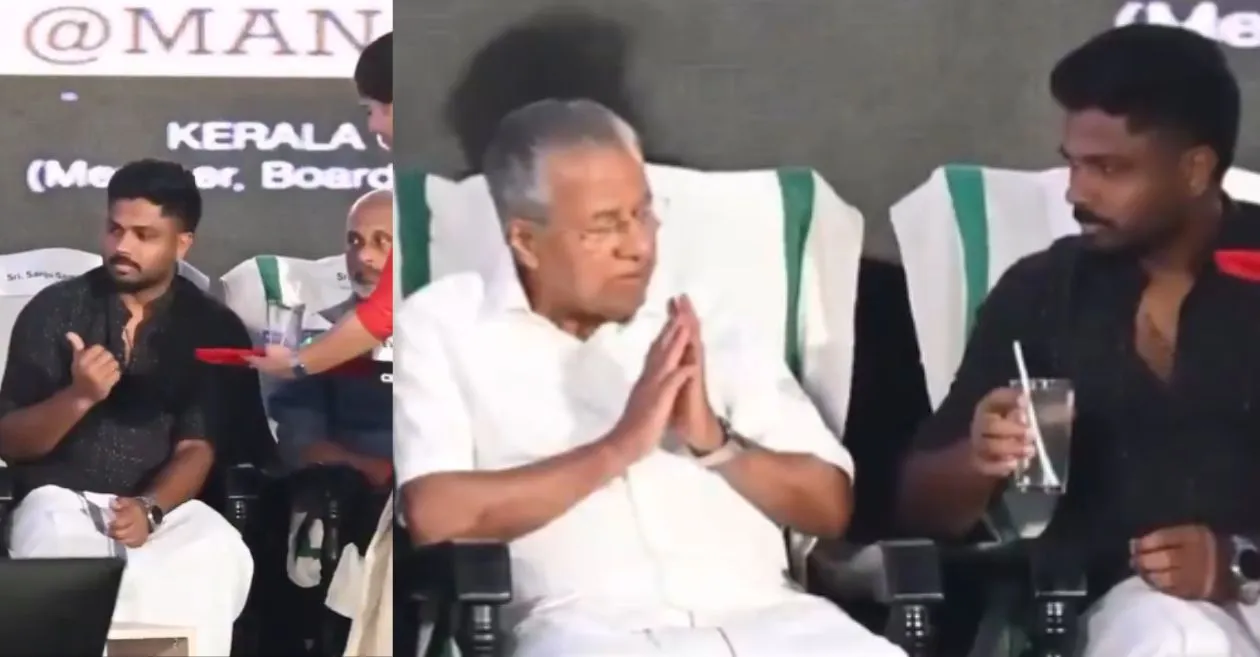
Sanju Samson wins admiration with heartfelt gesture towards Kerala CM Pinarayi Vijayan

The viral moment occurred at Cliff House, the CM’s official residence, on March 16. As Samson sat alongside Chief Minister Vijayan, a staff member approached to serve refreshments. In a reflexive act of traditional Indian etiquette and deep personal humility, Samson refused to take his glass of water until he had first offered it to the Chief Minister.

The video shows the CM gently gesturing for Samson to drink first, acknowledging the young athlete’s respect while insisting he hydrate. Only after this polite exchange did the cricketer oblige. For fans, this wasn’t just a polite interaction; it was a testament to Samson’s character. Dressed in traditional Kerala attire, the 31-year-old embodied the cultural values of his home state, proving that while he may be a global icon, he remains deeply connected to the principles of decorum and respect for elders.

Here’s the video:

Also WATCH: Heartwarming scene as KL Rahul embraces Sanju Samson during BCCI’s Naman Awards tribute to T20 World Cup champions

Chief Minister Vijayan celebrates Kerala’s own champion

The felicitation was more than a formal event; it was a celebration of a resilient journey. CM Vijayan presented Samson with a commemorative memento that read, “We salute Sanju Viswanath Samson,” specifically highlighting his bravery during the knockout stages. The Chief Minister later took to X (formerly Twitter) to express the state’s collective pride.

Had the pleasure of hosting India’s pride and Kerala’s own, Sanju Samson, at Cliff House yesterday. Conveyed the profound love and joy of the people of Kerala. May he draw strength from his recent achievements and continue to scale new heights,” Vijayan wrote.

This recognition marks a full-circle moment for Samson. Before the World Cup, his spot was questioned following a lean patch against New Zealand, and he started the tournament on the bench. By turning that adversity into a Player of the Tournament trophy, and doing so with such grace, Samson has cemented his legacy as a role model who leads with both his bat and his heart.

Also WATCH: Sanju Samson hilariously mimics Vaibhav Suryavanshi while recalling his IPL chat with Rahul Dravid


Source link

8 years on, food regulator still just consulting on front of pack labelling | India News


8 years on, food regulator still just consulting on front of pack labelling

Almost eight years after the Food Safety and Standards Authority of India (FSSAI) put out the first draft regulation related to front of pack labelling (FOPL) of packaged food in 2018 for comments and suggestions, the authority is yet to finalise the regulation.In an affidavit dated March 13, on a May 2024 petition in the Supreme Court, FSSAI asked for six weeks to submit a proposal on labelling of packaged foods high in fat, sugar salt (HFSS) the consumption of which has been shown to cause non-communicable diseases.After organising five rounds of consultation with stakeholders including the food industry, the FSSAI informed the court that it was holding one more consultation with stakeholders on March 19 on “the proposed labels to be issued”.“The question of front-of-pack labelling has already been the subject of extensive consultations and technical deliberations over several years,” pointed out Nutrition Advocacy in Public Interest (NAPi), a think tank of independent experts in epidemiology, nutrition and pediatrics, in a letter to the FSSAI. It added that FSSAI ought to consider proceeding with framing the FOPL regulation on the basis of the extensive consultations, available evidence and SC orders, rather than reopening the matter through additional stakeholder deliberations.The Supreme Court in its February 10 order had stated that “…we are of the view that whatever exercise has been undertaken so far has not yielded any positive or good result”. The court further pointed out that the PIL was filed to raise an important issue regarding the right to health of the citizens.FSSAI had organised a consultation in August 2018, followed by one in February 2022 in which all 17 industry associations voted for a star-rating system while all consumer organisations asked for warning labels.After an amended draft of the Food Safety and Standards (Labeling and Display) Regulations 2020 was put in public domain for objections and suggestions over 14,000 comments and suggestions were received from public and stakeholders. FSSAI had constituted an expert committee to analyse all the comments. In May 2025, the FSSAI organised four stakeholder consultations with food business operators and others in Delhi, Goa, Hyderabad and Kolkata. In October 2025, the food industry had submitted 430 representations to the food processing ministry in which they raised “serious concerns on the draft notification”. The parliamentary committee that brought out a report on food labelling regulation in December 2025 also heard various food industry associations and their representatives along with other stakeholders. “How many consultations will it take? The process for the regulation started in 2014, when FSSAI framed guidelines which included front-of-pack labelling specifying how much fat, sugar or salt it contained. How long does it take to bring in a regulation to protect public health interest? This is despite mounting evidence of rising incidence of non-communicable diseases and obesity, even among children, due to the consumption of packaged foods high in fats, salt and sugar,” asked Dr Arun Gupta, an NAPi member.


Source link